Kirjojen hintavertailu. Mukana 12 295 141 kirjaa ja 12 kauppaa.

Kirjailija

Hélène Cixous

Kirjat ja teokset yhdessä paikassa: 98 kirjaa, julkaisuja vuosilta 1986-2026, suosituimpien joukossa Manhattan. Vertaile teosten hintoja ja tarkista saatavuus suomalaisista kirjakaupoista.

Mukana myös kirjoitusasut: Helene Cixous

98 kirjaa

Kirjojen julkaisuhaarukka 1986-2026.

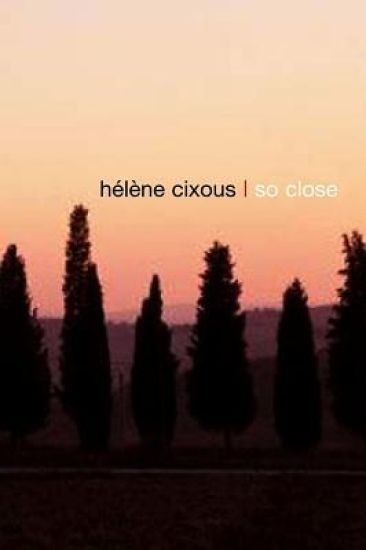
So Close

So Close

Hélène Cixous

Polity Press
2009
sidottu
In So Close, the internationally renowned writer Hélène Cixous recounts a return to her native Algeria after a more than thirty-year absence. Before she can decide to go, she must sift through large parts of her past in a land where she never felt at home and, from a young age, knew she must leave. Above all, she must confront the depths of her mother’s rejection of the country that had rejected her despite years of devotion to the poor women of Algiers. As she is struggling with this decision, she receives a message from Zohra Drif, with whom she has had no contact since their school days, which was just before Zohra joined the Algerian FLN and become a heroine in the uprising against French rule in her homeland. They meet in Paris for the first time in more than fifty years and soon afterward the narrator departs for Algiers. The latter part of the narrative brings a rush of sensations, impressions, memories, and new encounters as the narrator revisits sites from her past in Algiers and especially in Oran, the city of her birth, the city of the family’s happiness before her father’s death when she was a young girl. The quest to find his grave again in the overgrown Jewish cemetery of Algiers leads to a startlingly moving scene that closes the voyage and the book.
So Close

So Close

Hélène Cixous

Polity Press
2009
nidottu
In So Close, the internationally renowned writer Hélène Cixous recounts a return to her native Algeria after a more than thirty-year absence. Before she can decide to go, she must sift through large parts of her past in a land where she never felt at home and, from a young age, knew she must leave. Above all, she must confront the depths of her mother’s rejection of the country that had rejected her despite years of devotion to the poor women of Algiers. As she is struggling with this decision, she receives a message from Zohra Drif, with whom she has had no contact since their school days, which was just before Zohra joined the Algerian FLN and become a heroine in the uprising against French rule in her homeland. They meet in Paris for the first time in more than fifty years and soon afterward the narrator departs for Algiers. The latter part of the narrative brings a rush of sensations, impressions, memories, and new encounters as the narrator revisits sites from her past in Algiers and especially in Oran, the city of her birth, the city of the family’s happiness before her father’s death when she was a young girl. The quest to find his grave again in the overgrown Jewish cemetery of Algiers leads to a startlingly moving scene that closes the voyage and the book.
Hyperdream

Hyperdream

Hélène Cixous

Polity Press
2009
nidottu
Hyperdream is a major new novel by celebrated French author Hélène Cixous. It is a literary tour de force, returning anew to challenge necessity itself, the most implacable of human certainties: you die in the end – and that’s the end. For you, for me. But what if? What if death did not inevitably spell the end of life? Hyperdream invests this fragile, tentative suspension of disbelief with the sheer force of its poetic audacity, inventing a sort of magic telephone: a wireless lifeline against all the odds to the dearly departed. It is a book about time, age, love and the greatest loss. A book which turns on death: on the question or the moment of death, depending on it, expecting it, living off it, taking place at once before and after, but at the same time turning against it, contesting it, outwriting it hopefully, desperately, performatively, as an interruptible interruption. Hyperdream is a book of mourning, but also of morning, a tragedy-with-comedy and a universal family romance in which it transpires that the narrator is the veritable offspring of a “treasure of literature” in the form of a bed, purchased by her mother from a certain W. Benjamin in 1934, slept on for 40 years by her brother and dreamt of by her friend “J.D.”
Hyperdream

Hyperdream

Hélène Cixous

Polity Press
2009
sidottu
Hyperdream is a major new novel by celebrated French author Hélène Cixous. It is a literary tour de force, returning anew to challenge necessity itself, the most implacable of human certainties: you die in the end – and that’s the end. For you, for me. But what if? What if death did not inevitably spell the end of life? Hyperdream invests this fragile, tentative suspension of disbelief with the sheer force of its poetic audacity, inventing a sort of magic telephone: a wireless lifeline against all the odds to the dearly departed. It is a book about time, age, love and the greatest loss. A book which turns on death: on the question or the moment of death, depending on it, expecting it, living off it, taking place at once before and after, but at the same time turning against it, contesting it, outwriting it hopefully, desperately, performatively, as an interruptible interruption. Hyperdream is a book of mourning, but also of morning, a tragedy-with-comedy and a universal family romance in which it transpires that the narrator is the veritable offspring of a “treasure of literature” in the form of a bed, purchased by her mother from a certain W. Benjamin in 1934, slept on for 40 years by her brother and dreamt of by her friend “J.D.”
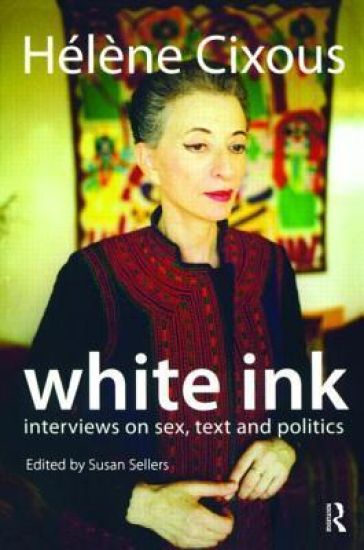
White Ink

White Ink

Hélène Cixous

Columbia University Press
2008
sidottu
These interviews with Helene Cixous offer invaluable insight into her philosophy and criticism. Culled from newspapers, journals, and books, White Ink collects the best of these conversations, which address the major concerns of Cixous's critical work and features two dialogues with twentieth-century intellectuals Michel Foucault and Jacques Derrida. The interviews in White Ink span more than three decades and include a new conversation with Susan Sellers, the book's editor and a leading Cixous scholar and translator. Cixous discusses her work and writing process. She shares her views on literature, feminism, theater, autobiography, philosophy, politics, aesthetics, religion, ethics, and human relations, and she reflects on her roles as poet, playwright, professor, woman, Jew, and, her most famous, "French feminist theorist." Sellers organizes White Ink in such a way that readers can grasp the development of Cixous's commentary on a series of vital questions. Taken together, the revealing performances in White Ink provide an excellent introduction this thinker's brave and vital work--each one an event in language and thought that epitomizes Cixous's intellectual and poetic force.
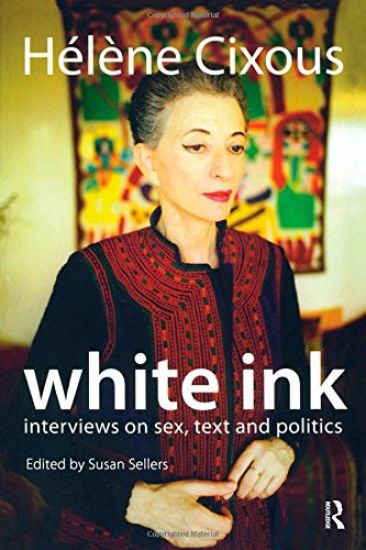
White Ink

White Ink

Helene Cixous; Susan Sellers

Acumen Publishing Ltd
2008
nidottu
Helene Cixous is widely regarded as one of the world's most influential feminist writers and thinkers. "White Ink" brings together her most revealing interviews, available in English for the first time. Spanning over four decades and including a new interview with the editor Susan Sellers, this collection presents a brilliant, running commentary on the subjects at the heart of Cixous' writing. Here, Cixous discusses her books and her creative process, her views on and insights into literature, philosophy, theatre, politics, aesthetics, faith and ethics, human relations and the state of the world.As she responds to interviewers' questions, Cixous is prompted to reflect on her roles and activities as poet, playwright, feminist theorist, professor of literature, philosopher, woman, Jew. Each interview is a remarkable performance, an event in language and thought where Cixous' celebrated intellectual and poetic force can be witnessed 'in action'. The accessibility of the interview format provides an excellent starting-point for readers new to Cixous, while those already familiar with her work will find unexpected insights and fresh elucidations of her thought.
White Ink

White Ink

Helene Cixous; Susan Sellers

Acumen Publishing Ltd
2008
sidottu
Helene Cixous is widely regarded as one of the world's most influential feminist writers and thinkers. "White Ink" brings together her most revealing interviews, available in English for the first time. Spanning over four decades and including a new interview with the editor Susan Sellers, this collection presents a brilliant, running commentary on the subjects at the heart of Cixous' writing.Here, Cixous discusses her books and her creative process, her views on and insights into literature, philosophy, theatre, politics, aesthetics, faith and ethics, human relations and the state of the world. As she responds to interviewers' questions, Cixous is prompted to reflect on her roles and activities as poet, playwright, feminist theorist, professor of literature, philosopher, woman, Jew. Each interview is a remarkable performance, an event in language and thought where Cixous' celebrated intellectual and poetic force can be witnessed 'in action'. The accessibility of the interview format provides an excellent starting-point for readers new to Cixous, while those already familiar with her work will find unexpected insights and fresh elucidations of her thought.
Love Itself

Love Itself

Hélène Cixous

Polity Press
2008
nidottu
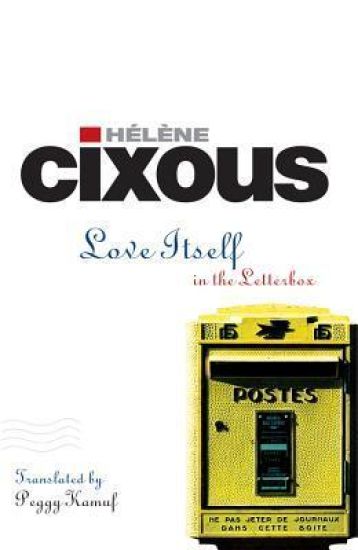
Love’s memories, love recalling itself in letters lost and found over an interval of forty years: Cixous’s writer-narrator advances here far into a labyrinth of passions long ago delivered and yet still arriving through the mail, through letters and literature, in other words, the poetry of the post. As for the lovers’ returning scenes, they have their addresses in Paris (rue Olivier de Serres, Avenue de Choisy, street names that endlessly feed love’s unconscious language) and in New York, but also in a lost oasis of the Egyptian desert during the Napoleonic wars, in Athens and along the shores of a great lake centuries ago in the country of myth. The lovers are poets or soldiers, philosophers or students madly in love with poetry and poets. They are as well mermaids or panthers. Panthers? Yes, for it is the passion of the animal that drives all these lovers to bare themselves, and sometimes their claws, before the beloved. Misunderstandings are often, even inevitably the result. Seconded and witnessed by her passionate, truth-telling cats, Cixous’s narrator-writer returns unerringly to moments of errancy inflicted on address and language, those errors and faults when love, perhaps, is listening only to itself, without subject or object, lover or beloved, just love itself, l’amour même, l’amour m’aime, love loving me, in the letter box of memory.
Love Itself

Love Itself

Hélène Cixous

Polity Press
2008
sidottu
Love’s memories, love recalling itself in letters lost and found over an interval of forty years: Cixous’s writer-narrator advances here far into a labyrinth of passions long ago delivered and yet still arriving through the mail, through letters and literature, in other words, the poetry of the post. As for the lovers’ returning scenes, they have their addresses in Paris (rue Olivier de Serres, Avenue de Choisy, street names that endlessly feed love’s unconscious language) and in New York, but also in a lost oasis of the Egyptian desert during the Napoleonic wars, in Athens and along the shores of a great lake centuries ago in the country of myth. The lovers are poets or soldiers, philosophers or students madly in love with poetry and poets. They are as well mermaids or panthers. Panthers? Yes, for it is the passion of the animal that drives all these lovers to bare themselves, and sometimes their claws, before the beloved. Misunderstandings are often, even inevitably the result. Seconded and witnessed by her passionate, truth-telling cats, Cixous’s narrator-writer returns unerringly to moments of errancy inflicted on address and language, those errors and faults when love, perhaps, is listening only to itself, without subject or object, lover or beloved, just love itself, l’amour même, l’amour m’aime, love loving me, in the letter box of memory.
Insister of Jacques Derrida

Insister of Jacques Derrida

Hélène Cixous

Stanford University Press
2008
pokkari
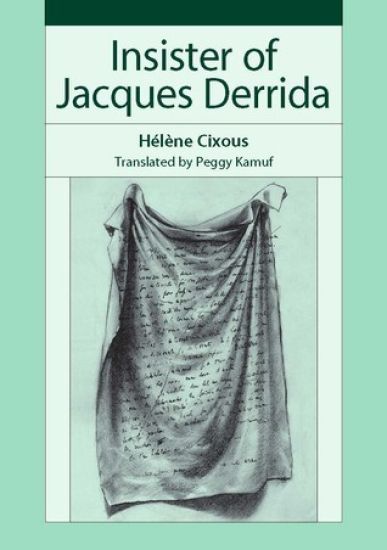
Helene Cixous is arguably the most insightful and unbridled reader of Jacques Derrida today. In Insister, she brings a unique mixture of scholarly erudition, theoretical speculation, and breathtaking textual explication to an extremely close reading of Derrida's work. At the same time, Insister is an extraordinarily poetic meditation, a work of literature and of mourning for Jacques Derrida the person, who was a close friend and accomplice of Cixous's from the beginning of their careers. In a melodic stream-of-consciousness Cixous speaks to Derrida, to his memory and to the words he left behind. She delves into the philosophical spaces that separated them, filling them out to create new understandings, bringing Derrida's words back to life while insisting on our inability to ever truly communicate through words. "More than once we say the same words," Cixous writes, "but we do not live them in the same tone." Insister of Jacques Derrida joins Veils, the two loosely autobiographical texts of Derrida and Cixous published together by Stanford in 2001.
Insister of Jacques Derrida

Insister of Jacques Derrida

Hélène Cixous

Stanford University Press
2008
sidottu
Helene Cixous is arguably the most insightful and unbridled reader of Jacques Derrida today. In Insister, she brings a unique mixture of scholarly erudition, theoretical speculation, and breathtaking textual explication to an extremely close reading of Derrida's work. At the same time, Insister is an extraordinarily poetic meditation, a work of literature and of mourning for Jacques Derrida the person, who was a close friend and accomplice of Cixous's from the beginning of their careers. In a melodic stream-of-consciousness Cixous speaks to Derrida, to his memory and to the words he left behind. She delves into the philosophical spaces that separated them, filling them out to create new understandings, bringing Derrida's words back to life while insisting on our inability to ever truly communicate through words. "More than once we say the same words," Cixous writes, "but we do not live them in the same tone." Insister of Jacques Derrida joins Veils, the two loosely autobiographical texts of Derrida and Cixous published together by Stanford in 2001.
Insister of Jacques Derrida

Insister of Jacques Derrida

Helene Cixous

Edinburgh University Press
2007
sidottu
'I have often declared my admiration for Helene Cixous, for the person and for the work: immense, powerful, so multiple but unique in this century.' - Jacques Derrida 'Insister of Jacques Derrida, so expertly translated by Derrida's principal and most faithful translator, Peggy Kamuf, is an indispensable, daring, heartfelt and moving book...It presents a flawless, committed reading that is in the spirit of Derrida in its serious playfulness, its poetic sinuousness, its elegant reasoning and rhetoric while also being wholly in Cixous' own singular voice. This is not merely a study of Derrida, it is a haunting dialogue with his memory and with his phantom.' - Julian Wolfreys, Professor of Modern Literature and Culture, Loughborough University Helene Cixous is arguably the most insightful and unbridled reader of Jacques Derrida today. In Insister she brings a unique mixture of theoretical speculation, breath-taking textual explication and scholarly erudition to an extremely close reading of Derrida's work, always attentive to the details of his thinking. At the same time, Insister is an extraordinarily poetic meditation, a work of literature and of mourning for Jacques Derrida the person, who was a close friend and accomplice of Cixous's from the beginning of their careers. Insister of Jacques Derrida joins Dream I Tell You by Helene Cixous and Geneses, Genealogies, Genres and Genius by Jacques Derrida, also published in The Frontiers of Theory series.
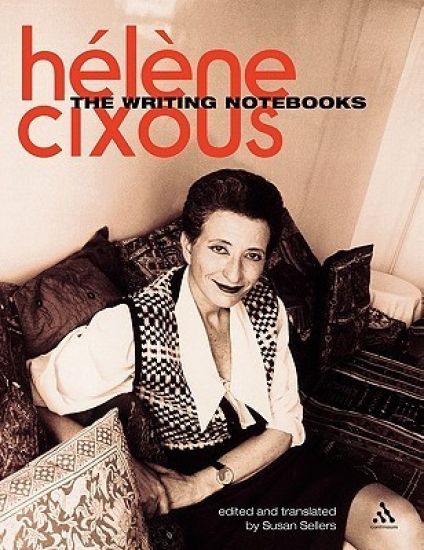
The Writing Notebooks

The Writing Notebooks

Helene Cixous; Susan Sellers

Continuum International Publishing Group Ltd.
2006
nidottu
Hne Cixous is among the most influential and original literary critics and feminist thinkers of our time. This volume reproduces - for the first time, in any language - a collection of pages from her original writing notebooks, offering a unique insight into her radical thought and work. The material gathered here ranges across the full spectrum of Cixous' writing, including the concept of criture minine, and the starting points and sources of inspiration for her poetry and prose. The editor's introduction succinctly outlines the central tenets of Cixous' theory of writing. Each extract is accompanied by editorial commentary and a translation, both by Susan Sellers. The book concludes with an interview with Cixous herself, in which she discusses the writing process, her own criticism, fiction and poetry and the value and importance of these notebooks. Students and teachers of literature, psychoanalysis, philosophy and feminist theory will find this an illuminating and inspiring collection of writings. Edited by Susan Sellers, Professor of English and Related Literature at the Univeristy of St Andrews.
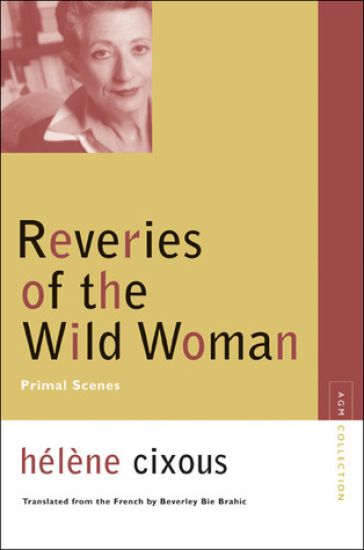
Reveries of the Wild Woman

Reveries of the Wild Woman

Helene Cixous

Northwestern University Press
2006
nidottu
All the time when I lived in Algeria, my native country, I dreamt of one day arriving in Algeria. Born in Oran, Algeria, Helene Cixous spent her childhood in France's former colony. ""Reveries of the Wild Woman"" is her visceral memoir of a preadolescence that shaped her with intense feelings of alienation, yet also contributed, in a paradoxically essential way, to her development as a writer and philosopher. Born to a French father and an Austro-German mother, both Jews, Cixous experienced a childhood fraught with racial and gender crisis. In her moving story she recounts how small events - a new dog, the gift of a bicycle - reverberate decades later as symbols filled with social and psychological meaning. She and her family endure a double alienation, by Algerians for being French and by the French for being Jewish, and Cixous builds her story on the themes of isolation and exclusion she felt in particular under the Vichy government and during the Algerian Civil War. Yet she also concedes that memories of Algeria awaken in her a longing for her home country, and ponders how that stormy relationship has influenced her life and thought. A meditation on postcolonial identity and gender, ""Reveries of the Wild Woman"" is also a poignant recollection of how a girl's childhood is, indeed, author to the woman.
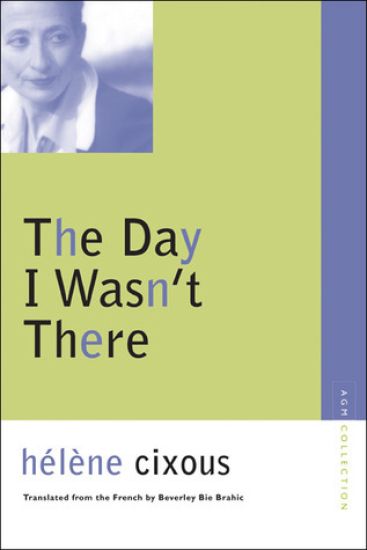
The Day I Wasn't There

The Day I Wasn't There

Helene Cixous

Northwestern University Press
2006
nidottu
In this memoir-novel, a narrator who resembles Helene Cixous obsessively recounts an incident - the premature death of her first-born child, a Down syndrome baby left in the care of the clinic in Algeria where her midwife mother works. She uses this event to probe her family history and her relationship with her mother, a refugee from Nazi Germany; her dead father, after whom the baby is named; and her medical-student brother, who takes on some of the duties of a father figure. Cixous's elusive writing bears all the trademarks of her poetic, provocative style, vivid with word play, intense feeling and a stream-of-consciousness that moves freely over time and place. The narrator's mother claims not to remember what happened, and the brother tries to fill in some gaps in the story. By the end of the book we understand the significance of the title: one day Cixous's mother returned to the clinic to find the baby on the brink of death. Rather than attempt to save him she chose to end his suffering. By closing the door to the imaginary clinic at the end, the narrator at last resolves the feelings of guilt and realizes that each human being has a fate they must endure. Informed by psychoanalytical theory, and always brutally honest, ""The Day I Wasn't There"" is above all an intimate study of a woman's inner landscape.
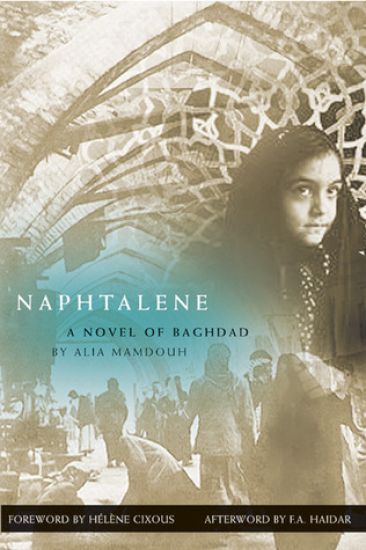
Naphtalene

Naphtalene

Helene Cixous

Feminist Press at The City University of New York
2006
nidottu
"This first novel by an Iraqi woman to be published in English in the United States is a hallucinatory incantation...an ode to a city...(with) its private courtyards and public baths where the women in Huda's life rage and pray and love and scream."--"Ms. Magazine"Now in paperback, "Naphtalene" captures a fierce and defiant young girl as she struggles to form her identity in 1950s Baghdad amid a world of unfulfilled women and family tragedies.Iraqi exile Alia Mamdouh is a journalist, essayist, and novelist living in Paris who received the Naguib Mahfouz Prize for Literature in 2004.
Dream I Tell You

Dream I Tell You

Helene Cixous

Edinburgh University Press
2006
sidottu
This book is an account of, and commentary on, a collection of dreams by the novelist, playwright and theorist Helene Cixous. As such the book presents a rich poetic experience and is a key document in understanding Cixous' writing practice. Jacques Derrida's commentary on Dream I Tell You is published in 'The Frontiers of Theory' series as Geneses, Genealogies, Genres and Genius. Key Features * Importance of Helene Cixous to contemporary literary and French feminist theory. * The poetic, autobiographical quality of the writing. * Significance of the book to the Cixous oeuvre.
Portrait of Jacques Derrida as a Young Jewish Saint

Portrait of Jacques Derrida as a Young Jewish Saint

Hélène Cixous

Columbia University Press
2005
pokkari
Who can say "I am Jewish?" What does "Jew" mean? What especially does it mean for Jacques Derrida, founder of deconstruction, scoffer at boundaries and fixed identities, explorer of the indeterminate and undecidable? In Portrait of Jacques Derrida as a Young Jewish Saint, French feminist philosopher Helene Cixous follows the intertwined threads of Jewishness and non-Jewishness that play through the life and works of one of the greatest living philosophers. Cixous is a lifelong friend of Derrida. They both grew up as French Jews in Algeria and share a "belonging constituted of exclusion and nonbelonging"-not Algerian, rejected by France, their Jewishness concealed or acculturated. In Derrida's family "one never said 'circumcision'but 'baptism,'not 'Bar Mitzvah'but 'communion.'" Judaism cloaked in Catholicism is one example of the undecidability of identity that influenced the thinker whom Cixous calls a "Jewish Saint." An intellectual contemporary of Derrida, Cixous's ideas on writing have an affinity with his philosophy of deconstruction, which sought to overturn binary oppositions-such as man/woman, or Jew/non-Jew-and blur boundaries of exclusion inherent in Western thought. In portraying Derrida, Cixous uses metonymy, alliteration, rhyme, neologisms, and puns to keep the text in constant motion, freeing language from any rigidity of meaning. In this way she writes a portrait of "Derrida in flight," slipping from one appearance to the next, unable to be fixed in one spot, yet encompassing each point he passes. From the circumcision act to family relationships, through Derrida's works to those of Celan, Rousseau, and Beaumarchais, Cixous effortlessly merges biography and textual commentary in this playful portrait of the man, his works, and being (or not being) Jewish.
Stigmata

Stigmata

Hélène Cixous

Routledge
2005
nidottu
A 'wilful extremist' according to the London Times, Hélène Cixous is hailed as one of the most formidable writers and thinkers of our time. Acclaimed by luminaries such as Jacques Derrida, her writing has nonetheless been misunderstood and misread, to a surprising extent. With the inclusion of Stigmata, one of her greatest works into the Routledge Classics series, this is about to change. Questions that have long concerned her – the self and the other, autobiographies of writing, sexual difference, literary theory, post-colonial theory, death and life – are explored here, woven into a stunning narrative. Displaying a remarkable virtuosity, the work of Cixous is heady stuff indeed: exciting, powerful, moving, and dangerous.
The Writing Notebooks

The Writing Notebooks

Helene Cixous

Continuum International Publishing Group Ltd.
2004
sidottu
Helene Cixous is among the most influential and original literary critics and feminist thinkers of our time. This volume reproduces - for the first time, in any language - a collection of pages from her original writing notebooks, offering a unique insight into her radical thought and work. The material gathered here ranges across the full spectrum of Cixous' writing, including the concept of ecriture feminine, and the starting points and sources of inspiration for her poetry and prose. The editor's introduction succinctly outlines the central tenets of Cixous' theory of writing. Each extract is accompanied by editorial commentary and a translation, both by Susan Sellers. The book concludes with an interview with Cixous herself, in which she discusses the writing process, her own criticism, fiction and poetry and the value and importance of these notebooks. Students and teachers of literature, psychoanalysis, philosophy and feminist theory will find this an illuminating and inspiring collection of writings.