Kirjailija
Henry A. Giroux
Kirjat ja teokset yhdessä paikassa: 97 kirjaa, julkaisuja vuosilta 1987-2026, suosituimpien joukossa America at War with Itself. Vertaile teosten hintoja ja tarkista saatavuus suomalaisista kirjakaupoista.
97 kirjaa
Kirjojen julkaisuhaarukka 1987-2026.
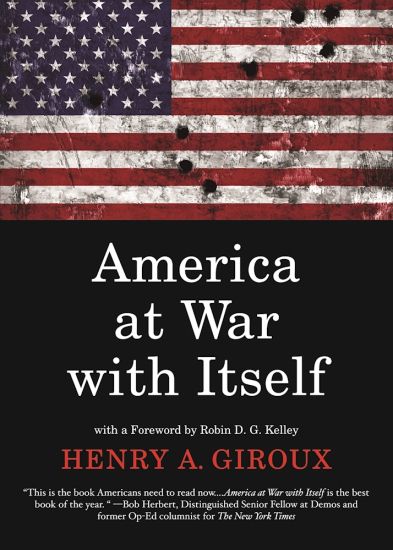
From poisoned water and police violence in our cities, to gun massacres and hate-mongering on the presidential campaign trail, evidence that America is at war with itself is everywhere around us. The question is not whether or not it's happening, but how to understand the forces at work in order to prevent conditions from getting worse. Henry A. Giroux offers a powerful, far-reaching critique of the economic interests, cultural dimensions, and political dynamics involved in the nation's shift toward increasingly abusive forms of power. His analysis helps us to frame critical questions about what can and should be done to turn things around while we can. Reflecting on a wide range of social issues, Giroux contrasts Donald Trump's America with Sandra Bland's to understand who really benefits from politically fueled intolerance for immigrants, communities of color, Muslims, low-income families, and those who challenge state and corporate power. A passionate advocate for civil rights and the importance of the imagination, Giroux argues that only through widespread social investment in democracy and education can the common good hope to prevail over the increasingly concentrated influence of extreme right-wing politicians and self-serving economic interests. Praise for America at War with Itself: "This is the book Americans need to read now. No one is better than Henry Giroux at analyzing the truly dangerous threats to our society. He punctures our delusions and offers us a compelling and enlightened vision of a better way. America at War with Itself is the best book of the year."--Bob Herbert, Distinguished Senior Fellow at Demos and former Op-Ed columnist for the New York Times "In this current era of corporate media misdirection and misinformation, America at War with Itself is a must read for all Americans, especially young people. Henry Giroux is one of the few great political voices of today, with powerful insight into the truth. Dr. Giroux is defiantly explaining, against the grain, what's REALLY going on right now, and doing so quite undeniably. Simply put, the ideas he brings forth are a beacon that need to be seen and heard and understood in order for the world to progress."--Julian Casablancas "In America at War with Itself, Henry Giroux again proves himself one of North America's most clear-sighted radical philosophers of education, culture and politics: radical because he discards the chaff of liberal critique and cuts to the root of the ills that are withering democracy. Giroux also connects the dots of reckless greed, corporate impunity, poverty, mass incarceration, racism and the co-opting of education to crush critical thinking and promote a culture that denigrates and even criminalizes civil society and the public good. His latest work is the antidote to an alarming tide of toxic authoritarianism that threatens to engulf America. The book could not be more timely."--Olivia Ward, Toronto Star "America at War with Itself makes the case for real ideological and structural change at a time when the need and stakes could not be greater. Everyone who cares about the survival and revival of democracy needs to read this book." --Kenneth Saltman, Professor, University of Massachusetts Dartmouth, Author of The Failure of Corporate School Reform Henry A. Giroux's most recent books include The Violence of Organized Forgetting and America's Addiction to Terrorism. A prolific writer and political commentator, he has appeared in a wide range of media, including the New York Times and Bill Moyers.
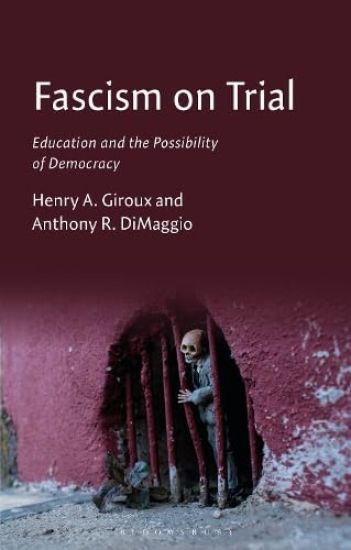
This book interrogates rising fascism in America. It spotlights the major facets of fascism that increasingly characterize contemporary US politics, in relation to political authoritarianism, the rise of anti-intellectualism, the mainstreaming of conspiracy theories, the glorification of political street violence and state violence, rising white supremacy, and the militarization of US political discourse. Alongside this, Giroux and DiMaggio show how the assault on critical education and pedagogy is central to the fascist program. They stress the importance of reprioritizing education as a public good to combating fascist politics and ideology and draw links between fascism and the banning of books in schools, whitewashing history, and punishing policies aimed at Black, Brown, and transgender youth. They challenge the commonly embraced notion that Trumpism is primarily a function of economic insecurity within his support base, documenting how support for the former president primarily centered on reactionary socio-cultural values and white supremacy. They also show how white supremacist values are central to the Trump base defending the January 6th insurrection, despite academics, journalists, and political officials in both major parties ignoring the threat of rising white nationalism.
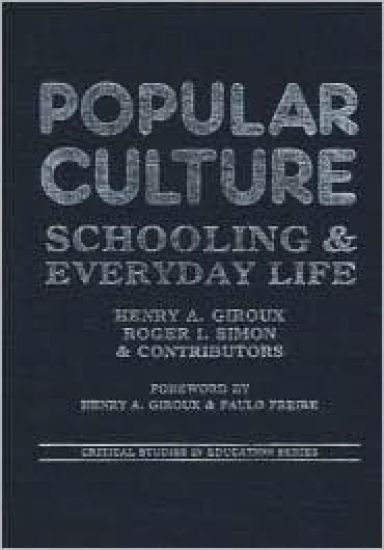
Popular Culture
Stanley Aronowitz; Robert W. Connell; Philip Corrigan; Elizabeth Ellsworth; Henry A. Giroux; Lawrence Grossberg; Peter McLaren; Roger Simon; Paul Smith; Richard Smith; Mimi White; Paul Willis
Praeger Publishers Inc
1989
sidottu
Illuminating one of the most pervasive issues of our time, Popular Culture is the first book to link the importance and implications of popular culture with pedagogical practice. It shows how cultural forms such as Hollywood films, pop music, soap operas, and televangelism are organized by gender, age, class, race, and ethnicity, thus providing the contradictory text that both enables and disables emancipatory interest, so fundamental to the formation of self and society. What emerges is a redefinition of the very notion of popular culture.
This book is a series of dispatches written from the front lines of a nation teetering on the abyss of self-destruction. Written with the belief that language still matters, that critical pedagogy can still give a sense of urgency to moral witnessing, that culture is still a battlefield worth fighting for, Giroux tackles the unfolding nightmare of Trump’s second presidency - a regime unshackled from even the pretense of democratic norms. He details a full-fledged fascist politics that traffics in erasure: of history, of the public good, of dissent, of bodies rendered disposable. From ICE agents disappearing students on US campus, to the attacks on USAID, to the war in Gaza, Giroux traces both the machinery of authoritarianism and the pedagogical, cultural, and civic terrains where resistance still lives. He celebrates the fire of refusal, burning in the eyes of students who resist, and faculty who speak out, immigrants who organize, people in the streets protesting, and youth who refuse to inherit a world built on lies. These are dispatches from a nation unraveling, but also from the front lines of struggle, solidarity, and radical imagination.
In this book, Henry A. Giroux addresses the attacks on student protesters speaking up against the war on Gaza, and connects this with wider attacks on critical education and democracy. He details the ongoing scholasticide taking place in Palestine, the systematic attacks by the Israeli military on schools, teachers and museums, and argues that they represent the extreme endpoint of a broader, insidious campaign aimed at crushing dissent across universities in the United States, Europe, and beyond. Books are banned, student protesters face police brutality, faculty are purged, history is whitewashed, and faculty are restricted from teaching certain content in the classroom. Throughout the book he draws links between authoritarianism and education, the war on youth, the politics of higher education, the politics of mass media, as well as what he has termed “organized forgetting”. He closes the book by arguing that we live in an era where historical amnesia has been weaponized, where many young people are denied the histories that allow them to narrate their own experiences and assert modes of self-reflection they can claim as their own.
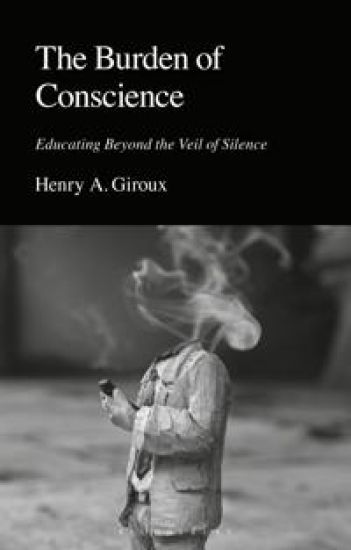
In The Burden of Conscience, Giroux confronts the insidious rise of fascism infiltrating today’s politics and education, alongside the suffocating silence that paralyzes our will to resist and speak truth to power. He decries the moral apathy in the face of the slaughter of children in Israel and the mass killing in Gaza, positioning this silence as part of a broader, ominous affliction of our age—the fusion of colonialism and neoliberal capitalism. He calls for a groundswell of resistance, urging a movement to reclaim education as a public good, where critical education becomes an expression of freedom, a crucible of literacy, liberation, and collective empowerment. Drawing on his own childhood, he intertwines the personal with the political, unearthing the complexities of class, whiteness, and race, showing that individual and collective actions must converge to dismantle oppressive systems. Finally, he argues that education is a powerful tool, giving us, in the words of Gayatri Chakravorty Spivak, ‘the power to think the absent.’ Only through this awakening can a critical public consciousness emerge, sparking a multiracial working-class movement capable of challenging entrenched systems of oppression and bringing about true social transformation and radical democracy.
Reissued with a new introduction from Henry A. Giroux, this classic work provides theoretical and political tools for addressing how pedagogy, knowledge, resistance, and power can be analyzed within and across a variety of cultural spheres, including but not limited to the schools. The time for radical social change has never been so urgent, since the fate of an entire generation of young people, if not democracy itself, is at stake. Giroux argues that challenge gives new meaning to the importance of resistance, the relevance of pedagogy, and the significance of political agency. In a time of growing fascism, Giroux argues that resistance is not an option but a necessity. The book includes a foreword by Paulo Freire and a preface by Stanley Aronowitz.
First published in 1988, Teachers as Intellectuals encourages us to see schools as democratic spaces in which teachers and students work together to transform society. Giroux incorporates the most valuable insights of critical pedagogy into a more comprehensive and practical theory of schooling, committed to educating students in the language of critique and possibility. At the heart of his vision for schooling is the ability of the teacher to act as a transformative intellectual and to use critical pedagogy as a form of cultural politics. The book includes an introduction by Paulo Freire, a foreword by Peter McLaren and new introduction from the author.
This book interrogates rising fascism in America. It spotlights the major facets of fascism that increasingly characterize contemporary US politics, in relation to political authoritarianism, the rise of anti-intellectualism, the mainstreaming of conspiracy theories, the glorification of political street violence and state violence, rising white supremacy, and the militarization of US political discourse. Alongside this, Giroux and DiMaggio show how the assault on critical education and pedagogy is central to the fascist program. They stress the importance of reprioritizing education as a public good to combating fascist politics and ideology and draw links between fascism and the banning of books in schools, whitewashing history, and punishing policies aimed at Black, Brown, and transgender youth. They challenge the commonly embraced notion that Trumpism is primarily a function of economic insecurity within his support base, documenting how support for the former president primarily centered on reactionary socio-cultural values and white supremacy. They also show how white supremacist values are central to the Trump base defending the January 6th insurrection, despite academics, journalists, and political officials in both major parties ignoring the threat of rising white nationalism.
Zombie Politics and Culture in the Age of Casino Capitalism
Henry A. Giroux
PETER LANG PUBLISHING INC
2023
nidottu
In the second edition of Zombie Politics and Culture in the Age of Casino Capitalism, Henry A. Giroux uses the metaphor of the zombie to highlight how America has embraced a machinery of social and civil death that chills any vestige of a robust democracy. He charts the various ways in which the political, corporate, and intellectual zombies that rule America embrace death-dealing institutions such as a bloated military, the punishing state, a form of predatory capitalism, and an authoritarian, death-driven set of policies that sanction torture, targeted assassinations, and a permanent war psychology. The author argues that government and corporate paranoia runs deep in America. While maintaining a massive security state, the ruling forces promote the internalization of their ideology, modes of governance, and policies by either seducing citizens with the decadent pleasures of a celebrity-loving consumer culture or by beating them into submission. Giroux calls for a systemic alternative to zombie capitalism through a political and pedagogical imperative to address and inform a new cultural vision, mode of individual subjectivity, and understanding of critical agency. As part of a larger effort to build a broad-based social movement, he argues for a new political language capable of placing education at the center of politics. Connecting the language of critique to the discourse of educated hope he calls for the reclaiming of public spaces and institutions where formative cultures can flourish that nourish the radical imagination, and the ongoing search for justice, equality, and the promise of a democracy to come.
Updated with both a new introduction and a series of interviews, the second edition of Education and the Crisis of Public Values examines American society’s shift away from democratic public values, the ensuing move toward a market-driven mode of education, and the last decade’s growing social disinvestment in youth. The book discusses the number of ways that the ideal of public education as a democratic public sphere has been under siege, including full-fledged attacks by corporate interests on public school teachers, schools of education, and teacher unions. It also reveals how a business culture cloaked in the guise of generosity and reform has supported a charter school movement that aims to dismantle public schools in favor of a corporate-friendly privatized system. The book encourages educators to become public intellectuals, willing to engage in creating a formative culture of learning that can nurture the ability to defend public and higher education as a general good – one crucial to sustaining a critical citizenry and a democratic society.
With this book Henry A. Giroux argues that insurrection has become a dominant motif for the USA and other countries torn between the promises and ideals of democracy and an emergent authoritarianism. He argues that education is central to the idea of insurrection, showing how on the one hand it contributes to an insurrectional authoritarianism, wedded to a fascist legacy that calls for racial purity, militarism, ultra-nationalism, and state terrorism. On the other hand he presents the idea of insurrectional democracy which has a long legacy in the battle for racial justice, economic equality, and a politics of inclusion. The book explores how both positions are motivated by specific visions, values, and particular understandings of education and agency. He also shows how powerful images, social media, and the internet are in merging political education, power, and cultural politics. Giroux makes an impassioned call for an insurrectional democracy that makes education central to politics and produces an anti-capitalist consciousness as the basis for developing a mass movement in defence of a radical democracy.
Henry A. Giroux argues that education holds a crucial role in shaping politics at a time when ignorance, lies and fake news have empowered right-wing groups and created deep divisions in society. Education, with its increasingly corporate and conservative-based technologies, is partly responsible for creating these division. It contributes to the pitting of people against each other through the lens of class, race, and any other differences that don't embrace White nationalism. Giroux’s analysis ranges from the pandemic and the inequality it has revealed, to the rise of Trumpism and its afterlife, and to the work of Paulo Freire and how his book Pedagogy of Hope can guide us in these dark times and help us produce critical and informed citizens. He argues that underlying the current climate of inequity, isolation, and social atomization (all exacerbated by the pandemic) is a crisis of education. Out of this comes the need for a pedagogy of resistance that is accessible to everyone, built around a vision of hope for an alternative society rooted in the ideals of justice, equality, and freedom.