
Kirjailija
Henry David Thoreau
Kirjat ja teokset yhdessä paikassa: 844 kirjaa, julkaisuja vuosilta 1849-2026, suosituimpien joukossa Viikko virran vietävänä. Vertaile teosten hintoja ja tarkista saatavuus suomalaisista kirjakaupoista.
844 kirjaa
Kirjojen julkaisuhaarukka 1849-2026.

Little Book of Nature Themes 1906
Henry David Thoreau; Thomas Coke (EDT) Watkins
Kessinger Pub
2003
pokkari
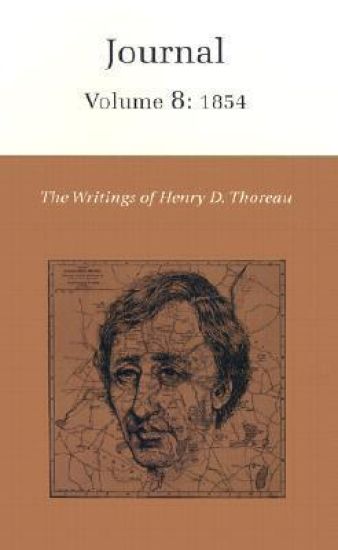
The Writings of Henry David Thoreau, Volume 8
Henry David Thoreau
Princeton University Press
2002
sidottu
From 1837 to 1861, Thoreau kept a Journal that began as a conventional record of ideas, grew into a writer's notebook, and eventually became the principal imaginative work of his career. The source of much of his published writing, the Journal is also a record of his interior life and of his monumental studies of the natural history of his native Concord, Massachusetts. Unlike earlier editions, the Princeton edition reproduces the Journal in its original and complete form, in a reading text free of editorial interpolations but keyed to a comprehensive scholarly apparatus. Journal 8: 1854 is edited from the 467-page notebook that Thoreau kept February 13-September 3, 1854. It reveals him as an increasingly confident taxonomist creating lists that distill his observations about plant leafing and seasonal birds. Two particularly significant public events took place in his life in the summer of 1854. On July 4, at an antislavery rally at Framingham, Massachusetts, Thoreau appeared for the first time in the company of prominent abolitionists, delivering as heated a statement against slavery as he had yet made. And on August 9, Ticknor and Fields published Walden, the book Thoreau had been working on since 1846. In Journal 8 Thoreau indicates that these public accomplishments, though satisfying, took a toll on his creative life and did not fully compensate him for the hours spent away from the woods.
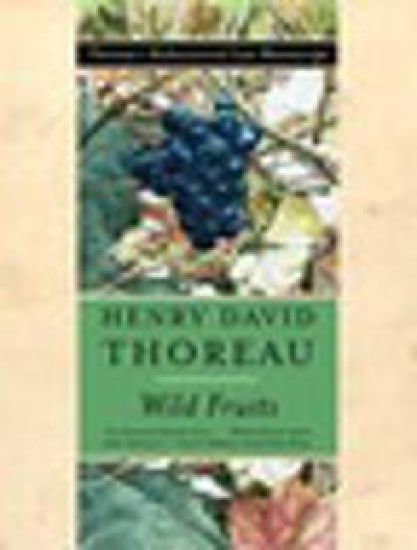
The final harvest of our great nature writer’s last years, Wild Fruits presents Thoreau’s distinctly American gospel—a sacramental vision of nature in which "the tension between Thoreau the naturalist and Thoreau the missionary for nature’s wonders invigorates nearly every page" (Time). In transcribing the 150-year-old manuscript’s cryptic handwriting and complex notations, Thoreau specialist Bradley Dean has performed a "heroic feat of decipherment" (Booklist) to bring this great work to light. Readers will discover "passages that reach for the transcendentalist ideal of writing new scriptures, yet grounding this Bible in a vision of practical ecology" (Boston). Beautifully illustrated throughout with line drawings of the natural life Thoreau considers on his walks, Wild Fruits is "well worth any nature lover’s attention" (Christian Science Monitor).
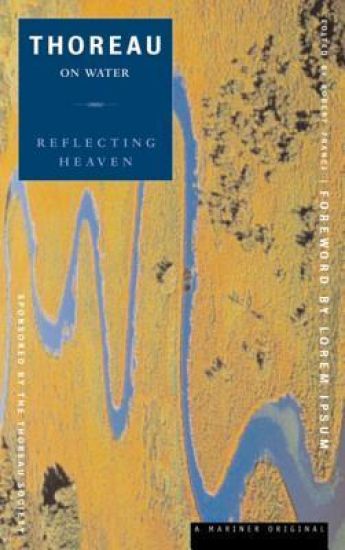
The Spirit of Thoreau series is a fresh new collection of Thoreau's best writing and thinking on various themes, drawn from both unpublished and published sources. THOREAU ON WATER REFLECTING HEAVEN Edited by Robert France Thoreau's most famous book is named for a pond, and he had an almost mystical fascination with water. As he wrote in his journal, "Water indeed reflects heaven because my mind does such is its own serenity its transparency & stillness." THOREAU ON WATER brings together his finest writing on one of his greatest passions. Author Biography: Born in Concord, MA in 1817, Henry David Thoreau is best know for his influential work, Walden, which was published by Ticknor & Fields in 1854.

The Spirit of Thoreau series is a fresh new collection of Thoreau's best writing and thinking on various themes, drawn from both unpublished and published sources. THOREAU ON LANDNATURE'S CANVASEdited by Joseph Valentine This elegant volume chronicles Thoreau's fascination with nature, from his well-known reflections on Walden to an unexpected meeting with loggers in the woods: "No doubt our employment is more alike than we suspect, and we are each serving the great Master's needs more than our own."He shows a Thoreau much broader in his interests and sympathies than most of us imagine.
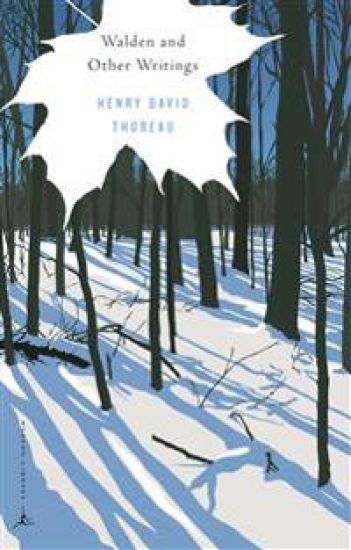
Introduction by Ralph Waldo EmersonCommentary by Van Wyck Brooks and E. B. White Naturalist, philosopher, champion of self-reliance and moral independence, Henry David Thoreau remains not only one of our most influential writers but also one of our most contemporary. This unique and comprehensive edition gathers all of Thoreau's most significant works, including his masterpiece, Walden (reproduced in its entirety); A Week on the Concord and Merrimack Rivers; selections from Cape Cod and The Maine Woods; as well as "Walking," "Civil Disobedience," "Slavery in Massachusetts," "A Plea for Captain John Brown," and "Life Without Principle." Taken together, they reveal the astounding range, subtlety, artistry, and depth of thought of this true American original. Includes a Modern Library Reading Group Guide
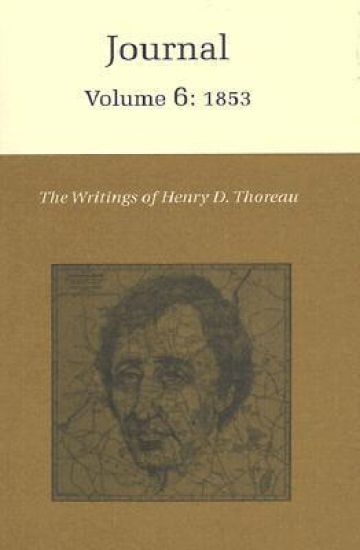
The Writings of Henry David Thoreau, Volume 6
Henry David Thoreau
Princeton University Press
2000
sidottu
From 1837 to 1861, Thoreau kept a Journal that began as a conventional record of ideas, grew into a writer's notebook, and eventually became the principal imaginative work of his career. The source of much of his published writing, the Journal is also a record of both his interior life and his monumental studies of the natural history of his native Concord, Massachusetts. In contrast to earlier editions, the Princeton Edition reproduces the Journal in its original and complete form, in a reading text that is free of editorial interpolations but keyed to a comprehensive scholarly apparatus. Journal 6 comprises a single manuscript notebook of nearly five hundred pages that Thoreau filled between March 9 and August 18, 1853. During this period, Thoreau divided his energies among his increasingly professional studies as a naturalist in Concord, the revision of his Walden manuscript, and surveying, which provided him a living and established him more securely as a contributing member of the Concord community. Thoreau's writing and his understanding of natural history were enriched by surveying, which gave him the opportunity to regularly observe seasonal occurrences and other natural events in and around Concord. Thoreau recorded these observations in his Journal, making both literary and scientific use of them. Substantial passages from Journal 6 were incorporated into the sixth draft of Walden, and its observations formed the basis for later compilations of field ecology. They are made available here, along with Journal entries, completely unrevised. This volume will delight all custodians of literary and natural history and be an essential addition to the libraries of all Thoreau devotees.

Originally published in 1849 as Resistance to Civil Government, Thoreau's classic essay on resistance to the laws and acts of government that he considered unjust was largely ignored until the Twentieth Century when Mahatma Gandhi, Martin Luther King, Jr. and anti-Vietnam War activists applied Thoreau's principles.

Thoreau has inspired generations of readers to think for themselves and to find meaning and beauty in nature. This sampling includes five of his most frequently read and cited essays: "On the Duty of Civil Disobedience" (1849), "Life without Principle" (1863), "Slavery in Massachusetts" (1854), "A Plea for Captain John Brown" (1869) and "Walking" (1862).
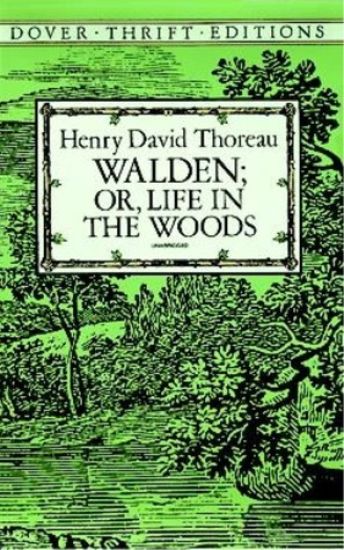
One of the great books of American letters and a masterpiece of reflective philosophizing. Accounts of Thoreau's daily life on the shores of Walden Pond outside Concord, Massachusetts, are interwoven with musings on the virtues of self-reliance and individual freedom, on society, government, and other topics.
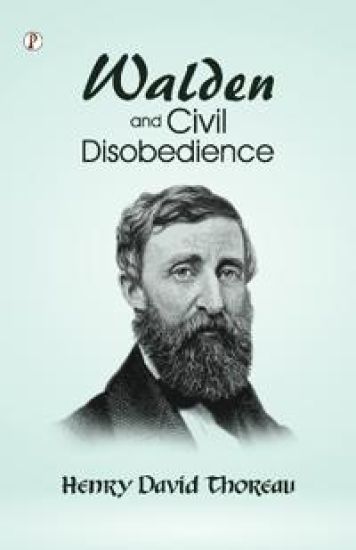
Walden and Civil Disobedience (Edition1st)
Henry David Thoreau
Pharos Books Private Limited
2000
nidottu
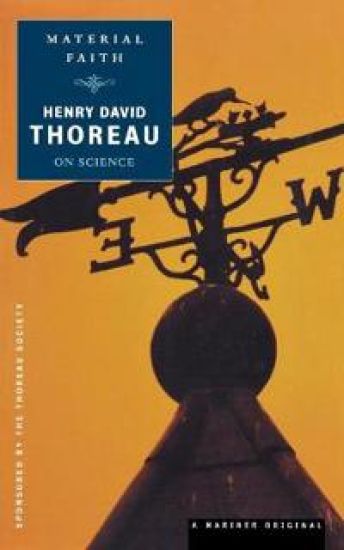
Thoreau developed ideas fundamental to ecology fifty years before that word was coined. He called for a science that would join man and nature-a "conscience," a moral knowledge founded on material faith.

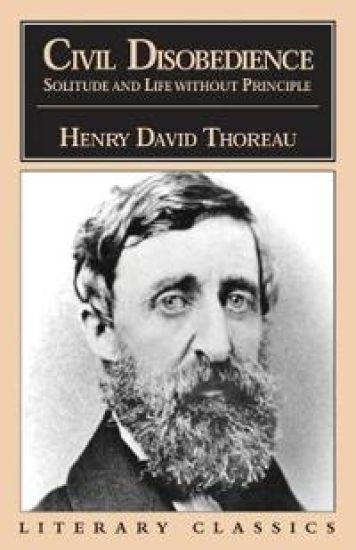
Civil Disobedience, Solitude and Life Without Principle
Henry David Thoreau
Prometheus Books
1998
pokkari
Henry David Thoreau (1817-1862) championed the belief that people of conscience were at liberty to follow their own opinion. In these selections from his writings, we see Thoreau the individualist and opponent of injustice. Civil Disobedience(1849), composed following Thoreau's imprisonment for refusing to pay his taxes in protest against slavery and the Mexican War, is an eloquent declaration of the principles that make revolution inevitable in times of political dishonor. Solitude, from his masterpiece, Walden (1854), poetically describes Thoreau's oneness with nature and the companionship solitude offers to those who want to be rid of the travails of the world to discover themselves. Life without Principle(posthumously published 1863) decries the way in which excessive devotion to business and money coarsens the fabric of society: in merely making a living, the meaning of life gets lost.
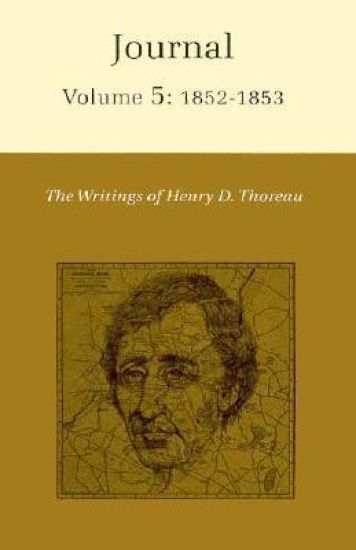
The Writings of Henry David Thoreau, Volume 5
Henry David Thoreau
Princeton University Press
1997
sidottu
From 1837 to 1861 Thoreau kept a journal that began as a conventional record of ideas, grew into a writer's notebook, and eventually became the principal imaginative work of his career. The source of much of his published writing, the Journal is also a record of both his interior life and his monumental studies of the natural history of his native Concord, Massachusetts. In contrast to earlier editions, the Princeton Edition reproduces the Journal in its original and complete form, in a reading text that is free of editorial interpolations but keyed to a comprehensive scholarly apparatus. Covering an annual cycle from spring 1852 to late winter 1853, Journal 5 finds Thoreau intensely concentrating on detailed observations of natural phenomena and on "the mysterious relation between myself & these things" that he always strove to understand. Increasingly, the Journal attempts to balance a new found scientific professionalism and the accurate recording of phenological data with a firmly rooted belief in the spiritual correspondences that Nature reveals. Fittingly, the year of observation ends with Thoreau pondering an invitation to join the Association for the Advancement of Science, an invitation he ultimately declined in order to pursue his own life studies.

Two institutions of New England, our fall colors and Henry David Thoreau, are brought back together in this posthumously published rumination on Nature. This is Thoreau classic essay on the colors of New England fall.
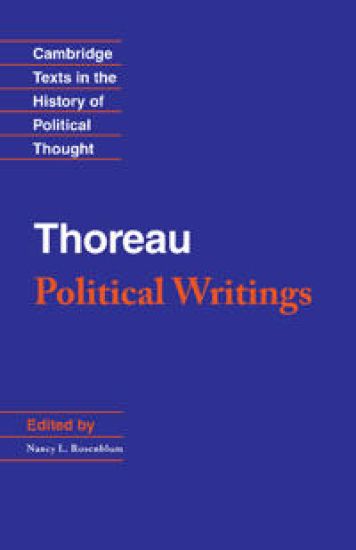
Thoreau’s political writing is intensely personal and direct. Both his life and work focus uncompromisingly on the question ‘how should I live?’, and for Thoreau, no element of day-to-day existence is left untouched by moral and political issues. This edition of Thoreau’s political essays includes ‘Civil Disobedience’, selections from Walden, ‘Life Without Principle’, and the anti-slavery addresses, such as ‘Slavery in Massachusetts’. In her introduction, Nancy L. Rosenblum places the essays in the context of Thoreau’s life of self-examination, and the debates about the abolition of slavery, and she analyses the themes of citizenship and resistance that have made Thoreau an enduring influence in political philosophy and practice.
Thoreau’s political writing is intensely personal and direct. Both his life and work focus uncompromisingly on the question ‘how should I live?’, and for Thoreau, no element of day-to-day existence is left untouched by moral and political issues. This edition of Thoreau’s political essays includes ‘Civil Disobedience’, selections from Walden, ‘Life Without Principle’, and the anti-slavery addresses, such as ‘Slavery in Massachusetts’. In her introduction, Nancy L. Rosenblum places the essays in the context of Thoreau’s life of self-examination, and the debates about the abolition of slavery, and she analyses the themes of citizenship and resistance that have made Thoreau an enduring influence in political philosophy and practice.