Kirjojen hintavertailu. Mukana 12 459 402 kirjaa ja 12 kauppaa.

Kirjailija

Henry David Thoreau

Kirjat ja teokset yhdessä paikassa: 849 kirjaa, julkaisuja vuosilta 1849-2026, suosituimpien joukossa Viikko virran vietävänä. Vertaile teosten hintoja ja tarkista saatavuus suomalaisista kirjakaupoista.

849 kirjaa

Kirjojen julkaisuhaarukka 1849-2026.

Civil Disobedience, Solitude and Life Without Principle
Henry David Thoreau (1817-1862) championed the belief that people of conscience were at liberty to follow their own opinion. In these selections from his writings, we see Thoreau the individualist and opponent of injustice. Civil Disobedience(1849), composed following Thoreau's imprisonment for refusing to pay his taxes in protest against slavery and the Mexican War, is an eloquent declaration of the principles that make revolution inevitable in times of political dishonor. Solitude, from his masterpiece, Walden (1854), poetically describes Thoreau's oneness with nature and the companionship solitude offers to those who want to be rid of the travails of the world to discover themselves. Life without Principle(posthumously published 1863) decries the way in which excessive devotion to business and money coarsens the fabric of society: in merely making a living, the meaning of life gets lost.
The Writings of Henry David Thoreau, Volume 5

The Writings of Henry David Thoreau, Volume 5

Henry David Thoreau

Princeton University Press
1997
sidottu
From 1837 to 1861 Thoreau kept a journal that began as a conventional record of ideas, grew into a writer's notebook, and eventually became the principal imaginative work of his career. The source of much of his published writing, the Journal is also a record of both his interior life and his monumental studies of the natural history of his native Concord, Massachusetts. In contrast to earlier editions, the Princeton Edition reproduces the Journal in its original and complete form, in a reading text that is free of editorial interpolations but keyed to a comprehensive scholarly apparatus. Covering an annual cycle from spring 1852 to late winter 1853, Journal 5 finds Thoreau intensely concentrating on detailed observations of natural phenomena and on "the mysterious relation between myself & these things" that he always strove to understand. Increasingly, the Journal attempts to balance a new found scientific professionalism and the accurate recording of phenological data with a firmly rooted belief in the spiritual correspondences that Nature reveals. Fittingly, the year of observation ends with Thoreau pondering an invitation to join the Association for the Advancement of Science, an invitation he ultimately declined in order to pursue his own life studies.
Autumnal Tints

Autumnal Tints

Henry David Thoreau

Applewood Books
1996
pokkari
Two institutions of New England, our fall colors and Henry David Thoreau, are brought back together in this posthumously published rumination on Nature. This is Thoreau classic essay on the colors of New England fall.
Thoreau: Political Writings

Thoreau: Political Writings

Henry David Thoreau

Cambridge University Press
1996
sidottu
Thoreau’s political writing is intensely personal and direct. Both his life and work focus uncompromisingly on the question ‘how should I live?’, and for Thoreau, no element of day-to-day existence is left untouched by moral and political issues. This edition of Thoreau’s political essays includes ‘Civil Disobedience’, selections from Walden, ‘Life Without Principle’, and the anti-slavery addresses, such as ‘Slavery in Massachusetts’. In her introduction, Nancy L. Rosenblum places the essays in the context of Thoreau’s life of self-examination, and the debates about the abolition of slavery, and she analyses the themes of citizenship and resistance that have made Thoreau an enduring influence in political philosophy and practice.
Thoreau: Political Writings

Thoreau: Political Writings

Henry David Thoreau

Cambridge University Press
1996
pokkari
Thoreau’s political writing is intensely personal and direct. Both his life and work focus uncompromisingly on the question ‘how should I live?’, and for Thoreau, no element of day-to-day existence is left untouched by moral and political issues. This edition of Thoreau’s political essays includes ‘Civil Disobedience’, selections from Walden, ‘Life Without Principle’, and the anti-slavery addresses, such as ‘Slavery in Massachusetts’. In her introduction, Nancy L. Rosenblum places the essays in the context of Thoreau’s life of self-examination, and the debates about the abolition of slavery, and she analyses the themes of citizenship and resistance that have made Thoreau an enduring influence in political philosophy and practice.
Walden

Walden

Henry David Thoreau

Hawk Press
1995
pokkari
Walden is an American book written by noted transcendentalist Henry David Thoreau, a reflection upon simple living in natural surroundings. The work is part personal declaration of independence, social experiment, voyage of spiritual discovery, satire, and manual for self-reliance. First published in 1854, it details Thoreau's experiences over the course of two years, two months, and two days in a cabin he built near Walden Pond, amidst woodland owned by his friend and mentor Ralph Waldo Emerson, near Concord, Massachusetts.By immersing himself in nature, Thoreau hoped to gain a more objective understanding of society through personal introspection. Simple living and self-sufficiency were Thoreau's other goals, and the whole project was inspired by transcendentalist philosophy, a central theme of the American Romantic Period.
Walking

Walking

Henry David Thoreau

HarperOne
1994
nidottu
The ideal book of portable wisdom from America's quintessential nature writer. Thoreau's celebrated essay shows how anyone can more fully appreciate nature's wonders by "sauntering" in tranquillity with senses wide open.
Walden

Walden

Henry David Thoreau

Random House USA Inc
1993
sidottu
By virtue of its casual, off-handedly brilliant wisdom and the easy splendor of its nature writing, Thoreau's account of his adventure in self-reliance on the shores of a pond in Massachusetts is one of the signposts by which the modern mind has located itself in an increasingly bewildering world. Deeply sane, invigorating in its awareness of humanity's place in the moral and natural order, Walden represents the progressive spirit of nineteenth-century America at its eloquent best.
The Writings of Henry David Thoreau, Volume 4

The Writings of Henry David Thoreau, Volume 4

Henry David Thoreau

Princeton University Press
1992
sidottu
From 1837 to 1861 Thoreau kept a Journal that began as a conventional record of ideas, grew into a writer's notebook, and eventually became the principal imaginative work of his career. The source of much of his published writing, the Journal is also a record of both his interior life and his monumental studies of the natural history of his native Concord, Massachusetts. In contrast to earlier editions, the Princeton Edition reproduces the Journal in its original and complete form, in a reading text that is free of editorial interpolations but keyed to a comprehensive scholarly apparatus. Despite activities as time-consuming and varied as urveying for the town of Concord and helping a fugitive slave escape to Canada, Thoreau wrote nearly eight hundred manuscript pages in his Journal during the eight months covered by this volume. Confirmed in his vocation as a natural historian, he began to compile the richly detailed records of Concord's woods, fields, and streams that would occupy him for the rest of his life, and he consciously shaped the Journal to reflect his new aims as a writer. He also began major revisions of his Walden that would lead to its publication in 1854.
The Writings of Henry David Thoreau, Volume 3

The Writings of Henry David Thoreau, Volume 3

Henry David Thoreau

Princeton University Press
1991
sidottu
From 1837 to 1861 Thoreau kept a Journal that began as a conventional record of ideas, grew into a writer's notebook, and eventually became the principal imaginative work of his career. The source of much of his published writing, the Journal is also a record of both his interior life and his monumental studies of the natural history of his native Concord, Massachusetts. In contrast to earlier editions, the Princeton Edition reproduces the Journal in its original and complete form, in a reading text that is free of editorial interpolations but keyed to a comprehensive scholarly apparatus. This volume spans a period of rapid change in Thoreau's life and literary career, including the publication of his first book and a crisis in his friendship with Emerson, during which the Journal assumes its mature form as the extensive, regular, and dated record of his studies of and reflections on the natural and human life of the Concord region.
Wild Apples

Wild Apples

Henry David Thoreau

Applewood Books, U.S.
1989
pokkari
A meditation on apples begins with a short history of the apple tree, tracing its path from ancient Greece to America. Thoreau saw the apple as a perfect mirror of man and eloquently lamented where they both were heading.
Walking

Walking

Henry David Thoreau

Applewood Books
1988
nidottu
Stroll Along with Thoreau as he Reveals the Power and Art of Walking In this charming little book, Henry David Thoreau treats his subject as if it were a walk itself. As he wanders, so do his thoughts. Thoreau walked both for exercise of mind and body and as a way of exploring his inner and outer worlds.
The Writings of Henry David Thoreau

The Writings of Henry David Thoreau

Henry David Thoreau

Princeton University Press
1988
sidottu
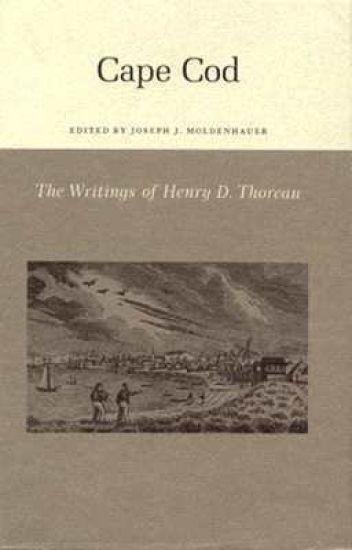
Thoreau's compelling account of Cape Cod is here presented in the complete and definitive text. His trips to the Cape, he wrote, were intended to afford "a better view than I had yet had of the ocean." In the plants, animals, topography, weather, people, and human works of Massachusetts' long projection into the Atlantic, he finds "another world." Encounters with the ocean dominate the book, from the fatal shipwreck of the opening episode to the late reflections on the Pilgrims' Cape Cod landing and reconnaissance. Along the way, Thoreau relates the experiences of fishermen and oystermen, farmers and salvagers, lighthouse-keepers and ship-captains, as well as his own intense confrontations with the sea as he travels the land's outermost margins. Chronicles of exploration, settlement, and survival on the Cape lead Thoreau to reconceive the history of New England and to recognize the parochialism of history itself.
Cape Cod

Cape Cod

Henry David Thoreau

Penguin Putnam Inc
1987
pokkari
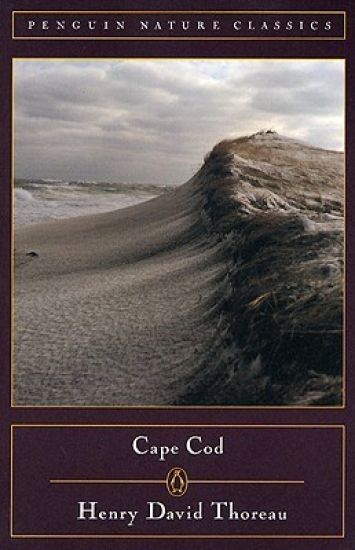
Thoreau's classic account of his meditative, beach-combing walking trips to Cape Cod in the early 1850s, reflecting on the elemental forces of the sea, with an introduction by Paul Theroux Cape Cod chronicles Henry David Thoreau's journey of discovery along this evocative stretch of Massachusetts coastline, during which time he came to understand the complex relationship between the sea and the shore. He spent his nights in lighthouses, in fishing huts, and on isolated farms. He passed his days wandering the beaches, where he observed the wide variety of life and death offered up by the ocean. Through these observations, Thoreau discovered that the only way to truly know the sea--its depth, its wildness, and the natural life it contained--was to study it from the shore. Like his most famous work, Walden, Cape Cod is full of Thoreau's unique perceptions and precise descriptions. But it is also full of his own joy and wonder at having stumbled across a new frontier so close to home, where a man may stand and "put all America behind him." Part of the Penguin Nature Library edited by Edward Hoagland For more than seventy years, Penguin has been the leading publisher of classic literature in the English-speaking world. With more than 1,700 titles, Penguin Classics represents a global bookshelf of the best works throughout history and across genres and disciplines. Readers trust the series to provide authoritative texts enhanced by introductions and notes by distinguished scholars and contemporary authors, as well as up-to-date translations by award-winning translators.
The Writings of Henry David Thoreau, Volume 2

The Writings of Henry David Thoreau, Volume 2

Henry David Thoreau

Princeton University Press
1984
sidottu
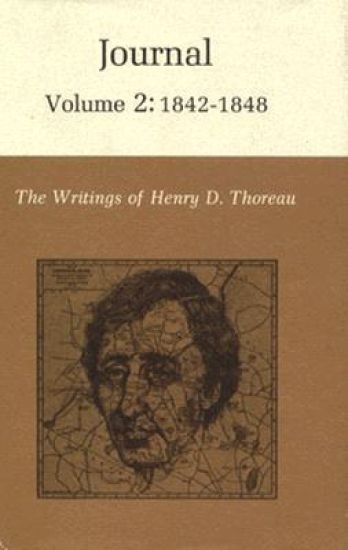
Volume two of the Journal includes Thoreau's extensive reminiscences of his 1839 excursion with his brother John along the Concord and Merrimack rivers and all his first impressions and observations entered in journals during the famous Walden sojourn. Collectively, these journals illustrate the middle stage of Thoreau's literary career--a stage noteworthy for his "devotion to the mastery of his craft" as evidenced by the progressive, intermingled drafts of A Week on the Concord and Merrimack Rivers and Walden, "Thomas Carlyle and His Works," "Wendell Phillips Before Concord Lyceum," and "Ktaadn, and the Maine Woods." More than half of the material presented in Journal 2 is previously unpublished.
Walden and Other Writings

Walden and Other Writings

Henry David Thoreau

Bantam USA
1983
pokkari
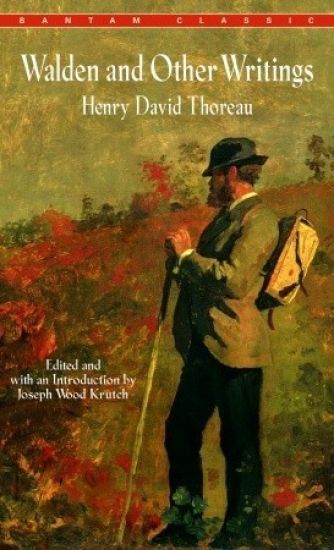
With their call for"simplicity, simplicity, simplicity!", for self-honesty, and for harmony with nature, the writings of Henry David Thoreau are perhaps the most influential philosophical works in all American literature. The selections in tis volume represent Thoreau at his best. Included in their entirety are Walden, his indisputable masterpiece, and his two great arguments for nonconformity, Civil Disobedience and Life Without Principle. A lifetime of brilliant observation of nature -- and of himself -- is recorded in selections from A Week On The Concord And Merrimack Rivers, Cape Cod, The Maine Woods and The Journal.