Kirjojen hintavertailu. Mukana 12 595 353 kirjaa ja 12 kauppaa.

Kirjailija

Henry Gee

Kirjat ja teokset yhdessä paikassa: 36 kirjaa, julkaisuja vuosilta 2004-2026, suosituimpien joukossa Aufstieg und Fall der Menschheit. Vertaile teosten hintoja ja tarkista saatavuus suomalaisista kirjakaupoista.

36 kirjaa

Kirjojen julkaisuhaarukka 2004-2026.

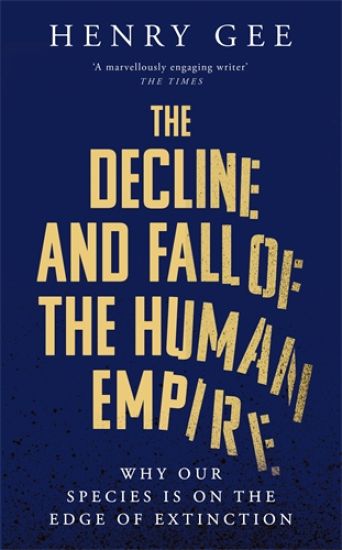
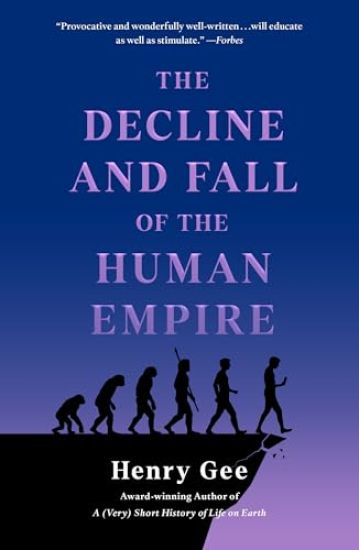
The Decline and Fall of the Human Empire: Why Our Species Is on the Edge of Extinction
By the award-winning author of A (Very) Short History of Life on Earth: a history of humanity on the brink of decline. We are living through a period that is unique in human history. For the first time in more than ten thousand years, the rate of human population growth is slowing down. In the middle of this century population growth will stop, and the number of people on Earth will start to decline - fast. In this provocative book, award-winning science writer Henry Gee offers a concise, brilliantly-told history of our species--and argues that we are on a rapid, one-way trip to extinction. The Decline and Fall of the Human Empire narrates the dramatic rise of humanity. The human story is relatively brief--the oldest fossils of H. Sapiens date to approximately 300,000 years ago--yet the spread of our species has been unstoppable...until recently. As Gee demonstrates, our environment is becoming inimical to human life in many locations; our core resources of water, arable land, and air are diminishing; and new diseases, simmering conflicts, and ambiguous technologies threaten our collective health. Can we still change our course? Or is our own extinction inevitable? With assured narration, dramatic stories, and his signature sprightly humor, Henry Gee envisions new opportunities for the future of humanity--a future that will reward facing challenges with ingenuity, foresight, and cooperation.
The Decline and Fall of the Human Empire
‘Brilliant’ The Times‘Hugely informative and entertaining’ New Scientist‘Put this at the head of your reading lists immediately’ Eric IdleFrom the winner of the 2022 Royal Society Science Book Prize, a thrilling and thought-provoking account of the rise and fall of humankind.For the first time in over ten millennia, the rate of human population growth is slowing down. The global population is forecast to begin declining in the second half of this century, and in 10,000 years’ time our species will likely be extinct.In The Decline and Fall of the Human Empire, Henry Gee shows how we arrived at this crucial moment in history, beginning his story deep in the palaeolithic past and charting our dramatic rise from one species of human among many to the most dominant animal ever to live on Earth.But rapid climate change, a stagnating global economy, falling birth rates and an unexplainable decline in average human sperm count are combining to make our chances for longevity increasingly slim. There could be a way forward, but the launch window is narrow . . .Drawing on a dazzling array of the latest scientific research, Gee tells the extraordinary story of humanity with characteristic warmth and wit, and suggests how our exceptional species might avoid its tragic fate.‘Like Jared Diamond meets Arthur C. Clarke with a dash of Douglas Adams’ Philip Ball, author of How Life Works
The Decline and Fall of the Human Empire
'Brilliant' – The Times'Hugely informative and entertaining' – New Scientist'Put this at the head of your reading lists immediately' – Eric IdleFrom the winner of the 2022 Royal Society Science Book Prize, a thrilling and thought-provoking account of the rise and fall of humankind.For the first time in over ten millennia, the rate of human population growth is slowing down. The global population is forecast to begin declining in the second half of this century, and in 10,000 years’ time our species will likely be extinct.In The Decline and Fall of the Human Empire, Henry Gee shows how we arrived at this crucial moment in history, beginning his story deep in the palaeolithic past and charting our dramatic rise from one species of human among many to the most dominant animal to ever live on Earth.But rapid climate change, a stagnating global economy, falling birth rates and an unexplainable decline in average human sperm count are combining to make our chances for longevity increasingly slim. There could be a way forward, but the launch window is narrow . . .Drawing on a dazzling array of the latest scientific research, Gee tells the extraordinary story of humanity with characteristic warmth and wit, and suggests how our exceptional species might avoid its tragic fate.'Like Jared Diamond meets Arthur C. Clarke with a dash of Douglas Adams' – Philip Ball, author of How Life Works
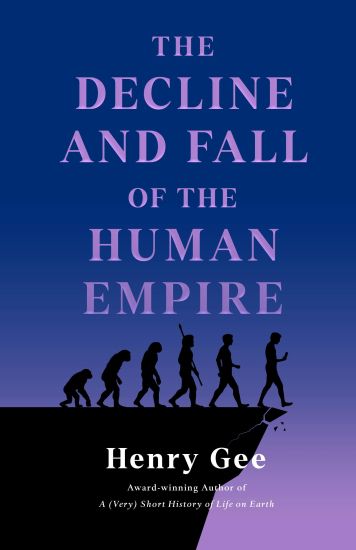
The Decline and Fall of the Human Empire: Why Our Species Is on the Edge of Extinction
By the award-winning author of A (Very) Short History of Life on Earth: a history of humanity on the brink of decline.A Next Big Idea Club Must-Read Selection We are living through a period that is unique in human history. For the first time in more than ten thousand years, the rate of human population growth is slowing down. In the middle of this century population growth will stop, and the number of people on Earth will start to decline - fast. In this provocative book, award-winning science writer Henry Gee offers a concise, brilliantly-told history of our species--and argues that we are on a rapid, one-way trip to extinction. The Decline and Fall of the Human Empire narrates the dramatic rise of humanity, how a scattered range of small groups across several continents eventually inbred, interacted, fought, established stable communities and food supplies, and began the process of dominating the planet. The human story is relatively brief--the oldest fossils of H. Sapiens date to approximately 300,000 years ago--yet the spread of our species has been unstoppable...until recently. As Gee demonstrates, our population has peaked, and is declining; our environment is becoming inimical to human life in many locations; our core resources of water, arable land, and air are diminishing; and new diseases, simmering conflicts, and ambiguous technologies threaten our collective health. Can we still change our course? Or is our own extinction inevitable? There could be a way out, but the launch window is narrow. Unless Homo sapiens establishes successful colonies in space within the next two centuries, our species is likely to stay earthbound and will have vanished entirely within another ten thousand years, bringing the seven-million-year story of the human lineage to an end. With assured narration, dramatic stories, and his signature sprightly humor, Henry Gee envisions new opportunities for the future of humanity--a future that will reward facing challenges with ingenuity, foresight, and cooperation.
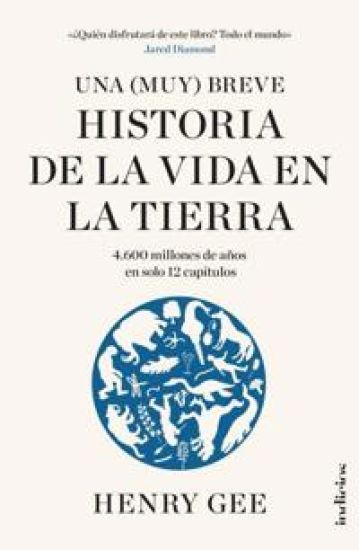
En kort historik över livet på jorden
En gång för länge sedan kollapsade en jättestjärna.Så börjar Henry Gee sin berättelse om livet på jorden. Sedan tar han med läsaren på en halsbrytande, underhållande och upplysande odyssé genom 4,6 miljarder år av geologisk och evolutionär historia.I skuggan av kontinentaldrift, jordbävningar, vulkanutbrott, vilda hav, istider och torrperioder har olika livsformer uppstått och dött ut, överlevt och utvecklats. Livet har trots – eller kanske tack vare – detta kaos ständigt hittat nya vägar, från de första encelliga organismerna i de djupaste haven till de framgångsrika Homo sapiens.Människans tid på jorden utgör ett mycket litet avsnitt i den långa berättelsen om livet på den här planeten. Hur kommer det att gå för oss? Är vi så framgångsrika att vi till och med kommer att lyckas ta kål på vår egen art?
The Elizabethan Clergy

The Elizabethan Clergy

Henry Gee

Hansebooks
2024
pokkari
The Elizabethan Clergy - and the settlement of religion, 1558-1564 is an unchanged, high-quality reprint of the original edition of 1898. Hansebooks is editor of the literature on different topic areas such as research and science, travel and expeditions, cooking and nutrition, medicine, and other genres. As a publisher we focus on the preservation of historical literature. Many works of historical writers and scientists are available today as antiques only. Hansebooks newly publishes these books and contributes to the preservation of literature which has become rare and historical knowledge for the future.
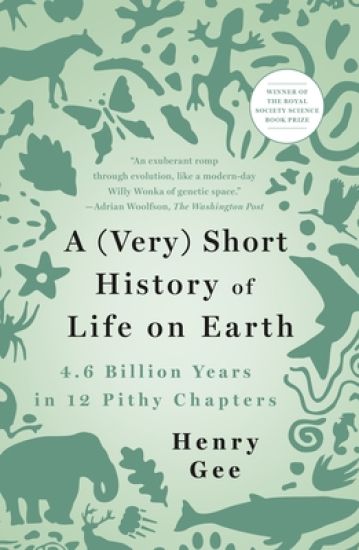
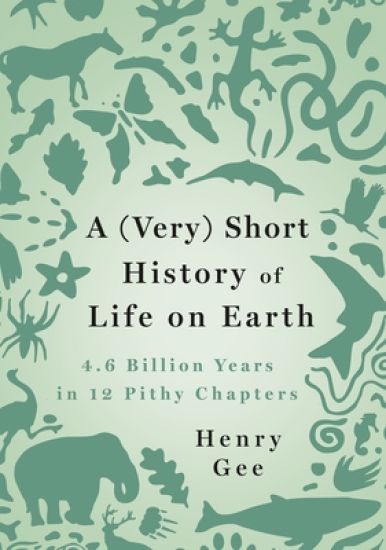
A (Very) Short History of Life on Earth: 4.6 Billion Years in 12 Pithy Chapters
A]n exuberant romp through evolution, like a modern-day Willy Wonka of genetic space. Gee's grand tour enthusiastically details the narrative underlying life's erratic and often whimsical exploration of biological form and function." --Adrian Woolfson, The Washington PostIn the tradition of Richard Dawkins, Bill Bryson, and Simon Winchester--An entertaining and uniquely informed narration of Life's life story.In the beginning, Earth was an inhospitably alien place--in constant chemical flux, covered with churning seas, crafting its landscape through incessant volcanic eruptions. Amid all this tumult and disaster, life began. The earliest living things were no more than membranes stretched across microscopic gaps in rocks, where boiling hot jets of mineral-rich water gushed out from cracks in the ocean floor. Although these membranes were leaky, the environment within them became different from the raging maelstrom beyond. These havens of order slowly refined the generation of energy, using it to form membrane-bound bubbles that were mostly-faithful copies of their parents--a foamy lather of soap-bubble cells standing as tiny clenched fists, defiant against the lifeless world. Life on this planet has continued in much the same way for millennia, adapting to literally every conceivable setback that living organisms could encounter and thriving, from these humblest beginnings to the thrilling and unlikely story of ourselves. In A (Very) Short History of Life on Earth, Henry Gee zips through the last 4.6 billion years with infectious enthusiasm and intellectual rigor. Drawing on the very latest scientific understanding and writing in a clear, accessible style, he tells an enlightening tale of survival and persistence that illuminates the delicate balance within which life has always existed.
A (Very) Short History of Life On Earth
Winner of the Royal Society Science Book.'Exhilaratingly whizzes through billions of years . . . Gee is a marvellously engaging writer' - The Times4.6 billion years of the story of life on Earth, in twelve concise chapters. Brief, brilliant and entirely gripping.For billions of years, Earth was an inhospitably alien place – covered with churning seas, slowly crafting its landscape through volcanic eruptions, the atmosphere in a constant state of chemical flux. And yet, despite facing literally every conceivable setback that living organisms could encounter, life has been extinguished and picked itself up to evolve again.From that first foray to the spread of early hominids who later became Homo sapiens, life has persisted, undaunted. A (Very) Short History of Life: 4.6 Billion Years in 12 Chapters is an enlightening story of survival, of persistence, illuminating the delicate balance within which life has always existed, and continues to exist today. It is our planet like you’ve never seen it before.Dr Henry Gee presents creatures from ‘gregarious’ bacteria populating the seas to duelling dinosaurs in the Triassic period, to magnificent mammals with the future in their grasp. Life’s evolutionary steps – from the development of a digestive system to the awe of creatures taking to the skies in flight – are conveyed with an up-close intimacy.'Henry Gee makes the kaleidoscopically changing canvas of life understandable and exciting.' – Jared Diamond, author of Guns, Germs, and Steel
A (Very) Short History of Life on Earth: 4.6 Billion Years in 12 Pithy Chapters
A]n exuberant romp through evolution, like a modern-day Willy Wonka of genetic space. Gee's grand tour enthusiastically details the narrative underlying life's erratic and often whimsical exploration of biological form and function." --Adrian Woolfson, The Washington PostIn the tradition of Richard Dawkins, Bill Bryson, and Simon Winchester--An entertaining and uniquely informed narration of Life's life story.In the beginning, Earth was an inhospitably alien place--in constant chemical flux, covered with churning seas, crafting its landscape through incessant volcanic eruptions. Amid all this tumult and disaster, life began. The earliest living things were no more than membranes stretched across microscopic gaps in rocks, where boiling hot jets of mineral-rich water gushed out from cracks in the ocean floor. Although these membranes were leaky, the environment within them became different from the raging maelstrom beyond. These havens of order slowly refined the generation of energy, using it to form membrane-bound bubbles that were mostly-faithful copies of their parents--a foamy lather of soap-bubble cells standing as tiny clenched fists, defiant against the lifeless world. Life on this planet has continued in much the same way for millennia, adapting to literally every conceivable setback that living organisms could encounter and thriving, from these humblest beginnings to the thrilling and unlikely story of ourselves. In A (Very) Short History of Life on Earth, Henry Gee zips through the last 4.6 billion years with infectious enthusiasm and intellectual rigor. Drawing on the very latest scientific understanding and writing in a clear, accessible style, he tells an enlightening tale of survival and persistence that illuminates the delicate balance within which life has always existed.
The Elizabethan clergy and the settlement of religion,
The Elizabethan clergy and the settlement of religion, - 1558-1564 is an unchanged, high-quality reprint of the original edition of 1898. Hansebooks is editor of the literature on different topic areas such as research and science, travel and expeditions, cooking and nutrition, medicine, and other genres. As a publisher we focus on the preservation of historical literature. Many works of historical writers and scientists are available today as antiques only. Hansebooks newly publishes these books and contributes to the preservation of literature which has become rare and historical knowledge for the future.
Across the Bridge

Across the Bridge

Henry Gee

University of Chicago Press
2018
pokkari
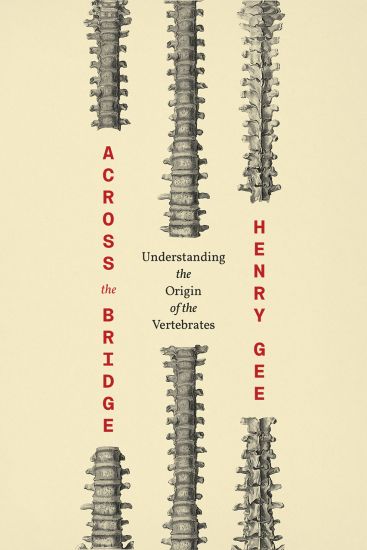
Our understanding of vertebrate origins and the backbone of human history evolves with each new fossil find and DNA map. Many species have now had their genomes sequenced, and molecular techniques allow genetic inspection of even nonmodel organisms. But as longtime Nature editor Henry Gee argues in Across the Bridge, despite these giant strides and our deepening understanding of how vertebrates fit into the tree of life, the morphological chasm between vertebrates and invertebrates remains vast and enigmatic. As Gee shows, even as scientific advances have falsified a variety of theories linking these groups, the extant relatives of vertebrates are too few for effective genetic analysis. Moreover, the more we learn about the species that do remain--from seasquirts to starfish--the clearer it becomes that they are too far evolved along their own courses to be of much use in reconstructing what the latest invertebrate ancestors of vertebrates looked like. Fossils present yet further problems of interpretation. Tracing both the fast-changing science that has helped illuminate the intricacies of vertebrate evolution as well as the limits of that science, Across the Bridge helps us to see how far the field has come in crossing the invertebrate-to-vertebrate divide--and how far we still have to go.
The Elizabethan clergy and the settlement of religion, 1558-1564
The Elizabethan clergy and the settlement of religion, 1558-1564 is an unchanged, high-quality reprint of the original edition of 1898. Hansebooks is editor of the literature on different topic areas such as research and science, travel and expeditions, cooking and nutrition, medicine, and other genres. As a publisher we focus on the preservation of historical literature. Many works of historical writers and scientists are available today as antiques only. Hansebooks newly publishes these books and contributes to the preservation of literature which has become rare and historical knowledge for the future.