Kirjojen hintavertailu. Mukana 12 390 323 kirjaa ja 12 kauppaa.
Kirjailija
Henryk Sienkiewicz
Kirjat ja teokset yhdessä paikassa: 407 kirjaa, julkaisuja vuosilta 1997-2026, suosituimpien joukossa Hania. Vertaile teosten hintoja ja tarkista saatavuus suomalaisista kirjakaupoista.
Children of the Soil is an unchanged, high-quality reprint of the original edition of 1898. Hansebooks is editor of the literature on different topic areas such as research and science, travel and expeditions, cooking and nutrition, medicine, and other genres. As a publisher we focus on the preservation of historical literature. Many works of historical writers and scientists are available today as antiques only. Hansebooks newly publishes these books and contributes to the preservation of literature which has become rare and historical knowledge for the future.
Lillian Morris and Other Stories is an unchanged, high-quality reprint of the original edition of 1894. Hansebooks is editor of the literature on different topic areas such as research and science, travel and expeditions, cooking and nutrition, medicine, and other genres. As a publisher we focus on the preservation of historical literature. Many works of historical writers and scientists are available today as antiques only. Hansebooks newly publishes these books and contributes to the preservation of literature which has become rare and historical knowledge for the future.
At the beginning of Quo Vadis, after being injured and cared for at the house of the general Plautius, warrior hero and tribune Marcus Vinicius tells his uncle Petronius about his unquenchable desire for a beautiful woman he saw at the general's home and seeks his help in obtaining her. After the pair visit the general, Petronius tells Vinicius he has a plan to obtain the woman.Petronius tells Nero that Lygia, a hostage of Rome who therefore belongs to Caesar, dwells in the home of Plautius. When Nero sends a centurion to retrieve Lygia from the general's home, Pomponia fears they are coming to kill her husband but is little relieved when she discovers their real mission. Encouraging her adopted daughter to be strong in her Christian faith, she and the general release her to Nero's care, sending with her Christian servants, including the giant Ursus. The angry general rightly suspects Petronius is behind the taking of Lygia and perhaps intends to make her a concubine for himself or Vinicius.Placed among the concubines, Lygia is directed to the care of Acte, a freedwoman and Nero's former lover, by a letter from Pomponia, who knows Acte has sympathy for the Christians. Acte promises to keep her from the lustful gaze of the emperor. At first believing Petronius betrayed him, Vinicius is delighted to learn that his uncle intends to see that Lygia be given to him. At one of Nero's debauched parties, a drunken Vinicius tries to seduce Lygia, who is saved by Ursus.
Henryk Sienkiewicz: Pan Wolodyjowski, der kleine Ritter. Historischer Roman Edition Holzinger. Taschenbuch Berliner Ausgabe, 2017 Durchgesehener Neusatz mit einer Biographie des Autors bearbeitet und eingerichtet von Michael Holzinger Pan Wolodyjowski. Erstdruck: 1888. Hier in der bersetzung von Raphael L wenfeld, O. Gracklauer, Leipzig, 1902. Herausgeber der Reihe: Michael Holzinger Reihengestaltung: Viktor Harvion Umschlaggestaltung unter Verwendung des Bildes: Andreas Stech und Ferdinand van Kessel, Die Schlacht von Chotyn, 1674-1679 Gesetzt aus der Minion Pro, 11 pt.
IN the trilogy "With Fire and Sword," "The Deluge," and "Pan Michael," Sienkiewicz has given pictures of a great and decisive epoch in modern history. The results of the struggle begun under Bogdan Hmelnitski have been felt for more than two centuries, and they are growing daily in importance. The Russia which rose out of that struggle has become a power not only of European but of world-wide significance, and, to all human seeming, she is yet in an early stage of her career. In "Quo Vadis" the author gives us pictures of opening scenes in the conflict of moral ideas with the Roman Empire, - a conflict from which Christianity issued as the leading force in history. The Slays are not so well known to Western Europe or to us as they are sure to be in the near future; hence the trilogy, with all its popularity and merit, is not appreciated yet as it will be. The conflict described in "Quo Vadis" is of supreme interest to a vast number of persons reading English; and this book will rouse, I think, more attention at first than anything written by Sienkiewicz hitherto.
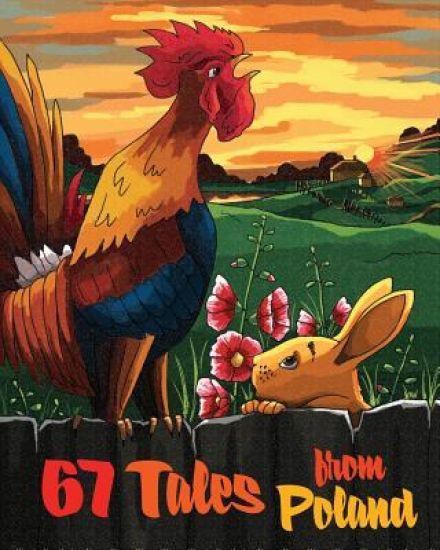
The book comprises the best of Polish folk tales as well as short stories by the most renowned Polish authors, such as: Henryk Sienkiewicz, Wladyslaw St.Reymont, Boleslaw Prus, Adam Szymanski, Stefan Zeromski, Juliusz Kaden-Bandrowski, Zofia Rygier-Nalkowska, Waclaw Sieroszewski.It is undoubtedly the best compilation of Polish fairy tales and children's short stories.
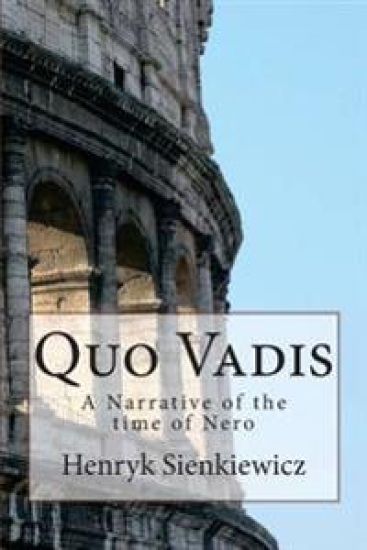
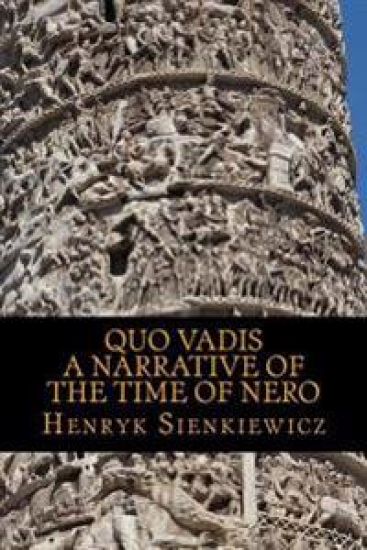
Quo Vadis: A Narrative of the Time of Nero, commonly known as Quo Vadis, is a historical novel written by Henryk Sienkiewicz in Polish. "Quo vadis Domine" is Latin for "Where are you going, Lord?" and alludes to the apocryphal Acts of Peter, in which Peter flees Rome but on his way meets Jesus and asks him why he is going to Rome. Jesus says, "I am going back to be crucified again", which makes Peter go back to Rome and accept martyrdom.The novel Quo Vadis tells of a love that develops between a young Christian woman, Ligia (or Lygia), and Marcus Vinicius, a Roman patrician. It takes place in the city of Rome under the rule of emperor Nero, c. AD 64.Sienkiewicz studied the Roman Empire extensively prior to writing the novel, with the aim of getting historical details correct. Consequently, several historical figures appear in the book. As a whole, the novel carries an outspoken pro-Christian message. citation needed]Published in installments in three Polish dailies in 1895, it came out in book form in 1896 and has since been translated into more than 50 languages. This novel contributed to Sienkiewicz's Nobel Prize for literature in 1905.
Quo Vadis: A Narrative of the Time of Nero, commonly known as Quo Vadis, is a historical novel written by Henryk Sienkiewicz. Quo vadis is Latin for "Where are you going?" and alludes to a New Testament verse (John 13:36). The verse, in the King James Version, reads as follows, "Simon Peter said unto him, Lord, whither goest thou? Jesus answered him, Whither I go, thou canst not follow me now; but thou shalt follow me afterwards."
This work has been selected by scholars as being culturally important, and is part of the knowledge base of civilization as we know it. This work was reproduced from the original artifact, and remains as true to the original work as possible. Therefore, you will see the original copyright references, library stamps (as most of these works have been housed in our most important libraries around the world), and other notations in the work.This work is in the public domain in the United States of America, and possibly other nations. Within the United States, you may freely copy and distribute this work, as no entity (individual or corporate) has a copyright on the body of the work.As a reproduction of a historical artifact, this work may contain missing or blurred pages, poor pictures, errant marks, etc. Scholars believe, and we concur, that this work is important enough to be preserved, reproduced, and made generally available to the public. We appreciate your support of the preservation process, and thank you for being an important part of keeping this knowledge alive and relevant.