Kirjojen hintavertailu. Mukana 12 459 402 kirjaa ja 12 kauppaa.
Kirjailija
Henryk Sienkiewicz
Kirjat ja teokset yhdessä paikassa: 410 kirjaa, julkaisuja vuosilta 1997-2026, suosituimpien joukossa Hania. Vertaile teosten hintoja ja tarkista saatavuus suomalaisista kirjakaupoista.
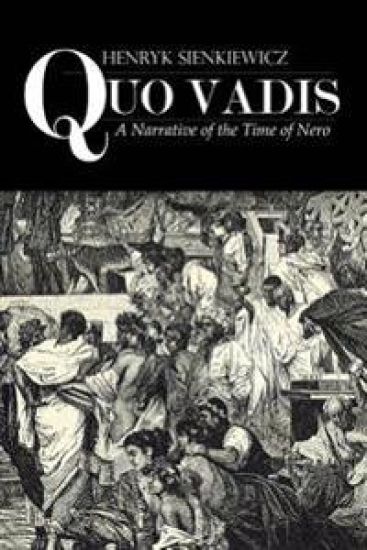
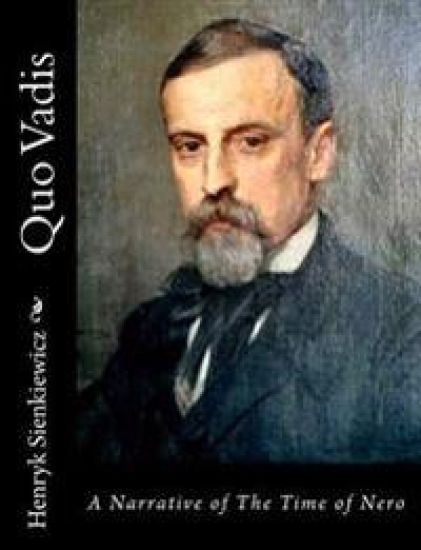
Quo Vadis: A Narrative of the Time of Nero, commonly known as Quo Vadis, is a historical novel written by Henryk Sienkiewicz. "Quo vadis Domine" is Latin for "Where are you going, Lord?" and alludes to the apocryphal Acts of Peter, in which Peter flees Rome but on his way meets Jesus and asks him why he is going to Rome. Jesus says "I am going back to be crucified again", which makes Peter go back to Rome and accept martyrdom. Sienkiewicz studied the Roman Empire extensively prior to writing the novel, with the aim of getting historical details correct. As such, several historical figures appear in the book. This novel contributed to Sienkiewicz's Nobel Prize for literature in 1905, and has been translated into more than 50 languages. Several movies were adapted based on Quo Vadis including the 1925 Italian silent film Quo Vadis, the 1951 Hollywood production Quo Vadis and the 2001 adaptation by Jerzy Kawalerowicz.
Chapter I PETRONIUS woke only about midday, and as usual greatly wearied. The evening before he had been at one of Nero's feasts, which was prolonged till late at night. For some time his health had been failing. He said himself that he woke up benumbed, as it were, and without power of collecting his thoughts. But the morning bath and careful kneading of the body by trained slaves hastened gradually the course of his slothful blood, roused him, quickened him, restored his strength, so that he issued from the el othesium, that is, the last division of the bath, as if he had risen from the dead, with eyes gleaming from wit and gladness, rejuvenated, filled with life, exquisite, so unapproachable that Otho himself could not compare with him, and was really that which he had been called, -arbiter elegantiarum. He visited the public baths rarely, only when some rhetor happened there who roused admiration and who was spoken of in the city, or when in the ephebias there were combats of exceptional interest. Moreover, he had in his own "insula" private baths which Celer, the famous contemporary of Severus, had extended for him, reconstructed and arranged with such uncommon taste that Nero himself acknowledged their excellence over those of the Emperor, though the imperial baths were more extensive and finished with incomparably greater luxury. After that feast, at which he was bored by the jesting of Vatinius with Nero, Lucan, and Seneca, he took part in a diatribe as to whether woman has a soul. Rising late, he used, as was his custom, the baths. Two enormous balneatores laid him on a cypress table covered with snowwhite Egyptian byssus, and with hands dipped in perfumed olive oil began to rub his shapely body; and he waited with closed eyes till the heat of the laconicum and the heat of their hands passed through him and expelled weariness. But after a certain time he spoke, and opened his eyes; he inquired about the weather, and then about gems which the jeweller Idomeneus had promised to send him for examination that day. It appeared that the weather was beautiful, with a light breeze from the Alban hills, and that the gems had not been brought. Petronius closed his eyes again, and had given command to bear him to the tepidarium, when from behind the curtain the nomenclator looked in, announcing that young Marcus Vinicius, recently returned from Asia Minor, had come to visit him. Petronius ordered to admit the guest to the tepidarium, to which he was borne himself. Vinicius was the son of his oldest sister, who years before had married Marcus Vinicius, a man of consular dignity from the time of Tiberius. The young man was serving then under Corbulo against the Parthians, and at the close of the war had returned to the city. Petronius had for him a certain weakness bordering on attachment, for Marcus was beautiful and athletic, a young man who knew how to preserve a certain aesthetic measure in his profligacy; this, Petronius prized above everything. "A greeting to Petronius," said ...