Kirjojen hintavertailu. Mukana 12 152 606 kirjaa ja 12 kauppaa.

Kirjailija

Hugh Harkins

Kirjat ja teokset yhdessä paikassa: 61 kirjaa, julkaisuja vuosilta 2012-2021, suosituimpien joukossa Ilya Muromets & The Russian Knight. Vertaile teosten hintoja ja tarkista saatavuus suomalaisista kirjakaupoista.

61 kirjaa

Kirjojen julkaisuhaarukka 2012-2021.

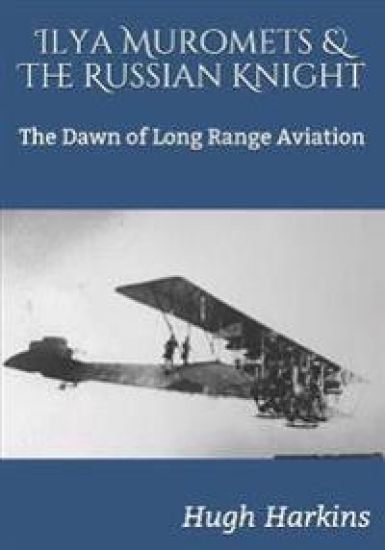
Ilya Muromets & The Russian Knight

Ilya Muromets & The Russian Knight

Hugh Harkins

CENTURION PUBLISHING
2021
pokkari
The intent of this volume is to detail the world's premier large-size multi-engine heavier than air craft, the Grand Baltic/Russian Knight and the Ilya Muromets, the world's premier four engine heavy bomber/reconnaissance aircraft. The latter entered operations with the air service of the Imperial Russian Army in 1915 and served through the years of World War 1 - 1914 to 1918 - and the Russian Civil War that followed, from which the Soviet Union was born.Drawing upon historical data from a number of sources, including the Ministry of Defence of the Russian Federation and the Russian Air Force (Aerospace Forces) historical records, the volume covers the genesis, design and development of the Grand Baltic, it's evolution into the Russian Knight and the subsequent development and deployment of the Ilya Muromets as a heavy bomber/reconnaissance aircraft operating against the Central Powers from 1915. It further covers the Ilya Muromets fleet organisation in the Russian Civil War and the establishment of air transport links in the early Soviet period, 1921-1922.
Defiant MK.I Combat Log

Defiant MK.I Combat Log

Hugh Harkins

CENTURION PUBLISHING
2014
pokkari
Boulton Paul Defiant.The purpose of this volume is to provide a comprehensive detailed study of the operational and combat operations of the RAF's Boulton Paul Defiant MK.I turret armed fighter aircraft during the hectic air battles of mid and late May 1940, the latter period of which the Defiant was heavily involved in operations against Luftwaffe fighters and bombers attacking the British Expeditionary Force evacuation operations on the channel coast, particularly around Dunkirk. It also covers the Defiants operations in the air battles of July and August at the height of the Battle of Britain, when 264 Squadron and 141 Squadron flew day and night operations, suffering severe losses. A brief description of the genesis and development of the Defiant MK.I fighter is laid down, but the volume is not designed to be a comprehensive monograph on that subject. A brief description of the Defiants main fighter adversary, the German Me.109E, is also provided. The volume is copiously supported by a wealth of operational documents including Squadron Narratives, Group Intelligence Combat Reports, Squadron operational Records and pilot Personal Combat Reports, many of which are reproduced verbatim. Operational documents have been tied up against German reports whenever possible which naturally results in areas of disputed figures, particularly with regards to numbers of German aircraft shot down.
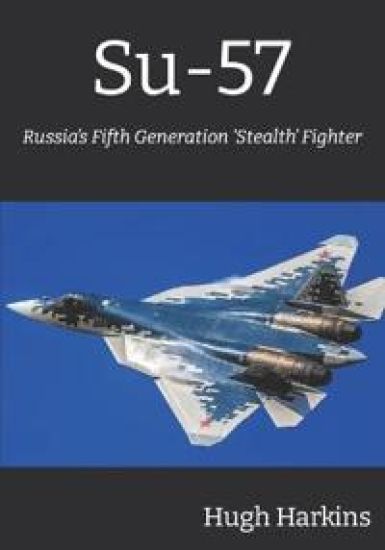
Su-57

Su-57

Hugh Harkins

CENTURION PUBLISHING
2021
pokkari
The Sukhoi Su-57 (T-50) was developed under the Perspektivniy Aviacionniy Complex Frontovoi Aviacii (Perspective Aviation Complex for Frontline Aviation) program to field a fifth generation multifunctional/multidimensional strike fighter for service with the Russia Federation Aerospace Forces from the third decade of the twenty first century. Taking to the air in January 2010, the T-50 prototype emerged from the LFI (Legikiy Frontovoi Istrebitel - Light Frontline Fighter) program that rose from the ashes of the cancelled Soviet era MFI (Mnogofunktsional'nyy Frontovoi Istrebitel - Multifunctional Frontline Fighter) program aimed at fielding a Sukhoi Su-27 heavy air superiority fighter replacement.This volume, which builds upon and advances the work conducted on the 2015 volume, covers the Su-57 program from conception of the MFI and LFI programs from the early 1980's and 1990's, to flight testing of the T-50 development and pre-series aircraft and initial service deliveries of series aircraft to the Russian Aerospace Forces in December 2020. The Su-57/T-50 design is described in detail, as are its various advanced systems, including low-observable technologies, power plant, radio-electronic, optoelectronics, electronic warfare, navigation and weapons etc. All technical information concenring the aircraft, systems and weapons comes from designer/developer/operator documentation.In regard to formal or informal writing, it has been deemed more appropriate to use the term 5th generation when referring to a specific aircraft design - Su-57 5th generation multifunctional fighter - and fifth generation when referring to overall programs - Russian fifth generation multifunctional fighter.
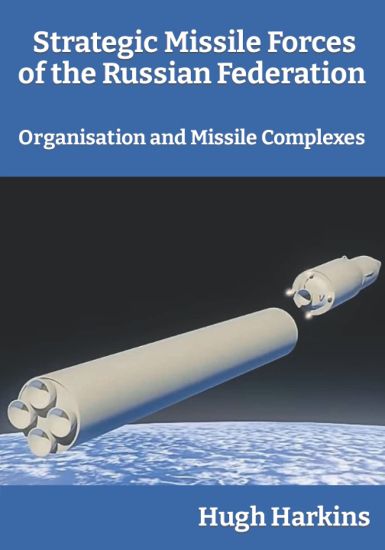
Strategic Missile Forces of the Russian Federation
In the second and third decades of the twenty first century the Russian Federation Strategic Missile Forces, the largest arm of the Russian Strategic Nuclear Forces, underwent force modernisation to ensure deterrent capability to counter proliferation of North Atlantic Treaty Organisation missile defence systems. Capability enhancements and deterrence potential would be ensured through the introduction/development of advanced intercontinental ballistic missile complexes - Yars and Sarmat - armed with a new generation of maneuverable warheads, the Avangard hypersonic glide vehicle and, longer term, the projected Kedr light intercontinental ballistic missile, revealed in 2020.The volume draws upon information from official sources to provide a picture of the Strategic Missile Forces and constituent missile systems as understood in early 2021 when it operated RT-2PM Topol, RT-2PM2/1 Topol-M, RS-24 Yars series, R-36M2, UR-100N UTTKh and Avangard complexes, with the RS-28 Sarmat then scheduled to be placed on alert the following year. In regard to Avangard and Sarmat, information is naturally scarce as these programs were, in 2021, shrouded in the highest levels of classification. However, significant data had been released to provide an informed outline of the systems, which, along with Yars, were intended to constitute the backbone of the Strategic Missile Forces through the third decade of the twenty first century.The volume adopts a factual rather than a geopolitical approach and avoids unsubstantiated data. The number of strategic strike systems, ICBM complexes etc., in service and deployed, are taken directly from the data submitted by both parties to the New Strategic Arms Reduction Treaty. All technical data concerning missile complexes and associated systems, missile formations and associated organisations, operational data, such as the Russian Federations nuclear doctrine (thresholds for the use of nuclear weapons), along with graphic material, has been furnished by the respective design bureau, manufacturers, experimental/research agencies, the Ministry of Defence of the Russian Federation and the Ministry of Foreign Affairs of the Russian Federation.
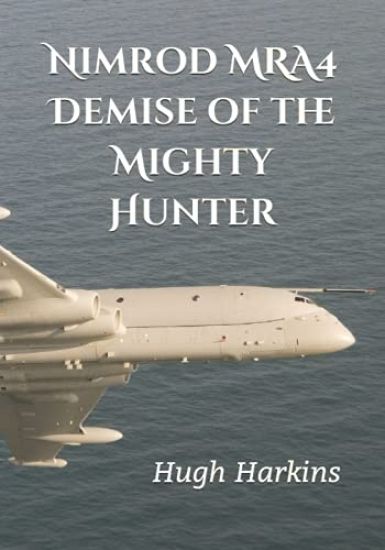
Nimrod MRA4

Nimrod MRA4

Hugh Harkins

CENTURION PUBLISHING
2021
pokkari
The Nimrod MRA4 was an ambitious program intended to provide the British Royal Air Force with a high capability multi-mission aircraft with an emphasis on anti-submarine warfare/anti-surface strike/maritime patrol missions. As the focus of the volume is the Nimrod MRA4 program, only a brief resume of the design heritage going back to the first and second generation Nimrod, themselves derived from the de Havilland DH106 Comet 4, is provided.The volume draws on textual and graphic material from the respective design house/test team and governmental papers in an attempt to arrive at an objective account of the program from inception, development/testing, to cancellation, almost on the eve of service entry.
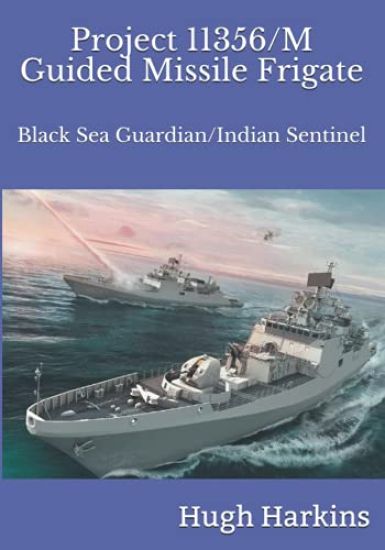
Project 11356/M Guided Missile Frigate

Project 11356/M Guided Missile Frigate

Hugh Harkins

Centurion Publishing
2021
pokkari
The Project 11356/M Guided Missile Frigate/Guard Ship was initially developed by Severnoye Design Bureau in Russia to meet an Indian Navy requirement that emerged as the Talwar and Teg Class respectively. The basic design, which was, in 2009, selected for service with the Russian Federation Black Sea Fleet as the Project 11356M, could conduct the full spectrum of Frigate related missions - anti-air warfare, anti-submarine warfare and surface strike etc., courtesy of advanced mission sensors and weapon systems.The volume sets out to detail the Project 11356/M design, sensors, incorporated weapon systems and entry into service with the Indian and Russian Federation navies. All technical data relating to the respective ship platforms, sensors, weapon systems and components have been furnished by the respective design bureaus, builders and operators, as has the imagery/graphics.
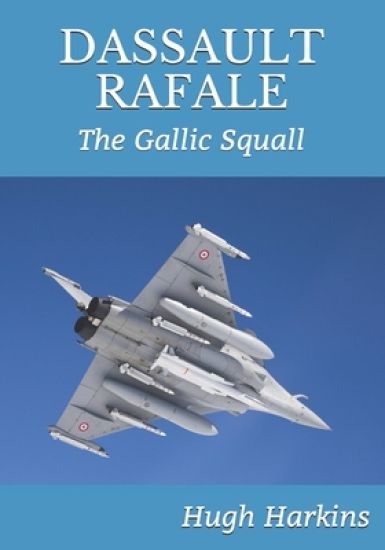
Dassault Rafale

Dassault Rafale

Hugh Harkins

CENTURION PUBLISHING
2020
pokkari
The Dassault Rafale, designed to replace a number of legacy aircraft types in French Air Force and Naval aviation service, is a 4th+/4th++ generation omnirole combat aircraft, which emerged from the French ACX (Avion de Combat Experimental) program of the early 1980's. This progressed after France withdrew from the consortium of European partner nations, which went on to develop the Eurofighter Typhoon.The Rafale design is centred on a comprehensive multi-sensor avionics suite, embracing the concept of sensor fusion to enhance overall mission effectiveness. The integral internal and external sensors and comprehensive array of precision guided weapons enable Rafale to conduct a plethora of operational missions, ranging from air defence, air to surface strike, including nuclear stand-off strike and maritime surface strike, to reconnaissance intelligence gathering.The volume covers the evolution of the Rafale concept from the early AXC studies that led to the Rafale A technology demonstrator through the succession of serial produced Rafale Standards built or planned - F1to F5. All technical and historical information regarding the aircraft, systems and weapons, have been furnished by the respective designers/developers, as has much of the graphic material, with technical and graphic input from other entities, such as the French D l gu G n ral pour l'armament and respective operators. Certain segments of updated text, where pertinent, are taken from the volumes 'Dassault Rafale, the Gallic Squall' (Harkins, 2004) and 'Eurofighter Typhoon, Storm over Europe' (Harkins, 2013).
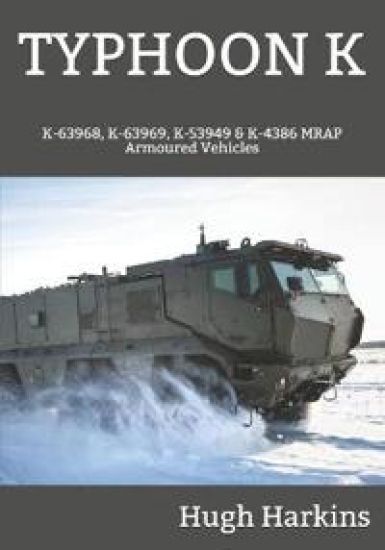
Typhoon K

Typhoon K

Hugh Harkins

Centurion
2020
pokkari
The Typhoon K (Тайфун K (Taifun K)) family of mine resistant ambush protected wheeled armoured vehicles began entering service with the ground forces of the Russian Federation in late 2013/early 2014. The Typhoon K series was developed as an integral element of the Russian Federation plans to modernise its armoured vehicle inventory in the period 2010-2020. There are four major variants of the Typhoon K - K-63968 & K-63969 built on a 6x6 chassis and K-53949 & K-4386 built on a 4x4 chassis. All variants can be armed with automatic combat modules, the 4x4 variants being outfitted with more diverse weapons options, ranging from medium/heavy machine guns and 30 mm automatic grenade launchers to 30 mm automatic gun armed uninhabited turrets for the K-4386. The K-53949 and K-4386 have been further developed as fire support vehicles armed with mortar complexes. The K-53949 has also been developed as a dedicated medical module (further developed into two distinct sub-variants) and for engineering (mine carrier) and command posts. The K-4386 has been further developed as the MTP-K tactical reconnaissance platform and as the Typhoon Air-Defence Vehicle for carriage of Igla-S surface to air missiles.This volume adopts a free flowing style rather than the traditional chapter format, due to the interrelated relationship between the variants and weapon systems. The volume sets out to detail the Typhoon K genesis, design and initial entry into service with the ground forces of the Russian Federation. All technical data relating to the respective Typhoon K platforms, weapon systems and components have been furnished by the respective design bureaus, as has much of the imagery/graphics, with additional impute from the Ministry of Defense of the Russian Federation.
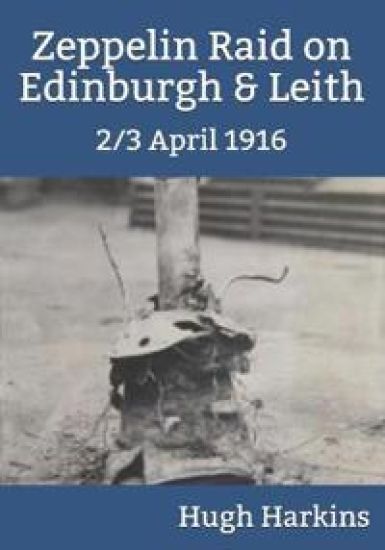
2/3 April 1916 Zeppelin Raid on Edinburgh & Leith

2/3 April 1916 Zeppelin Raid on Edinburgh & Leith

Hugh Harkins

CENTURION PUBLISHING
2019
nidottu
On the night of 2/3 April 1916, Scotland experienced her first ever air raid when German High Seas Fleet Zeppelin L.14 bombed the town of Leith and the City of Edinburgh on the South shore of the Forth Estuary. This report details the raids genesis - showing that it was not an isolated operation, but part of a far wider ranging German campaign that involved a number of other planned Zeppelin raids in the area of the Forth Estuary and the East coast of England - details the raid itself and its aftermath. The report shows that only a single Zeppelin operated over Scotland on the night of 2/3 April 1916 - disproving the claim that two such airships bombed targets in Scotland that night, a fallacy that has endured for more than 100 years after the event. The report also shows that defensive measures were instigated to try to intercept the Zeppelin on its inbound journey - by a RNAS fighter aircraft - and on the outbound journey - by warships of the Royal Navy 2nd Light Cruiser Squadron and attendant Destroyers. This was the first recorded incidence of a fighter aircraft being launched to counter an air raid on Scotland, a historical fact that has gone un-acknowledged during the ensuing 103 years.The report draws on documentary evidence from several archives held in a number of depositories. The major documentary evidence is taken from the Leith and Edinburgh Police Constabularies, the Edinburgh Fire Brigade, the Lothian Health Services Archives, German mission reports, British Admiralty reports on the airship raids and naval operations to counter the raid and a number of government documents/letters and personal circumstance letters.
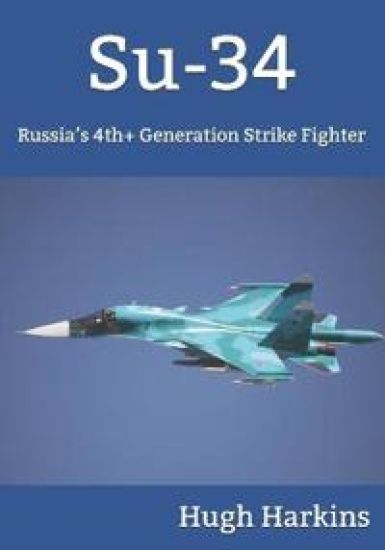
Su-34

Su-34

Hugh Harkins

CENTURION PUBLISHING
2019
pokkari
Su-34The Sukhoi Su-34 'Fullback' strike fighter was developed from the Sukhoi Su-27 'Flanker' air superiority fighter as a 4th+ generation stike aircraft for service with the VKS - Russian Federation Air Force - from the second decade of the twenty first century. The Su-34 was designed to replace the Russian Federations aging fleet of Sukhoi Su-24M/2 variable-geometry strike aircraft and possibly the Su-24MR in the tactical reconnaissance role. Conceived under the T-10V program in the twilight years of the Soviet Union - Union of Soviet Socialist Republics - the design weathered the financial crisis that gripped Russia following the break-up of that union on 25 December 1991. The T-10V matured into an advanced strike aircraft, deliveries to the Russian Federation Air Force commencing in second half of the first decade of the twenty first century.This volume covers the program from conception to operational service with chapters describing the aircraft design, development, production, systems, weapons complexes and strike operations flown by the Russian Aerospace Group supporting the Syrian Arab Republic in the civil war that gripped that nation in the 2010's.
Yak-130

Yak-130

Hugh Harkins

CENTURION PUBLISHING
2019
pokkari
Yak-130The Yak-130 entered service with the Russian Federation Air Force (Aerospace Forces from August 2015) in 2010, as a new generation training system for basic and advanced pilot training with a secondary light combat aircraft role.The intent of this volume is to detail the Yak-130 from s systems point of view with only a brief genesis/historic overview. All technical information regarding the aircraft, systems and weapons have been provided by the respective design houses/developers and experimental agencies, as has most of the graphic material, with technical and graphic input from other entities, such as the Ministry of Defence of the Russian Federation and Ministry of Defence of the Republic of Belarus - the later nation operating the Yak-130 as a light combat aircraft.
Su-33

Su-33

Hugh Harkins

CENTURION PUBLISHING
2019
pokkari
The intent of this volume is to detail the Sukhoi Su-33 (Su-27K) fourth generation naval strike fighter aircraft design procured for service aboard the Soviet Union (later Russian Federation) Project 1143.5 Aircraft Carrying Heavy Cruiser, Admiral of the Fleet of the Soviet Union, Kuznetsov. The volume covers the evolution of the T-10K, which was developed for service as the Su-33, and the limited updates introduced. All technical information regarding the aircraft, systems and weapons have been provided by the respective designers/developers, as has most of the graphic material, with technical and graphic input from other entities such as the Ministry of Defence of the Russian Federation. Certain elements of text, where pertinent, are taken from the volume 'Sukhoi Su-27SM(3)/SKM' (Harkins, 2016) and 'Russian/Soviet Aircraft Carrier & Carrier Aviation Design & Evolution Volume 2' (Harkins, 2017). No attempt is made to detail the Su-27KUB experimental design or the Chinese Su-33 copy, the Shenyang J-15, which are outside the scope of the volume, although both are referred to in the addendum.
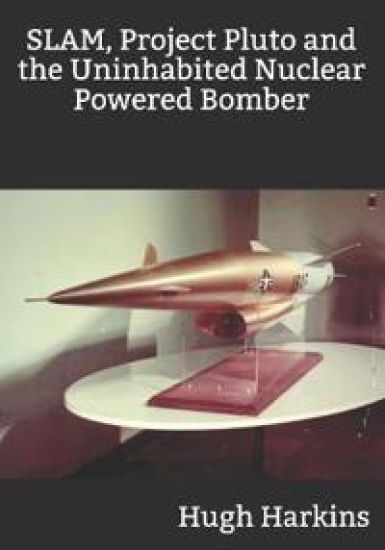
SLAM, Project Pluto and the Uninhabited Nuclear Bomber
SLAMConceived in the late 1950's as a Mach 3+ global range nuclear warhead delivery system, the Chance Vought SLAM (Supersonic Low Altitude Missile), powered by a ramjet engine propelled by a nuclear reactor developed under Project Pluto, can be considered an unrealised anachronism of the Cold War era. This was a period when human kind proved its ingenuity in many fields, including, unfortunately, that of provisioning the ability to destroy itself on an ever increasing scale.This volume looks at the genesis and development of the SLAM concept and the results of Project Pluto, and details how the concept lost out to the intercontinental ballistic missile concept as the major delivery system for nuclear weapons in the 1960's. The volume is supported by photographs, technical drawings, renderings and flight vehicle and nuclear propulsion planned performance charts. All technical data relating to the concepts have been supplied by contractors and test organisations.There is a deliberate switch from imperial measurements/weights to the fore and metric measurements/weights secondary to metric to the fore and imperial secondary at various stages in the text. This has been done to ensure 100% accuracy in primary reporting from respective designer/test/research organisations, whereas secondary measurements may, at times, be rounded to the nearest cm, kg, inch or lb.
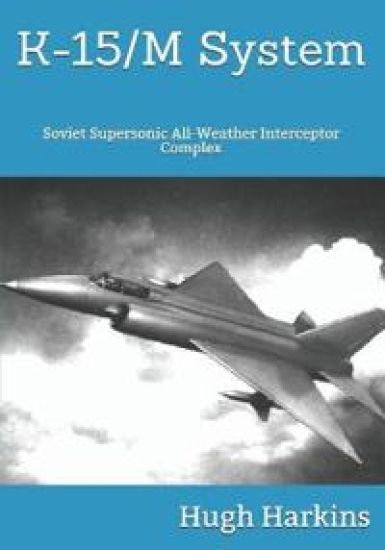
K-15 System

K-15 System

Hugh Harkins

CENTURION PUBLISHING
2019
pokkari
K-15 System - This research paper is intended to provide an overview of the early Soviet efforts to field an all-weather interceptor capability, leading to the OKB-301 K-15/M System. This emerged as the first Soviet airborne interception complex to be developed as an integrated weapon system, capable of conducting fully-automated interceptions against an aggressor nations strategic bomber fleets operating against the Soviet Union's northern and eastern boundaries. To facilitate destruction of the target the K-15M System was to employ air launched guided missiles armed with conventional and nuclear warheads.All textual technical-historical data and graphic material has been furnished by various design and manufacturing bureau and the Ministry of Defense of the Russian Federation, with additional input form agencies and industries outside the Russian Federation
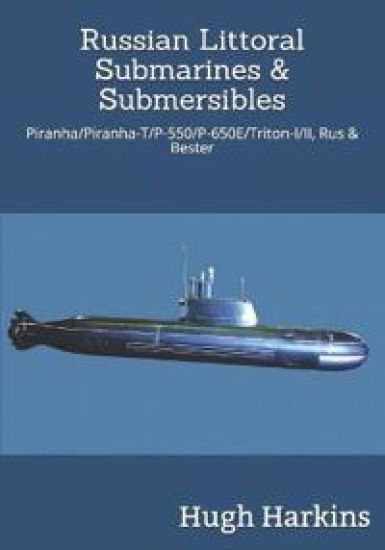
Russian Littoral Submarines & Submersibles

Russian Littoral Submarines & Submersibles

Hugh Harkins

CENTURION PUBLISHING
2019
pokkari
Russian Littoral Submarines & Submersibles - The purpose of this volume is to detail the current stable of Russian designed littoral attack submarines, midget submarines and submersibles. The evolution of small displacement Russian/Soviet submarine building is detailed, leading to the first generation Special Project 865 Piranha, Project 09070 Triton I and Project 09080 Triton II coastal and midget submarines that served the Soviet and later Russian Federation navies. The family of modern littoral submarine designs, typified by the Piranha/Piranha-T/P-550/P-650E, are detailed, as are the major submersible programs, typified by the Project 16810/16811 Rus & Project 18270 Bester deep sea rescue vehicle. The volume also covers the generation of tourist submarines designed and developed in the Soviet Union, and later the Russia Federation, from the late 1980's. The various control, sensor, communications, navigation and weapons systems that can be employed by the various submarine designs are detailed.All technical information regarding the submarines, systems and weapons have been provided by the respective design houses, developers and builders, as has the majority of the photographic and graphic material used throughout the volume.
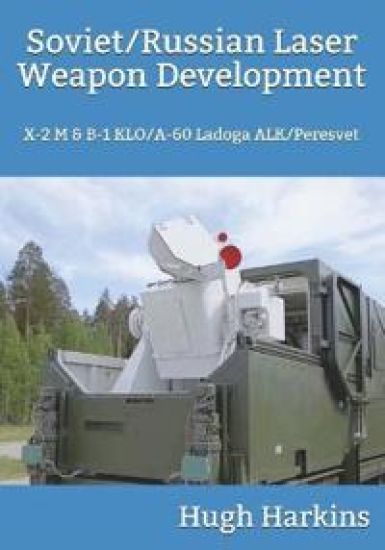
Soviet/Russian Laser Weapon Development

Soviet/Russian Laser Weapon Development

Hugh Harkins

CENTURION PUBLISHING
2019
pokkari
While there is a wealth of information available in regards to United States laser weapons program, including the application of such weapons in airborne laboratory testbeds, little is known about Soviet Union and later Russian Federation efforts to produce such weapons. This paper, which deals with the subject from a historical and scientific perspective, is intended to shed some light on the Soviet ground based KLO and A-60 Ladoga ALK laser weapon complex flying laboratory that first flew in the first half of the 1980's. The paper will also briefly detail Russian Federation continuation of A-60 ALK and KLO research work in the twenty first century, the former leading to the current generation Peresvet ground based combat laser complex unveiled in March 2018.All of the technical data and the majority of the graphic material has been furnished by official sources within the current Russian and past Soviet defence industry as well as the Ministry of Defence of the Russian Federation and United States intelligence agencies.
Russia's Strategic Missile Carrier/Bomber Roadmap, 2018-2040
In the second decade of the twenty first century the Russian Federation Long Range Aviation is undergoing a series of capability enhancements through the introduction of new long range strategic strike weapons, development of new long-range strategic missile carries - PAK DA and Tu-160M2 - and a deep modernisation of all three Cold War legacy strategic missile carrier/long range bombers resulting in the Tu-95MSM, Tu-160M2 (modernisation of Tu-160) and Tu-22M3M.The volume will draw on such information as is available to provide a picture of the Russian Federation strategic bomber roadmap as it stands in the second half of 2018. In regards to the PAK DA, information is naturally scarce as this program is shrouded in the highest levels of classification.While the volume is not intended to be a descriptive manual for the three Cold War legacy strategic missile carrier/bomber types - Tu-95MS, Tu-22M3 and Tu-160 - a brief description of the genesis, development and fielding of these weapon systems is provided. The volume sets out to detail the PAK DA and the evolution of the legacy Soviet era designs to the Tu-95MSM, Tu-22M3M and Tu-160M2 and associated weapons complexes intended for service into the 2040's and possibly beyond alongside the PAK DA. All technical information concerning aircraft and weapons, along with the majority of the graphic material, has been furnished by the respective design bureau, manufacturers, experimental agencies and the Ministry Of Defence of the Russian Federation.