Kirjojen hintavertailu. Mukana 12 290 406 kirjaa ja 12 kauppaa.

Kirjailija

Hui Wang

Kirjat ja teokset yhdessä paikassa: 96 kirjaa, julkaisuja vuosilta 2006-2026, suosituimpien joukossa CONSTRUCTION PROCESS ANALYSIS. Vertaile teosten hintoja ja tarkista saatavuus suomalaisista kirjakaupoista.

96 kirjaa

Kirjojen julkaisuhaarukka 2006-2026.

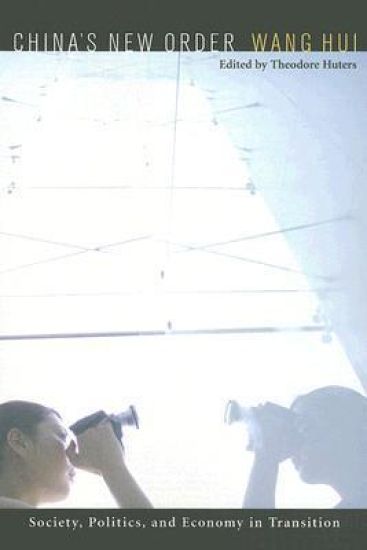
China’s New Order

China’s New Order

Hui Wang

Harvard University Press
2006
nidottu
As the world is drawn together with increasing force, our long-standing isolation from—and baffling ignorance of—China is ever more perilous. This book offers a powerful analysis of China and the transformations it has undertaken since 1989.Wang Hui is unique in China’s intellectual world for his ability to synthesize an insider’s knowledge of economics, politics, civilization, and Western critical theory. A participant in the Tiananmen Square movement, he is also the editor of the most important intellectual journal in contemporary China. He has a grasp and vision that go beyond contemporary debates to allow him to connect the events of 1989 with a long view of Chinese history. Wang Hui argues that the features of contemporary China are elements of the new global order as a whole in which considerations of economic growth and development have trumped every other concern, particularly those of democracy and social justice. At its heart this book represents an impassioned plea for economic and social justice and an indictment of the corruption caused by the explosion of “market extremism.”As Wang Hui observes, terms like “free” and “unregulated” are largely ideological constructs masking the intervention of highly manipulative, coercive governmental actions on behalf of economic policies that favor a particular scheme of capitalist acquisition—something that must be distinguished from truly free markets. He sees new openings toward social, political, and economic democracy in China as the only agencies by which the unstable conditions thus engendered can be remedied.
Modern Europe: Europe in History
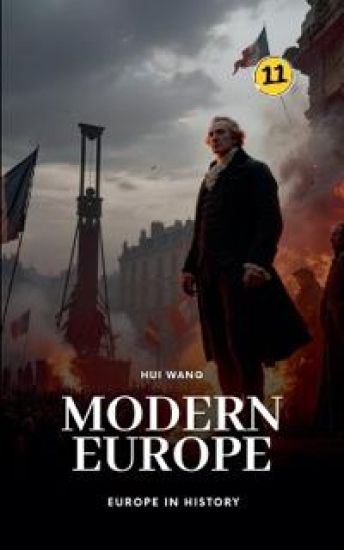
Modern Europe: Europe in History, PART ONE, is my attempt to guide readers through the dramatic transformation of France from a Bourbon monarchy into a revolutionary republic. I begin with Henry IV (reigned 1589-1610 CE), the founder of Bourbon rule in France, then turn to Cardinal Richelieu-chief minister to Louis XIII (serving roughly 1624-1642 CE)-and the early consolidation of royal authority. From there I move into the long reign of Louis XIV, the Sun King (1643-1715 CE), whose vision of absolute monarchy remade the political landscape of Europe. Along the way we meet powerful religious and political forces-the Jesuits (founded 1540 CE), the Jansenists, and the bitter tensions between them that helped to test and define royal power. This is where the modern story begins: not with a single explosion of revolution, but with the patient building of centralized authority. As the narrative unfolds, financiers and speculators like John Law-whose Mississippi scheme and the ensuing bubble in 1719-1720 CE rattled France's finances-take the stage, showing how credit and gambling could shake the foundations of the Ancien R gime. The Enlightenment does not appear as an abstract, detached phenomenon; it arrives in the voices of Voltaire and Jean-Jacques Rousseau, who challenged authority, questioned religious dogma, and reimagined the structure of society itself. Slowly but unmistakably, science, philosophy, and political thought begin to tilt the balance of power away from the old doctrine of divine right and toward reason, public debate, and fresh ideas about sovereignty. Under Louis XV the cracks in the ancien r gime grow harder to ignore. War - above all the Seven Years' War (1756-1763 CE) - exacts a heavy toll, deepening the monarchy's financial woes and exposing the crown's growing weakness. Political paralysis at court, mounting fiscal disaster, and the ferment of Enlightenment ideas together feed a slow, structural collapse that historians have traced in The Fall of the Old Regime. What erupts in The Opening of the French Revolution is not random chaos but the long-awaited release of decades of pent-up pressure. The Revolution brings a new cast of forceful personalities. Abb Emmanuel-Joseph Siey s forces a rethink of what "the nation" actually means with pamphlets like What is the Third Estate?. Jacques-Pierre Brissot and the Girondins try to steer the Revolution toward a more moderate, federalist path, while the Jacobins push for centralization and a sharper republican zeal. As these factions collide in The Battle for the Republic, Maximilien Robespierre increasingly emerges as one of the Revolution's most decisive - and most controversial - figures. The book reaches its climax in the figure of Robespierre and the Reign of Terror, where the optimistic promise of liberty smashes into political extremism and the grim necessities of revolutionary survival. By following the lives and struggles of Louis XIV and Louis XV, the polemics of Voltaire and Rousseau, and the political maneuverings of figures like Emmanuel-Joseph Siey s and Jacques-Pierre Brissot, I trace the long arc that bends history from absolutist monarchy toward the idea of popular sovereignty.
Late Medieval Europe

Late Medieval Europe

Hui Wang

Hui Wang
2026
pokkari
Late Medieval Europe: Europe in History, PART ONE, tells the story I wanted to tell - a world carved by bold rulers and relentless reformers. Picture Gregory VII at the heart of the Investiture struggle and, further down the line, Henry V negotiating the Concordat of Worms (1122 CE); imagine Nicholas II securing the Treaty of Melfi (1059 CE) and Urban II calling knights to Clermont (1095 CE). The tale opens in 1054 CE, the year traditionally marked as the East-West Schism - a turning point when empires and churches began to head in visibly different directions - and it follows the clash between throne and altar through dramatic moments like the Humiliation of Canossa (1077 CE), where politics and faith collided in unforgettable ways. As the narrative pushes eastward, readers encounter crusading leaders, Venetian merchants woven into dangerous bargains, and papal strategists plotting power on a continental scale. The birth of the Crusader Kingdoms after 1099 CE, Venice's dramatic-and often self-interested-role in the Fourth Crusade (1204 CE), and the shock of Ain Jalut (1260 CE) all surface alongside towering figures such as Innocent III, whose Fourth Lateran Council (1215 CE) reshaped the medieval church. His ascent and eventual waning make plain how fragile even the greatest authority could be in a Europe where alliances shifted as quickly and unpredictably as the tide. Ideas and power move in tandem across the pages. Thomas Aquinas rises within the universities at precisely the moment scholasticism begins to reshape intellectual life, while emperors and popes wrestle over the true limits of their authority. The political map widens under figures like Eleanor of Aquitaine and Henry II, and in the age of Philip II - specifically Philip II Augustus of France - a span of history that runs from the sieges at Acre during the Third Crusade to the decisive clash at Bouvines, turning the rivalry between France and England into one of the Middle Ages' defining dramas. England's transformation then takes center stage. From the forging of the English realm under William the Conqueror after the Norman Conquest of 1066 CE, through the vast expansion of the Plantagenet inheritance under Henry II, the narrative traces how power flowed between Normandy, the French crown and the papacy. Men like King John stand at the eye of those storms - squeezed by French ambitions and by papal pressure, struggling to hold a fragile kingdom together. I wrote this book to feel like a living epic rather than a distant lecture. It tracks the arc from crusading campaigns and thunderous church councils to the sealing of the Magna Carta and the slow forging of common law, showing how choices made by figures such as Pope Gregory VII, Pope Innocent III, King Henry II of England, King Philip II of France, and King John still ripple through modern law and politics.
Early Medieval Europe

Early Medieval Europe

Hui Wang

Hui Wang
2026
pokkari
Early Medieval Europe: Europe in History, PART TWO, opens amid the wreckage left by Rome's collapse, where figures such as Galla Placidia, Clovis, and Pope Gregory the Great tried to stitch a shattered world back together when the old rules no longer held. I begin in post-Roman Italy, a place where barbarian kings-many of them Arian Christians-argued theology as fiercely as they contested territory, where Roman institutions refused to die quietly, and where debates about the Trinity were anything but abstract: doctrinal lines often doubled as political weapons. In that age, survival depended as much on belief and allegiance as on armies and fortresses. As the narrative moves west and north, it follows the rise of the Franks-from Clovis and the Merovingians, through a period in which royal authority and local power were in constant tension-to a scene of everyday power struggles that reveal how fragile loyalty could be and how kingship had to be reinvented from the ground up. The decisive turn comes with Pepin the Short, who secured papal support, won recognition and anointing, and enacted the Donation of Pepin that helped realign secular and ecclesiastical power across Europe. And then Charlemagne: on maps his empire looked solid and vast, but in practice it rested on personal bonds, military prestige, and contested loyalties, and felt painfully unstable even at its height. Empire did not end with Charlemagne's coronation-it became a burden. Under Louis the Pious and then Charles the Bald, dynastic quarrels, noble ambition, and the blunt force of Viking raids gradually unraveled Carolingian authority. These chapters follow that slow undoing: kings remained kings in name, but power increasingly depended on negotiation, compromise, and a perpetual scramble to contain crises. Europe, in learning how hard unity could be, discovered that it was expensive and often fleeting. The book does not stop at Latin Christendom. It moves east and south to trace the rise and transformation of the Islamic caliphates-from Muʿawiya ibn Abi Sufyan and the Umayyads to Harun al-Rashid and al-Ma'mun of the Abbasids. In Baghdad's famed House of Wisdom (Bayt al-Hikma), translation, science, and philosophy flourished at a pace that made Europe's fragmentation look like a different kind of history. Placing these worlds side by side makes it unmistakably clear that early medieval history was shared, interconnected, and far more global than it first appears. The final chapters turn east, following the rise of the Slavs and the mission of Saints Cyril and Methodius - the ninth-century Byzantine brothers who brought Christianity to many Slavic peoples and created the first Slavic script, Glagolitic (their disciples later developed what we now call the Cyrillic alphabet). They trace, too, the emergence of Rus under the Varangian leader Rurik, the semi-legendary figure traditionally said to have been invited to rule Novgorod in 862. The book closes where history often feels most intimate: with Galla Placidia, daughter of Theodosius I, a woman whose life was bent between empire, invasion, and faith - taken into the turmoil of the early fifth century, entwined with Gothic and Roman courts, and ultimately a central figure in the troubled politics of the late Western Empire. I wrote this book to show that early medieval Europe was not a dark pause between great eras but the crucible when new political orders, religions, and identities were forged - messy, human, and full of consequences that still shape the world today.
Early Medieval Europe

Early Medieval Europe

Hui Wang

Hui Wang
2026
pokkari
Early Medieval Europe: Europe in History, PART ONE, is the book I set out to write when I first realized just how bewildering the years after Rome really are. This narrative begins in the wake of the fall of the Western Roman Empire (commonly dated to 476 CE) and follows a long, uneasy transition rather than a neat, instantaneous break. Tracing the older biblical traditions-from the figure of Moses in the religious imagination-to the arrival of Jesus and the slow, often violent spread of Christianity, I map how lingering Roman power, emerging religious ideas, and fragile institutions collided and reshaped a continent. Europe did not suddenly wake up medieval; it stumbled there, step by step, under the twin pressures of conviction and calculation, of belief and bare survival. At the center of the story stand figures such as Constantine the Great, whose decisions altered both the map of empire and the map of faith. He legalized Christianity with the Edict of Milan (313) and convened the Council of Nicaea in 325, moments that pulled theology into the bloodstream of politics. I guide readers through Nicaea, the rise and contestation of Christian doctrine, and the influence of currents like Neoplatonism on early Christian thinkers. Arius and Alexander were not dusty theologians tucked away in cloisters-their quarrel over the nature of Christ split cities, inflamed popular loyalties, and forced emperors to pick sides. Councils became arenas of power where theological verdicts could help crown a ruler or topple one. As the empire strained, emperors fought to hold the reins. The Battle of Adrianople in 378 cracked the Roman military fa ade and reshaped politics; it helped usher Theodosius into power and set the stage for a new religious order when his reign hardened Nicene Christianity into imperial policy. The fall of John Chrysostom-forced from the patriarchate and exiled after clashing with court power-made plain how dangerous it was to speak truth from the pulpit when it challenged the throne. Meanwhile theological storms-arguments over Nestorianism and debates that would culminate at Council of Ephesus (431) and later the Council of Chalcedon (451)-pulled the empire into doctrinal combat. Chalcedon proclaimed a form of unity, but the peace it offered was brittle, and religious dispute kept the seams of empire taut. Then the crisis broke into the open. The rise of the Goths, Alaric's shocking sack of Rome in 410, and the ripple of panic that spread across the Mediterranean marked a new phase of decline. Gaiseric's seizure of Roman Africa and the loss of Carthage in 439 stripped the West of vital grain and revenue, while Attila's Huns stormed across Gaul and into Italy, proving how exposed the western provinces had become. In this collapsing world, Anthemius-installed as Western emperor in the late 460s with Eastern backing-stands out as Rome's last serious gamble: an effort to stitch the old order back together even as the threads were already slipping through history's fingers. The final chapters look beyond collapse. From Justinian and Theodora's bold programs of law, rebuilding, and reconquest to the wrenching debates over icons, the doctrinal battles that rent churches, and the slow road to the Macedonian Renaissance, I follow how the Eastern Empire adapted and survived. The Roman Empire did not simply vanish-it continued in the east and, over centuries, evolved into what historians call the Byzantine Empire, an eastern Roman state reshaped by Greek language, Christian faith, and administrative reinvention. The world after Rome was forged by faith and violence as much as by compromise and creative reinvention.
Ancient Rome

Ancient Rome

Hui Wang

Hui Wang
2026
pokkari
Ancient Rome: Europe in History, PART TWO, is the book I wish I'd had when I first tried to make sense of Rome's long slide from republic to empire. I start with Gaius Marius - the reformer whose changes to recruitment and the structure of the legions quietly altered the balance of power in Rome - and then press on to the hard question of why the Republic broke down at all. From there, Sulla steps onto the stage, a living example of how violence and the pursuit of personal power became routine tools of Roman politics long before Caesar ever crossed the Rubicon. As the story unfolds I lead you into the world of Pompey and Crassus and a Senate that clung to the illusion of control even as it was losing its grip. The First Triumvirate - Caesar, Pompey, and Crassus - looks formidable from the outside, but it is built on rivalry, mutual suspicion, and fragile convenience. That tension ultimately explodes into open civil war between Julius Caesar and Pompey, culminating in Caesar's victory and the effective end of the old Republic. His assassination closes one chapter of Roman history, but it precipitates a far darker and more chaotic one. The next act belongs to the Second Triumvirate - the brutal rivalry that boiled down to Octavian and Mark Antony. I follow how Octavian outmaneuvered every rival, co-opted institutions and loyalties, and built an imperial machine step by patient step - all while refusing the title of king. He styled himself Princeps and, when he accepted the honorific Augustus in 27 BC, transformed the republic's forms into a working mask for a new, hidden monarchy. Under Augustus, Rome learned to live with that disguise: dynastic maneuvering, emperors who ruled from behind the language of the old republic, and an official reverence that could slide into emperor-worship. From there, the story moves through the empire's high water and its long, slow erosion. I examine the rise of the imperial cult and the long calm under the Five Good Emperors (Nerva, Trajan, Hadrian, Antoninus Pius, Marcus Aurelius), then the sharp turn under Caracalla and into the era of the barracks emperors - the soldier-kings who made the purple a prize seized by the army. Stability gave way to military politics, short reigns, and an empire always on edge. The final chapters follow Rome through its last great experiments. Diocletian's Tetrarchy - a divided rule of two Augusti and two Caesars - was a desperate bid to save the empire with rigid structure, sweeping administrative and fiscal reforms, and an iron discipline meant to end the chaos of the third-century crisis. Constantine reshaped the map again: he re-founded Byzantium as Constantinople in 330 and, with the 313 Edict of Milan (issued alongside Licinius), put Christianity on a new footing by legalizing it and ending imperial persecution. That shift set Christianity on a path to imperial favor - though it would only become the empire's official religion later, under Theodosius. I close by confronting the biggest question of all: why did the Western Roman Empire collapse while the East endured?
Ancient Rome

Ancient Rome

Hui Wang

Hui Wang
2026
pokkari
Ancient Rome: Europe in History, PART ONE, is the book I wrote to tell Rome's story from the ground up, starting with Romulus and Numa and the fragile order they tried to build. These early figures were not just legends; they shaped how Romans thought about law, religion, violence, and authority. From sacred rituals to kingship, from fear to discipline, this opening part shows how Rome learned to hold itself together before it ever dreamed of ruling others. As the narrative moves on, the focus shifts to power inside the city. Figures like Servius Tullius come into view, along with the curial system, the Comitia, and the slow rise of the Senate. The fall of the kings and the birth of the Republic did not bring calm or equality. Consuls, senators, patrons, and ordinary citizens pushed and pulled against each other, arguing over law, land, and voice. Reforms such as the Licinian-Sextian laws reveal a society constantly renegotiating who counted and who decided. Rome's wars then take center stage, and the story widens beyond Italy. The First Punic War introduces Rome as a naval power, while the Second and Third Punic Wars bring unforgettable figures like Hannibal and Cato onto the stage. The destruction of Carthage was not just a military triumph; it changed Rome's economy, its politics, and its sense of destiny. Victory made Rome rich, restless, and increasingly dangerous to itself. From there, Rome steps into the Greek world. The Macedonian Wars, the clash with Antiochus III, and campaigns stretching from Macedon to North Africa show a republic learning how to dominate ancient kingdoms with very different traditions. Battles, diplomacy, and intimidation all play their part. Rome now commands immense power, yet it still relies on old institutions that strain under the weight of empire. The final chapters turn inward, to the crisis of the Republic itself. Tiberius Gracchus and Gaius Gracchus stand at the heart of this struggle, as land reform, grain laws, popular power, and elite resistance collide. Their rise and fall expose deep cracks in Rome's political system, ending in bloodshed and fear. By the time of Gaius Gracchus's last stand, the Republic is no longer stable, and its future feels uncertain.
Ancient Greece

Ancient Greece

Hui Wang

Hui Wang
2026
pokkari
Ancient Greece: Europe in History, PART TWO, is my attempt to tell the Greek story the way it actually felt to live it-tense, unstable, and full of agonizing choices. I open the book with two competing roads to power, Athens and Sparta, and trace how their very different ideas about freedom, discipline, and leadership pushed the Greek world toward confrontation. What begins as cooperation-alliances and shared purpose-slowly hardens into rivalry, and then into something far more destructive. The rise of Athens is narrated through real people, not abstractions. Men like Cimon and Pericles make visible how alliance politics frayed and how Athens drifted from leadership into outright empire. Cimon, the earlier generation, pushed Athenian influence at sea while favoring conciliation with Sparta; Pericles, later, presided over the city's golden age and its imperial consolidation and, during the great war, argued for a strategy that relied on the navy, the city's walls, and its resources rather than reckless land engagements. The earlier conflict often called the First Peloponnesian War (c. 460-445 BCE) and the later, much larger struggle commonly known simply as the Peloponnesian War (431-404 BCE) - sometimes called the Second Peloponnesian War in periodized accounts - together reveal a city trying to rule others while convincing itself it was still free. In that struggle, ships, money, speeches, and civic pride mattered as much-sometimes more-as hoplites on the battlefield. As the war drags on, individuals begin to bend events in dangerous, unexpected ways. Episodes at Pylos and the daring rise of Brasidas expose how fragile power really is, how a single battle or charismatic commander can tilt the balance. Then comes Alcibiades-brilliant, extravagant, and corrosive-whose personal brilliance accelerates political and military chaos. That chaos deepens with the opportunism of Theramenes, the oligarchic coup of the Four Hundred, and the uneasy, short-lived government of the Five Thousand. The brief, brutal reign of the Thirty Tyrants and the trial and execution of Socrates become the shattering moments for Athenian democracy, emblematic of a wider collapse in the Classical civic ideal. The story then turns north to Macedon, where Philip II, patient and ruthless, rebuilds power brick by brick. His victories do more than defeat city-states; they reorder the Greek world. The establishment of the Corinthian League creates the institutional framework Philip hands to his son, Alexander. Alexander's meteoric ascent forces defenders of the old polis-above all the orator Demosthenes-into renewed, desperate resistance, a final campaign of rhetoric and coalition-building that can't halt the tide. These chapters trace how stubborn local loyalties, soaring oratory, and a longing for a vanished past collided with the hard realities of a new political order. The book closes with Alexander the Great, the fading of Classical Greece, and the rise of the Hellenistic world. Greek culture now radiates farther than it ever had, but political control fractures in unexpected ways: the great experiment of city-state politics gives way to sprawling Hellenistic monarchies, and local customs blend with Greek forms. What remains is not a neat, triumphant ending but a transformed world - a shifting tapestry of ideas, institutions, and art that spans continents.
Origins of the Jewish World: The Middle East in History
Origins of the Jewish World: The Middle East in History, opens with a journey that predates the state of Israel by millennia. I begin with figures like Gilgamesh, Noah, and the Tower of Babel because Jewish history did not spring from a vacuum but from the same deep, shared ancient world that produced those stories. From these early myths and memories the narrative moves to Abraham - a man who walks between competing gods, promises, and unfamiliar lands. His voyage, and the idea of a "chosen" family, sets the compass for everything that follows and draws the reader into the long human story behind faith. From there the book takes the road into Egypt, where Joseph rises, falls, and rises again, and where Moses ultimately steps forward to confront Pharaoh. The Ten Plagues, the Exodus, and the Ten Commandments are not treated here as mere distant fables; I approach them as charged moments shaped by fear, power, and the basic realities of survival. I look closely at Moses not only as a lawgiver but as a leader bearing impossible weight - and at how law, in those raw and uncertain times, became a means of holding a people together amid chaos. The story then turns to conquest and kingship. In the biblical account, Joshua leads campaigns in Canaan-an image of rapid conquest that scholars still debate-while the age of judges gives way to the prophetic and royal dramas of Samuel, Saul, David, and Solomon. David's rise and Solomon's building of the First Temple in Jerusalem are cast as a high point, an almost mythic consolidation of power, but cracks quickly appear: internal divisions, prophetic challenges, and the pressures that will culminate in exile. From the era of the Temple to the trauma of the Babylonian Exile, the narrative shifts from triumph to loss and uncertainty. In the Book of Daniel a figure stands in foreign courts-modeled on Babylonian and later Persian palaces-interpreting dreams and visions about empires, and in doing so the story of Jewish identity begins to stretch beyond land and throne toward law, scripture, and community. History grows harsher as larger empires tighten their grip. The Hellenistic policies of Antiochus IV Epiphanes-his attempts to impose Greek customs and interfere with Jewish worship-helped spark the Maccabean Revolt, a fierce struggle to defend religious life and local autonomy. Under Roman rule the Second Temple itself was destroyed in 70 CE by Roman forces under Titus, ending the Temple-centered sacrificial system. A few decades later, the brutal suppression of the Bar Kokhba revolt (132-136 CE) and measures taken by Emperor Hadrian-among them the renaming of the province-further crushed hopes for Jewish political autonomy. At the same time, currents already visible in Second Temple literature were reshaping Jewish life. The Dead Sea Scrolls (texts dating roughly from the third century BCE through the first century CE) preserve the anxieties, sectarian debates, and apocalyptic expectations of the period. Those texts, together with the shock of conquest and exile, helped push Jewish community life toward new forms-centered more on law, texts, and local institutions like synagogues-rather than on kings and armies. The final chapters trace what comes after. I follow the rise of Ashkenazi Jewry - and the divergent journeys of Ashkenaz and Sepharad - into the hard realities of money, work, and survival in the Jewish Diaspora.
War, Violence, and Collapse: The Middle East in History
War, Violence, and Collapse: The Middle East in History, opens with a simple question that kept pushing me back to the archives and the map: what actually happened when the global war crashed into the Middle East? I follow a cast of leaders who stood at the edge of ruin and had to choose between survival, loyalty, and ambition - from Abdul Hamid II, the deposed sultan whose long shadow still shaped Ottoman politics, to Mustafa Kemal, the battlefield officer who would become the architect of modern Turkey, and to Sharif Husayn (Husayn ibn Ali), the Sharif of Mecca who would spark the Arab Revolt. These were not distant figures merely reacting to Europe's storms; they were actors shaping events that would decide the fate of empires. As the narrative pushes forward, the war spreads fast and brutally across deserts, mountains, and river plains. From Sarikamish in the high Caucasus to Deir ez-Zor on the Euphrates, from the embattled city of Van to long convoys into exile and shattered hope, violence remade entire communities and polities. Meanwhile Verdun and Jutland thundered in Europe, and the Arab Revolt flared across desert tracks and coastal towns. My book argues that these fronts were never separate worlds but facets of a single expanding catastrophe - a vast convulsion that dragged soldiers, civilians, and rulers alike into its deadly orbit. Ideas mattered as much as armies. The rise of Islam under Muhammad and the early caliphs cast a long, indelible shadow over later conflicts, and at a pivotal crossroads where faith, empire, and rebellion collided stood Sharif Husayn ibn Ali - the Sharif of Mecca whose revolt would reshape the map of the Middle East. Figures such as T. E. Lawrence and Gertrude Bell slipped into a quieter, hidden war for influence, intelligence, and control - a war fought with promises, maps, and carefully chosen words. The turning point of 1917 brought new forces into the arena. Lenin and Woodrow Wilson emerged as symbols of radically different futures, while blockade, hunger, and sheer exhaustion pushed societies toward breaking. From the Schlieffen Plan to the Kiel mutiny, from America's entry into the war to Wilson's Fourteen Points, the book traces how grand designs unraveled and how ordinary people ultimately paid the price. The final chapters follow the collapse itself. Bulgaria is the first of the Central Powers to crumble-signing an armistice at Salonika on 29 September 1918-and that initial rupture sets the pace. Empires begin to unravel. From the Armistice of Mudros on 30 October to the Armistice of Compi gne on 11 November, old orders fall apart faster than anyone had expected. I wrote this book to show that war destroys more than armies-it shatters illusions and reshapes political life. If you want to understand why the modern Middle East bears the lines and wounds it does, and how a global war turned local struggles into lasting scars, this book invites you to read on.
The Road to World War I: The Middle East in History
The Road to World War I: The Middle East in History, plunges you into the years when Europe and the Ottoman world were already fraying at the edges, even as many people still believed that peace could hold. I wrote this book to insist that World War I did not spring fully formed from a single gunshot in Sarajevo. Its origins run deeper - in the Ottoman Balkans, in the contested lands of Macedonia, and across a region worn down by crisis, ambition, and fear. At the heart of the story lie the Balkan Wars of 1912-1913. Italy's assault on Ottoman possessions in the Italo-Turkish War (1911-12), the brutal scramble for control of Macedonia, and the slow unravelling of Ottoman authority turned the peninsula into a grim testing ground for modern war. Those conflicts stripped away old illusions and made large-scale violence feel inevitable. By the time Sarajevo entered history in 1914, the fuse had already been burning for years. This book follows the men and women who tried to keep empires alive. Emperor Franz Joseph I presided over an old world slipping from his grasp; Empress Elisabeth - "Sisi" - came to embody the fragile, human side of imperial power. Archduke Franz Ferdinand hoped that reform might rescue Austria-Hungary, yet his choices - and his assassination in Sarajevo - hurled the empire straight into the coming storm. Their private lives and political calculations altered the course of history far more than they ever imagined. I then turn to the Ottoman side of the story. Enver Pasha rose with startling speed and audacity, moving from youthful military acclaim to a central role among the Three Pashas and helping drag the empire from cautious neutrality into a wartime gamble that changed everything. Across Europe the balance was breaking: Otto von Bismarck's careful system unraveled after his fall, while Kaiser Wilhelm II chased power and prestige. And Winston Churchill, by steering the Royal Navy from coal to oil as First Lord of the Admiralty and by pressing Britain to secure reliable oil supplies, quietly reshaped the future of global warfare. This book digs deeper into the past to show why identity and belief came to mean so much. Gregory the Illuminator and the emergence of Christian Armenia illustrate how faith became bound up with survival - how a nation's religion could be its shield and its stake. The reign of Abdul Hamid II, and the bloody episodes of the 1890s that followed, demonstrate how fear, state policy and sectarian suspicion can turn whole communities into targets - setting a brutal precedent that helped make the later catastrophe of 1915-17 possible.
The Decline of the Ottoman World: The Middle East in History
The Decline of the Ottoman World: The Middle East in History, takes you inside the long, uneasy journey from imperial glory to crisis. I start with Suleiman the Magnificent - the sultan under whom Ottoman power felt unshakable - and trace what comes after: the slow, grinding process by which swagger gave way to unease and confidence slowly eroded into anxiety. This is not a tale of sudden collapse. It is a story of rulers trying, again and again, to hold an unruly empire together while the ground beneath them quietly drifted. As the empire moved into an age of reform, men like Selim III and Mahmud II were forced into choices that offered no clean escape. Selim attempted bold modernization - most famously his Nizam-ı Cedid measures to remake the army - and paid a heavy price when entrenched interests rose up against him. Mahmud pushed even further: in 1826 he provoked and then crushed the Janissaries in what became the brutal "Auspicious Incident," clearing one of the most dangerous obstacles to change. These chapters show how, in an ancient polity, reform often meant tearing apart the very institutions that had once been the source of its strength. The nineteenth century only deepened the strain. Under Abd lmecid I, reform accelerated: the Tanzimat agenda pushed the state into new realms of modernization, grand palaces rose as symbols of renewal, and with them came rising debt. Then Midhat Pasha and the 1876 Ottoman Constitution offered a rare glimpse of constitutional rule - a moment when parliamentary government seemed, at last, within reach. That hope was short-lived. Abd lhamid II quickly consolidated power, suspended parliament in 1878, and held the state together through surveillance, secret police, and an atmosphere of fear. Branded the "Red Sultan" by his opponents, he came to personify the empire's desperate tension between tight control and looming collapse. But opposition did not vanish; it went underground and grew stronger. A new generation - forged in military schools, steeped in nationalist ideas, and seething from diplomatic humiliations abroad - coalesced into the Young Turks. Their 1908 revolution restored the constitution and promised a fresh start, yet governing proved far harder than protesting. Ideals collided with diplomacy, crushing debt, and relentless foreign pressure - the very realities that had long constrained Ottoman reform - forcing these reformers to confront the limits of power they had once so passionately denounced. The final chapters turn to war and exposure. Italy plunges into the Ottoman world, sparking the Italo-Turkish War of 1911-1912 (often called the Italo-Ottoman War), as Italian forces seized the Ottoman provinces of Tripolitania and Cyrenaica - the very territories that would later become modern Libya - and turned them into a testing ground for new weapons and imperial ambition. Those clashes brutally revealed how fragile the empire had become and how tightly the Middle East and North Africa were now bound into global rivalries.
Ottoman Turkey: Civilizations of the Middle East
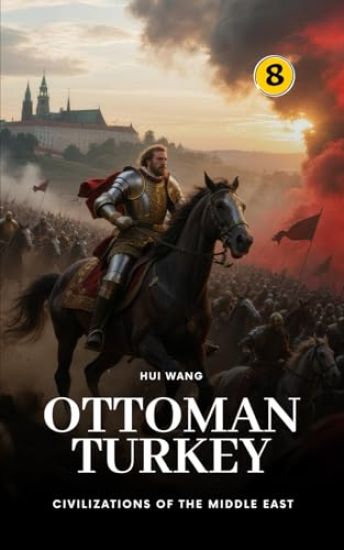
Ottoman Turkey: Civilizations of the Middle East, PART TWO, plunges you into the long, dramatic final centuries of the Ottoman Empire. As the author, I follow the story not from palaces or dusty treaties alone, but through the people who made-and remade-it. You will meet the formidable K pr l grand viziers, feel the slow march toward catastrophe at the siege of Vienna in 1683, and watch the balance of Europe tilt as the Ottomans confront new enemies and unfamiliar ideas. This is the story of an empire struggling to survive in a world that had stopped playing by its old rules. Then the narrative turns north and east, where new giants were rising. You will see how Peter the Great dragged Russia onto the European stage-how his victory at Poltava (1709) helped set off a chain of events that drew Moscow and Istanbul into confrontation, culminating in the Prut campaign of 1711-and how, later, Catherine the Great's wars and diplomacy pushed Russia toward control of the Black Sea. These chapters explain why Russia became the Ottoman Empire's most dangerous rival, and why the rivalry between Istanbul and St. Petersburg shaped the fate of Eastern Europe and the Middle East for generations. Reform and culture also take center stage. Readers step into the Tulip Era under Sultan Ahmed III - a brief season of elegance and optimistic spectacle - before the empire slides into harsher times. Figures such as Mahmud II emerge not as distant, ceremonial monarchs but as leaders forced into brutal choices: he crushed the Janissary corps in the bloody 1826 "Auspicious Incident," using ruthless means to push the Ottoman state toward centralization and modernization. Abd lmecid I follows, and the Tanzimat reforms unfold - a sweeping effort to rebuild law, administration, and society under enormous pressure from both internal unrest and foreign demands. Foreign powers never stop circling. Napoleon's invasion of Egypt in 1798 jolts the Ottoman world; out of that turmoil Muhammad Ali Pasha rises in Cairo and carves out an effectively autonomous Egypt. The Crimean War (1853-56) drags the empire into a wider international struggle, with Britain and France fighting alongside the Ottomans against Russia. From Istanbul to Egypt, the great powers - Britain, France, and, increasingly in the late nineteenth century, Germany - tug at Ottoman politics. This book traces how Ottoman foreign alignment shifted over the century, moving from heavy British and French influence toward closer ties with Germany, and explains why those diplomatic choices carried such profound risks. The final chapters track the empire into its last great storm: the twilight of Abdul Hamid II's rule, the rise of the Young Turks and figures like Enver Pasha, and the twin crises in Libya and the Balkans that shattered Ottoman dominance in North Africa and Europe. Those defeats and the broader regional tensions helped set the stage for the catastrophe that followed - with Sarajevo providing the immediate spark that ignited the First World War. From the assassination in Sarajevo through the smoke of the trenches to the collapse of imperial order, the narrative reaches its decisive turning point. This book is written for readers who want to understand how an empire fell, how a republic was born, and why leaders such as Mustafa Kemal Atat rk emerged from the wreckage to remake history forever.