Kirjojen hintavertailu. Mukana 12 229 519 kirjaa ja 12 kauppaa.

Kirjailija

Hui Wang

Kirjat ja teokset yhdessä paikassa: 96 kirjaa, julkaisuja vuosilta 2006-2026, suosituimpien joukossa CONSTRUCTION PROCESS ANALYSIS. Vertaile teosten hintoja ja tarkista saatavuus suomalaisista kirjakaupoista.

96 kirjaa

Kirjojen julkaisuhaarukka 2006-2026.

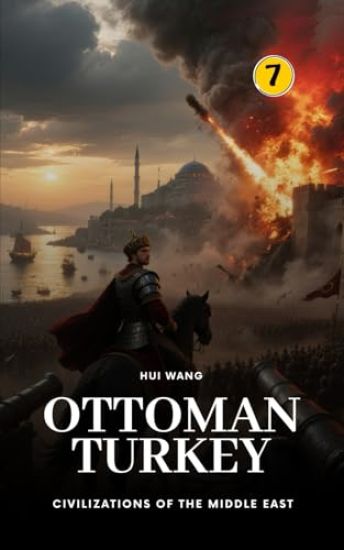
Ottoman Turkey: Civilizations of the Middle East
Ottoman Turkey: Civilizations of the Middle East, PART ONE, carries you from the first stirrings of the Turkic world to the roaring heights of an empire that reshaped three continents. When I set out to write this book, my aim was never to hand you a dusty timeline. I wanted history to breathe - to feel like a living journey that begins with the rise of early Turkic peoples and culminates in fleets cleaving the Mediterranean under legendary captains such as Hayreddin Barbarossa. Each chapter holds a hinge moment, when the balance of things tilts and the stage is set for the Ottomans we recognize today. You'll meet Osman I, the frontier warrior whose bold dream planted the dynasty's seed, and Orhan I, who took that small beylik and forged it into a functioning state. Their stories flow into the fierce, patient rule of Murad I, the first to shoulder the full burden of imperial ambition, and then into the flash and fire of Bayezid I - the Thunderbolt - whose speed on the battlefield became the stuff of legend. His defeat and capture at the Battle of Ankara in 1402 by Timur plunged the realm into crisis and sparked the Ottoman Interregnum, a civil rupture whose shockwaves reverberate through what comes after. I walk you through those aftershocks, step by step. From there the narrative tightens on the young Mehmed II - a boy whose early life was anything but smooth. Watching this hesitant, uncertain youth harden into the ruler who fixed his eyes on Constantinople is one of the book's most gripping arcs. When we reach The Road to 1453, The Fall of Constantinople, the tension accumulates until it crashes into a moment that altered the course of history. The Siege That Changed the World is not a dusty entry in a textbook - it rewrote trade routes, shifted religious and political balances, and reshaped the architecture of global power. I lead you into that night and that roar as if you're standing on the ramparts yourself. But the tale does not end with the city's stones falling silent. Once the smoke clears, we move into Shaping Ottoman Istanbul, where a ruined metropolis is remade into a vibrant cultural and administrative center that still draws millions. Then comes Brothers at War, a close-up on how dynastic struggle could be as deadly as any battlefield. These chapters pry open the intimate mechanics of empire-building - ambition and fear, rivalry and loyalty - the raw forces that make or break dynasties. The final stretch brings forward the rulers who drove the empire to its zenith. Walk beside Selim I - Selim the Grim - the man whose campaigns against the Safavids and the Mamluks reshaped Ottoman dominion across Anatolia, Syria, Egypt and the Hejaz. Then follow Suleiman I, whose long, luminous reign came to embodied the empire at full blaze: lawgiver, patron of the arts, and conqueror who carried Ottoman power to its high-water mark. And sweeping in from the sea, Hayreddin "Barbarossa" - corsair turned admiral - remade Mediterranean naval power, forcing Spain, Venice and the Habsburgs to rethink their strategies. By the end, my hope is simple: you'll close the book feeling that you didn't just learn Ottoman history - you lived it, chapter by chapter, alongside the people who built it with their own hands.
Persia

Persia

Hui Wang

Hui Wang
2025
pokkari
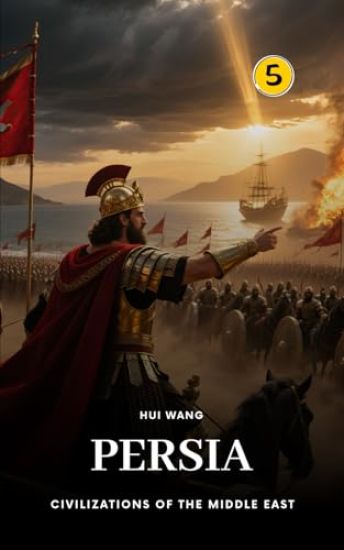
Persia: Civilizations of the Middle East, PART TWO, I sweeps across centuries of Iranian history, beginning with the legendary Khosrow I - Anushirvan - the ruler who revitalized the Sasanian state, enacting reforms that both propelled its greatest achievements and, in time, contributed to the complex forces that would bring it down. I still remember the image that first grabbed me: Yazdegerd III, the last Sasanian shah, fleeing from one crumbling province to the next. That haunted, urgent picture stayed with me and became the spark that pushed me to write this book. The story of Persia in this era is never just a catalogue of kings and battles. It's a world of brittle authority, fierce cultural pride, and critical choices whose reverberations were felt for centuries. From there the narrative carries you into the rise of Islam, when figures such as the Prophet Muhammad and the first caliphs - Abu Bakr and ʿUmar ibn al-Khaṭṭāb - remade the political and spiritual map of the Middle East. Watching Persia stand against Arab armies, then absorb, adapt, and transform under new influences, is one of the most compelling chapters I've worked on. After the initial upheavals, the spotlight turns to long, layered contests for dominance among Persians, Arabs, and Turks: the Abbasid caliphate rising to power, and centuries later the Seljuq Turks asserting their authority, with countless regional warlords and princes vying to build new orders atop the old ruins. It's a story of collapse and continuity, of destruction and creative survival - the kind of history that refuses tidy endings and keeps echoing into later ages. When the Islamic Golden Age is in full bloom, you meet scholars, poets, sultans, and generals whose ideas still shape the world. Cities hum with learning and verse, and the air feels electric with possibility. But that fragile peace will not last. In the early 13th century the Khwarazmian state is shattered by Genghis Khan's campaigns, and later, in the mid-1200s, Hulagu Khan rides in with his Mongol forces and smashes Baghdad, extinguishing the political heart of the Abbasid world. The map is ripped apart, power slides and splinters, and out of that ruin other figures surge forward: Timur - ruthless, brilliant, seemingly unstoppable - sweeps across Persia and Central Asia in the late 14th century, and, after the fires of conquest cool, the Safavids rise in the early 16th century to rebuild Persia and recast its identity. As the story advances into the last two centuries, the pace quickens: Agha Mohammad Khan Qajar reunites and crowns the country, the Qajar dynasty takes hold, and the people push for limits on royal power in Iran's Constitutional Revolution. In the 20th century Reza Khan bulldozes the old order aside and, as Reza Shah, drives a forceful program of modernization. The century keeps turning faster - Mohammad Mossadegh fights to nationalize Iran's oil, only to be toppled after international intrigue; the Shah launches the White Revolution in an attempt to remake society; and Ayatollah Khomeini rises as the decisive, combustible challenge to the entire system. Writing these parts felt like standing on the very edge of the stage as history exploded into motion. The final chapters sweep you through the collapse of the Pahlavi dynasty and the upheaval of the 1979 Iranian Revolution, into the long shadow cast by Saddam Hussein and the brutal Iran-Iraq War (1980-1988), and finally to the messy, fraught birth of modern Iran. This book is my attempt to gather all those voices-kings and revolutionaries, conquerors and poets, clerics and ordinary Persians-so you can hear how their lives and choices braided together to make the country we see today.
Persia

Persia

Hui Wang

Hui Wang
2025
pokkari
Persia: Civilizations of the Middle East, PART ONE, carries you back to the very beginnings - to the stirrings of the Indo-Iranian peoples long before names like Cyrus or Darius became household words. I wanted readers to feel the raw force of those beginnings: the first cities of Elam, the slow rise of early Persian polities, and the rugged landscapes that forged the peoples who would one day build empires. These opening chapters are not a lecture; they are an invitation to walk alongside the tribes, the soldiers, and the storytellers who steered Persia toward history. Within these pages you will meet Cyrus the Great as a young man shaped by danger and fate - living in the shadow of Astyages, the Median king whose hold on power was slipping. You will watch Croesus make a fateful gamble that rearranged the map, see Babylon take on a new banner, and follow Cyrus through campaigns that tested him at every turn. Then comes Cambyses, burning with purpose as he presses into Egypt, while rumors - whether true or crafted by enemies and courtiers - whisper of a troubling change in him that unsettled his court. Every figure arrives with their own storm, their own motives, and their own indelible mark on the world. The story keeps climbing with Darius the Great - the iron-willed ruler who seized the throne in 522 BCE, reorganized the sprawling Achaemenid machine, and set about carving a new capital at Persepolis, stone by stone. His world swings from the dusty plains of Marathon - where Persian ambition met Athenian resistance - to the marble terraces and ceremonial halls that would stand as the empire's visible heart. Xerxes steps onto the stage after him, heir to an empire at a turning point, shouldering the burdens of conquest and court alike as he pushes further into the Hellenic world. Then comes Alexander - the young Macedonian whose lightning campaigns sent shockwaves through every Persian province and brought the Achaemenid order crashing down. Those clashes did more than redraw borders; they recast how the wider world understood empire, kingship, and force. When the dust finally settles, new polities rise from the ruins. Iran is reshaped again under the Parthians, and centuries later the Sasanians reclaim the Persian throne and reforge a Persian state of devastating energy and refinement. Among the Sasanian rulers, Shapur II emerges - and here legend slips into history: tradition holds he was "crowned" before birth, a vivid image of the chaotic times that preceded him. Whether literal or symbolic, the story fits the man: he grew into a sovereign whose military strength and political skill became a shield for Persia in an age of relentless threats. The kings who followed wrestled with faith, war, ambition, and the stubborn dream of keeping Persia alive in a world that never stopped shifting around it. By the time the book brings you to modern Iran, you'll have felt how every chapter, every ruler, and every disaster and triumph helped shape the country you see today. This is not the story of a single empire but of many - successive powers that built on one another, each adding fresh layers of identity, language, faith, and memory. If you've ever wanted one book that can carry you from the thunder of mounted nomads to the courts of rulers such as Cyrus the Great, Darius I, Xerxes I, and Shapur II - and all the way to the Iran we recognize now - I wrote it for you. The road is long, the characters unforgettable, and their stories are waiting for you to turn the page.
Crusades

Crusades

Hui Wang

Hui Wang
2025
pokkari
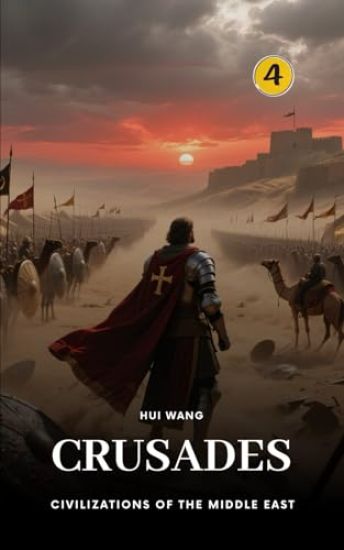
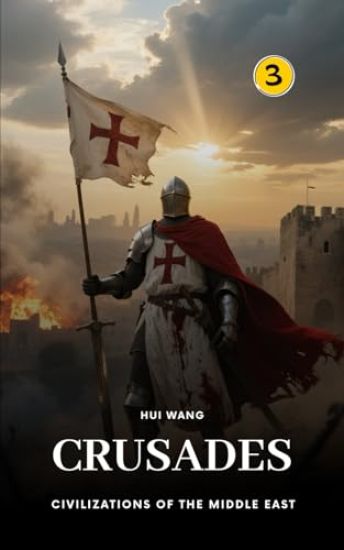
Crusades: Civilizations of the Middle East, PART TWO, carries you through roughly two hundred years when the Mediterranean world truly felt like the center of everything. I wrote this book to pull readers into the very rooms, battlefields, and fraught councils where figures such as Saladin, Baldwin IV, Raynald of Ch tillon, and Richard the Lionheart made decisions that shook kingdoms. You'll stand in the marketplaces where Venetian, Genoese, and Pisan traders haggled over spices, cross the deserts where armies marched until the earth seemed to groan, and enter the cities where faith and ambition collided face to face. As the story unfolds, you'll walk beside Baldwin IV as he fights to hold his kingdom together despite his illness; you'll watch Saladin rise out of Egypt with a steady hand and unshakable resolve; and you'll follow Raynald - often remembered by his enemies as the "Mad Dog" - as he lights sparks no one can easily extinguish. Their rivalry pulls you toward the disasters and triumphs clustered around Hattin and Jerusalem, and into the long, grinding confrontations whose consequences reshaped the Middle East. Every chapter carries the tension that one wrong move could send everything spiraling. From there the world widens fast. Richard the Lionheart bursts onto the stage during the Third Crusade, locking horns with Saladin as the fighting sweeps from the siege of Acre to the battle at Arsuf and the standoffs around Jaffa. Then Pope Innocent III takes center stage with grand designs that set the Fourth Crusade on a strange, costly detour - Venice's price, a promise from Alexios IV Angelos, mounting debts - and ultimately the astonishing sack of Constantinople in 1204. Later expeditions swing toward Egypt and Damietta (the Fifth Crusade), showing how a "holy war" could be waylaid by money, pride, or plain bad luck. These moments don't feel like distant, static dates on a page - they feel raw, human, and full of tension. New players rise in surprising ways. Frederick II appears almost like a man out of his time - where others drew swords he negotiated, recovering control of Jerusalem by treaty during the Sixth Crusade in 1229 rather than by massacre. Louis IX turns up with deep devotion and iron determination, pressing the crusading dream into its later, wearier chapters. Waiting in the wings are Qutuz, Baibars, and Hulagu - the rising Mamluk commanders and the Mongol khan - whose collision at Ain Jalut in 1260 saw the Mamluks halt the Mongol advance and, with later campaigns, reshape the region long after European kings have sailed home. By the time you reach the final chapters, you'll see how every moment - from bustling trade routes to petty royal feuds - nudged Europe and the eastern Mediterranean toward a collision that reshaped both worlds. I want this book to leave you with the sense of actually standing there: feeling the creak of ships, the clank of armor, the sharp snap of arguments, and the fragile, fierce hopes of people who truly believed they could remake history. If you've ever wanted a clear, vivid, and human view of the Crusades, this journey is waiting for you.
Crusades

Crusades

Hui Wang

Hui Wang
2025
pokkari
Crusades: Civilizations of the Middle East, PART ONE, plunges you into a world where faith, ambition, and human courage crash together on an enormous stage. When I first set out to write this book, my aim was simple: to bring readers up close to the people who lived behind history's headlines - not to idolize them as marble figures in a textbook, but to show them as flesh-and-blood leaders whose choices reshaped continents. Think of Pope Urban II and Godfrey of Bouillon; Baldwin of Boulogne and Tancred; Bohemond of Taranto; and later figures like Imad ad-Din Zengi and his successor, Nur ad-Din - all threads in a long, tangled tapestry of conflict and ambition. Walk with me through chapters such as "Faiths in Conflict," "Urban II and the Birth of the Crusade," and "The First Wave to the Holy Land," and you'll be beside the men and women who set the First Crusade in motion. You'll sense Charlemagne's distant legacy still echoing across European courts, feel the tense aftershocks of Canossa and the broader investiture struggle, and witness the incandescent instant when Urban II's call sent thousands toward Jerusalem. My hope is that you come away feeling the era's raw energy - the cheering and the terror, the hope and the conviction that the world was changing under everyone's feet. The story sharpens as the Crusader armies push into the East. I take you inside the Siege of Nicaea, the moment when Baldwin and Tancred split from the main force and followed very different ambitions, the brutal, grinding struggle at Antioch, and the desperate, almost mystical search for hope that produced the Holy Lance. You'll feel the hunger, the rivalries, and that stubborn, dangerous momentum that drove princes forward even as everything threatened to collapse. Each chapter throws you up against decisions that might have saved thousands-or doomed them. Later chapters bring a new cast of power players: Bohemond on one of his last great gambles; the military orders-the Templars and the Hospitallers-rising into power in the crusade's aftermath; and Imad ad-Din Zengi, whose seizure of Edessa in 1144 sent shockwaves through Christendom. From there the road runs straight into the Second Crusade, when kings marched, empires shuddered, and Damascus became the eye of a gathering storm. Figures such as Queen Melisende, Louis VII, Conrad III, and Nur ad-Din step into the spotlight, each tugging the story in a new direction. By the time you reach the Siege of Damascus and the rise of Nur ad-Din, you'll see how the world of the Middle East was reshaped not merely by battles but by personalities-bold, stubborn, brilliant, and flawed. My hope is that when you close this book you'll feel as if you've stood right there with them: on the walls of Antioch, in the chambers of kings, and on the dusty roads that carried armies across vast distances.
The Qing Dynasty

The Qing Dynasty

Hui Wang

Hui Wang
2025
pokkari
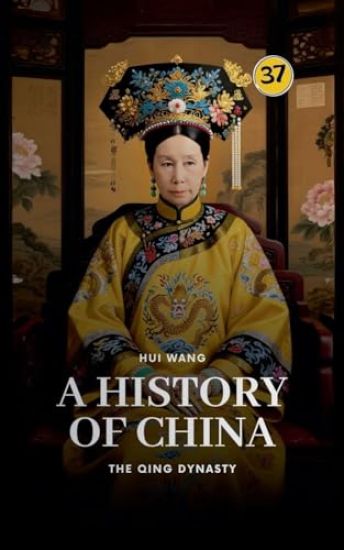
The Qing Dynasty: A History of China, PART ONE, takes you deep into the rise and struggles of the empire's last ruling house. In these pages, I tell the story of how scattered tribes and ambitious leaders came together to build a dynasty that would leave its mark on centuries of Chinese history. From the earliest clashes with the Ming dynasty to the appearance of brilliant emperors, this book is my attempt to bring those figures and battles back to life. The story begins with the so-called "barbarians" and the Jianzhou Jurchens, a people caught between survival and extinction. Their fate changed with the rise of Nurhaci, a man of vision and iron will, remembered as the great founder of the Qing. His journey from a small tribal leader with only thirteen suits of armor to the commander who unified the Jurchens shows how determination can turn weakness into power. But Nurhaci's path was not without obstacles. Powerful figures such as Mao Wenlong, the fierce enemy who refused to bend, and the famous Five Tiger Generals of Later Jin tested the dynasty's strength in brutal campaigns. Marriage alliances among tribal chiefs, shifting loyalties, and betrayals added layers of drama to the struggle. These chapters show how fragile power could be, and how quickly friends might turn into rivals. As the Qing grew, new battles reshaped its destiny. The dynasty declared itself with confidence, but soon faced the Great Upheaval in Jiangnan and the politics of regents who rose and fell. The bold Wu Sangui, unwilling to surrender his influence when the emperor sought to abolish the feudatories, became a central figure in one of the most dramatic conflicts of the age. The later chapters bring forward the empire's brightest and darkest moments. You'll read about the jewel in the crown of the dynasty, the desperate stand of only 300 men, and the rise of the Living Buddha who became Khan. Finally, the stage belongs to the Scholar-Emperor, whose reign reflected both the wisdom of learning and the burdens of ruling. These figures are not just names in history-they were real people whose choices shaped the destiny of millions.
The Ming Dynasty: A History of China
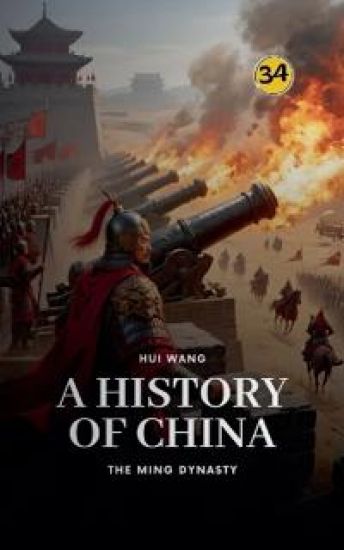
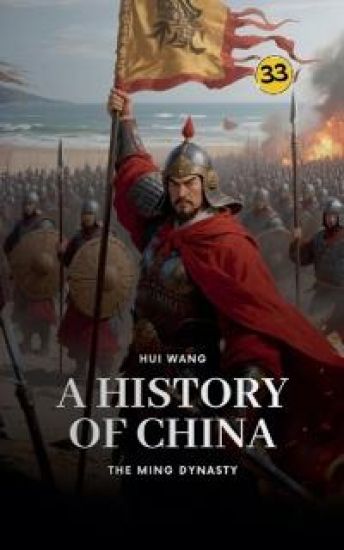
The Ming Dynasty: A History of China, PART ONE, takes you back to the rough beginnings of Zhu Yuanzhang, a boy who grew up with almost nothing and later rose to found a new dynasty. His early struggles, his daring leap into rebellion, and the turning points that followed read less like distant history and more like the story of someone fighting his way through impossible odds. The journey leads through a land split by rival powers, where warlords fought for survival and control. You'll stand at the Battle of Poyang Lake, one of the greatest clashes on water, and follow Zhu Yuanzhang in his hard-fought campaigns against Zhang Shicheng. From southern expeditions to the march north against the Yuan dynasty and the dramatic capture of Dadu, every step feels urgent, dangerous, and deeply human. But the battles outside were only half the struggle. Inside the new court, danger wore a different face. The Hu Weiyong case and the fall of Lan Yu show how ambition and mistrust shaped the dynasty from within. Even the strongest empire could tremble when friends became suspects and loyalty turned into a question of survival. The story doesn't stop with Zhu Yuanzhang. You'll meet Emperor Jianwen, whose rule was shaken by the Jingnan Campaign, and Zhu Di, the prince who seized the throne and became known as the Yongle Emperor. Under his reign, Zheng He's massive fleets sailed across oceans, carrying China's name to distant shores, while at home the Yongle court built an age of wealth, culture, and vision that still fascinates today. Later emperors like Hongxi and Xuande brought their own touch, steering the dynasty toward steadier governance and leaving marks of their own. From desperate beginnings to sea voyages that reached beyond the horizon, from brutal battles to palace intrigue, this book opens the Ming dynasty as a living tale of leaders, rivals, and dreamers whose choices shaped centuries of history.