Kirjojen hintavertailu. Mukana 12 595 353 kirjaa ja 12 kauppaa.

Kirjailija

Ian Baxter

Kirjat ja teokset yhdessä paikassa: 68 kirjaa, julkaisuja vuosilta 1966-2026, suosituimpien joukossa Tanks and Armour at Kursk 1943. Vertaile teosten hintoja ja tarkista saatavuus suomalaisista kirjakaupoista.

68 kirjaa

Kirjojen julkaisuhaarukka 1966-2026.

The Perpetrators of Auschwitz

The Perpetrators of Auschwitz

Ian Baxter

PEN SWORD BOOKS LTD
2026
sidottu
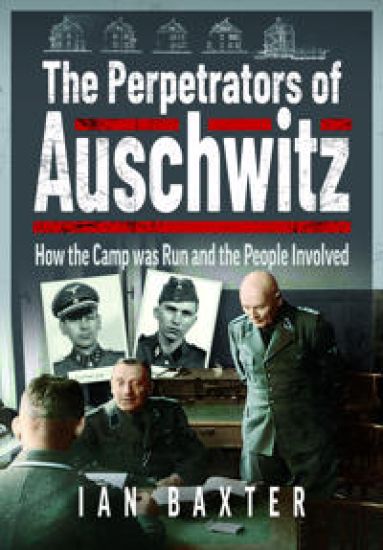
Perpetrators of Auschwitz is a chilling and comprehensive study of the men and women of the SS who operated the largest and most infamous Nazi concentration camp. Moving beyond the barbed wire and gas chambers, this book uncovers the full structure of the SS community that orchestrated and facilitated mass murder, detailing their roles, routines and disturbing attempts at normalcy. Through archival material, personal diaries and eyewitness accounts, the book explores the lives of over 7,000 SS personnel stationed at Auschwitz between its conception in 1940 to its liberation by the Red Army in 1945. It examines their organizational hierarchy, the medical staff, photographers, female guards and the seemingly mundane domestic arrangements that supported an industrialized killing machine. At the heart of the narrative is Commandant Rudolf Höss and his family, who lived in a remodelled villa just outside the camp. Their ‘normal’ domestic life, complete with servants, gardens and children, unfolded mere steps from unimaginable horror. The noises, smells and even stolen camp belongings did not seem to interrupt their focus on creating what they considered a serene home life. Drawing from testimonies of housekeepers and local workers, the book reveals how the perpetrators not only administered genocide by day but also hosted social events by night; all to uphold an appearance of normality against a backdrop of pure evil. Despite their brutality, most SS personnel had no criminal record and fewer than 800 were held accountable after the war. This book confronts the disturbing truth of how ordinary people became architects of genocide and how the Auschwitz complex evolved into a hub of systematic extermination, responsible for the deaths of over 1 million people including 200,000 children. With harrowing detail, historical clarity and containing 390 photographs, Perpetrators of Auschwitz is an essential study of the individuals behind one of history’s greatest atrocities.
Hitler's Vengeance Weapons

Hitler's Vengeance Weapons

Ian Baxter

PEN SWORD BOOKS LTD
2026
nidottu
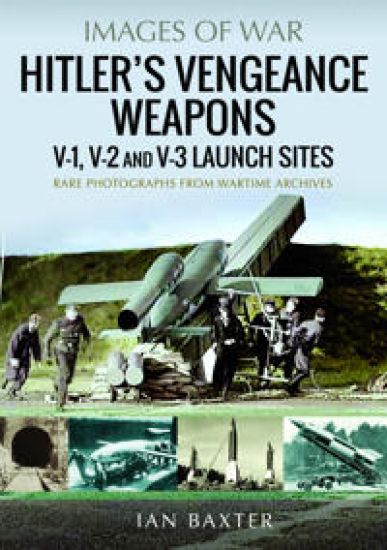
When Nazi Germany invented long-range missiles, the world entered a new era of warfare. In a desperate bid to turn the tide of the Second World War, Hitler pinned his hopes on a terrifying arsenal of so-called Wunderwaffe – ‘wonder weapons’ – designed for mass destruction and psychological terror. This richly illustrated Images of War book offers a comprehensive look at the V-1 flying bomb and the V-2 ballistic missile, known collectively as the Vergeltungswaffen or ‘retaliatory weapons’. With 150 rare and previously unpublished photographs, alongside in-depth analysis through supplementary text and detailed captions, it chronicles the development of these groundbreaking weapons, the construction of launch sites and missile manufacturing with the use of slave labour from concentration camps like Mittelbau-Dora. From the initial V-1 static launch sites of northern France, particularly in the Pas-de-Calais region, to the shift toward mobile V-2 launchers that rained destruction not only on London and other cities in England but mainland Europe, principally in France and Belgium, this book reveals the full story behind Hitler’s technological last stand. Though these weapons failed to alter the outcome of the war, they marked the dawn of a new and deadly era in military history and were responsible for 18,000 deaths, mostly civilians. A gripping and meticulously researched photographic account of ambition, cruelty and the race for technological supremacy, V-1, V-2 and V-3 Launch Sites is essential reading for anyone interested in the Second World War, military innovation or the dark legacy of Nazi science.
The Panzerwaffe

The Panzerwaffe

Ian Baxter

PEN SWORD BOOKS LTD
2026
sidottu
The Panzerwaffe: Vehicles, Equipment, Weapons, Uniforms and Insignia is a highly illustrated chronicle of Nazi Germany’s Panzerwaffe (Armoured Force) during the Second World War. Spanning the Blitzkrieg in Poland in 1939 to the desperate final days of the war in 1945, this comprehensive volume explores the evolution of the Panzerwaffe and its supporting units, which includes: the organization of a Panzer Division, lists of light, medium and heavy panzers including the Sturmgeschütz assault gun, self-propelled tank destroyers (Jagdpanzer), self-propelled anti-aircraft guns (Flakpanzer) and halftracks. Featuring over 200 rare and previously unpublished photographs, as well as forty meticulously drawn colour profiles, photographs and artworks, the book also covers the uniforms of armoured panzer and assault gun crew, vehicle camouflage schemes, the use and application of Zimmerit anti-magnetic mine paste and divisional insignia. With insightful text and extensive captions, this book offers a detailed look at how the Panzerwaffe adapted its tactics and technology in response to the shifting course of the war, often converting tanks into fast-moving self-propelled artillery and flak carrying vehicles. These were gradually supported by formidable heavy vehicles such as the Panther and Tiger. From the brutal fighting on the Eastern Front at Kursk to its role in defending the beaches against Allied D-Day landings in the West, The Panzerwaffe explains the key components of this effective killing machine and is an essential visual reference for military historians, modellers and enthusiasts alike.
Tanks and Armour in the Battle for Moscow

Tanks and Armour in the Battle for Moscow

Ian Baxter

PEN SWORD BOOKS LTD
2026
nidottu
From the moment Germany launched its invasion of the Soviet Union in June 1941, code-named Operation Barbarossa, Hitler was fixated on the capture of Moscow. Yet his fear of exposing the flanks of the German Central Front led to costly diversions north and south at Leningrad and Kiev, delaying the assault on the Russian capital. When the Battle of Moscow – Operation Typhoon – finally began on 30 September, the Panzerwaffe was already weakened while Soviet forces had fortified their defences and reinforced their lines. Spanning a 370-mile front, 3rd and 4th Panzer Armies in the north and 2nd Panzer Army in the south surged towards Moscow in a vast pincer movement with hundreds of tanks and assault guns in tow, relying on the familiar tactics of Blitzkrieg. But what followed was no lightning war. Instead, German tanks and infantry were dragged into a gruelling battle of attrition during the coldest recorded winter of the twentieth century. Snowbound and under-supplied, with entire units freezing to death, the offensive ground to a halt before the gates of the capital. Tanks and Armour in the Battle for Moscow offers a compelling visual account of the Panzerwaffe’s doomed advance on Moscow, drawing on over 130 rare and unpublished wartime photographs. Through detailed captions and expert narrative, it follows the campaign from its faltering restart in the spring of 1942 to the bloody Rzhev-Sychyovka offensive and beyond, charting how the Germans lost the initiative on the Eastern Front. By early 1943, any hope of capturing Moscow had vanished, and a protracted retreat westward had begun – one that would not end until the Reich itself lay in ruins.
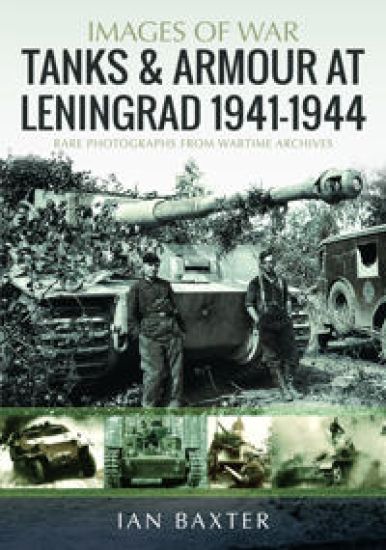
Tanks and Armour at Leningrad 1941–1944

Tanks and Armour at Leningrad 1941–1944

Ian Baxter

PEN SWORD BOOKS LTD
2026
nidottu
At dawn on 22 June 1941, along an 1,800-mile-long invasion front, three million German soldiers on the frontier of the Soviet Union unleashed the largest offensive in military history – Operation Barbarossa. Spearheading this titanic clash was Field Marshal Ritter von Leeb, commander of Army Group North. With 500,000 men at his disposal, comprising almost thirty divisions, six of them armoured and motorized, with 1,500 Panzers and 12,000 heavy weapons, plus an air fleet of nearly 1,000 planes, he was determined to strike through the Baltic states of Lithuania, Latvia and Estonia, straight towards their objective – Leningrad. Leeb’s offensive on Leningrad was rapid. Its armoured force was the backbone of the advance comprising of the 3rd and 4th Panzer Group with Field Marshal Erich von Manstein commanding the LVI Motorized Corps and General Rudolf Schmidt’s XXXIX Motorized Corps that included the 12th, 18th and 20th Panzer Divisions. Tanks and Armour at Leningrad 1941–1944 provides a powerful visual chronicle of how the Panzerwaffe attacked and supported the infantry that battled around the besieged city of Leningrad. With 150 rare and often unpublished images, this book provides a unique insight into German armour that operated around Leningrad from its early triumphant days in 1941 and 1943 to its slow and painful retreat in early 1944.
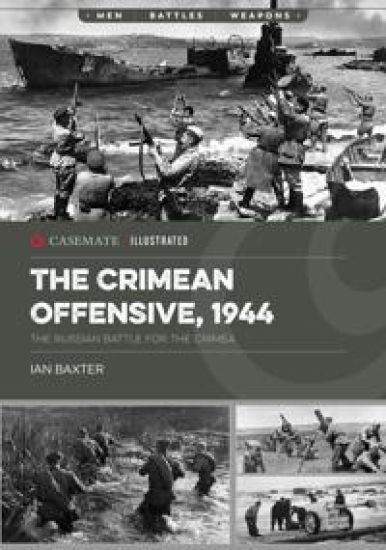
The Crimean Offensive, 1944

The Crimean Offensive, 1944

Ian Baxter

Casemate Publishers
2025
nidottu
By October 1943, the German 17th Army had been forced to retreat from the Kuban bridgehead across the Kerch Strait to Crimea. During the following months, the Red Army pushed back the German forces in the southern Ukraine. In November 1943, they eventually cut off the land-based connection of 17th Army through the Perekop Isthmus. Hitler prohibited a sea evacuation of 17th Army because he thought the Red Army could use the Crimean Peninsula to launch air attacks against Romanian oil refineries. In November 1943, the Russian launched a massive amphibious assault at two locations on the eastern coast of the Crimea, but its units were unable to prevent an Axis counterattack that collapsed the southern bridgehead. The Red Army held the bridgehead at Yenikale, from which they launched further offensive operations, culminating in a huge offensive in April 1944. Although the 17th Army bitterly contested every bit of ground, it was unable to stop the advance. Soviet forces reached Kerch on April 11, forcing the 17th Army to retreat towards Sevastopol. The remaining Axis forces in the Crimea were concentrating around the city by the end of the third week of April. The Germans intended to hold Sevastopol as a fortress, as the Russians had done between 1941 and 1942. However, the fortifications of the city had not been restored and the city fell on 9 May. From mid-April, Romanian and German ships undertook a huge and complex evacuation operation. The last phase of the evacuation, following the fall of Sevastopol, saw 37,000 troops transported under constant attacks from Soviet aircraft and shore artillery. Overall around 57,000 men were lost during the evacuation. Fully illustrated with rare and unpublished photos, this is a detailed account of the dogged attempt to retake the Crimea in 1943–44.
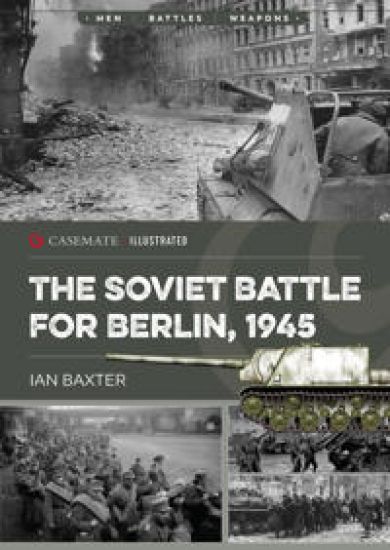
The Soviet Battle for Berlin, 1945

The Soviet Battle for Berlin, 1945

Ian Baxter

Casemate Publishers
2024
nidottu
In the spring of 1945, simultaneously with the battle of the Seelow Heights, powerful Red Army spearheads launched three sub-offensive operations to clear German resistance for the Berlin operation. Between April 13 and 17, 1945, elements of the 2nd Belorussian Front replaced parts of the 1st Belorussian Front and began to prepare their offensive operations. Bitter fighting ensued, as German units desperately tried to hold their positions. Whilst these operations continued with unabated ferocity, Zhukov’s 1st Belorussian Front broke through the final line of the Seelow Heights and nothing but broken German formations lay between them and Berlin. On April 20, Hitler’s 56th birthday, Soviet artillery of the 1st Belorussian Front began shelling Berlin in preparation for attacking the city. At the same time the 1st Belorussian Front advanced towards the east and northeast of the Reich capital, whilst the 1st Ukrainian Front smashed through the last formations of the northern wing of the German Army Group Center. What followed was the Soviet battle for Berlin. Russian planners divided the frontal and pincer parts of the battle for Berlin in phases. Once the 1st Belorussian Front and 1st Ukrainian Front completely encircled the city, over one million Russian soldiers began attacking into the suburbs towards the center. They faced some 45,000 soldiers in several severely depleted Wehrmacht and Waffen-SS divisions. These divisions were supplemented by the Berlin Police force, and the Hitlerjugend and Volkssturm, mainly manned by teenaged boys.
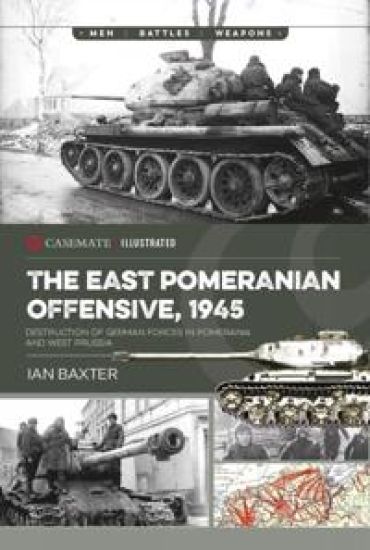
The East Pomeranian Offensive, 1945

The East Pomeranian Offensive, 1945

Ian Baxter

Casemate Publishers
2024
nidottu
In early 1945, the Red Army marched into East Prussia. Having advanced across Poland, relentlessly pushing back German forces, the Red Army built up forces along the Oder River, preparing for the final push towards Berlin. But before that battle could take place, it was necessary to clear and destroy German forces in Pomerania and West Prussia. In February 1945, the 2nd Byelorussian Front was advanced west north of the Vistula River toward Pomerania and the major port city of Danzig, with the primary aim of protecting the right flank of Zhukov’s 1st Byelorussian Front, which was pushing towards Berlin. The opening of the offensive saw a series of heavy attacks east of Neustettin against the towns of Kontiz and Koslin. The fighting was bitter, resulting in the entire left wing of the 3rd Panzer Army being cut off.Forward Soviet tank units reached the Baltic, and the German forces in Pomerania became trapped in a series of encirclements. Russian troops then pushed on to Danzig—strategic location and the last German stronghold in the region—reaching it in early March and putting it under siege. A third stage was the operation to take the Arnswalde and Kolberg areas. Kolberg was one of the key German positions in the “Pomeranian wall,” the vital link between Pomerania and Prussia. The German high command had planned to use the port facilities for the logistical supply of nearby German forces, and hoped that the presence of this stronghold would lure Soviet forces away from the main thrust toward Berlin. The ensuing battle was brutal, with Soviet troops eventually seizing Kolberg. Finally, spearheads of the 1st Byelorussian Front advanced against the German Eleventh SS Panzer Army, which was being assembled in Pomerania. What followed was a bitter and bloody battle for the town of Altdamm.The offensive successfully cleared the remnants of German forces northeast of Berlin, allowing Zhukov’s forces to finally launch the battle of Berlin from the Seelow Heights on the Oder on April 16, 1945.
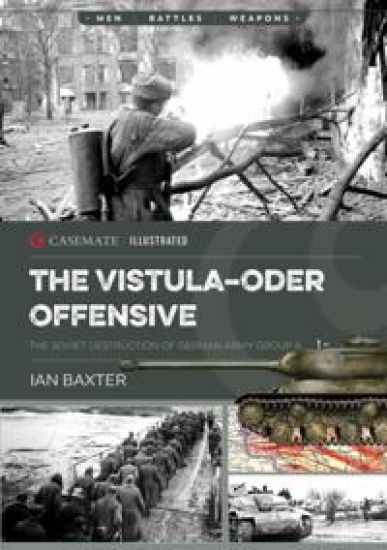
The Vistula-Oder Offensive

The Vistula-Oder Offensive

Ian Baxter

Casemate Publishers
2023
nidottu
The Vistula-Oder offensive was a massive Soviet Army operation on the Eastern Front which was launched on 12 January 1945 and paved the way for the Battle of Berlin. Its main objective was a major advance from the River Vistula to the River Oder, bringing Soviet forces within fifty miles of the gates of Berlin. The offensive faced a German defensive line east of Warsaw. These 450,000 German troops were outmatched three to one by the Soviet forces. The Red Army assault began what would be a devastating three weeks for the German forces of Army Group A.German attempts to hold their lines and avoid being sucked into a maelstrom of destruction were unsuccessful. Army Group A would collapse almost all the way back to Berlin, ending the Third Reich’s desperate efforts to cling onto land captured in Poland five years earlier, and stem enemy forces spilling over into Germany and threatening Berlin. The battle saw some 295,000 soldiers killed and 147,000 captured, as well as thousands of tanks, artillery, and machine guns destroyed. Within two months of the offensive the battle of Berlin was launched.This fully illustrated book relates this story of defeat and survival, offering a detailed visual record of Nazi Germany’s demise between two main rivers in Poland and Germany.
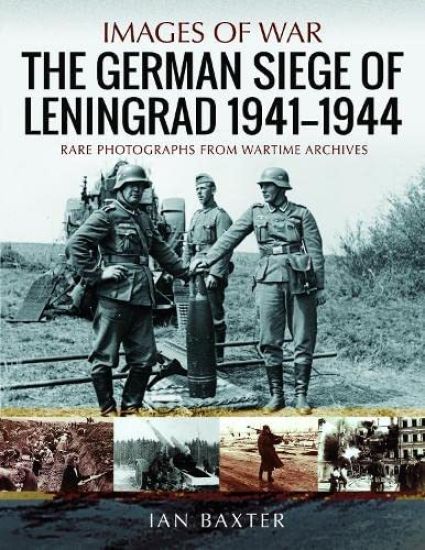
The German Siege of Leningrad, 1941 1944

The German Siege of Leningrad, 1941 1944

Ian Baxter

PEN SWORD BOOKS LTD
2023
nidottu
The historic 872 day siege of Leningrad by German Army Group North began in earnest on 8 September 1941 and was not lifted until 27 January 1944\. During this period the Red Army made numerous desperate attempts to break the blockade, which the Nazis and their Spanish and Finnish allies doggedly resisted. Eventually, due to overwhelming enemy pressure, Hitler's forces were compelled to retreat, but not before looting and destroying numerous historic palaces and landmarks and looting their priceless art collections. The bitter and prolonged fighting often under appalling climatic conditions resulted in many thousands of casualties for both sides from direct action and constant indirect artillery and air attack. Arguably most shocking was the loss of life due to the systematic starvation of the civilian population trapped inside and the intentional destruction of its buildings. Drawing on a superb collection of rare and unpublished photographs with detailed captions and explanatory text, this dramatic book vividly portrays every aspect of the siege which has the dubious claim of being arguably the most costly in human and material terms of any in recent military history.
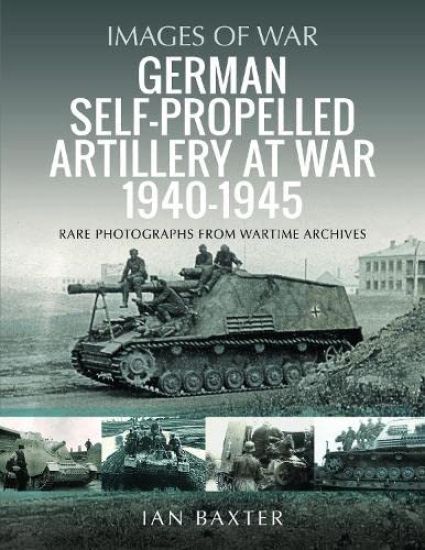
German Self-propelled Artillery at War 1940 1945
Despite the German Panzerwaffe's ability to engage its foes rapidly with concentrated force, additional fire power was often required to break through enemy lines. Initially this was with towed artillery but, as the war developed, converting tanks into fast-moving self-propelled artillery carrying vehicles proved far more effective. As a result a number of weapon systems came into service including the Pz.Kpfw.I and II. Other conversions followed including the Pz.Kpfw.II Wespe with its 10.5cm gun, the Pz.Kpfw.III/IV Hummel armed with a 15cm howitzer, the Sturmpanzer Brummbar with its powerful 15cm gun and the Grille series based on the Czech Pz.Kpfw 38(t) tank chassis. These and other armoured vehicles were capable of providing both close firesupport for infantry and acting as anti-tank weapons. This highly illustrated book describes the key role played by German self-propelled artillery from its introduction in 1940 in France, to North Africa, Italy, Russia and North-West Europe. It analyses the development of the numerous variants that came into service as these formidable weapon systems were adapted and up-gunned to face the ever-increasing enemy threat. With rare and often published photographs this book provides a unique insight into German self-propelled artillery from its early triumphant war years to final defeat in 1945.
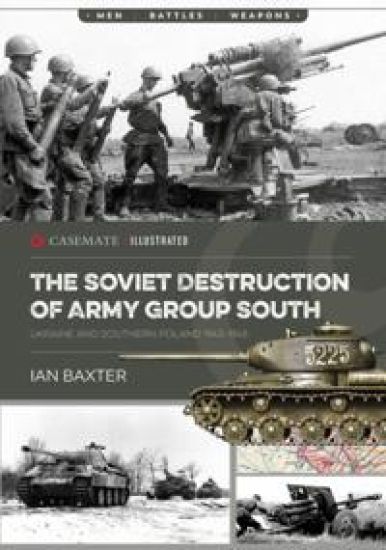
The Soviet Destruction of Army Group South

The Soviet Destruction of Army Group South

Ian Baxter

Casemate Publishers
2023
nidottu
Following the destruction of Sixth Army at Stalingrad in February 1943, Army Group South slowly withdrew westwards, using the Dnieper as a fortified position. In late 1943, the Soviet 1st, 2nd, 3rd, and 4th Ukrainian Front launched a strategic offensive against the German Army Group South A – one of the largest operations of the war. In May 1944, Red Army troops defeated Army Group South and Army Group A on the Dnieper. Many thousands of German troops evacuated across the Black Sea. In July, troops of the 1st Ukrainian Front launched an operation into the Crimea. The offensive coincided with other Red Army operations further north, including the Lublin-Brest Offensive – part of Operation Bagration. Slowly and inexorably, the powerful Russian attacks forced the tattered German army group to retreat hundreds of miles west, into Eastern Poland and Romania. Here German forces defended their positions and built defences in Hungary and Austria to try and slow down the overwhelming might of the Red Army. There, the Germans would fight a series of desperate battles until the remnants surrendered in early May 1945. Drawing on rare and previously unpublished images accompanied by detailed captions and text, the book gives a fascinating analysis of the destruction of Army Group South in southern Russia between 1944 and 1945.
Waffen-SS Dutch & Belgian Volunteers

Waffen-SS Dutch & Belgian Volunteers

Ian Baxter

PEN SWORD BOOKS LTD
2023
nidottu
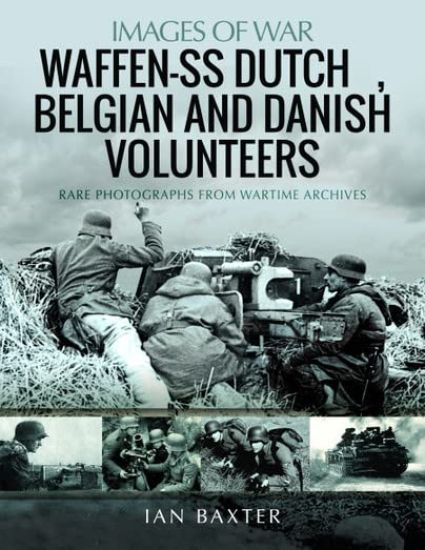
Following the German invasion of the Soviet Union, numerous Dutchmen, Belgians and Danes volunteered for the Waffen-SS. The largest division, SS Volunteer Legion Netherlands operated in Yugoslavia and then Northern Russia. It was later re-designated 23rd SS Volunteer Panzergrenadier Division Nederland. Fighting alongside the Nederland formation was the SS Volunteer Legion Flanders, manned mainly with Dutch speaking recruits from occupied Belgium. After being disbanded it was later reformed as the SS Assault Brigade Langemarck (SS-Sturmbrigade Langemarck). The SS Volunteer Legion Walloon, recruited from French-speaking volunteers from German occupied Belgium, was sent to Russia and later integrated with the SS Assault Brigade Wallonia (SS-Sturmbrigade Wallonien). Finally some 6,000 Danes served in Free Corps Denmark which went to the Eastern Front in May 1942. Within a year the formation was disbanded into Division Nordland, known as `Regiment 24 Danemark` Drawing on a superb collection of rare and often unpublished photographs, this fine Images of War book describes the fighting history of each formation, notably the 1944 battle of Narva, which was known as the battle of the European SS. As its forces were pushed further back across a scarred and burning wasteland it describes how these Dutch, Belgian and Danish units became cut off in the Kurland Pocket until some were evacuated by sea. The remainder were killed or captured in front of Berlin in April 1945.
The Armour of Hitler's Allies in Action, 1943-1945
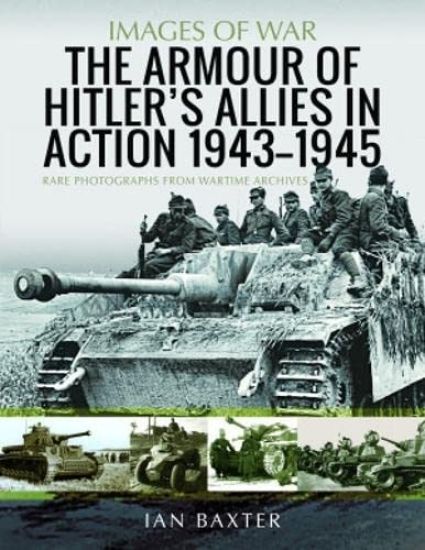
While much has been written about the Nazis' panzers, comparatively little is known about the armoured vehicles in service with the other Axis armies. This classic Images of War book redresses the balance by covering in detail the equipment operated by these nations supporting Hitler's war machine. Using rare and often unpublished photographs with full captions and authoritative text, it provides a comprehensive coverage of Romanian, Bulgarian and Hungarian tanks and other armoured fighting vehicles. In addition, it describes Yugoslavian, Serbian and Slovakian armour in addition to armour originating from the Fatherland. Examples of tanks and assault guns are the Romanian TCAM R-2 (Panzer 35t tank destroyer), TACAM T-38 (Panzer 38t), the Bulgarian Jadgpanzer 38(t), StuG40 Ausf.G, Pz.Kp.IV AusH and the Hungarian StuG.III Ausf.G, not forgetting Tigers & Panthers. As well as giving technical specifications, the book traces the fighting record of these vehicles between 1943 - 1945. It shows how armoured units fought bands of partisans, and were used to defend their frontiers against the overwhelming might of the Red Army, until they were either captured or destroyed.
The Soviet Baltic Offensive, 1944-45

The Soviet Baltic Offensive, 1944-45

Ian Baxter

Casemate Publishers
2022
nidottu
This is a compelling account of the German defense of the Baltic States of Estonia, Latvia and Lithuania. Against overwhelming Soviet forces the book shows how the German Army Group North was driven across the Baltics from Leningrad and fought a number isolated battles including the defense of Narva, Memel and the Kurland pocket. The book outlines in dramatic detail how Hitler forbade his troops to withdraw, ordering them to follow his Halt Order Decree and fight to the death. However, exhausted and demoralized by continuous Soviet assaults, Army Group North became cut-off and isolated, fighting fanatically to hold the capital cities of Tallin, Vilnius and Riga. What followed were German forces fighting to the death in the last few small pockets of land surrounding three ports: Libau in Kurland, Pillau in East Prussia and Danzig at the mouth of the River Vistula. In the Kurland, German divisions became surrounded and fought a vicious defense until May 1945. Drawing on a host of rare and unpublished photographs accompanied by in-depth captions and text, the book provides an absorbing read of the Red Army's conquering of the Baltics.
Heydrich: Butcher of Prague

Heydrich: Butcher of Prague

Ian Baxter

PEN SWORD BOOKS LTD
2022
nidottu
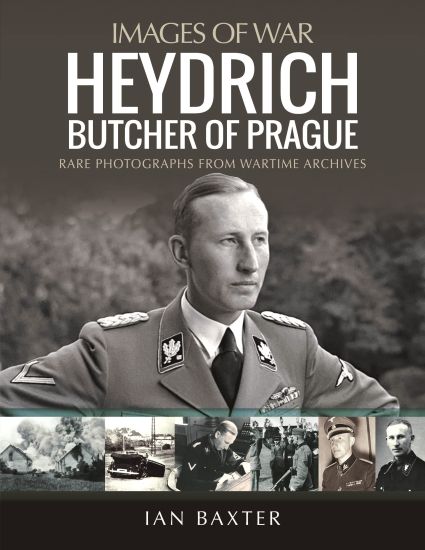
Reinhard Heydrich along with Heinrich Himmler, whose deputy he was, will always be regarded as one of the most ruthless of the Nazi elite. Even Hitler described him as a man with an iron heart'. He established his fearsome reputation in the 1930s, as head of the Sicherheitsdienst (SD), the intelligence organisation which neutralised opposition to the Nazi Party by murder and deportation. He organised Kristalnacht and played a leading role in the Holocaust, chairing the 1942 Wannsee Conference which formalised plans for the Final Solution'. In addition, as head of the Einsatzgruppen murder squads in Eastern Europe he was responsible for countless murders. Appointed Deputy Reich-Protector of Bohemia and Moravia, he died of wounds inflicted by British trained SOE operatives in Prague in May 1942. The reprisals that followed his assassination were extreme by even the terrible standards of Nazi ruthlessness. Heydrich's shocking and leading role in the Nazi regime is graphically portrayed in this Images of War book.
Himmler: Hitler's Henchman

Himmler: Hitler's Henchman

Ian Baxter

PEN SWORD BOOKS LTD
2022
nidottu
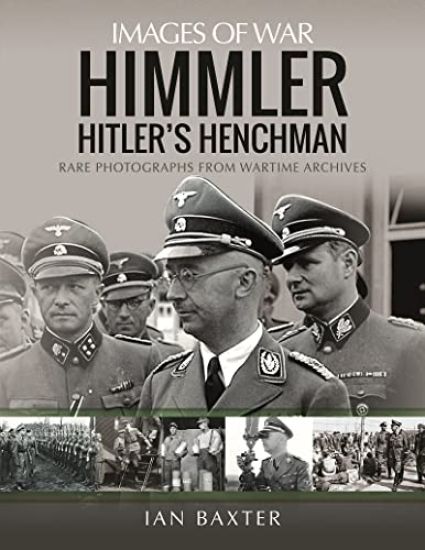
Heinrich Himmler has a strong claim to be Adolf Hitler's most powerful subordinate. He was certainly the main architect of the Holocaust. Appointed Reichsfuhrer-SS in 1929 he built the SS into a million strong paramilitary force and took control of the Nazi concentration camps system. From 1943 he became Chief of German Police and Minister of the Interior with command of the Gestapo as well as the Einsatzgruppen, who committed appalling atrocities and murder in occupied Eastern Europe and Russia. Despite his lack of military experience in the closing stages of the War he was appointed by Hitler as Commander of Army Group Vistula. Realising the war was lost, Himmler attempted to open peace talks with the Allies. Learning of this, Hitler dismissed him of all his posts in April 1945. Detained and arrested by British forces, he committed suicide on 22 May 1945. The wartime career of this cruel and capable man is captured brilliantly with contemporary fully captioned images in this Images of War series work.
Waffen-SS Armour on the Eastern Front 1941 1945
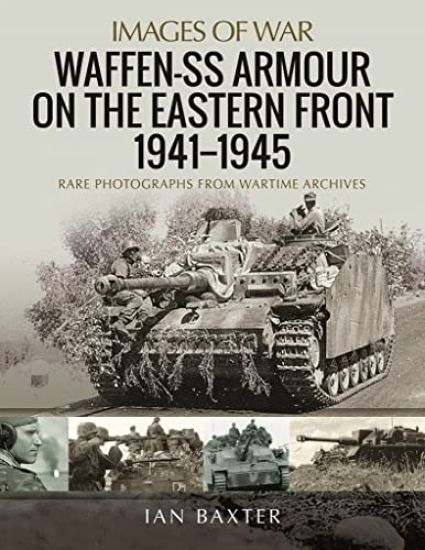
Hitler's invasion of the Soviet Union, codename Operation Barbarossa, was arguably the pivotal moment of the Second World War. Initially the onslaught was staggeringly successful with, as the superb contemporary images in this book show, Waffen- SS armoured divisions leading the charge. But the Nazis had underestimated the Russians' determination to defend their homeland and the logistical problems compounded by the extreme winter weather conditions. After early victories such as the recapture of Kharkov in early 1943 and the Kursk offensive, commanders and crews of armoured vehicles such as Pz.Kpfw.I, II, III, IV, Panther, Tiger, King Tiger, assault and self-propelled guns had to adapt their tactics and equipment to what became a desperate defensive withdrawal eventually back across a scarred and devastated Eastern Front. Even during the last months of the war as the Panzers withdrew through Poland and into the Reich, these exhausted elite units, broken down into small battle groups or Kampfgruppen, fought to the bitter end. With authoritative text supported by a plethora of rare fully captioned photographs, this classic Images of War book informs and inspires the reader revealing the key role played by Waffen-SS Panzer units in this most bitter campaign.
Himmler's Death Squad - Einsatzgruppen in Action, 1939-1944
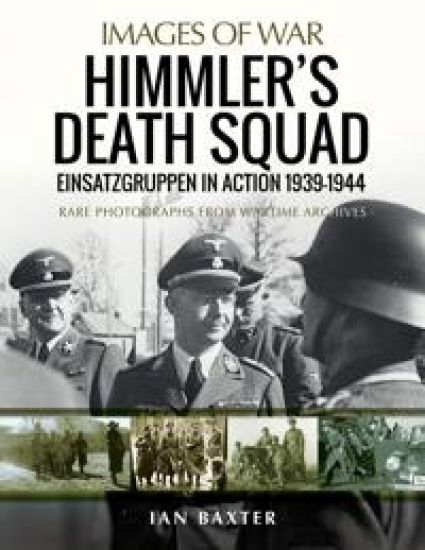
The murderous activities of Himmler's Einsatzgruppen - or death squads - rank high among the horrors of the Nazi regime during the Second World War. These hand-picked groups followed in the wake of Waffen-SS and Wehrmacht units advancing intro Eastern Europe and Soviet Russia. Their mass murder of civilians in the occupied territories will never be accurately quantified but is likely to have exceeded two million people, including some 1.3 million of the 6,000,00 Jews who perished in the Holocaust. The graphic and shocking photographs in this Images of War book not only show the hunt for and rounding up of civilians, communists, Jews and Romani people but the active support given to the Einsatzgruppen by SS units and Wehrmacht units. The latter strenuously denied any collusion but the photographic evidence here refutes this.
The Warsaw Uprisings, 1943-1944

The Warsaw Uprisings, 1943-1944

Ian Baxter

Pen Sword Military
2021
nidottu
By 1942 the Nazi leadership had decided that the Jewish ghettos across occupied Poland should be liquidated, with Warsaw's being the largest , processed in phases. In response the left-wing Jewish Combat Organisation (ZOB) and right-wing Jewish Military Union (ZZW) formed and began training, preparing defences and smuggling in arms and explosives. The first Warsaw Ghetto Uprising began in April 1943\. Although this was quelled at devastating cost to the Jewish community, resistance continued until the summer of 1944\. By this time the Red Army was closing on the city and with liberation apparently imminent the 40,000 resistance fighters of the Polish Home Army launched a second uprising. For sixty-three days the insurgents battled their oppressors on the streets, in ruined buildings and cellars. Rather than come to their aid the Russians waited and watched the inevitable slaughter. This gallant but tragic struggle is brought to life in this book by the superb collection of photographs drawn from the album compiled for none other than Heinrich Himmler entitled Warschauer Aufstand 1944.