Kirjojen hintavertailu. Mukana 12 595 353 kirjaa ja 12 kauppaa.

Kirjailija

Ian Baxter

Kirjat ja teokset yhdessä paikassa: 68 kirjaa, julkaisuja vuosilta 1966-2026, suosituimpien joukossa Tanks and Armour at Kursk 1943. Vertaile teosten hintoja ja tarkista saatavuus suomalaisista kirjakaupoista.

68 kirjaa

Kirjojen julkaisuhaarukka 1966-2026.

The Nazis' Winter Warfare on the Eastern Front 1941-1945
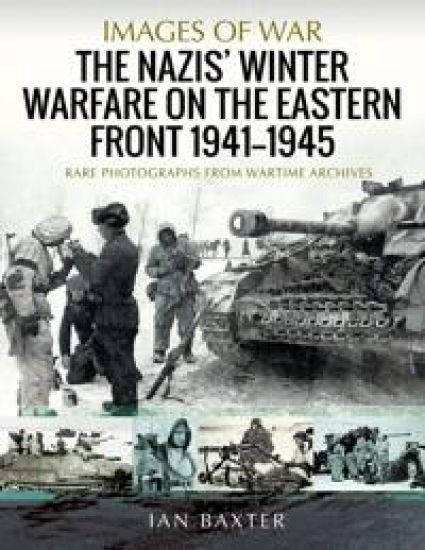
Hitler's shock decision to launch the Axis invasion of the Soviet Union on 22 June 1941 was arguably the turning point of the Second World War. Spectacular early victories saw the Nazis close in on Moscow but the Soviet 1941/42 winter counter offensive changed the odds entirely. Without doubt Russian winter conditions were a major factor compounded by the Germans' woeful lack of preparedness. As this fascinating book reveals, Wehrmacht and SS units only began to be issued with winter clothing in late 1941 and many had to improvise well into 1942. In an attempt to restore morale adversely affected by the harsh conditions and military reversals 'The Winter Warfare Handbook' (Winter Buch) was produced in 1942 and extracts are quoted in this work. Commanders had to adapt to the snow, freezing conditions and, almost worse, the impassable roads during the melt. With customary thoroughness and drastic measures the Germans largely mastered the climatic challenges but nothing could mask the reality of the ruthless and numerically superior enemy that they faced.
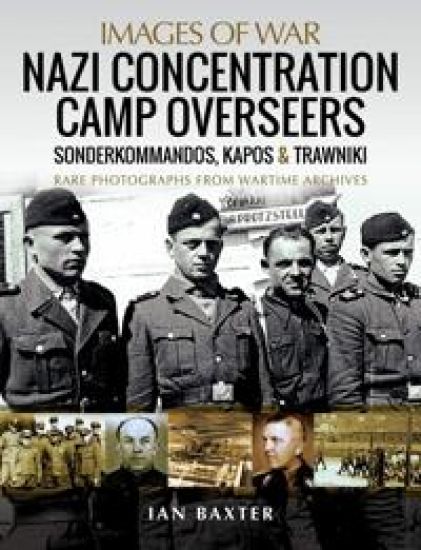
Nazi Concentration Camp Overseers

Nazi Concentration Camp Overseers

Ian Baxter

Pen Sword Military
2021
nidottu
The Nazis' vast concentration camp network and, later, the 'Final Solution' programme made heavy demands on the SS whose responsibility it was. The use of 'overseers' minimised costs and enabled the camps to run with fewer SS personnel. As this well researched book describes, there were three principal groups of 'helpers': Sonderkommandos, Kapos and Trawniki. The Sonderkommandos' duties included unloading Jews from trains, collecting their possessions and allocating work details. Under SS supervision, they also ran the gas chambers and crematoria. The Kapos oversaw the Sonderkommandos. Many were originally prisoner functionaries recruited from violent criminal gangs and had a well-deserved reputation for brutality. The third group, known as Trawniki or Trawnikimanner, were Central and Eastern European collaborators recruited from Russian POW camps. While some served in a military capacity, others played an instrumental role in the Holocaust programme, rounding up and transporting Jews from the ghettos to the concentration camps. The graphic images and text of this Images of War series work demonstrate that the 'overseer' system was extensive and effective as its members competed without scruple to maintain the favour of their SS masters while pitting victim against victim.
Hitler's Death Camps in Poland

Hitler's Death Camps in Poland

Ian Baxter

Pen Sword Military
2021
nidottu
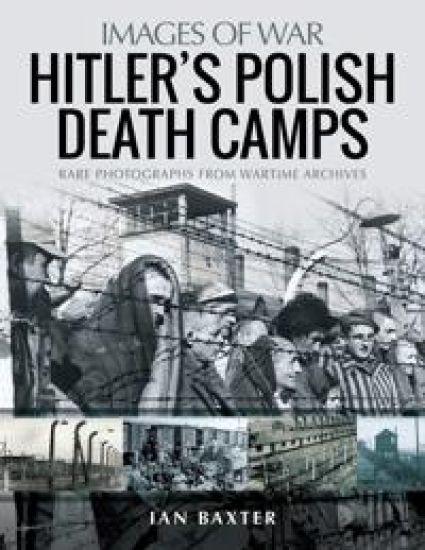
Nearly 80 years on, the concept and scale of the Nazis' genocide programme remains an indelible, nay almost unbelievable, stain on the human race. Yet it was a dreadful reality of which, as this graphic book demonstrates, all too much proof exists. Between 1941 and 1945 an estimated three and a half million Jews and an unknown number of others, including Soviet POWs and gypsies, perished in six camps built in Poland; Auschwitz-Birkenau, Belzec, Chelmno, Majdenak, Sobibor and Treblinka. Unpleasant as it may be, it does no harm for present generations to be reminded of man's inhumanity to man, if only to ensure such atrocities will never be repeated. This book aims to do just this by tracing the history of the so called Final Solution and the building and operation of the Operation Reinhard camps built for the sole purpose of mass murder and genocide.
Operation Bagration

Operation Bagration

Ian Baxter

Casemate Publishers
2020
nidottu
Bagration was the code word that the Soviet Army gave for their summer offensive in 1944. This massive offensive led to the destruction of the German Army Group Center and was the greatest military defeat ever experienced by the German Army during World War Two. This book provides an absorbing insight into the German defeat and the Russian offensive using a wide variety of rare and previously unpublished photographs. With detailed captions and text together with 20 artist profiles and maps, the book shows the compelling story of how German Army Group Center tried to counter the overwhelming might of the Soviet Army as it poured thousands of men, weapons and armor across the German lines, smashing its way through.What ensued was a swift and bloody battle of attrition as the German Army tried to contain the might of its unstoppable enemy. In the days and weeks that followed German units fought and gradually retreated under the constant hammer blows of Russian ground and aerial bombardments, and endless armored and infantry attacks. Many German units fighting to the grim death were duty-bound not to withdraw, and what followed was a disaster of a colossal magnitude. As the Soviet might punched a massive hole in the German lines it sent huge shock waves through Army Group Center forcing them to retreat or face total annihilation.However, the Russian offensive was so quick that many of the German units with their precious panzer and infantry divisions quickly became encircled and destroyed - its remnants retreating west in order to save itself. By the end of the battle this cataclysm was bigger than that experienced at Stalingrad. It saw the German Army being pushed out of Russia towards Poland with the loss of over 300,000 men and most of its weaponry lost.The story of the destruction of Army Group Center during the summer of 1944 has been completely overshadowed by the D-Day campaign in Normandy three weeks earlier. Yet, the battle in which the German forces endured on the Eastern Front that fateful summer was more catastrophic than that experienced by the Allies on the Western Front, but little is known of the operation. This book reveals the lesser-known battle in the East and shows how the German forces fought and lost against overwhelming odds.
The Ghettos of Nazi-Occupied Poland

The Ghettos of Nazi-Occupied Poland

Ian Baxter

Pen Sword Military
2020
nidottu
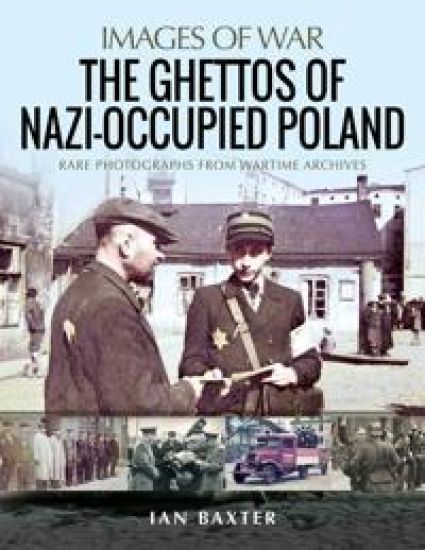
Following the 1940 invasion of Poland, the Nazis established ghettos in cities and towns across the country with the initial aim of segregating and isolating the Jewish community. These closed sectors were referred to as Judischer Wohnbezirk or Wohngebiet der Juden (Jewish Quarters). Using contemporary images this well researched and inevitably harrowing book shows the harsh and deteriorating conditions of daily life in these restricted areas. In reality the ghettos were holding areas prior to the transportation to concentration, extermination and work camps, such as Auschwitz-Birkenau and Belzec. Aware of their imminent fate including the threat of family separation, enslavement and death, underground resistance groups sprung up and promoted numerous uprisings which were brutally and callously suppressed. The Nazis' ultimate aim was the liquidation of the ghettos and the extermination of their inhabitants in furtherance of The Final Solution. This may seem unthinkable today but, as this book graphically reveals, they worked to achieve their objective regardless of human suffering.
Hitler's Panther Tank Battalions, 1943-1945

Hitler's Panther Tank Battalions, 1943-1945

Ian Baxter

Pen Sword Military
2020
nidottu
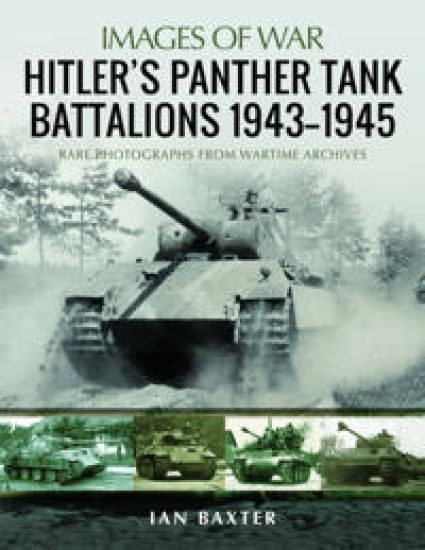
From July 1943 to the Nazis' final defeat in May 1945 the Panther main battle tank and its variants were the mainstay of Germany's armoured forces. This superbly engineered fighting vehicle offered a lethal combination of firepower, mobility and protection. As this classic Images of War series title reveals, the Panther saw non-stop fighting on the Eastern, Western and Italian fronts. Using rare and often unpublished contemporary photographs with full captions and authoritative text, it provides a comprehensive coverage of elite Panther battalions in action. The book traces the development of the Panther, for example into tank hunter (Panzerjager), and also covers the other supporting vehicles that formed part of the Panther battalions' establishment. These included armoured recovery, Bergepanther, halftracks, Sd.kfz.2 Kettenrad, gun tractors and communications vehicles.
The Destruction of 6th Army at Stalingrad

The Destruction of 6th Army at Stalingrad

Ian Baxter

Pen Sword Military
2020
nidottu
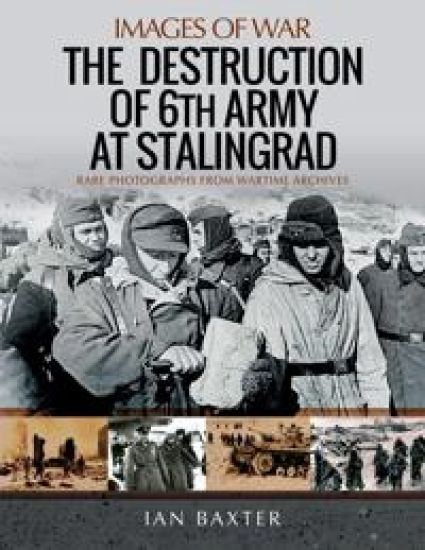
The scale of death and destruction during the Battle of Stalingrad during late 1942 and early 1943 remains unprecedented in the history of warfare. The annihilation of General von Paulus' 6th Army epitomised the devastating defeat of Hitler's ambition to conquer Stalin's Soviet Union. After the successful Operation Blue offensive 6th Army reached the River Volga north of Stalingrad in summer 1942\. With over-extended supply lines and facing steely opposition, increasingly desperate attempts to seize the city repeatedly failed. Slowly 6th Army became encircled. The German High Command attempted a number of relief attempts, notably Field Marshal von Manstein's Winter Storm' but all were defeated by the tenacity of the enemy and the Russian winter. To their credit the men of 6th Army fought to the end but by February 1943 the last pockets of German resistance were either destroyed or had surrendered. Thanks to a superb collection of unpublished photographs, this Images of War book provides an absorbing insight into the dramatic events of the last months of 6th Army's doomed existence.
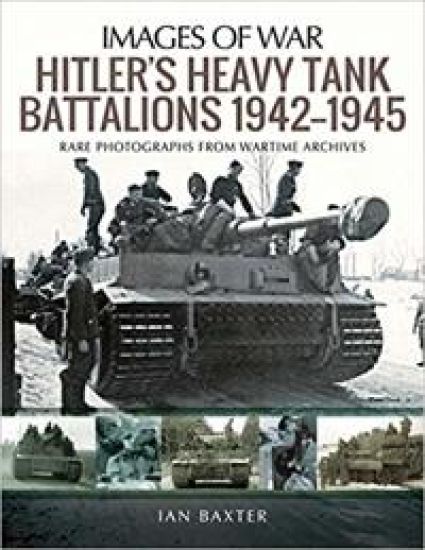
Hitler's Heavy Tiger Tank Battalions 1942-1945
With rare, often unpublished photographs and full captions Hitler's Heavy Tank Battalions provides a superb record of the Wehrmacht's Schwere Panzerableilung on operations between 1942 and 1945. In addition to the Tiger I and successor Tiger II heavy tanks, these battalions were equipped with Pz.Kpfw III's, Flakpanzer IV, Sd. Kfz 7/1 self-propelled anti-aircraft guns, Sd.Kfz 9 and 10 halftracks, Sd.Kfz 2 and Kettenkrad gun tractors. The Tigers required substantial maintenance and the Berge Panther armoured recovery vehicle played a key role. Heavy tank battalions saw action on the Eastern Front, in Italy and North West Europe before being pushed back to Berlin for the final defensive battles and there are graphic photographs and descriptions of vehicles on operations in all these theatres. While feared by the Allies in the early years, these units suffered increasing attrition from anti-tank artillery, ground attack aircraft and mechanical issues. Modellers and equipment buffs in particular will find this latest Images of War book extremely useful and fascinating.
Kursk, 1943

Kursk, 1943

Ian Baxter

Casemate Publishers
2020
nidottu
In the summer of 1943, the German launched Operation Zitadelle (Citadel), aimed at cutting off a large number of Soviet forces in the Kursk salient. This offensive resulted in the battle of Kursk, the largest tank battle of World War II.Kursk quickly became a fierce contest of attrition, as Wehrmacht and elite Waffen-SS Panzer-Divisions with their powerful Tiger and Panther tanks unsuccessfully tried to hammer their way through the intricate lines of strong Soviet defensive positions. What followed was unabated fighting for two weeks as German units were slowly and systematically ground down in a series of brutal armored battles.During this ferocious fighting the Red Army savagely contested every foot of ground, finally ending German invincibility forever. For the first time in its short history, the blitzkrieg concept had failed. The reverberations caused by the defeat at Kursk were immense, and never again did the German war machine go on the offensive in the East. Stiff defensive action was now the stratagem placed upon the dwindling Panzerwaffe right to the gates of Berlin.With comprehensive captions and text, Kursk tells the story of this dramatic battle using rare and unpublished photographs, maps, and highly detailed artist profiles. The book reveals the events leading up to the battle in the first half of 1943, and the build up of forces by both sides before their climatic showdown at Kursk.
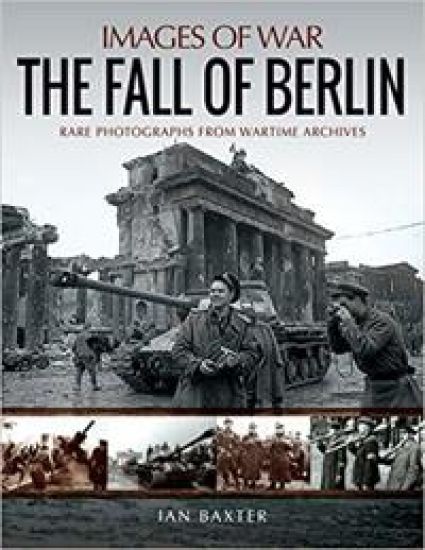
The Fall of Berlin

The Fall of Berlin

Ian Baxter

Pen Sword Military
2019
nidottu
By March 1945, the Red Army had closed in on Berlin. Marshal Zhukov, with almost a million soldiers and 20,000 tanks and guns at his disposal, launched his assault of the Seelow Heights. While costly with 30,000 Russians killed, it brought the Russian Army to the gates of the capital. On 20 April, Hitler's 56th birthday, Soviet artillery began a massive bombardment of the doomed city. The Fuhrer ordered every soldier, Hitlerjugend and Volksstrum to fight to the death. The house-to-house fighting that followed was brutal and savage with heavy casualties for both military and civilians. Using superb Russian and German imagery this fine Images of War series book describes the Russian assault and Nazi last-ditch defence of Hitler's capital during the final days of the Third Reich.
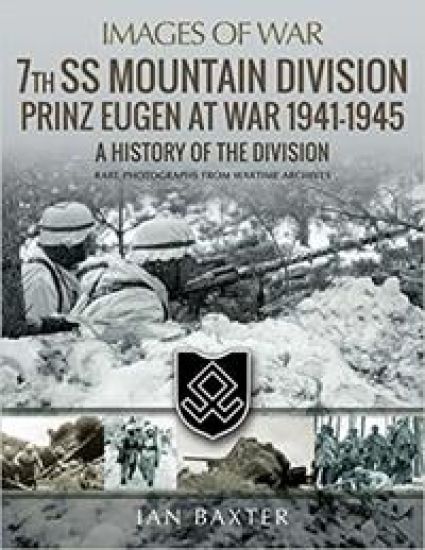
7th SS Mountain Division Prinz Eugen At War 1941-1945
Drawing on a superb collection of rare and unpublished photographs the The 7th SS Volunteer Mountain Division Prinz Eugen 1941 - 1945 is the 7th book in the Waffen-SS Images of War Series written by Ian Baxter. The book tells the story of the 7th SS Mountain Division was formed in 1941 from the Volksdeutsche (ethnic German) volunteers and conscripts from the Banat, Independent State of Croatia, Hungary and Romania. It fought a brutal counter insurgency campaign against communist-led Yugoslav Partisan resistance forces in the occupied Serbia and Montenegro. It was given the title Prinz Eugen after Prince Eugene of Savoy, an outstanding military leader of the Habsburg Empire who liberated the Banat and Belgrade from the Ottoman Empire in the Austro Turkish War. It was initially named the SS-Freiwilligen-Division Prinz Eugen (SS-Volunteer Division Prinz Eugen).
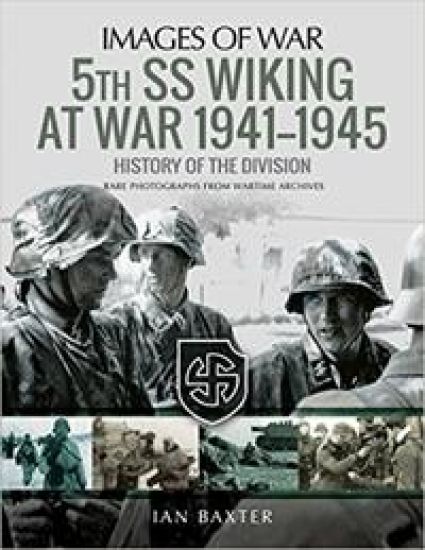
5th SS Division Wiking at War 1941-1945: History of the Division
Drawing on a superb collection of rare and unpublished photographs the 5th SS Division Wiking 1941 - 1945 is the 5th book in the Waffen-SS Images of War Series by Ian Baxter. The book tells the dramatic story of the 5th SS Panzer Division�Wiking at War. �The men of the division were recruited from foreign volunteers in Denmark, Norway, Sweden, Finland, Estonia, the Netherlands and Belgium under the command of German officers. Not all were collaborators - the choice they were all too often presented with was join up or be locked up - or worse. During the course of the war, the division served on the Eastern Front in 1941. It surrendered in May 1945 to the American forces in Austria.
SS Polizei Division at War 1940 - 1945

SS Polizei Division at War 1940 - 1945

Ian Baxter

Pen Sword Military
2018
nidottu
Formed in 1939 SS-Polizei Division were not considered initially as an SS fighting force, and this status was reflected in the quality of the equipment they were issued. Following operations in France, Greece and then Russia, it was not until 1942 the division was transferred to the Waffen-SS, and eventually upgraded to a Panzergrenadier division, the 4th SS-Polizei-Panzergrenadier Division. The book describes how the SS-Polizei Division fought across the Low Countries, the Eastern Front, before deploying to the Balkans and Greece where it committed numerous atrocities. During the last days of the War it was assigned to Army Detachment Steiner defending Berlin where many soldiers fought to the death. This book is a unique glimpse into one of the most infamous fighting machines in World War Two and a great addition to any reader interested Waffen-SS history.
SS Das Reich At War 1939-1945: History of the Division
Between 1933 and 1939, the strength and influence of the SS grew considerably with thousands of men being recruited into the new ideological armed formation, many into units known as the SS-Verfgungstruppe (Special Disposal Troop). These troops saw action in Poland before switching to the Western Front in 1940. Out of this organisation the SS Das Reich Division was created. This book, with its extensive text and over 250 rare and unpublished photographs with detailed captions describes the fighting tactics, the uniforms, the battles and the different elements that went into making the Das Reich Division such a formidable fighting force. The chapters reveal the Division as it battled its way through Poland, the Low Countries, the Balkans and the Eastern Front. Finally the Das Reich defended Normandy before falling back to Germany. The Division gained its fearsome and notorious reputation for its fighting ability, often against vastly numerically superior forces, as well as its fanatical zeal.
Crushing of Army Group North 1944 - 1945

Crushing of Army Group North 1944 - 1945

Ian Baxter

Pen Sword Military
2017
nidottu
The Crushing of Army Group North 1944-45 on the Eastern Front tells the story in words and images of the last bitter months fought on Russian soil and the battle of the Baltic States that ensued. Drawing on rare and unpublished photos it reveals in detail how remnants of Army Group North were driven back to the borders of Estonia, Latvia and Lithuania. In the battles that followed, the retreating German Panzer and infantry divisions were encircled and annihilated. With the remnants were pushed back into East Prussia, and then fought to the death in the last few small pockets of land surrounding three ports of Libau in Kurland, Pillau in East Prussia and Danzig at the mouth of the River Vistula. It was here that the final battle of Army Group North would take place after Hitler ordered his troops to 'stand and fight' and wage an unprecedented battle of attrition.
Hitler's Heavy Panzers 1943 -1945

Hitler's Heavy Panzers 1943 -1945

Ian Baxter

Pen Sword Military
2016
nidottu
This work with its in-depth text, captions and rare images chronicles the last desperate years of the Wehrmacht Panzerwaffe. Despite a worsening strategic situation both on the Eastern Front and in the West, Hitler's Panzers and their highly motivated crews showed superior tactical abilities and killing power abut such was the overall picture that this was not enough to alter the course of the war as the Allies closed remorselessly in on Berlin. Covered in this superb book are many variants, some well known and others less so including often modified, up-armoured and up-gunned models. Copious images of Tigers 1 and 11, Panzerjager, Panthers, Panzer 4's, StuG IV and III, Wespes, Hummels are provided as well as other fine examples of German engineering.
German Army on the Eastern Front - The Retreat 1943 ? 1945
After the defeat at Stalingrad in January 1943, the German Army's front lines were slowly smashed to pieces by the growing might of the Soviet Army. Yet these soldiers continued to fight gallantly. Even after the failed battle of the Kursk in the summer of 1943, and then a year later when the Russians launched their mighty summer offensive, code names Operation BAGRATION, the German Army continued to fight on, withdrawing under constant enemy ground and air bombardments. As the final months of retreat were played out on the Eastern Front in early 1945, it depicts how the once vaunted German Army, with diminishing resources, withdrew back across the Polish/German frontier to Berlin itself.
German Army on the Eastern Front: The Advance
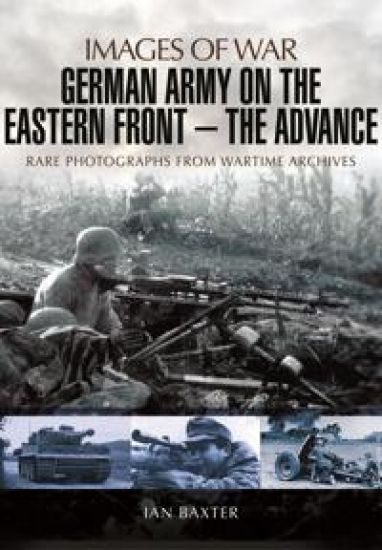
German Army on the Eastern Front - The Advance is a highly illustrated record of the extraordinary feat of arms that saw the Nazi armies drive deep into the vast terrain of the Soviet Union, to the gates of Stalingrad and Moscow. It traces the campaign from these hopeful beginnings until, on the brink of victory, the defenders and the winter contrived to slow and then halt the advance. It vividly conveys the appalling conditions endured by the invaders. By early 1943 the German advance finally petered out, leaving some 1.5 million dead from the battle of Stalingrad alone. The long and costly retreat was about to begin.
Nazi Concentration Camp Commandants 1933 - 1945
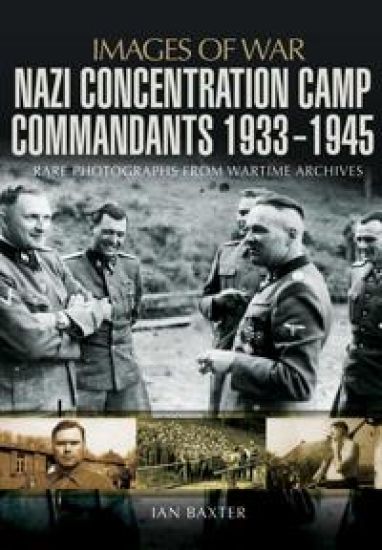
Using many rare and unpublished images this book identifies and delves into the characters of the notorious men who were instrumental in one of the greatest crimes against humanity in World history. Through words and pictures the chilling truth emerges. In many respects these monsters were all too normal. Rudolf Hoss, the Commandant of Auschwitz, was a family man and hospitable host and yet while there is no record of his committing acts of violence personally he presided over a regime that accounted for over a million deaths. Others such as Amon Goeth and Josef Kramer personally promoted violence and terror and took pleasure from ever more brutal practices. They were competitive in obtaining 'results'. While following orders from above they did not hesitate to use their own initiative in pursuit of their barbaric objectives. Every occupied country in Europe was touched by the 'Final Solution' and despite the capture, trials and punishment of these leading perpetrators the stain of man's inhumanity to man, woman and child remains ineradicable. Justice came too late for millions but the lessons learnt must never be forgotten and this book throws new light on the managers of the murderous Holocaust process.
Belsen and its Liberation

Belsen and its Liberation

Ian Baxter

Pen Sword Military
2014
nidottu
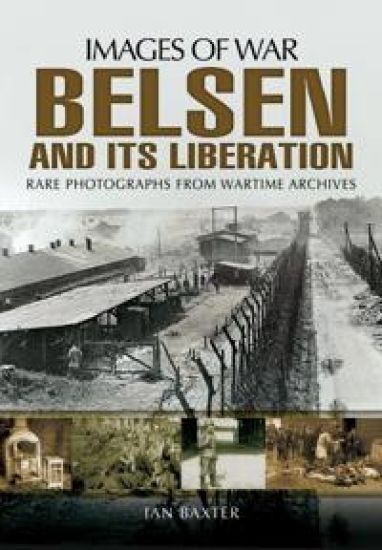
Accompanied by rare and unpublished photos with in-depth captions the book presents a unique visual account of one of the Nazi's most infamous concentration camps. The imagery shows the SS's murderous activities inside Belsen, and also reveal another disturbing side to them relaxing in their barracks or visiting their families and loved ones. The book is an absorbing insight into how the SS played a key part in murdering, torturing and starving to death tens of thousands of inmates. During the latter part of the war as many as 500 a day were perishing from the long-term effects of starvation as well as the resultant diseases. There is a wealth of information on how the camp was run and all aspects of life inside the camp for the inmates are covered. The final episode of Belsen is witnessed by British soldiers of the Second Army, who were completely unprepared for what they encountered when they arrived at the gates of the camp. Inside the camp they found some 10,000 unburied dead in addition to the mass graves already containing 40,000 more corpses. This latest Images of War book captures the shocking story of those that ran Belsen, those that perished, and the troops that liberated the living from their hell.