Kirjojen hintavertailu. Mukana 12 152 606 kirjaa ja 12 kauppaa.

Kirjailija

Ian Collard

Kirjat ja teokset yhdessä paikassa: 46 kirjaa, julkaisuja vuosilta 1997-2026, suosituimpien joukossa Birkenhead History Tour. Vertaile teosten hintoja ja tarkista saatavuus suomalaisista kirjakaupoista.

46 kirjaa

Kirjojen julkaisuhaarukka 1997-2026.

Wallasey History Tour

Wallasey History Tour

Ian Collard

Amberley Publishing
2020
nidottu
Wallasey History Tour offers a fascinating glimpse into the past of this town on the Wirral Peninsula. Local author Ian Collard guides readers around its streets and buildings, showing how its famous landmarks used to look and how they have changed across the centuries, as well as exploring some of its lesser-known sights and hidden corners. This pocket-sized guide reveals how the town has altered and highlights the way of life for past generations. With the help of a handy location map, readers are invited to discover for themselves the changing face of Wallasey.
Birkenhead History Tour

Birkenhead History Tour

Ian Collard

Amberley Publishing
2019
nidottu
The earliest mention of Birkenhead, on the Wirral Peninsula, was in the twelfth century when monks built a priory there and established a ferry crossing to Liverpool. In later centuries the town became famous for its shipbuilding industry, most notably with the Cammell Laird shipyard, and as a centre for trade with the docks. The town prospered during the Industrial Revolution and was the location for Britain’s first street tramway. Joseph Paxton designed the Grade I listed Birkenhead Park, the first publicly funded one in the world, which served as the inspiration for many others including the famous Central Park in New York. Join local author Ian Collard in Birkenhead History Tour as he guides readers on a fascinating walk through the town and its history. Along the route readers will be able to see how Birkenhead has changed during the nineteenth and twentieth centuries. With the help of a handy location map, this pocket-sized guide explores some of the streets, buildings and landmarks, and discovers the well-known and hidden aspects of Birkenhead’s social and industrial heritage.
Tugs and Towing Around Britain

Tugs and Towing Around Britain

Ian Collard

AMBERLEY PUBLISHING
2024
nidottu
The first tugs were built at the beginning of the nineteenth century as a result of the development of enclosed docks and the increase in size and power of sea-going vessels. Tugs were needed to assist ships to their berths and to navigate larger vessels into narrow waterways and tight docking areas. Tugs can tow or push vessels and need to be highly manoeuvrable and powerful. It is thought that the first tugboat was the Charlotte Dundas, which was powered by a Watt engine and was employed towing barges on the Forth and Clyde Canal in Scotland in 1802. The early tugs were fitted with paddle wheels, which were later replaced by propeller driven vessels. Ian Collard looks at a range of tugs employed around the British Isles assisting a variety of ships in the major ports and a selection of the smaller ones. The book features previously unpublished photographs from the author’s collection accompanied by informative captions.
Stena Line

Stena Line

Ian Collard

AMBERLEY PUBLISHING
2022
nidottu
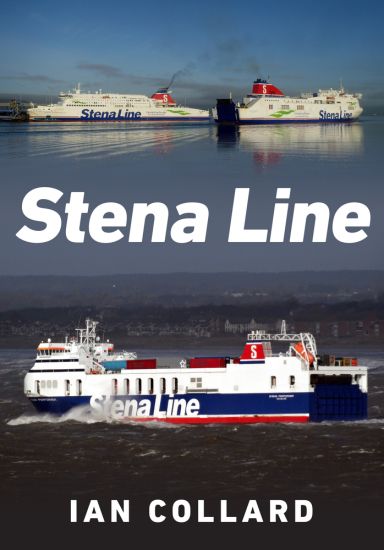
The major company in the short-sea passenger and freight business in 2020 is the Swedish Stena Line, who operate services to Europe, Scandinavia and Ireland from United Kingdom ports. The company was founded in 1962 by Sten A. Olsson in Gothenburg, Sweden, and was one of the first ferry operators in Europe to introduce a computer-based reservation system. In the 1980s, Stena took over three other ferry companies and their ships. Various other acquisitions followed, including the Harwich to Hook of Holland route The company doubled in size in 1990 following its takeover of Sealink British Ferries and Sea Containers. The company became Sealink Stena Line, then Stena Sealink Line, and finally Stena Line. With a wealth of rare and previously unpublished images, Ian Collard celebrates this famous company.
Irish Sea Ports on the River Mersey and River Dee
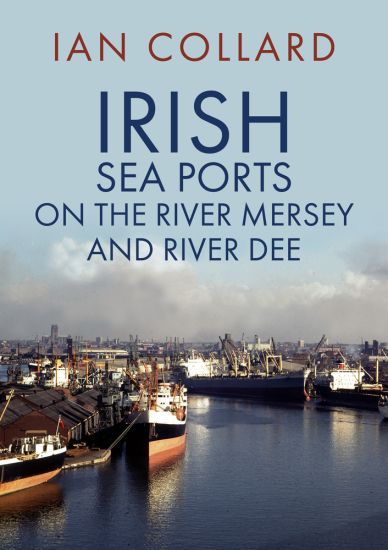
In this book, Ian Collard uses his collection of rare and previously unpublished images to tell the story of the Irish sea ports located on the River Mersey and River Dee. The history of these ports stretches back hundreds of years. The Mersey Docks & Harbour Board took control in 1858, and a variety of boards and groups have controlled various elements along both the Mersey and Dee ever since. Illustrated profusely throughout, this book tells the fascinating history of these hubs of business and activity.
Canadian Pacific Ships

Canadian Pacific Ships

Ian Collard; Stuart Wood

THE HISTORY PRESS LTD
2022
nidottu
In 1873 a company was formed to construct the first railway across Canada. It soon branched out into shipping, chartering ships from the Cunard Line for service between Vancouver, Yokohama, Shanghai and Hong Kong. In 1889 Canadian Pacific would be awarded the mail contract for the service across the Pacific and, by 1903, they would purchase Elder Dempster & Company and begin sailing from Liverpool to Quebec and Montreal.They obtained control of the Atlantic, rail and Pacific routes, and later interest in the Canadian–Australasian Line, becoming ‘the world’s greatest transportation system’, bridging two oceans and linking four continents. Canada’s largest operator of Atlantic and Pacific steamships until after the Second World War, CP Ships boasted such names as Empress of Britain, Empress of Ireland and Empress of Canada. This new history of the shipping side of Canadian Pacific includes a wealth of illustrations and a detailed fleet list that will enthral maritime enthusiasts.
P&O Ferries

P&O Ferries

Ian Collard

Amberley Publishing
2021
nidottu
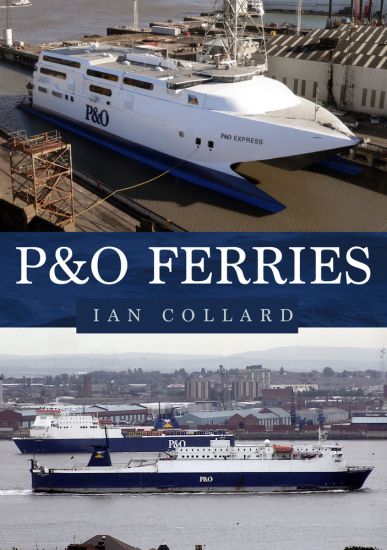
In the late 1960s, P&O established ferry services in the North Sea and English Channel. Roll-on/roll-off operations and containerisation were introduced and new ships, facilities and investment was needed to take advantage of developments. What followed was several decades of growth, buyouts and divisions. The twenty-first century saw the closure of several routes as the ferries saw increased competition from low-cost airline and the Channel Tunnel. Throughout this period, P&O attracted a loyal customer base and became one of the most recognisable names on the sea. Utilising a selection of rare and previously unpublished images, maritime historian Ian Collard delves into the story of this iconic company and its ships.
Sealink British Ferries

Sealink British Ferries

Ian Collard

Amberley Publishing
2019
nidottu
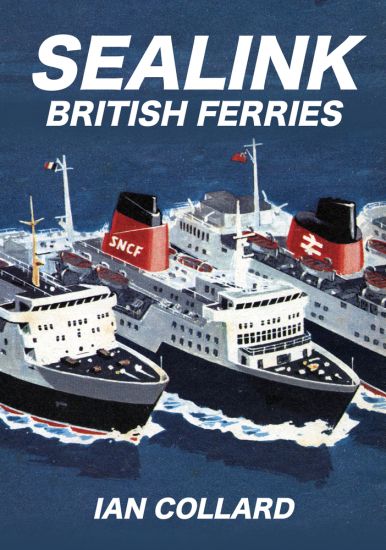
Sealink’s antecedents go back to the packet boats of the days before steam. The invention of the steam engine greatly assisted the development of the railways and led to the growth of the packet boats. The private railway companies recognised the need for an integrated transport system which included operating services across the sea routes. The Big Four railway companies were nationalised in 1948 and their shipping services came under the control of the British Transport ommission. In 1968 a Shipping and International Services Division of the British Railways Board was formed. This separate division operated under the brand name of Sealink. In 1979 the assets of the Shipping and International Services Division were transferred to Sealink UK Limited, a wholly owned subsidiary company. With a wealth of previously unpublished images, Ian Collard tells the fascinating story of this unique shipping company.
The Port of Southampton

The Port of Southampton

Ian Collard

Amberley Publishing
2019
nidottu
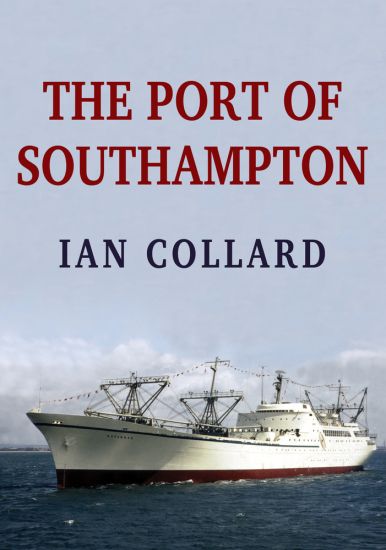
An Act of Parliament passed in 1836 authorised the Southampton Dock Company to build a dock at Southampton. The foundation stone for the new docks was laid on 12 October 1838. The Eastern Docks were developed in the 1830s and the Inner and Outer Docks were then constructed. The Outer Dock was opened in 1842 and the Inner Dock in 1851, being completed eight years later. As trade and business increased the old facilities proved inadequate and a new dock named Empress Dock was opened by Queen Victoria in 1890. Taken over by the London & South Western Railway Company, the port facilities were nationalised, and then later privatised. The Port of Southampton is now the United Kingdom’s premier passenger port and is the second largest container facility, handling more than 1.5 million containers each year. In this book, Ian Collard uses a wonderful collection of photographs to tell the story of one of the world’s most famous ports.
Wirral From Old Photographs

Wirral From Old Photographs

Ian Collard

Amberley Publishing
2018
nidottu
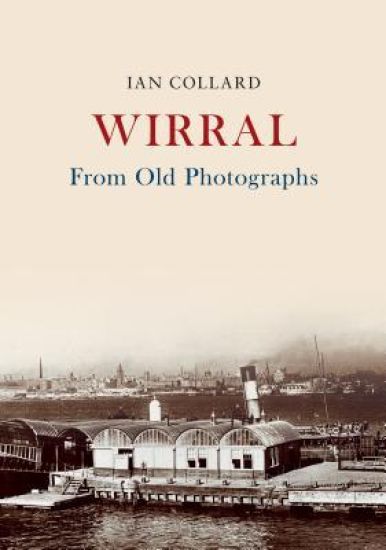
The Wirral Peninsula in north-west England lies within Cheshire and Merseyside but has its own distinct identity. In the east, on the estuary of the River Mersey, lie the two largest urban centres on the Wirral, Birkenhead and Wallasey. These grew rapidly in the nineteenth century with large docks in both, increasing industrialisation and improved access to Liverpool across the Mersey. At the same time the resort of New Brighton was also established. On the eastern side of the Wirral, on the estuary of the River Dee, development in the towns of Hoylake, West Kirby and Heswall was slower, although improved transport links with Chester and Liverpool in the nineteenth and twentieth centuries saw these towns grow too. Away from these heavily populated towns, there are more rural areas in the south and west of the Wirral. Wirral From Old Photographs presents a fascinating portrait of the Wirral over the last 100 years. Drawing on an extensive collection of historical photographs, the author surveys how the area has changed, from the height of its industrial development, when the docks were busy, through the intense destruction of areas of the Wirral from aerial bombardment during the Second World War, post-war industrial decline and later regeneration. This book will appeal to all those who know this part of north-west England.
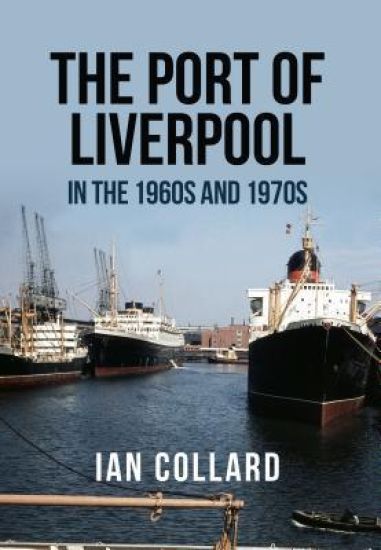
The Port of Liverpool in the 1960s and 1970s

The Port of Liverpool in the 1960s and 1970s

Ian Collard

Amberley Publishing
2018
nidottu
In the 1960s and 1970s, many of the traditional shipping companies trading or based in Liverpool slowly vanished because of containerisation or competition from passenger aircraft. Many of these shipping lines had been in operation since the early years of the nineteenth century and had provided links with the outposts of the Empire and the developing independent countries of the Commonwealth. They had been established in the days of sailing ships and had survived the transition from sail to steam and had provided a lifeline to the country in the difficult days of the First and Second World Wars and the Great Depression of the 1930s. With a fascinating collection of newly unearthed photographs, shipping historian Ian Collard documents this important period of transition in the history of one of the world’s most famous ports.
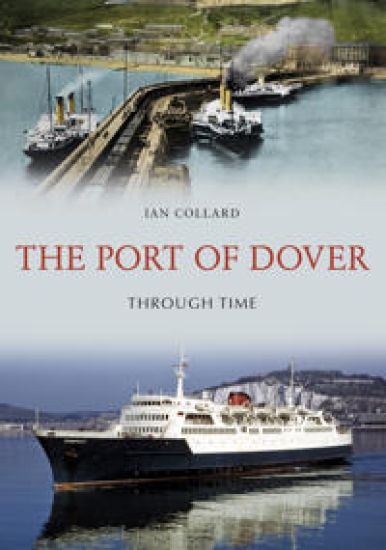
The Port of Dover Through Time

The Port of Dover Through Time

Ian Collard

Amberley Publishing
2018
nidottu
The Port of Dover is Europe’s busiest ferry port and is situated in south-east England. It is the nearest port to France, which is twenty-one miles away, and the world’s busiest passenger port, with 12 million travellers, 2.5 million lorries, 2.2 million cars and motorcycles and 87,000 coaches passing through it each year. The port is owned and operated by the Dover Harbour Board, which was formed by Royal Charter in 1606 by King James I. It has an annual turnover of £59.8 million and the board members are appointed by the government. P&O Ferries and DFDS Seaways operate services to Calais and Dunkirk from the Eastern Docks. These docks were used for ship-breaking during the First World War and finally closed in 1964. In 1966 over 600,000 vehicles travelled through Dover’s Eastern Docks to France and Belgium. The Western Docks are formed by the western arm of the harbour and include Admiralty Pier and other port facilities. They were used as a terminal for the Golden Arrow and other cross-channel train services. The railway station closed in 1994 and this area of the port was used for cross-channel hovercraft services operated by Hoverspeed, which was declared bankrupt in 2005. The railway station re-opened as the Dover Cruise Terminal and can accommodate up to three cruise ships at a time. The White Cliffs remain one of the most iconic and memorable parts of the Kent coast and the strategic importance of the town has been recognised throughout its history.
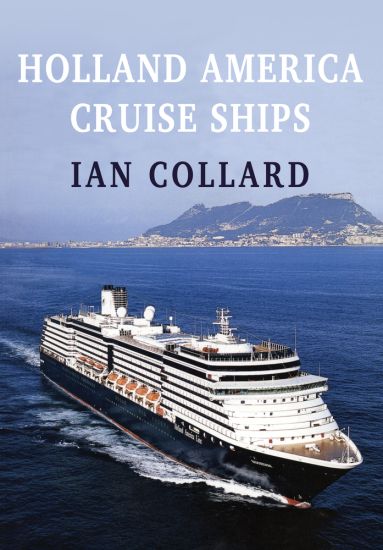
Holland America Cruise Ships

Holland America Cruise Ships

Ian Collard

Amberley Publishing
2018
nidottu
The Holland America Line was founded in 1873 and operated a fleet of passenger and cargo vessels from the Netherlands to the east and west coasts of America. The company later acquired the stock of the Europa-Canada Line and in 1964 became involved with the Swedish America Line, Axel Johnson and Wallenius Rederiana to form the Atlantic Container Line. In 1988 the company was purchased by the Carnival Cruise Line and the name was retained, continuing the history of this line. The company currently operate five different classes of ships, the smaller and older ‘S’ class vessels; the mid-range ‘R’ class; the ‘Vista’ class; the newest and largest ‘Signature’ class; and the smaller ‘Prinsendam’. Koningsdam, delivered on 31 March 2016, is the largest vessel designed and built for the Holland America Line, with a beam of 35 metres, and complies with the new Panamax dimensions, which enable it to cruise through the wider locks in the Panama Canal. Utilising many rare and unpublished images, Ian Collard offers a lavishly illustrated look at the cruise ships operated by the Holland America Line. Included here are images of the ships in many guises and liveries as the author offers an array of superb photographs of these iconic vessels.
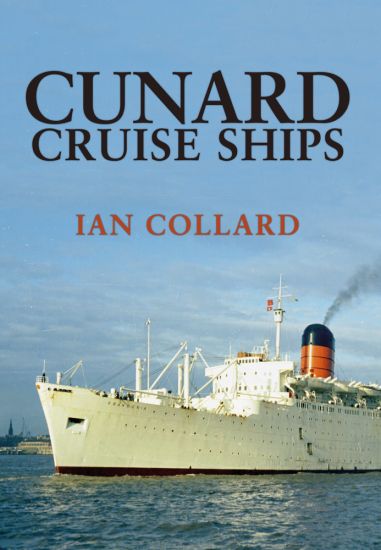
Cunard Cruise Ships

Cunard Cruise Ships

Ian Collard

Amberley Publishing
2017
nidottu
The Cunard Line’s Britannia was the first steamship to establish regular communication across the Atlantic. She sailed on her maiden voyage on 4 July 1840, setting in motion the first regular steamship line. Iron supplanted wood in hull construction and the screw propeller was gradually replacing the paddle wheel. The line became a public company in 1878 and became the Cunard Steam Ship Company Ltd. The construction of many famous ships such as Mauretania, Lusitania, Queen Mary and Queen Elizabeth followed, and the company continued to trade in profit until the introduction of the jet aircraft in the 1960s and 1970s. Following various restructuring and takeovers, the Cunard Line was acquired by the Carnival Corporation and now offers cruises on the Three Queens. Utilising many rare and unpublished images, Ian Collard offers a superbly illustrated look at the cruise ships operated by Cunard. Included here are images of the ships in many guises and liveries, with comprehensive annotation of these iconic liners.
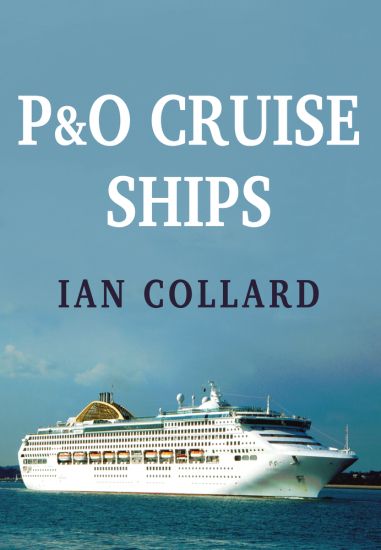
P&O Cruise Ships

P&O Cruise Ships

Ian Collard

AMBERLEY PUBLISHING
2017
nidottu
P&O was established in 1837 and maintained a schedule of routes to India, the Far East and Australia, being the first choice for the majority of passengers travelling to that part of the world. P&O later took over the British India Line, the Union Steamship Company of New Zealand, the New Zealand Shipping Company and the fleet of the British Coast Lines Group. In 1960 P&O Orient Lines was formed to manage the fleets of both operations and Oriana and Canberra were added to the fleet. Retirements of older vessels were made and others converted for cruising duties to operate from the United Kingdom and Australia. Between 1947 and 1962, P&O had transported 427,983 migrants, with an additional 500,000 following over the next eight years. However, this trade was gradually transferred to the airlines and it was clear that P&O’s future was in cruising, with state-of-the-art purpose-built vessels. Princess Cruises were taken over by P&O in 1974 and P&O Princess Cruises merged with the Carnival Corporation in 2003. Utilising many rare and unpublished images, Ian Collard offers a lavishly illustrated look at the cruise ships operated by P&O Cruises. Included here are images of the ships in many guises and liveries as the author offers an array of superb photographs of these iconic liners.
Liverpool City Centre History Tour

Liverpool City Centre History Tour

Ian Collard

Amberley Publishing
2017
nidottu
Liverpool City Centre History Tour is a unique insight into the illustrious history of this famous old port city. Local author Ian Collard guides us through the streets and alleyways, showing how its famous landmarks used to look and how they’ve changed over the years, as well as exploring its lesser-known sights and hidden corners. With the help of a handy location map, readers are invited to follow a timeline of events and discover for themselves the changing face of Liverpool City Centre.
Coastal Shipping Through Time

Coastal Shipping Through Time

Ian Collard

Amberley Publishing
2016
nidottu
Before the development of canals, railways or metalled roads, the quickest and most effective means of transporting goods from one point to another in Britain was by the use of coastal shipping, shallow-draught boats travelling between the ports of the British Isles. With the development and improvement of the canals, railways and especially the road network, however, coastal shipping in the UK has decreased dramatically. In this book, maritime author Ian Collard takes a look at the history of coastal shipping in the UK, examining a selection of the ships used to transport so much cargo and so many passengers across the English Channel, the Irish Sea, the Solent and along the west coast of Scotland, among other places.