Kirjailija
Ian Knight
Kirjat ja teokset yhdessä paikassa: 36 kirjaa, julkaisuja vuosilta 1989-2025, suosituimpien joukossa Warriors in Scarlet. Vertaile teosten hintoja ja tarkista saatavuus suomalaisista kirjakaupoista.
36 kirjaa
Kirjojen julkaisuhaarukka 1989-2025.

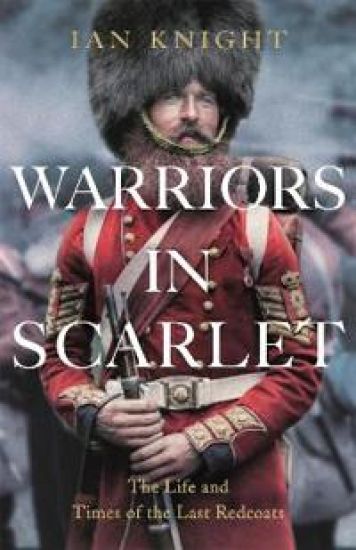
From the highly acclaimed Sunday Times bestselling author Ian Knight, Warriors in Scarlet is an authoritative new history of Queen Victoria�s army.
The Agroforestry Handbook, Second Edition
Paul Burgess; Steven Newman; Tim Pagella; Jo Smith; Sally Westaway; Clive Thomas; Stephen Briggs; Ian Knight; Lindsay Whistance
5M Books Ltd
2025
nidottu
Agriculture and forestry have often been treated as separate and distinct disciplines in colleges, universities and handbooks on farm management. However, on the ground, most farmers manage land that combines agricultural production with trees. The increased uptake of agroforestry in the UK can benefit productivity, soils, climate change mitigation, water management, biodiversity and landscape, as well as animal welfare. This handbook introduces the theory of agroforestry and looks at practical management and design considerations. The authors are leading researchers and practitioners with decades of experience in agroforestry from the UK and around the world. This book will help you to assess the potential for agroforestry for your farm or client and understand the possible benefits to the wider environment, for instance by sequestering carbon and reducing flood risk. This second edition has a new Farm Woodland chapter, additional detail on funding strategies for agroforestry and an increased focus on climate resilience. We hope this handbook will give farmers and advisors the confidence and inspiration to start planting and successfully manage their woody on-farm assets for a profitable and resilient future.
A myth-shattering study of the first clash between the Zulu kingdom and European interlopers and its dramatic effects on Boer and Zulu alike. By the 1830s, the Zulu kingdom was consolidating its power as the strongest African polity in the south-east, but was under growing pressure from British traders and hunters on the coast, and descendants of the early Dutch settlers at the Cape – the Boers. In 1837, the vanguard of the Boers' Great Trek migration reached the borders of Zulu territory, causing alarm. When the Boer leader Piet Retief and his followers were massacred in cold blood, war broke out. Although the initial Boer counter-attacks were defeated by the Zulus, in December 1838 a new Trekker offensive resulted in a nation-defining clash between Boer and Zulu at the battle of Blood River. In this ground-breaking and carefully balanced new work, containing stunning artwork and detailed maps, Ian Knight explores what has long been a controversial and partisan topic in South African history, placing the Zulus more squarely in this part of their history. Among the topics covered are the 1836 Boer/Ndebele conflict, the imbalance in technique and weaponry, the reasons why the British settlers allied themselves with the Boer Trekkers, and why the war was a key turning point in the use of traditional Zulu military techniques. This work also reveals that a Boer victory at Blood River was by no means a foregone conclusion.
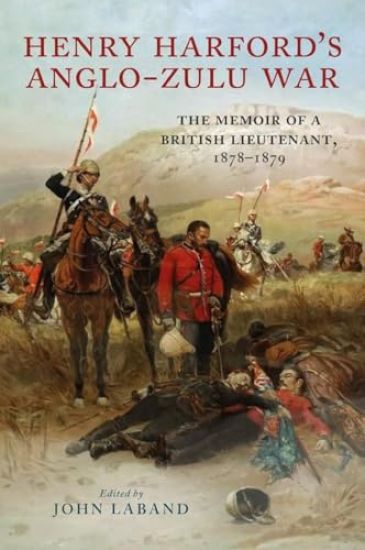
'Highly recommended, not only for the remarkable story itself but also the quality of its research, its presentation and readability.' — Adrian Greaves 'Charlie Harford's entertaining memoirs are among the most often quoted sources for the Anglo-Zulu War of 1879, but a scholarly edition is long overdue. Professor Laband's thoroughly annotated volume fills this gap admirably, and will be an invaluable addition to any Zulu War library.' — Chris Peers Henry Harford was a young officer in the British Army and the adjutant of his own regiment when tensions were rising between the British colonial government in Natal and the independent Zulu kingdom in 1878. In the face of these tensions, Harford volunteered for temporary special service and first served as a Lieutenant in the Natal Native Contingent before going on to resume his commission and adjutancy of his regiment in Natal during the 1879 Anglo-Zulu War. The Zulu War Journal tells the true story of his experience during this time, providing readers with fascinating eye-witness accounts of the conflict. Harford’s journal chronicles key events in the Zulu Wars in captivating, eye-opening detail and pays tribute to all those who fought bravely alongside him. Among the episodes covered are: the disaster at Isandlwana; the heroic battle at Rorke’s Drift; the recovery of the Queen's Colour of the 1st Battalion, 24th Regiment, at Fugitive's Drift; and the hunt for the Zulu king Cetshwayo. This comprehensive new edition of the journal offers readers even more insight into and details about the conflict thanks to a host of contemporary photographs and expert commentary from leading Anglo-Zulu specialist John Laband. A truly fascinating and dramatic testimony, this updated edition of Henry Harford's Anglo-Zulu War Journal is essential reading for anyone interested in military history.
From the highly acclaimed Sunday Times bestselling author Ian Knight, Warriors in Scarlet is an authoritative new history of Queen Victoriaâ??s army.
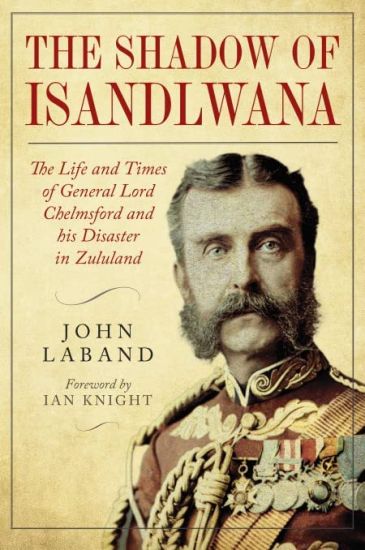
Lord Chelmsford is not a bad man. He is industrious and conscientious so far as his lights guide him. But nature has refused to him the qualities of a great captain. He has suffered much and is entitled to certain commiseration. - Thomas Gibson Bowles, Vanity Fair General Lord Chelmsford's military career took him around the world; he served in the Crimean War, the Indian Mutiny and the Abyssinian Expedition, before commanding the British invasion of the Zulu Kingdom in South Africa. In January 1879, disaster struck when Chelmsford divided his forces at Isandlwana in the face of the enemy and the Zulu overwhelmed his camp, killing more than 1,300 of its defenders. Such a defeat was almost unprecedented in a Victorian colonial campaign. Despite Chelmsford's later victories at Gingindlovu and Ulundi, he was humiliatingly relieved of his command. His responsibility for Isandlwana dogged him for the rest of his days, and he would forever be associated with this historic defeat. In this comprehensive new biography, Anglo-Zulu War specialist John Laband, explores the personal character and military career of Lord Chelmsford, providing a well-rounded, well-balanced and well-informed picture of this complex military figure.
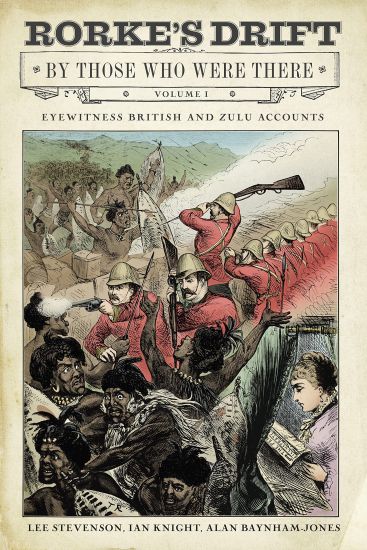
Rorke's Drift By Those Who Were There
Lee Stevenson; Ian Knight; Gary Bayhnam-Jones
GREENHILL BOOKS
2023
sidottu
"Yes you have beaten us; you had the best guns, but we have the best men . . . But we'll fight again in two or three years' time." - Prince Dabulamanzi kaMpande (who led the Zulu at Rorke's Drift) On 22 January 1879, during the final hour of the Battle of Isandlwana - one of the greatest disasters ever to befall British troops during the Victorian era - a very different story was about to unfold a few miles away at the mission station of Rorke's Drift. A Zulu force of more than 3,000 warriors had turned their attention to the small outpost, defended by around 150 British and Imperial troops. The odds of the British surviving were staggeringly low. The British victory that ensued, therefore, would go down as one of the most heroic actions of all time, and has fascinated military history enthusiasts for decades. In this classic work, Anglo-Zulu War experts Lee Stevenson, Alan Baynham-Jones and Ian Knight examine a wide range of personal testimonies from those present at Rorke's Drift, while also presenting a clear overview of the battle in its entirety. By reading this account, readers will gain an impressive, unique breadth of knowledge about one of the most epic battles in British history. This updated edition includes even more first-person accounts from the combatants on both the British and Zulu sides. Providing personal, microscopic accounts of events, while at the same time presenting a clear overview of the battle in its entirety, this second volume completes the collection of accounts of the defenders of Rorke's Drift and also includes contemporary accounts of those who saw the immediate aftermath of the battle.
Rorke's Drift By Those Who Were There
Ian Knight; Lee Stevenson; Alan Baynham-Jones
GREENHILL BOOKS
2023
sidottu
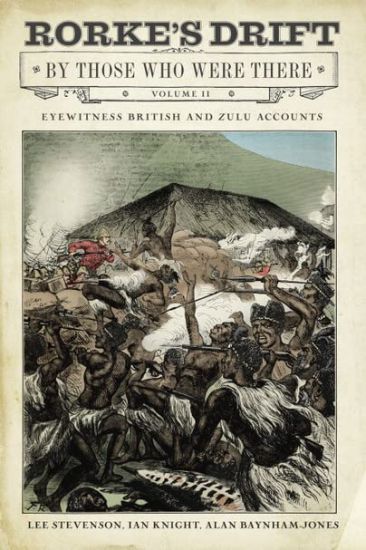
The great host came steadily on, spreading out spreading out - spreading out till they seemed like a giant pair of nut-crackers opening round the little nut of Rorke's Drift. - Surgeon Major James Henry Reynolds V.C., Army Medical Department On 22 January 1879, during the final hour of the Battle of iSandlwana - one of the greatest disasters ever to befall British troops during the Victorian era - a very different story was about to unfold a few miles away at the mission station of Rorke's Drift. When a Zulu force of more than 3,000 warriors turned their attention to the small outpost, defended by around 150 British and Imperial troops, the odds of the British surviving were staggeringly low. The British victory that ensued, therefore, would go down as one of the most heroic actions of all time, and has enraptured military history enthusiasts for decades. Featuring a wide range of first-hand accounts and testimonies from those present during the Battle of Rorke's Drift, Rorke's Drift By Those Who Were There is a remarkable work of Anglo-Zulu military history by those who know the topic best, Lee Stevenson and Ian Knight. This updated edition of the classic work of the same name includes even more first-person accounts from the combatants on both the British and Zulu sides. Providing personal, microscopic accounts of events, while at the same time presenting a clear overview of the battle in its entirety, readers will gain an impressive, unique breadth of knowledge about one of the most awe-inspiring battles in British history.
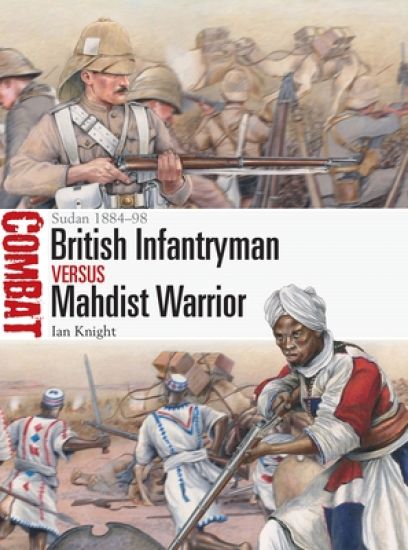
In the early 1880s, Britain intervened in independent Egypt and seized control of the Suez Canal. British forces were soon deployed to Egypt’s southern colony, the Sudan, where they confronted a determined and capable foe amid some of the world’s most inhospitable terrain. In 1881 an Islamic fundamentalist revolt had broken out in the Sudan, led by a religious teacher named Muhammad Ahmad bin Abd Allah, who proclaimed himself al-Mahdi, ‘The Guided One’. In 1884, Mahdist forces besieged the Sudanese capital of Khartoum; Colonel Charles Gordon was sent to the city with orders to evacuate British personnel, but refused to leave. Although the British despatched a relief column to rescue Gordon, the Mahdists stormed Khartoum in January 1885 and he was killed. British troops abandoned much of the Sudan, but renewed their efforts to reconquer it in the late 1890s, in a bloody campaign that would decide the region’s fate for generations. Written by leading expert Ian Knight, this fully illustrated study examines the evolving forces, weapons and tactics employed by both sides in the Sudan, notably at the battles of Abu Klea (16–18 January 1885), Tofrek (22 March 1885) and Atbara (8 April 1898).
The Anglo-Zulu War was a defining episode in British imperial history, and it is still a subject of intense interest. The Zulu victory at Isandlwana, the heroic British defence of Rorke's Drift and the eventual British triumph are among the most closely researched events of the colonial era. In this historical companion, Ian Knight, one of the foremost authorities on the war and the Zulu kingdom, provides an essential reference guide to a short, bloody campaign that had an enduring impact on the history of Britain and southern Africa. He gives succinct summaries of the issues, events, armies and individuals involved. His work is an invaluable resource for anyone who is interested in the history of the period, in the operations of the British army in southern Africa, and in the Zulu kingdom.
The first 'bushrangers' or frontier outlaws were escaped or time-expired convicts, who took to the wilderness – 'the bush' – in New South Wales and on the island of Tasmania. Initially, the only Crown forces available were redcoats from the small, scattered garrisons, but by 1825 the problem of outlawry led to the formation of the first Mounted Police from these soldiers. The gold strikes of the 1860s attracted a new group of men who preferred to get rich by the gun rather than the shovel. The roads, and later railways, that linked the mines with the cities offered many tempting targets and were preyed upon by the bushrangers. This 1860s generation boasted many famous outlaws who passed into legend for their boldness. The last outbreak came in Victoria in 1880, when the notorious Kelly Gang staged several hold-ups and deliberately ambushed the pursuing police. Their last stand at Glenrowan has become a legendary episode in Australian history. Fully illustrated with some rare period photographs, this is the fascinating story of Australia’s most infamous outlaws and the men tasked with tracking them down.
Waged across an inhospitable terrain which varied from open African savannah to broken mountain country and arid semi-desert, the Anglo-Boer wars of 1880–81 and 1899–1902 pitted the British Army and its allies against the Boers’ commandos.The nature of warfare across these campaigns was shaped by the realities of the terrain and by Boer fighting techniques. Independent and individualistic, the Boers were not professional soldiers but a civilian militia who were bound by the terms of the ‘Commando system’ to come together to protect their community against an outside threat. By contrast the British Army was a full-time professional body with an established military ethos, but its over-dependence on conventional infantry tactics led to a string of Boer victories. This fully illustrated study examines the evolving nature of Boer military techniques, and contrasts them with the British experience, charting the development of effective British mounted tactics from the first faltering steps of 1881 through to the final successes of 1902.
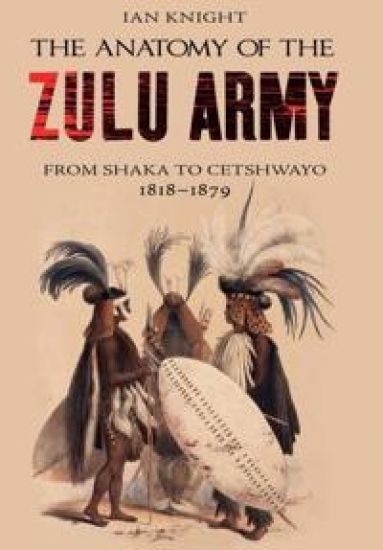
Forces of the independent Zulu kingdom inflicted a crushing defeat on British imperial forces at Isandlwana in January 1879. The Zulu Army was not, however, a professional force, unlike its British counterpart, but was the mobilized manpower of the Zulu state. Ian Knight details how the Zulu army functioned and ties its role firmly to the broader context of Zulu society and culture. The Zulu army had its roots in the early groups of young men who took part in combats between tribes, but such warfare was limited to disputes over cattle ownership, grazing rights, or avenging insults. In the early nineteenth century the Zulu nation began a period of rapid expansion, and King Shaka began to reform his forces into regular military units. Ian Knight charts the development and training of the men that formed the impi which later operated so successfully under King Cetshwayo. He analysis the Zulu's fighting methods, weapons and philosophy, all of which led to the disciplined force that faced the British army in 1879.
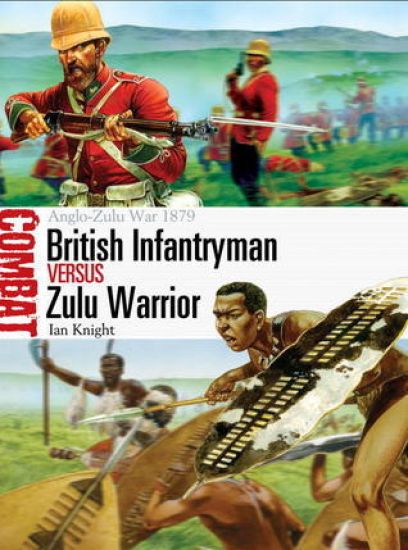
The short but savage Anglo-Zulu War of 1879 pitched well-equipped but complacent British soldiers into combat with the Zulu, one of history’s finest fighting forces.The clashes between these two different armies prompted tactical innovation on both sides, as the British and their Zulu opponents sought to find the optimal combination of mobility, protection and firepower. This engrossing study traces the changing face of infantry combat in the Anglo-Zulu War. Three major engagements are detailed: the Zulu ambush at Nyezane, repulsed by the British using their established tactics; the shocking defeat and massacre of outmanoeuvred British forces in savage close-quarter fighting at iSandlwana; and the British victory at Khambula following their adoption of more condensed firing lines and prepared positions.A noted authority on this epic confrontation examines three pivotal clashes from the infantryman’s perspective on both sides to shed new light on the nature of colonial warfare ‘at the sharp end’.
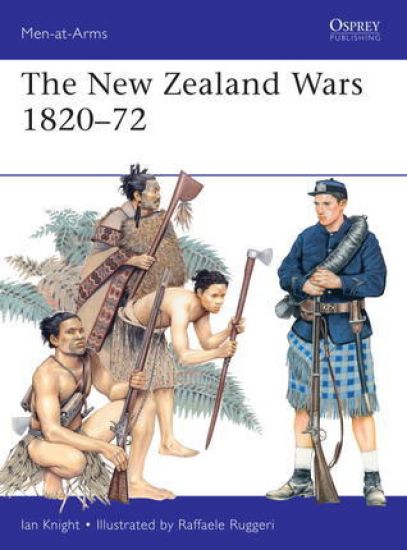
Between 1845 and 1872, various groups of Maori were involved in a series of wars of resistance against British settlers. The Maori had a fierce and long-established warrior tradition and subduing them took a lengthy British Army commitment, only surpassed in the Victorian period by that on the North-West Frontier of India. Warfare had been endemic in pre-colonial New Zealand and Maori groups maintained fortified villages or pas. The small early British coastal settlements were tolerated, and in the 1820s a chief named Hongi Hika travelled to Britain with a missionary and returned laden with gifts. He promptly exchanged these for muskets, and began an aggressive 15-year expansion. By the 1860s many Maori had acquired firearms and had perfected their bush-warfare tactics. In the last phase of the wars a religious movement, Pai Maarire (‘Hau Hau’), inspired remarkable guerrilla leaders such as Te Kooti Arikirangi to renewed resistance. This final phase saw a reduction in British Army forces. European victory was not total, but led to a negotiated peace that preserved some of the Maori people’s territories and freedoms.
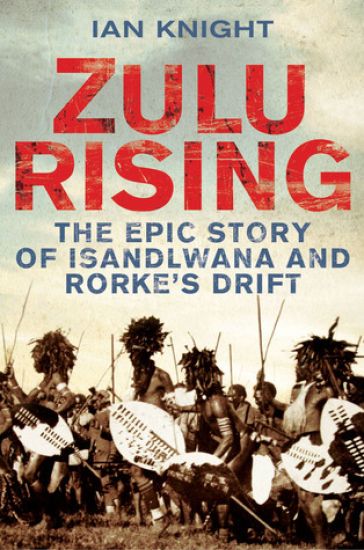
'A definitive account of one of the most dramatic encounters in the whole history of Empire . . . [a] tour de force' The Daily Mail'Ian Knight manages to expose many of the Victorian myths while still capturing the kind of epic excitement that makes Zulu so stirring. It is a first class work of military history, not least for its evocative and extensive use of Zulu sources' Sunday TimesThe battle of iSandlwana was the single most destructive incident in the 150-year history of the British colonisation of South Africa. In one bloody day over 800 British troops, 500 of their allies and at least 2000 Zulus were killed in a staggering defeat for the British empire. The consequences of the battle echoed brutally across the following decades as Britain took ruthless revenge on the Zulu people.In Zulu Rising Ian Knight shows that the brutality of the battle was the result of an inevitable clash between two aggressive warrior traditions. He gives full weight to the Zulu experience and explores the reality of the fighting through the eyes of men who took part on both sides, looking into the human heart of this savage conflict. Based on new research, including previously unpublished material, Zulu oral history, and new archaeological evidence from the battlefield, this is the definitive account of a battle that has shaped the political fortunes of the Zulu people to this day.'This new history by Ian Knight is thorough and definitive. Knight uses first-hand sources, both Zulu and British, with admirable even-handedness, to examine the bloody clash between two different warrior traditions' Sunday Telegraph
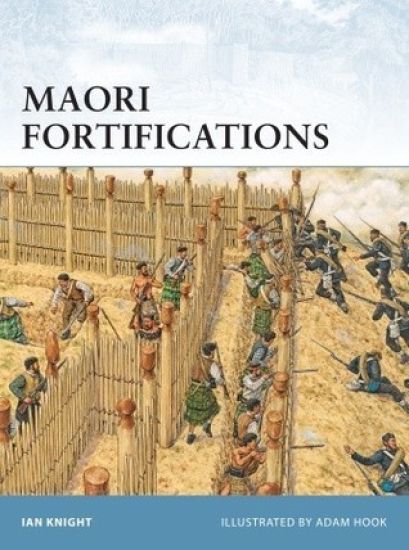
The Maori people of New Zealand were experienced field engineers and it was common practice to protect villages with surrounding entrenchments and wooden palisades, known as pas. However, it was not until 1845, with the first fighting between the Maori and the British, that it became clear just how strong and sophisticated the Maori fortifications were. For the best part of 20 years, the Maori held off the dominant and technologically superior British forces, by adapting and developing their defences in response to new British assaults. This book explores the evolution and design of Maori fortifications, and charts the course of a conflict that would ultimately see the British break the Maori pas, leading to a bitter guerrilla bush war.
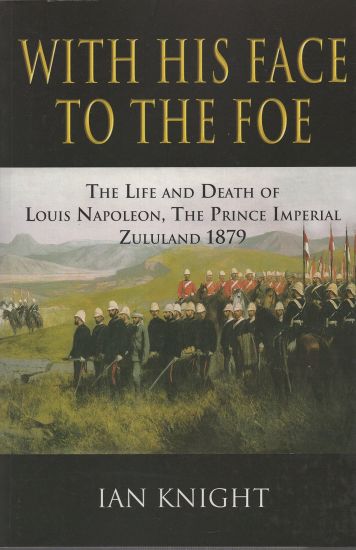
On the afternoon of 1 June 1879, in a muddy gully in the heart of Zululand, the ambitions of France's Bonaparte dynasty came to a tragic and violent end. A patrol of British troops, in the vanguard of an invading column, was ambushed by the Zulu, and fled, leaving three men dead on the field. Among them was Prince Louis Napoleon, the exiled heir to the Imperial throne in France, the last of the Bonapartes. What curious combination of circumstances had brought the Prince Imperial to southern Africa, wearing the uniform of - of all things - a British officer? His was a romantic and melancholy story.Chased out of France after the debacle of the Franco-Prussian War, the Emperor Napoleon III had sought refuge with his family in England, where they were befriended by Queen Victoria. Napoleon's son, Louis, had grown to manhood in exile, succeeding on his father's death to the title of Napoleon IV, and awaiting a call to reclaim his throne, which might never have come. Raised in the shadow of the reputation of the great Napoleon, he hungered for military glory, and by special dispensation was allowed to train as a British officer.As a foreign Prince, however, and a Bonaparte, there was never any hope that he might serve in the British army, but when the Anglo-Zulu war broke out in 1879 he was allowed to go to Africa as an observer, attached to General Lord Chelmsford's staff. The war seemed to offer him the perfect chance for military experience without European political repercussions, and with a minimum of danger. This was not to be.