Kirjojen hintavertailu. Mukana 12 218 848 kirjaa ja 12 kauppaa.
Kirjailija
James Joyce
Kirjat ja teokset yhdessä paikassa: 668 kirjaa, julkaisuja vuosilta 1914-2026, suosituimpien joukossa Ulysses. Vertaile teosten hintoja ja tarkista saatavuus suomalaisista kirjakaupoista.
The most consistent of all series in terms of language control, length, and quality of story. David R. Hill, Director of the Edinburgh Project on Extensive Reading.
Stuck in the Liffey with you... Booze, Sex and Hot Floury Potatoes... Those Dubliners are at it again! Liars, thieves, whores and priests... James Joyce sure knew how to throw a party! This relentlessly downbeat collection explores the very worst aspects of human nature, and doesn't leave out the juicy bits. It might not be in the best possible taste, but who doesn't want to get down and dirty in Dublin?
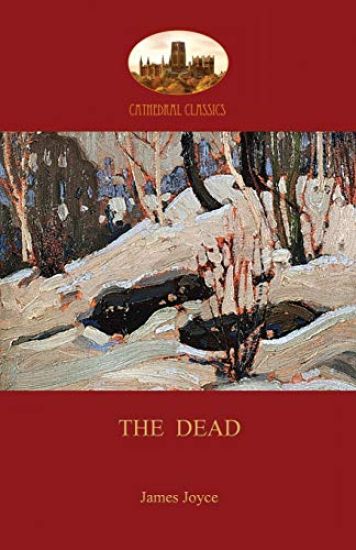
That James Joyce's ""The Dead"" forms an extraordinary conclusion to his collection Dubliners, there can be no doubt. But as many have pointed out, ""The Dead"" may equally well be read as a novella—arguably, one of the finest novellas ever written. ""The Dead,"" a ""story of public life,"" as Joyce categorised it, was written more than a year after Joyce had finished the other stories in the collection, and was meant to redress what he felt was their ""unnecessary harsh[ness]."" Set on the feast of the epiphany, it is a haunting tale of connection and of alienation, reflecting, in the words of Stanislaus Joyce (James's brother and confidant), ""the nostalgic love of a rejected exile."" The present volume highlights ""The Dead"" for readers who wish to focus on that great work in a concise volume—and for university courses in which it is not possible to cover all of Dubliners. But it also gives a strong sense of how that story is part of a larger whole. One story from each of the other sections of Dubliners has been included, and a wide range of background materials is included as well, providing a vivid sense of the literary and historical context out of which the work emerged.
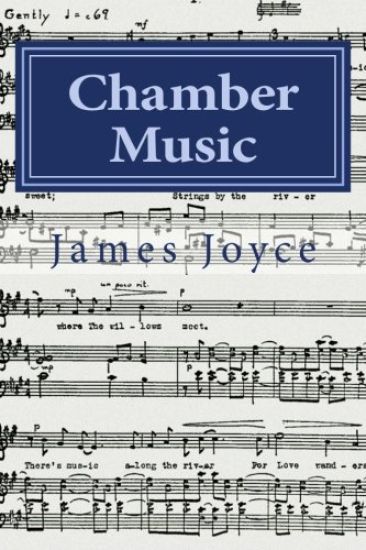
This selection of the major poems James Joyce published in his lifetime is accompanied by his only surviving play, Exiles. Joyce is most celebrated for his remarkable novel Ulysses, and yet he was also a highly accomplished poet. Chamber Music is his debut collection of lyrical love poems, which he intended to be set to music; in it, he enlivens the styles of the Celtic Revival with his own brand of playful irony. Pomes Penyeach, a collection written while Joyce was working on A Portrait of the Artist as a Young Man, sounds intimately autobiographical notes of passion and betrayal that would go on to resonate throughout the rest of his work. Joyce's other poems include the moving "Ecce Puer," written on the occasion of the birth of his grandson, and his fiery satires "The Holy Office" and "Gas from a Burner." Exiles was written after Joyce had left Ireland, never to return; it is a richly nuanced drama that reflects a grappling with the state of his own marriage and career as he was about to embark on the writing of Ulysses. In its tale of an unconventional couple involved in a love triangle, Exiles engages Joycean themes of envy and jealousy, freedom and love, men and women, and the complicated relationship between an artist and his homeland.
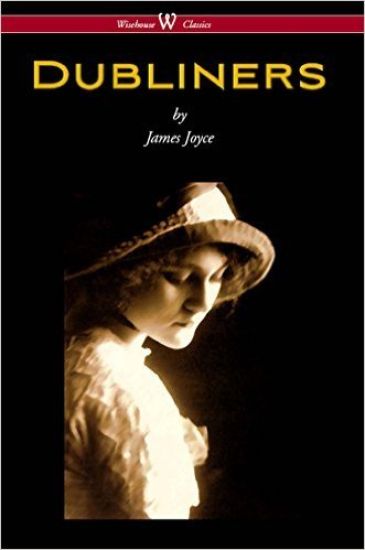
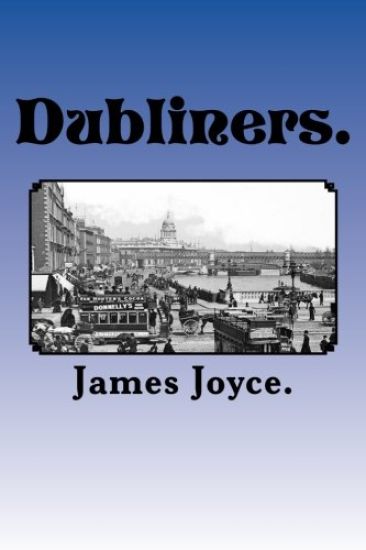
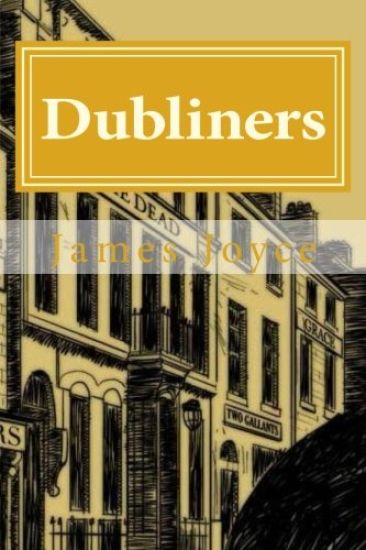
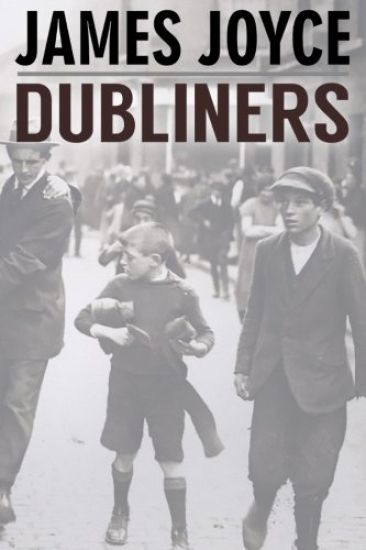
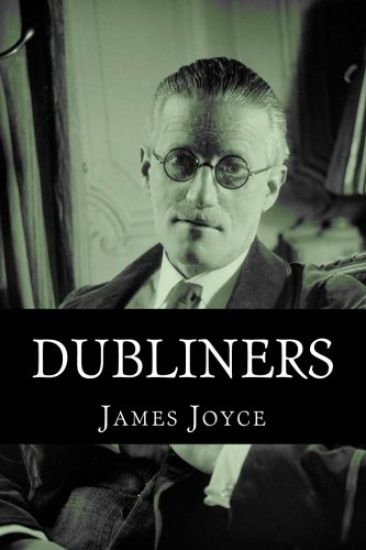
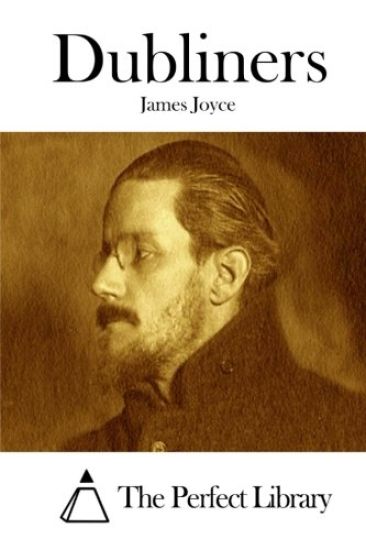
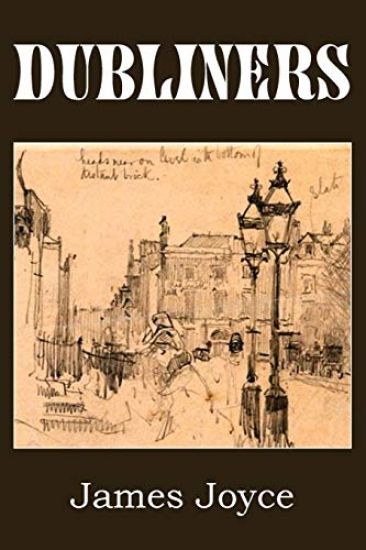
Dubliners is a collection of 15 short stories by James Joyce, first published in 1914. They form a naturalistic depiction of Irish middle class life in and around Dublin in the early years of the 20th century. The stories were written when Irish nationalism was at its peak, and a search for a national identity and purpose was raging; at a crossroads of history and culture, Ireland was jolted by various converging ideas and influences. They centre on Joyce's idea of an epiphany: a moment where a character experiences self-understanding or illumination. Many of the characters in Dubliners later appear in minor roles in Joyce's novel Ulysses. The initial stories in the collection are narrated by child protagonists, and as the stories continue, they deal with the lives and concerns of progressively older people. This is in line with Joyce's tripartite division of the collection into childhood, adolescence and maturity. Style In Dubliners Joyce rarely uses hyperbole, relying on simplicity and close detail to create a realistic setting. This ties the reader's understanding of people to their environments. He does not tell readers what to think, rather they are left to come to their own conclusions. This is even more evident when contrasted with the moral judgements displayed by earlier writers such as Charles Dickens. This frequently leads to a lack of traditional dramatic resolution within the stories. It has been argued that Joyce often allows his narrative voice to gravitate towards the voice of a textual character. For example, the opening line of 'The Dead' reads "Lily, the caretaker's daughter, was literally run off her feet." She is not, in this instance, "literally" run off her feet, and neither would Joyce have thought so; rather, the narrative lends itself to a misuse of language typical of the character being described. Joyce often uses descriptions from the characters' point of view, although he very rarely writes in the first person. This can be seen in Eveline, when Joyce writes, "Her head was leaned against the window curtains and in her nostrils was the odour of dusty cretonne". Here, Joyce employs an empirical perspective in his description of characters and events; an understanding of characters' personalities is often gained through an analysis of their possessions. The first paragraph of A Painful Case is an example of this style, as well as Joyce's use of global to local description of the character's possessions. Joyce also employs parodies of other writing styles; part of A Painful Case is written as a newspaper story, and part of Grace is written as a sermon. This stylistic motif may also be seen in Ulysses (for example, in the Aeolus episode, which is written in a newspaper style), and is indicative of a sort of blending of narrative with textual circumstances. The collection as a whole displays an overall plan, beginning with stories of youth and progressing in age to culminate in The Dead. Great emphasis is laid upon the specific geographic details of Dublin, details to which a reader with a knowledge of the area would be able to directly relate. The multiple perspectives presented throughout the collection serve to contrast the characters in Dublin at this time.
From A to Z, the Penguin Drop Caps series collects 26 unique hardcovers--featuring cover art by Jessica Hische It all begins with a letter. Fall in love with Penguin Drop Caps, a new series of twenty-six collectible and hardcover editions, each with a type cover showcasing a gorgeously illustrated letter of the alphabet. In a design collaboration between Jessica Hische and Penguin Art Director Paul Buckley, the series features unique cover art by Hische, a superstar in the world of type design and illustration, whose work has appeared everywhere from Tiffany & Co. to Wes Anderson's recent film Moonrise Kingdom to Penguin's own bestsellers Committed and Rules of Civility. With exclusive designs that have never before appeared on Hische's hugely popular Daily Drop Cap blog, the Penguin Drop Caps series debuted with an 'A' for Jane Austen's Pride and Prejudice, a 'B' for Charlotte Bronte's Jane Eyre, and a 'C' for Willa Cather's My Antonia. It continues with more perennial classics, perfect to give as elegant gifts or to showcase on your own shelves. J is for Joyce. From its chronicling of youthful days at Clongowes Wood school to the radical questioning of all convention and the desire "to forge in the smithy of my soul the uncreated conscience of my race," James Joyce's highly autobiographical A Portrait of the Artist as a Young Man portrays Stephen Dedalus in his Dublin upbringing. In doing so, it provides an oblique self-portrait of young Joyce himself. At its center lie questions of origin and source, authority and authorship, and the relationship of an artist to his family, culture, and race. Exuberantly inventive in style, A Portrait of the Artist as a Young Man subtly and beautifully orchestrates the patterns of quotation and repetition instrumental in its hero's quest to create his own character, his own language, life and art: "to express myself in some mode of life or art as freely as I can and as wholly as I can, using for my defense the only arms I allow myself to use--silence, exile, and cunning."