Kirjojen hintavertailu. Mukana 12 595 353 kirjaa ja 12 kauppaa.

Kirjailija

James Simpson

Kirjat ja teokset yhdessä paikassa: 52 kirjaa, julkaisuja vuosilta 1995-2026, suosituimpien joukossa Transactions of the Cumberland & Westmorland Antiquarian & Archaeological Society. Vertaile teosten hintoja ja tarkista saatavuus suomalaisista kirjakaupoista.

52 kirjaa

Kirjojen julkaisuhaarukka 1995-2026.

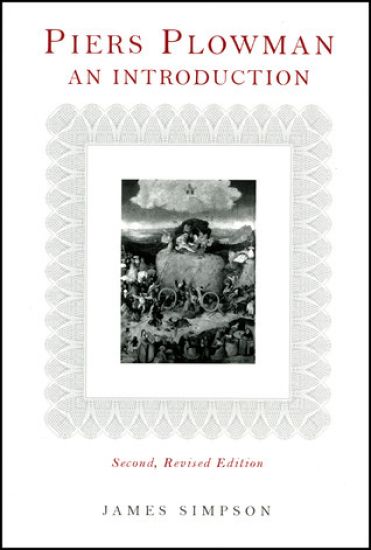
Piers Plowman: An Introduction

Piers Plowman: An Introduction

James Simpson

University of Exeter Press
2007
nidottu
This book provides an accessible, concise and intellectually stimulating introduction and guide to one of the richest, most challenging poems of pre-Reformation English. New to the internationally-renowned "Exeter Medieval Texts and Studies" series, James Simpson's indispensable guide to Piers Plowman has been fully revised for this reissue. As any teacher of the poem knows, teaching Piers Plowman is massively facilitated by a reliable introductory guide providing both information and interpretation. This book does just that. Its main aim is to demonstrate to undergraduate readers the centrality of Piers Plowman in any account of the literary and cultural history of the later English Middle Ages. Piers Plowman's principal project is the re-imagination of a vernacular Church; the text questions the culture within which it is anchored and moves towards an active re-imagination of social and religious institutions. Simpson's book demonstrates how the poem's historical significance is embedded in its formal choices. This is a truly introductory guide to Piers Plowman notable for its clarity, its intellectual subtlety and its originality. Piers Plowman is a key medieval undergraduate text, both for its literary value and its religious significance. This full revision of the book incorporates the best new scholarship on Piers since the original 1990 edition.
Piers Plowman: An Introduction

Piers Plowman: An Introduction

James Simpson

University of Exeter Press
2007
sidottu
This book provides an accessible, concise and intellectually stimulating introduction and guide to one of the richest, most challenging poems of pre-Reformation English. New to the internationally-renowned "Exeter Medieval Texts and Studies" series, James Simpson's indispensable guide to Piers Plowman has been fully revised for this reissue. As any teacher of the poem knows, teaching Piers Plowman is massively facilitated by a reliable introductory guide providing both information and interpretation. This book does just that. Its main aim is to demonstrate to undergraduate readers the centrality of Piers Plowman in any account of the literary and cultural history of the later English Middle Ages. Piers Plowman's principal project is the re-imagination of a vernacular Church; the text questions the culture within which it is anchored and moves towards an active re-imagination of social and religious institutions. Simpson's book demonstrates how the poem's historical significance is embedded in its formal choices. This is a truly introductory guide to Piers Plowman notable for its clarity, its intellectual subtlety and its originality. Piers Plowman is a key medieval undergraduate text, both for its literary value and its religious significance. This full revision of the book incorporates the best new scholarship on Piers since the original 1990 edition.
The Index of Middle English Prose Handlist VII
Index of manuscripts in Middle English prose contained in Parisian libraries The Parisian manuscript collections checked for the compilation of this handlist are the Bibliotheque Nationale, the Bibliotheque Mazarine and the Bibliotheque Sainte Genevieve. They contain a miscellaneous but interesting set of Middle English prose texts: there is the Middle English version of Guy de Chauliac's 'Cyrurgie', a 'Brut', four miscellanies of religious matter, including a 'Pore Caitif' and a 'Lay Folks' Catechism', as well as texts by Rolle and Hilton. There is also Julian of Norwich's Showings and the polemical Twelve Conclusions of the Lollards.
John Lydgate

John Lydgate

James Simpson

University of Notre Dame Press
2006
nidottu
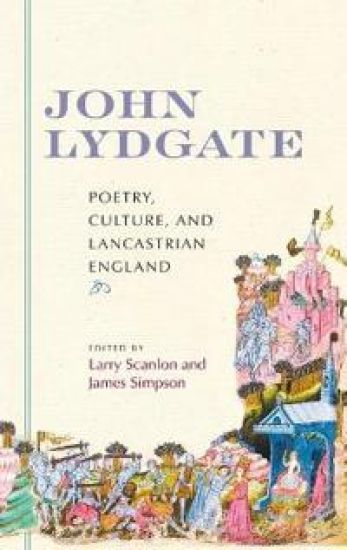
Essays in this volume argue that it is time for a powerful reassessment of John Lydgate's poetic projects. The pre-eminent poet of his own century, Lydgate (c. 1370-1449) addressed the historical challenges of war with France, of looming civil war, and of new theological forces in the vernacular. He wrote for household, parish, city, monastery, Church, and state. Although an official poet of sorts—perhaps the first major official poet in the English poetic tradition—he was not by any means a merely celebratory or sycophantic writer. Instead, he drew on his authority as monk to shape a contestative poetic space, underlining the grief and treacherousness of power. Despite his exceptional cultural significance, Lydgate has, for different reasons, been marginalized by many literary historical movements since the sixteenth century. John Lydgate is energized by the challenge of an oeuvre so large and so ripe for reevaluation. Each essay here makes a decisive contribution to an area of Lydgate's corpus, and opens fresh perspectives for further investigation. Contributors write about Lydgate from a variety of critical perspectives and underscore the poet's diverse writings, which included beast fables, mummings, hagiographical and devotional poetry, and civic pageants. The essays also reassess better-known works and themes in the field of Lydgate studies, including Lydgate's unofficial laureateship, his relations to his patrons, and his relationship to Chaucer. This book makes an important contribution to medieval scholarship and it will be welcomed by scholars and students alike.
John Lydgate

John Lydgate

James Simpson

University of Notre Dame Press
2006
sidottu
Essays in this volume argue that it is time for a powerful reassessment of John Lydgate's poetic projects. The pre-eminent poet of his own century, Lydgate (c. 1370-1449) addressed the historical challenges of war with France, of looming civil war, and of new theological forces in the vernacular. He wrote for household, parish, city, monastery, Church, and state. Although an official poet of sorts—perhaps the first major official poet in the English poetic tradition—he was not by any means a merely celebratory or sycophantic writer. Instead, he drew on his authority as monk to shape a contestative poetic space, underlining the grief and treacherousness of power. Despite his exceptional cultural significance, Lydgate has, for different reasons, been marginalized by many literary historical movements since the sixteenth century. John Lydgate is energized by the challenge of an oeuvre so large and so ripe for reevaluation. Each essay here makes a decisive contribution to an area of Lydgate's corpus, and opens fresh perspectives for further investigation. Contributors write about Lydgate from a variety of critical perspectives and underscore the poet's diverse writings, which included beast fables, mummings, hagiographical and devotional poetry, and civic pageants. The essays also reassess better-known works and themes in the field of Lydgate studies, including Lydgate's unofficial laureateship, his relations to his patrons, and his relationship to Chaucer. This book makes an important contribution to medieval scholarship and it will be welcomed by scholars and students alike.
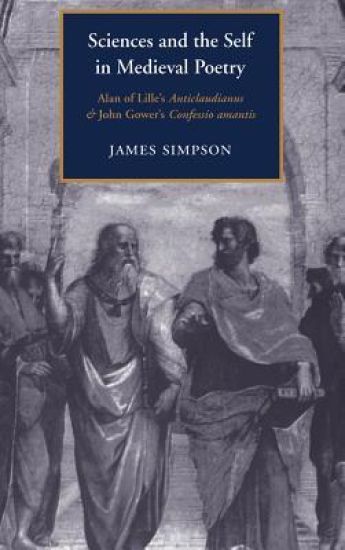
Sciences and the Self in Medieval Poetry

Sciences and the Self in Medieval Poetry

James Simpson

Cambridge University Press
2005
pokkari
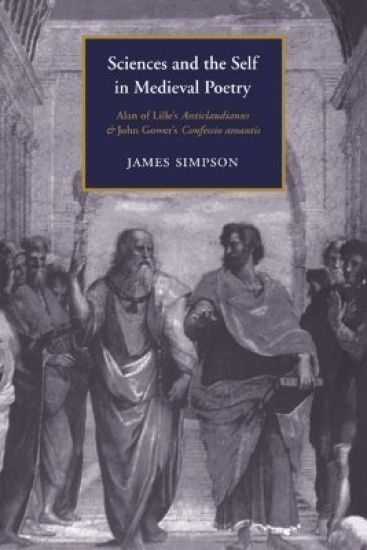
In this 1995 study James Simpson examines two great poems of the later medieval period, the Latin philosophical epic, Alan of Lille's Anticlaudianus (1181–3), and John Gower's English poem, The Confessio Amantis (1390–3). Simpson locates these works in a cultural context dominated by two kinds of literary humanism: the absolutist, whose philosophical mentor is Plato, whose literary model is Virgil and whose concept of the self is centred in the intellect, and the constitutionalist, whose classical models are Aristotle and Ovid and whose concept of the self resides in the mediatory power of the imagination. Both poems are examples of the Bildungsroman, in which the self reaches its fullness only by traversing an educational cursus in the related sciences of ethics, politics and cosmology, but as this study shows, there are very different modes of thought behind their conceptions of selfhood and education.
The Oxford English Literary History: Volume 2: 1350-1547: Reform and Cultural Revolution
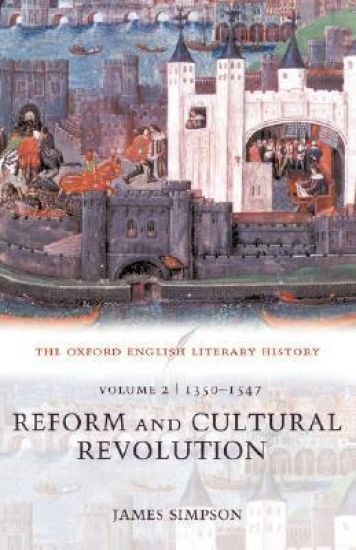
Heralding a new era in literary studies, the Oxford English Literary History breaks the mould of traditional approaches to the canon by focusing on the contexts in which the authors wrote and how their work was shaped by the times in which they lived. Each volume offers a fresh, ground-breaking re-assessment of the authors, their works, and the events and ideas which shaped the literary voice of their age. Written by some of the leading scholars in the field, under the general-editorship of Jonathan Bate, the Oxford English Literary History is essential reading for everyone studying, teaching, and researching in English literature. Unlike most medieval literary histories, which end with the coming of the Tudors, this volume continues into the mid-sixteenth century, and registers the impact of Henry VIII's cultural revolution and the linking of Church and State after the break with Rome. Although potent traditions praise both 'Reformation' and 'Renaissance' as moments of liberation, this book argues the reverse. Simpson shows that the emergent centralized culture narrowed and simplified the literary possibilities that had been enjoyed by late medieval writers. The consequences for literature, and even for the varieties of English in which it was written, were dramatic. From roughly 1350, where the volume starts, a wide range of literary kinds flourished, in a wide range of dialects. Many of these texts can be described as a mixed commonwealth of styles and genres, such as Langland's Piers Plowman, Gower's Confessio Amantis, Chaucer's Canterbury Tales, the dramatic 'mystery' cycles, and Malory's Works. In the sixteenth century this stylistic variety gave way to a literary practice that prized coherence and unity above all. Some kinds of writing, especially romance, survived. Others, such as Langland's brand of ecclesiology, the 'Aristotelian' politics of Gower and Hoccleve, and the feminine visionary mode of Julian of Norwich, became untenable. Religious cycle drama outlived the 1530s but was suppressed within the next forty years. Sixteenth-century writing, by figures such as Wyatt, Surrey, and the dramatist John Bale, emerges in this book as the product of profoundly divided writers, torn between their commitment to the new order and their awareness of its painful, often destructive strictures.
Spanish Agriculture

Spanish Agriculture

James Simpson

Cambridge University Press
2003
pokkari
Spanish Agriculture: The Long Siesta, 1765–1965 is the first major study in English of Spanish agrarian history. James Simpson examines how traditional agriculture responded to population growth and the integration of commodity markets, emphasising both Spain’s regional variations and its context in Europe. Using statistical data as well as his wide knowledge of the recent secondary literature, Simpson argues that decisive changes in farming techniques only occurred at the start of this century. He rejects arguments that slow growth can be explained by poor resources or inefficient farmers. Indeed, farmers were quick to change when they had market opportunities, but development was interrupted by the Spanish Civil War and subsequent short-sighted government policies, only resuming in the 1950s. This comprehensive study will be of relevance to students and scholars of historical geography and agrarian history, as well as economic history.
The Oxford English Literary History: Volume 2: 1350-1547: Reform and Cultural Revolution
Heralding a new era in literary studies, the Oxford English Literary History breaks the mould of traditional approaches to the canon by focusing on the contexts in which the authors wrote and how their work was shaped by the times in which they lived. Each volume offers a fresh, ground-breaking re-assessment of the authors, their works, and the events and ideas which shaped the literary voice of their age. Written by some of the leading scholars in the field, under the general-editorship of Jonathan Bate, the Oxford English Literary History is essential reading for everyone studying, teaching, and researching in English literature. Unlike most medieval literary histories, which end with the coming of the Tudors, this volume continues into the mid-sixteenth century, and registers the impact of Henry VIII's cultural revolution and the linking of Church and State after the break with Rome. Although potent traditions praise both 'Reformation' and 'Renaissance' as moments of liberation, this book argues the reverse. Simpson shows that the emergent centralized culture narrowed and simplified the literary possibilities that had been enjoyed by late medieval writers. The consequences for literature, and even for the varieties of English in which it was written, were dramatic. From roughly 1350, where the volume starts, a wide range of literary kinds flourished, in a wide range of dialects. Many of these texts can be described as a mixed commonwealth of styles and genres, such as Langland's Piers Plowman, Gower's Confessio Amantis, Chaucer's Canterbury Tales, the dramatic 'mystery' cycles, and Malory's Works. In the sixteenth century this stylistic variety gave way to a literary practice that prized coherence and unity above all. Some kinds of writing, especially romance, survived. Others, such as Langland's brand of ecclesiology, the 'Aristotelian' politics of Gower and Hoccleve, and the feminine visionary mode of Julian of Norwich, became untenable. Religious cycle drama outlived the 1530s but was suppressed within the next forty years. Sixteenth-century writing, by figures such as Wyatt, Surrey, and the dramatist John Bale, emerges in this book as the product of profoundly divided writers, torn between their commitment to the new order and their awareness of its painful, often destructive strictures.
Spanish Agriculture

Spanish Agriculture

James Simpson

Cambridge University Press
1996
sidottu
Spanish Agriculture: The Long Siesta, 1765–1965 is the first major study in English of Spanish agrarian history. James Simpson examines how traditional agriculture responded to population growth and the integration of commodity markets, emphasising both Spain’s regional variations and its context in Europe. Using statistical data as well as his wide knowledge of the recent secondary literature, Simpson argues that decisive changes in farming techniques only occurred at the start of this century. He rejects arguments that slow growth can be explained by poor resources or inefficient farmers. Indeed, farmers were quick to change when they had market opportunities, but development was interrupted by the Spanish Civil War and subsequent short-sighted government policies, only resuming in the 1950s. This comprehensive study will be of relevance to students and scholars of historical geography and agrarian history, as well as economic history.
Index of Middle English Prose volumes I-X

Index of Middle English Prose volumes I-X

Ralph Hanna; G.A. Lester; Patrick J. Horner; Laurel Braswell; Peter Brown; Elton D. Higgs; Oliver S Pickering; Susan Powell; James Simpson; Sarah Ogilvie-Thomson; L.M. Eldredge; Irma Taavitseinen

D.S. Brewer
1995
muu
The Index of Middle English Prose is an international collaborative project which will ultimately locate, identify and record all extant Middle English prose texts composed between c.1200 and c.1500, in both manuscript andprinted form in medieval and post-medieval versions. The first step towards this goal has been this series of Handlists, each recording the holdings of a major library or group of libraries. Compiled by scholars, Handlists include detailed descriptions ofeach prose item with identifications, categorisations and full bibliographical data. Every Handlist will also contain a series of indexes including listings of opening and closing lines, authors, titles, subject matter and rubrics. For students of the middle ages Handlists provide essential bibliographical tools and shed light on a wide range of subjects.
Sciences and the Self in Medieval Poetry

Sciences and the Self in Medieval Poetry

James Simpson

Cambridge University Press
1995
sidottu
In this study James Simpson examines two great poems of the later medieval period, the Latin philosophical epic, Alan of Lille’s Anticlaudianus (1181–3), and John Gower’s English poem, The Confessio Amantis (1390–3). Simpson locates these works in a cultural context dominated by two kinds of literary humanism: the absolutist, whose philosophical mentor is Plato, whose literary model is Virgil and whose concept of the self is centred in the intellect, and the constitutionalist, whose classical models are Aristotle and Ovid and whose concept of the self resides in the mediatory power of the imagination. Both poems are examples of the Bildungsroman, in which the self reaches its fullness only by traversing an educational cursus in the related sciences of ethics, politics and cosmology, but as this study shows, there are very different modes of thought behind their conceptions of selfhood and education.