

Kirjailija
Jason Brennan
Kirjat ja teokset yhdessä paikassa: 32 kirjaa, julkaisuja vuosilta 2010-2026, suosituimpien joukossa Glass Houses. Vertaile teosten hintoja ja tarkista saatavuus suomalaisista kirjakaupoista.
32 kirjaa
Kirjojen julkaisuhaarukka 2010-2026.
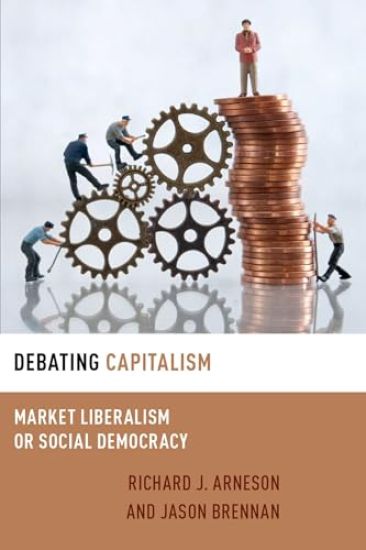
Which form of capitalism serves justice, not just at home, but worldwide? In Debating Capitalism: Market Liberalism or Social Democracy, leading philosophers Richard J. Arneson and Jason Brennan square off in a clear, forceful, and timely debate about how market societies should be structured—and for whose benefit. Brennan defends a market liberal vision: strong property rights, open global trade, labor mobility, and minimal government interference. He claims that modern social democratic welfare states often serve the affluent. Social democracies redistribute from the global top 1% to the top 10%, while keeping the truly poor—those in developing countries—locked out. Capitalism, by contrast, has proven the most powerful force in history for reducing global poverty. Brennan argues that freer global markets, not bigger welfare states, are the moral path forward. Arneson defends social democratic capitalism, and in particular Nordic social democracy (NSD), featuring capitalist markets alongside pro-growth redistribution that delivers high-quality education, boosts the incomes of the poor, and presses toward equal opportunities between men and women and fairness between young and old. He makes a case for countries embracing an NSD model within their own borders, resulting in a world in which all countries are wealthy and can distribute wealth more fairly across persons and boost individual well-being equally. Together, Arneson and Brennan move the capitalism debate beyond slogans, diverging on how to weigh freedom vs. equality, and on the role of the state in shaping economic life. This results in Debating Capitalism—an accessible and refreshingly honest book offering two compelling visions for a just market society.
Debating Libertarianism offers readers a sustained debate between two leading political philosophers over which vision of society--Rawlsian left-liberalism or libertarianism--is best and most just. In this crucial and timely book, Samuel Freeman and Jason Brennan consider both fundamental questions of justice and issues of applied policy. Along the way, they debate which economic rights people have; whether democracy liberates people and is essential for social equality, or is merely a tool to promote justice; the justification and extent of property rights and of taxation; whether the fact that freedom permits people to make bad choices is a reason to limit freedom; and whether the modern welfare state is necessary for social justice or instead a barrier to it. Debating Libertarianism offers readers both a succinct defence and critique of two important conceptions of what makes institutions just and good.
Debating Libertarianism offers readers a sustained debate between two leading political philosophers over which vision of society--Rawlsian left-liberalism or libertarianism--is best and most just. In this crucial and timely book, Samuel Freeman and Jason Brennan consider both fundamental questions of justice and issues of applied policy. Along the way, they debate which economic rights people have; whether democracy liberates people and is essential for social equality, or is merely a tool to promote justice; the justification and extent of property rights and of taxation; whether the fact that freedom permits people to make bad choices is a reason to limit freedom; and whether the modern welfare state is necessary for social justice or instead a barrier to it. Debating Libertarianism offers readers both a succinct defence and critique of two important conceptions of what makes institutions just and good.
Most people believe capitalism is a compromise with selfish human nature. As Adam Smith put it, "It is not from the benevolence of the butcher, the brewer, or the baker, that we expect our dinner, but from their regard to their own interest." Capitalism works better than socialism, according to this thinking, only because we are not kind and generous enough to make socialism work. If we were saints, we would be socialists.In Why Not Capitalism?, Jason Brennan attacks this widely held belief, arguing that capitalism would remain the best system even if we were morally perfect. Even then, private property and free markets would be the best way to realize mutual cooperation, social justice, harmony, and prosperity. Socialists seek to capture the moral high ground by showing that ideal socialism is morally superior to realistic capitalism. But, Brennan responds, ideal capitalism is superior to ideal socialism, and so capitalism beats socialism at every level.Clearly, engagingly, and at times provocatively written, Why Not Capitalism? will cause readers of all political persuasions to re-evaluate where they stand vis-à-vis economic priorities and systems—as they exist now and as they might be improved in the future.In this expanded second edition, Brennan responds to his critics throughout the book and provides two new, final chapters. One argues against egalitarianism in a capitalist utopia because egalitarianism frequently misdiagnoses the problems (for example, the problem with poverty isn’t that poor people have less but that they don’t have enough). The other new chapter shows that we don’t need to be angels in an anarchic utopia, but merely decent people who are willing to adhere to four undemanding moral principles.

Most people believe capitalism is a compromise with selfish human nature. As Adam Smith put it, "It is not from the benevolence of the butcher, the brewer, or the baker, that we expect our dinner, but from their regard to their own interest." Capitalism works better than socialism, according to this thinking, only because we are not kind and generous enough to make socialism work. If we were saints, we would be socialists.In Why Not Capitalism?, Jason Brennan attacks this widely held belief, arguing that capitalism would remain the best system even if we were morally perfect. Even then, private property and free markets would be the best way to realize mutual cooperation, social justice, harmony, and prosperity. Socialists seek to capture the moral high ground by showing that ideal socialism is morally superior to realistic capitalism. But, Brennan responds, ideal capitalism is superior to ideal socialism, and so capitalism beats socialism at every level.Clearly, engagingly, and at times provocatively written, Why Not Capitalism? will cause readers of all political persuasions to re-evaluate where they stand vis-à-vis economic priorities and systems—as they exist now and as they might be improved in the future.In this expanded second edition, Brennan responds to his critics throughout the book and provides two new, final chapters. One argues against egalitarianism in a capitalist utopia because egalitarianism frequently misdiagnoses the problems (for example, the problem with poverty isn’t that poor people have less but that they don’t have enough). The other new chapter shows that we don’t need to be angels in an anarchic utopia, but merely decent people who are willing to adhere to four undemanding moral principles.

How did “democracy” go from a pejorative label for mob rule to the widely shared ideal of enlightened self-rule? How has it evolved as an idea and a set of practices? How have the ways democracy has been practiced impacted the idea of democracy itself? In this short, accessible book, leading democratic theorist Jason Brennan guides readers through the evolution of the concept of democracy and actual democratic practice over time to help them understand the foundations of this longstanding and yet newly fragile political system. In his wide-ranging tour of the concept, Brennan will examine what democracy meant to the Greeks who first developed the concept before examining how it changed throughout European and later Western history. This will open up rich and perplexing questions. Over time, democracy shifted from being a fringe idea to the gold standard of political institutions: how did this change occur? How did the question of who counts as part of the ruling “people” change over time? As monarchies were replaced with democracies, what did theorists think the promises and perils of republican democracy were? How did actual democratic practice change the debates? What have we learned about how democracy functions--and in some cases, doesn't function--and what does this mean for future philosophical or empirical work? Brennan provides a curated, guided tour of the most important arguments for and against democracy, looking through the core values of stability, virtue, wisdom, freedom, and equality. The goal is to help readers understand what is really at stake in democracy and its alternatives. Democracy: A Guided Tour gives readers a crash course on the evolution of the idea of democracy, how it has been and is currently practiced, and how we might think about it as we head into a new chapter in its story.
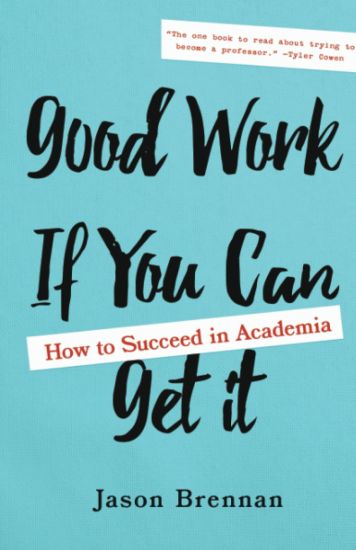
What does it really take to get a job in academia?Do you want to go to graduate school? Then you're in good company: nearly 80,000 students will begin pursuing a PhD this year alone. But while almost all new PhD students say they want to work in academia, most are destined for something else. The hard truth is that half will quit or fail to get their degree, and most graduates will never find a full-time academic job. In Good Work If You Can Get It, Jason Brennan combines personal experience with the latest higher education research to help you understand what graduate school and the academy are really like. This candid, pull-no-punches book answers questions big and small, including• Should I go to graduate school—and what will I do once I get there?• How much does a PhD cost—and should I pay for one?• What does it take to succeed in graduate school? • What kinds of jobs are there after grad school—and who gets them? • What happens to the people who never get full-time professorships? • What does it take to be productive, to publish continually at a high level? • What does it take to teach many classes at once? • How does "publish or perish" work? • How much do professors get paid?• What do search committees look for, and what turns them off? • How do I know which journals and book publishers matter? • How do I balance work and life?This realistic, data-driven look at university teaching and research will help make your graduate and postgraduate experience a success. Good Work If You Can Get It is the guidebook that anyone considering graduate school, already in grad school, starting as a new professor, or advising graduate students needs. Read it, and you will come away ready to hit the ground running.
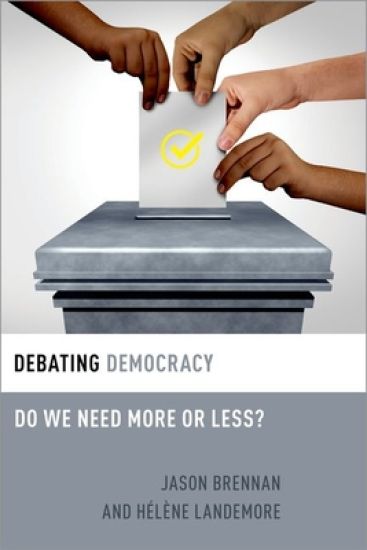
Around the world, faith in democracy is falling. Russia, Turkey, and Venezuela have moved from flawed democracies to authoritarian regimes. Brexit and the rise of far-right parties show that even stable Western democracies are struggling. Partisanship and mutual distrust are increasing. What, if anything, should we do about these problems? In this accessible work, leading philosophers Jason Brennan and Hélène Landemore debate whether the solution lies in having less democracy or more. Brennan argues that democracy has systematic flaws, and that democracy does not and cannot work the way most of us commonly assume. He argues the best solution is to limit democracy's scope and to experiment with certain voting systems that can overcome democracy's problems. Landemore argues that democracy, defined as a regime that distributes power equally and inclusively, is a better way to generate good governance than oligarchies of knowledge. To her, the crisis of "representative democracy" comes in large part from its glaring democratic deficits. The solution is not just more democracy, but a better kind, which Landemore theorizes as "open democracy."

Around the world, faith in democracy is falling. Russia, Turkey, and Venezuela have moved from flawed democracies to authoritarian regimes. Brexit and the rise of far-right parties show that even stable Western democracies are struggling. Partisanship and mutual distrust are increasing. What, if anything, should we do about these problems? In this accessible work, leading philosophers Jason Brennan and Hélène Landemore debate whether the solution lies in having less democracy or more. Brennan argues that democracy has systematic flaws, and that democracy does not and cannot work the way most of us commonly assume. He argues the best solution is to limit democracy's scope and to experiment with certain voting systems that can overcome democracy's problems. Landemore argues that democracy, defined as a regime that distributes power equally and inclusively, is a better way to generate good governance than oligarchies of knowledge. To her, the crisis of "representative democracy" comes in large part from its glaring democratic deficits. The solution is not just more democracy, but a better kind, which Landemore theorizes as "open democracy."
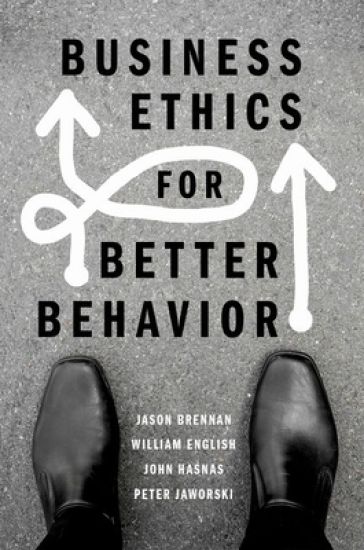
Business Ethics for Better Behavior
Jason Brennan; William English; John Hasnas; Peter Jaworski
Oxford University Press Inc
2021
nidottu
A clear and concise roadmap for ethical business behavior using commonsense moral principles Business Ethics for Better Behavior concisely answers the three most pressing ethical questions business professionals face: What makes business practices right or wrong?; Why do normal, decent businesspeople of good will sometimes do the wrong thing?; and How can we use the answer to these questions to get ourselves, our coworkers, our bosses, and our employees to behave better? Bad behavior in business rarely results from bad will. Most people mean well much of the time. But most of us are vulnerable. We all fall into moral traps, usually without even noticing. Business Ethics for Better Behavior teaches business professionals, students, and other readers how to become aware of those traps, how to avoid them, and how to dig their way out if they fall in. It integrates the best work in psychology, economics, management theory, and normative philosophy into a simple action plan for ensuring the best ethical performance at all levels of business practice. This is a book anyone in business, from an entry-level employee to CEO, can use.

Academics extol high-minded ideals, such as serving the common good and promoting social justice. Universities aim to be centers of learning that find the best and brightest students, treat them fairly, and equip them with the knowledge they need to lead better lives. But as Jason Brennan and Phillip Magness show in Cracks in the Ivory Tower, American universities fall far short of this ideal. At almost every level, they find that students, professors, and administrators are guided by self-interest rather than ethical concerns. College bureaucratic structures also often incentivize and reward bad behavior, while disincentivizing and even punishing good behavior. Most students, faculty, and administrators are out to serve themselves and pass their costs onto others. The problems are deep and pervasive: most academic marketing and advertising is semi-fraudulent. To justify their own pay raises and higher budgets, administrators hire expensive and unnecessary staff. Faculty exploit students for tuition dollars through gen-ed requirements. Students hardly learn anything and cheating is pervasive. At every level, academics disguise their pursuit of self-interest with high-faluting moral language. Marshaling an array of data, Brennan and Magness expose many of the ethical failings of academia and in turn reshape our understanding of how such high power institutions run their business. Everyone knows academia is dysfunctional. Brennan and Magness show the problems are worse than anyone realized. Academics have only themselves to blame.
Business Ethics for Better Behavior
Jason Brennan; William English; John Hasnas; Peter Jaworski
Oxford University Press Inc
2021
sidottu
A clear and concise roadmap for ethical business behavior using commonsense moral principles Business Ethics for Better Behavior concisely answers the three most pressing ethical questions business professionals face: What makes business practices right or wrong?; Why do normal, decent businesspeople of good will sometimes do the wrong thing?; and How can we use the answer to these questions to get ourselves, our coworkers, our bosses, and our employees to behave better? Bad behavior in business rarely results from bad will. Most people mean well much of the time. But most of us are vulnerable. We all fall into moral traps, usually without even noticing. Business Ethics for Better Behavior teaches business professionals, students, and other readers how to become aware of those traps, how to avoid them, and how to dig their way out if they fall in. It integrates the best work in psychology, economics, management theory, and normative philosophy into a simple action plan for ensuring the best ethical performance at all levels of business practice. This is a book anyone in business, from an entry-level employee to CEO, can use.
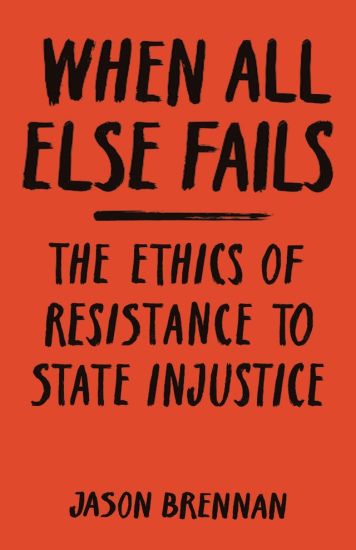
Why you have the right to resist unjust governmentFor centuries, almost everyone has believed that we must allow the government and its representatives to act without interference, no matter how they behave. We may complain, protest, sue, or vote officials out, but we can’t fight back. But in When All Else Fails, Jason Brennan argues that we have every right to react with acts of “uncivil disobedience” when governments violate our rights. We may resist arrest for violation of unjust laws. We may disobey orders, sabotage government property, or reveal classified information. We may deceive ignorant, irrational, or malicious voters. We may even use force to defend ourselves or others. The result is a provocative challenge to long-held beliefs about how citizens may respond when government officials act unjustly or abuse their power.

Finger-wagging moralizers say the love of money is the root of all evil. They assume that making a lot of money requires exploiting others, and that the best way to wash off the resulting stain is to give a lot of it away.In Why It’s OK to Want to Be Rich, Jason Brennan shows that the moralizers have it backwards. He argues that, in general, the more money you make, the more you already do for others, and that even an average wage earner is productively “giving back” to society just by doing her job. In addition, wealth liberates us to have the best chance of leading a life that’s authentically our own.Brennan also demonstrates how money-based societies create nicer, more trustworthy, and more cooperative citizens. And in another chapter that takes on the new historians of capitalism, Brennan argues that wealthy nations became wealthy because of their healthy institutions, not from their horrific histories of slavery or colonialism.While writing that the more money one has, the more one should help others, Brennan also notes that we weren’t born into a perpetual debt to society. It’s OK to get rich and it’s OK to enjoy being rich, too.--- Key Features Shows how the desire to become wealthy in an open and fair market helps maximize cooperation and lessens the chance of violence and war Argues that it is much easier for the average for-profit business to add value to the world than it is for the average non-profit Demonstrates that the kinds of virtues (e.g., conscientiousness, thoughtfulness, hard work) that lead to desirable personal and civic states (e.g., happy marriages, stable families, engaged citizens) also make people richer Argues that living in small clans for most of their history has given humans a negative attitude towards anyone acquiring more than her "fair share," an attitude that’s ill-suited for our market-driven, globally connected world In a final, provocative chapter, maintains that ideal economic growth is infinite.
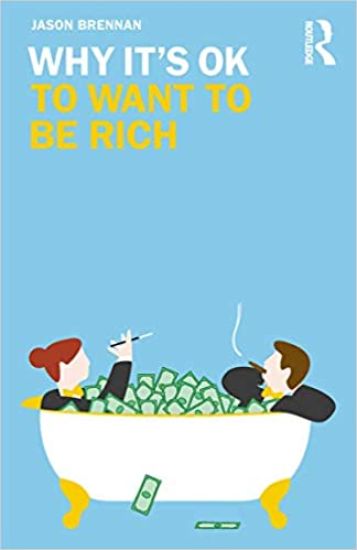
Finger-wagging moralizers say the love of money is the root of all evil. They assume that making a lot of money requires exploiting others, and that the best way to wash off the resulting stain is to give a lot of it away.In Why It’s OK to Want to Be Rich, Jason Brennan shows that the moralizers have it backwards. He argues that, in general, the more money you make, the more you already do for others, and that even an average wage earner is productively “giving back” to society just by doing her job. In addition, wealth liberates us to have the best chance of leading a life that’s authentically our own.Brennan also demonstrates how money-based societies create nicer, more trustworthy, and more cooperative citizens. And in another chapter that takes on the new historians of capitalism, Brennan argues that wealthy nations became wealthy because of their healthy institutions, not from their horrific histories of slavery or colonialism.While writing that the more money one has, the more one should help others, Brennan also notes that we weren’t born into a perpetual debt to society. It’s OK to get rich and it’s OK to enjoy being rich, too.--- Key Features Shows how the desire to become wealthy in an open and fair market helps maximize cooperation and lessens the chance of violence and war Argues that it is much easier for the average for-profit business to add value to the world than it is for the average non-profit Demonstrates that the kinds of virtues (e.g., conscientiousness, thoughtfulness, hard work) that lead to desirable personal and civic states (e.g., happy marriages, stable families, engaged citizens) also make people richer Argues that living in small clans for most of their history has given humans a negative attitude towards anyone acquiring more than her "fair share," an attitude that’s ill-suited for our market-driven, globally connected world In a final, provocative chapter, maintains that ideal economic growth is infinite.
What does it really take to get a job in academia?Do you want to go to graduate school? Then you're in good company: nearly 80,000 students will begin pursuing a PhD this year alone. But while almost all new PhD students say they want to work in academia, most are destined for something else. The hard truth is that half will quit or fail to get their degree, and most graduates will never find a full-time academic job. In Good Work If You Can Get It, Jason Brennan combines personal experience with the latest higher education research to help you understand what graduate school and the academy are really like. This candid, pull-no-punches book answers questions big and small, including• Should I go to graduate school—and what will I do once I get there?• How much does a PhD cost—and should I pay for one?• What does it take to succeed in graduate school? • What kinds of jobs are there after grad school—and who gets them? • What happens to the people who never get full-time professorships? • What does it take to be productive, to publish continually at a high level? • What does it take to teach many classes at once? • How does "publish or perish" work? • How much do professors get paid?• What do search committees look for, and what turns them off? • How do I know which journals and book publishers matter? • How do I balance work and life?This realistic, data-driven look at university teaching and research will help make your graduate and postgraduate experience a success. Good Work If You Can Get It is the guidebook that anyone considering graduate school, already in grad school, starting as a new professor, or advising graduate students needs. Read it, and you will come away ready to hit the ground running.

American criminal justice is a dysfunctional mess. Cops are too violent, the punishments are too punitive, and the so-called Land of the Free imprisons more people than any other country in the world. Understanding why means focusing on color—not only on black or white (which already has been studied extensively), but also on green. The problem is that nearly everyone involved in criminal justice—including district attorneys, elected judges, the police, voters, and politicians—faces bad incentives. Local towns often would rather send people to prison on someone else’s dime than pay for more effective policing themselves. Local police forces can enrich themselves by turning into warrior cops who steal from innocent civilians. Voters have very little incentive to understand the basic facts about crime or how to fix it—and vote accordingly. And politicians have every incentive to cater to voters’ worst biases. Injustice for All systematically diagnoses why and where American criminal justice goes wrong, and offers functional proposals for reform. By changing who pays for what, how people are appointed, how people are punished, and which things are criminalized, we can make the US a country which guarantees justice for all.Key Features: Shows how bad incentives, not "bad apples," cause the dysfunction in American criminal justice Focuses not only on overincarceration, but on overcriminalization and other failures of the criminal justice system Provides a philosophical and practical defense of reducing the scope of what’s considered criminal activity Crosses ideological lines, highlighting both the weaknesses and strengths of liberal, conservative, and libertarian agendas Fully integrates tools from philosophy and social science, making this stand out from the many philosophy books on punishment, on the one hand, and the solely empirical studies from sociology and criminal science, on the other Avoids disciplinary jargon, broadening the book’s suitability for students and researchers in many different fields and for an interested general readership Offers plausible reforms that realign specific incentives with the public good.
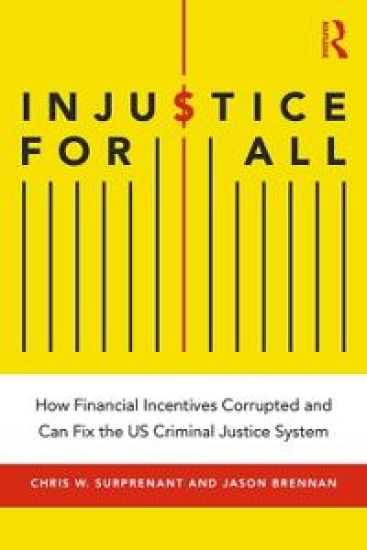
American criminal justice is a dysfunctional mess. Cops are too violent, the punishments are too punitive, and the so-called Land of the Free imprisons more people than any other country in the world. Understanding why means focusing on color—not only on black or white (which already has been studied extensively), but also on green. The problem is that nearly everyone involved in criminal justice—including district attorneys, elected judges, the police, voters, and politicians—faces bad incentives. Local towns often would rather send people to prison on someone else’s dime than pay for more effective policing themselves. Local police forces can enrich themselves by turning into warrior cops who steal from innocent civilians. Voters have very little incentive to understand the basic facts about crime or how to fix it—and vote accordingly. And politicians have every incentive to cater to voters’ worst biases. Injustice for All systematically diagnoses why and where American criminal justice goes wrong, and offers functional proposals for reform. By changing who pays for what, how people are appointed, how people are punished, and which things are criminalized, we can make the US a country which guarantees justice for all.Key Features: Shows how bad incentives, not "bad apples," cause the dysfunction in American criminal justice Focuses not only on overincarceration, but on overcriminalization and other failures of the criminal justice system Provides a philosophical and practical defense of reducing the scope of what’s considered criminal activity Crosses ideological lines, highlighting both the weaknesses and strengths of liberal, conservative, and libertarian agendas Fully integrates tools from philosophy and social science, making this stand out from the many philosophy books on punishment, on the one hand, and the solely empirical studies from sociology and criminal science, on the other Avoids disciplinary jargon, broadening the book’s suitability for students and researchers in many different fields and for an interested general readership Offers plausible reforms that realign specific incentives with the public good.

Academics extol high-minded ideals, such as serving the common good and promoting social justice. Universities aim to be centers of learning that find the best and brightest students, treat them fairly, and equip them with the knowledge they need to lead better lives. But as Jason Brennan and Phillip Magness show in Cracks in the Ivory Tower, American universities fall far short of this ideal. At almost every level, they find that students, professors, and administrators are guided by self-interest rather than ethical concerns. College bureaucratic structures also often incentivize and reward bad behavior, while disincentivizing and even punishing good behavior. Most students, faculty, and administrators are out to serve themselves and pass their costs onto others. The problems are deep and pervasive: most academic marketing and advertising is semi-fraudulent. To justify their own pay raises and higher budgets, administrators hire expensive and unnecessary staff. Faculty exploit students for tuition dollars through gen-ed requirements. Students hardly learn anything and cheating is pervasive. At every level, academics disguise their pursuit of self-interest with high-faluting moral language. Marshaling an array of data, Brennan and Magness expose many of the ethical failings of academia and in turn reshape our understanding of how such high power institutions run their business. Everyone knows academia is dysfunctional. Brennan and Magness show the problems are worse than anyone realized. Academics have only themselves to blame.