Kirjojen hintavertailu. Mukana 12 595 353 kirjaa ja 12 kauppaa.

Kirjailija

Jeffrey D. Sachs

Kirjat ja teokset yhdessä paikassa: 26 kirjaa, julkaisuja vuosilta 1985-2026, suosituimpien joukossa Economic Development and the Division of Labor. Vertaile teosten hintoja ja tarkista saatavuus suomalaisista kirjakaupoista.

Mukana myös kirjoitusasut: Jeffrey D Sachs

26 kirjaa

Kirjojen julkaisuhaarukka 1985-2026.

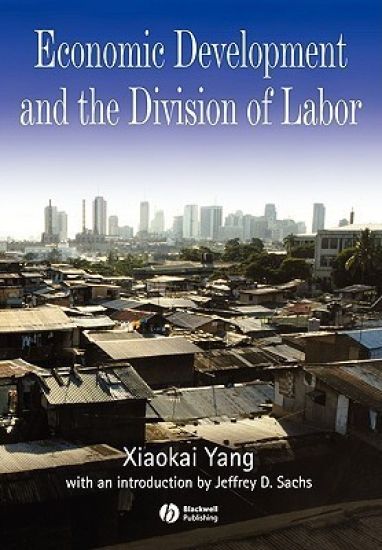
Economic Development and the Division of Labor

Economic Development and the Division of Labor

Xiaokai Yang; Jeffrey D. Sachs

Blackwell Publishers
2003
sidottu
This innovative new text from Jeffrey Sachs and Xiokai Yang introduces students to development economics from the perspectives of inframarginal analysis and marginal analysis. The book demonstrates how the new-found emphasis on inframarginal analysis has influenced a shift back to an interest in Classical Economics from Neoclassical Economics. Inframarginal Analysis vs. Marginal Analysis is presented as a consistent theoretical framework throughout. Shows how the relationship of Inframarginal Analysis to Marginal Analysis has influenced the shift back to an interest in Classical Economics from Neoclassical Economics with regard to economic development. Allows economists to reduce their overall reliance on marginal analysis, which may be less relevant to development economics than it is to the economics of development countries. Brings considerable analytic machinery to bear on important problems. A focus on institutions and transaction costs that is very relevant to development economics. Offers a thorough analysis of trade (CHs. 3 - 7) and macroeconomics (CHs. 16 - 19), both of which are not dealth with in depth by comparable textbooks.
Economic Development and the Division of Labor

Economic Development and the Division of Labor

Xiaokai Yang; Jeffrey D. Sachs

Blackwell Publishers
2003
nidottu
This innovative new text from Jeffrey Sachs and Xiokai Yang introduces students to development economics from the perspectives of inframarginal analysis and marginal analysis. The book demonstrates how the new-found emphasis on inframarginal analysis has influenced a shift back to an interest in Classical Economics from Neoclassical Economics. Inframarginal Analysis vs. Marginal Analysis is presented as a consistent theoretical framework throughout. Shows how the relationship of Inframarginal Analysis to Marginal Analysis has influenced the shift back to an interest in Classical Economics from Neoclassical Economics with regard to economic development. Allows economists to reduce their overall reliance on marginal analysis, which may be less relevant to development economics than it is to the economics of development countries. Brings considerable analytic machinery to bear on important problems. A focus on institutions and transaction costs that is very relevant to development economics. Offers a thorough analysis of trade (CHs. 3 - 7) and macroeconomics (CHs. 16 - 19), both of which are not dealth with in depth by comparable textbooks.

Sant'Egidio's Dream

Sant'Egidio's Dream

Roberto Morozzo della Rocca; Jeffrey D. Sachs; Paul Elie

GEORGETOWN UNIVERSITY PRESS
2024
pokkari
The story of an innovative program of treatment for AIDS in Africa that succeeded in the face of international development agencies’ “afro pessimism” Until this century, Western governments and foundations framing policies for AIDS relief in Africa maintained that prevention alone was a preferable alternative to prevention-plus-treatment, which would be costly and impractical in Africa, or would benefit only the prosperous and well-connected. Sant'Egidio’s Dream argues that this initial, failed approach to AIDS in African countries reflects a global moral blindness to the imperative to save lives–which was not lost on the Community of Sant’Egidio, an Italian, Catholic social movement rooted in “the gospel and friendship” and present in 70 countries. Drawing on two decades of peacemaking and humanitarian experience in Africa, the movement grasped the evidence that HIV, if treated, does not lead to AIDS and to death–and saw that treatment gives hope in Africa just as it does in the developed world. By enabling large numbers of people to live with a chronic disease, and involving family and neighbors in free and effective care, it offers a dream of a society surviving and even thriving in spite of HIV. In 2002, Sant Egidio established the DREAM (Drug Resource Enhancement Against AIDS and Malnutrition) project, a community-based approach to the AIDS crisis, rooted in medicine, epidemiology, and public health, that has proven effective in ten countries where it has been implemented–and has emerged as a model for healthcare in the global South.
Sant'Egidio's Dream

Sant'Egidio's Dream

Roberto Morozzo della Rocca; Jeffrey D. Sachs; Paul Elie

GEORGETOWN UNIVERSITY PRESS
2024
sidottu
The story of an innovative program of treatment for AIDS in Africa that succeeded in the face of international development agencies’ “afro pessimism” Until this century, Western governments and foundations framing policies for AIDS relief in Africa maintained that prevention alone was a preferable alternative to prevention-plus-treatment, which would be costly and impractical in Africa, or would benefit only the prosperous and well-connected. Sant'Egidio’s Dream argues that this initial, failed approach to AIDS in African countries reflects a global moral blindness to the imperative to save lives–which was not lost on the Community of Sant’Egidio, an Italian, Catholic social movement rooted in “the gospel and friendship” and present in 70 countries. Drawing on two decades of peacemaking and humanitarian experience in Africa, the movement grasped the evidence that HIV, if treated, does not lead to AIDS and to death–and saw that treatment gives hope in Africa just as it does in the developed world. By enabling large numbers of people to live with a chronic disease, and involving family and neighbors in free and effective care, it offers a dream of a society surviving and even thriving in spite of HIV. In 2002, Sant Egidio established the DREAM (Drug Resource Enhancement Against AIDS and Malnutrition) project, a community-based approach to the AIDS crisis, rooted in medicine, epidemiology, and public health, that has proven effective in ten countries where it has been implemented–and has emerged as a model for healthcare in the global South.
Cathonomics

Cathonomics

Anthony M. Annett; Jeffrey D. Sachs

GEORGETOWN UNIVERSITY PRESS
2024
pokkari
Inequality is skyrocketing. In this world of vast riches, millions of people live in extreme poverty, barely surviving from day to day. All over the world, the wealthy's increasing political power is biasing policy away from the public interest and toward the financial interests of the rich. At the same time, many countries are facing financial fragility and diminished well-being. On top of it all, the global economy, driven by fossil fuels, has proven to be a collective act of self-sabotage with the poor on the front lines. In a new foreword to his book, Anthony M. Annett examines the Biden administration's economic policies and discusses reactions to Cathonomics. A growing chorus of economists and politicians is demanding a new paradigm to create a global economy that seeks the common good. In Cathonomics, Annett unites insights in economics with those from theology, philosophy, climate science, and psychology, exposing the failures of neoliberalism while offering us a new model rooted in the wisdom of Catholic social teaching and classical ethical traditions. Drawing from the work of Pope Leo XIII, Pope Francis, Thomas Aquinas, and Aristotle, Annett applies these teachings to discuss current economic challenges, such as inequality, unemployment and underemployment, climate change, and the roles of business and finance. Cathonomics is an ethical and practical guide for readers of all faiths and backgrounds seeking to create a world economy that is more prosperous, inclusive, and sustainable for all.
Sustainable Development Report 2022

Sustainable Development Report 2022

Jeffrey D. Sachs; Christian Kroll; Guillame Lafortune; Grayson Fuller; Finn Woelm

Cambridge University Press
2022
sidottu
The Sustainable Development Report 2022 features the SDG Index and Dashboards, the first and widely used tool to assess country performance on the Agenda 2030 and the Sustainable Development Goals. In a context of multiple crises, the report analyzes and outlines how the SDGs can be used as a roadmap for more sustainable societies by 2030 and beyond. In particular, this year's edition underlines the importance of international financing mechanisms for addressing lack of fiscal space in poorer countries and promoting sustainable investments into physical and human infrastructure. The authors examine country performance on the SDGs for 193 countries using a wide array of indicators, and calculate future trajectories, presenting a number of best practices to achieve the historic Agenda 2030. The views expressed in this report do not reflect the views of any organization, agency or program of the United Nations. This title is available as Open Access on Cambridge Core.
Sustainable Development Report 2022

Sustainable Development Report 2022

Jeffrey D. Sachs; Christian Kroll; Guillame Lafortune; Grayson Fuller; Finn Woelm

Cambridge University Press
2022
pokkari
The Sustainable Development Report 2022 features the SDG Index and Dashboards, the first and widely used tool to assess country performance on the Agenda 2030 and the Sustainable Development Goals. In a context of multiple crises, the report analyzes and outlines how the SDGs can be used as a roadmap for more sustainable societies by 2030 and beyond. In particular, this year's edition underlines the importance of international financing mechanisms for addressing lack of fiscal space in poorer countries and promoting sustainable investments into physical and human infrastructure. The authors examine country performance on the SDGs for 193 countries using a wide array of indicators, and calculate future trajectories, presenting a number of best practices to achieve the historic Agenda 2030. The views expressed in this report do not reflect the views of any organization, agency or program of the United Nations. This title is available as Open Access on Cambridge Core.
Cathonomics

Cathonomics

Anthony M. Annett; Jeffrey D. Sachs

Georgetown University Press
2022
sidottu
Inequality is skyrocketing. In this world of vast riches, millions of people live in extreme poverty, barely surviving from day to day. All over the world, the wealthy's increasing political power is biasing policy away from the public interest and toward the financial interests of the rich. At the same time, many countries are facing financial fragility and diminished well-being. On top of it all, the global economy, driven by fossil fuels, has proven to be a collective act of self-sabotage with the poor on the front lines. In a new foreword to his book, Anthony M. Annett examines the Biden administration's economic policies and discusses reactions to Cathonomics. A growing chorus of economists and politicians is demanding a new paradigm to create a global economy that seeks the common good. In Cathonomics, Annett unites insights in economics with those from theology, philosophy, climate science, and psychology, exposing the failures of neoliberalism while offering us a new model rooted in the wisdom of Catholic social teaching and classical ethical traditions. Drawing from the work of Pope Leo XIII, Pope Francis, Thomas Aquinas, and Aristotle, Annett applies these teachings to discuss current economic challenges, such as inequality, unemployment and underemployment, climate change, and the roles of business and finance.Cathonomics is an ethical and practical guide for readers of all faiths and backgrounds seeking to create a world economy that is more prosperous, inclusive, and sustainable for all.
The Ages of Globalization

The Ages of Globalization

Jeffrey D. Sachs

Columbia University Press
2020
sidottu
Today’s most urgent problems are fundamentally global. They require nothing less than concerted, planetwide action if we are to secure a long-term future. But humanity’s story has always been on a global scale. In this book, Jeffrey D. Sachs, renowned economist and expert on sustainable development, turns to world history to shed light on how we can meet the challenges and opportunities of the twenty-first century.Sachs takes readers through a series of seven distinct waves of technological and institutional change, starting with the original settling of the planet by early modern humans through long-distance migration and ending with reflections on today’s globalization. Along the way, he considers how the interplay of geography, technology, and institutions influenced the Neolithic revolution; the role of the horse in the emergence of empires; the spread of large land-based empires in the classical age; the rise of global empires after the opening of sea routes from Europe to Asia and the Americas; and the industrial age. The dynamics of these past waves, Sachs demonstrates, offer fresh perspective on the ongoing processes taking place in our own time—a globalization based on digital technologies. Sachs emphasizes the need for new methods of international governance and cooperation to prevent conflicts and to achieve economic, social, and environmental objectives aligned with sustainable development. The Ages of Globalization is a vital book for all readers aiming to make sense of our rapidly changing world.
A New Foreign Policy

A New Foreign Policy

Jeffrey D. Sachs

Columbia University Press
2020
pokkari
The American Century began in 1941 and ended on January 20, 2017. While the United States remains a military giant and is still an economic powerhouse, it no longer dominates the world economy or geopolitics as it once did. The current turn toward nationalism and “America first” unilateralism in foreign policy will not make America great. Instead, it represents the abdication of our responsibilities in the face of severe environmental threats, political upheaval, mass migration, and other global challenges.In this incisive and forceful book, Jeffrey D. Sachs provides the blueprint for a new foreign policy that embraces global cooperation, international law, and aspirations for worldwide prosperity—not nationalism and gauzy dreams of past glory. He argues that America’s approach to the world must shift from military might and wars of choice to a commitment to shared objectives of sustainable development. Our pursuit of primacy has embroiled us in unwise and unwinnable wars, and it is time to shift from making war to making peace and time to embrace the opportunities that international cooperation offers. A New Foreign Policy explores both the danger of the “America first” mindset and the possibilities for a new way forward, proposing timely and achievable plans to foster global economic growth, reconfigure the United Nations for the twenty-first century, and build a multipolar world that is prosperous, peaceful, fair, and resilient.
A New Foreign Policy

A New Foreign Policy

Jeffrey D. Sachs

Columbia University Press
2018
sidottu
The American Century began in 1941 and ended on January 20, 2017. While the United States remains a military giant and is still an economic powerhouse, it no longer dominates the world economy or geopolitics as it once did. The current turn toward nationalism and “America first” unilateralism in foreign policy will not make America great. Instead, it represents the abdication of our responsibilities in the face of severe environmental threats, political upheaval, mass migration, and other global challenges.In this incisive and forceful book, Jeffrey D. Sachs provides the blueprint for a new foreign policy that embraces global cooperation, international law, and aspirations for worldwide prosperity—not nationalism and gauzy dreams of past glory. He argues that America’s approach to the world must shift from military might and wars of choice to a commitment to shared objectives of sustainable development. Our pursuit of primacy has embroiled us in unwise and unwinnable wars, and it is time to shift from making war to making peace and time to embrace the opportunities that international cooperation offers. A New Foreign Policy explores both the danger of the “America first” mindset and the possibilities for a new way forward, proposing timely and achievable plans to foster global economic growth, reconfigure the United Nations for the twenty-first century, and build a multipolar world that is prosperous, peaceful, fair, and resilient.
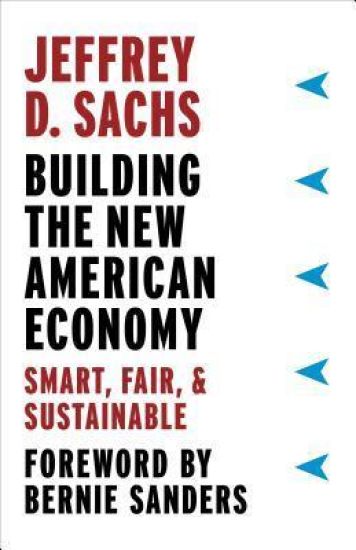
Building the New American Economy

Building the New American Economy

Jeffrey D. Sachs; Bernie Sanders

Columbia University Press
2018
pokkari
In this passionate and powerful book-part manifesto, part plan of action-the renowned economist Jeffrey D. Sachs offers a practical strategy to move America, seemingly more divided than ever, toward a new consensus: sustainable development. Sustainable development is a holistic approach that emphasizes economic, social, and environmental objectives in shaping policy. In focusing too much on economic growth, the United States has neglected rising economic inequality and dire environmental threats. Now, even growth is imperiled. Sachs explores issues that have captivated the nation and political debate, including infrastructure, trade deals, energy policy, the proper size and role of government, the national debt, and income inequality. Not only does he provide illuminating and accessible explanations of the forces at work in each case, but he also presents specific policy solutions. His argument rises above the pessimism born of political paralysis, economic stagnation, and partisanship to devise a brighter way forward, achievable both individually and collectively. In Building the New American Economy, Sachs shows how the United States can find a path to renewed economic progress that is fair and environmentally sustainable.
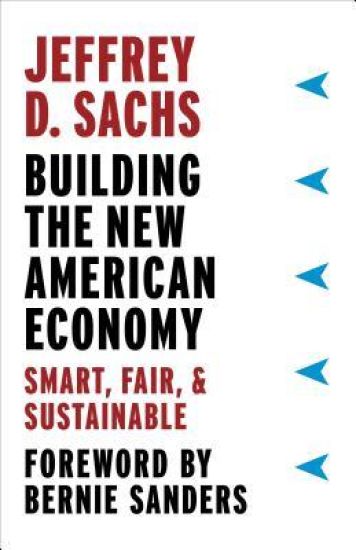
Building the New American Economy

Building the New American Economy

Jeffrey D. Sachs; Bernie Sanders

Columbia University Press
2017
sidottu
In this passionate and powerful book-part manifesto, part plan of action-the renowned economist Jeffrey D. Sachs offers a practical strategy to move America, seemingly more divided than ever, toward a new consensus: sustainable development. Sustainable development is a holistic approach that emphasizes economic, social, and environmental objectives in shaping policy. In focusing too much on economic growth, the United States has neglected rising economic inequality and dire environmental threats. Now, even growth is imperiled. Sachs explores issues that have captivated the nation and political debate, including infrastructure, trade deals, energy policy, the proper size and role of government, the national debt, and income inequality. Not only does he provide illuminating and accessible explanations of the forces at work in each case, but he also presents specific policy solutions. His argument rises above the pessimism born of political paralysis, economic stagnation, and partisanship to devise a brighter way forward, achievable both individually and collectively. In Building the New American Economy, Sachs shows how the United States can find a path to renewed economic progress that is fair and environmentally sustainable.
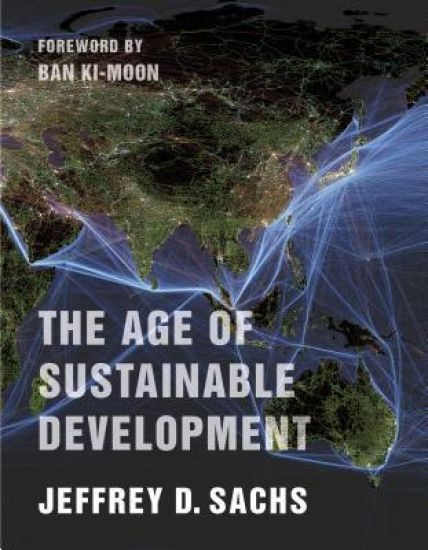
The Age of Sustainable Development

The Age of Sustainable Development

Jeffrey D. Sachs; Ban Ki-moon

Columbia University Press
2015
sidottu
Jeffrey D. Sachs is one of the world's most perceptive and original analysts of global development. In this major new work he presents a compelling and practical framework for how global citizens can use a holistic way forward to address the seemingly intractable worldwide problems of persistent extreme poverty, environmental degradation, and political-economic injustice: sustainable development. Sachs offers readers, students, activists, environmentalists, and policy makers the tools, metrics, and practical pathways they need to achieve Sustainable Development Goals. Far more than a rhetorical exercise, this book is designed to inform, inspire, and spur action. Based on Sachs's twelve years as director of the Earth Institute at Columbia University, his thirteen years advising the United Nations secretary-general on the Millennium Development Goals, and his recent presentation of these ideas in a popular online course, The Age of Sustainable Development is a landmark publication and clarion call for all who care about our planet and global justice. Visit http://cup.columbia.edu/extras/supplement/sachs-9780231173148 for additional teaching materials for students and instructors, including chapter summaries, key concepts, problem sets, and slides.
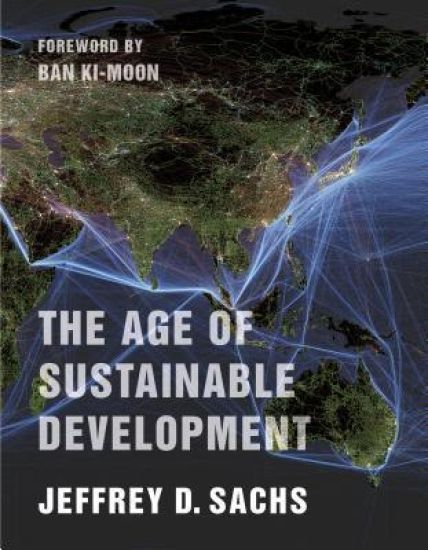
The Age of Sustainable Development

The Age of Sustainable Development

Jeffrey D. Sachs; Ban Ki-moon

Columbia University Press
2015
pokkari
Jeffrey D. Sachs is one of the world's most perceptive and original analysts of global development. In this major new work he presents a compelling and practical framework for how global citizens can use a holistic way forward to address the seemingly intractable worldwide problems of persistent extreme poverty, environmental degradation, and political-economic injustice: sustainable development. Sachs offers readers, students, activists, environmentalists, and policy makers the tools, metrics, and practical pathways they need to achieve Sustainable Development Goals. Far more than a rhetorical exercise, this book is designed to inform, inspire, and spur action. Based on Sachs's twelve years as director of the Earth Institute at Columbia University, his thirteen years advising the United Nations secretary-general on the Millennium Development Goals, and his recent presentation of these ideas in a popular online course, The Age of Sustainable Development is a landmark publication and clarion call for all who care about our planet and global justice. Visit http://cup.columbia.edu/extras/supplement/sachs-9780231173148 for additional teaching materials for students and instructors, including chapter summaries, key concepts, problem sets, and slides.
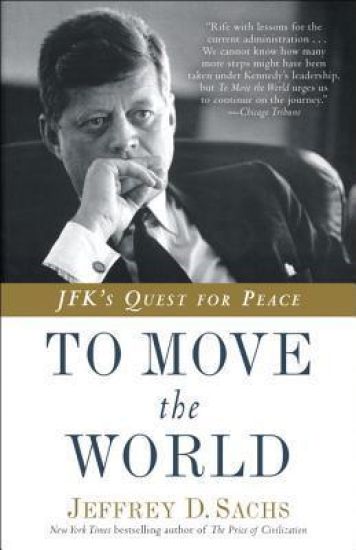
To Move the World: Jfk's Quest for Peace

To Move the World: Jfk's Quest for Peace

Jeffrey D. Sachs

Random House Trade
2014
nidottu
An inspiring look at the historic foreign policy triumph of John F. Kennedy's presidency--the crusade for world peace that consumed his final year in office--by the New York Times bestselling author of The Price of Civilization, Common Wealth, and The End of Poverty The last great campaign of John F. Kennedy's life was not the battle for reelection he did not live to wage, but the struggle for a sustainable peace with the Soviet Union. To Move the World recalls the extraordinary days from October 1962 to September 1963, when JFK marshaled the power of oratory and his remarkable political skills to establish more peaceful relations with the Soviet Union and a dramatic slowdown in the proliferation of nuclear arms. Kennedy and his Soviet counterpart, Nikita Khrushchev, led their nations during the Cuban Missile Crisis, when the two superpowers came eyeball to eyeball at the nuclear abyss. This near-death experience shook both leaders deeply. Jeffrey D. Sachs shows how Kennedy emerged from the Missile crisis with the determination and prodigious skills to forge a new and less threatening direction for the world. Together, he and Khrushchev would pull the world away from the nuclear precipice, charting a path for future peacemakers to follow. During his final year in office, Kennedy gave a series of speeches in which he pushed back against the momentum of the Cold War to persuade the world that peace with the Soviets was possible. The oratorical high point came on June 10, 1963, when Kennedy delivered the most important foreign policy speech of the modern presidency. He argued against the prevailing pessimism that viewed humanity as doomed by forces beyond its control. Mankind, argued Kennedy, could bring a new peace into reality through a bold vision combined with concrete and practical measures. Achieving the first of those measures in the summer of 1963, the Partial Nuclear Test Ban Treaty, required more than just speechmaking, however. Kennedy had to use his great gifts of persuasion on multiple fronts--with fractious allies, hawkish Republican congressmen, dubious members of his own administration, and the American and world public--to persuade a skeptical world that cooperation between the superpowers was realistic and necessary. Sachs shows how Kennedy campaigned for his vision and opened the eyes of the American people and the world to the possibilities of peace. Featuring the full text of JFK's speeches from this period, as well as striking photographs, To Move the World gives us a startlingly fresh perspective on Kennedy's presidency and a model for strong leadership and problem solving in our time. Praise for To Move the World "Rife with lessons for the current administration . . . We cannot know how many more steps might have been taken under Kennedy's leadership, but To Move the World urges us to continue on the journey."--Chicago Tribune "The messages in these four speeches seem all too pertinent today."--Publishers Weekly
The Price of Civilization: Reawakening American Virtue and Prosperity
NEW YORK TIMES BESTSELLER - NAMED ONE OF THE BEST BOOKS OF THE YEAR BY THE GUARDIAN AND PUBLISHERS WEEKLY "Succinct, humane, and politically astute . . . Sachs lays out a detailed path to reform, regulation, and recovery."--The American Prospect In this forceful and impassioned book, Jeffrey D. Sachs offers a searing and incisive diagnosis of our country's economic ills, and an urgent call for Americans to restore the core virtues of fairness, honesty, and foresight as the foundations of national prosperity. Sachs finds that both political parties--and many leading economists--have missed the big picture, profoundly underestimating globalization's long-term effects and offering shortsighted solutions. He describes a political system that is beholden to big donors and influential lobbyists and a consumption-driven culture that suffers shortfalls of social trust and compassion. He bids readers to reclaim the virtues of good citizenship and mindfulness toward the economy and each one another. Most important, he urges each of us to accept the price of civilization, so that together we restore America to its great promise. The Price of Civilization is a masterly road map for prosperity, founded on America's deepest values and on a rigorous understanding of the twenty-first-century world economy. With a new Preface by the author"Half a century ago J. K. Galbraith's The Affluent Society changed the political consciousness of a generation. . . . Jeffrey Sachs's new book is a landmark in this great and essentially American tradition. . . . Sachs by his life and his writing goes far to restore one's wavering faith in the informing inspiration of the post-1945 new dawn, faith in economics, faith in America and faith in humanity."--The Spectator "Stimulating . . . a must-read for every concerned citizen . . . a] hard-hitting brief for a humane economy."--Publishers Weekly (starred review) "Sachs's book is loaded with information and anecdotes and] proposals that would make it harder for the powerful to rig the system for their benefit."--Scientific American "An eloquent call for American civic renewal based on moderation, compassion, and cooperation across the lines of class, ethnicity, and ideology."--CNN Money "Compelling . . . This is an important book."--Financial Times
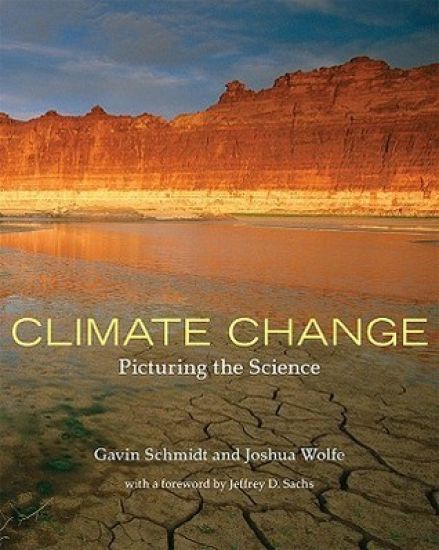
Climate Change

Climate Change

Gavin Schmidt; Joshua Wolfe; Jeffrey D. Sachs

WW Norton Co
2009
nidottu
Going beyond the headlines, this work by leading NASA climate scientist Gavin Schmidt and master photographer Joshua Wolfe illustrates as never before the ramifications of shifting climate. Photographic spreads show retreating glaciers, sinking villages in Alaska’s tundra, and drying lakes. The text follows adventurous scientists through the ice caps at the poles to the coral reefs of the tropical seas. Marshaling data spanning centuries and continents, the book sparkles with cutting-edge research and visual records, including contributions from experts on atmospheric science, oceanography, paleoclimatology, technology, politics, and the polar regions. As Jeffrey D. Sachs writes in his powerful foreword, “Climate Change is a tour de force of public education.”