Kirjailija
Jeffrey J. Kripal
Kirjat ja teokset yhdessä paikassa: 25 kirjaa, julkaisuja vuosilta 1998-2025, suosituimpien joukossa The Flip. Vertaile teosten hintoja ja tarkista saatavuus suomalaisista kirjakaupoista.
Mukana myös kirjoitusasut: Jeffrey J Kripal
25 kirjaa
Kirjojen julkaisuhaarukka 1998-2025.
“One of the most provocative new books of the year, and, for me, mindblowing.” —Michael Pollan, author of The Omnivore's Dilemma and How to Change Your Mind“Kripal makes many sympathetic points about the present spiritual state of America. . . . [He] continues to believe that spirituality and science should not contradict each other.” —New York Times Book Review“Kripal prompts us to reflect on our personal assumptions, as well as the shared assumptions that create and maintain our institutions. . . . [His] work will likely become more and more relevant to more and more areas of inquiry as the century unfolds. It may even open up a new space for Americans to reevaluate the personal and cultural narratives they have inherited, and to imagine alternative futures.” —Los Angeles Review of BooksA “flip,” writes Jeffrey J. Kripal, is “a reversal of perspective,” “a new real,” often born of an extreme, life-changing experience. The Flip is Kripal’s ambitious, visionary program for unifying the sciences and the humanities to expand our minds, open our hearts, and negotiate a peaceful resolution to the culture wars. Combining accounts of rationalists’ spiritual awakenings and consciousness explorations by philosophers, neuroscientists, and mystics within a framework of the history of science and religion, Kripal compellingly signals a path to mending our fractured world.Jeffrey J. Kripal holds the J. Newton Rayzor Chair in Philosophy and Religious Thought at Rice University and is the associate director of the Center for Theory and Research at the Esalen Institute in Big Sur, California. He has previously taught at Harvard Divinity School and Westminster College and is the author of eight books, including The Flip. He lives in Houston, Texas.
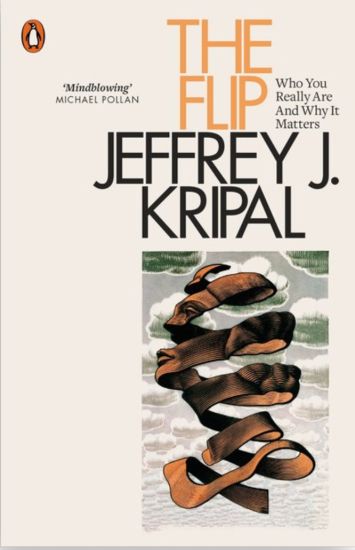
Why do we know so much more about the cosmos than our own consciousness? Are there limits to the scientific method? Why do we assume that only science, mathematics and technology reveal truth?The Flip shows us what happens when we realise that consciousness is fundamental to the cosmos and not some random evolutionary accident or surface cognitive illusion; that everything is alive, connected, and 'one'. We meet the people who have made this visionary, intuitive leap towards new forms of knowledge: Mark Twain's prophetic dreams, Marie Curie's séances, Einstein's cosmically attuned mind. But these forms of knowledge are not archaic; indeed, they are essential in a universe that has evolved specifically to be understandable by the consciousnesses we inhabit.The Flip peels back the layers of our beliefs about the world to reveal a visionary, new way of understanding ourselves and everything around us, with huge repercussions for how we live our lives. After all, once we have flipped, we understand that the cosmos is not just human. The human is also cosmic.
The 19th-century Bengali mystic Ramakrishna played a major role in the development of Hinduism and is regarded as a modern saint. Yet he remains an enigma to followers unable to reconcile his saintly status with his eroticized language and actions. In this work, Jeffrey J. Kripal attempts to untangle the paradox. He demonstrates that Ramakrishna's famous mystical experiences were driven by erotic energies that he neither fully accepted nor understood; the key to understanding him, Kripal argues, lies in Tantra and its ritual, symbolic and doctrinal equation of the mystical and the erotic. Moving through Ramakrishna's world both chronologically and conceptually, this book employs two complementary interpretive strategies: a nuanced phenomenological reinterpretation of original Bengali texts and a non-reductive psychoanalytic reading of Ramakrishna's mystical eroticism. Kripal shows how the heterosexual structure of Tantric symbolism, the abusive way its rituals were often forced upon the saint, and Ramakrishna's own homosexual desires all came together to produce in him profound feelings of shame, disgust and fear. Kripal establishes that the homosexuality of this great, if unwilling, Tantric mystic is linked inextricably to virtually every aspect of his life and teachings.
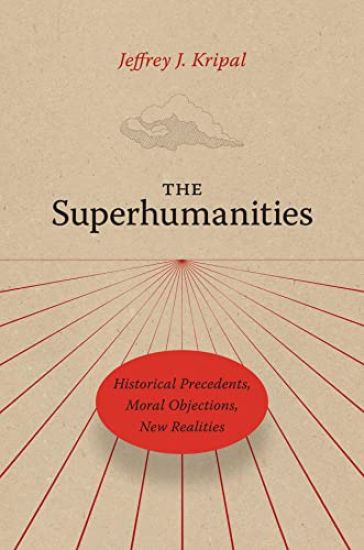
A bold challenge to rethink the humanities as intimately connected to the superhuman and to “decolonize reality itself.” What would happen if we reimagined the humanities as the superhumanities? If we acknowledged and celebrated the undercurrent of the fantastic within our humanistic disciplines, entirely new cultural worlds and meanings would become possible. That is Jeffrey J. Kripal’s vision for the future—to revive the suppressed dimension of the superhumanities, which consists of rare but real altered states of knowledge that have driven the creative processes of many of our most revered authors, artists, and activists. In Kripal’s telling, the history of the humanities is filled with precognitive dreams, evolving superhumans, and doubled selves. The basic idea of the superhuman, for Kripal, is at the core of who and what the human species has tried to become over millennia and around the planet. After diagnosing the basic malaise of the humanities—that the truth must be depressing—Kripal shows how it can all be done differently. He argues that we have to decolonize reality itself if we are going to take human diversity seriously. Toward this pluralist end, he engages psychoanalytic, Black critical, feminist, postcolonial, queer, and ecocritical theory. He works through objections to the superhumanities while also recognizing the new realities represented by the contemporary sciences. In doing so, he tries to move beyond naysaying practices of critique toward a future that can embrace those critiques within a more holistic view—a view that recognizes the human being as both a social-political animal as well as an evolved cosmic species that understands and experiences itself as something super.
A mind-bending invitation to experience the impossible as fundamentally human. From precognitive dreams and telepathic visions to near-death experiences, UFO encounters, and beyond, so-called impossible phenomena are not supposed to happen. But they do happen—all the time. Jeffrey J. Kripal asserts that the impossible is a function not of reality but of our everchanging assumptions about what is real. How to Think Impossibly invites us to think about these fantastic (yet commonplace) experiences as an essential part of being human, expressive of a deeply shared reality that is neither mental nor material but gives rise to both. Thinking with specific individuals and their extraordinary experiences in vulnerable, open, and often humorous ways, Kripal interweaves humanistic and scientific inquiry to foster an awareness that the fantastic is real, the supernatural is super natural, and the impossible is possible.
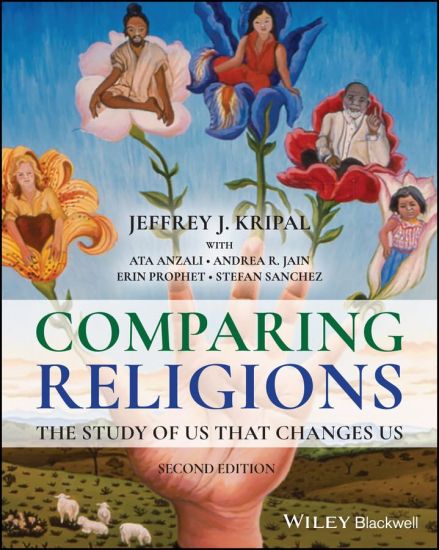
Comparing Religions
Jeffrey J. Kripal; Ata Anzali; Andrea R. Jain; Erin Prophet; Stefan Sanchez
JOHN WILEY AND SONS LTD
2024
nidottu
Teaches students the art and practice of comparison in the globalizing world, fully updated to reflect recent scholarship and major developments in the field Comparing Religions: The Study of Us that Changes Us is a wholly original, absorbing, and provocative reimagining of the comparative study of religion in the 21st century. The first textbook of its kind to foreground the extraordinary or “paranormal” aspects of religious experience, this innovative volume reviews the fundamental tenets of the world’s religions, discusses the benefits and problems of comparative inquiry, explores how the practice can impact a person's worldview and values, and much more. Asserting that religions have always engaged in comparing one another, the authors provide insights into the history, trends, debates, and questions of explicit comparativism in the modern world. Easily accessible chapters examine the challenges of studying religion using a comparative approach rather than focusing on religious identity, inspiring students to think seriously about religious pluralism as they engage in comparative practice. Throughout the text, a wealth of diverse case studies and vivid illustrations are complemented by chapter outlines, summaries, toolkits, discussion questions, and other learning features. Substantially updated with new and revised material, the second edition of Comparing Religions: Draws from both comparative work and critical theory to present a well-balanced introduction to contemporary practiceExplains classic comparative themes, provides a historical outline of comparative practices, and offers key strategies for understanding, analyzing, and re-reading religionDraws on a wide range of religious traditions to illustrate the complexity and efficacy of comparative practiceEmbraces the transcendent nature of the religious experience in all its forms, including in popular culture, film, and televisionContains a classroom-proven, three-part structure with easy-to-digest, thematically organized chaptersFeatures a companion website with information on individual religious traditions, additional images, a glossary, discussion questions, and links to supplementary materialComparing Religions: The Study of Us that Changes Us, Second Edition, is the perfect textbook for undergraduate students and faculty in comparative religion, the study of religion, and world religions, as well as a valuable resource for general readers interested in understanding this rewarding area.
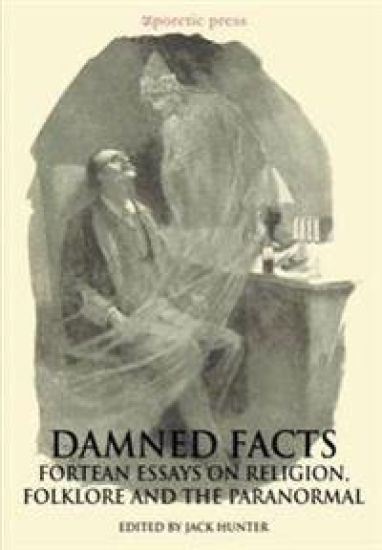
This book is about the stranger reaches of extraordinary experience research. In these pages an intrepid cast of writers, investigators and academics explore the complexities of extraordinary experience, and consider why it is that some of the most unusual experiential reports - what we might call 'high strangeness' experiences - come to be neglected, even in what is already a relatively fringe field of inquiry.The aversion to the most unusual forms of extraordinary experience has resulted in a gulf between the kinds of experiences discussed in the academic parapsychological literature and those experiences discussed by Fortean and popular paranormal researchers, who have more frequently been able to discuss a broader range of extraordinary experiential accounts - from UFO encounters to Bigfoot and fairy sightings, and everything in between.Notwithstanding this divide, there are significant themes that run throughout the established academic literature on religious and extraordinary experience, the parapsychological literature, and the canon of popular paranormal research. These similarities suggest that even the most unusual experiences, which are often ignored in academic research, contain elements that connect them to other forms of extraordinary experience that are more broadly accepted, such as certain kinds of spiritual, mystical, religious and other paranormal experiences. This book is an exploration of the possibility that the 'highly strange' might well be a core underlying feature of extraordinary experiences more generally, and that instead of being neglected, 'high strangeness' should be granted greater and renewed scholarly and parapsychological attention.Includes contributions from Jeffrey J. Kripal, Jack Hunter, Sharon Hewitt Rawlette, Gregory Shushan, Samantha Lee Treasure, Michael Grosso, Zofia Weaver, Alan Murdie, David Luke, Simon Young, Zelia Edgar, Leonardo Breno Martins, Peter M. Rojcewicz, Barbara A. Fisher, Christopher Diltz, Joshua Cutchin, Anthony Peake, Peter Sj stedt-Hughes, Susan Demeter and Ren e E. Mazinegiizhigo-kwe B dard.
A bold challenge to rethink the humanities as intimately connected to the superhuman and to “decolonize reality itself.” What would happen if we reimagined the humanities as the superhumanities? If we acknowledged and celebrated the undercurrent of the fantastic within our humanistic disciplines, entirely new cultural worlds and meanings would become possible. That is Jeffrey J. Kripal’s vision for the future—to revive the suppressed dimension of the superhumanities, which consists of rare but real altered states of knowledge that have driven the creative processes of many of our most revered authors, artists, and activists. In Kripal’s telling, the history of the humanities is filled with precognitive dreams, evolving superhumans, and doubled selves. The basic idea of the superhuman, for Kripal, is at the core of who and what the human species has tried to become over millennia and around the planet. After diagnosing the basic malaise of the humanities—that the truth must be depressing—Kripal shows how it can all be done differently. He argues that we have to decolonize reality itself if we are going to take human diversity seriously. Toward this pluralist end, he engages psychoanalytic, Black critical, feminist, postcolonial, queer, and ecocritical theory. He works through objections to the superhumanities while also recognizing the new realities represented by the contemporary sciences. In doing so, he tries to move beyond naysaying practices of critique toward a future that can embrace those critiques within a more holistic view—a view that recognizes the human being as both a social-political animal as well as an evolved cosmic species that understands and experiences itself as something super.
Machine Intelligence and the Imaginal Realm
Luke Lafitte; Jeffrey J. Kripal
INNER TRADITIONS BEAR AND COMPANY
2022
pokkari
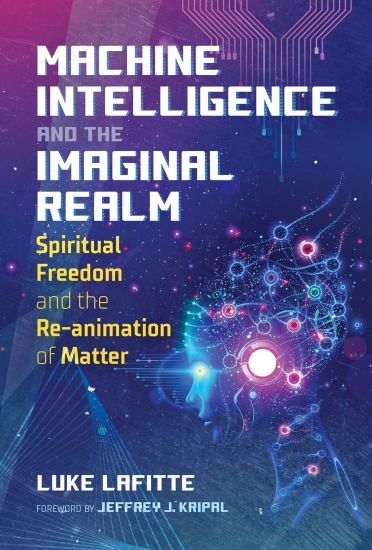
Examines the role that machines play in the struggle between “spiritual man” and “mechanical man” throughout the ages• Explores how we naturally project consciousness onto machines and how this is reflected in human culture, science, artificial intelligence, and literature • Demonstrates a direct connection between consciousness and the history of machines in American history • Looks at the contributions and influence of Grace Hopper, Richard Feynman, Philip K. Dick, Nikola Tesla, Thomas Edison, Elon Musk, David Bohm, Norbert Wiener, and Steve Jobs as well as the Nag Hammadi Gnostic gospels Humans invented and constructed machines to aid them as far back as the Stone Age. As the machines became more complex, they became extensions of the body and mind, and we naturally began projecting consciousness onto them. As Luke Lafitte shows in detail, although machines complicate the already complicated issue of identity, because they are “ours” and “of us,” they are part of our spiritual development. In this sweeping exploration of the history of the machine as a tool, as a transpersonal object to assist human activity, and as a transitional artifact between spirits and the humans who interact with them, Lafitte examines the role that machines play in the struggle between “spiritual man” and “mechanical-man” throughout history. He interprets the messages, archetypes, and language of the unconscious in the first popular stories related to mechanical-men, and he demonstrates a direct connection between consciousness and the history of machines in American history, specifically between the inventors of these machines and the awakening of our imaginations and our powers of manifestation. He examines the influence of Philip K. Dick, Nikola Tesla, Thomas Edison, Grace Hopper, Richard Feynman, Elon Musk, David Bohm, and others and shows how the Nag Hammadi gospels explain how we can take back our myth and spirit from the machine. Although the term mechanical-man is a catch-all phrase, Lafitte shows that the term is also a meeting ground where extra-dimensional communications between different forms of matter occur. Every machine, android, robot, and cyborg arose from consciousness, and these mechanical-men, whether real or fictive, offer us an opportunity to free ourselves from enslavement to materialism and awaken our imaginations to create our own realities.
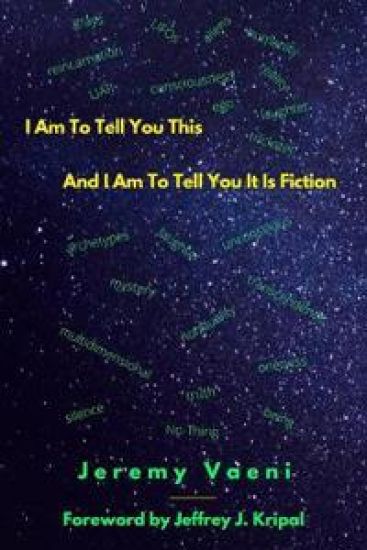
I Am To Tell You This And I Am To Tell You It Is Fiction
Jeffrey J Kripal
Kynegion House
2020
pokkari
With his 2003 debut, I Know Why The Aliens Don't Land , Amazon best-selling author Jeremy Vaeni redefined what an alien abductee sounded like. Not one to sit meekly in the shadows while some researcher told an audience what his bizarre experiences were, Jeremy offered the depth, humor, and raw honesty sorely lacking in ufology. Now, as he attempts to write its sequel, he can't shake the feeling that he's just going through the motions. Thankfully, there are deeper forces at work who don't want him to write that book, anyway. They want him to write a better one. What emerges is a book unlike any you have ever read before. I Am To Tell You This And I Am To Tell You It Is Fiction sets a new standard for what it means to think deeply about alien abductions, the multiverse, the afterlife, and the life we're living now. And it does so wrapped in the author's trademark, wildly inappropriate sense of humor.
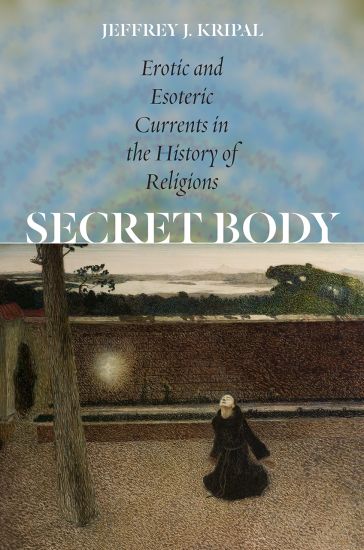
Over the course of his twenty-five-year career, Jeffrey J. Kripal's study of religion has had two major areas of focus: the erotic expression of mystical experience and the rise of the paranormal in American culture. This book brings these two halves together in surprising ways through a blend of memoir, manifesto, and anthology, drawing new connections between these two realms of human experience and revealing Kripal's body of work to be a dynamic whole that has the potential to renew and reshape the study of religion. Kripal tells his story, biographically, historically and politically contextualizing each of the six books of his Chicago corpus, from Kali's Child to Mutants and Mystics, all the while answering his censors and critics and exploring new implications of his thought. In the process, he begins to sketch out a speculative "new comparativism" in twenty theses. The result is a new vision for the study of religion, one that takes in the best of the past, engages with outside critiques from the sciences and the humanities, and begins to blaze a new positive path forward. A major work decades in the making, Secret Body will become a landmark in the study of religion.
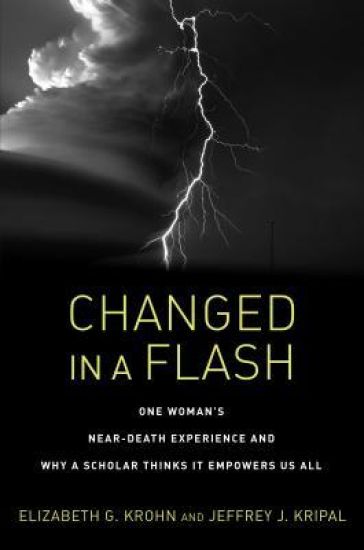
Changed in a Flash
Elizabeth Greenfield Krohn; Jeffrey J. Kripal
North Atlantic Books,U.S.
2018
sidottu
A fascinating first-hand account of an awakening into a psychic consciousness, paired with a revolutionary analysis by a respected professor of religion When Elizabeth Greenfield Krohn got out of her car with her two young sons in the parking lot of her synagogue on a late afternoon in September 1988, she couldn't have anticipated she would within seconds be struck by lightning and have a near-death experience. She felt herself transported to a garden and engaging in a revelatory conversation with a spiritual being. When she recovered, her most fundamental understandings of what the world is and how it works had been completely transformed. She was "changed in a flash," suddenly able to interact with those who had died and have prescient dreams predicting news events. She came to believe that some early traumatic and abusive experiences had played a part in preparing her for this experience. Told in matter-of-fact language, the first half of this book is the story of Krohn's journey, and the second is an interpretation and analysis by respected professor of religion Jeffrey J. Kripal. He places Krohn's experience in the context of religious traditions and proposes the groundbreaking idea that we are shaping our own experiences in the future by how we engage with near-death experiences in the present. Changed in a Flash is not about proving a story, but about carving out space for serious discussion of this phenomenon.
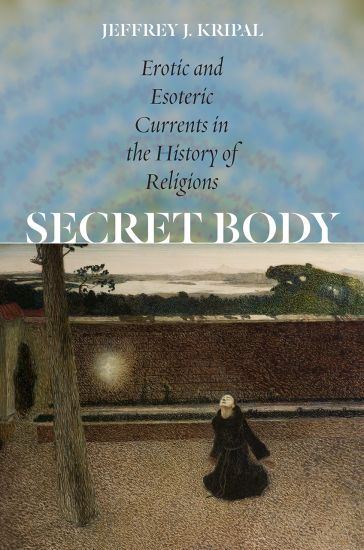
Secret Body – Erotic and Esoteric Currents in the History of Religions
Jeffrey J. Kripal
University of Chicago Press
2017
sidottu
Over the course of his twenty-five-year career, Jeffrey J. Kripal's study of religion has had two major areas of focus: the erotic expression of mystical experience and the rise of the paranormal in American culture. This book brings these two halves together in surprising ways through a blend of memoir, manifesto, and anthology, drawing new connections between these two realms of human experience and revealing Kripal's body of work to be a dynamic whole that has the potential to renew and reshape the study of religion. Kripal tells his story, biographically, historically and politically contextualizing each of the six books of his Chicago corpus, from Kali's Child to Mutants and Mystics, all the while answering his censors and critics and exploring new implications of his thought. In the process, he begins to sketch out a speculative "new comparativism" in twenty theses. The result is a new vision for the study of religion, one that takes in the best of the past, engages with outside critiques from the sciences and the humanities, and begins to blaze a new positive path forward. A major work decades in the making, Secret Body will become a landmark in the study of religion.
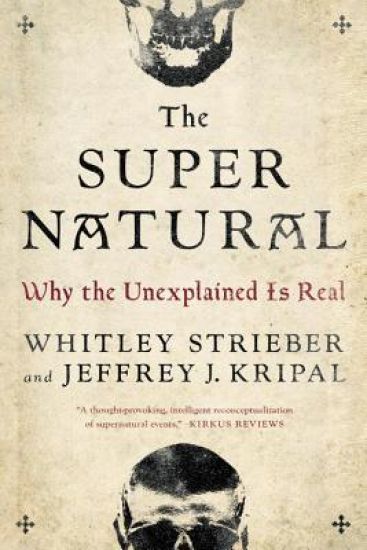
The Super Natural
Whitley Strieber; Jeffrey J. Kripal
J.P.Tarcher,U.S./Perigee Bks.,U.S.
2017
nidottu
Two of today's maverick authors on anomalous experience present a perception-altering and intellectually thrilling analysis of why the paranormal is real, but radically different from what is conventionally understood. Whitley Strieber (Communion) and Jeffrey J. Kripal (J. Newton Rayzor professor of religion at Rice University) team up on this unprecedented and intellectually vibrant new framing of inexplicable events and experiences. Rather than merely document the anomalous, these authors--one the man who popularized alien abduction and the other a renowned scholar and -renegade advocate for including the paranormal in religious studies- (The New York Times)--deliver a fast-paced and exhilarating study of why the supernatural is neither fantasy nor fiction but a vital and authentic aspect of life. Their suggestion? That all kinds of -impossible- things, from extra-dimensional beings to bilocation to bumps in the night, are not impossible at all: rather, they are a part of our natural world. But this natural world is immeasurably more weird, more wonderful, and probably more populated than we have so far imagined with our current categories and cultures, which are what really make these things seem -impossible.- The Super Natural considers that the natural world is actually a -super natural world---and all we have to do to see this is to change the lenses through which we are looking at it and the languages through which we are presently limiting it. In short: The extraordinary exists if we know how to look at and think about it. From the Hardcover edition.
In many ways, twentieth-century America was the land of superheroes and science fiction. From Superman and Batman to the Fantastic Four and the X-Men, these pop-culture juggernauts, with their "powers and abilities far beyond those of mortal men," thrilled readers and audiences - and simultaneously embodied a host of our dreams and fears about modern life and the onrushing future. But that's just scratching the surface, says Jeffrey J. Kripal. In Mutants and Mystics, Kripal offers a brilliantly insightful account of how comic book heroes have helped their creators and fans alike explore and express a wealth of paranormal experiences ignored by mainstream science. Delving deeply into the work of major figures in the field - from Jack Kirby's cosmic superhero sagas and Philip K. Dick's futuristic head - trips to Alan Moore's sex magic and Whitley Strieber's communion with visitors - Kripal shows how creators turned to science fiction to convey the reality of the inexplicable and the paranormal they experienced in their lives. Expanded consciousness found its language in the metaphors of sci-fi-incredible powers, unprecedented mutations, time-loops, and vast intergalactic intelligences - and the deeper influences of mythology and religion that these in turn drew from; the wildly creative work that followed caught the imaginations of millions. A bravura performance, beautifully illustrated in full color throughout and brimming over with incredible personal stories, Mutants and Mystics is that rarest of things: a book that is guaranteed to broaden-and maybe even blow-your mind.
Most scholars dismiss research into the paranormal as pseudoscience, a frivolous pursuit for the paranoid or gullible. Even historians of religion, whose work naturally attends to events beyond the realm of empirical science, have shown scant interest in the subject. But the history of psychical phenomena, Jeffrey J. Kripal contends, is an untapped source of insight into the sacred, and by tracing that history through the last two centuries of Western thought we can see its potential centrality to the critical study of religion. The cultural history of telepathy, teleportation, and UFOs; a ghostly love story; the occult dimensions of science fiction; Cold War psychic espionage; galactic colonialism; and, the intimate relationship between consciousness and culture all come together in "Authors of the Impossible", a dazzling and profound look at how the paranormal bridges the sacred and the scientific.
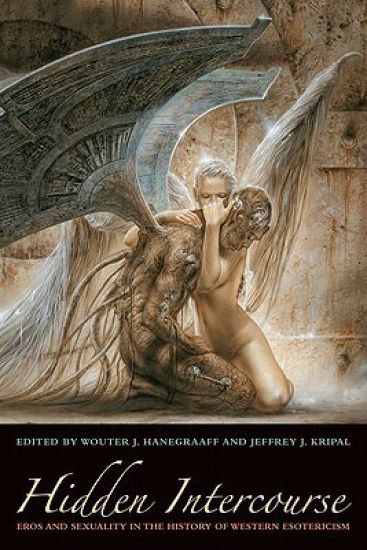
From rumors about gnostic orgies in antiquity to the explicit erotic symbolism of alchemical texts, from the subtly coded eroticism of medieval kabbalah to the sexual magic practiced by contemporary occultists and countercultural translations of Asian Tantra, the history of Western esotericism is rich in references to the domains of eros and sexuality. This volume, which brings together an impressive array of top-level specialists, is the first to analyze the eroticism of the esoteric without sensationalism or cheap generalizations, but on the basis of expert scholarship and attention to textual and historical detail. While there are few domains where the imagination may so easily run wild, the various contributions seek to distinguish fact from fiction—only to find that historical realities are sometimes even stranger than the fantasies. In doing so, they reveal the outlines of a largely unknown history spanning more than twenty centuries.
Most scholars dismiss research into the paranormal as pseudoscience, a frivolous pursuit for the paranoid or gullible. Even historians of religion, whose work naturally attends to events beyond the realm of empirical science, have shown scant interest in the subject. But the history of psychical phenomena, Jeffrey J. Kripal contends, is an untapped source of insight into the sacred, and by tracing that history through the last two centuries of Western thought we can see its potential centrality to the critical study of religion. The cultural history of telepathy, teleportation, and UFOs; a ghostly love story; the occult dimensions of science fiction; Cold War psychic espionage; galactic colonialism; and, the intimate relationship between consciousness and culture all come together in "Authors of the Impossible", a dazzling and profound look at how the paranormal bridges the sacred and the scientific.