Kirjojen hintavertailu. Mukana 12 390 323 kirjaa ja 12 kauppaa.

Kirjailija

Jerald T. Milanich

Kirjat ja teokset yhdessä paikassa: 36 kirjaa, julkaisuja vuosilta 1992-2020, suosituimpien joukossa The Archaeology and History of the Native Georgia Tribes. Vertaile teosten hintoja ja tarkista saatavuus suomalaisista kirjakaupoista.

Mukana myös kirjoitusasut: Jerald T Milanich

36 kirjaa

Kirjojen julkaisuhaarukka 1992-2020.

Light on the Path

Light on the Path

Eric E. Bowne; Steven C. Hahn; David J. Hally; Scott Jones; William Martin Jurgelski; Adam King; Stephen A. Kowalewski; Jerald T. Milanich

The University of Alabama Press
2006
nidottu
The past 20 years have witnessed a change in the study of the prehistory and history of the native peoples of the American South. This paradigm shift is the bridging of prehistory and history to fashion a seamless social history that includes not only the 16th-century Late Mississippian period and the 18th-century colonial period but also the largely forgotten - and critically important - century in between. The shift is in part methodological, for it involves combining methods from anthropology, history, and archaeology. It is also conceptual and theoretical, employing historical and archaeological data to reconstruct broad patterns of history - not just political history with Native Americans as a backdrop, nor simply an archaeology with added historical specificity, but a true social history of the Southeastern Indians, spanning their entire existence in the American South. The scholarship underlying this shift comes from many directions, but much of the groundwork can be attributed to Charles Hudson. The papers in this volume were contributed by Hudson's colleagues and former students (many now leading scholars themselves) in his honor. The assumption linking these papers is that of a historical transformation between Mississippian societies and the Indian societies of the historic era that requires explanation and critical analysis. In all of the chapters, the legacy of Hudson's work is evident. Anthropologists, archaeologists, and historians are storming the bridge that connects prehistory and history in a manner unimaginable 20 years ago. While there remains much work to do on the path toward understanding this transformation and constructing a complete social history of the Southeastern Indians, the work of Charles Hudson and his colleagues have shown the way.
Tales from the Catskill Tribune

Tales from the Catskill Tribune

Jerald T Milanich

Peppertree Press
2020
pokkari
TALES FROM THE CATSKILL TRIBUNE The Mountains' Premier Source for Fake NewsGreat scenery, bubbling streams, and Rip Van Winkle are hallmarks of the Catskill Mountains in upstate New York. The mountains also are home to a hilarious collection of characters featured in the pages of the Catskill Tribune, an imaginary newspaper. A Bigfoot family, aliens, Vikings, and a host of residents and tourists all find themselves in highly irregular circumstances.A Tribune reporter conducted an in-depth investigation of the extraordinary discovery of gangster Dutch Schultz's hidden treasure cache-once rumored to be in the town of Phoenicia. The eerie fate of astrophysicist and former Fox News science reader Kathy Young is chronicled in two stories. Ms. Young likely was transmuted from a Catskill mountaintop to Kepler-62f, a planet in the constellation Lyra. Another news account records the misadventures of a pot-smoking grandmother who decides to drive her tractor to town...the hard way.Readers will not want to miss the Tribune's coverage of the "Roxit" saga, a vote by Roxbury's residents to exit the United States and Join Great Britain. The action, afforded by a pre-Revolutionary War document penned by Queen Anne, drew less than positive attention from President Donald Trump and Fox News.A number of individuals who moved to the Catskills to find fame and fortune receive Tribune attention. They include a flakey West Coast astrologer; a financial consultant who predicts the stock market using photos of lightning bolts; and Brooklyn cowboy Christian Potok, whose mountain path is littered with failed business investments, notably Eskimo Heaven-a Catskill fat-freezing facility-and Sodom and Gomorrah-a family-oriented arcade. The Catskill Tribune regularly features two award-winning columns: "Life and Love in the Catskills" and "Constables Corner," both of which will elicit guffaws. And don't forget the woman who files a paternity suit against Jolly Old St. Nick. The Catskill Tribune has it all
Florida Indians and the Invasion from Europe

Florida Indians and the Invasion from Europe

Jerald T. Milanich

Library Press at UF
2018
nidottu
Florida's Indians tells the story of the native societies that have lived in Florida for twelve millennia, from the early hunters at the end of the Ice Age to the modern Seminole, Miccosukee, and Creeks.When the first Indians arrived in what is now Florida, they wrested their livelihood from a land far different from the modern countryside, one that was cooler, drier, and almost twice the size. Thousands of years later European explorers encountered literally hundreds of different Indian groups living in every part of the state. (Today every Florida county contains an Indian archaeological site.) The arrival of colonists brought the native peoples a new world and great changes took place--by the mid-1700s, through warfare, slave raids, and especially epidemics, the population was almost annihilated. Other Indians soon moved into the state, including Creeks from Georgia and Alabama, who were the ancestors of the modern Seminole and Miccosukee Indians. Written for a general audience, this book is lavishly illustrated with full-color drawings and photographs. It skillfully integrates the latest archaeological and historical information about the Sunshine State's Native Americans, connecting the past and present with modern place-names, and it gives a proud voice to Florida’s rich Indian heritage.
Archaeology of Precolumbian Florida

Archaeology of Precolumbian Florida

Jerald T. Milanich

Library Press at UF
2018
nidottu
The books in the Florida and the Caribbean Open Books Series demonstrate the University Press of Florida’s long history of publishing Latin American and Caribbean studies titles that connect in and through Florida, highlighting the connections between the Sunshine State and its neighboring islands. Books in this series show how early explorers found and settled Florida and the Caribbean. They tell the tales of early pioneers, both foreign and domestic. They examine topics critical to the area such as travel, migration, economic opportunity, and tourism. They look at the growth of Florida and the Caribbean and the attendant pressures on the environment, culture, urban development, and the movement of peoples, both forced and voluntary. The Florida and the Caribbean Open Books Series gathers the rich data available in these architectural, archaeological, cultural, and historical works, as well as the travelogues and naturalists’ sketches of the area in prior to the twentieth century, making it accessible for scholars and the general public alike. The Florida and the Caribbean Open Books Series is made possible through a grant from the National Endowment for the Humanities and the Andrew W. Mellon Foundation, under the Humanities Open Books program.
Enchantments

Enchantments

Jerald T. Milanich; Nina J. Root

University Press of Florida
2013
sidottu
In the first decade of the twentieth century, Julian Dimock and his father traveled throughout southwest Florida photographing the land, the people, and the waterways of this frontier Eden. The former Wall Street moguls turned gentlemen explorers published hundreds of articles documenting their journeys in Harper's, Field & Stream, and other periodicals, introducing Americans to the mysterious world of the Florida Everglades and its inhabitants. While photographer Julian was keenly interested in the isolated but culturally rich lives of the Seminole Indians, he was also drawn to the outcasts and wanderers, refugees and outlaws who had staked out hardscrabble lives far from the fledgling towns of Miami and Fort Myers.From their base camp in the then-undeveloped outpost of Marco Island, the Dimocks trekked through the swamps and savannahs of southwest Florida as few whites had ever done. They canoed the Ten Thousand Islands, the Everglades, and Big Cypress Swamp. They traveled overland by oxcart to reach hidden places, including Deep Lake Plantation and its historic citrus grove, the tiny Henderson Creek settlement on Rookery Bay, and America's southernmost bee tree. From their houseboat they photographed Chatham Bend, the island home of the notorious killer Edgar Watson. Shedding light on these remote and wild lands, the Dimocks inspired interest and appreciation in people who never would have known such places existed. Documenting the lives of the Seminoles who inhabited the wetlands in south Florida’s interior after the Seminole Wars, the Dimocks’ articles and photographs served as a call to protect this special area from poachers, hunters, and developers. Their historical importance is beyond question. Enchantments presents a large selection of Julian’s photographs, accompanied by excerpts from the original magazine articles written by the Dimocks. The captions, often supplemented by the Dimocks’ firsthand observations, tell a number of stories, each a vignette about life on the southward-moving Florida frontier. These vivid duotone reproductions from original glass negatives--donated by Dimock to the American Museum of Natural History in the 1920s--preserve a rare and beautiful slice of history.
Foraging, Farming and Coastal Adaptation in Late Prehistoric North Carolina

Foraging, Farming and Coastal Adaptation in Late Prehistoric North Carolina

Dale L. Hutchinson; Jerald T. Milanich

University Press of Florida
2002
sidottu
Dale Hutchinson provides a detailed bioarchaeological analysis exploring human adaptation in the estuary zone of North Carolina and the influence of coastal foraging during the late prehistoric transition to agriculture. He draws on observations of human skeletal remains to look at nutrition, disease, physical activity, morbidity, and mortality of coastal populations, focusing particularly on changes in nutrition and health associated with the move from foraging to farming. Hutchinson confronts the prevailing notion of a universal agricultural transition by documenting a more variable and complex process of change. Among his notable findings is that skeletal and dental markers long accepted as indicators of corn consumption in fact occur more frequently among coastal foragers than among interior agriculturalists. His research shows that men and women differed not only in their economic roles but in their diets as well and that outer coastal populations continued to rely on maritime resources without the adoption of corn after A.D. 800, a reliance that almost surely influenced their evolving lifestyle. The combination of original data, well-supported interpretation, and the breadth of evidence from many categories significantly advances our anthropological understanding of the lives of these first North Carolinians.
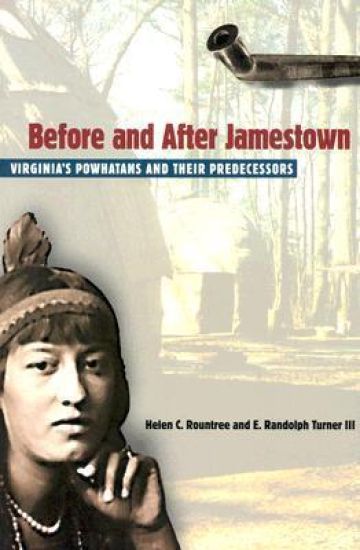
Before and After Jamestown

Before and After Jamestown

Helen C. Rountree; E.Randolph Turner; Jerald T. Milanich

University Press of Florida
2002
nidottu
Addressed to specialists and nonspecialists alike, Before and After Jamestown introduces the Powhatans--the Native Americans of Virginia's coastal plains, who played an integral part in the life of the Williamsburg and Jamestown settlements--in scenes that span 1,100 years, from just before their earliest contact with non-Indians to the present day. Synthesizing a wealth of documentary and archaeological data, the authors have produced a book at once thoroughly grounded in scholarship and accessible to the general reader. They have also extended the historical account through the native people's long-term adaptation to European immigrants and into the immediate present and their continuing efforts to gain greater recognition as Indians. Illustrated with more than 100 photographs, maps, and drawings, the book also includes an entire chapter, from the Powhatan perspective, on the original English fort at Jamestown. The authors provide suggestions for additional reading for both children and adults as well as a list of Indian-related sites to visit in Virginia.
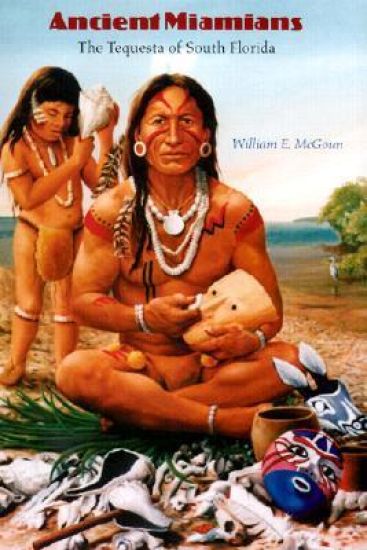
Ancient Miamians

Ancient Miamians

William McGoun; Jerald T. Milanich

University Press of Florida
2002
sidottu
Focusing on the Native Americans the Spanish called Tequesta and their ancestors, Ancient Miamians covers the 10,000 years from 8,000 B.C. to A.D. 1761, painting a vivid word portrait of a resident from each of six eras as they make tools, obtain food, deal with their fellow humans, and seek harmony with the forces that govern their lives. From first light to evening firelight, McGoun presents for the non-specialist a series of narratives depicting a single day in each of the lives of six typical men and women who once lived on the land around presentday Biscayne Bay. This concise and readable tale of the remarkable predecessors of Miami-Dade's current 2 million residents is the first such treatment of Florida's pre-European and early historic native people. Without violating archaeological fact, McGoun includes the major cultural periods and significant archaeological sites in the region, all in terms of day-to-day life rendered in engaging narrative. The story begins with the first settlers, who moved down the Florida peninsula more than 10 millennia ago, pursuing large animals that are now mostly extinct. It draws to a close with the 250 years that saw the Tequesta themselves become extinct, beginning with a time when ""the English and their friends just won't take 'Go away' for an answer, and they become such pests that finally even the Spaniards look good, or at least better."" Bibliographic summaries allow readers to extend the scope of their exploration beyond this fictiorialized reconstruction of prehistoric culture.
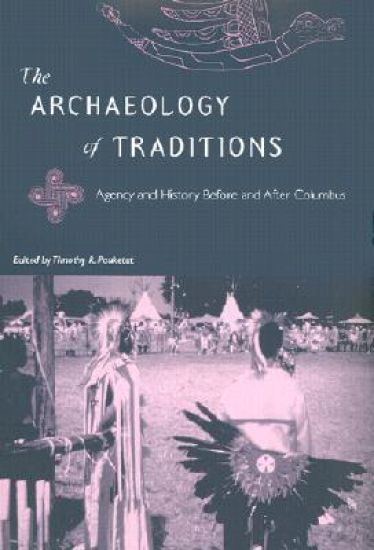
The Archaeology of Traditions

The Archaeology of Traditions

Jerald T. Milanich

University Press of Florida
2001
sidottu
Rich with the objects of the day-to-day lives of illiterate or common people in the southeastern United States, this book offers an archaeological reevaluation of history itself: where it is, what it is, and how it came to be. Through clothing, cooking, eating, tool making, and other mundane forms of social expression and production, traditions were altered daily in encounters between missionaries and natives, between planters and slaves, and between native leaders and native followers. As this work demonstrates, these ""unwritten texts"" proved to be potent ingredients in the larger-scale social and political events that shaped peoples, cultures, and institutions.
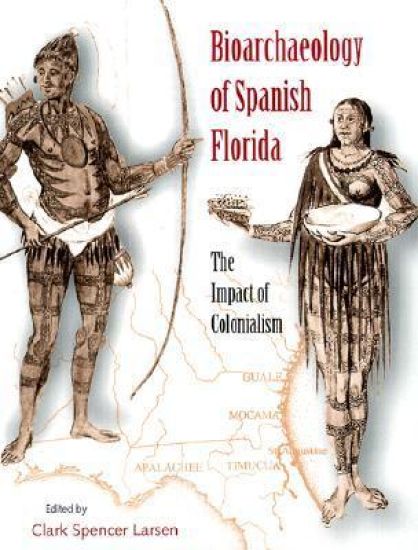
Bioarchaeology of Spanish Florida

Bioarchaeology of Spanish Florida

Jerald T. Milanich

University Press of Florida
2001
sidottu
These important essays address the biological consequences of the arrival of Europeans in the New World and on the lifeways of native populations following contact in the late 16th century. Moving away from monocausal explanations of population change, they maintain that disease should be viewed as only a facet of a complex problem and that issues relating to diet, nutrition, activity, the work environment, and social and political change are equally important.
The Ancient Mounds of Poverty Point

The Ancient Mounds of Poverty Point

Jon L. Gibson; Jerald T. Milanich

University Press of Florida
2001
nidottu
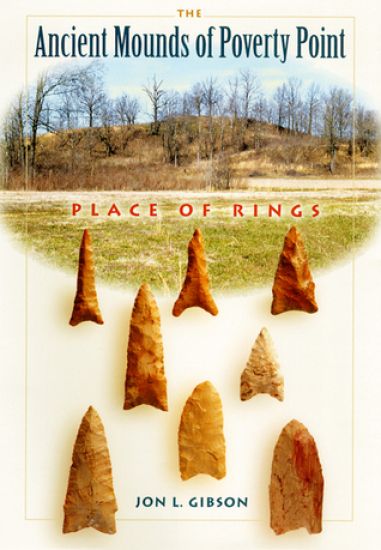
Jon Gibson confronts the intriguing mystery of Poverty Point, the ruins of a large prehistoric Indian settlement that was home to one of the most fascinating ancient cultures in eastern North America. The 3,500-year-old site in northeastern Louisiana is known for its large, elaborate earthworks - a series of concentric, crescent-shaped dirt rings and bird-shaped mounds. With its imposing 25-mile core, it is one of the largest archaic constructions on American soil. It's also one of the most puzzling - perplexing questions haunt Poverty Point, and archaeologists still speculate about life and culture at the site, its age, how it was created, and if it was at the forefront of an emerging complex society. Gibson's engaging, well-illustrated account of Poverty Point brings to life one of the oldest earthworks of its size in the Western Hemisphere, the hub of a massive exchange network among native American peoples reaching a third of the way across the present-day United States.
Grit-tempered

Grit-tempered

Jerald T. Milanich

University Press of Florida
2001
nidottu
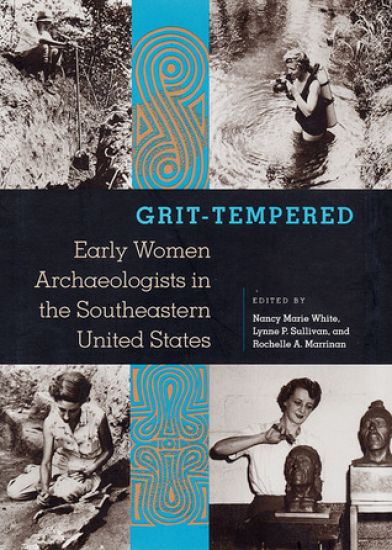
This volume documents the lives and work of pioneering women archaeologists in the southeastern United States, from the 1920s through the 1960s, portraying their professional accomplishments in the context of their personal lives. Some of the women are working today, and they either wrote their own stories or were interviewed. Others are no longer living; their biographies are gleaned from archival research. Rich with humor, tragedy, and important information for the history of anthropology and archaeology in the South and beyond, this book includes the story of African-American women excavators on WPA crews during the Great Depression; tales of innovative lab work, adventurous fieldwork, and public archaeology; and provocative discussions of women in archaeology and of gender in the archaeological record.
Exploration of the Etowah Site in Georgia

Exploration of the Etowah Site in Georgia

Warren King Moorehead; Jerald T. Milanich

University Press of Florida
2000
nidottu
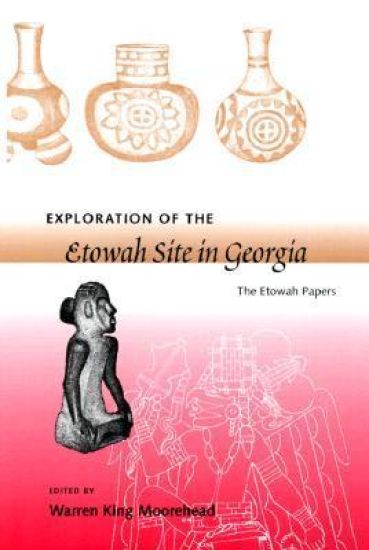
Spectacular discoveries at the Etowah site in Georgia changed the American perspective of the artistic achievements of prehistoric Native Americans. These papers, originally published in 1932, offer an understanding of American archaeology and the cultural heritage of prehistoric Native America.
Here They Once Stood

Here They Once Stood

Mark F. Boyd; Hale G. Smith; John W. Griffin; Jerald T. Milanich

University Press of Florida
1999
nidottu
A presentation of first-hand accounts describing the horrific fate of the Apalachee missions in 17th-century Florida. It also offers archaeological reports documenting the missions and the lives of the native peoples who lived and died as Christians under Spanish rule.
Unconquered People

Unconquered People

Brent Richards Weisman; Jerald T. Milanich

University Press of Florida
1999
nidottu
Who are Florida's Siminole and Miccosukee Indians and where did they come from? This book explores their culture through information provided by archaeology, ethnography, historical documents and the words of the Indians themselves.
Precolumbian Architecture in Eastern North America

Precolumbian Architecture in Eastern North America

William N. Morgan; Jerald T. Milanich

University Press of Florida
1999
nidottu
This study of prehistoric North American architecture is organized into three periods: the beginnings of architecture dating from 4000 BC; the beginning of the Christian era; and the period just preceding Columbus' arrival. The architectural chracteristics of 96 pre-Columbian sites are described.