Kirjojen hintavertailu. Mukana 12 152 606 kirjaa ja 12 kauppaa.

Kirjailija

Jeremy Black

Kirjat ja teokset yhdessä paikassa: 250 kirjaa, julkaisuja vuosilta 1992-2027, suosituimpien joukossa Geopolitikens återkomst : striden om framtidens historia. Vertaile teosten hintoja ja tarkista saatavuus suomalaisista kirjakaupoista.

250 kirjaa

Kirjojen julkaisuhaarukka 1992-2027.

Geopolitikens återkomst : striden om framtidens historia

Geopolitikens återkomst : striden om framtidens historia

Jeremy Black; Philip Bobbitt; Michael Broers; Roger Crowley; Gregory Feifer; Noah Feldman; Jonathan Fenby; David Frum; Gabriel Gorodetsky; Peter Heather; Josef Joffe; Anna-Lena Laurén; John H. Maurer; Sean McMeekin; Walter Russell Mead; Richard Miles; Fraser Nelson; Richard Overy; Lincoln Paine; Andrew Preston; Morris Rossabi; Charly Salonius-Pasternak; Norman Stone; Barry Strauss; Mikael Wigell

Bokförlaget Stolpe
2021
sidottu
Det var inte länge sedan idén om att vi nått historiens slut vann kraft och spridning: tanken att människans sociokulturella evolution nått fram till en punkt där den knappast kunde nå längre. Ett kvartssekel senare verkar denna optimism ha försvunnit. I stället bevittnar vi nu geopolitikens återkomst. Ett tjugotal experter utforskar i denna antologi hur vi hamnade där vi är idag men också vart vi kan tänkas vara på väg. Huvudredaktörer är Kurt Almqvist och Alexander Linklater.
English Culture

English Culture

Jeremy Black

AMBERLEY PUBLISHING
2027
pokkari
Culture. What is it? Paintings or television? The National Gallery or Harry Styles? There is of course no one answer, no agreement. But what is clear is that culture, however defined, plays a key role as a form and content of identity, while, in turn, it is affected by changes in the patterns and pressures of identification. In Emma, Jane Austen praised Shakespeare as a touchstone of Englishness and wrote: ‘It was a sweet view – sweet to the eye and the mind. English verdure, English culture, English comfort, seen under a sun bright, without being oppressive.’ Would anyone today write the same words without irony? Professor Black charts the changes in English culture over three centuries. Turnpikes, steam engines, canals, novels, landscape gardens, Adam Smith et al were scarcely indicators of an unchanging world; but Jeremy Black points out that the early period analysed was profoundly historic. The historical bent of the years from the Glorious Revolution to the Great Reform Act could be found in thought, religion, politics, law, society, literature, art, architecture, music, sculpture, and much else, and was true at all levels of society. And history still defines England today, even in its denial or rejection, with the destruction of monuments. History was presented as moving in an inevitable direction, one of steady improvement, a teleological progressivism. Black observes that ‘In the 18th century, the public market for an explicitly English engagement with English culture and history became far stronger, in turn creating models for the future. Even if a shared inheritance, the past was interpreted to emphasise Englishness.’ Then what happened?
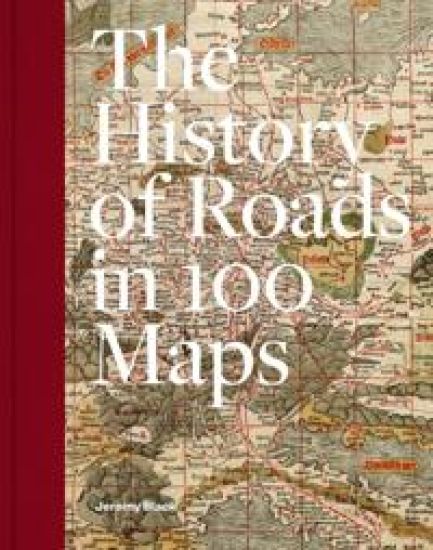
The History of Roads in 100 Maps

The History of Roads in 100 Maps

Jeremy Black

British Library Publishing
2026
sidottu
The major form of travel throughout history has been roadways. And while humanity has traversed these roadways on foot, by horse or in mechanical vehicles, there is the common theme of a particular route; a right of way differentiating the roadway from adjoining countryside. This book provides the first unique survey of the mapping of roads, exploring the development of these most essential of societies’ arteries. Taking as its principal research source one of the world’s greatest historical map collections at the British Library, this volume commences with Konrad Peutinger’s celebrated map of 4th Century Roman roads but, as the print revolution develops, we are soon transported along pilgrim routes, across conqueror’s maps, along early Modern post-roads and via the beautiful cartography of Japan’s 1666 Tokaido map. A History of Roads in 100 Maps also explores the early maps of Automobile Clubs, heralding the dramatic revolution motorised transport brought to roads, and concludes with a similarly seismic shift, a century later, as the birth of the information superhighway reinvented the road map for ever.
In the National Interest

In the National Interest

Jeremy Black

AMBERLEY PUBLISHING
2026
sidottu
‘In the National Interest’ does not focus on diplomatic history but instead on the broad strands of development and on the politics of policy, the way in which different approaches reflect political commitments and have been affected by them. This then will not be a book for those committed to the idea that there is a clear national interest, or, indeed, an obvious process of policy formation. Instead, Professor Black describes a world in which the national interest is contested and foreign policy is important to political identities and rivalries, and is affected by them. This approach is made more significant by the extent to which international relations have now become highly contentious, in a volatile atmosphere that is testing political assumptions about interests and responses. The situation is likely to escalate in complexity and gravity in the coming years and this book provides the crucial introduction to the politics of foreign policy. What changes between the politics of Religious Internationalism 1500-1700 and the politics of a foreign policy of Imperial Grandeur 1800-1900? Without some understanding of that question, one cannot hope to understand the politics of contemporary foreign policy. Why does Britain support Ukraine - and when will it stop doing so?
The Short History of Russia

The Short History of Russia

Jeremy Black

AMBERLEY PUBLISHING
2026
sidottu
The invasion of Ukraine in 2022 began a new episode in history and was surrounded by a miscellany of historical claims. This book is a succinct, up-to-date guide to the histories on offer about and from Russia, one that seeks to make sense of present issues and future prospects as well as of the past. There is a heavy emphasis on war and international relations, but that is appropriate not only for the past but also from a present in which both are to the fore. Peter the Great (r. 1689-1725), an eager modernizer, was viewed as an un-Russian evil phenomenon in light of his denial of the divine identity of traditional Russian monarchy, his blasphemy, his theft of time from God when he changed the calendar, and his sacrilegious violation of the image of God in man when he forced men to cut off their beards. Vladimir Putin cuts off no beards, he is no moderniser; the fall of the Berlin Wall left him with an abiding mistrust of democracy and 'People's Power'. At Davos in 2000, American journalist Trudy Rubin asked a panel of top Russian officials: 'Who is Mr Putin?' None of them could answer, except to say: 'He is the president of Russia.' How did this foreign intelligence officer of the KGB become Trump's favourite running dog of capitalism? To answer the question, we have to understand what Russia was. There is a continuity that will give us a clue about what it is and will become.
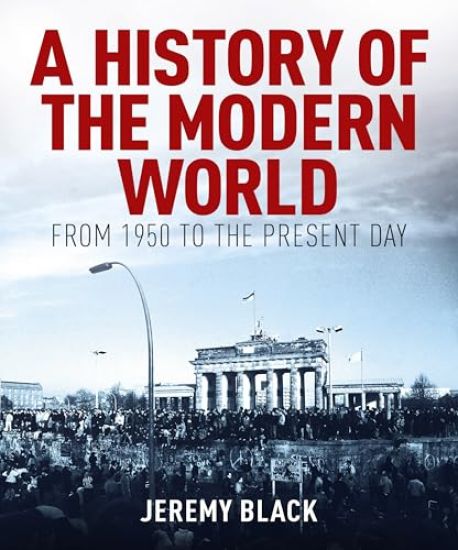
A History of the Modern World: From 1950 to the Present Day
Written by lead historian Jeremy Black, this fascinating hardback reference guide charts an incredible history of the modern world, beautifully visualised with full-colour images throughout. In this masterful account, Black explores the key themes that have shaped the history of the modern world since 1950. Eschewing a simple political narrative, he instead explores the roles of the environment, demographics, the economy and technology in driving change in the world. The story begins in 1950, by which time a new world order had come into place, with Communism firmly established in Russia, Eastern Europe and China, decolonisation well underway in the old European empires, and the American monopoly on nuclear weaponry at an end, setting the stage for the Cold War. Over the course of the next 75 years, the world changed immeasurably - the population nearly tripled; climate change became ever more pronounced; new liberal values regarding gender, sexuality and age took hold; television and then the internet became the primary drivers of culture; and a new frontier of exploration opened up in space. At the same time tensions continued in politics, with alternative models of democracy and authoritarianism coming into fierce conflict and a range of new countries emerging through decolonization. Ranging widely across the globe, A History of the World from 1950 sheds new light on this fascinating era.
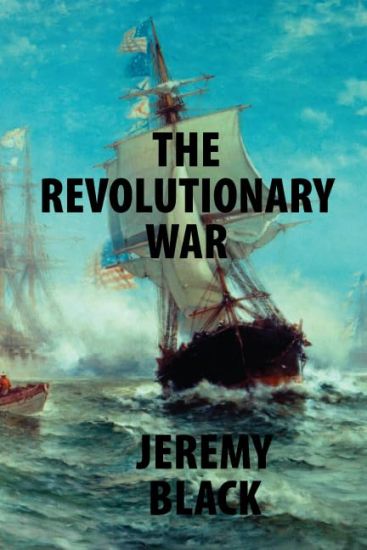
The Revolutionary War

The Revolutionary War

Jeremy Black

ST AUGUSTINE'S PRESS
2025
nidottu
Military historian Jeremy Black follows his engagement with the American Civil War (St. Augustine's Press, 2025) with a review of the Revolutionary War in North America and the strategic asymmetry it presents. This was a key episode for global affairs and formative for the United States, but also fascinating for military history as a whole. Black's earlier treatment of this war (1991) remains operational, but he thought it "necessary to revisit the subject and reconsider not only the specifics of assessment, but also the more general ways of analyzing and presenting the struggle." Black's rendering of the war is accurate, well researched, and successfully hits his target without undue speculation. Identifying all the factors at play is one of Black's strengths, as is his sober restraint in applying hindsight while evaluating leadership and campaigns throughout. His field of vision is expansive and refers to the global theatre when offering any kind of final statements––for example, in his claim that the Revolution was largely lost long after the conclusion of battles, and that Canada in British hands underlined the failure of revolutionary efforts and the embodiment of continued threats. The Revolutionary War is a masterful treatment of an historical event and also the very nature of revolutionary warfare. Black is a fair-handed assessor of 'American' interests and strategic politics, and likewise observant in explaining that Britain was not entirely bested by the revolution even in losing the war. His discussion of the aftermath is as critical as his illustration of the beginning of hostilities, as in his chapter dedicated to "heritages, lessons, and retrospectives." Black is one of the most important and prolific historians of his generation, a writer whose concise and thorough manner renders readers in the United States a refreshing service of understanding their history more deeply.
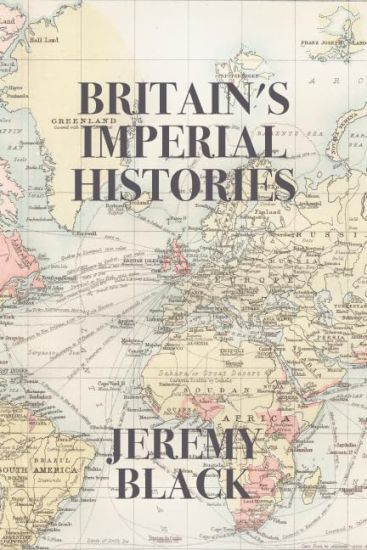
Britain's Imperial Histories

Britain's Imperial Histories

Jeremy Black

ST AUGUSTINE'S PRESS
2025
nidottu
Military historian Jeremy Black continues his review of the global context of martial conflict and spatial conquest into the modern era (16th–20th centuries), focusing on the British empire and its lasting effect on this landscape. Black offers a representation of the "imperial experience" that is eye-opening for a generation of readers who associate this with a strictly negative connotation. But the notion of an empire is not understood at all if this is true. Indeed, not only is there "no one type of empire, no prototype," the basis of empire is much more 'order' than it is 'invasion.' Furthermore, reflecting on the unavoidable cultural and sociological symbiosis and transfer, Black makes the case that in all instances of influence and encounter, sameness between peoples never results. But how does one distinguish influence from control? What are the long-term benefits among peoples? "To many today, empire might seem obvious: governors with ostrich-feathers in their colonial garb ruling non-White peoples; but this scarcely describes the situation across time and place." Why did the European empires ultimately fall? When approaching this question, Britain's Imperial Histories proposes that the perspective of "making and remaking of the international system" be made distinct from the "rational pursuit of power and wealth and the use of technology." As seen in earlier work, Black's brilliance is centered in his capacity to incorporate the complexity of war and its battles in his assessments, while never neglecting the fact that wars themselves have specific and broad contexts that must be read thoroughly. Another highlight of the present work includes more insight into the British-American relationship and American political identity. "If the British empire is blamed for many of the aspects of modernization and globalization, is also serves as a way of offering historical depth to a critique of American power." Yet he is also adept at drawing in Asia into the study and does so with uncommon acumen. This book provides an approach to history that has been neglected, especially in the New World, and connects the present to the past with a kind of hermeneutical responsibility that has been of late abandoned.
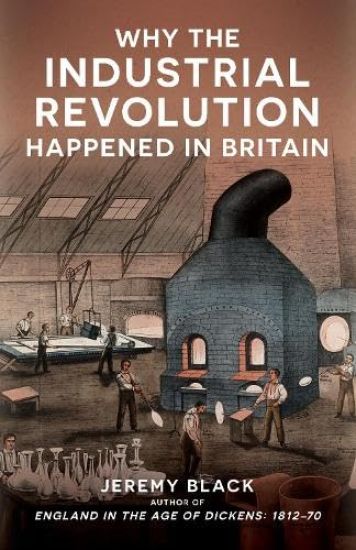
Why the Industrial Revolution Happened in Britain
Britain’s key importance in world history was a product of its constitution and its empire, but both, in turn, were sustained and supported by Britain’s role in achieving the first Industrial Revolution. In part this was a matter of coal and steam but far more was involved. Alongside the ‘push’ factors of entrepreneurs and resources came the ‘pull’ factors of consumerism, fashion and an ability to purchase goods. There was also the context of parliamentary government, the rule of law, a society open to talent, and no internal tariff boundaries. The combination of these factors produced vital synergies. They also ensure that the history of the Industrial Revolution is the history of a country, a people, and of the factors that made them exceptional.
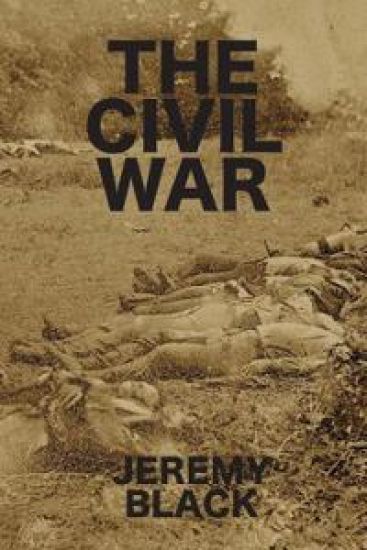
The Civil War

The Civil War

Jeremy Black

ST AUGUSTINE'S PRESS
2025
nidottu
The American Civil War may have been more consequential to American history (and its global supremacy) than its Revolutionary War and participation in all other world wars. The influence of this war is not just reduced to the victory of the north and its economic infrastructure, but the fact of Union success ushered in the notion of 'what it means to be American' that even the revolution could not instill. European military historian Jeremy Black reorients readers to see what was extraordinary in the civil war of 'the American colonies' and why this was warfare unlike anything that could be properly understood on the world stage at that time. He also examines with expertise the role of foreign powers (or lack thereof). Black's treatment might be the doom of civil war counterfactuals. Was the south destined to fail? Was it weaker motive, faulty strategy, or lack of European support? Was the north just lucky, or possessed of foresight and providential endowment? Black dispels romanticism and sentimentalist hindsight––the American Civil War is unparalleled in many respects, but it is not without clear lessons in warcraft, diplomacy, and cultural–economic impasse. Furthermore, Black's Civil War is a new resource that teaches, reaffirms, and reminds readers of the intensity of the American past––in both error and idealistic impulse––that might continue to guide us to the best future and avoid the lose-lose circumstances of a civil war. Black's acumen for historical review in this case renders a kind of warning: May the leaders of men in the future come to a better way of self-realization than give way to the internal conflict that pits father against son, and sister against brother. But if he must engage, at least understand the distinction between war and politics. Black's objective and concise account is a treasure for students and experts alike who need clarity and insight without too much of an investment. The take-away is an appreciation for the American spirit that civil strife petrified and an understanding of the tactical progression of this conflict and the context of combat of that era.
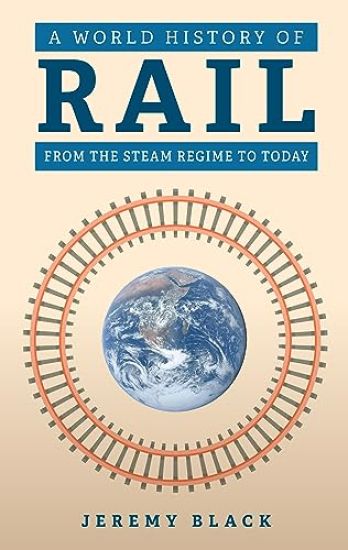
A World History of Rail

A World History of Rail

Jeremy Black

AMBERLEY PUBLISHING
2025
pokkari
There were 20,000 miles of railways in 1865 and about a million by 2020. Scale has always been a key theme in railway history. In the First World War, the London and North West Railway transported 325,000 miles of barbed wire and over twelve million pairs of army boots. At the end of the twentieth century, Indian Railways sold 4.5 billion tickets annually. With his renowned ability to take the long view of any subject and bring it into sharp focus for the reader, Jeremy Black examines how rail transformed the world. While always shaped by commercial interests, the role of the railway was (and is) strategic in the broadest sense: like Roman roads and Chinese canals, it helped develop the economic links that sustained and strengthened the major powers. For example, the railway was fundamental in integrating the frontiers of settlement with the world economy, in the spread of cultivation and ranching, and in the exploitation of mining opportunities. Rail expanded the ‘logistical space’ of most states. To give one modern example of the political importance of rail, Ukraine’s railway is on the 1.52 metre gauge, rather than the 1.435 metre one used in Poland and most of Europe. In 2022, Denys Shmyhal, Ukraine’s Prime Minister, declared that the railways there would be rebuilt to the European gauge. This enhanced capability would counter the Russian ability to blockade Ukraine’s Black Sea ports, notably Odessa. The plan was not endorsed by the Kremlin…
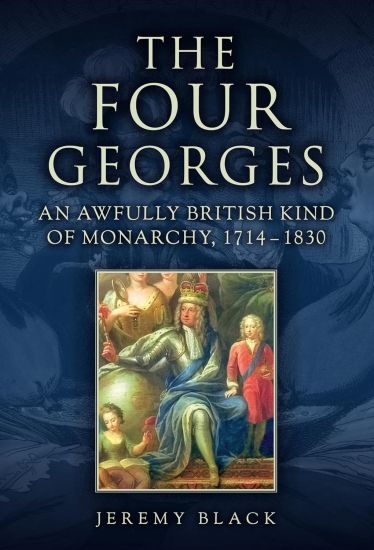
The Four Georges

The Four Georges

Jeremy Black

AMBERLEY PUBLISHING
2025
sidottu
The role of monarchy in the development of the distinctive British political nation is a subject that has commanded much interest with reference to the nineteenth century, but recent consideration of the preceding period has not been so widespread. The monarchies of France, Spain, Sweden, Portugal, Poland, the Holy Roman Empire, and the house of Orange all faced serious crises between 1790 and 1810, and not all of them survived. In contrast, the British monarchy confronted a serious and unsuccessful imperial revolution in 1775-83 but avoided an existential challenge at home. The relationship between this and the role of the monarchy in the British political system requires examination. The bedding down of the Glorious Revolution settlement included the crucial defence against Jacobitism. From then on, a practice of limited government begins to emerge: regular parliaments, frequent elections, and the scrutiny of the press. Adaptations occurred due to the challenges of the American and French revolutions, and the meritocratic ‘monarchies’ of Washington and Napoleon. British monarchy became linked to a more potent imperial nationalism. Wellington, the vanquisher of Napoleon, was never more than a servant of the often-preposterous George IV. How can that be? Crucially, Jeremy Black, with his own inimitable way of extracting the principle from the detail, shows that what materialised was a system that worked.
The English Town

The English Town

Jeremy Black

PEN SWORD BOOKS LTD
2025
sidottu
A wide-ranging history of English towns and cities covering al aspects, political, social, cultural and economic. Towns are vital spheres of national life and 'important forcing houses for modernisation and modernity'. And it is impossible to tell national history without understanding the experience of towns and cities. Each will be covered in all aspects including physical structure, social experience, cultural standing and contribution, and environmental impact. The book will be accessible and 'a good read' for general readers but will also attract attention of academics and students of urban history, historical geography and urban studies. The study will cover towns and cities of the Romans to the Middle Ages, the Tudors and Stuarts, in early modern history 1700-1800, in modern history 1800-1900 and town and cities to 1950 to today, and in future.
Infantry

Infantry

Jeremy Black

PEN SWORD BOOKS LTD
2025
sidottu
‘The infantryman always bears the brunt’ according to Field-Marshal Wavell in 1945. The ‘Poor Bloody Infantry,’ ‘The Grunts on the Ground,’ the infantry have often been seen as the humble, indeed shunned, relations of others, from cavalry to tanks. This book is their story, one from the dawn of human conflict to the present day, a study that looks round the world to consider fighting, weaponry, recruitment, contexts and impact. Infantry as the shock of assault as well as firepower, as the force in state-to-state conflict and in civil warfare, in symmetrical and asymmetrical warfare, are considered, as are the different accounts of development that are offered. Central to the military and to combat, infantry has also served many non-combat roles, notably as the arm of government. Indeed, infantry can be crucial to political history and nation-building, from coups to iconic battles
Paris

Paris

Jeremy Black

THAMES HUDSON LTD
2025
nidottu
A concise history of Paris and the great events and personalities, from prehistory to the present, that have shaped its unique cultural legacy. Paris has long been celebrated as a place of style, wit and sensuality. In this deft and broad-ranging narrative, Jeremy Black demonstrates that the history of Paris is about more than a city: it is the history of a culture, a society and a state that has impacted the rest of the world through centuries of changing fortunes. Black explores how a humble Gallic capital grew into a flourishing medieval city full of spectacular palaces and cathedrals. He depicts the opulent courts of Louis XIV and XV and the Revolution that tore French society apart; the Belle Époque and the destruction of World Wars I and II, leading us on to the Paris of today: one of the most iconic cities in the world.
A History of Britain's Transport

A History of Britain's Transport

Jeremy Black

PEN SWORD BOOKS LTD
2024
sidottu
An accessible book to draw on popular interest in transport history, routes, vehicles and experiences. Transport history is social and industrial national history. Passengers and freight will be covered including all types of transport from walking and packhorses, that predominated for much of national history, both of which tend to be underrated, to changes brought by improvements to road transport from the Romans to medieval bridgebuilders and eighteenth-century turnpikes, and, in parallel, river, coastal and canal travel, again from the Romans to the eighteenth century. The story moves to the age of rail, motoring and lastly air. All forms overlap. as well as being sequential.
A History of the Railroad in 100 Maps

A History of the Railroad in 100 Maps

Jeremy Black

University of Chicago Press
2024
sidottu
The first international history of railroads and railroad infrastructure told through stunningly reproduced maps. Since their origins in eighteenth-century England, railroads have spread across the globe, changing everything in their path, from where and how people grew and made things to where and how they lived and moved. Railroads rewrote not only world geography but also the history of maps and mapping. Today, the needs of train companies and their users continue to shape the maps we consume and consult. Featuring full-color maps primarily from the British Library's distinguished collection--many of them never before published--A History of the Railroad in 100 Maps is the first international history of railroads and railroad infrastructure told through maps. Jeremy Black includes examples from six continents, spanning a variety of uses from railroad planning and operations to guides for passengers, shippers, and tourists. Arranged chronologically, the maps are accompanied by explanatory text that sheds light on the political, military, and urban development histories associated with the spread of railroads. A final chapter considers railroad maps from games, books, and other cultural artifacts. For anyone interested in the history of railroads or maps, A History of the Railroad in 100 Maps will offer new and unexpected insights into their intertwined global history.
English Culture

English Culture

Jeremy Black

AMBERLEY PUBLISHING
2024
sidottu
Culture. What is it? Paintings or television? The National Gallery or Harry Styles? There is of course no one answer, no agreement. But what is clear is that culture, however defined, plays a key role as a form and content of identity, while, in turn, it is affected by changes in the patterns and pressures of identification. In Emma, Jane Austen praised Shakespeare as a touchstone of Englishness and wrote: ‘It was a sweet view – sweet to the eye and the mind. English verdure, English culture, English comfort, seen under a sun bright, without being oppressive.’ Would anyone today write the same words without irony? Professor Black charts the changes in English culture over three centuries. Turnpikes, steam engines, canals, novels, landscape gardens, Adam Smith et al were scarcely indicators of an unchanging world; but Jeremy Black points out that the early period analysed was profoundly historic. The historical bent of the years from the Glorious Revolution to the Great Reform Act could be found in thought, religion, politics, law, society, literature, art, architecture, music, sculpture, and much else, and was true at all levels of society. And history still defines England today, even in its denial or rejection, with the destruction of monuments. History was presented as moving in an inevitable direction, one of steady improvement, a teleological progressivism. Black observes that ‘In the 18th century, the public market for an explicitly English engagement with English culture and history became far stronger, in turn creating models for the future. Even if a shared inheritance, the past was interpreted to emphasise Englishness.’ Then what happened?
Politics and Foreign Policy in the Age of George I, 1714-1727
Through its focus on the relationship between foreign and domestic politics, this book provides a new perspective on the often fractious and tangled events of George I’s reign (1714-27). This was a period of transition for Britain, as royal authority gave way to cabinet government, and as the country began to exercise increased influence upon the world stage. It was a reign that witnessed the trauma of the 1715 Jacobite Rebellion, saw Britain fighting Spain as part of the Quadruple Alliance, and in which Britain confronted the rise of Russia under Peter the Great. There has been relatively little new detailed work on this subject since Hatton’s biography of George I appeared in 1978, and that book, while impressive, devoted relatively little attention to the domestic political dimension of foreign policy. In contrast, Black links diplomacy to domestic politics to show that foreign policy was a key aspect of government as well as the leading battleground both for domestic politics and for ministerial rivalries. As a result he demonstrates how party identities in foreign policy were not marginal, to either policy or party, but, instead, central to both. The research is based upon a wealth of both British and foreign archive material, including State Papers Domestic, Scotland, Ireland and Regencies, as well as Foreign. Extensive use is also made of parliamentary and ministerial papers, as well as the private papers of numerous diplomats. Foreign archives consulted include papers from Hanover, Osnabrück, Darmstadt, Marburg, Munich, Paris, The Hague, Vienna and Turin. By drawing upon such a wide ranging array of sources, this book offers a rich and nuanced view of politics and foreign policy under George I.
British Politics and Foreign Policy, 1744-57

British Politics and Foreign Policy, 1744-57

Jeremy Black

TAYLOR FRANCIS LTD
2024
nidottu
The years between 1744 and 1757 were a testing time for the British government as political unrest at home exploded into armed rebellion, whilst on the continent French armies were repeatedly victorious. Providing an analytical narrative, supported by thematic chapters, this book examines the relationship between Britain’s politics and foreign policy in a period not hitherto treated as a unit. Building upon methods employed in the preceding two books (’Politics and Foreign Policy in the Age of George I, 1714-1727’ and ’Politics and Foreign Policy, 1727-44’), this volume charts the significant political changes of 1744-57. It shows how ministerial change and political fortunes were closely linked to foreign policy, with foreign policy affecting, and being affected by, political developments. In particular, it asks important questions about the politics and foreign policy of these years and thus reconsiders the context of imperial growth, economic development and political stability. Far from being simply a study of individual episodes, the book outlines the structural aspects of the relationship between foreign policy and politics, examining issues of political stability, motivation and effectiveness. In particular, the role of monarch, Court and ministers are considered alongside those of Parliament, parliamentary politics, and the public sphere of discussion, notably, but not only, the press. The book therefore offers a guided narrative that both uses and builds on the analysis offered by contemporary commentators, and provides an informed assessment of the significance of the ideas, terms and language employed in eighteenth-century Britain to discuss foreign policy and politics.