

Kirjailija
Jessica Keyes
Kirjat ja teokset yhdessä paikassa: 26 kirjaa, julkaisuja vuosilta 1998-2026, suosituimpien joukossa The Enterprise PMO Governance Toolkit. Vertaile teosten hintoja ja tarkista saatavuus suomalaisista kirjakaupoista.
26 kirjaa
Kirjojen julkaisuhaarukka 1998-2026.

In an age of globalization, widely distributed systems, and rapidly advancing technological change, IT professionals and their managers must understand that risk is ever present. The key to project success is to identify risk and subsequently deal with it.The CIO’s Guide to Risk addresses the many faces of risk, whether it be in systems development, adoption of bleeding edge tech, the push for innovation, and even the march toward all things social media. Risk management planning, risk identification, qualitative and quantitative risk analysis, contingency planning, and risk monitoring and control are all addressed on a macro as well as micro level.The book begins with a big-picture view of analyzing technology trends to evaluate risk. It shows how to conceptualize trends, analyze their effect on infrastructure, develop metrics to measure success, and assess risk in adapting new technology. The book takes an in-depth look at project-related risks. It explains the fundamentals of project management and how project management relates to systems development and technology implementation. Techniques for analyzing project risk include brainstorming, the Delphi technique, assumption analysis, and decision analysis. Metrics to track and control project risks include the Balance Scorecard, project monitoring and reporting, and business and technology metrics. The book also takes an in-depth look at the role of knowledge management and innovation management in identifying, assessing, and managing risk. The book concludes with an executive’s guide to the legal and privacy issues related to risk management, as well overviews of risks associated with social media and mobile environments. With its checklists, templates, and worksheets, the book is an indispensable reference on risk and information technology.
From operating systems to the cloud, Oracle’s products and services are everywhere, and it has the market share to prove it. Given the share diversity of the Oracle product line, and the level of complexity of integration, management can be quite a daunting task.The CIO's Guide to Oracle Products and Solutions is the go-to guide for all things Oracle. It provides management-level guidance on how to successfully navigate and manage the full range of Oracle products. The book presents management best practices and user/developer lessons learned in the use of Oracle products and services.Supplying both conceptual and technical views, the text focuses on what CIOs need to do to orient, or reorient, their organization toward the use of Oracle products and services. It describes how to develop a strategic framework for the use of these products and services rather than the specific product or service itself. This strategic framework will help you to prepare, educate, keep up with change, mitigate risk, and implement with the confidence needed to succeed.Providing an overview of the suite of Oracle technologies and solutions, the book covers the heart of the Oracle products set, including Oracle analytics, enterprise performance management, Oracle cloud, data management, application development, social business, and fusion. It examines compliance and security issues and includes metrics to help you evaluate potential solutions.The book also provides readers with access to a set of helpful resources on the book’s page at www.crcpress.com, including cloud procurement best practices, cloud migration tips, a sample project procurement plan template, and various glossaries.
Enterprise 2.0 (E 2.0) has caught the collective imagination of executives who are innovating to radically change the face of business. E 2.0 takes full benefit of social networking, including blogs, discussion boards, mashups, and all that is sharable and combinable.Examining organizations and their social activities, Enterprise 2.0: Social Networking Tools to Transform Your Organization considers the complete spectrum of social media and social activities available to your business. It not only offers a hands-on, practical assessment of "what to do," but also "how to do it." Demonstrating how to utilize social networking within diverse functional areas, the book:Describes the functions of social networking in the context of today's enterpriseDetails how to make the best use of blogs, discussion boards, and workspaces in an organizational settingSupplies a complete discussion on how to prepare staff for social enterprisingExplains how to measure and manage social networkingThis book includes discussions of social networking in enterprise activities such as human resources, risk management, operations, and project management. It describes the utility and role of social networking on a department by department basis, explains how to integrate social enterprising with knowledge management, and supplies helpful insights into legal, performance, and measurement issues. Touching on key security and privacy issues, the book clearly illustrates how social networking and E 2.0 can help improve risk management in your organization.
Characterized by lightning quick innovation, abrupt shifts in technology, and shorter lifecycles, the marketing of IT products and services presents a unique set of challenges and often requires IT managers and developers to get involved in the marketing process. Marketing IT Products and Services is written to help busy IT managers and marketing managers get up to speed quickly and easily on what’s needed to develop effective marketing strategies and campaigns. Focusing on the unique issues involved, this one-stop resource provides everything needed to understand the roles, responsibilities, and management techniques essential for the development of successful strategies. It covers strategic market planning, targeting markets, researching markets, understanding the competition, integrating market and sales strategies, nuances of global markets, developing marketing budgets, pricing, and implementing marketing campaigns. A plethora of appendices included on the book’s downloadable resources allow you to get up and running right away. Aside from a complete marketing glossary, two complete marketing plans—one for a hardware product; the other for a software product—enable you to bypass the "scut" work of developing a marketing plan so you can focus on the creative aspects of marketing. Because a marketing plan is closely aligned with an organization’s business and strategic plans, this book provides you with templates for both of these, as well as a template for that all-important business plan executive summary. The downloadable resources also feature loads of fill-in templates including customer and competitor analysis surveys, sample press releases, letters of agreement, demographic and target market worksheets, and cost benefit forms. If you have a marketing need, this book has an effective template to meet that need.
Knowledge Management, Business Intelligence, and Content Management
Jessica Keyes
CRC Press
2019
nidottu
Knowledge management (KM) is the identification and analysis of available and required knowledge, and the subsequent planning and control of actions, to develop "knowledge assets" that enable businesses to generate profits and improve their competitive positions. This volume provides the framework for the strategic use of the information intelligence processes - business intelligence, content management, and knowledge management. In nine detailed chapters, the author explains every facet of these three subjects, enabling you to understand these sophisticated business concepts within the framework of information technology. Knowledge Management, Business Intelligence, and Content Management: The IT Practitioner's Guide discusses creation, protection, development, sharing, and management of information and intellectual assets through the use of business intelligence and other knowledge sharing and analytical techniques. About the Author Jessica Keyes is president of New Art Technologies, Inc., a high-technology and management consultancy, and is also founding partner of Manhattan Technology Group. Often a keynote speaker on the topics of competitive strategy, productivity, and quality, she is a founding board of directors member of the New York Software Industry Association, and has recently completed a 2-year term on the Mayor of New York City's Small Business Advisory Council. A noted columnist and correspondent, Keyes is the author of 19 books, including Auerbach Publications' Software Engineering Handbook, Software Configuration Management, and Implementing the IT Balanced Scorecard.

Before social media. Before smartphones. Before the algorithms. There was the early Internet-chaotic, anonymous, exhilarating, and far more dangerous than anyone imagined. Written in the late 1990s and first published in 2001, Tales of the Internet documents the raw, unfiltered world of the early Web at the exact moment it exploded into public life. Based on firsthand observations and real digital patterns of the time, this book reveals how ordinary people, opportunists, thrill-seekers, and predators behaved when suddenly given new identities, new freedoms, and a new kind of power. Republished in 2019 and updated again in 2025, this edition reframes the original text for today's reader-offering reflections on how much has changed and, more importantly, how much has not. The scams are larger now, the platforms slicker, the risks automated, but the core human behaviors that shaped the early Web still drive the digital world we live in today. Tales of the Internet serves as a time capsule of an online era that has vanished: a world of dial-up modems, message boards, primitive chatrooms, early e-commerce, and thousands of strange little websites where humanity revealed itself in new and unexpected ways. What began as an experiment in connection evolved into a mirror-reflecting our desires, our deceptions, our vulnerabilities, and our inventions. Whether you lived through the early Internet or came of age long after it disappeared, this book offers a fascinating-and sometimes unsettling-look at the foundations of modern online culture. It shows how the Web didn't change who we are. It simply exposed it.
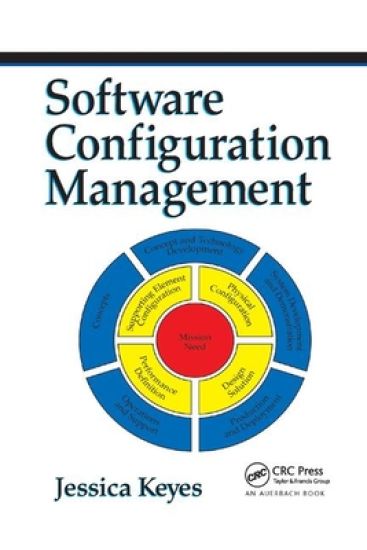
An effective systems development and design process is far easier to explain than it is to implement. A framework is needed that organizes the life cycle activities that form the process. This framework is Configuration Management (CM). Software Configuration Management discusses the framework from a standards viewpoint, using the original DoD MIL-STD-973 and EIA-649 standards to describe the elements of configuration management within a software engineering perspective. Divided into two parts, the first section is composed of 14 chapters that explain every facet of configuration management related to software engineering. The second section consists of 25 appendices that contain many valuable real world CM templates. The content is extensive and inclusive, covering everything from CM planning to configuration identification, verification, and auditing. Although it is vendor-neutral, it offers a serious discussion of what to look for in a CM tool and lists toolsets for review. This volume is a sourcebook of techniques, templates, and best practices in the field, providing software engineers and systems developers with what they need to run a successful CM program.

Business managers have long known the power of the Balanced Scorecard in executing corporate strategy. Implementing the Project Management Balanced Scorecard shows project managers how they too can use this framework to meet strategic objectives. It supplies valuable insight into the project management process as a whole and provides detailed explanations on how to effectively implement the balanced scorecard to measure and manage performance and projects. The book details a tactical approach for implementing the scorecard approach at the project level and investigates numerous sample scorecards, metrics, and techniques. It examines recent research on critical issues such as performance measurement and management, continuous process improvement, benchmarking, metrics selection, and people management. It also explains how to integrate these issues with the four perspectives of the balanced scorecard: customer, business processes, learning and innovation, and financial. Filled with examples and case histories, the book directly relates the scorecard concept to the major project management steps of determining scope, scheduling, estimation, risk management, procurement, and project termination. It includes a plethora of resources on the accompanying downloadable resources—including detailed instructions for developing a measurement program, a full metrics guide, a sample project plan, and a set of project management fill-in forms.
Although the precepts of software engineering have been around for decades, the field has failed to keep pace with rapid advancements in computer hardware and software. Modern systems that integrate multiple platforms and architectures, along with the collaborative nature of users who expect an instantaneous global reach via the Internet, require updated software engineering methods. Social Software Engineering: Development and Collaboration with Social Networking examines the field through the spectrum of the social activities that now compose it. Supplying an up-to-date look at this ever-evolving field, it provides comprehensive coverage that includes security, legal, and privacy issues in addition to workflow and people issues. Jessica Keyes, former managing director of R&D for the New York Stock Exchange and noted columnist, correspondent, and author with more than 200 articles published, details the methodology needed to bring mission-critical software projects to successful conclusions. She provides readers with the understanding and tools required to fuse psychology, sociology, mathematics, and the principles of knowledge engineering to develop infrastructures capable of supporting the collaborative applications that today’s users require.

With 70 percent of organizations already adopting bring your own device (BYOD) and Gartner expecting this number to increase to 90 percent by the end of 2014, it is not a question of if, or when, it’s a question of will you be ready.BYOD for Healthcare provides authoritative guidance to help you thrive during the healthcare BYOD (hBYOD) revolution. Jessica Keyes, president of New Art Technologies, Inc., professor at the University of Liverpool, and former managing director of R&D for the New York Stock Exchange, supplies an understanding of these new end users, their demands, and the strategic and tactical ramifications of these demands. Maintaining a focus on the healthcare industry, the book considers the broad range of technical considerations, including selection, connectivity, training, support, and security. It examines the integration of BYOD to current health IT, legal, regulatory, and ethical issues. It also covers risk assessment and mitigation strategies for an hBYOD environment that are in line with medical laws, regulations, ethics, and the HIPAA and HITECH Acts.The text discusses BYOD security and provides time-saving guidance on how to configure your hBYOD environment. It also considers how BYOD impacts resource management, certification of EMR/EHR software, health informatics, and health information exchange.The book covers content and data management, risk assessment, and performance measurement and management. It includes a set of Quick Start guides with tips for assessing costs, cloud integration, and legal issues. It also contains a robust appendix with information on everything from security settings for Apple iOS devices to a sample employee mobile device agreement.

This desk reference for IT professionals in the insurance industry provides information about the latest technologies to improve efficiency and prediction.Topics include:imaging modeling management systems customer systems Internet commerce Issues affecting all financial service sectors, such as the year 2000 problemThe Insurance Technology Handbook is geared toward all levels of technology management and financial services management responsible for developing and implementing cutting-edge technology.

In an age of globalization, widely distributed systems, and rapidly advancing technological change, IT professionals and their managers must understand that risk is ever present. The key to project success is to identify risk and subsequently deal with it.The CIO’s Guide to Risk addresses the many faces of risk, whether it be in systems development, adoption of bleeding edge tech, the push for innovation, and even the march toward all things social media. Risk management planning, risk identification, qualitative and quantitative risk analysis, contingency planning, and risk monitoring and control are all addressed on a macro as well as micro level.The book begins with a big-picture view of analyzing technology trends to evaluate risk. It shows how to conceptualize trends, analyze their effect on infrastructure, develop metrics to measure success, and assess risk in adapting new technology. The book takes an in-depth look at project-related risks. It explains the fundamentals of project management and how project management relates to systems development and technology implementation. Techniques for analyzing project risk include brainstorming, the Delphi technique, assumption analysis, and decision analysis. Metrics to track and control project risks include the Balance Scorecard, project monitoring and reporting, and business and technology metrics. The book also takes an in-depth look at the role of knowledge management and innovation management in identifying, assessing, and managing risk. The book concludes with an executive’s guide to the legal and privacy issues related to risk management, as well overviews of risks associated with social media and mobile environments. With its checklists, templates, and worksheets, the book is an indispensable reference on risk and information technology.
Managing IT Performance to Create Business Value provides examples, case histories, and current research for critical business issues such as performance measurement and management, continuous process improvement, knowledge management, risk management, benchmarking, metrics selection, and people management. It gives IT executives strategies for improving IT performance and delivering value, plus it guides them in selecting the right metrics for their IT organizations. Additionally, it offers knowledge management strategies to mature an organization, shows how to manage risks to exploit opportunities and prepare for threats, and explains how to baseline an IT organization’s performance and measure its improvement.Consisting of 10 chapters plus appendices, the book begins with an overview of performance-based strategic planning, after which it discusses the development of a quality improvement (QI) plan, establishing benchmarks, and measuring performance improvements. It covers how to design IT-specific measures and financial metrics as well as the establishment of a software measurement program. From there, it moves on to designing people improvement systems and discusses such topics as leadership, motivation, recruitment, and employee appraisal.The final few chapters show how to use balanced scorecards to manage and measure knowledge-based social enterprising and to identify, analyze, and avoid risks. In addition to covering new methods and metrics for measuring and improving IT processes, the author looks at strategies for measuring product development and implementing continuous innovation. The final chapter considers customer value systems and explains how to use force field analysis to listen to customers with the goal of improving customer satisfaction and operational excellence.
The CIO's Guide to Oracle Products and Solutions
Jessica Keyes
Apple Academic Press Inc.
2014
sidottu
From operating systems to the cloud, Oracle’s products and services are everywhere, and it has the market share to prove it. Given the share diversity of the Oracle product line, and the level of complexity of integration, management can be quite a daunting task.The CIO's Guide to Oracle Products and Solutions is the go-to guide for all things Oracle. It provides management-level guidance on how to successfully navigate and manage the full range of Oracle products. The book presents management best practices and user/developer lessons learned in the use of Oracle products and services.Supplying both conceptual and technical views, the text focuses on what CIOs need to do to orient, or reorient, their organization toward the use of Oracle products and services. It describes how to develop a strategic framework for the use of these products and services rather than the specific product or service itself. This strategic framework will help you to prepare, educate, keep up with change, mitigate risk, and implement with the confidence needed to succeed.Providing an overview of the suite of Oracle technologies and solutions, the book covers the heart of the Oracle products set, including Oracle analytics, enterprise performance management, Oracle cloud, data management, application development, social business, and fusion. It examines compliance and security issues and includes metrics to help you evaluate potential solutions.The book also provides readers with access to a set of helpful resources on the book’s page at www.crcpress.com, including cloud procurement best practices, cloud migration tips, a sample project procurement plan template, and various glossaries.

With 70 percent of organizations already adopting bring your own device (BYOD) and Gartner expecting this number to increase to 90 percent by the end of 2014, it is not a question of if, or when, it’s a question of will you be ready.BYOD for Healthcare provides authoritative guidance to help you thrive during the healthcare BYOD (hBYOD) revolution. Jessica Keyes, president of New Art Technologies, Inc., professor at the University of Liverpool, and former managing director of R&D for the New York Stock Exchange, supplies an understanding of these new end users, their demands, and the strategic and tactical ramifications of these demands. Maintaining a focus on the healthcare industry, the book considers the broad range of technical considerations, including selection, connectivity, training, support, and security. It examines the integration of BYOD to current health IT, legal, regulatory, and ethical issues. It also covers risk assessment and mitigation strategies for an hBYOD environment that are in line with medical laws, regulations, ethics, and the HIPAA and HITECH Acts.The text discusses BYOD security and provides time-saving guidance on how to configure your hBYOD environment. It also considers how BYOD impacts resource management, certification of EMR/EHR software, health informatics, and health information exchange.The book covers content and data management, risk assessment, and performance measurement and management. It includes a set of Quick Start guides with tips for assessing costs, cloud integration, and legal issues. It also contains a robust appendix with information on everything from security settings for Apple iOS devices to a sample employee mobile device agreement.

Where end-users once queued up to ask the IT department for permission to buy a new computer or a new version of software, they are now bypassing IT altogether and buying it on their own. From laptops and smartphones to iPads and virtually unlimited software apps, end-users have tasted their freedom and love it. IT will simply never be the same.Bring Your Own Devices (BYOD) Survival Guide explains the psycho-techno phenomenon also known as bring your own technology (BYOT). Providing the guidance necessary for living in this new world, it describes the new end-users (Millennials) and their demands, as well as the strategic and tactical ramifications of these demands.Examining the business aspects of BYOD—selection, purchasing, and corporate culture—the book covers the broad range of technical considerations including selection, connectivity, training, support, and security. It also includes an extensive set of best practices.The book is geared for the small- to medium-size enterprise that needs to integrate BYOD into their environment. It addresses topics such as content and data management, risk assessment, performance measurement, management, and even configuration management.The text includes a set of Quick Start guides that provide tips for such things as assessing costs, cloud integration, and even legal issues. There is also a full set of appendices that supply helpful information on everything from security settings for Apple iOS devices to a sample employee mobile device agreement.
Enterprise 2.0 (E 2.0) has caught the collective imagination of executives who are innovating to radically change the face of business. E 2.0 takes full benefit of social networking, including blogs, discussion boards, mashups, and all that is sharable and combinable.Examining organizations and their social activities, Enterprise 2.0: Social Networking Tools to Transform Your Organization considers the complete spectrum of social media and social activities available to your business. It not only offers a hands-on, practical assessment of "what to do," but also "how to do it." Demonstrating how to utilize social networking within diverse functional areas, the book:Describes the functions of social networking in the context of today's enterpriseDetails how to make the best use of blogs, discussion boards, and workspaces in an organizational settingSupplies a complete discussion on how to prepare staff for social enterprisingExplains how to measure and manage social networkingThis book includes discussions of social networking in enterprise activities such as human resources, risk management, operations, and project management. It describes the utility and role of social networking on a department by department basis, explains how to integrate social enterprising with knowledge management, and supplies helpful insights into legal, performance, and measurement issues. Touching on key security and privacy issues, the book clearly illustrates how social networking and E 2.0 can help improve risk management in your organization.
Although the precepts of software engineering have been around for decades, the field has failed to keep pace with rapid advancements in computer hardware and software. Modern systems that integrate multiple platforms and architectures, along with the collaborative nature of users who expect an instantaneous global reach via the Internet, require updated software engineering methods. Social Software Engineering: Development and Collaboration with Social Networking examines the field through the spectrum of the social activities that now compose it. Supplying an up-to-date look at this ever-evolving field, it provides comprehensive coverage that includes security, legal, and privacy issues in addition to workflow and people issues. Jessica Keyes, former managing director of R&D for the New York Stock Exchange and noted columnist, correspondent, and author with more than 200 articles published, details the methodology needed to bring mission-critical software projects to successful conclusions. She provides readers with the understanding and tools required to fuse psychology, sociology, mathematics, and the principles of knowledge engineering to develop infrastructures capable of supporting the collaborative applications that today’s users require.

Business managers have long known the power of the Balanced Scorecard in executing corporate strategy. Implementing the Project Management Balanced Scorecard shows project managers how they too can use this framework to meet strategic objectives. It supplies valuable insight into the project management process as a whole and provides detailed explanations on how to effectively implement the balanced scorecard to measure and manage performance and projects. The book details a tactical approach for implementing the scorecard approach at the project level and investigates numerous sample scorecards, metrics, and techniques. It examines recent research on critical issues such as performance measurement and management, continuous process improvement, benchmarking, metrics selection, and people management. It also explains how to integrate these issues with the four perspectives of the balanced scorecard: customer, business processes, learning and innovation, and financial. Filled with examples and case histories, the book directly relates the scorecard concept to the major project management steps of determining scope, scheduling, estimation, risk management, procurement, and project termination. It includes a plethora of resources on the accompanying downloadable resources—including detailed instructions for developing a measurement program, a full metrics guide, a sample project plan, and a set of project management fill-in forms.