
Kirjailija
Jimmy Carter
Kirjat ja teokset yhdessä paikassa: 53 kirjaa, julkaisuja vuosilta 1991-2025, suosituimpien joukossa Kenny. Vertaile teosten hintoja ja tarkista saatavuus suomalaisista kirjakaupoista.
53 kirjaa
Kirjojen julkaisuhaarukka 1991-2025.



In Through the Year with Jimmy Carter, the thirty-ninth President of the United States takes you on a unique journey into the heart of the Christian faith. Based on more than three decades of practical Bible teaching, these readings draw from the riches of God's Word and the compelling experiences of Mr. Carter's own life. Whether through fascinating glimpses into behind-the-scenes activity at the White House, or insightful remembrances of his career in the U.S. Navy, Mr. Carter never ceases to connect the wisdom of Scripture with your own crucial place on the stage of life. Frank, honest, sometimes funny, sometimes heartbreaking, and always relevant, Through the Year with Jimmy Carter challenges readers to be more Christ-like every day of their lives.

A Certain Kind of Life
Jimmy Carter; Abigail Chang; Francesco Marullo; Agata Siemionow
Actar Publishers
2025
pokkari
A Certain Kind of Life examines how we dwell and live together, delving into the relationships between architecture and asceticism, domesticity and estrangement, rules and transgressions, solitary rituals and collective forms within both historical and contemporary societies. This book derives an approach to individual and collective living from monastic architecture. Alongside research and documentation of a large-scale pavilion and exhibition featured at the 2019 Lisbon Architecture Triennale, the book builds on drawings, texts, and images from scholars and architects who contemplate questions surrounding solitude, retreat, and quietness. The narrative considers how architecture can distill our everyday social encounters into a building language through different mediums. The ideas of community present in the monastic architecture typology offer a lens to reflect on the solitary living that we recently collectively experienced. From these various perspectives, A Certain Kind of Life examines how we have historically lived together, alone while continuing to share, adapt and build under unpredictable conditions that bind us globally. With Contributions of Penelope Dean, Walter Benn Michaels, Mauricio Pezo & Sofia von Ellrichshausen, Robert Somol, Tuomas Toivonen, with photographs by Ibai Rigby.

In diesem Buch teilt Jimmy Carter uns seine intimen Kenntnisse der Geschichte des Nahost-Konflikts und seine pers nlichen Erfahrungen mit den Politikern der Region. Behutsam und mit u erster Sensibilit t macht Carter Vorschl ge wie beide V lker in zwei Staaten leben k nnten ohne das ungerechte System der Apartheid oder Angst vor Terrorismus. Es ist an der Zeit, dass die Welt das einsieht und Regierungen ihren Einfluss in dieser Richtung geltend machen. Pal stina - Frieden nicht Apartheid ist ein provokatives und mutiges Buch, das uns zum Handeln auffordert.

From his childhood in New Orleans to Howard University as a boy of fifteen, from his work as a young pastor in Alabama to his leadership role in the SCLC, from serving as the first Black congressman from Georgia since Reconstruction to serving as the Ambassador to the United Nations, from two transformational terms as mayor of Atlanta to co-chairmanship of the 1996 Summer Olympics Games, from co-founding Good Works International to promoting human rights across the globe with the Andrew Young Foundation, The Many Lives of Andrew Young tells the inspiring, dramatic story of civil rights hero, congressman, ambassador, mayor, and American icon Andrew Young. Featuring hundreds of full-color photographs that capture the extraordinary life and times of Andrew Young and a captivating narrative by acclaimed Atlanta Journal-Constitution race reporter Ernie Suggs, filled with personal accounts from Andrew Young himself, The Many Lives of Andrew Young is both a tribute to and an essential chronicle of the life of a man whose activism and service changed the face of America and whose work continues to reverberate around the world today.
And the Coastlands Wait
Reid W. Harris; Jimmy Carter; Charles H. McMillan
University of Georgia Press
2020
pokkari
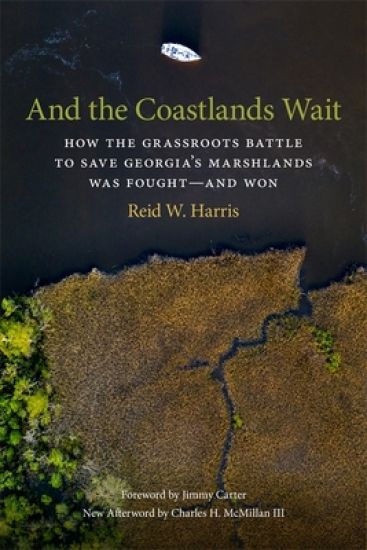
A broad-based coalition of conservative southern politicians, countercultural activists, environmental scientists, sportsmen, devout Christians, garden clubs in Atlanta, and others came together to push the Coastal Marshlands Protection Act of 1970 through the Georgia state legislature. The law was a first-in-the-nation bill to save the marshes of a state from mining and aggressive development and was a political watershed that reflected the changing nature of the state. It set a foundation that would lead to the thoughtful use of the state’s coastal resources still relevant today.And the Coastlands Wait is the history of this legislative act, as told by St. Simons lawyer and leader of the coalition, Reid Harris. Harris served as head of the environmental section of Governor Jimmy Carter’s Goals for Georgia program and later as chairman of the governor’s State Environmental Council. The coastlands coalition he led backed a groundbreaking act that, when instated, set up a permitting process to control development and to protect five hundred thousand acres of precious Georgia marshland. That coalition did not survive for long and is now seen as an unusual moment in the history of conservation, when allies as deeply diverse as conservative governor Lester Maddox and Atlanta liberals stood together.
In this powerful and personal New York Times bestseller, President Jimmy Carter contemplates how faith has sustained him in happiness and disappointment and considers how we may find it in our own lives. All his life, President Jimmy Carter has been a courageous exemplar of faith. Now he shares the lessons he learned. He writes, "The issue of faith arises in almost every area of human existence, so it is important to understand its multiple meanings. In this book, my primary goal is to explore the broader meaning of faith, its far-reaching effect on our lives, and its relationship to past, present, and future events in America and around the world. The religious aspects of faith are also covered, since this is how the word is most often used, and I have included a description of the ways my faith has guided and sustained me, as well as how it has challenged and driven me to seek a closer and better relationship with people and with God." Quoting eminent Protestant theologians, in Faith President Carter describes his belief in religious freedom, moral politics, and the place of prayer in his daily life. He examines faith's many meanings, he describes how to accept it, live it, how to doubt and find faith again. This is a serious and moving reflection from one of America's most admired and respected citizens.

The Task Force for Child Survival
William H. Foege; Jimmy Carter
Johns Hopkins University Press
2018
pokkari
How did coalition-building give rise to the incredible achievements of the Task Force for Childhood Survival?Dr. Bill Foege, one of the best-known names in global health, brings readers to the table during the creation of one of the world’s most famous and successful global health efforts—the Task Force for Child Survival.In 1984, the US immunization program was so successful that many childhood diseases were at record lows—yet 40,000 children a day were dying around the world from preventable diseases. That year, Dr. Foege, former director of the Centers for Disease Control and Prevention, came together with Jonas Salk, Robert McNamara, and representatives from UNICEF, the World Health Organization, the World Bank, the United Nations Development Programme, and the Rockefeller Foundation to see how some of the lessons learned in America could be applied to global programs. The assembled participants recommended the formation of a small task force to help UN agencies improve immunization coverage. They dubbed it the Task Force for Child Survival and installed Foege as its first leader.In this book, Dr. Foege describes the task force from its conception through its landmark success. Over its first six years, as more resources were allocated to the task force, immunization coverage climbed from approximately 15 percent of the world’s children for some vaccines to 80 percent of the world’s children for at least one vaccine. UNICEF head Jim Grant called it the greatest peacetime endeavor the world had ever seen. How did this small, independent, low-profile group leverage change in the largest of global health agencies? Foege dissects each element for clues as to why the task force was able to accomplish so much so quickly, ultimately concluding that coalition-building played a major role and explaining how to strengthen coalitions by scrupulously avoiding the turf guarding and credit seeking that are so common to international endeavors.Inspiring and accessible, this brief book combines the distilled advice of one of global health's major leaders with the history of an iconic public health program.
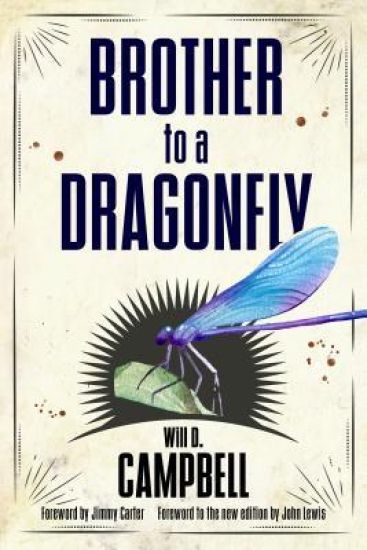
Brother to a Dragonfly
Will D. Campbell; Jimmy Carter; John Lewis
University Press of Mississippi
2018
nidottu
In Brother to a Dragonfly, Will D. Campbell writes about his life growing up poor in Amite County, Mississippi, during the 1930s alongside his older brother, Joe. Though they grew up in a close-knit family and cared for each other, the two went on to lead very different lives. After serving together in World War II, Will became a highly educated Baptist minister who later became a major figure in the early years of the civil rights movement, and Joe became a pharmacist who developed a substance abuse problem that ultimately took his life.Brother to a Dragonfly also serves as a historical record. Though Will's love and dedication to his brother are the primary story, interwoven throughout the narrative is the story of the Jim Crow South and the civil rights movement. Will is present through many of the most pivotal moments in history--he was one of four people who escorted black students integrating the Little Rock public schools; he was the only white person present at the founding of the SCLC; he helped CORE and SNCC Freedom Riders integrate interstate bus travel; he joined Dr. Martin Luther King Jr.'s campaign of boycotts, sit-ins, and marches in Birmingham; and he was at the Lorraine Motel the night Dr. King was assassinated.Will's accomplishments, however, never take the spotlight from his brother, and as his relationship with Joe evolves, so does Will's faith. Featuring a new foreword by Congressman John Lewis, this book brings back to print the combined lives of Will Campbell--Will the brother and Will the preacher.

Editor Anthony Dunbar has assembled essays from 12 leading Southern historians, activists, civil rights attorneys, law professors, and theologians to discuss militarism, religion, the environment, voting rights, the Patriot Act, the economy, prisons and crime, and other subjects. The writers share the beliefs that the current policies of our national administration sacrifice the interests of the poor and the people who work for a living to the interests of a privileged elite, that the power of money and the military must be tethered, that the natural environment must be sheltered, and that racial justice matters. A common sentiment is dismay at the deepening chasm that now divides America—and specifically the South—into hostile armies whose leaders are fast losing whatever motivation they ever had to pursue compromise and cooperation, and the common good. The essayists are Leslie Dunbar, Paul Gaston, John Egerton, Janisse Ray, Dan Pollitt, Connie Curry, Laughlin McDonald, Sheldon Hackney, Susan Wiltshire, Gene Nichol, Dan Carter, and Charles Bussey.

When Hamilton Jordan died of peritoneal mesothelioma in 2008, he left behind amostly finished memoir, a book on which he had been working for the last decade. Jordan’s daughter, Kathleen—with the help of her brothers and mother—took up the task of editing and completing the book. A Boy from Georgia—the result of this posthumous father-daughter collaboration—chronicles Hamilton Jordan’s childhood in Albany, Georgia, charting his moral and intellectual development as he gradually discovers the complicated legacies of racism, religious intolerance, and southern politics, and affords his readers an intimate view of the state’s wheelers and dealers.Jordan’s middle-class childhood was bucolic in some ways and traumatizing in others. As Georgia politicians battled civil rights leaders, a young Hamilton straddled the uncomfortable line between the southern establishment to which he belonged and the movement in which he believed. Fortunate enough to grow up in a family that had considerable political clout within Georgia, Jordan went into politics to put his ideals to work. Eventually he became a key aide to Jimmy Carter and was the architect of Carter’s stunning victory in the presidential campaign of 1976; Jordan later served as Carter’s chief of staff. Clear eyed about the triumphs and tragedies of Jordan’s beloved home state and region, A Boy from Georgia tells the story of a remarkable life in a voice that is witty, vivid, and honest.
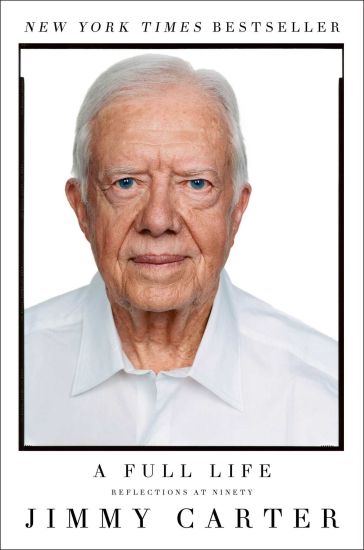
In his major New York Times bestseller, Jimmy Carter looks back from ninety years of age and “reveals private thoughts and recollections over a fascinating career as businessman, politician, evangelist, and humanitarian” (Booklist).At ninety, Jimmy Carter reflects on his public and private life with a frankness that is disarming. He adds detail and emotion about his youth in rural Georgia that he described in his magnificent An Hour Before Daylight. He writes about racism and the isolation of the Carters. He describes the brutality of the hazing regimen at Annapolis, and how he nearly lost his life twice serving on submarines and his amazing interview with Admiral Rickover. He describes the profound influence his mother had on him, and how he admired his father even though he didn’t emulate him. He admits that he decided to quit the Navy and later enter politics without consulting his wife, Rosalynn, and how appalled he is in retrospect. In his “warm and detailed memoir” (Los Angeles Times), Carter tells what he is proud of and what he might do differently. He discusses his regret at losing his re-election, but how he and Rosalynn pushed on and made a new life and second and third rewarding careers. He is frank about the presidents who have succeeded him, world leaders, and his passions for the causes he cares most about, particularly the condition of women and the deprived people of the developing world. “Always warm and human…even inspirational” (Buffalo News), A Full Life is a wise and moving look back from this remarkable man. Jimmy Carter has lived one of our great American lives—from rural obscurity to world fame, universal respect, and contentment. A Full Life is an extraordinary read from a “force to be reckoned with” (Christian Science Monitor).
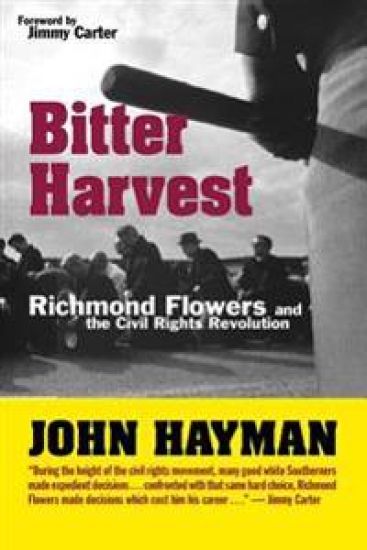
Bitter Harvest traces the development of Richmond Flowers, a color politician who began his career as a segregationist but who, as Attorney General of Alabama, fought bitterly against Governor George Wallace in trying to support the Constitution. In the process, he sacrificed his political career.Flowers was elected Attorney General in 1962. A likable storyteller who had served in the state senate, Flowers came into office promising like the rest to send the Yankees a message. He did not seem the stuff of which heroes (or martyrs) are made. But faced with the choice of upholding the law or of taking the popular course, he chose to uphold the law. Events thereafter made him a central figure in the most violent years of the civil rights revolution.The book sets this story against the background of the Southern war against civil rights, a savage contest motivated by hatred and fear. It advances the thesis that during this period, Alabama suffered a fundamental failure in leadership which determined the state's response to the demand for social change. Alabama's leaders encourage lawlessness with their statements and actions. They took the state down a self-destructive course which has had lasting and damaging consequences.
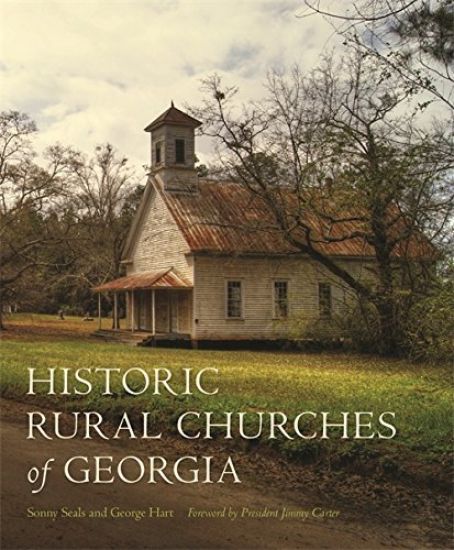
Historic Rural Churches of Georgia
Sonny Seals; George S. Hart; Jimmy Carter
University of Georgia Press
2016
sidottu
Aspects of Georgia’s unique history can only be told through its extant rural churches. As the Georgia backcountry rapidly expanded in the late eighteenth and early nineteenth centuries, the churches erected on this newly parceled land became the center of community life. These early structures ranged from primitive outbuildings to those with more elaborate designs and were constructed with local, hand-hewn materials to serve the residents who lived nearby. From these rural communities sprang the villages, towns, counties, and cities that informed the way Georgia was organized and governed and that continue to influence the way we live today.Historic Rural Churches of Georgia presents forty-seven early houses of worship from all areas of the state. Nearly three hundred stunning color photographs capture the simple elegance of these sanctuaries and their surrounding grounds and cemeteries. Of the historic churches that have survived, many are now in various states of distress and neglect and require restoration to ensure that they will continue to stand. This book is a project of the Historic Rural Churches of Georgia organization, whose mission is the preservation of historic rural churches across the state and the documentation of their history since their founding. If proper care is taken, these endangered and important landmarks can continue to represent the state’s earliest examples of rural sacred architecture and the communities and traditions they housed.

Zbigniew Brzezinski's multifaceted career dealing with U.S. security and foreign policy has led him from the halls of academia to multiple terms in public service, including a stint as President Jimmy Carter's National Security Advisor from 1977 to 1981. He is a renowned policy analyst and author who frequently appears as a commentator on popular talk shows, and his strategic vision continues to carry a great deal of gravitas. in Zbig, Charles Gati has enlisted many of the top foreign policy players of the past thirty years to reflect on and analyze Brzezinski and his work. A senior scholar in Eastern European and Russian studies, Gati observed firsthand much of the history and politics surrounding Brzezinski's career. His vibrant introduction and concluding interview with Brzezinski frame this critical assessment of a major statesman's accomplishments. Contributors: Justin Vaisse, David C. Engerman, Mark Kramer, David J. Rothkopf, Warren I. Cohen and Nancy Bernkopf Tucker, Robert A. Pastor, William B. Quandt, Robert Hunter, James Thomson, Patrick Vaughan, Marin Strmecki, James Mann, David Ignatius, Adam Garfinkle, Stephen F. Szabo, Francis Fukuyama, Charles Gati

In the highly acclaimed bestselling A Call to Action, President Jimmy Carter addresses the world's most serious, pervasive, and ignored violation of basic human rights: the ongoing discrimination and violence against women and girls. President Carter was encouraged to write this book by a wide coalition of leaders of all faiths. His urgent report covers a system of discrimination that extends to every nation. Women are deprived of equal opportunity in wealthier nations and "owned" by men in others, forced to suffer servitude, child marriage, and genital cutting. The most vulnerable and their children are trapped in war and violence. A Call to Action addresses the suffering inflicted upon women by a false interpretation of carefully selected religious texts and a growing tolerance of violence and warfare. Key verses are often omitted or quoted out of context by male religious leaders to exalt the status of men and exclude women. And in nations that accept or even glorify violence, this perceived inequality becomes the basis for abuse. Carter draws upon his own experiences and the testimony of courageous women from all regions and all major religions to demonstrate that women around the world, more than half of all human beings, are being denied equal rights. This is an informed and passionate charge about a devastating effect on economic prosperity and unconscionable human suffering. It affects us all.

“Once upon a time there was a little boy named Jeremy who lived with his mother in a small house near the sea. His mother earned a bare living for the two of them by washing clothes for some of the wealthy families in their town. Jeremy loved her very much.”So begins the enchanting fairy tale president Jimmy Carter first spun for his daughter Amy as a child. Originally published in 1995, this favorite family story has been joined with Amy Carter’s vibrant illustrations to bring to life a secret friendship that produces unexpected rewards when tragedy looms in a young boy’s life.