Kirjojen hintavertailu. Mukana 12 171 488 kirjaa ja 12 kauppaa.

Kirjailija

Joel Spring

Kirjat ja teokset yhdessä paikassa: 54 kirjaa, julkaisuja vuosilta 1996-2026, suosituimpien joukossa The American School. Vertaile teosten hintoja ja tarkista saatavuus suomalaisista kirjakaupoista.

54 kirjaa

Kirjojen julkaisuhaarukka 1996-2026.

American Education

American Education

Joel Spring

Routledge
2015
nidottu
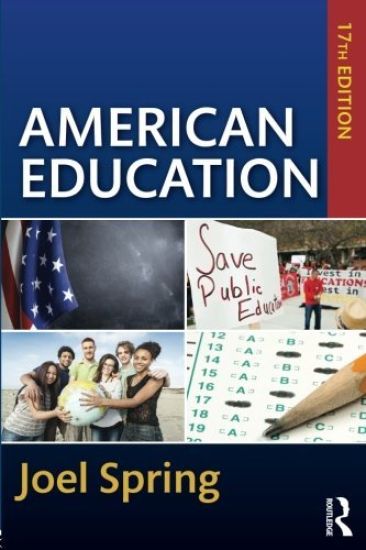
Joel Spring’s American Education introduces readers to the historical, political, social, and legal foundations of education and to the profession of teaching in the United States. In his signature straightforward and concise approach to describing complex issues, Spring illuminates events and topics and that are often overlooked or whitewashed, giving students the opportunity to engage in critical thinking about education. In this edition he looks closely at the global context of education in the U.S. Featuring current information and challenging perspectives—with scholarship that is often cited as a primary source, students will come away from this clear, authoritative text informed on the latest topics, issues, and data and with a strong knowledge of the forces shaping of the American educational system. Changes in the 17th Edition include new and updated material and statistics on economic theories related to "skills" education and employability the conflict between a skills approach and cultural diversity political differences regarding education among the Republican, Democratic, Libertarian and Green parties social mobility and equality of opportunity as related to schooling global migration and student diversity in US schools charter schools and home schooling

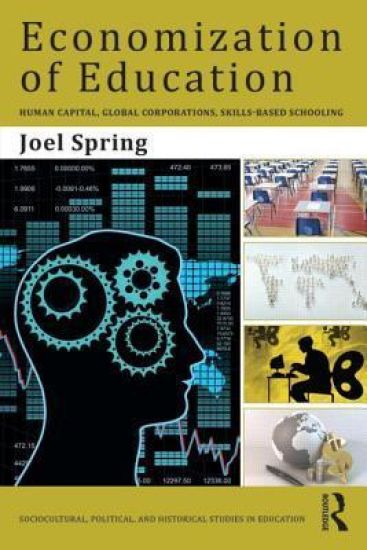
Economization of Education

Economization of Education

Joel Spring

Routledge
2015
sidottu
In this timely, cogent analysis of trends and powerful forces shaping global educational policy today, Joel Spring focuses on how economization is making economic growth and increased productivity the main goals of schools, and the ways these goals are achieved—including measuring educational policies by their costs and economic benefits, shaping family life to ensure productive workers and high-achieving students, introducing entrepreneurship education into curricula from preschool through higher education, and increasing the involvement of economists in educational policy analysis. Close attention is given to the Organization for Economic Cooperation and Development (OECD), the World Bank, the World Economic Forum, and multinational corporations, which, as advocates of economization, want schools to focus on teaching hard and soft skills needed by the global labor market.Economization raises questions about the effects of economically driven agendas for schools: Will education policies advocated by global organizations and multinational businesses corporatize and standardize human personalities and families? What type of global worker is being sought by global organizations and multinational corporations? What education programs are supported to educate the ideal global worker? What is the ideal family life for economic growth and development? Detailing and analyzing the politics and motivations driving economization, the book concludes with an assessment of the impacts of the confluence of business interests, economic theories, governments, and educators.
Economization of Education

Economization of Education

Joel Spring

Routledge
2015
nidottu
In this timely, cogent analysis of trends and powerful forces shaping global educational policy today, Joel Spring focuses on how economization is making economic growth and increased productivity the main goals of schools, and the ways these goals are achieved—including measuring educational policies by their costs and economic benefits, shaping family life to ensure productive workers and high-achieving students, introducing entrepreneurship education into curricula from preschool through higher education, and increasing the involvement of economists in educational policy analysis. Close attention is given to the Organization for Economic Cooperation and Development (OECD), the World Bank, the World Economic Forum, and multinational corporations, which, as advocates of economization, want schools to focus on teaching hard and soft skills needed by the global labor market.Economization raises questions about the effects of economically driven agendas for schools: Will education policies advocated by global organizations and multinational businesses corporatize and standardize human personalities and families? What type of global worker is being sought by global organizations and multinational corporations? What education programs are supported to educate the ideal global worker? What is the ideal family life for economic growth and development? Detailing and analyzing the politics and motivations driving economization, the book concludes with an assessment of the impacts of the confluence of business interests, economic theories, governments, and educators.
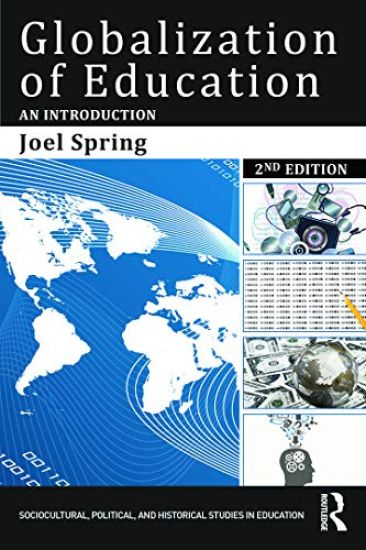
Globalization of Education

Globalization of Education

Joel Spring

Routledge
2014
nidottu
Continuing Joel Spring’s reportage and analysis of the intersection of global forces and education, this text offers a comprehensive overview and synthesis of current research, theories, and models related to the topic. Written in his signature clear, narrative style, Spring introduces the processes, institutions, and forces by which schooling has been globalized and examines the impact of these forces on schooling in local contexts. Significant conceptual frameworks are added to this Second Edition, specifically the “economization of education,” “corporatization of education” and the “audit state.” These concepts are embedded in the global educational plans of major organizations such as the World Bank, the Organization for Economic Development and Cooperation (OECD), World Economic Forum, and multinational corporations. Globalization of Education, Second Edition features new and updated information on • The World Bank• OECD and the United Nations• The World Trade Organization and the Global Culture of Higher Education• Corporatization of Global Education• Religious and Indigenous Education Models• The Global Workforce: Migration and the Talent Auction• Globalization and Complex Thought
Globalization of Education

Globalization of Education

Joel Spring

Routledge
2014
sidottu
Continuing Joel Spring’s reportage and analysis of the intersection of global forces and education, this text offers a comprehensive overview and synthesis of current research, theories, and models related to the topic. Written in his signature clear, narrative style, Spring introduces the processes, institutions, and forces by which schooling has been globalized and examines the impact of these forces on schooling in local contexts. Significant conceptual frameworks are added to this Second Edition, specifically the “economization of education,” “corporatization of education” and the “audit state.” These concepts are embedded in the global educational plans of major organizations such as the World Bank, the Organization for Economic Development and Cooperation (OECD), World Economic Forum, and multinational corporations. Globalization of Education, Second Edition features new and updated information on • The World Bank• OECD and the United Nations• The World Trade Organization and the Global Culture of Higher Education• Corporatization of Global Education• Religious and Indigenous Education Models• The Global Workforce: Migration and the Talent Auction• Globalization and Complex Thought
Corporatism, Social Control, and Cultural Domination in Education: From the Radical Right to Globalization
Starting with the 1972 publication of his seminal work, Education and the Rise of the Corporate State, Joel Spring has been documenting and analyzing the politics of knowledge and education. Throughout his work he has explored the attempts to use education to advance the economic and political interests of dominant groups. The general term he uses for the relationship between schools and power is "ideological management." His scholarly work first looked at the influence on American schooling of business and economic doctrines embodied in human capital theories and consumerism. The next step in his exploration of the politics of knowledge was to examine these issues in the context of globalization, leading to a proposed educational rights amendment to national constitutions and a new paradigm for education, both of which might ensure that schools are protected from ideological management by economic and political elites. Spring’s indigenous background has strongly shaped his interest in the political and economic goals of schooling, particularly the attempts of those in power to use schools to destroy indigenous languages and cultures. In this collection, Spring brings together 10 of his key writings, providing an overview not just of his own career but the larger contexts in which it is situated. In the Introduction he reviews the evolution and scope of his work and his earlier arguments and reflects on its central themes, which are reflected in the writings selected for this volume.In the World Library of Educationalists, international scholars themselves compile career-long collections of what they judge to be their finest pieces – extracts from books, key articles, salient research findings, major theoretical and/practical contributions – so the world can read them in a single manageable volume. Readers will be able to follow the themes and strands of their work and see their contribution to the development of a field, as well as the development of the field itself. Contributors to the series include: Michael Apple, James A. Banks, Stephen J. Ball, Elliot Eisner, Howard Gardner, John Gilbert, Ivor F. Goodson, Peter Jarvis.
The Great American Education-Industrial Complex

The Great American Education-Industrial Complex

Anthony G. Picciano; Joel Spring

Routledge
2012
sidottu
The Great American Education-Industrial Complex examines the structure and nature of national networks and enterprises that seek to influence public education policy in accord with their own goals and objectives. In the past twenty years, significant changes have taken place in the way various interest groups seek to influence policies and practices in public education in the United States. No longer left to the experience and knowledge of educators, American education has become as much the domain of private organizations, corporate entities, and political agents who see it as a market for their ideas, technologies, and ultimately profits. Piccciano and Spring posit that educational technology is the vehicle whereby these separate movements, organizations, and individuals have become integrated in a powerful common entity, and detail how the educational-industrial complex has grown and strengthened its position of influence. This timely, carefully documented, well argued book brings together Picciano’s perspective and expertise in the field of technology and policy issues and Spring’s in the history and politics of education in a unique critical analysis of the education-industrial complex and its implications for the future.
The Great American Education-Industrial Complex

The Great American Education-Industrial Complex

Anthony G. Picciano; Joel Spring

Routledge
2012
nidottu
The Great American Education-Industrial Complex examines the structure and nature of national networks and enterprises that seek to influence public education policy in accord with their own goals and objectives. In the past twenty years, significant changes have taken place in the way various interest groups seek to influence policies and practices in public education in the United States. No longer left to the experience and knowledge of educators, American education has become as much the domain of private organizations, corporate entities, and political agents who see it as a market for their ideas, technologies, and ultimately profits. Piccciano and Spring posit that educational technology is the vehicle whereby these separate movements, organizations, and individuals have become integrated in a powerful common entity, and detail how the educational-industrial complex has grown and strengthened its position of influence. This timely, carefully documented, well argued book brings together Picciano’s perspective and expertise in the field of technology and policy issues and Spring’s in the history and politics of education in a unique critical analysis of the education-industrial complex and its implications for the future.
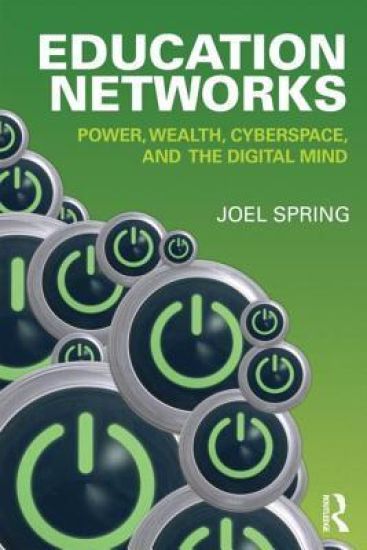
Education Networks

Education Networks

Joel Spring

Routledge
2012
sidottu
Education Networks is a critical analysis of the emerging intersection among the global power elite, information and communication technology, and schools. Joel Spring documents and examines the economic and political interests and forces —including elite networks, the for-profit education industry, data managers, and professional educators — that are pushing the use of ICT for online instruction, test preparation and tutoring, data management, instructional software packages, and more , and looks closely at the impact this is having on schools, students, and learning. Making a distinction between "mind" (as socially constructed) and "brain" (as a physiological entity), Spring draws on recent findings from comparative psychology on the possible effects of ICT on the social construction of the minds of students and school managers, and from neuroscience regarding its effect on students’ brains. Throughout, the influence of elite networks and powerful interest groups is linked to what is happening to children in classrooms. In conclusion Spring offers bold suggestions to change the course of the looming technological triumph of ICT in the "brave new world" of schooling.
Education Networks

Education Networks

Joel Spring

Routledge
2012
nidottu
Education Networks is a critical analysis of the emerging intersection among the global power elite, information and communication technology, and schools. Joel Spring documents and examines the economic and political interests and forces —including elite networks, the for-profit education industry, data managers, and professional educators — that are pushing the use of ICT for online instruction, test preparation and tutoring, data management, instructional software packages, and more , and looks closely at the impact this is having on schools, students, and learning. Making a distinction between "mind" (as socially constructed) and "brain" (as a physiological entity), Spring draws on recent findings from comparative psychology on the possible effects of ICT on the social construction of the minds of students and school managers, and from neuroscience regarding its effect on students’ brains. Throughout, the influence of elite networks and powerful interest groups is linked to what is happening to children in classrooms. In conclusion Spring offers bold suggestions to change the course of the looming technological triumph of ICT in the "brave new world" of schooling.
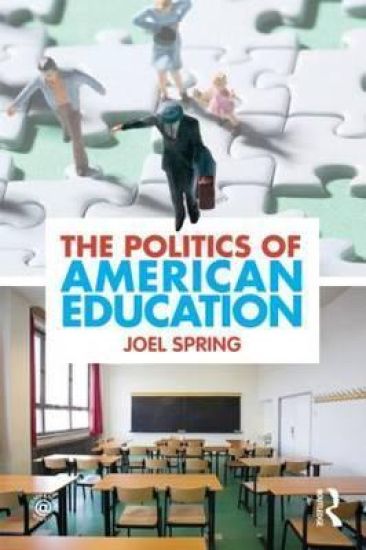
The Politics of American Education
Turning his distinctive analytical lens to the politics of American education, Joel Spring looks at contemporary educational policy issues from theoretical, practical, and historical perspectives. This comprehensive overview documents and explains who influences educational policy and how, bringing to life the realities of schooling in the 21st century and revealing the ongoing ideological struggles at play. Coverage includes the influence of global organizations on American school policies and the impact of emerging open source and other forms of electronic textbooks.Thought-provoking, lucid, original in its conceptual framework and rich with engaging examples from the real world, this text is timely and useful for understanding the big picture and the micro-level intricacies of the multiple forces at work in controlling U.S. public schools . It is the text of choice for any course that covers or addresses the politics of American education.Companion Website: The interactive Companion Website accompanying this text includes relevant data, public domain documents, YouTube links, and links to websites representing political organizations and interest groups involved in education.
The Politics of American Education
Turning his distinctive analytical lens to the politics of American education, Joel Spring looks at contemporary educational policy issues from theoretical, practical, and historical perspectives. This comprehensive overview documents and explains who influences educational policy and how, bringing to life the realities of schooling in the 21st century and revealing the ongoing ideological struggles at play. Coverage includes the influence of global organizations on American school policies and the impact of emerging open source and other forms of electronic textbooks.Thought-provoking, lucid, original in its conceptual framework and rich with engaging examples from the real world, this text is timely and useful for understanding the big picture and the micro-level intricacies of the multiple forces at work in controlling U.S. public schools . It is the text of choice for any course that covers or addresses the politics of American education.Companion Website: The interactive Companion Website accompanying this text includes relevant data, public domain documents, YouTube links, and links to websites representing political organizations and interest groups involved in education.
Wheels in the Head

Wheels in the Head

Joel Spring

Routledge Member of the Taylor and Francis Group
2007
nidottu
In this popular text Joel Spring provocatively analyzes the ideas of traditional and non-traditional philosophies from Confucianism to human rights regarding the contribution of education to the creation of a democratic society. The goal is to explore how governments use education to control and manage their populations, and to examine forms of education that claim to free people from authoritarian control. A critically original work, it is widely used as a text for courses on philosophical, social, political, and historical foundations of education, and critical issues in education. Reflecting its global relevance, a Chinese translation was published by the University of Peking Press in 2005.New in the third edition:Expanded analysis of the use of education by authoritarian statesRevisions to more clearly relate educational ideas to the theme of “wheels in the head” – a phrase coined by philosopher Max Stirner - to describe the use of schools by modern governments to control their citizensNew sections on liberation education and on human rights education
The Intersection of Cultures

The Intersection of Cultures

Joel Spring

Routledge Member of the Taylor and Francis Group
2007
nidottu
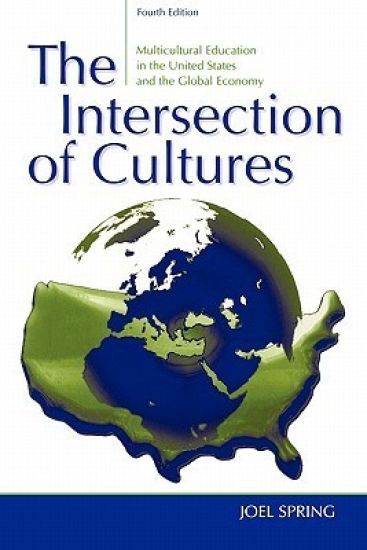
The Intersection of Cultures: Multicultural Education in the United States and the Global Economy, Fourth Edition offers a unique, problem-solving approach to the complex issues involved in educating culturally and linguistically diverse students. Perfect for any course devoted wholly or in part to the study of multicultural education, this text addresses a wealth of topics. A particular focus in this edition is the current global migration of peoples, and the tension between local and global cultures. Part One, Multiculturalism, includes chapters on cultural differences and schooling, dominated cultures, and immigrant cultures. Chapters in Part Two, Cultural Frames of Reference, address monoculturalism, biculturalism, and ethnic identity; multicultural minds; history, gender, and social class; and the intersection of school culture with dominated and immigrant cultures. Part Three, Perspectives on Teaching Multicultural Education, includes chapters on teaching about racism; teaching about sexism; and teaching to protect and preserve cultures. All chapters include model multicultural lessons for elementary through college classes. These lessons serve a dual function—first, they can be used to help teach the content of the chapter, and second, elementary, middle school, and high school teachers can use these lessons in their own classes. Each chapter concludes with a “Personal Frames of References” section designed to engage students in relating multiculturalism to their own lives.New in the Fourth Edition: *cultural differences in ways of seeing, knowing, and interrelating with the world;*recent research findings from cross cultural psychology and the psychology of immigration; and*methods for educating “multicultural minds”.
Wheels in the Head

Wheels in the Head

Joel Spring

Routledge Member of the Taylor and Francis Group
2007
sidottu
In this popular text Joel Spring provocatively analyzes the ideas of traditional and non-traditional philosophies from Confucianism to human rights regarding the contribution of education to the creation of a democratic society. The goal is to explore how governments use education to control and manage their populations, and to examine forms of education that claim to free people from authoritarian control. A critically original work, it is widely used as a text for courses on philosophical, social, political, and historical foundations of education, and critical issues in education. Reflecting its global relevance, a Chinese translation was published by the University of Peking Press in 2005.New in the third edition:Expanded analysis of the use of education by authoritarian statesRevisions to more clearly relate educational ideas to the theme of “wheels in the head” – a phrase coined by philosopher Max Stirner - to describe the use of schools by modern governments to control their citizensNew sections on liberation education and on human rights education
A New Paradigm for Global School Systems

A New Paradigm for Global School Systems

Joel Spring

Routledge Member of the Taylor and Francis Group
2007
sidottu
This volume—a major new contribution to Joel Spring’s reportage and analysis of the intersection of global forces and education—offers a new paradigm for global school systems. Education for global economic competition is the prevailing goal of most national school systems. Spring argues that recent international studies by economists, social psychologists, and others on the social factors that support subjective well-being and longevity should serve as a call to arms to change education policy; the current industrial-consumer paradigm is not supportive of either happiness or long life.Building his argument through an original documentation, synthesis, and critique of prevailing global economic goals for schools and research on social conditions that support happiness and long life, Spring: *develops guidelines for a global core curriculum, methods of instruction, and school organizations; *translates these guidelines into a new paradigm for global school systems based on progressive, human rights, and environmental educational traditions; *contrasts differing ways of seeing and knowing among indigenous, Western, and Confucian-based societies, concluding that global teaching and learning involve a particular form of holistic knowing and seeing; and*proposes a prototype for a global school—an eco-school that functions to protect the biosphere and human rights and to support the happiness and well-being of the school staff, students, and immediate community—and for a global core curriculum based on holistic models for lessons and instruction. The book concludes with Spring’s retelling of Plato’s parable of the cave—in which educators break the chains that bind them to the industrial-consumer paradigm and rethink their commitment to humanity’s welfare.
A New Paradigm for Global School Systems

A New Paradigm for Global School Systems

Joel Spring

Routledge Member of the Taylor and Francis Group
2007
nidottu
This volume—a major new contribution to Joel Spring’s reportage and analysis of the intersection of global forces and education—offers a new paradigm for global school systems. Education for global economic competition is the prevailing goal of most national school systems. Spring argues that recent international studies by economists, social psychologists, and others on the social factors that support subjective well-being and longevity should serve as a call to arms to change education policy; the current industrial-consumer paradigm is not supportive of either happiness or long life.Building his argument through an original documentation, synthesis, and critique of prevailing global economic goals for schools and research on social conditions that support happiness and long life, Spring: *develops guidelines for a global core curriculum, methods of instruction, and school organizations; *translates these guidelines into a new paradigm for global school systems based on progressive, human rights, and environmental educational traditions; *contrasts differing ways of seeing and knowing among indigenous, Western, and Confucian-based societies, concluding that global teaching and learning involve a particular form of holistic knowing and seeing; and*proposes a prototype for a global school—an eco-school that functions to protect the biosphere and human rights and to support the happiness and well-being of the school staff, students, and immediate community—and for a global core curriculum based on holistic models for lessons and instruction. The book concludes with Spring’s retelling of Plato’s parable of the cave—in which educators break the chains that bind them to the industrial-consumer paradigm and rethink their commitment to humanity’s welfare.