Kirjailija
John Casey
Kirjat ja teokset yhdessä paikassa: 48 kirjaa, julkaisuja vuosilta 1990-2026, suosituimpien joukossa A Treatise on Plane Trigonometry, Containing an Account of Hyperbolic Functions; With Numerous Examples. Vertaile teosten hintoja ja tarkista saatavuus suomalaisista kirjakaupoista.
48 kirjaa
Kirjojen julkaisuhaarukka 1990-2026.

A treatise on the analytical geometry of the point, line, circle, and conic sections, containing an account of its most recent extensions, with numerous examples
John Casey
Alpha Edition
2019
pokkari
This book has been considered by academicians and scholars of great significance and value to literature. This forms a part of the knowledge base for future generations. So that the book is never forgotten we have represented this book in a print format as the same form as it was originally first published. Hence any marks or annotations seen are left intentionally to preserve its true nature.
A Treatise on the Analytical Geometry of the Point, Line, Circle and Conic Sections
John Casey
Hansebooks
2019
pokkari
A Treatise on the Analytical Geometry of the Point, Line, Circle and Conic Sections is an unchanged, high-quality reprint of the original edition of 1885. Hansebooks is editor of the literature on different topic areas such as research and science, travel and expeditions, cooking and nutrition, medicine, and other genres. As a publisher we focus on the preservation of historical literature. Many works of historical writers and scientists are available today as antiques only. Hansebooks newly publishes these books and contributes to the preservation of literature which has become rare and historical knowledge for the future.


A Treatise on the Analytical Geometry of the Point, Line, Circle and Conic Sections
John Casey
Hansebooks
2018
nidottu
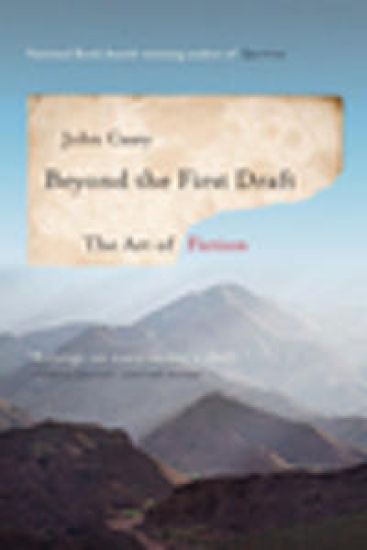
In Beyond the First Draft John Casey offers essential and original insights into the art of writing—and rewriting—fiction. Throughout the fourteen essays there are notes on voice, point of view, structure and other crucial elements. This book is an invaluable resource for aspiring writers and a revitalising companion for seasoned ones.
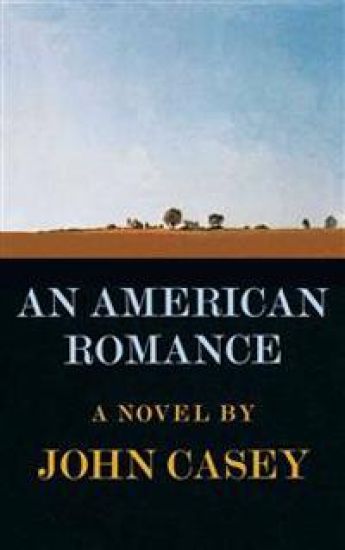
John Casey pens a passionate and charming love story about the ups and downs of a couple living together in rural Iowa. An American Romance follows the relationship of Anya, the director of a theater commune, and Mac, a Canadian engineer who builds sets for the theater, as they embark on their personal journeys of fulfillment while by each other's side. Against the backdrop of rural Iowa, Anya and Mac share a passionate and tumultuous relationship that lends itself to the anything-but-standard culture of American life in seventies. "This is a novel of Proustian detail, rich and sensuous; in fact, in the depth of affection felt for his characters, John Casey has achieved a contemporary American novel that closely resembles Remembrance of Things Past." -- John Irving
National Book Award winner John Casey is a masterful novelist who is also an inspiring and beloved teacher. In Beyond the First Draft he offers essential and original insights into the art of writing—and rewriting—fiction. Through anecdotes about other writers’ methods and habits (as well as his own) and close readings of literature from Aristotle to Zola, the essays in this collection offer “suggestions about things to do, things to think about when your writing has got you lost in the woods.” In “Dogma and Anti-dogma” Casey sets out the tried-and-true advice and then comments on when to apply it and when to ignore it. In “What's Funny” he considers the range of comedy from pratfalls to elegant wit. In “In Other Words” he discusses translations and the surprising effects that translating can have on one’s native language. In “Mentors” he pays tribute to those who have guided him and other writers. Throughout the fourteen essays there are notes on voice, point of view, structure, and other crucial elements. This book is an invaluable resource for aspiring writers and a revitalizing companion for seasoned ones.
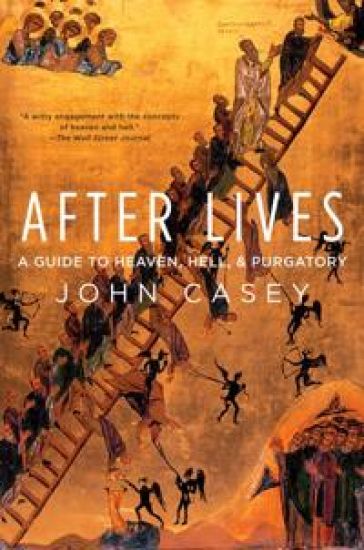
One of the most profound, deeply affecting questions we face as human beings is the matter of our mortality--and its connection to immortality. Ancient animist ghost cultures, Egyptian mummification, late Jewish hopes of resurrection, Christian eternal salvation, Muslim belief in hell and paradise all spring from a remarkably consistent impulse to tether a triumph over death to our conduct in life. In After Lives, British scholar John Casey provides a rich historical and philosophical exploration of the world beyond, from the ancient Egyptians to St. Thomas Aquinas, from Martin Luther to modern Mormons. In a lively, wide-ranging discussion, he examines such topics as predestination, purgatory, Spiritualism, the Rapture, Armageddon and current Muslim apocalyptics, as well as the impact of such influences as the New Testament, St. Augustine, Dante, and the Second Vatican Council. Ideas of heaven and hell, Casey argues, illuminate how we understand the ultimate nature of sin, justice, punishment, and our moral sense itself. The concepts of eternal bliss and eternal punishment express--and test--our ideas of good and evil. For example, the ancient Egyptians saw the afterlife as flowing from ma'at, a sense of being in harmony with life, a concept that includes truth, order, justice, and the fundamental law of the universe. "It is an optimistic view of life," he writes. "It is an ethic that connects wisdom with moral goodness." Perhaps just as revealing, Casey finds, are modern secular interpretations of heaven and hell, as he probes the place of goodness, virtue, and happiness in the age of psychology and scientific investigation. With elegant prose, a magisterial grasp of a vast literary and religious history, and moments of humor and irony, After Lives sheds new light on the question of life, death, and morality in human culture.
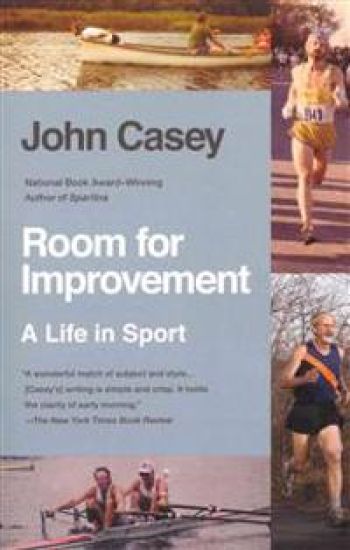
PEN/ESPN Award Finalist Spanning more than fifty years of ambitious and wild endeavors, Room for Improvement chronicles John Casey's most peculiar addiction, that of an adrenaline junky. Here we see Casey taking part in an Outward Bound course in Maine during the dead of winter; being pinned by a two-hundred-pound judo instructor; leading a lost couple on a yacht through the rocky waterways of Narragansett Bay by a simple rowboat; and completing--on his seventieth birthday--a 70K marathon of his own devising that included rowing, bicycling, skating, dog walking, and rollerblading. Be it a preoccupation with health or just an indomitably playful sense of adventure, John Casey's insatiable drive is an inspiration to us all
First published in 1966, the Language of Criticism was the first systematic attempt to understand literary criticism through the methods of linguistic philosophy and the later work of Wittgenstein. Literary critical and aesthetic judgements are rational, but are not to be explained by scientific methods. Criticism discovers reasons for a response, rather than causes, and is a rational procedure, rather than the expression of simply subjective taste, or of ideology, or of the power relations of society.The book aims at a philosophical justification of the tradition of practical criticism that runs from Matthew Arnold, through T.S.Eliot to I.A.Richards, William Empson, F.R.Leavis and the American New Critics. It argues that the close reading of texts moves justifiably from text to world, from aesthetic to ethical valuation. In this it differs radically from the schools of "theory" that have recently dominated the humanities.
First published in 1966, the Language of Criticism was the first systematic attempt to understand literary criticism through the methods of linguistic philosophy and the later work of Wittgenstein. Literary critical and aesthetic judgements are rational, but are not to be explained by scientific methods. Criticism discovers reasons for a response, rather than causes, and is a rational procedure, rather than the expression of simply subjective taste, or of ideology, or of the power relations of society.The book aims at a philosophical justification of the tradition of practical criticism that runs from Matthew Arnold, through T.S.Eliot to I.A.Richards, William Empson, F.R.Leavis and the American New Critics. It argues that the close reading of texts moves justifiably from text to world, from aesthetic to ethical valuation. In this it differs radically from the schools of "theory" that have recently dominated the humanities.
A Treatise On Spherical Trigonometry, And Its Application To Geodesy And Astronomy, With Numerous Examples
John Casey
Read Books
2011
pokkari


One of the most profound, deeply affecting questions we face as human beings is the matter of our mortality--and its connection to immorality. Ancient animist ghost cultures, Egyptian mummification, late Jewish hopes of resurrection, Christian eternal salvation, Muslim belief in hell and paradise all spring from a remarkably consistent impulse to tether a triumph over death to our conduct in life. In After Lives, British scholar John Casey provides a rich historical and philosophical exploration of the world beyond, from the ancient Egyptians to St. Thomas Aquinas, from Martin Luther to modern Mormons. In a lively, wide-ranging discussion, he examines such topics as predestination, purgatory, Spiritualism, the Rapture, Armageddon and current Muslim apocalyptics, as well as the impact of such influences as the New Testament, St. Augustine, Dante, and the Second Vatican Council. Ideas of heaven and hell, Casey argues, illuminate how we understand the ultimate nature of sin, justice, punishment, and our moral sense itself. The concepts of eternal bliss and eternal punishment express--and test--our ideas of good and evil. For example, the ancient Egyptians saw the afterlife as flowing from ma'at, a sense of being in harmony with life, a concept that includes truth, order, justice, and the fundamental law of the universe. "It is an optimistic view of life," he writes. "It is an ethic that connects wisdom with moral goodness." Perhaps just as revealing, Casey finds, are modern secular interpretations of heaven and hell, as he probes the place of goodness, virtue, and happiness in the age of psychology and scientific investigation. With elegant writing, a magisterial grasp of a vast literary and religious history, and moments of humor and irony, After Lives sheds new light on the question of life, death, and morality in human culture.