Kirjojen hintavertailu. Mukana 12 595 353 kirjaa ja 12 kauppaa.

Kirjailija

John Christopher

Kirjat ja teokset yhdessä paikassa: 108 kirjaa, julkaisuja vuosilta 1973-2023, suosituimpien joukossa A Dusk of Demons. Vertaile teosten hintoja ja tarkista saatavuus suomalaisista kirjakaupoista.

108 kirjaa

Kirjojen julkaisuhaarukka 1973-2023.

1943 The Second World War in Photographs

1943 The Second World War in Photographs

John Christopher; Campbell McCutcheon

Amberley Publishing
2015
nidottu
1943 saw the Allies on the offensive, with victories in North Africa followed by the invasion of Sicily and landings in Italy establishing a foothold on mainland Europe, while on the Eastern Front the Red Army was making gains, and in the Pacific the Japanese-held islands were falling. The change in the Allies’ fortunes had begun the previous year and now they were building on those successes, paving the way for the major return to Europe with D-Day planned for 1944. The 8th Army’s successes in the Tunisian campaign pushed the German Afrika Korps out of North Africa. This was followed by the invasion of Sicily in May and landings on the toe of Italy in September, resulting in the ousting of Benito Mussolini. Other Allied successes came in the Pacific with the taking of Papua New Guinea and the Solomon Islands, together with British and Chinese advances in Burma, putting the Japanese onto the defensive. The conflict in Russia saw the key tank battle at Kursk and the subsequent retaking of some German-held territory. Other events included the Dambuster raids, an attack on the Ploesti oil refineries and the uprising in the Warsaw Ghetto. John Christopher and Campbell McCutcheon tell the story of 1943 at war using many rare and often unpublished images, showing the rapidly changing nature of the conflict.

Orient Express Story

Orient Express Story

John Christopher

The History Press Ltd
2015
sidottu
* The latest in the successful 'Story of' series! * Spans from 1883 to present day services * Venice Simplon Orient-Express aware and supportive of the publication: free access to image archive * A service synonymous with intrigue and luxury travel * Colourful internals with entertaining narrative and fun facts and figures
1918 The First World War in Photographs

1918 The First World War in Photographs

John Christopher; Campbell McCutcheon

Amberley Publishing
2015
nidottu
1918 was the fifth and final year of the Great War. With thousands of fresh American troops heading across the Atlantic to fight on the side of the Allies, Germany’s High Command knew it had to strike a decisive blow to turn the course of the war in its favour. With revolution in Russia a peace treaty was agreed on the Eastern Front, enabling General Ludendorff to transfer seventy divisions to the west for a Spring Offensive that was intended to drive the French back to Paris and the British to the Channel ports. The Allied counter-offensive on the Marne began in July and, with the Americans joining the fighting, the Germans were forced back to the Hindenburg Line. Starved of food and supplies, Germany faced inevitable defeat and sought terms for a peace settlement. The Kaiser abdicated on 11 November 1918 and the guns become silent with the signing of the Armistice. In defeat Germany was humiliated and economically paralysed by the demand for war reparations imposed by the Treaty of Versailles, which was signed in June the following year. But for both sides the real cost of the war was measured in human lives. Twenty million were killed and the participating European nations all but bankrupted. The political map was irrevocably changed and the so-called ‘war to end all wars’ was the harbinger of an even greater conflict yet to come. John Christopher and Campbell McCutcheon tell the story of 1918, the final year of fighting, and also the immediate post-war period, using many rare and often unpublished images.
1942 The Second World War in Photographs

1942 The Second World War in Photographs

John Christopher; Campbell McCutcheon

Amberley Publishing
2015
nidottu
1942 was the turning point of the war. In the words of Winston Churchill, it was ‘not the end. It is not even the beginning of the end, but it is, perhaps, the end of the beginning.’ In the Pacific the Japanese had been soundly defeated at the Battle of Midway, with the loss of four valuable and irreplaceable aircraft carriers, while the Allied landings in North Africa had been a complete success, and the rout of the German and Italian soldiers in the desert war had begun in earnest. Fortress Britain saw the infamous Baedeker raids on English towns and cities, but also the build-up of American troops and material in preparation for the invasion of mainland Europe, of which August’s costly raid on Dieppe was a precursor. Despite some setbacks, the war had changed and the Allies were on the attack on all fronts. In Russia, the German 6th Army spent the New Year surrounded in Stalingrad, the Germans and Italians being squeezed in North Africa, and the Japanese were suffering defeat after defeat. John Christopher and Campbell McCutcheon tell the story of 1942 at war using many rare and often unpublished images, showing the rapidly changing nature of the conflict, as well as its impact on the everyday person.
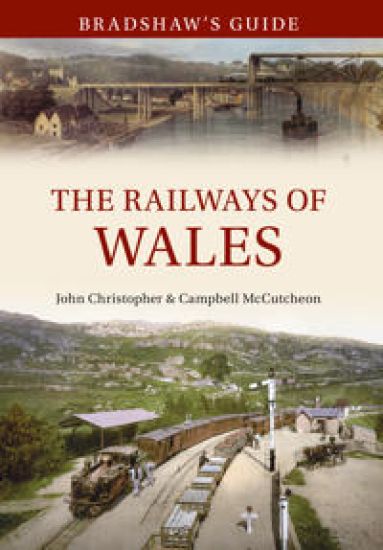
Bradshaw's Guide The Railways of Wales

Bradshaw's Guide The Railways of Wales

John Christopher; Campbell McCutcheon

Amberley Publishing
2015
nidottu
Bradshaw’s Guide of 1863 was the staple book to what’s what and where’s where for the mid-Victorians and it gives the modern reader a unique insight into the world of the nineteenth-century railway travellers. Built primarily to serve industry and the mail packets to Ireland, the railways of Wales would go on to open up the Principality to tourism for the first time. They also brought communities closer together and many journeys that once took days to complete could now be undertaken in hours. This illustrated guide records the sights to be seen in the towns and cities encountered along the various routes. John Christopher and Campbell McCutcheon take us on Brunel’s broad gauge lines in South Wales, before joining the central and northern railways, using contemporary Victorian and Edwardian photographs and postcards to illustrate the scenes that the readers of Bradshaw’s Guide to the Railways would have experienced. This volume covers the South Wales Railway, the Great Western Railway, the Cambrian lines and the Chester & Holyhead Railway as well as the many branch lines.
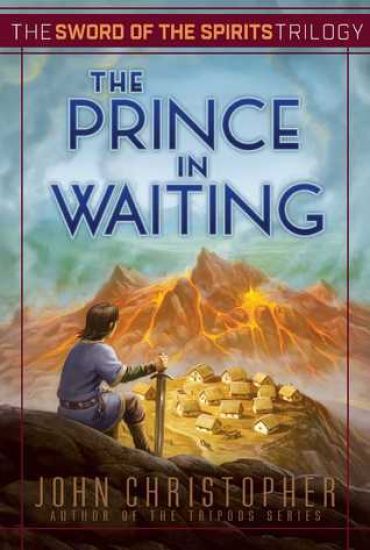
The Prince in Waiting

The Prince in Waiting

John Christopher

Aladdin Paperbacks
2015
nidottu
A thirteen-year-old's expectations of royalty give way to adventure in the first book in the post-apocalyptic Sword of the Spirits trilogy from the author of The Tripods series. In Winchester, roles are clearly defined. Warriors fight battles every spring. Dwarfs make the swords and the shields. Grotesque mutants are the servant class. Seers interpret the wishes and predictions of the spirits. And the Prince is the ruler of the city. Thirteen-year-old Luke has no reason to suspect that any of this will change. It's been this way for centuries...at least since the year 2000. But things are not what they seem, and soon Luke is thrown into a story of ambition and adventure in the primitive world of the future, expertly crafted by critically acclaimed Tripods author John Christopher.
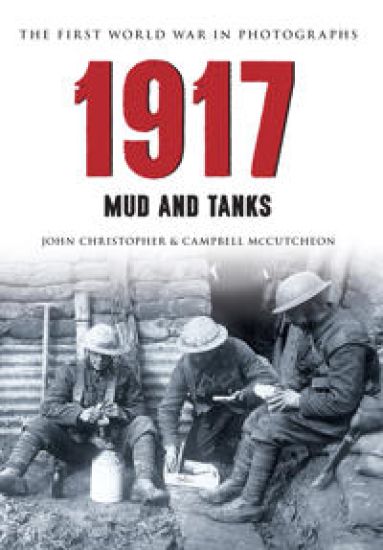
1917 The First World War in Photographs

1917 The First World War in Photographs

John Christopher; Campbell McCutcheon

Amberley Publishing
2014
nidottu
1917, the fourth year of the Great War, saw another year in the trenches for millions of troops mobilised in Europe. Apart from short patrols in the North Sea, the ships of the Royal Navy and Germany’s imperial navy remained in port. However, the enemy submarines were in operation intensively. In March, three American ships were sunk in one day, finally bringing the United States to the brink of war. President Woodrow Wilson made an impassioned speech to Congress, which voted for war. At the same time, Russia was in turmoil, with revolution breaking out in Petrograd, Moscow and other cities. While the Russians sued for peace with Germany and Austria-Hungary, from June onward, American soldiers began to flood into France at the rate of 300,000 a month. The Austro-Hungarians ended the year almost defeated, while the Germans knew that they had the opportunity for one final push for victory before they too would have to succumb to the weight of numbers of American troops landing at Brest and St Nazaire. The year also saw Lawrence of Arabia help the Arabs attack the Turks, the life-sucking mud of Passchendaele, the massed tank battle of Cambrai and multiple battles of the Isonzo on the border of Italy and Austria-Hungary. John Christopher and Campbell McCutcheon tell the story of 1917 at war using many rare and often unpublished images, showing the full horror of the conflict, as well as its impact on the everyday person.
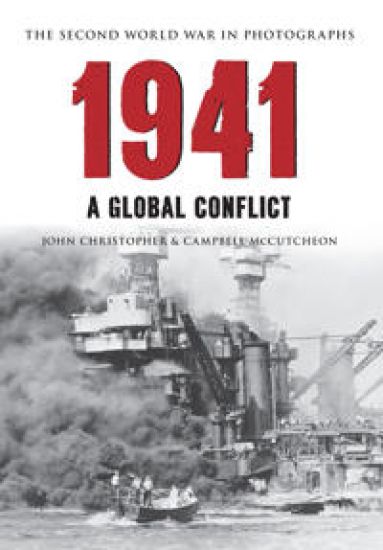
1941 The Second World War in Photographs

1941 The Second World War in Photographs

John Christopher; Campbell McCutcheon

Amberley Publishing
2014
nidottu
1941 At the beginning of the year, Britain stood alone against Germany and Italy. The war in Africa dominated the headlines, with huge swathes of the North African desert changing hands continually. At sea, Germany’s Bismarck sank HMS Hood, but was soon sunk herself, while Fortress Britain endured night after night of heavy Blitz and the horrors of the Luftwaffe’s incendiary bombs. The first turning point of the war came in June, with Operation Barbarossa – Germany’s invasion of the Soviet Union – opening up a second front in the east. The next would not come till December, when the war moved from beyond its European and African front lines to become a truly global conflict. Japan awoke the sleeping giant that was the USA with a surprise attack on Pearl Harbor. Simultaneous attacks on Hong Kong, Malaya, the Philippines and Indonesia saw huge parts of Asia firmly under Japanese control by the end of the year. John Christopher and Campbell McCutcheon tell the story of 1941 at war using many rare and often unpublished images, showing the rapidly changing nature of the conflict, as well as its impact on the everyday person.
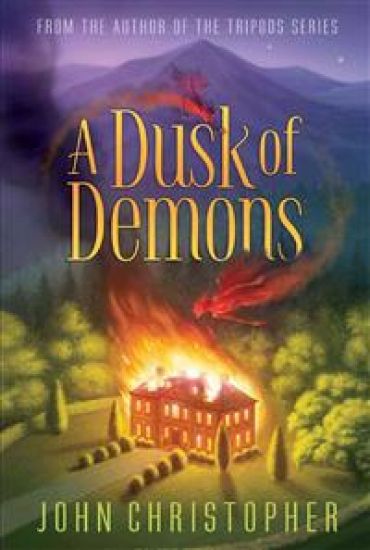
A Dusk of Demons

A Dusk of Demons

John Christopher

Aladdin Paperbacks
2014
sidottu
Ben must uncover the secrets of his home, the strange demons that lurk in dark corners, and his destiny as the Master of Old Isle in this adventure from the author of the Tripods series. Ben lives a carefree life on Old Isle, far away from horrible demons that terrorize the people on the mainland. He shares his home with Mother Ryan, Antonia, Paddy, and the Master. They're not his real family, but they're the only family he's ever known. Then, in a single day, Ben's quiet existence is turned upside down. After the Master dies and reveals a startling connection, Ben becomes the new Master of Old Isle. And when demons burn his house to the ground and his family leaves their home, Ben is forced to stay behind. Soon Ben manages to escape and begin a journey across the sea and the countryside to learn the secrets of his heritage. But he is being pursued by people who wish to use his power for their own selfish purposes, and time is running short for him to make things rights.
The Lotus Caves

The Lotus Caves

John Christopher

Aladdin Paperbacks
2014
sidottu
Two boys discover a series of caverns underneath their moon colony home in this futuristic story from the author of the Tripods series. Marty and Steve may live on the moon, but that doesn't mean they don't want to get away every once in a while. So when Steve makes the suggestion to skip school and take a lunar car out to explore the moon's surface like real astronauts, Marty thinks it's a great idea. But the fun quickly ends when the lunar car crashes, stranding Marty and Steve beneath the moon's surface. There, in a bizarre, cave, Marty and Steve find the unexpected: a world filled with various plants, food, and life...including a man who supposedly went missing more than one hundred years before. The boys think that they've found the most wonderful place in the galaxy...but they soon learn that the joy comes with a price. The strange creature that is keeping them alive also wants to control them, and when Marty and Steve decide that they want to leave, the creature might have something else in mind.
1916 The First World War in Photographs

1916 The First World War in Photographs

John Christopher; Campbell McCutcheon

Amberley Publishing
2014
nidottu
1916, the third year of the Great War, was to see the introduction of conscription for the first time in Britain to feed the insatiable demand for men at the Front. It was just as well, as the spring saw the launch of the German offensive at Verdun and the British counter-attack, but neither side achieved any significant gains. On 1 July the Allies experienced the bloodiest day of the war at the start of the Somme campaign with some 60,000 men killed in a single day. The British Mark 1 tank also made its combat debut at the Somme, heralding a new era of mechanised warfare. 1916 was also the year of the Battle of Jutland, which was the greatest naval encounter of the war but resulted in an inconclusive outcome with both sides losing many ships. Shortly afterwards Lord Kitchener died when HMS Hampshire hit a mine. Kitchener had become the iconic figure of the First World War, appearing on countless recruiting posters. On the Eastern Front the Russian forces pushed forward to draw the Germans into pulling their troops away from the Western Front. John Christopher and Campbell McCutcheon tell the story of 1916 at war using many rare and often unpublished images, showing the full horror of the conflict, as well as its impact on the everyday person.
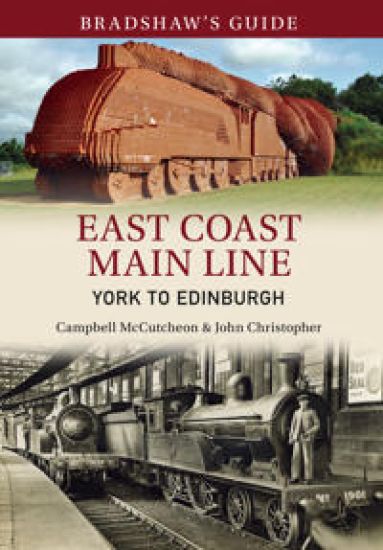
Bradshaw's Guide East Coast Main Line York to Edinburgh

Bradshaw's Guide East Coast Main Line York to Edinburgh

John Christopher; Campbell McCutcheon

Amberley Publishing
2014
nidottu
The East Coast Main Line – going from London to Edinburgh – remains one of the most important routes in this country. It was built by a number of separate companies and by 1863, when Bradshaw published his guide, the section from York to Berwick was operated by the North Eastern Railway, and onwards into Scotland by the North British Railway. This guide covers that final section of the ECML, including the important locations and branches encountered along the way. In the 1930s the LNER captured briefly the world record for a steam locomotive on this line, with Gresley’s streamlined A4 Pacific Mallard, as represented by David Mach’s brick sculpture at Darlington. ‘Seldom has the gigantic intellect of man been employed upon a work of greater utility.’ Punch, in praise of Bradshaw’s publications. Bradshaw’s guide was published in 1863, not that long after most of Britain’s railway network had been completed. It gives the reader a unique insight into the world of the Victorian railways and goes beyond the engineering aspects to record the sights to be seen in the towns and cities encountered along the way. Campbell McCutcheon and John Christopher present Bradshaw’s original text accompanied by contemporary images to bring the ECML journey to life for the modern reader.
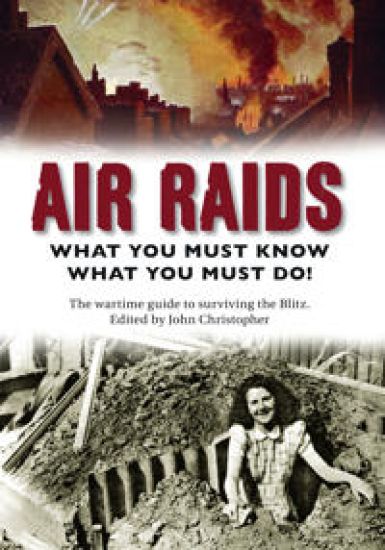
Air Raids

Air Raids

John Christopher

Amberley Publishing
2014
nidottu
During the Second World War the British Government, through the Ministry of Home Security, issued a number of publications advising the civilian population on what they needed to know and what they must do in an air raid. This special edition reproduces that practical information on a range of subjects including air-raid shelters, protection against high-explosive bombs, incendiary devices and the ever present risk of a gas attack. ‘Do your part in preparing to meet this and any other form of air attack. Act carefully, calmly, and promptly on the instructions that are given you.’ Air Raids explains the role of the Civil Defence services and vividly brings to life the practicalities of living in constant fear of an air raid. It provides the modern reader with an evocative insight into life on the home front in the dark days of the Blitz.
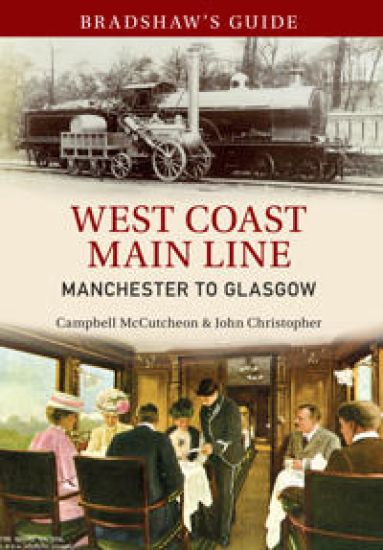
Bradshaw's Guide West Coast Main Line Manchester to Glasgow

Bradshaw's Guide West Coast Main Line Manchester to Glasgow

Campbell McCutcheon; John Christopher

Amberley Publishing
2014
nidottu
The West Coast Main Line – going all the way from London to Glasgow – remains one of the most important railway routes in this country. It was built by a number of separate companies and by 1863, when Bradshaw published his guide, the section from Manchester was operated as far as Carlisle by the London & North Western Railway, and from Carlisle onwards into Scotland by the Caledonian Railway. This guide covers that final section of the WCML, including the important locations encountered along the way. In the 1930s the LMS captured briefly the world record for a steam locomotive on this line. ‘Seldom has the gigantic intellect of man been employed upon a work of greater utility.’ Punch, in praise of Bradshaw’s publications Bradshaw’s guide was published in 1863, not that long after most of the railway network had been completed. It gives the reader a unique insight into the world of the Victorian railways and goes beyond the engineering aspects to record the sights to be seen in the towns and cities encountered along the way. Campbell McCutcheon and John Christopher present Bradshaw’s original text accompanied by contemporary images to bring the journey to life for the modern reader.
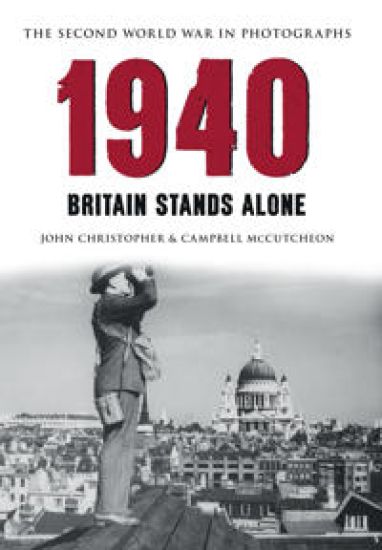
1940 the Second World War in Photographs

1940 the Second World War in Photographs

John Christopher; Campbell McCutcheon

Amberley Publishing
2014
nidottu
1940 As the period of the ‘Phoney War’ came to an end, the Nazis unleashed their Blitzkrieg tactics, which saw the rapid mobility of the ground forces closely supported by superior air power. The Netherlands, Belgium, Denmark and Norway fell in the spring, and the British Expeditionary Force made a hasty retreat from the beaches of Dunkirk in Operation Dynamo. Winston Churchill, the new Prime Minister of the coalition government, described the evacuation of thousands of troops by an armada of little vessels as a miracle. But, following the fall of France in June, he issued a sombre warning that Britain now fought alone. The nation’s fate was in the hands of the ‘Few’, the men of fighter command who fought to hold back Göring’s Luftwaffe in its bid to gain superiority in the air as the prelude to a German invasion. This was the Battle of Britain, and as the Spitfires and Hurricanes jousted with enemy fighters and bombers in the late summer of 1940, the ordinary people of London and many other cities and towns came to know the terror of the air raids. John Christopher and Campbell McCutcheon tell the story of 1940 at war using many rare and often unpublished images, showing the rapidly changing nature of the conflict, as well as its impact on the everyday person.
Bradshaw's Guide Scotland's Railways East Coast Berwick to Aberdeen & Beyond

Bradshaw's Guide Scotland's Railways East Coast Berwick to Aberdeen & Beyond

John Christopher; Campbell McCutcheon

Amberley Publishing
2014
nidottu
Bradshaw’s Guide of 1863 was the staple book to what’s what and where’s where for the mid-Victorians and it gives the modern reader a unique insight into the world of the nineteenth-century travellers. The railways themselves opened up Scotland properly to tourism for the first time, and many journeys that once took days to complete could now be undertaken in hours, bringing its many attractions within the reaches of the masses. This illustrated guide records the sights to be seen in the towns and cities encountered along the route. ‘Bradshaw’s Guides were invaluable in their time and they provide the modern-day reader with a fascinating insight into the nineteenth century rail traveller’s experience.’ Campbell McCutcheon takes us up the eastern side of Bradshaw’s Scotland, using contemporary Victorian and Edwardian photographs and postcards to illustrate the scenes that the users of Bradshaw’s Guide to Scotland’s Railways would have experienced. This volume covers primarily the lines of the North British Railway and the Great North of Scotland Railway.
1915 The First World War in Photographs

1915 The First World War in Photographs

John Christopher; Campbell McCutcheon

Amberley Publishing
2014
nidottu
1915, the second year of the Great War, was to see the failure of the Dardanelles landings and the sinking of the Lusitania, shown below, with the loss of 1,198 people, as well as the first bombing of mainland Britain by Zeppelin and the entry of Italy into the war. Huge battles would be fought at sea and on land, while the fledgling air forces of the fighting powers clashed in the clouds. 1915 will be remembered not just for the Lusitania but also for that most inhumane and indiscriminate weapon, poison gas, its first use being against the Russians on the Eastern Front. The Western Front was in stalemate, with the troops entrenched and little in the way of advance or retreat to counter the thousands of lives being lost on a daily basis. War in the east and in Mesopotamia was more fluid, with the armies of Germany, Turkey, Russia and Austria-Hungary moving over huge swathes of Central Europe and the Middle East. John Christopher and Campbell McCutcheon tell the story of 1915 at war using many rare and often unpublished images, showing the full horror of the conflict, as well as its impact on the everyday person.
1939 the Second World War in Photographs

1939 the Second World War in Photographs

John Christopher; Campbell McCutcheon

Amberley Publishing
2014
nidottu
Seventy-five years ago, on 1 September 1939, Germany invaded Poland. With political agreements in place to come to Poland’s aid, Britain and France both declared war on Germany within two days. It was the start of a conflict that would erupt over every continent and see the deaths of tens of millions of people, with much of central Europe destroyed. It would also see the development of jets, intercontinental missiles, computers and the Atomic Bomb. 1939, in particular, saw the sinking of the passenger ship Athenia on the first day of the war, the evacuation of children from Britain’s population centres, the daring attack by U-49 on the Royal Oak at Scapa Flow, air raids on Wilhelmshaven and on Shetland and the Forth Bridge. It also saw the development of the Blitzkrieg tactics that were to prove so successful in France, Belgium and the Netherlands in 1940.