Kirjojen hintavertailu. Mukana 12 595 353 kirjaa ja 12 kauppaa.

Kirjailija

John Christopher

Kirjat ja teokset yhdessä paikassa: 108 kirjaa, julkaisuja vuosilta 1973-2023, suosituimpien joukossa A Dusk of Demons. Vertaile teosten hintoja ja tarkista saatavuus suomalaisista kirjakaupoista.

108 kirjaa

Kirjojen julkaisuhaarukka 1973-2023.

Locomotives of the London Brighton & South Coast Railway 1839-1903
The London Brighton & South Coast Railway - also known as the 'Brighton Line' - was an important pre-grouping railway covering a triangular territory with London at its apex and the Sussex and Surrey coast at its base. Many of the early locomotives were acquired through amalgamations with other companies. Under a trio of chief mechanical engineers, including John Craven, William Stroudley, Robert and Lawson Billington, father and son, and Douglas Earle Marsh the company built or purchased well over 1,000 steam locomotives, many of which were handed over to the Southern Railway in the 1923 grouping of Britain's independent railway companies. To this day the former LBSCR lines form the backbone of the south east coast network. This account covers the years 1839 - 1903. This fascinating account of the LBSCR's locomotives was originally published in 1903, and is profusely illustrated with over 140 line drawings.
Bradshaw's Guide Brunel's Railways Swindon to South Wales
Brunel and Bradshaw were close contemporaries. One became Britain's most celebrated engineer, driving his iron rails across the country, while the other brought the experience of rail travel to the masses through his timetables and guide books. Although the GWR mainline from London to Bristol had opened in 1840, the through journey across southern Wales to Neyland in Pembrokeshire - where Brunel planned to connect with his transatlantic steamships - only become possible after the opening of the Chepstow Bridge over the Wye and the completion of the line just a few years before Brunel's death. 'Bradshaw's Guides were invaluable in their time and they provide the modern-day reader with a fascinating insight into the nineteenth century rail traveller's experience.' Bradshaw's guide gives the reader a unique insight into the new world of the Victorian railways and goes beyond the engineering aspects of the line to record the sights to be seen in the towns and cities encountered along the route. Brunel expert John Christopher presents Bradshaw's original account as a journey from Swindon up to Gloucester and across South Wales. Branch lines to Cheltenham, Ross, Hereford, Neath and Merthyr are included. The text is annotated and accompanied by contemporary images as well as many new colour photographs of the same journey today.
Bradshaw's London

Bradshaw's London

John Christopher

Amberley Publishing
2014
pokkari
Famed for his railway hand-books - recently rediscovered through Michael Portillo's television series on the great railway journeys - George Bradshaw also produced this Hand Book to London, which was originally published in 1862. Presented as a series of walks within central London, as well as a trip along the Thames by steamer and a visit to the Crystal Palace at Sydenham, it provides a unique perspective on the city as it was 150 years ago. This new edition presents Bradshaw's Hand Book to London in a highly readable form, accompanied by a wealth of contemporary images to bring the text to life. It is packed with fascinating information and armed with this guide, which includes contemporary maps, the modern explorer can retrace Bradshaw's steps to discover the Victorian world amid today's busy city.
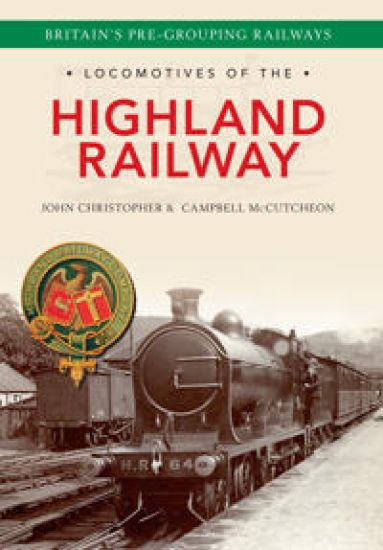
Locomotives of the Highland Railway

Locomotives of the Highland Railway

John Christopher; Campbell McCutcheon

Amberley Publishing
2014
nidottu
Formed from the merger of the Inverness & Aberdeen Junction and the Inverness & Perth Junction railways in 1865, the Highland ran from Perth in Central Scotland north to Inverness and then on up to Wick and Thurso. From Dingwall it ran west to Kyle of Lochalsh to serve Skye and the Western Isles. Another line ran east from Inverness to Keith, where it connected with the line to Aberdeen. Several branches were built to serve nearby towns. In addition to inheriting several locomotives from its constituent companies, the Highland Railway was renowned for its distinctive stable of locomotives. Many of these were built at the company's works at Lochgorm, Inverness. Locomotive superintendents for the HR were William Barclay, William Stroudley, David Jones, Peter Drummond, F. G. Smith and Christopher Cumming. Jones and Cumming in particular produced some outstanding designs such as the F 'Bruce', Strath, Jones Goods, the Small and Large Ben (mountain), the K 'Barney' classes, not to mention the Snaigows and the Clans. They included not only the large named trains for passenger services, but also the humble shunters. A fascinating new archive of the Highland Railway's locomotives featuring over 150 photographs and images.
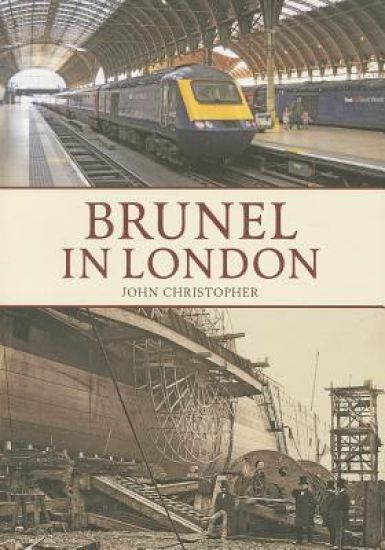
Brunel in London

Brunel in London

John Christopher

Amberley Publishing
2014
nidottu
Brunel and London. It might not seem an obvious association, but John Christopher puts the case that it was London, not Bristol, that was the most important centre of Brunel's activities. It was here that he lived, worked and died. The city is dotted with examples of his works, some obvious and some less so, from the subaquatic Thames Tunnel between Wapping to Rotherhithe where he cut his engineering teeth and was almost killed in a sudden deluge, to the Hungerford suspension bridge between Charing Cross and the South Bank - mostly forgotten but parts of it still exist - the two stations at Paddington with the Great Western Railway main line running to the west and, of course, his final steamship, the vast Great Eastern which was built at Millwall and marked the end of his career and his life. Less familiar are Brunel's connections with the Crystal Palace, designed by Joseph Paxton for the Great Exhibition of 1851, and the two towers he built when it was relocated to Sydenham in south London. John Christopher, an acknowledged expert on Brunel, takes us on a tour of London, examining the relationship between city and engineer. This is the latest in a series of books which are about rediscovering Brunel's works in your area.
Bradshaw's Guide Brunel's Railways Paddington to Penzance
Brunel and Bradshaw were close contemporaries. One became Britain's most celebrated engineer, driving his iron rails across the country from London to the tip of Cornwall, while the other brought the experience of rail travel to the masses through his timetables and guide books. Although the GWR had opened in 1840, the through journey to Penzance had only become possible with the completion of the Royal Albert Bridge at Saltash in 1859, the year of Brunel's death. 'Bradshaw's Guides were invaluable in their time and they provide the modern-day reader with a fascinating insight into the nineteenth century rail traveller's experience.' Bradshaw's guide was published very shortly after the line opened. It gives the reader a unique insight into the new world of the Victorian railways and goes beyond the engineering aspects of the line to record the sights to be seen in the towns and cities encountered along the route. Brunel expert John Christopher presents Bradshaw's original account as a continuous journey from Paddington to Penzance. The text is accompanied by contemporary images as well as many new colour photographs of the same journey today.
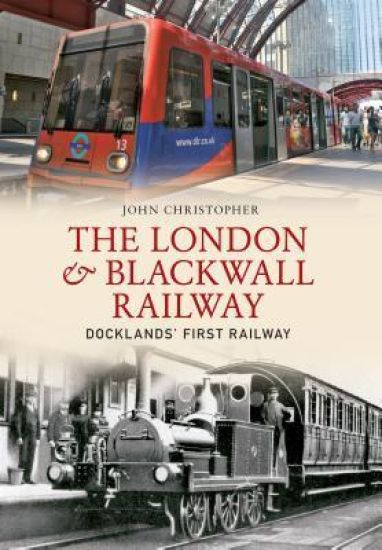
The London & Blackwall Railway

The London & Blackwall Railway

John Christopher

Amberley Publishing
2013
nidottu
Originally known as the Commercial Railway, the London & Blackwall was one of London's earliest and most distinctive lines. Stretching eastwards along a string of viaducts, it went from the City to Blackwall on the Thames. Worked by a rope haulage system initially, rather than conventional locomotives, it was built to a non-standard gauge of about 5 feet - all the more surprising given the involvement of Robert Stephenson. The railway served a mixed clientele, with dock workers and seamen rubbing shoulders with day-trippers and travellers connecting with vessels moored at Blackwall. Later extensions took the rails into the Isle of Dogs and, via Bow, to the east and northeast of London. Leased by the Great Eastern Railway in 1866, it was later absorbed by the LNER until passenger services ceased in 1926. Final closure of the railway in 1968 was not the end of the line for the old L&BR as the arrival of the Docklands Light Railway saw much of the route brought back into regular use.
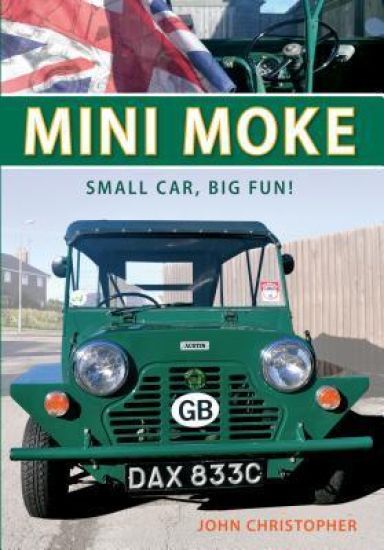
Mini Moke

Mini Moke

John Christopher

Amberley Publishing
2013
nidottu
Intended for the British Army as a contract for a small, Jeep-like, air-portable vehicle, the Mini Moke was a failure at this role and found its success as a fun, sunshine toy, equally at home on the beach as in the mountains. Over 50,000 were made and many still survive. Its most famous role was in the cult TV series The Prisoner. The Moke was manufactured in Britain and later in Australia and Portugal. With Mini running gear, the Moke is a practical and fun vehicle for the summer and this explains why so many survive to the present day. John Christopher tells the story of the Moke and the varieties from development to preservation.
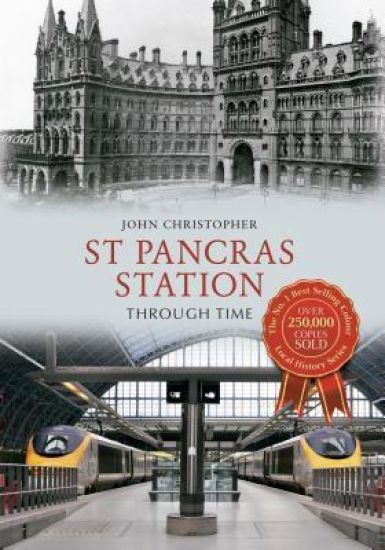
St Pancras Station Through Time

St Pancras Station Through Time

John Christopher

Amberley Publishing
2013
nidottu
With its famous hotel, St Pancras is now the London terminus of the Eurostar, with a high speed rail link to the Kent coast and the Channel Tunnel. But it was not always so. Once nearly redundant and threatened with demolition, the station was the London terminus of the Midland Railway, and could proclaim at its opening the largest single span roof in the world. Over GBP800 million saw St Pancras restored and rebuilt for the modern day. Described now as the 'world's most wonderful railway station', St Pancras is a paragon of Gothic architecture. The St Pancras Renaissance London Hotel utilised large parts of the Midland Grand Hotel and opened in 2011, exactly 138 years after the original was opened. John Christopher tells the story of the rise, decline and rise again of St Pancras as London's international station.
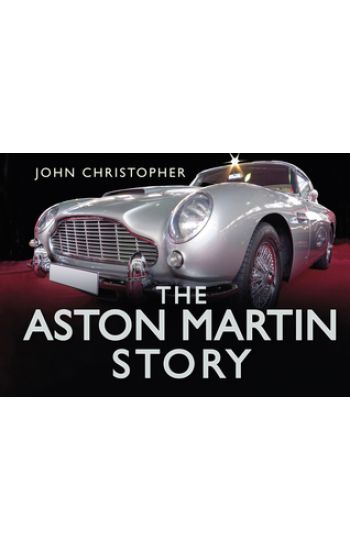
The Aston Martin Story

The Aston Martin Story

John Christopher

The History Press Ltd
2012
sidottu
John Christopher takes a fresh look at 100 years of Britain's most iconic car company, Aston Martin. From the origins of the Aston Martin marque, through the gadget-laden stars of numerous James Bond films, to the prestigious super-cars that continue to be market leaders throughout the world. Aston Martin was nearly called Bamford Martin, as founders Lionel Martin and Robert Bamford were already selling cars together, but in the end the company was named after the Aston Hill speed hill-climb near Aston Clinton in Buckinghamshire. Their first car was produced in 1915 but war and financial troubles often tempered progress and the company went through various changes in ownership on its way to becoming the global icon it is today. Following the typical Story book format, this sleekest of cars is celebrated with a wealth of colour photographs, facts and statistics.
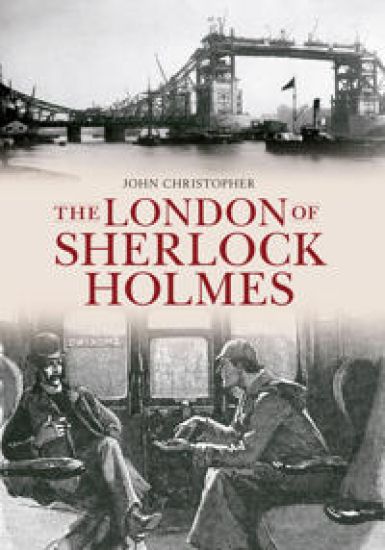
The London of Sherlock Holmes

The London of Sherlock Holmes

John Christopher

Amberley Publishing
2012
nidottu
221B Baker Street was the fictional home of Sherlock Holmes, Arthur Conan Doyle's 'consulting detective'. He penned 56 short stories and four novels featuring the detective and his faithful assistant, Dr Watson, mostly set in and around London. From 1887 until 1927, each new story captivated readers. Within the stories, over 250 London landmarks and streets are mentioned and John Christopher has brought together archive and more recent images of the most famous of Holmes's London haunts. Discovering the London of Sherlock Holmes gives the reader an insight into the London of the master detective, with guides to the locations which feature in the stories. From Scotland Yard to Paddington Station, from Victoria to the Embankment, from the Houses of Parliament to Holmes' own residence in 221B Baker Street, John Christopher brings Holmes into the modern day and makes it easy for the fan to guide themselves around the venues from the stories.
Building Great Relationships

Building Great Relationships

John Christopher

Lulu.com
2012
pokkari
The best things in life - success, happiness, love - depend on your ability to create and maintain great relationships. Everyone puts their best foot forward in a new work setting or when looking to attract a mate, but often have problems trying to maintain their relationships over the long term. That's because keeping a relationship healthy and fulfilling, requires a set of emotional intelligence skills that many of us don't have. Find out inside how to acquire them
Euston Station Through Time

Euston Station Through Time

John Christopher

Amberley Publishing
2012
nidottu
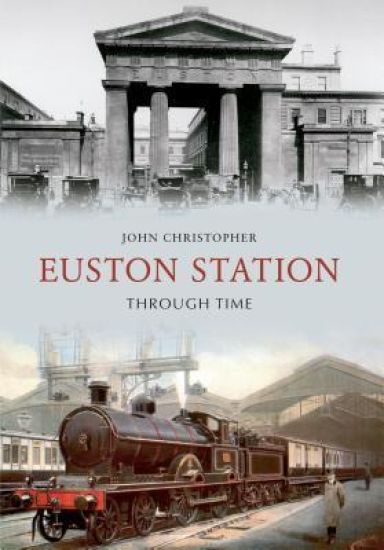
Built as the London terminus of the London & Birmingham Railway in July 1837, Euston was London's first intercity railway station. Originally designed by Philip Hardwick, the station entrance was through the world's largest Doric propylaeum, which became known as the Euston Arch. In the 1840s the station was expanded greatly and by 1923 express trains left Euston regularly for Wales, Scotland and the major cities of England, including Birmingham, Manchester and Liverpool. In 1961 - 2, the original station was demolished, to a huge outcry, and a new modernist station built in its place. In 2007, it was announced that the station would be rebuilt once more, but these plans fell by the wayside and in 2011 a new plan was announced. Euston is one of London's busiest stations, and may eventually be the terminus of the HS2 line. Join the author on a journey through time, telling the story of Euston from 1837 to the present day.
The White Voyage

The White Voyage

John Christopher

Literary Licensing, LLC
2012
sidottu
The White Voyage is a novel written by John Christopher, an English author. The story revolves around a group of explorers who embark on a dangerous journey to the South Pole. The expedition is led by a man named David, who is determined to be the first to reach the pole.As they make their way through the frozen wasteland, the group faces numerous challenges, including harsh weather conditions, treacherous terrain, and a lack of supplies. Along the way, they encounter a mysterious white creature that seems to be watching them.As the journey progresses, tensions rise among the group, and David's leadership is called into question. The explorers must overcome their differences and work together if they hope to survive the journey and achieve their goal.The White Voyage is a thrilling adventure story that explores themes of leadership, teamwork, and the human spirit. Christopher's vivid descriptions of the frozen landscape and the challenges faced by the explorers make for a gripping read that will keep readers on the edge of their seats.This scarce antiquarian book is a facsimile reprint of the old original and may contain some imperfections such as library marks and notations. Because we believe this work is culturally important, we have made it available as part of our commitment for protecting, preserving, and promoting the world's literature in affordable, high quality, modern editions, that are true to their original work.
The Mary Rose Story

The Mary Rose Story

John Christopher

The History Press Ltd
2012
sidottu
She was the finest vessel in Henry VIII's navy, the flagship of the fleet and one of the first to be equipped with heavy guns. The Mary Rose struck fear into the hearts of England's enemies and yet, during the Battle of the Solent in 1545, this great warship inexplicably heeled over and sank in full view of the King who was watching from the shore. Even now the cause of this disaster remains shrouded in controversy. Had water poured in through the open gunwales of the over-laden ship, or had the French guns found their target? John Christopher takes a fresh look at the design and construction of the Mary Rose, her illustrious naval career and the reasons behind the sinking. He also tells of the incredible salvage mission to recover the famous ship and the preservation of a fascinating and unique time-capsule of life in Tudor times.