Kirjojen hintavertailu. Mukana 12 595 353 kirjaa ja 12 kauppaa.

Kirjailija

John Christopher

Kirjat ja teokset yhdessä paikassa: 108 kirjaa, julkaisuja vuosilta 1973-2023, suosituimpien joukossa A Dusk of Demons. Vertaile teosten hintoja ja tarkista saatavuus suomalaisista kirjakaupoista.

108 kirjaa

Kirjojen julkaisuhaarukka 1973-2023.

Wren's City of London Churches

Wren's City of London Churches

John Christopher

Amberley Publishing
2012
nidottu
LONDON needed rebuilding after the great fire of 1666. Eighty-eight churches had been destroyed and a grand plan to rebuild them was started by Sir Christopher Wren. In the end, he designed fifty-one new churches and the splendour that is St Paul's Cathedral. Of the fifty-one churches, many have been lost, either to a combination of Victorian indifference, fire, subsidence or German bombs. Twelve Wren City churches survive in their original form, while many of the remaining churches have been rebuilt or substantially altered. Wren left an amazing legacy and John Christopher takes us on a tour of the churches, showing them as built and showing us a comparison scene of today.
Sherman Tank

Sherman Tank

John Christopher

Amberley Publishing
2011
nidottu
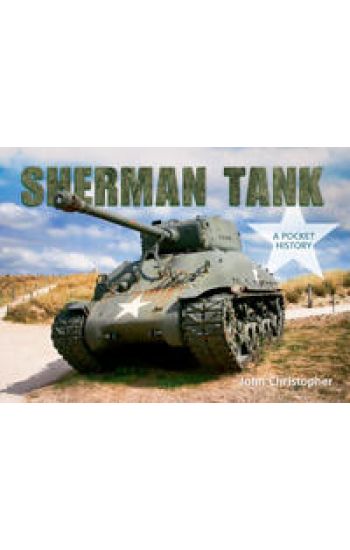
Once described as the 'worst tank that ever won the war', the Sherman tank was never going to be the equal of the German heavies in a direct tank-on-tank confrontation. It was never meant to be. What is was, though, was reliable, maneuverable and built in such prodigious quantities that it became ubiquitous. Sheer weight of numbers and interchangeability of parts was what made the Medium Tank M4, as the Sherman was officially designated, a war winner. Built in the States in car factories, railway works and new bespoke factories, the Sherman came in many variants, and was converted for other uses by the Allied forces. The Brits gave it a bigger gun, made 'funnies' that could wade ditches, build bridges, even float in the sea and clear minefields. The Sherman lasted in service into Korea with the Americans and many were sold overseas to Israel, Uganda, India, Paraguay, Argentina and Mexico, with the last coming out of service in 1989 in Chile. John Christopher tells the story of the M4 Sherman, using both new and archive images to show the most famous tank in the world in all its guises and variants.
The Lost Works of Isambard Kingdom Brunel

The Lost Works of Isambard Kingdom Brunel

John Christopher

Amberley Publishing
2011
nidottu
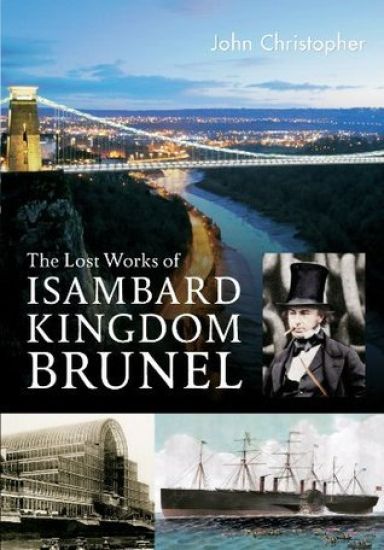
ISAMBARD KINGDOM BRUNEL is famous for the engineering wonders he left behind - from the SS Great Britain to the delights of Paddington and Temple Meads stations, but much of what he designed has been lost. From the ships Great Western and Great Eastern to the majestic water towers of Crystal Palace, the Hungerford Bridge and the South Devon atmospheric railway, many of Brunel's achievements have been lost to rebuilding, fire, neglect and scrapping. What survives of some of these structures tends to be photographic or in print form, with little extant to remind us of some of Brunel's greatness. John Christopher, author of Isambard Kingdom Brunel Through Time, takes us on a tour of the lost works of Brunel, telling the story with treasures that have been lost to us, and illustrating just why Brunel can truly be crowned as Britain's most famous engineer.
The SS Great Britain Story

The SS Great Britain Story

John Christopher

The History Press Ltd
2011
sidottu
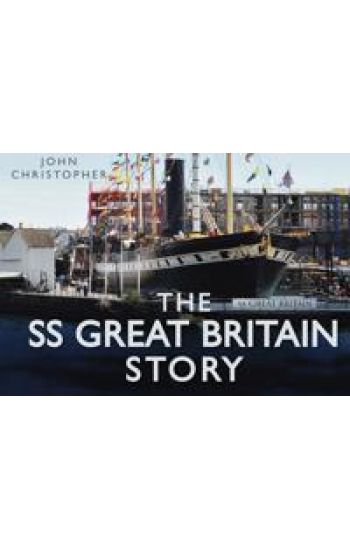
The SS Great Britain Story is a concise account of one of the most famous steamships ever built. The great Victorian engineer Isambard Kingdom Brunel embraced the latest innovations, including an iron hull and a screw-propeller, to create an ocean liner that was decades ahead of its time. Launched by Prince Albert in 1843, the SS Great Britain was nearly lost three years later when she ran aground in Dundrum Bay, Ireland. Fortunately she weathered the winter storms and went on to enjoy a long and chequered career. She spent many years transporting emigrants to Australia, served as a cargo vessel, and almost ended her days stranded on the Falkland Islands. Following an incredible rescue mission in the 1970s, fully documented here, she was returned to dry-dock in Bristol, where she was originally built, and is now the centrepiece of a fascinating and ongoing restoration project.
Land Rovers

Land Rovers

John Christopher

Amberley Publishing
2011
nidottu
In 1948, on the Isle of Anglesey, the first prototype Land Rover was put through its paces. It was a utilitarian four wheel-drive vehicle, designed for farmers, who could use it for a multitude of purposes. The vehicle, made to be simple and rugged, had an aluminium alloy body with a steel chassis. Intended as a simple stopgap for Rover, while post-war car production restarted, the Land Rover has proved to be an enduring British icon, advertised as the 'best 4x4 x far'. Infinitely flexible, Land Rovers have appeared in short, medium and long wheelbase variants, with a host of body styles and conversions to everything from six-wheeled fire engines to motor homes. Over sixty years after the prototype was built, the Land Rover of today still resembles the original - although creature comforts may be more evident on the current Defender. Whatever form it takes, the Land Rover is still one of the few vehicles that can be found on every continent of the world, and well over 50 per cent of all Land Rovers made are still in daily use. From the Outback to the Sahara, from the plains of America to the mountains of Norway, from the savanna of Africa to the jungles of Borneo, Land Rovers are still the best 4x4 x far.
Victoria Station Through Time

Victoria Station Through Time

John Christopher

Amberley Publishing
2011
nidottu
Victoria Station is the second in the Through Time series on London's famous railway termini. 115 million people pass through Victoria each year, making the station London's second busiest after Waterloo. The station is not one, but actually two halves, one built for the London, Brighton & South Coast railway, the other for the London, Chatham & Dover Railway, with the first of these halves opening in October 1860, and the other following in August 1862. As such, its architecture and design has always been a mating of two distinctive styles, each with its own booking office, stationmaster, platform numbering and timetable. The original LBSCR station was plain, with a simple iron girder roof, while the LCDR station had a wide canopy roof. Various rebuildings see us with the station of today. The amalgamation of various lines operating into the South East and Southern England into the Southern Railway, saw the stations finally being joined as one. Victoria has been the gateway to the continent, with boat trains running to various ports in the South Coast and is also a major underground station on the Victoria, District and Circle Lines.
The Me 262 Stormbird Story

The Me 262 Stormbird Story

John Christopher

The History Press Ltd
2010
sidottu
By the time of its introduction into front-line service in July 1944 many Germans thought the Me 262 was capable of turning the tide of the Second World War. Accelerating to speeds well over 500mph, it was faster than any Allied fighter operating in the European theatre. Officially designated as the Schwalbe, or Swallow, its pilots soon renamed the Me 262 as the Sturmvogel. While the war was still going Hitler’s way the Me262 was not considered a high-priority project by German High Command, until May 1943 when the celebrated Luftwaffe ace Adolf Galland flew the Me 262 and was so impressed by its performance that he advocated immediate mass production. Several types of the Me 262 were deployed – fighter bomber, interceptor and an unarmed reconnaissance version - but although over 1,400 Me 262s were constructed less than 300 saw combat. Even so, the Stormbird signalled the beginning of the end for piston-engined combat aircraft, and with the fall of the Third Reich the Allies were quick to seize the surviving Me 262s and their design directly influenced the development of jet fighters after the war. Packed with little-known facts and figures and featuring lists of preserved examples, this is both a fascinating and accessible read.
The Zeppelin Story

The Zeppelin Story

John Christopher

The History Press Ltd
2010
sidottu
In the 1930s the silver Zeppelins ruled the skies, crossing the Atlantic on a regular basis with a style and elegance never seen before or since in air travel. The rigid-framed leviathans were the brainchild of elderly Count Zeppelin and when the German people rose in popular support for his cause his airships rode a wave of national pride. From the aerial bombers of the First World War, Zeppelins were reinvented as the way for the rich and famous to travel, and with the embryonic aircraft of the time barely able to hop the Atlantic they were set to rule the airways. That is until the fiery destruction of the Hindenburg at Lakehurst, New Jersey, put an end to that dream. In many ways the tale of what might have been, written by an expert in lighter-than-air flight, The Zeppelin Story offers unique insights into this fascinating aircraft.
The HMS Victory Story

The HMS Victory Story

John Christopher

The History Press Ltd
2010
sidottu
Constructed from the wood of over 6,000 trees HMS Victory was designed as a ‘first-rate ship’, packing a formidable punch with over 100 guns arranged over three decks. Immortalised as Admiral Lord Nelson’s flagship in the Battle of Trafalgar, after bringing Nelson’s body back to England the Victory sailed out on a number of expeditions until her retirement in 1812. In a wonderfully entertaining narrative, and packed with fun facts, figures and over 100 colour photographs, author John Christopher recounts the story of this celebrated warship right up to its restoration project and current role as the centrepiece of Portsmouth’s historic docks. Author John Christopher is a life-long transport enthusiast and a balloon pilot. He has previously written The Hunter Story and Balloons at War for The History Press.
Paddington Station Through Time

Paddington Station Through Time

John Christopher

Amberley Publishing
2010
nidottu
Paddington is part of a hub of underground stations and is home to the world's most famous bear, named after the station. Revel in the selection of images of Paddington Through Time and see how Brunel's masterpiece has stood the test of time. 'I am going to design, in a great hurry, and I believe to build, a station after my own fancy,' stated Isambard Kingdom Brunel in 1851. That station, the second to bear the name 'Paddington', was to be another Brunel masterpiece. His delight at the prospect of building a replacement and permanent station at Paddington is self-evident. The new station was to be built on the plot of land just south of the Bishop's Road Bridge, defined by Eastbourne Terrace and Praed Street on two sides, and by London Street and the canal on the northeast side. Because the new station would be located almost entirely within a cutting, there would be no grand exterior, and instead, Brunel impressed with his immense roof of iron and glass. Paddington is currently in the middle of a huge redevelopment that has seen it retain much of its nineteenth-century design, but updated to suit traffic flows of today. Millions pass through the station weekly, both to the West and Wales and to Heathrow on the Heathrow Express.
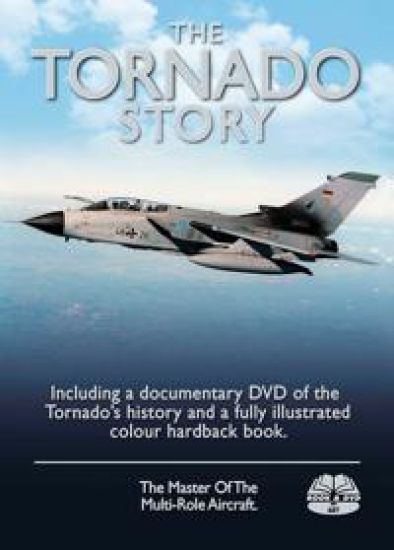
The Tornado Story DVD & Book Pack

The Tornado Story DVD & Book Pack

John Christopher

The History Press Ltd
2010
muu
The DVD explores how the US managed to keep stealth technology secret for more than a decade. Night Stalkers were designed and built in total secrecy and flown only at night. The US Government refused to acknowledge the existence of the F117A and the B2 Spirit see how the company that designed the ‘Flying Wing’ did it again in stealth form with the aid of a super computer. This is the true story of perhaps the most secret weapon since the Atomic Bomb.
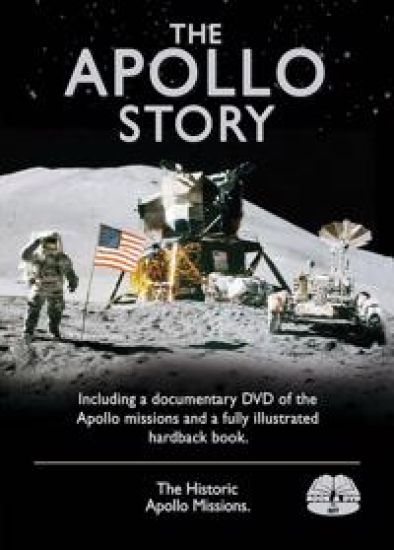
The Apollo Story DVD & Book Pack

The Apollo Story DVD & Book Pack

John Christopher

The History Press Ltd
2010
muu
When Neil Armstrong and Buzz Aldrin of Apollo 11 stepped on to the surface of the Moon in July 1969, it marked the pinnacle of eight years of manned spaceflight. Eight short years saw not only incredible technological advancement, but also the unbelievable bravery of an elite team of astronauts who rode the most powerful rockets ever devised. The 'space race' had been in response to JFK’s promise to the nation and the need to beat the Russians at all cost at a time of intense political rivalry. But victory came at a terrible price with the disastrous Apollo 1 launch-pad fire that killed three astronauts, and who can forget the unfolding drama of the ill-fated Apollo 13 mission? This is the story behind the greatest technological challenge of the twentieth century. Twelve men walked on the Moon while mankind discovered a new perspective on planet Earth.
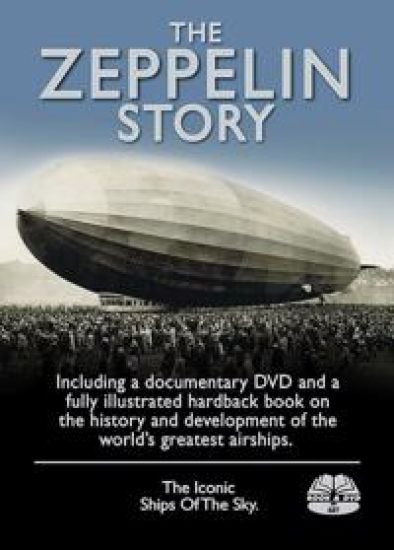
The Zeppelin Story DVD & Book Pack

The Zeppelin Story DVD & Book Pack

John Christopher

The History Press Ltd
2010
muu
The latest instalment in the successful 'Story' series, The Zeppelin Story charts the history of these incredible airships from their conception to their fiery destruction. In the 1930s the Zeppelins ruled the skies, crossing the Atlantic with a style and elegance never seen before - or since - in air travel. The brainchild of the elderly Count Zeppelin, the airships were reinvented from the aerial bombers of the First World War as the only way for the rich and famous to travel, and with the embryonic aircraft of the time barely able to hop the Atlantic, the Zeppelins were set to dominate air travel. At least, that was until the obliteration of the Hindenburg at Lakehurt, New Jersey.
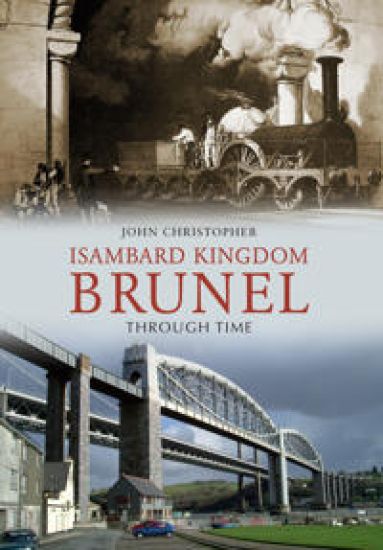
Isambard Kingdom Brunel Through Time

Isambard Kingdom Brunel Through Time

John Christopher

AMBERLEY PUBLISHING
2010
nidottu
Isambard Kingdom Brunel was Britain's greatest engineer, he was the man who built everything on a huge scale, he built Britain's biggest ship, some of Britain's most spectacular bridges, a tunnel under the Thames and the finest railway line in Britain, the London to Bristol route of the Great Western Railway. Everything he did was on a scale not seen before, not just in Britain, but in the world. Brunel left a legacy of industrial architecture and design, from the vaulted roof of Paddington station to the SS Great Britain, the first true ocean greyhound, from the Clifton Suspension Bridge to the Tamar Bridge, which bears his name on its approaches. His life was one of superlatives - bigger, wider, taller and faster. Nearly drowning in the Thames Tunnel, he eventually suffered a stroke aboard his Great Eastern, the world's largest vessel for almost half a century, and died two days before her maiden voyage. As the historian Dan Cruikshank put it, Brunel was quite simply 'a one-man Industrial Revolution'. Here, John Christopher tells the story of the man and his tunnels, bridges, railways, ships and buildings, with many new illustrations accompanying the old, showing the changes time has made to Brunel's greatest legacy - the things he designed and built that we still take for granted and use every day, over a century and a half since his death.
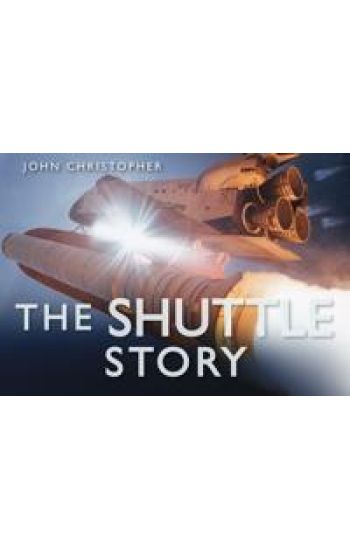
The Shuttle Story

The Shuttle Story

John Christopher

The History Press Ltd
2010
sidottu
Even before the Apollo astronauts had stepped on to the surface of the Moon, NASA's engineers were drawing up plans for a reusable space vehicle to replace the expendable and expensive rockets. The answer was STS – the Space Transportation System – a 'space plane' to be known as the Space Shuttle. First flown in 1981, the Shuttle is the most complicated flying machine ever devised. It has been the stalwart of NASA's continued manned spaceflight programme for almost thirty years, with well over 100 successful missions including the construction and provision of the International Space Station. This success has come at a high price with the loss of eleven astronauts in the Challenger and Columbia disasters, forever burned into the memories of the watching world. With NASA due to retire its ageing fleet in 2010, this book tells the fascinating story of the Space Shuttle from its inception to the shape of things to come and through triumph and disaster.
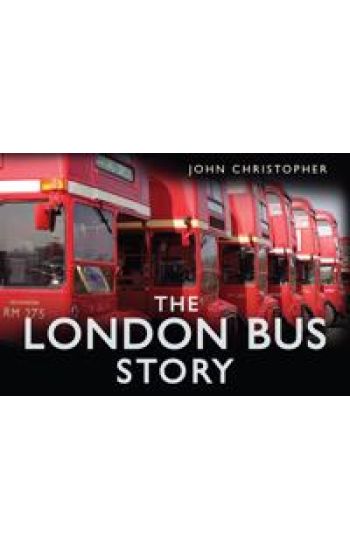
The London Bus Story

The London Bus Story

John Christopher

The History Press Ltd
2009
sidottu
The archetypal Routemaster is arguably the most recognised vehicle in the world, as witnessed at the recent Beijing Olympic handover ceremony. Buses have been operating on London's streets since 1829, originally with horse-drawn omnibuses, and the London Omnibus Company was founded in 1855 to regulate the various services. The first motorised buses made an appearance in 1902 with the LGOC beginning to manufacture the buses itself two years later. For six decades London went its own way with specially designed buses. More recent innovations such as the 'bendy' bus have not been popular, but today practicality of pushchair and wheelchair access has consigned the Routemaster to a nostalgic, but much-loved, position. With full-colour photographs, this book comprehensively tells the story behind London's famous red buses.
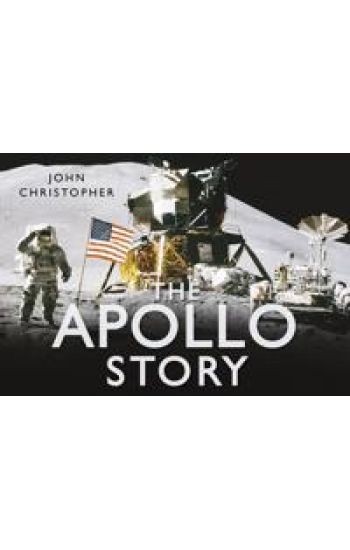
The Apollo Story

The Apollo Story

John Christopher

The History Press Ltd
2009
sidottu
When Neil Armstrong and Buzz Aldrin stepped onto the surface of the Moon in July 1969, it marked the pinnacle of the Apollo programme and a victory over the Soviets. But victory came at a terrible price, as politicians drove engineers forwards, beginning with the disastrous Apollo 1 launch-pad fire that killed three astronauts, and ending with the unfolding drama of the ill-fated Apollo 13 mission. Following on from the Moon landings, the Apollo programme went on to push the boundaries of long endurance space missions aboard Skylab, and it finished on a triumphant note with the American and Soviets joining forces in orbit, concluding a decade of feuding and paving the way for the International Space Station. Eight short years saw not only an incredible technological advancement, but also the unbelievable bravery of an elite team of astronauts who rode into the unknown on the most powerful rockets ever devised.
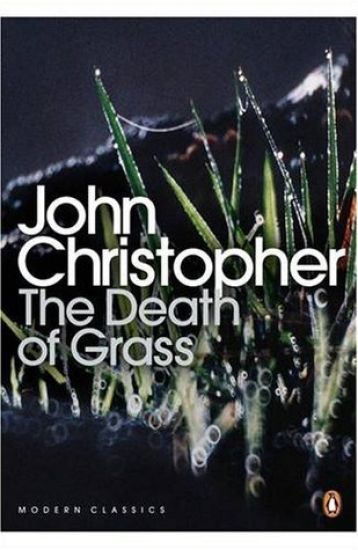
The Death of Grass

The Death of Grass

John Christopher

Penguin Classics
2009
pokkari
A thought experiment in future-shock survivalism' Robert MacFarlane'Gripping ... of all science fiction's apocalypses, this is one of the most haunting' Financial TimesWITH AN INTRODUCTION BY ROBERT MACFARLANEA post-apocalyptic vision of the world pushed to the brink by famine, John Christopher's science fiction masterpiece The Death of Grass includes an introduction by Robert MacFarlane in Penguin Modern Classics.At first the virus wiping out grass and crops is of little concern to John Custance. It has decimated Asia, causing mass starvation and riots, but Europe is safe and a counter-virus is expected any day. Except, it turns out, the governments have been lying to their people. When the deadly disease hits Britain, society starts to descend into barbarism. As John and his family try to make it across country to the safety of his brother's farm in a hidden valley, their humanity is tested to its very limits. A chilling psychological thriller and one of the greatest post-apocalyptic novels ever written, The Death of Grass shows people struggling to hold on to their identities as the familiar world disintegrates - and the terrible price they must pay for surviving.John Christopher (1922-2012) was the pen name of Samuel Youd, a prolific writer of science fiction. His novels were popular during the 1950s and 1960s, most notably The Death Of Grass (1956), The World in Winter (1962), and Wrinkle in the Skin (1965), all works depicting ordinary people struggling in the midst of apocalyptic catastrophes. In 1966 he started writing science-fiction for adolescents; The Tripods trilogy, the Prince in Waiting trilogy (also known as the Sword of the Spirits trilogy) and The Lotus Caves are still widely read today.Ifyou enjoyed The Death of Grass, you might like John Wyndham's The Day of the Triffids, also available in Penguin Modern Classics.