Kirjojen hintavertailu. Mukana 12 390 323 kirjaa ja 12 kauppaa.

Kirjailija

John Cooper

Kirjat ja teokset yhdessä paikassa: 69 kirjaa, julkaisuja vuosilta 1987-2025, suosituimpien joukossa Kielhofners Model of Human Occupation : teori och tillämpning. Vertaile teosten hintoja ja tarkista saatavuus suomalaisista kirjakaupoista.

69 kirjaa

Kirjojen julkaisuhaarukka 1987-2025.

Kielhofners Model of Human Occupation : teori och tillämpning

Kielhofners Model of Human Occupation : teori och tillämpning

Renée R Taylor; Judith Abelenda; Patricia Bowyer; Susan M. Cahill; John Cooper; Nichola Duffy; Elin Ekbladh; Anette Erikson; Mandana Fallah Pour; Chia-Wei Fan; Gail Fisher; Kirsty Forsyth; Sylwia Gorska; Lena Haglund; Michele Harrison; Helena Hemmingsson; Carmen-Gloria de las Heras de Pablo; Roberta P. Holzmueller; Riitta Keponen; Jessica Kramer; Patricia Lavedure; Sun Wook Lee; Donald Maciver; Alice Moody; Jane Melton; Kelly Munger; Lauro Munoz; Hiromi Nakamura-Thomas; Louise Nygård; Jane C. O'Brien; Ay-Woan Pan; Sue Parkinson

Studentlitteratur AB
2020
nidottu
I den svenska översättningen av Kielhofner’s Model of Human Occupation (femte amerikanska upplagan, den andra i svensk översättning), presenteras teori, forskning och tillämpning av modellen i boken. Modellen förklarar hur aktivitet motiveras, inordnas i vardagens livsmönster, utförs och påverkas av aktuell miljökontext samt vad som händer när människan ställs inför svårigheter som sjukdom, skador och annat som leder till problem med att utföra aktiviteter. I boken diskuteras hur arbetsterapi med stöd av modellen kan möjliggöra för människor att engagera sig i aktiviteter som ger mening och tillfredsställelse och som gynnar deras fysiska och emotionella välbefinnande. MOHO är den internationellt mest spridda och använda aktivitetsfokuserade modellen inom arbetsterapi. Boken innehåller rikligt med exempel på hur MOHO kan användas vid personcentrerad arbetsterapi. Modellen grundar sig på omfattande forskning och det finns ett starkt evidensbaserat empiriskt stöd för modellen och dess användning, vilket framkommer i bokens rika referensmaterial. I denna femte upplaga av boken har nya kapitel med tillämpning av modellen inom olika områden tillkommit och miljöns betydelse för görande och aktivitet har utvecklats. Boken vänder sig främst till arbetsterapeuter, studenter och forskare inom arbetsterapi men även till andra som vill fördjupa sig kring människans engagemang och delaktighet i aktivitet.Den engelska originalupplagan är publicerad av Wolters Kluwer.
The Lost Chapel of Westminster

The Lost Chapel of Westminster

John Cooper

BLOOMSBURY PUBLISHING PLC
2025
nidottu
The fascinating history of St Stephen's Chapel in the Palace of Westminster, a building at the heart of British life for over 700 years. Begun in 1292, the royal chapel of St Stephen was the crowning glory of the old palace of Westminster – a place of worship for kings and a showcase of the finest architecture, ritual and music the Plantagenets could muster. But in 1548, as the Protestant Reformation reached its height, St Stephen's was given a new purpose as the House of Commons. Burned out in the great palace fire of 1834, the Commons chamber was then recreated on a remarkably similar medieval design, perpetuating a way of doing politics that is recognisable to this day.St Stephen's has been part of many lives over the centuries, from the medieval masons who worked through the Black Death to complete the chapel, to the generations of MPs who locked horns in the Commons chamber. Threading together religion, politics, art, architecture and narrative history, John Cooper tells the story of the lost chapel, an iconic building that reflects the national transition from medieval divine-right monarchy to modern parliamentary democracy.
The Lost Chapel of Westminster

The Lost Chapel of Westminster

John Cooper

BLOOMSBURY PUBLISHING PLC
2024
sidottu
The fascinating history of St Stephen's Chapel in the Palace of Westminster, a building at the heart of British life for over 700 years. Begun in 1292, the royal chapel of St Stephen was the crowning glory of the old palace of Westminster – a place of worship for kings and a showcase of the finest architecture, ritual and music the Plantagenets could muster. But in 1548, as the Protestant Reformation reached its height, St Stephen's was given a new purpose as the House of Commons. Burned out in the great palace fire of 1834, the Commons chamber was then recreated on a remarkably similar medieval design, perpetuating a way of doing politics that is recognisable to this day.St Stephen's has been part of many lives over the centuries, from the medieval masons who worked through the Black Death to complete the chapel, to the generations of MPs who locked horns in the Commons chamber. Threading together religion, politics, art, architecture and narrative history, John Cooper tells the story of the lost chapel, an iconic building that reflects the national transition from medieval divine-right monarchy to modern parliamentary democracy.
Managing People in Commercial Kitchens

Managing People in Commercial Kitchens

Charalampos Giousmpasoglou; Evangelia Marinakou; Anastasios Zopiatis; John Cooper

TAYLOR FRANCIS LTD
2024
nidottu
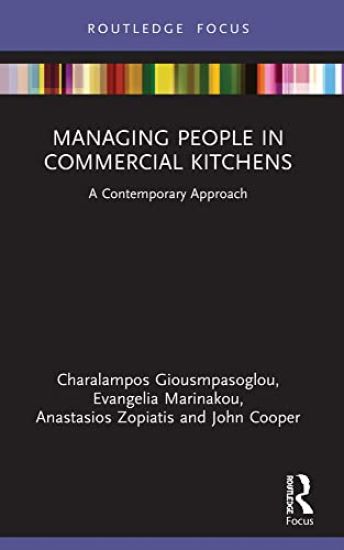
Managing People in Commercial Kitchens: A Contemporary Approach uses original research to argue that senior managers (head chefs) should differentiate their people management practices in kitchen brigades from those used in the hospitality industry more generally (induction, socialisation, and performance evaluation) due to the group’s strong occupational identity and culture.The understanding of chefs’ work from a management perspective is critical for successful hospitality operations but has been historically under-researched. Chapters provide a detailed account of chefs’ work in commercial kitchens from an HRM perspective. Using occupational identity and culture as a vehicle, this book explores the different aspects of managerial work in commercial kitchen settings: general management, leadership, education and training, skills and competencies, managing deviant behaviour, managing stress, and managing diversity (focused on gender segregation). The final chapter looks at future perspectives on this unique working environment and the many challenges arising from the latest developments such as the COVID-19 pandemic.Providing both theoretical insights and practical applications with the use of case studies throughout, this will be of great interest to upper-level students and researchers in hospitality, as well as a useful reference for current managers in the field.
The British Campaign for Soviet Jewry 1966-1991: Human Rights and Exit Permits.
The British Campaign for Soviet Jewry 1966-1991: Human Rights and Exit Permits is the first full length study of the movement based on primary sources. The book tells the story of one of the three or four most significant events of twentieth century Jewish history. Almost 1.5 million Jews left the Soviet Union mainly for Israel and the United States. According to Natan Sharansky, the international human rights campaign was the most successful such movement in history. It was one of the principal props of the Soviet dissidents campaigning, and an important factor that led to the humbling of the regime and the eventual disintegration of the Soviet Empire. It was also a rare example of the reversal of an attempt at Cultural Genocide, that the Soviet Union had intended to inflict on its Jewish citizens. The book attempts to weave the exciting story of the British movement in its international context in a fluent and readable manner. It focusses on its various components – the women and students and the National Council for Soviet Jewry; and differentiating it from its American counterparts, and the Israeli government, which attempted to guide its over-all strategy. While it covers the changing attitude of the British government to human rights from Harold Wilson to Margaret Thatcher, it also details the trials and tribulations of a countless number of Jewish and other dissidents and their supporters overseas. They bravely defied not only Stalin and his successors but the secret police and enabled the mass migration of Soviet Jewry to happen.
Fields of Madness

Fields of Madness

John Cooper

New Generation Publishing
2022
pokkari
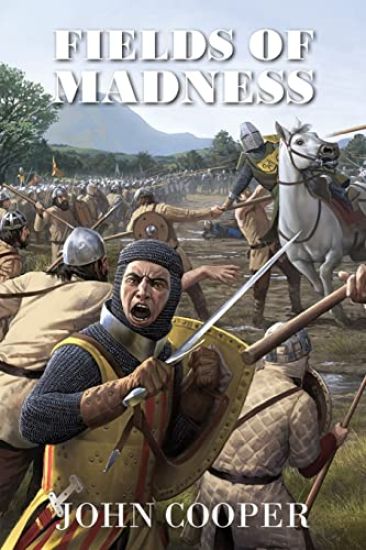
"Spread-eagled and face down in shallow snow, hurting in every centimetre of his body, he prised open an eyelid. Bewildered, his mind refused to process what he saw. He was surrounded by grotesque nightmares. Visibility was poor and falling snow imposed a theatrical dimension to the horror. However, there was no doubt. Hundreds of savages battered and lunged at each other in slow motion, their lead-weighted poleaxes and war-hammers clanging against armour. An unearthly cacophony bludgeoned his eardrums as, utterly terrified, he watched the violence. Surely, he had arrived in hell.""Bagnold, who specialised in software for the neurosurgical market, were at an advanced stage of trialling Neuro-Praxis, their new brain scanning technology. It would be able to read the entire structure of the brain and map it in a neural network using artificially created DNA molecules. Other companies in China and Germany were working on such technology but the unique and sensational aspect of Bagnold's design was that it could "learn" spontaneously and grow without restriction using on-line Internet resources. By mapping the entire structure of the subject's brain, it would have access to all its memories and beliefs."
Managing People in Commercial Kitchens

Managing People in Commercial Kitchens

Charalampos Giousmpasoglou; Evangelia Marinakou; Anastasios Zopiatis; John Cooper

TAYLOR FRANCIS LTD
2022
sidottu
Managing People in Commercial Kitchens: A Contemporary Approach uses original research to argue that senior managers (head chefs) should differentiate their people management practices in kitchen brigades from those used in the hospitality industry more generally (induction, socialisation, and performance evaluation) due to the group’s strong occupational identity and culture.The understanding of chefs’ work from a management perspective is critical for successful hospitality operations but has been historically under-researched. Chapters provide a detailed account of chefs’ work in commercial kitchens from an HRM perspective. Using occupational identity and culture as a vehicle, this book explores the different aspects of managerial work in commercial kitchen settings: general management, leadership, education and training, skills and competencies, managing deviant behaviour, managing stress, and managing diversity (focused on gender segregation). The final chapter looks at future perspectives on this unique working environment and the many challenges arising from the latest developments such as the COVID-19 pandemic.Providing both theoretical insights and practical applications with the use of case studies throughout, this will be of great interest to upper-level students and researchers in hospitality, as well as a useful reference for current managers in the field.
A Northern Childhood

A Northern Childhood

John Cooper

GROSVENOR HOUSE PUBLISHING LTD
2021
sidottu
This book chronicles my early life, from my birth in 1948 in austerity Britain to leaving school in 1964. The book is written very much through my own eyes, evoking memories of a poor but happy childhood. Life in what is now a distant bygone age was a lot simpler, and any pleasures were something you whole heartedly embraced, as they did not come along too often. It has been said many times that everyone has a book in them, and had been at the back of my mind for many years, without a clear idea of what my book would be about. With hindsight I think the idea of this book was always there in my mind, as I remember vividly the first few lines which simply describe the end of my childhood, as I waited for the no 17 bus to take me home after my last football match. It was August 1964, and my first job awaited at the Cooperative Wholesale Society in Manchester. The Cooper family was probably no different from any other family on Pershore Road, working hard to survive in post war Britain, and my parents striving to bring up their children with relatively little money. My mother (our Mam) was the rock of the family, the glue that held it all together, and was fiercely protective of her children. My father I am sure had his demons, and only having one leg for almost 40 years of his life would not have been easy, both physically and psychologically. I did find it difficult to talk to him at times, and with hindsight regret not having had a closer relationship. The greater Cooper family were an interesting bunch, but had many secrets and numerous "fallings out". Things changed slowly in the 1950's, and this was epitomised in my school life. My first school Parkfield Infant/Primary was a throwback to the "old days" with some of my teachers having taught my mother, the maxim being "children should be seen but not heard". Then in the late 1950's I went to Hollin Secondary Modern School, and it was like "night and day", with much younger teachers, promoting inclusive learning. Football has always been an important part of my life, particularly my love of Oldham Athletic, who I started supporting in the late 1950's with my uncle Billy. I also loved playing the game in all kinds of situations and conditions, making many good friends along the way, some of these friendships lasting to this day. At times it was a struggle to write this book despite it being relatively short in length, but I am so glad I did - something which my children and grandchildren can remember me by.
Lost Rickmansworth, Croxley Green and Chorleywood
Lost Rickmansworth, Croxley Green and Chorleywood portrays a vivid picture of the many losses and changes that have taken place in this lovely area over the last 100 years, as the reader embarks on a fascinating journey of discovery. Fond memories are evoked of the local cinemas, long since gone, where for a few hours one could escape to the celluloid world of make-believe in the smoky atmosphere of the auditorium. Sadly, industries such as Walker’s boatbuilding, Moussec’s sparkling wine and the John Dickinson paper mills have similarly disappeared, all irreplaceable and much missed. However, many buildings have survived such as Croxley House, The Cedars and Chorleywood House, though all now used for a different purpose to what they were originally. With a wealth of information inside, this book will surely appeal to those who can still recollect much that is lost and now relegated to memory, and those eager to discover the history of this small town and two villages in south-west Hertfordshire.
Zac and Kat, A Rough Road to Friendship

Zac and Kat, A Rough Road to Friendship

John Cooper; Esther Cooper

Epj2 Publishing
2021
pokkari
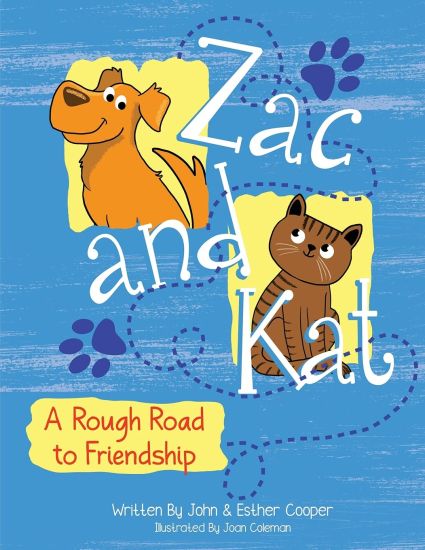
After making many photo books about adventures they have had over the years with their grandchildren, the Coopers decided to publish their first illustrated children's book. While growing up, the Coopers remember people quoting that old adage, "Don't judge a book by its cover." In Zac and Kat, A Rough Road to Friendship, it is proven that preconceptions of others are often faulty. If we can rid ourselves of the ingrained social and cultural stigmas, there is the possibility of finding new friends and productive relationships.In this delightful tale, children witness the making of an unlikely friendship between a dog and a cat. By using a pair of characters that children "know" are natural adversaries, Zac and Kat introduces young readers to the idea that established norms and expectations can be questioned. If you take a second look, you just might meet your best friend.
Children's Fiction 1900–1950

Children's Fiction 1900–1950

John Cooper

Routledge
2020
nidottu
First published in 1998, this volume explores how the genre of school stories had become firmly established by the turn of the twentieth century, having been built on the foundations laid by writers such as Thomas Hughes and F.W. Farrar. Stories for girls were also taking on a more exciting complexion, inspired by the ‘Katy’ books of Susan Coolidge.The first five decades of the twentieth century saw further developments in children’s fiction. In this comprehensive volume, John and Jonathan Cooper examine each decade in turn, with alphabetically arranged entries on popular children’s writers that published works in English during that period. 206 different authors are covered, many from the United States and Canada. Each entry provides information on the author’s pseudonyms, date of birth, nationality, titles of works, place and date of publication and the publisher’s name. The artist responsible for a book’s illustrations is also identified where possible.With over 200 illustrations of cover designs and dustwrappers, many of which are now rare and have never before been published, this book will delight collectors, dealers, scholars, librarians, parents and all those who simply enjoy reading children’s fiction.
Lost Watford

Lost Watford

John Cooper

Amberley Publishing
2020
nidottu
Lost Watford portrays a vivid picture of the many losses and changes that have taken place over the last 100 years, as the reader embarks on an interesting journey of discovery around the old market town. Lovely buildings such as Cassiobury House, the seat of the Earls of Essex, and the historic park gates, both long gone and now just a memory. We remember too much-loved shops such as Clements and Cawdell’s where each delightful visit was a shopping experience in itself. Fond memories are evoked as well of the many lost cinemas in the town, where for a few hours one could escape to the celluloid world of make-believe in the smoky atmosphere of the auditorium. Sadly, major industries such as printing, brewing and the production lines of Scammell Lorries have similarly disappeared into the mists of time, all irreplaceable and much missed. Lost Watford presents a portrait of this town in Hertfordshire and a way of life that has radically changed or disappeared today, showing not just the buildings, streets and industries that have gone or changed, but also a way of life. This fascinating photographic history of lost Watford will appeal to all those who live in the town or know it well, as well as those who remember it from previous decades.
Let God in: One Ignatian Journey

Let God in: One Ignatian Journey

John Cooper

Austin Macauley Publishers
2019
nidottu
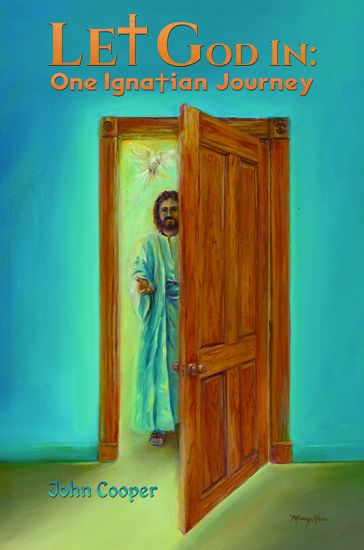
Perhaps you are a lifelong Christian as is the author, John A. Cooper. Perhaps you are thinking, ""I have already let God into my life and my salvation is assured."" Perhaps you are not a Christian, maybe you are Muslim, or atheist, or maintain another belief system, or no system at all. Then, this book is for you Even if you have a relationship with God, would you open the door to your heart even wider and give up everything to live only in the love and Grace of God? Notice the cover art and symbol for the Holy Spirit, the light from the Father, and Jesus, all One God, all of the same substance. Jesus' hands reach out for you... Will you let Him into your life? Will you open the door even wider if he already lives in you? May Jesus be your Peace?John, You share yourself beautifully, both in your life experiences and in your imagination of scripture scenes, in the way you image Jesus, and how you apply those prayers to your personal and spiritual growth. This is a book that will invite all who read it with humility and courage to seek God in their everyday life experiences, with greater depth, trust, and unity. Thank you for sharing this book with me. - Bob Fitzgerald, former Executive Director Ignatius House, Atlanta, GA; currently Adjunct Lecturer, Spring Hill College; and Spiritual Director.This book is both a personal testimony and a practical guide. As in the story of St. Ignatius, the sudden loss of lifelong ambitions led to the grace of transformation, from self-confident determination to profound surrender, to the living Christ. Cooper shares a condensed version of his personal journal during the Spiritual Exercises in daily life. His notes for 32 weeks of prayer and reflection offer a very practical template for others to make their own journey of transformation. - Christopher Viscardi, S.J., Director of Spiritual Direction Program, Spring Hill College.
Let God in: One Ignatian Journey

Let God in: One Ignatian Journey

John Cooper

Austin Macauley Publishers
2019
sidottu
Perhaps you are a lifelong Christian as is the author, John A. Cooper. Perhaps you are thinking, ""I have already let God into my life and my salvation is assured."" Perhaps you are not a Christian, maybe you are Muslim, or atheist, or maintain another belief system, or no system at all. Then, this book is for you Even if you have a relationship with God, would you open the door to your heart even wider and give up everything to live only in the love and Grace of God? Notice the cover art and symbol for the Holy Spirit, the light from the Father, and Jesus, all One God, all of the same substance. Jesus' hands reach out for you... Will you let Him into your life? Will you open the door even wider if he already lives in you? May Jesus be your Peace?John, You share yourself beautifully, both in your life experiences and in your imagination of scripture scenes, in the way you image Jesus, and how you apply those prayers to your personal and spiritual growth. This is a book that will invite all who read it with humility and courage to seek God in their everyday life experiences, with greater depth, trust, and unity. Thank you for sharing this book with me. - Bob Fitzgerald, former Executive Director Ignatius House, Atlanta, GA; currently Adjunct Lecturer, Spring Hill College; and Spiritual Director.This book is both a personal testimony and a practical guide. As in the story of St. Ignatius, the sudden loss of lifelong ambitions led to the grace of transformation, from self-confident determination to profound surrender, to the living Christ. Cooper shares a condensed version of his personal journal during the Spiritual Exercises in daily life. His notes for 32 weeks of prayer and reflection offer a very practical template for others to make their own journey of transformation. - Christopher Viscardi, S.J., Director of Spiritual Direction Program, Spring Hill College.