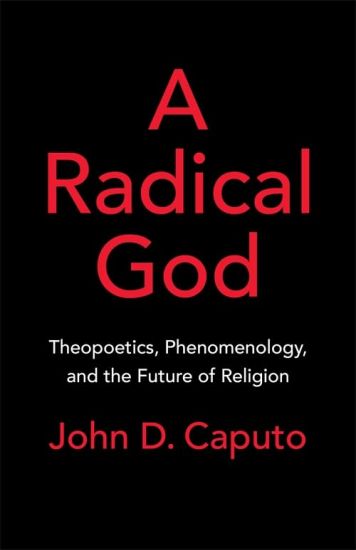
Kirjailija
John D. Caputo
Kirjat ja teokset yhdessä paikassa: 41 kirjaa, julkaisuja vuosilta 1982-2026, suosituimpien joukossa Poesía Teológica. Vertaile teosten hintoja ja tarkista saatavuus suomalaisista kirjakaupoista.
Mukana myös kirjoitusasut: John D Caputo
41 kirjaa
Kirjojen julkaisuhaarukka 1982-2026.
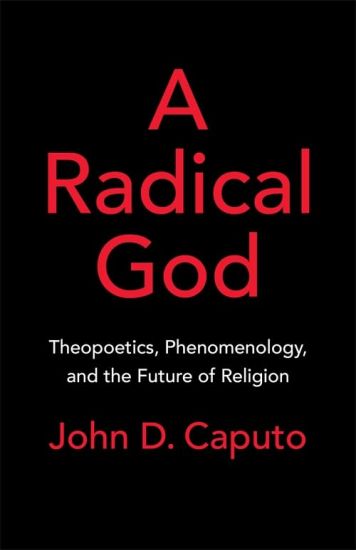
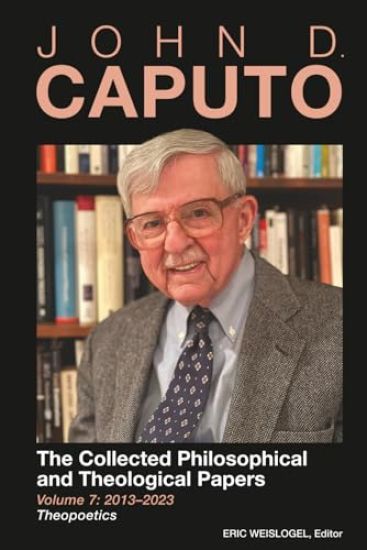
Religion is making itself unbelievable—scandal-ridden, antiscientific, authoritarian, and reactionary. Can religion be saved? Is it even worth saving? Can religion be saved not just from its critics but from itself? John D. Caputo proposes a radical alternative—what he calls “religion’s last stand”—by turning to theopoetics. In the traditional account, theopoetics calls for approaching God poetically because God transcends human language. Caputo contests this view, arguing that in the radical account, God does not precede but is generated by the poetic imagination. Theopoetics is not adorning an already constituted God; it is constituting the very idea of God. A radical God, untethered from theological orthodoxy and confessional rivalries, is neither a real being nor an unreal illusion, neither the object of supernatural belief nor the reject of skeptical disbelief. By adopting a phenomenological suspension of both belief and disbelief, both theism and atheism, both the religious and the secular, Caputo demystifies the distinction between the natural and the supernatural and replaces it with the distinction between the prosaic and the poetic. A daring undertaking in radical theology, this lively and provocative book proposes a startlingly different future for religion.
If you no longer “believe in God,” the Supreme Being of classical theology, or you never did in the first place, is there anything you still ought to believe, anything you should cherish unconditionally, no matter what? In this lively and accessible book, addressed to believers, “recovering” believers, disbelievers, nonbelievers, and “nones” alike—to anyone in search of what they really do believe—the acclaimed philosopher and theologian John D. Caputo seeks out what there is to believe, with or without religion.Writing in a lucid and witty style, Caputo offers a bold account of a “radical theology” that is anything but what the word theology suggests to most people. His point of departure is autobiographical, describing growing up in the world of pre-Vatican II Catholicism, serving as an altar boy, and spending four years in a Catholic religious order after high school. Caputo places Augustine’s Confessions, Tillich’s Dynamics of Faith, and Jacques Derrida and postmodern theory in conversation in the service of what he calls the “mystical sense of life.” He argues that radical theology is not simply an academic exercise but describes a concrete practice immediately relevant to the daily lives of believers and nonbelievers alike. What to Believe? is an engaging introduction to radical theology for all readers curious about what religion can mean today.
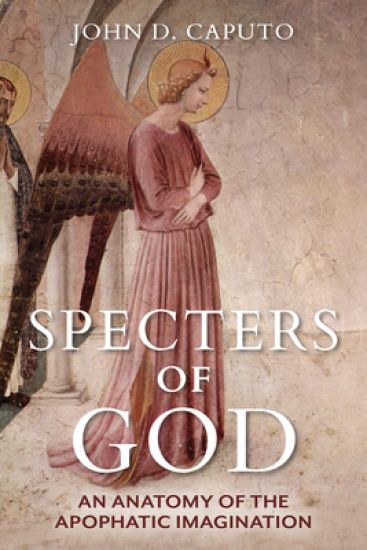
In Specters of God, John D. Caputo returns to the original impulse of his work, the "mystical element" in things, here under the name of an "anxious apophatics," as distinct from an "edifying apophatics" anchored in unity with God. In dialogue with Schelling, a new turn for him and the lynchpin of this argument, Caputo addresses the nocturnal powers in being, the specters that haunt our being and bring us up short. The result is an erudite and insightful analysis—in his usual lively and masterful style—of several key "spectral" figures from medieval angelology and Eckhart's Gottheit, through Luther's deus absconditus and Schelling's "Satanology," to the spectralization and virtualization of the world in the "posthuman" age. Arguing that the name of God is not the master name of a super-being who is going to save us but a placeholder for sources deep in our apophatic imaginary, he asks, Has "God" become a (holy) ghost of the past? A passing spectral effect of the ancient harmonies of the spheres? Does radical thinking culminate in a cosmopoetics beyond theism and its theology, in a doxology to the transient glory of the world, whatever it was in the beginning, however eerie its end, world without why?
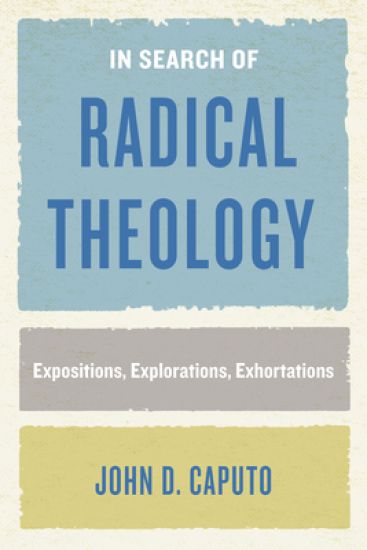
This sparkling collection of essays invites readers to join a seasoned scholar on his journey to catch "radical theology" in action, both in the Church and our culture at large. Capturing a career's worth of thought and erudition, this rich volume treats readers to creative thought, careful argumentation, and sophisticated analysis transmitted through the lucid, accessible prose that has earned the author a wide readership of academics and non-academics alike. In tackling "radical theology," John D. Caputo has in mind the deeper stream that courses its way through various historical and confessional theologies, upon which these theologies draw even while it disturbs them from within. They are well served by this disturbance because it keeps them on their toes. When we read about professional theologians' losing their jobs in confessional institutions, the chances are that, by earnestly digging into what is going on in their tradition, they have hit upon radical theological rock. Unlike modernist dismissals of religion, radical theology does not debunk but re-invents the theological tradition. Radical theology, Caputo says, is a double deconstruction—of supernatural theology on the one hand and of transcendental reason on the other, and therefore of the settled distinctions between the religious and the secular. Caputo also addresses the challenge for radical theology to earn a spot in the curriculum, given that the "radical" makes it suspect among the confessional seminaries while the "theology" renders it suspect among university seminars. Journeying from the academy to contemporary American culture, In Search of Radical Theology includes a captivating presentation of radical political theology for the time of Trump. This utterly unique volume not only brings readers on an enlightening tour of Caputo's thought but also invites us to accompany the author as he travels into intriguing new territories.
John D. Caputo stretches his project as a radical theologian to new limits in this groundbreaking book. Mapping out his summative theological position, he identifies with Martin Luther to take on notions of the hidden god, the theology of the cross, confessional theology, and natural theology. Caputo also confronts the dark side of the cross with its correlation to lynching and racial and sexual discrimination. Caputo is clear that he is not writing as any kind of orthodox Lutheran but is instead engaging with a radical view of theology, cosmology, and poetics of the cross. Readers will recognize Caputo's signature themes—hermeneutics, deconstruction, weakness, and the call—as well as his unique voice as he writes about moral life and our strivings for joy against contemporary society and politics.
The Adventure of Weak Theology
Štefan Štofaník; John D. Caputo
State University of New York Press
2019
pokkari
Štofaník provides a unique, personal reading of weak theology and tries to inhabit the gap between it and its "founder," John D. Caputo.In this distinctive exploration of John D. Caputo's work, Štefan Štofaník traces Caputo's journey of philosophical discovery from his earlier, more conventional academic writings to his later, almost confessional works of weak theology and his deep engagement with Derrida. Štofaník draws upon Caputo's life story to help explain sudden shifts in Caputo's thinking, offers intricate readings of philosophical passages that have all too often been taken for granted, and joins in Caputo's effort to find a theology that can be trusted and that does not rely upon dogmatic and hierarchical authority. At the same time, Štofaník subtly disagrees with aspects of Caputo's view and turns to the work of Antoine de Saint-Exupéry as a way to suggest that one cannot take leave of the tradition of theology as easily as Caputo thinks. At times, The Adventure of Weak Theology reads like a letter to Caputo, and Štofaník's own passion for theology, his deep understanding of Caputo's work, and his gift for writing makes this an immensely appealing book for both admirers and critics of Caputo.
The Adventure of Weak Theology
Štefan Štofaník; John D. Caputo
State University of New York Press
2018
sidottu
Štofaník provides a unique, personal reading of weak theology and tries to inhabit the gap between it and its "founder," John D. Caputo.In this distinctive exploration of John D. Caputo's work, Štefan Štofaník traces Caputo's journey of philosophical discovery from his earlier, more conventional academic writings to his later, almost confessional works of weak theology and his deep engagement with Derrida. Štofaník draws upon Caputo's life story to help explain sudden shifts in Caputo's thinking, offers intricate readings of philosophical passages that have all too often been taken for granted, and joins in Caputo's effort to find a theology that can be trusted and that does not rely upon dogmatic and hierarchical authority. At the same time, Štofaník subtly disagrees with aspects of Caputo's view and turns to the work of Antoine de Saint-Exupéry as a way to suggest that one cannot take leave of the tradition of theology as easily as Caputo thinks. At times, The Adventure of Weak Theology reads like a letter to Caputo, and Štofaník's own passion for theology, his deep understanding of Caputo's work, and his gift for writing makes this an immensely appealing book for both admirers and critics of Caputo.
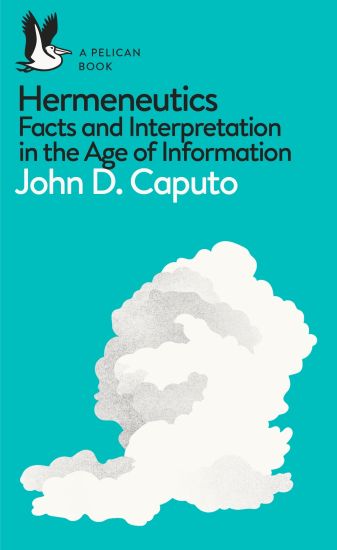
Is anything ever not an interpretation? Does interpretation go all the way down? Is there such a thing as a pure fact that is interpretation-free? If not, how are we supposed to know what to think and do? These tantalizing questions are tackled by renowned American thinker John D Caputo in this wide-reaching exploration of what the traditional term 'hermeneutics' can mean in a postmodern, twenty-first century world. As a contemporary of Derrida's and longstanding champion of rethinking the disciplines of theology and philosophy, for decades Caputo has been forming alliances across disciplines and drawing in readers with his compelling approach to what he calls "radical hermeneutics." In this new introduction, drawing upon a range of thinkers from Heidegger to the Parisian "1968ers" and beyond, he raises a series of probing questions about the challenges of life in the postmodern and maybe soon to be 'post-human' world.'
Inspired by Paul Tillich's suggestion that atheism is not the end of theology but is instead the beginning, and working this together with Derrida's idea of the undeconstructible, Caputo explores the idea that the real interest of theology is not God, especially not God as supreme being, but the unconditional.
Inspired by Paul Tillich’s suggestion that atheism is not the end of theology but is instead the beginning, and working this together with Derrida’s idea of the undeconstructible, Caputo explores the idea that the real interest of theology is not God, especially not God as supreme being, but the unconditional.
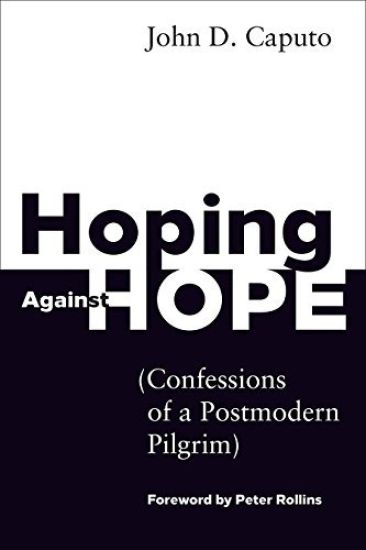
John D. Caputo has a long career as one of the preeminent postmodern philosophers in America. Caputo now reflects on his spiritual journey from a Catholic altar boy in 1950s Philadelphia to a philosopher after the death of God. Part spiritual autobiography, part homily on what he calls the nihilism of grace, Hoping against Hope calls believers and nonbelievers alike to participate in the praxis of the kingdom of God, which Caputo says we must pursue without why.