Kirjojen hintavertailu. Mukana 12 390 323 kirjaa ja 12 kauppaa.

Kirjailija

John Grehan

Kirjat ja teokset yhdessä paikassa: 33 kirjaa, julkaisuja vuosilta 1999-2026, suosituimpien joukossa The Death Railway in Numbers. Vertaile teosten hintoja ja tarkista saatavuus suomalaisista kirjakaupoista.

33 kirjaa

Kirjojen julkaisuhaarukka 1999-2026.

The Death Railway in Numbers

The Death Railway in Numbers

John Grehan

PEN SWORD BOOKS LTD
2026
nidottu
Between May 1942 and October 1943 Allied prisoners of war built and later helped maintain a railway which linked the rail networks of Thailand and Burma. Yet how many prisoners worked on the railway and how many died during its construction? How far did it run? How many stations and work camps were there along the line? How many times was the railway attacked by Allied bombers and how many times were Imperial Japanese Army soldiers attacked by elephants? The answers to all these questions, along with the mass of intriguing facts and figures in this book, reveal not just how the railway was built and used, but the suffering and misery endured by the prisoners as they strove under the brutal direction of the Japanese railway engineers and the savage, merciless treatment of the guards in the working camps. How deep was the mud the prisoners had to struggle through to reach their workstations during the monsoon period, and how far did they have to struggle? How many hours did the prisoners work each day during the oppressive ‘speedo’ period, and what quantity of earth did they have to shift when clearing the jungle before they could return to camp? There were, of course, lighter moments recorded. How far did PoWs dressed up as women for an event chase a thoroughly embarrassed Japanese guard? How many senior officers were invited by the Japanese to a slap-up, multi-course meal in the midst of the prisoners having to survive on starvation rations? The Death Railway in Numbers is illuminated by the stories behind the numbers, often told by the ones who worked on the construction and subsequent maintenance of the railway. The details are fascinating, but the numbers reveal an horrific picture of one of the most shocking episodes of the twentieth century.
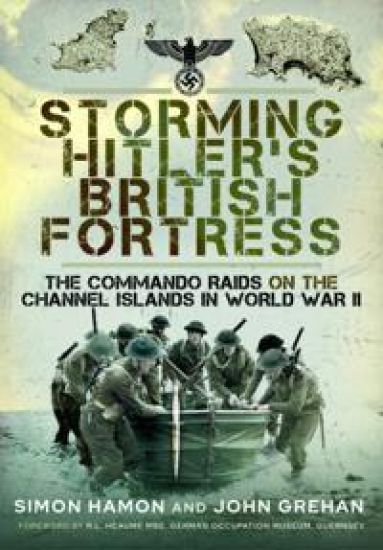
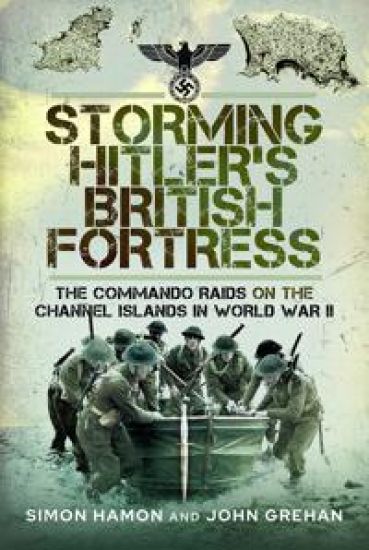
Storming Hitler's British Fortress

Storming Hitler's British Fortress

Simon Hamon; John Grehan

PEN SWORD BOOKS LTD
2026
nidottu
In 1940 British forces were withdrawn from the Channel Islands, allowing the Germans to occupy British territory. Hitler was determined to hold onto what he saw as a valuable prize, and the islands were heavily fortified. However, despite being extensively defended, the occupied Channel Islands remained vulnerable to commando-style raids. Indeed, a total of nine such operations were conducted between 1940 and 1943. Many others were planned but never executed. Each one was a bold and dangerous expedition, with small groups of men daring to trespass on Hitler’s cherished British stronghold. The first of these attacks, Operation Ambassador, took place on the night of 14/15 July 1940. The second ever raid undertaken by the Commandos, it was focused on the island of Guernsey. Though the mission failed to achieve any of its objectives, valuable lessons were learnt. In the weeks, months and years that followed, raids were also undertaken against Jersey, Sark, Herm, Burhou and the Casquets lighthouse off Alderney. The final attack, Hardtack 22, was one of the three carried out against the German garrison on Sark. After the second mission, Hardtack 7, had to be aborted, the Commandos returned to the island on the night of 26/27 December 1943, tasked with undertaking a reconnaissance and capturing prisoners. This too was a failure after the raiders entered a minefield; two men were killed and most of the others wounded. Compiled from official reports and first-hand accounts, each of the raids is packed with intrigue and drama – including the fear of reprisals being taken against the islanders. Each of the missions are explored on the ground today by the authors, with the routes taken and all key locations relating to each attack photographed and described. The planned but never executed raids are also explored. Never before have these stories been told in such detail, and never before in the words of those that took part in the raids and those who, ultimately, were most affected.
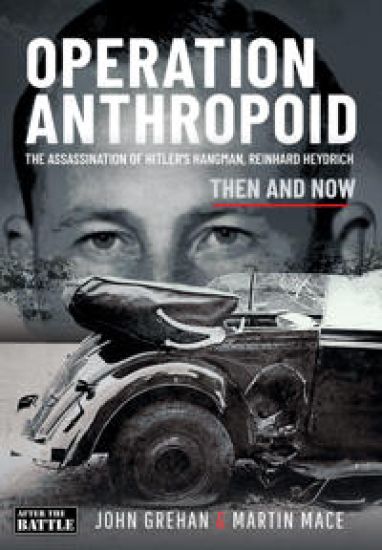
Operation Anthropoid

Operation Anthropoid

John Grehan; Martin Mace

PEN SWORD BOOKS LTD
2025
sidottu
Czechoslovakia, a vital European economy, was dismantled by Nazi Germany. The Sudetenland was annexed, and the rest of the nation became the Protectorate of Bohemia and Moravia. Hitler replaced Reichsprotektor Konstantin von Neurath with Reinhard Heydrich in September 1941 due to unmet production quotas. Known as the "Butcher of Prague," Heydrich imposed martial law, leading to widespread arrests and executions. In response, the Czechoslovak government-in-exile, led by Edvard Beneš, devised Operation Anthropoid to assassinate Heydrich. Josef Gabcík and Jan Kubiš, members of the exiled Czech Army trained by the British Special Operations Executive, parachuted into Czechoslovakia on 29 December 1941. Despite Heydrich’s suppression of the Czech resistance, local supporters assisted them. On 27 May 1942, Gabcík and Kubiš attacked Heydrich as his car slowed at a bend. Gabcík’s Sten gun jammed, but Kubiš’s grenade wounded Heydrich. Though they escaped, Heydrich died eight days later.
Atomic Attack

Atomic Attack

Alexander Nicoll; John Grehan

PEN SWORD BOOKS LTD
2025
nidottu
At 08.15 hours on 6 August 1945, one of the most seismic events in human history unfolded over the Japanese city of Hiroshima. An atomic bomb, nicknamed _Little Boy_, exploded about 1,500 feet above the city with a force of 15,000 tons of TNT. Around five square miles of the city were destroyed in seconds and tens of thousands of its citizens and soldiers were killed. Three days later, a second atomic bomb was unleased against Nagasaki with similar devastating results. Less than a week later Emperor Hirohito announced Japan’s unconditional surrender, bringing the Second World War to an explosive end. The story of the bombing of Hiroshima and Nagasaki begins with the Manhattan Project. From its inception in 1939, the Manhattan Project, which at its height involved more than 125,000 individuals and ultimately cost billions of US dollars, is explored in this book, as is the organisation and training of the bomb crews of 393rd Bombardment Squadron of Colonel Paul Tibbets’ 509th Composite Group. For its attacks on Japan, the squadron was equipped with fifteen dazzling silverplate Boeing B-29 Superfortresses, which had been specially adapted to carry nuclear weapons. It is, of course, the dramatic events of 6 and 9 August 1945, which are featured most prominently in this book. Every step of the attacks, from the arming of _Enola Gay_ and _Bockscar_, which famously carried the two nuclear devices, to their take-off from Runway Able on the tiny island of Tinian, to the flights to the targets and the release of the bombs are revealed. Many are the unmistakable images of the detonation and effects of the two nuclear blasts, portrayed here in graphic contemporary photographs. Portraits of the key individuals are shown, as are the test sites, workshops, aircraft and the weapons themselves to provide a wide-ranging, comprehensive visual study of the steps which led to the first and only deployment of nuclear bombs in warfare.
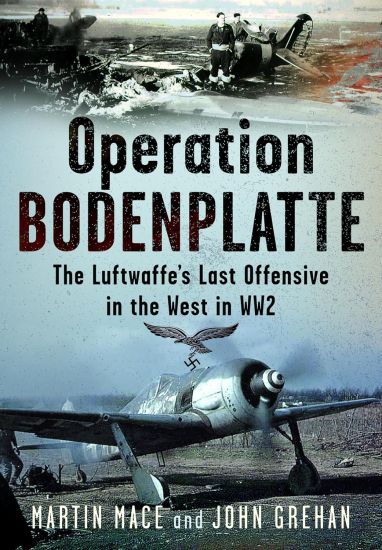
Operation Bodenplatte

Operation Bodenplatte

Martin Mace; John Grehan

PEN SWORD BOOKS LTD
2025
sidottu
Hitler’s Ardennes Offensive, his last great throw of the dice, was stagnating. After the initial German successes, the Allies had rallied. In a desperate bid to recover the momentum, the Luftwaffe aimed to gain control of the air by launching a major attack upon Allied airfields in the Low Countries – Operation Bodenplatte. On 1 January 1945, more than 800 fighters and fighter-bombers, predominantly Focke-Wulf Fw 190s and Messerschmitt Bf 109s, were despatched in this low-level, dawn raid on Allied airfields in Belgium and the Netherlands. The object was to destroy or cripple as many Allied aircraft, hangars and airstrips as possible. Generalleutnant Adolf Galland, the man in charge of Germany’s fighter force and responsible for the original plans for Operation Bodenplatte, saw that the Allies had accumulated such a strong force of aircraft that there must be heavy congestion on the airfields used by the Allies. As the Luftwaffe rarely risked daylight raids, he hoped to take the Allies by surprise and catch their aircraft on the ground in a single massive strike. Galland’s plan worked. Surprise was complete, and many Allied aircraft were destroyed before they could be scrambled. Allied pilots and aircrew ran or dived for cover as the German fighters swept over the airfields of Duerne at Antwerp, Evere in Brussels, Eindhoven, Ghent and another twelve bases of the RAF’s 2nd Tactical Air Force, and the American Eighth and Ninth Air Forces. But not all the attacks were as successful as Galland had hoped. At some airfields the Allied squadrons were absent, already engaged in operations and at others powerful anti-aircraft batteries took a heavy toll of the attackers. As Galland, explained: ‘In Unfamiliar conditions and with insufficient training and combat experience, our numerical strength had no effect. It was decimated while in transfer, on the ground, in large air battles ... and was finally destroyed.’ Figures vary enormously, though it has been recorded that 224 Allied aircraft were destroyed (of which 144 were RAF) with a further eighty-four damaged beyond unit repair. For its part, the Luftwaffe lost sixty-two aircraft to Allied fighters and 172 to anti-aircraft guns – losses that it never really replaced, particularly in terms of aircrew. In Galland’s words, the Luftwaffe ‘received its death blow at the Ardennes offensive’. Told through a detailed narrative and a unique collection of dramatic photographs, the story of the last major air battle of the Second World War, is portrayed in vivid detail allowing the reader to see the destruction and devastation of the German attacks – and the crippling losses the Luftwaffe sustained.
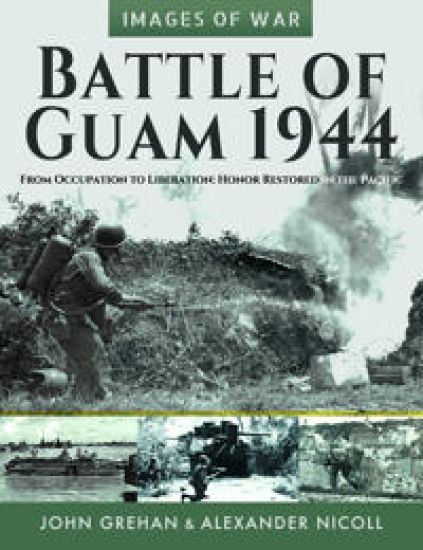
Battle of Guam 1944

Battle of Guam 1944

Alexander Nicoll; John Grehan

PEN SWORD BOOKS LTD
2025
nidottu
At 16.00 hours on 27 July 1944, the Stars and Stripes were raised over the central Pacific island of Guam. The symbolism of this moment was not lost on the officers and men who saluted the raising of Old Glory. This was because the first American flag to be pulled down by the Japanese in the Second World War was in Guam, on 10 December 1941, just three days after the attack on Pearl Harbor. Before the war three of the four main Mariana Islands – Saipan, Tinian and Rota – had substantial Japanese populations and were considered part of the Japanese empire. On the other hand, the largest island of the group, Guam, had been under American administration since the end of the nineteenth century, and its inhabitants saw themselves as Americans. Their liberation would be a ‘psychological high point’ in the long war against Imperial Japan for the people of the United States. The re-capture of Guam was more than just the recovery of lost territory. It was an essential element of Operation Forager, the US offensive to take the Mariana and Palau islands with the aim of neutralizing Japanese bases in the central Pacific and supporting the Allied drive to retake the Philippines. There was another factor which possibly was of even more significance. Prototypes of the new Boeing B-29 Superfortress were already being flown. The B-29 had an operational range of 3,500 miles, putting the Japanese Home Islands, and even Tokyo itself, well within striking distance of the Marianas. It would be from the Marianas that the strategic bombing campaign which helped bring Japan to its knees in 1945 would be carried out. The US assault upon the Marianas began with the attacks upon Saipan and Tinian. Then, on 21 July 1944, men of the III Marine Amphibious Corps landed on Guam after the longest preparatory bombardment of the war in the Pacific. For the next twenty days the Marines and the US Army’s 77th Division struggled through dense undergrowth and jungle and over rugged, wooded mountains to eliminate an enemy determined to fight to the death – and die they did. Roasted alive by flamethrowers in dugouts and caves, blasted out of ill-prepared pillboxes by artillery and mowed down by the score in senseless, tactically naïve headlong charges, almost the entire 20,000 strong Japanese garrison was killed. In the savage struggle throughout the island, American casualties were in excess of 6,000 and many hundreds of civilians were also killed in the fighting. But, after more than two-and-a-half years of Japanese occupation, honor was finally restored in the Central Pacific.
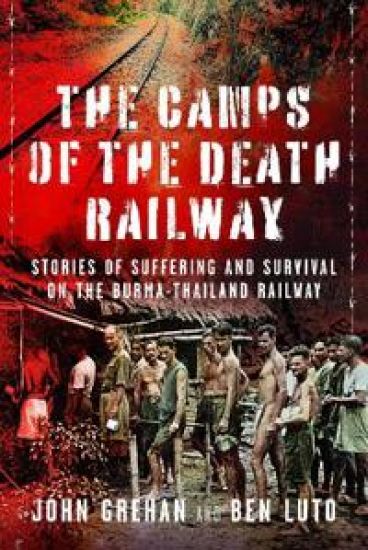
The Camps of the Death Railway

The Camps of the Death Railway

Ben Luto; John Grehan

PEN SWORD BOOKS LTD
2025
sidottu
As the terrible conditions experienced by the British, Australian, Dutch, and American PoWs in the building of railway linking Buma and Thailand became known, as well as the appalling atrocities the men suffered at the hands of the Japanese, it was clear that an investigation would have to be undertaken. Before war trials began, the Japanese submitted their account of the building of the railway, which is presented here. What is also presented are the stories from the prisoners themselves from each of the camps, telling in stark, unflinching detail what really happened to them. Drawn entirely from first-hand accounts, a picture emerges of men being driven to very heavy manual labour without boots to protect their feet from injuries which resulted in tropical ulcers and the amputation of untreatable limbs with nothing but a wood saw. Of men dying of cholera in their hundreds; of stinking, maggot-ridden open latrines and campgrounds covered in faeces from dysentery sufferers. With virtually no medical equipment or medicines, the Allied medical officers faced an unwinnable battle to save the lives of men so weakened from hunger and unremitting work at times for eighteen hours a day, they could not fight off the multiple diseases which were endemic in the depths of the Thai and Burmese jungles. As more and more prisoners became ill, the number available for work on the railway diminished. But with orders to finish the railway ahead of time, the Japanese forced prisoners from their hospital beds out to work, many of whom never returned. When Allied officers tried to intervene to protect their men, they were subjected beating from the Japanese and Korean guards. Other brutal punishments, sometimes fatal, were handed out to the prisoners, frequently for no accountable reason. Conditions were so intolerable, some prisoners tried to escape, only to die in the jungle or be recaptured and executed. Others simply gave up all hope and died, quite literally, of despair. There were, of course, lighter moments amid the misery. Elephants were used to pull heavy logs. When an extra load was added to that of one elephant, the animal refused to move. As the normal method adopted by the Japanese with uncooperative prisoners was to give them a beating, one of the guards hit the elephant. The elephant roared and charged after him, chasing the terrified guard into the River Kwai and squirted water at him through his trunk. Through sheer determination in some cases or mere good fortune, many men survived the horrors of the camps to tell the world of what was one of the most dreadful humanitarian disasters of the Second World War. This is their story.
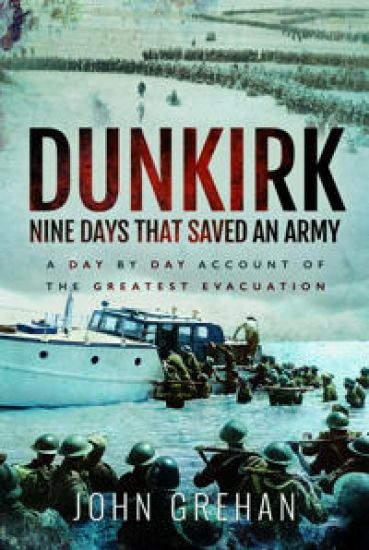
Dunkirk Nine Days That Saved An Army

Dunkirk Nine Days That Saved An Army

John Grehan

PEN SWORD BOOKS LTD
2023
nidottu
The epic of Dunkirk has been told many times, but the numerous accounts from surviving soldiers and sailors were often a blur of fear and fighting with the days mingling into each other, leaving what is, at times, a confusing picture. In this book, adopting a day by day approach, the author provides a clear portrayal of the unfolding drama on the perimeter around Dunkirk, in the port itself and along the beaches to La Panne and the Belgian border. Reports from many of the captains of the vessels which took part in the great evacuation were submitted to the Admiralty immediately after the conclusion of Operation Dynamo. With access to these, and supported by the various records maintained by the Army and RAF, the author has been able to finally piece together the movements and actions of the many of the squadrons, units and ships involved. With the Admiralty reports and a mass of other first-hand accounts, many of which have never been published before, the true tale of the heroism of the rescued and the rescuers is laid bare. Operation Dynamo saw civilian volunteers and Royal Navy personnel manning every type of craft from the anti-aircraft cruiser HMS Calcutta to the cockle boats of the Thames Estuary. The accounts of the men who crewed these vessels tell of being bombed and strafed by the Luftwaffe or shelled from the shore. There are stories of collisions in the dark, chaos on the beaches and tragic losses as ships went down. Similar tales are told by the men waiting on the beaches, defending the perimeter or flying in the skies overhead in a valiant effort to hold the German Army and Luftwaffe at bay. Yet this is ultimately a story, as Churchill described it, of ‘deliverance’, for against all the predictions, the BEF was saved to fight again another day. With civilians and servicemen working without respite for days and nights on end under almost continual attack to rescue the army, the nation pulled together as never before. It truly was Britain’s finest hour.
The Waterloo Campaign in 100 Locations

The Waterloo Campaign in 100 Locations

John Grehan

PEN SWORD BOOKS LTD
2023
sidottu
In the 200 years since the famous battle in the muddy, bloody fields of Waterloo, almost every aspect of the fighting has been examined and analysed, apart from one - that of finding and illustrating locations relating to the campaign. From Napoleon's landing on the Golfe Juan on France's Cote d'Azur, along the Route Napoleon and through Grenoble, the Emperor's journey back to Paris, and back to power, is revealed here. In this beautifully produced book, we see where Napoleon distributed the Imperial Eagles to the regiments of his army, and where his forces assembled before marching to war, and where the Due of Wellington's Anglo-Allied army gathered in Brussels. The camera follows the initial encounters on the banks of the River Sambre and the manoeuvring of the French and Coalition forces leading to the first great battles of the campaign at Quatre Bras and Ligny. The key sites occupied by the opposing armies at these battles are investigated as are the routes of the withdrawal to Mont St Jean by Wellington's army and to Wavre by Blucher's Prussians. The Waterloo battlefield and its associated buildings are examined in pictorial detail, as are the locations which marked the pivotal moments of the battle. The sites of the corresponding battle at Wavre are also shown, as well as the pursuit of the two wings of beaten French Army, including the sieges of the fortresses by the British army, before Paris was finally reached. The uprising in the Vendee and the last clashes of the campaign before Napoleon's abdication are also featured. The book closes with Napoleon's journey from Paris to St Helena via l'Ile d'Aix and Plymouth. Headquarters buildings, observation posts, monuments and memorials, bridges and battlefields, and the principal locations of the campaign are portrayed in unique photographs - and behind every plague and place is a tale of political posturing, military manoeuvring, sacrifice and savagery. Together these images tell the story of Napoleon's greatest gamble, and we know that a picture is worth a thousand words!
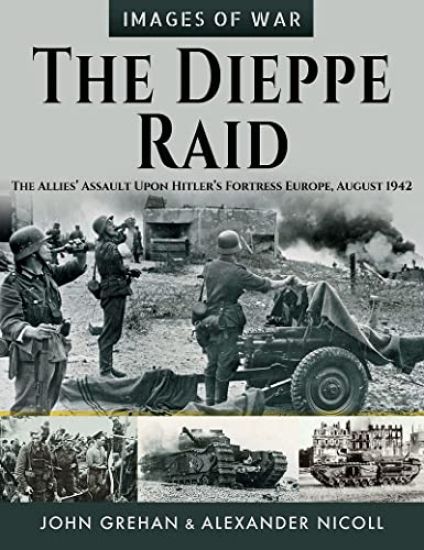
The Dieppe Raid

The Dieppe Raid

John Grehan; Alexander Nicoll

PEN SWORD BOOKS LTD
2023
nidottu
As dawn was breaking on the morning of 19 August 1942, Allied troops leapt ashore to the east and west of the French port of Dieppe. These were British commandoes accompanied by U.S. Rangers, tasked to silence the German gun batteries that flanked Dieppe. Other troops - the men of the 2nd Canadian Division - landed closer to Dieppe to capture the German positions that overlooked the port while, minutes later, the main body of the predominantly Canadian assaulting force began clambering from landing craft that had run onto the beach along Dieppe's seafront. This was the start of Operation Jubilee, the Allies' most ambitious assault upon Hitler's so-called Fortress Europe - it quickly became a bloodbath. The early months of 1942 had been difficult ones for Prime Minister Churchill. Stalin was demanding action in Western Europe to lessen the pressure of the 280 German divisions that were bearing down upon Stalingrad. Roosevelt was insisting that U.S. soldiers must start fighting the Germans in Europe, and Mackenzie King, the Canadian Prime Minister, desperately needed Canadian troops to become involved in the war to keep his politically divided nation together. Churchill's response to these measures was to authorise a super-raid' upon German-held territory, and the target selected by the planners was Dieppe. Apart from the notable success of No.4 Commando, the raid was a disaster with more than 50 per cent of the 6,086 men who landed being killed, wounded, or taken prisoner, plus all the Churchill tanks landed in support of the infantry suffered mechanical failure or were shelled into smoking wrecks. Yet amid the scenes slaughter, of confusion, and communication breakdown, were acts of almost unimaginable heroism, ingenuity, determination, and self-sacrifice to which the awarding of two Victoria Crosses paid a worthy tribute. There were also special missions associated with the raid, the details of which remained a closely guarded secret until long after the war. This book opens a window on Operation Jubilee, allowing the reader a rare insight into the death and destruction inflicted upon the Allied force during just a few hours, and of the damage done to Dieppe itself, with many of the photographs being taken by the victorious German defenders. The raid saw the heaviest casualty figures experienced by Canadians in the Second World War, and the photographs in this book are a stark reminder of that fateful day in late summer of 1942.
The Allied Assault on Hitler's Channel Island Fortress
Incredible as it may seem today, detailed plans were drawn up to re-capture the Channel Islands, the most heavily fortified of all the German-occupied territories, regardless of the potentially severe' loss of life and the widespread destruction to the property of the British citizens. Under the codenames Constellation, Condor, Concertina, and Coverlet, the islands of Jersey, Guernsey and Alderney were to be attacked in 1943. The operation against Alderney would be preceded by a bombardment by between 500 and 600 medium/light bombers and an astonishing forty to fifty squadrons of fighters. The official papers which have now become available state that: The islands cannot be taken without causing some civilian casualties. In the case of Alderney, it is thought that the air bombardment will have to be on such a scale that all personnel on the island will have to become casualties.' A similar number of aircraft would attack Guernsey while, for the assault upon Jersey, thirty-one squadrons of heavy bombers and strike aircraft would bombard the island's east and west coasts. This would be followed, on D-Day, by parachute and infantry landings and then a commando assault in the south-west. On Day 2 of the operation the first of the tanks were to land, with more armour and infantry to follow on subsequent days. As the German garrison of the Channel Islands was some 40,000 strong, the islands would be turned into an enormous battlefield, and a vast killing ground. The consequences for the Islanders were almost too horrendous to imagine and the political fallout beyond calculation if the operations failed in their objectives after the devastation and loss of British lives that the fighting had caused. Despite all this, it was thought that such operations would become the second front' so persistently demanded by Stalin to draw German troops from the Eastern Front and might also help the Allied forces which were about to invade Italy - Operation Husky - from North Africa. Equally, the Channel Islands would be the ideal base for the D-Day invasion of France scheduled for 1944. There was much then in favour of mounting the operations against the Channel Islands regardless of the fact that it meant the death of untold British citizens at the hands of British troops and the Allied air forces. The Allied Assault Upon Hitler's Channel Island Fortress is, therefore, the first detailed analysis of what would have been the most controversial operation ever undertaken by the British and American armed forces.
The Blitz

The Blitz

John Grehan

KEY PUBLISHING LTD
2023
nidottu
For months, The Few' had defended Britain against the might of the Luftwaffe. Then, on 7 September 1940, everything changed. Instead of targeting airfields, the German bombers turned their attention to London. The Blitz had begun. For two months, London was systemically attacked in one of the most sustained aerial bombing campaigns in history. The onslaught soon spread to other cities, including Liverpool, Bristol, Cardiff, Hull, Birmingham and Belfast, causing widespread destruction. In the face of this extreme devastation and heartbreak, however, came stories of survival, heroism and courage from the people of Britain. With sections examining life in the shelters, Britain's air raid defences and bomb disposal, citizen heroics and the rise of crimes such as looting, this book takes a look back at the Luftwaffe's unsuccessful attempt to break the British spirit and shares what life was really like during the Blitz.
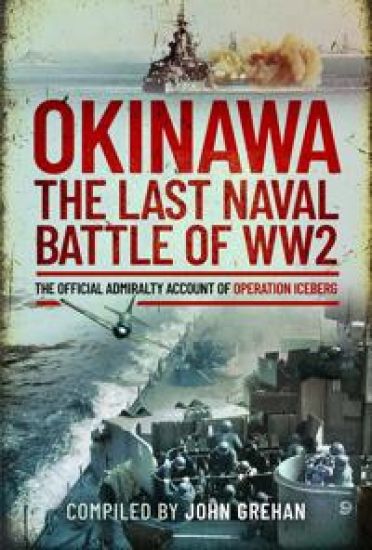
Okinawa: The Last Naval Battle of WW2

Okinawa: The Last Naval Battle of WW2

John Grehan

PEN SWORD BOOKS LTD
2022
sidottu
Having all but swept the Japanese Imperial Navy from the vast expanse of the Pacific Ocean, the Allied forces stood on the brink of invading the Japanese Home Islands. The launching pad for the invasion was to be the island of Okinawa. Amid the terrible slaughter and the shocking casualty statistics of the US Tenth Army and the US Marines, as well as the unrelenting defiance of the Japanese defenders so often detailed in the many books on the battle, the vital part played by the Allied navies in transporting, landing and supporting the ground offensive is all too often overlooked. The naval forces involved included the US Task Force 58 and the British Pacific Fleet composed of ships from the Royal Australian Navy, the Royal Canadian Navy, and the Royal New Zealand Navy which together with those of the Royal Navy constituted the most powerful fleet Britain had ever put together. The total firepower of the Allied force was staggering, consisting of 18 battleships, 27 cruisers, 177 destroyers/destroyer escorts, 11 fleet carriers, 6 light carriers and 22 escort carriers and various support and troop transport ships. Pitted against this formidable array was the Japanese Combined Fleet, with just one super battleship, one light cruiser and eight destroyers. But the Japanese had one other fearful weapon - the kamikaze. The resultant battle saw the Japanese fleet wiped out, but the Allies lost twenty-four support vessels and a further 386 ships were damaged - many at the hands of the kamikaze pilots. After the fighting the Admiralty called for a summary of the battle to be written for internal Royal Navy consumption. It is that secret report, which it was never intended would be seen by the general public, that is published here for the first time.
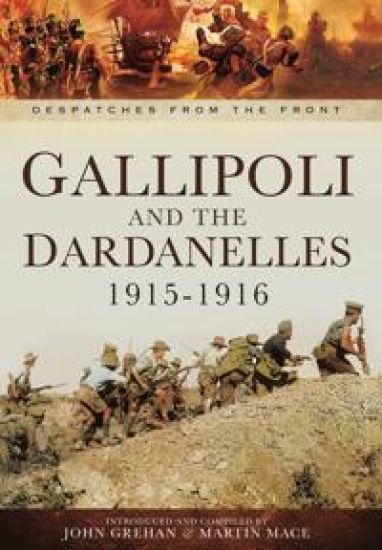
Gallipoli and the Dardanelles 1915-1916

Gallipoli and the Dardanelles 1915-1916

Martin Mace; John Grehan

PEN SWORD BOOKS LTD
2022
nidottu
The fighting in the Gallipoli or Dardanelles campaign began in 1915 as a purely naval affair undertaken partly at the instigation of Winston Churchill, who, as First Lord of the Admiralty, had entertained plans of capturing the Dardanelles as early as September 1914. It was the Royal Navy that bore the brunt of the initial action, supported by the French and with minor contributions from, the Russian and Australian fleets. On 3 November 1914, Churchill ordered the first British attack on the Dardanelles following the opening of hostilities between Ottoman and Russian empires. The British attack was carried out by battle cruisers of Carden's Mediterranean Squadron, HMS Indomitable and HMS Indefatigable, as well as two French battleships. This attack actually took place before a formal declaration of war had been made by Britain against the Ottoman Empire. Royal Navy submarines had already been operating in the region. When the naval operations failed, a full invasion of the Gallipoli Peninsula was launched. The bitter fighting that followed resonated profoundly among all nations involved. The campaign was the first major battle undertaken by the Australian and New Zealand Army Corps (ANZAC), and is often considered to mark the birth of national consciousness in both of these countries. For the Turkish forces it would prove a major victory.
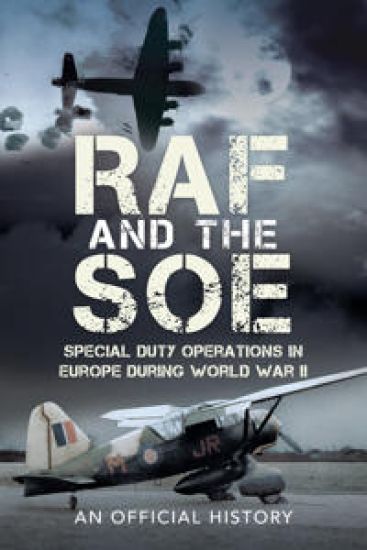
RAF and the SOE

RAF and the SOE

John Grehan

PEN SWORD BOOKS LTD
2022
nidottu
The Special Operations Executive developed a vast network of agents across Occupied Europe which played a vital role in developing and sustaining Resistance movements that persistently sought to subvert German control of their territories. The culmination of their efforts was seen when the Allied armies landed at Normandy in June 1944, with the SOE and the Resistance causing widespread destruction and disruption behind the German lines. None of this would have been possible had it not been for the Royal Air Force. Not only did the RAF supply the SOE, and the movements it led and co-ordinated, with the thousands of tons of arms and equipment needed to undertake this role, it also delivered and retrieved agents from under the very noses of the enemy. Compiled at the end of the war by the Air Historical Branch of the RAF, this is an extremely detailed and comprehensive account of the RAFs support for the SOE, and in it we learn of the enormous and complex arrangements undertaken by the Special Duties squadrons as well as showing how the material delivered by these aircraft was used in the field. This account is reproduced here in its entirety, along with a detailed appendix containing the official historical record of Bomber Command aircrews and aircraft engaged in clandestine operations. Taken together, this book represents the most comprehensive account of the RAFs support for SOE ever published.
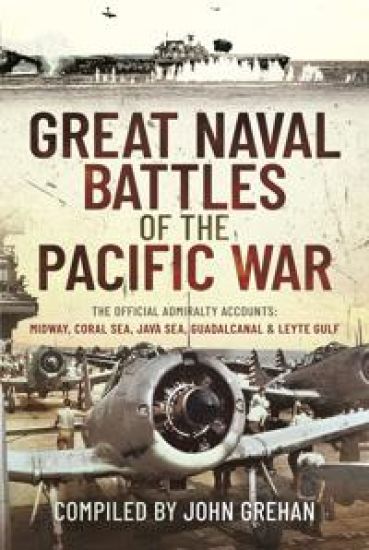
Great Naval Battles of the Pacific War

Great Naval Battles of the Pacific War

John Grehan

PEN SWORD BOOKS LTD
2022
sidottu
The key naval battles against Imperial Japan in the Pacific during the Second World War have been described many times by numerous diligent and skilful historians. Such histories are, of course, the products of many years, even decades, of accumulated knowledge, but also of a received consensus of how the war played out to its, seemingly, inevitable conclusion. That of course is not how it was perceived at the time. Hindsight, as we know, gives us 20/20 vision. The accounts here, compiled for and on behalf of the Admiralty, were written either during or immediately after the end of the war before historians had begun to give their assessments of these momentous events. These accounts were written for internal consumption, to guide and instruct naval officers. It was never intended that they would be released to the general public. As such, there was no jingoistic drum beating, no axes to grind, no new angles to try and find. The authors of these accounts relate each battle, move by move, as they unfolded, accurately and dispassionately. This makes these accounts so invaluable. They read almost like a running commentary, as action follows action, minute follows minute. This sensation is magnified by the absolute impartiality of the authors, their sole attempt being to provide a thorough but very clear and comprehensible record so that others in the future could understand precisely how each battle was fought. These accounts can never be superseded and never replaced. Written by naval officers of the time for naval officers of the future, they are the permanent record of the great victories, and the sobering defeat in the Java Sea, during the struggle for control of the Pacific which, for many months, hung precariously in the balance.
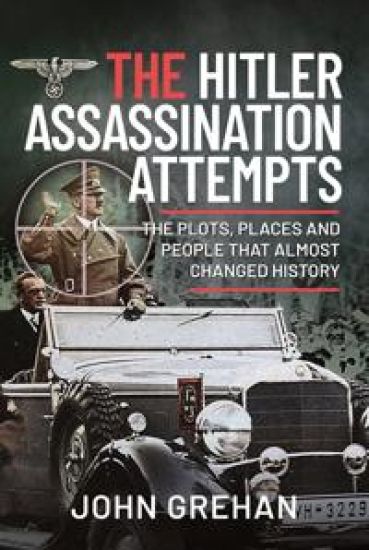
The Hitler Assassination Attempts

The Hitler Assassination Attempts

John Grehan

PEN SWORD BOOKS LTD
2022
sidottu
Throughout his political life, Adolf Hitler was the subject of numerous assassination plots, some of which were attempted, all of which failed. While a few of these have become well known, particularly the bomb explosions at the Burgerbr ukeller in Munich in 1939 and the Stauffenberg _Valkyrie_ attempt carried out at the Wolfsschanze on 20 July 1944, many others have received far less attention -until now. In this book, John Grehan has examined the known planned or proposed assassination attempts on Hitler, from Chicago to London and from Sweden to the Ukraine -some of which have not previously been presented to the general public by historians. All manner of methods were proposed by those willing to bring Hitler's life to a premature and sticky end and Hitler was well aware of the danger which lurked potentially around every corner of every road, railway track, every building and even every individual. As a result, an immense, multi-layered security apparatus surrounded the Fuhrer day and night. Despite this, and knowing the risks they faced, many people sought to kill the German leader, and some very nearly did. Yet Hitler survived, often by just a minute or a millimetre, to die ultimately of his own hand. These plots and conspiracies are detailed in this book, along with a unique collection of photographs of many of the proposed or actual assassination locations. All will be revealed in this fascinating compilation of the obscure, the fanciful and the carefully considered attempts to assassinate Hitler.
Medical Officers on the Infamous Burma Railway

Medical Officers on the Infamous Burma Railway

John Grehan

PEN SWORD BOOKS LTD
2022
sidottu
In 1944, a compilation of medical reports from the main prisoner of war work camps along the infamous Thailand-Burma railway was submitted to General Arimura Tsunemichi, commander of the Japanese Prisoner of War Administration. The authors stated that the reports were neither complaints nor protests, but merely statements of fact. The prisoners received only one reply -that all copies of the documents must be destroyed. As one officer later recalled, Of course, this was not done' and copies of these reports survived, stored away in dusty files, for future generations to learn the truth. Work on the railway began in June 1942, the Japanese using mainly forced civilian labour as well as some 12,000 British and Commonwealth PoWs. Such is well-known. So are the stories of ill-treatment and brutality, many of which have been published. The vast majority of these accounts, however, were written after the war, coloured by the sufferings the men had endured. The reports presented here are quite unique, for they were written by the medical officers in the camps as the events they describe were unfolding before their eyes. The health and well-being of the PoWs was the medical officers' primary concern, and these reports enable us to learn exactly how the men were treated, fed and cared for in unprecedented detail. There are no exaggerated tales or false memories here, merely facts, shocking and disturbing though they may be. We learn how the medical officers organised their hospitals and dealt with the terrible diseases, beatings and malnutrition the men endured. As the compilers of the reports state, 45 per cent of the men under their care died in the course of just twelve months. But equally, we find that the prisoners did have a voice and had the facilities, and the courage, to write and submit such reports to the Japanese, perhaps contradicting some of the long-held beliefs about conditions in the camps. Through the words of the Medical Officers themselves, some of the detail of what really happened on the Death Railway, for good or ill, is revealed here.