Kirjojen hintavertailu. Mukana 12 390 323 kirjaa ja 12 kauppaa.

Kirjailija

John J. Collins

Kirjat ja teokset yhdessä paikassa: 38 kirjaa, julkaisuja vuosilta 1984-2025, suosituimpien joukossa Scripture and Social Justice. Vertaile teosten hintoja ja tarkista saatavuus suomalaisista kirjakaupoista.

Mukana myös kirjoitusasut: John J Collins

38 kirjaa

Kirjojen julkaisuhaarukka 1984-2025.

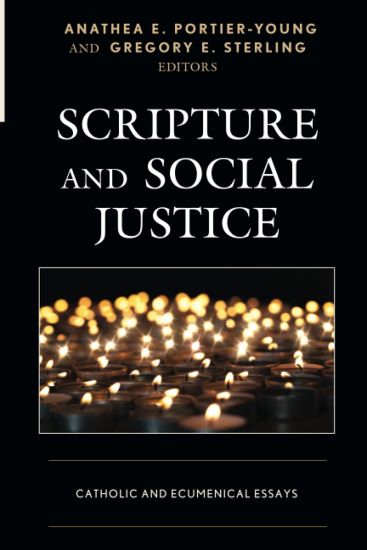
Scripture and Social Justice

Scripture and Social Justice

Stephen P. Ahearne-Kroll; Harold W. Attridge; Corrine Carvalho; Adela Yarbro Collins; John J. Collins; John R. Donahue; John Endres; Gina Hens-Piazza; Anathea E. Portier-Young; Julia D. E. Prinz; Gregory E. Sterling

Lexington Books/Fortress Academic
2021
nidottu
The essays gathered here provide a panoramic view of current thinking on biblical texts that play important roles in contemporary struggles for social justice – either as inspiration or impediment. Here, from the hands of an ecumenical array of leading biblical scholars, are fresh and compelling resources for thinking biblically about what justice is and what it demands. Individual essays treat key debates, themes, and texts, locating each within its historical and cultural settings while also linking them to the most pressing justice concerns of the twenty-first century. The volume aims to challenge academic and ecclesiastical complacency and highlight key avenues for future scholarship and action.
Scripture and Social Justice

Scripture and Social Justice

Stephen P. Ahearne-Kroll; Harold W. Attridge; Corrine Carvalho; Adela Yarbro Collins; John J. Collins; John R. Donahue; John Endres; Gina Hens-Piazza; Anathea E. Portier-Young; Julia D. E. Prinz; Gregory E. Sterling

Lexington Books/Fortress Academic
2018
sidottu
The essays gathered here provide a panoramic view of current thinking on biblical texts that play important roles in contemporary struggles for social justice – either as inspiration or impediment. Here, from the hands of an ecumenical array of leading biblical scholars, are fresh and compelling resources for thinking biblically about what justice is and what it demands. Individual essays treat key debates, themes, and texts, locating each within its historical and cultural settings while also linking them to the most pressing justice concerns of the twenty-first century. The volume aims to challenge academic and ecclesiastical complacency and highlight key avenues for future scholarship and action.
King and Messiah as Son of God

King and Messiah as Son of God

Adela Yarbro Collins; John J. Collins

William B Eerdmans Publishing Co
2008
nidottu
This book traces the history of the idea that the king and later the messiah is Son of God, from its origins in ancient Near Eastern royal ideology to its Christian appropriation in the New Testament. Both highly regarded scholars, Adela Yarbro Collins and John J. Collins argue that Jesus was called "the Son of God" precisely because he was believed to be the messianic king. This belief and tradition, they contend, led to the identification of Jesus as preexistent, personified Wisdom, or a heavenly being in the New Testament canon. However, the titles Jesus is given are historical titles tracing back to Egyptian New Kingdom ideology. Therefore the title "Son of God" is likely solely messianic and not literal. King and Messiah as Son of God is distinctive in its range, spanning both Testaments and informed by ancient Near Eastern literature and Jewish noncanonical literature.
The Rule of the Association and Related Texts

The Rule of the Association and Related Texts

John J. Collins; James Nati

Oxford University Press
2024
sidottu
The Rule of the Association (1QS; Serek ha-Yahad) is the primary description of the sectarian community described in the Dead Sea Scrolls. It was one of the first Scrolls published, in 1951. Several related fragmentary scrolls subsequently came to light. This book provides text, translation, and commentary on all these manuscripts, with a substantial introduction that locates the Rule in the context of the sectarian movement. Distinctive features of this commentary include: presentation of the Hebrew text; treatment of the related manuscripts as texts in their own right, not just as stages in the development of 1QS; recognition that this was a rule for a movement with many settlements and not just for the community that lived at Qumran; recognition of graded levels of holiness within 1QS; recognition of conceptual differences between 1QS and some of the related fragments with regard to the nature and goals of the association; discussion of the broader cultural context of voluntary associations in the Hellenistic world, and the influence of Persian dualism on the Instruction on the Two Spirits in 1QS 3-4. The commentary also engages the full range of scholarship on the texts known as 1QSa (The Rule of the Community) and 1QSb (The Scroll of Blessings) which were copied on the same scroll as 1QS but appear to have originated separately.
Creation in the Biblical Traditions

Creation in the Biblical Traditions

Richard J Sj Clifford; John J Collins

Pickwick Publications
2023
pokkari
This book brings together a series of informative essays on the theme of Creation in various Biblical traditions. They include Bernard Batto's "Creation Theology in Genesis"; Robert Di Vito's "The Demarcation of Divine and Human Realms in Genesis 2-11"; Richard Clifford's "Creation in Psalms"; James Crenshaw's "When Form and Content Clash: The Theology of Job 38:1-40:5"; Gale Yee's "The Theology of Creation in Proverbs 8:22-31"; and Michael Kolarcik's "Creation and Salvation in the Book of Wisdom."
Creation in the Biblical Traditions

Creation in the Biblical Traditions

Richard J Sj Clifford; John J Collins

Pickwick Publications
2023
sidottu
This book brings together a series of informative essays on the theme of Creation in various Biblical traditions. They include Bernard Batto's "Creation Theology in Genesis"; Robert Di Vito's "The Demarcation of Divine and Human Realms in Genesis 2-11"; Richard Clifford's "Creation in Psalms"; James Crenshaw's "When Form and Content Clash: The Theology of Job 38:1-40:5"; Gale Yee's "The Theology of Creation in Proverbs 8:22-31"; and Michael Kolarcik's "Creation and Salvation in the Book of Wisdom."
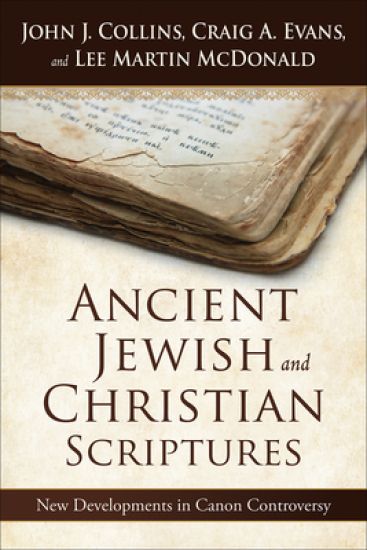
Ancient Jewish and Christian Scriptures

Ancient Jewish and Christian Scriptures

John J. Collins; Craig A. Evans; Lee Martin McDonald

Westminster/John Knox Press,U.S.
2020
nidottu
Ancient Jewish and Christian Scriptures examines the writings included in and excluded from the Jewish and Christian canons of Scripture and explores the social settings in which some of this literature was viewed as authoritative and some was viewed either as uninspired or as heretical. John J. Collins, Craig A. Evans, and Lee Martin McDonald examine how those noncanonical writings demonstrate the historical, literary, and religious aspects of the culture that gave rise to the writings. They also show how literature excluded from the Jewish and Christian canons of Scripture remains valuable today for understanding the questions and conflicts that early Jewish and Christian faith communities faced. Through this discussion, contemporary readers acquire a broader understanding of biblical Scripture and of Jewish and Christian faith inspired by Scripture.
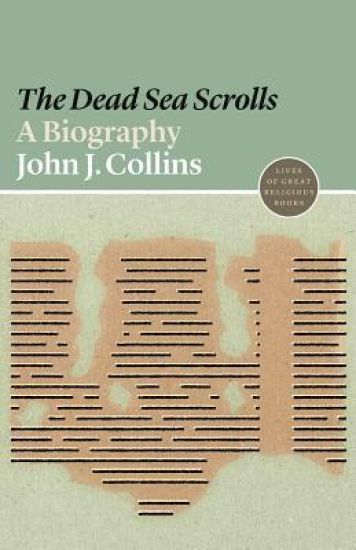
The Dead Sea Scrolls

The Dead Sea Scrolls

John J. Collins

Princeton University Press
2019
pokkari
Unraveling the controversies surrounding the Dead Sea ScrollsSince they were first discovered in the caves at Qumran in 1947, the Dead Sea Scrolls have aroused more fascination—and controversy—than perhaps any other archaeological find. They appear to have been hidden in the Judean desert by the Essenes, a Jewish sect that existed around the time of Jesus, and they continue to inspire veneration to this day. In this concise and accessible book, John Collins tells the story of the scrolls and the bitter conflicts that have swirled around them since their startling discovery. He explores whether the scrolls were indeed the property of an isolated, quasi-monastic community or more broadly reflected the Judaism of their time. He unravels the impassioned disputes surrounding the scrolls and Christianity, and looks at attempts to “reclaim” the scrolls for Judaism after the full corpus became available in the 1990s. Collins also describes how the decades-long delay in publishing the scrolls gave rise to sensational claims and conspiracy theories.
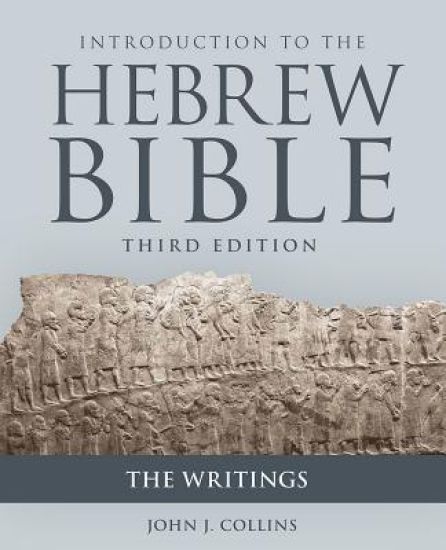
Introduction to the Hebrew Bible

Introduction to the Hebrew Bible

John J. Collins

Fortress Press,U.S.
2018
nidottu
John J. Collins's Introduction to the Hebrew Bible is one of the most popular introductory textbooks in colleges and seminary classrooms. Enriched by decades of classroom teaching, it is aimed explicitly at motivated students, regardless of their previous exposure to the Bible or faith commitments.The third edition is presented in a new and engaging format with new maps and images. An index has been added to the volume for the first time.In order to enhance classroom use, Collins's major text has now been divided into four volumes, one for each major part of the Hebrew Bible. This volume focuses on the Writings. Here, Collins explores Ezra-Nehemiah and Chronicles, as well as the books of poetry and wisdom. Also included are sections on Hebrew short stories, Daniel, and a number of the books belonging to the Apocrypha.The volume also contains the introduction to Collins's major text and is now available with even more student-friendly features, including charts, maps, photographs, chapter summaries, and bibliographies for further reading.Collins presents the current state of historical, archaeological, and literary understandings of the biblical text and engages the student in questions of significance and interpretation for the contemporary world.
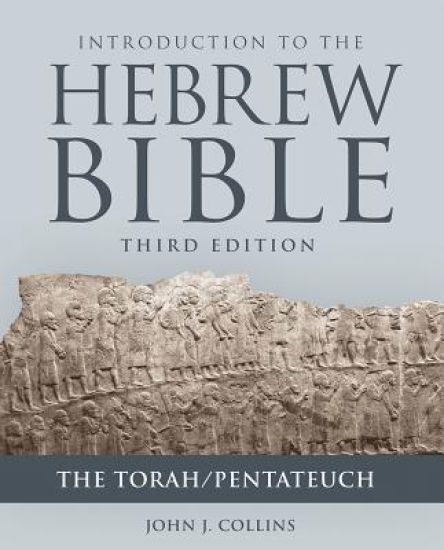
Introduction to the Hebrew Bible

Introduction to the Hebrew Bible

John J. Collins

Fortress Press,U.S.
2018
nidottu
John J. Collins's Introduction to the Hebrew Bible is one of the most popular introductory textbooks in colleges and seminary classrooms. Enriched by decades of classroom teaching, it is aimed explicitly at motivated students, regardless of their previous exposure to the Bible or faith commitments.The third edition is presented in a new and engaging format with new maps and images. An index has been added to the volume for the first time.In order to enhance classroom use, Collins's major text has now been divided into four volumes, one for each major part of the Hebrew Bible. This volume focuses on the Torah/Pentateuch. Here, Collins explores the Near Eastern context and the nature of the pentateuchal narrative and provides helpful insights into Gensis thorugh Deuteronomy.The volume also contains the introduction to Collins's major text and is now available with even more student-friendly features, including charts, maps, photographs, chapter summaries, and bibliographies for further reading.Collins presents the current state of historical, archaeological, and literary understandings of the biblical text and engages the student in questions of significance and interpretation for the contemporary world.
Introduction to the Hebrew Bible

Introduction to the Hebrew Bible

John J. Collins

Fortress Press,U.S.
2018
nidottu
John J. Collins's Introduction to the Hebrew Bible is one of the most popular introductory textbooks in colleges and seminary classrooms. Enriched by decades of classroom teaching, it is aimed explicitly at motivated students, regardless of their previous exposure to the Bible or faith commitments.The third edition is presented in a new and engaging format with new maps and images. An index has been added to the volume for the first time.In order to enhance classroom use, Collins's major text has now been divided into four volumes, one for each major part of the Hebrew Bible. This volume, based on the new third edition, focuses on prophecy in the Hebrew Bible. Here, Collins explores the major and minor prophets and the messages they delivered within each of their historical contexts.The volume also contains the introduction to Collins's major text and is now available with even more student-friendly features, including charts, maps, photographs, chapter summaries, and bibliographies for further reading.Collins presents the current state of historical, archaeological, and literary understandings of the biblical text and engages the student in questions of significance and interpretation for the contemporary world.
Introduction to the Hebrew Bible

Introduction to the Hebrew Bible

John J. Collins

Fortress Press,U.S.
2018
nidottu
John J. Collins's Introduction to the Hebrew Bible is one of the most popular introductory textbooks in colleges and seminary classrooms. Enriched by decades of classroom teaching, it is aimed explicitly at motivated students, regardless of their previous exposure to the Bible or faith commitments.The third edition is presented in a new and engaging format with new maps and images. An index has been added to the volume for the first time.In order to enhance classroom use, Collins's major text has now been divided into four volumes, one for each major part of the Hebrew Bible. This volume focuses on the Deuteronomistic History. Here, Collins explores the books of Joshua through 2 Kings, the main account of Israel's history.The volume also contains the introduction to Collins's major text and is now available with even more student-friendly features, including charts, maps, photographs, chapter summaries, and bibliographies for further reading. Collins presents the current state of historical, archaeological, and literary understandings of the biblical text and engages the student in questions of significance and interpretation for the contemporary world.
Introduction to the Hebrew Bible

Introduction to the Hebrew Bible

John J. Collins

Fortress Press,U.S.
2018
nidottu
John J. Collins's Introduction to the Hebrew Bible is one of the most reliable and widely adopted critical textbooks at undergraduate and graduate levels alike, and for good reason. Enriched by decades of classroom teaching, it is aimed explicitly at motivated students, regardless of their previous exposure to the Bible or faith commitments. The approach is ecumenical, in the sense that it seeks not to impose any particular theological perspective but to provide information and raise questions that should be relevant to any student.Collins proceeds through the canon of the Old Testament and the Apocrypha, judiciously presenting the current state of historical, archaeological, and literary understanding of the biblical text, and engaging the student in questions of significance and interpretation for the contemporary world.The third edition is presented in a new and engaging format with new maps and images. An index has been added to the volume for the first time.
A Short Introduction to the Hebrew Bible

A Short Introduction to the Hebrew Bible

John J. Collins

Fortress Press,U.S.
2018
nidottu
John J. Collins's A Short Introduction to the Hebrew Bible has become a popular option for college and seminary classrooms. The third edition is presented in a new and engaging format with new maps and images. An index has been added to the volume for the first time.
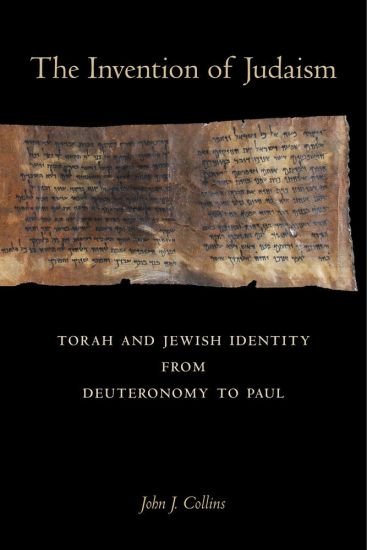
The Invention of Judaism

The Invention of Judaism

John J. Collins

University of California Press
2017
pokkari
Most people understand Judaism to be the Torah and the Torah to be Judaism. However, in The Invention of Judaism, John J. Collins persuasively argues this was not always the case. The Torah became the touchstone for most of Judaism's adherents only in the hands of the rabbis of late antiquity. For 600 years prior, from the Babylonian Exile to the Roman destruction of the Second Temple, there was enormous variation in the way the Torah was understood. Collins provides a comprehensive account of the role of the Torah in ancient Judaism, exploring key moments in its history, beginning with the formation of Deuteronomy and continuing through the Maccabean revolt and the rise of Jewish sectarianism and early Christianity.
The Invention of Judaism

The Invention of Judaism

John J. Collins

University of California Press
2017
sidottu
Most people understand Judaism to be the Torah and the Torah to be Judaism. However, in the Invention of Judaism, John J. Collins persuasively argues this was not always the case. The Torah became the touchstone for most of Judaism's adherents only in the hands of the rabbis of late antiquity. For 600 years prior, from the Babylonian Exile to the Roman destruction of the Second Temple, there was enormous variation in the way the Torah was understood. Collins provides a comprehensive account of the role of the Torah in ancient Judaism, exploring key moments in its history, beginning with the formation of Deuteronomy and continuing through the Maccabean revolt and the rise of Jewish sectarianism and early Christianity.
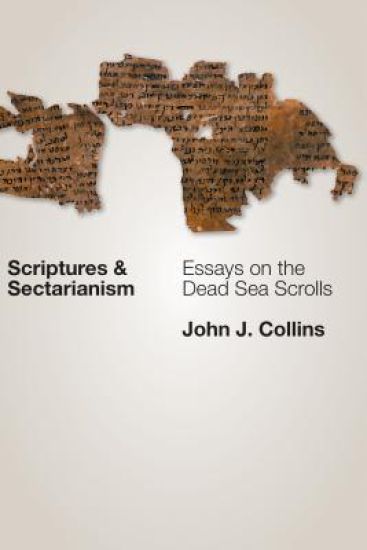
Scriptures and Sectarianism: Essays on the Dead Sea Scrolls

Scriptures and Sectarianism: Essays on the Dead Sea Scrolls

John J. Collins

William B. Eerdmans Publishing Company
2016
nidottu
Essays representing ten years of John J. Collins's expert reflection on Scripture and the Qumran community are here collected in a volume that is sure to be of interest to students and scholars of Early Judaism and the Dead Sea Scrolls. Collins opens with the introductory chapter "What Have We Learned from the Dead Sea Scrolls?" before offering essays on the authority and interpretation of Scripture, historiography and the emergence of the Qumran sect, and specific aspects of the sectarian worldview: covenant and dualism, the angelic world, the afterlife, prayer and ritual, and wisdom. A concluding epilogue considers the account of the Suffering Servant and illustrates the relevance of the Dead Sea Scrolls for early Christianity.
Apocalyptic Imagination

Apocalyptic Imagination

John J. Collins

William B Eerdmans Publishing Co
2016
nidottu
One of the most widely praised studies of Jewish apocalyptic literature ever written, The Apocalyptic Imagination by John J. Collins has served for over thirty years as a helpful, relevant, comprehensive survey of the apocalyptic literary genre.Collins begins by surveying the history of apocalyptic studies, then proceeds to deal with individual apocalyptic texts - the early Enochic literature, the book of Daniel, the Dead Sea Scrolls, and others - and concludes with an examination of apocalypticism in early Christianity. In this third edition Collins has updated information throughout to account for the profusion of studies germane to ancient Jewish apocalypticism since the second edition (1998), including the three-volume Encyclopedia of Apocalypticism and the now fully published Dead Sea Scrolls. The bibliography has also been substantially revised and updated. The Apocalyptic Imagination in this third edition will continue to serve students and scholars of Jewish apocalypticism for many years to come."The book provides important information about an important yet little known corpus of material. It is a valuable resource." - The Bible Today
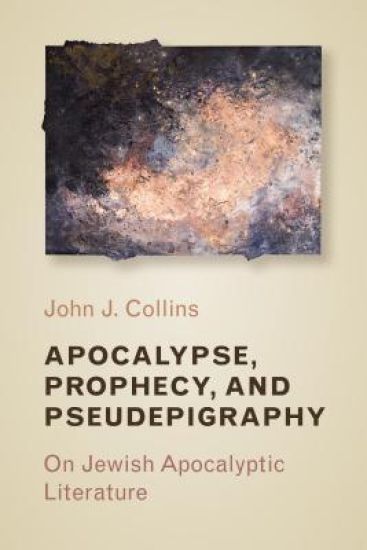
Apocalypse, Prophecy, and Pseudepigraphy

Apocalypse, Prophecy, and Pseudepigraphy

John J Collins

William B Eerdmans Publishing Co
2015
nidottu
A highly regarded expert on the Jewish apocalyptic tradition, John J. Collins has written extensively on the subject. Nineteen of his essays written over the last fifteen years, including previously unpublished contributions, are brought together for the first time in this volume. Its thematic essays organized in five sections, Apocalypse, Prophecy, and Pseudepigraphy complements and enriches Collins's well-known book The Apocalyptic Imagination.