
Kirjailija
John Laird
Kirjat ja teokset yhdessä paikassa: 30 kirjaa, julkaisuja vuosilta 1986-2026, suosituimpien joukossa A Study in Moral Theory. Vertaile teosten hintoja ja tarkista saatavuus suomalaisista kirjakaupoista.
30 kirjaa
Kirjojen julkaisuhaarukka 1986-2026.




This work has been selected by scholars as being culturally important and is part of the knowledge base of civilization as we know it.This work is in the public domain in the United States of America, and possibly other nations. Within the United States, you may freely copy and distribute this work, as no entity (individual or corporate) has a copyright on the body of the work.Scholars believe, and we concur, that this work is important enough to be preserved, reproduced, and made generally available to the public. To ensure a quality reading experience, this work has been proofread and republished using a format that seamlessly blends the original graphical elements with text in an easy-to-read typeface.We appreciate your support of the preservation process, and thank you for being an important part of keeping this knowledge alive and relevant.


Theism is one of the major types of metaphysics and cosmology is the general theory of the whole wide world. Must the world have an over-worldly source, or any source? Would "space" crumble unless God perpetually sustained it by his brooding omnipresence? Is all power, properly understood, divine power? These large questions, never out of date, are examined by Professor Laird in the light of contemporary philosophy. This seminal work, originally published in 1940 is a lucid and profound discussion in theological philosophy.
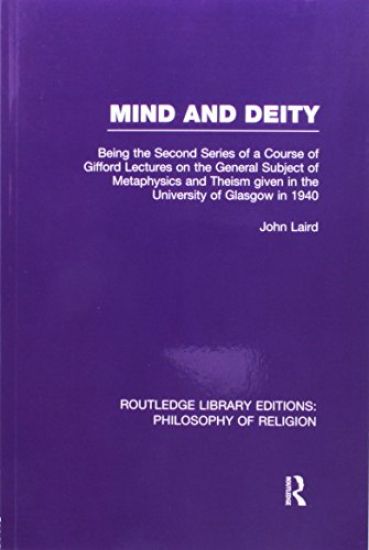
Complementary to Theism and Cosmology, this book begins with a discussion of philosophical and theological idea-ism, and our common beliefs concerning nature, man, and God. It is principally concerned with idealism - the place of ideals in reality rather than with the place of ideas. It discusses personality, justice, value, morals and theism versus pantheism then ends with a discussion of the general relations between a cosmological theism and a theism whose primary interest is the conservation and the incarnation of what is good and fine.
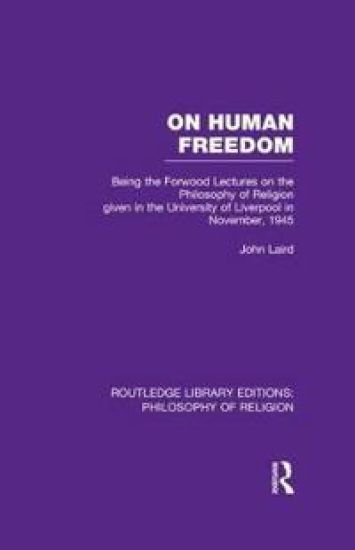
In the author’s opinion there are three primary conceptions of human freedom - non-coercion, autonomy and indeterminism. He presents his thoughts to define, compare, distinguish and correlate these, not merely with regard to the freedom of the human will, but also and more generally with regard to freedom in human life and thought. The discussion is psychological, ethical and theological. Originally published in 1947.
First published in 1935, this book compares and examines what John Laird termed the ‘three most important notions in ethical science’: the concepts of virtue, duty and well-being. Laird poses the question of whether any one of these three concepts is capable of being the foundation of ethics and of supporting the other two. This is an interesting reissue, which will be of particular value to students researching the philosophy of ethics and morality.
First published in 1926, this study addresses the theory of morality using four overarching approaches: analytical, psychological, theoretical, and finally, philosophical. Within these methodologies, chapters explore such areas as the character of moral enquiry, the knowledge of good and evil, freedom and self-determination and moral philosophy. This is an interesting reissue, which will be of particular value to students researching the philosophy of ethics and morality.
The essence of Hume’s eighteenth-century philosophy was that all the sciences were ‘dependent on the science of man’, and that the foundations of any such science need to rest on experience and observation. This title, first published in 1932, examines in detail how Hume interpreted ‘the science of man’ and how he applied his experimental methodology to humankind’s understanding, passions, social duties, economic activities, religious beliefs and secular history throughout his career. Particular attention is paid to the English, French and Latin sources that shaped Hume’s theories. This is a full and fascinating title, of particular relevance to students with an interest in the philosophy of Hume specifically, as well as the philosophy of human nature and the methodologies applied to its study more generally.
Originally published in 1946, this book examines the works of eleven different English authors through a philosophical lens. Laird, who spent the war re-reading English literature, reveals the underlying philosophy of several English classics, including several Shakespearian plays, Robinson Crusoe and Thomas Hardy's The Dynasts. This book will be of value to anyone with an interest in the philosophical analysis of literature.

John Laird (1887–1946) was a Scottish philosopher who held the position of Regius Professor of Moral Philosophy in the University of Aberdeen. Originally published in 1944, this book presents a concise account by Laird regarding the nature of politics and governmental institutions. The text had its basis in a series of lectures on general political theory given to troops during World War II. This book will be of value to anyone with an interest in political philosophy and the nature of government.
John Laird (1887–1946) was a Scottish philosopher who specialised in metaphysics and moral philosophy. In this early work, which was originally published in 1920, Laird set out to analyse some of the more perplexing problems of philosophical realism. The text includes a brief survey of philosophical realism at the beginning and critical notes throughout. This book will be of value to anyone with an interest in the works of Laird and the history of philosophy.
John Laird (1887–1946) was a Scottish philosopher who specialised in metaphysics and moral philosophy. In this book, which was first published in 1929, Laird provides a detailed analysis of the philosophical nature of value. The text begins with a discussion of the main definitions of value, before going through a more detailed examination of the various applications of value in turn. This book will appeal to anyone with an interest in value and the history of philosophy.
First published in 1926, this study addresses the theory of morality using four overarching approaches: analytical, psychological, theoretical, and finally, philosophical. Within these methodologies, chapters explore such areas as the character of moral enquiry, the knowledge of good and evil, freedom and self-determination and moral philosophy. This is an interesting reissue, which will be of particular value to students researching the philosophy of ethics and morality.

First published in 1935, this book compares and examines what John Laird termed the ‘three most important notions in ethical science’: the concepts of virtue, duty and well-being. Laird poses the question of whether any one of these three concepts is capable of being the foundation of ethics and of supporting the other two. This is an interesting reissue, which will be of particular value to students researching the philosophy of ethics and morality.
The essence of Hume’s eighteenth-century philosophy was that all the sciences were ‘dependent on the science of man’, and that the foundations of any such science need to rest on experience and observation. This title, first published in 1932, examines in detail how Hume interpreted ‘the science of man’ and how he applied his experimental methodology to humankind’s understanding, passions, social duties, economic activities, religious beliefs and secular history throughout his career. Particular attention is paid to the English, French and Latin sources that shaped Hume’s theories. This is a full and fascinating title, of particular relevance to students with an interest in the philosophy of Hume specifically, as well as the philosophy of human nature and the methodologies applied to its study more generally.