Kirjailija
John S C Abbott
Kirjat ja teokset yhdessä paikassa: 415 kirjaa, julkaisuja vuosilta 1874-2026, suosituimpien joukossa Josephine. Vertaile teosten hintoja ja tarkista saatavuus suomalaisista kirjakaupoista.
Mukana myös kirjoitusasut: John S. C. Abbott, John S.C. Abbott
415 kirjaa
Kirjojen julkaisuhaarukka 1874-2026.


"Know the woman, and you will know the man" is a proverb oft-repeated, and nowhere is it proved truer than in this highly insightful biography of Josephine de Beauharnais (1763-1814), first wife of Napoleon Bonaparte and famous in her own right. With his usual masterful flair, John S. C. Abbott provides the reader with a detailed description of Josephine's dramatic life: her birth into a wealthy French colonial family on the island of Martinique, her first marriage into the noble de Beauharnais family-and of her first spouse's execution during the Reign of Terror which accompanied the French Revolution. Josephine herself was only spared the guillotine after the overthrow of Robespierre, and a day before her own scheduled execution.She met Napoleon in 1795, and although six years his senior, soon became his lover. Within two years they were married, and her rise in society accompanied that of her husband. Starting as wife of the First Consul of France, her fame and beauty became even more widespread when, in 1804, she was proclaimed Empress of France by Napoleon at a grand ceremony in the Notre Dame Cathedral.This book does not however concentrate on her husband's exploits, but instead focuses on aspects of Josephine's life, activities, and interactions with the public which led her to become one of France's most loved figures. Included are revelations about her influence over her husband-which extended to matters of state-and also their domestic arrangements, which became strained over time with Napoleon's increasingly wide-ranging military adventures.Finally, the book provides the details of Napoleon's decision to divorce Josephine to marry the daughter of the Austrian emperor-driven by the need to produce an heir which Josephine could not fulfil. Napoleon's regret at this action-and the heartbreak it caused Josephine-are fully documented, and her death only four years later saw her last recorded words being his name. A marvelous sweeping story of high drama, and intense emotions which will leave no reader unmoved.ContentsChapter I: Life in MartiniqueChapter II: The Marriage of JosephineChapter III: Arrest of M. Beauharnais and JosephineChapter IV: Scenes in PrisonChapter V: The Release from PrisonChapter VI: Josephine in ItalyChapter VII: Josephine at MalmaisonChapter VIII: Josephine the Wife of the First ConsulChapter IX: Developments of CharacterChapter X: The CoronationChapter XI: Josephine an EmpressChapter XII: The Divorce and Last Days
"Know the woman, and you will know the man" is a proverb oft-repeated, and nowhere is it proved truer than in this highly insightful biography of Josephine de Beauharnais (1763-1814), first wife of Napoleon Bonaparte and famous in her own right. With his usual masterful flair, John S. C. Abbott provides the reader with a detailed description of Josephine's dramatic life: her birth into a wealthy French colonial family on the island of Martinique, her first marriage into the noble de Beauharnais family-and of her first spouse's execution during the Reign of Terror which accompanied the French Revolution. Josephine herself was only spared the guillotine after the overthrow of Robespierre, and a day before her own scheduled execution. She met Napoleon in 1795, and although six years his senior, soon became his lover. Within two years they were married, and her rise in society accompanied that of her husband. Starting as wife of the First Consul of France, her fame and beauty became even more widespread when, in 1804, she was proclaimed Empress of France by Napoleon at a grand ceremony in the Notre Dame Cathedral. This book does not however concentrate on her husband's exploits, but instead focuses on aspects of Josephine's life, activities, and interactions with the public which led her to become one of France's most loved figures. Included are revelations about her influence over her husband-which extended to matters of state-and also their domestic arrangements, which became strained over time with Napoleon's increasingly wide-ranging military adventures. Finally, the book provides the details of Napoleon's decision to divorce Josephine to marry the daughter of the Austrian emperor-driven by the need to produce an heir which Josephine could not fulfil. Napoleon's regret at this action-and the heartbreak it caused Josephine-are fully documented, and her death only four years later saw her last recorded words being his name.

History of Frederick the Second by John S. C. Abbott (Illustrated)
John S. C. Abbott
Independently Published
2019
nidottu
John Stevens Cabot Abbott (September 19, 1805 - June 17, 1877), an American historian, pastor, and pedagogical writer, was born in Brunswick, Maine to Jacob and Betsey Abbott.Early lifeHe was a brother of Jacob Abbott, and was associated with him in the management of Abbott's Institute, New York City, and in the preparation of his series of brief historical biographies. Dr. Abbott graduated at Bowdoin College in 1825, prepared for the ministry at Andover Theological Seminary, and between 1830 and 1844, when he retired from the ministry in the Congregational Church, preached successively at Worcester, Roxbury and Nantucket, all in MassachusettsLiterary careerOwing to the success of a little work, The Mother at Home, he devoted himself, from 1844 onwards, to literature. He was a voluminous writer of books on Christian ethics, and of popular histories, which were credited with cultivating a popular interest in history. He is best known as the author of the widely popular History of Napoleon Bonaparte (1855), in which the various elements and episodes in Napoleon's career are described. Abbott takes a very favourable view towards his subject throughout. Also among his principal works are: History of the Civil War in America (1863-1866), and The History of Frederick II, Called Frederick the Great (New York, 1871). He also did a forward to a book called Life of Boone by W.M. Bogart, about Daniel Boone in 1876.

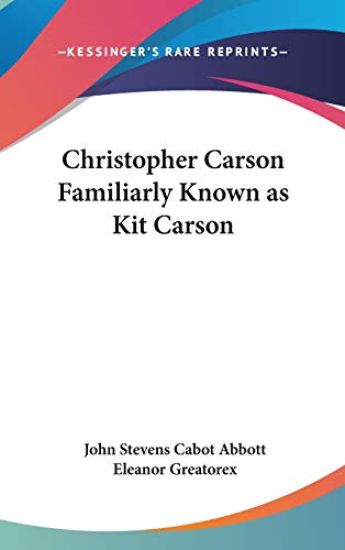
Christopher Carson: familiarly known as Kit Carson. By: John S. C. Abbott, illustrated By: (Elizabeth) Eleanor Greatorex (1854-1917): Chri
Eleanor Greatorex; John S. C. Abbott
Createspace Independent Publishing Platform
2017
nidottu
Christopher Houston Carson (December 24, 1809 - May 23, 1868), better known as Kit Carson, was an American frontiersman. He was a mountain man (fur trapper), wilderness guide, Indian agent, and U.S. Army officer. Carson became a frontier legend in his own lifetime via biographies and news articles. Exaggerated versions of his exploits were the subject of dime novels. Carson left home in rural present-day Missouri at age 16 to become a mountain man and trapper in the West. In the 1830s, he accompanied Ewing Young on an expedition to Mexican California and joined fur trapping expeditions into the Rocky Mountains. He lived among and married into the Arapaho and Cheyenne tribes. In the 1840s, he was hired as a guide by John C. Fremont. Fremont's expedition covered much of California, Oregon, and the Great Basin area. Fremont mapped and wrote reports and commentaries on the Oregon Trail to assist and encourage westward-bound American pioneers. Carson achieved national fame through Fremont's accounts of his expeditions. Under Fremont's command, Carson participated in the uprising against Mexican rule in California at the beginning of the Mexican-American War. Later in the war, Carson was a scout and courier, celebrated for his rescue mission after the Battle of San Pasqual and for his coast-to-coast journey from California to Washington, DC to deliver news of the conflict in California to the U.S. government. In the 1850s, he was appointed as the Indian agent to the Ute Indians and the Jicarilla Apaches. During the American Civil War, Carson led a regiment of mostly Hispanic volunteers from New Mexico on the side of the Union at the Battle of Valverde in 1862. When the Confederate threat to New Mexico was eliminated, Carson led forces to suppress the Navajo, Mescalero Apache, and the Kiowa and Comanche Indians. Carson was breveted a Brigadier General and took command of Fort Garland, Colorado. He was there only briefly: poor health forced him to retire from military life. Carson was married three times and had ten children. The Carson home was in Taos, New Mexico. Carson died at Fort Lyon, Colorado, of an aortic aneurysm on May 23, 1868. He is buried in Taos, New Mexico, next to his third wife Josefa Jaramillo.............. Elizabeth Eleanor Greatorex (1854-1917) was an American painter and illustrator.... John Stevens Cabot Abbott (September 19, 1805 - June 17, 1877), an American historian, pastor, and pedagogical writer, was born in Brunswick, Maine to Jacob and Betsey Abbott. Early life: He was a brother of Jacob Abbott, and was associated with him in the management of Abbott's Institute, New York City, and in the preparation of his series of brief historical biographies. Dr. Abbott graduated at Bowdoin College in 1825, prepared for the ministry at Andover Theological Seminary, and between 1830 and 1844, when he retired from the ministry in the Congregational Church, preached successively at Worcester, Roxbury and Nantucket, all in Massachusetts. Literary career: Owing to the success of a little work, The Mother at Home, he devoted himself, from 1844 onwards, to literature. He was a voluminous writer of books on Christian ethics, and of popular histories, which were credited with cultivating a popular interest in history. He is best known as the author of the widely popular History of Napoleon Bonaparte (1855), in which the various elements and episodes in Napoleon's career are described. Abbott takes a very favourable view towards his subject throughout. Also among his principal works are: History of the Civil War in America (1863-1866), and The History of Frederick II, Called Frederick the Great (New York, 1871). He also did a forward to a book called Life of Boone by W.M. Bogart, about Daniel Boone in 1876. In general, except that he did not write juvenile fiction, his work in subject and style closely resembles that of his brother, Jacob Abbott....
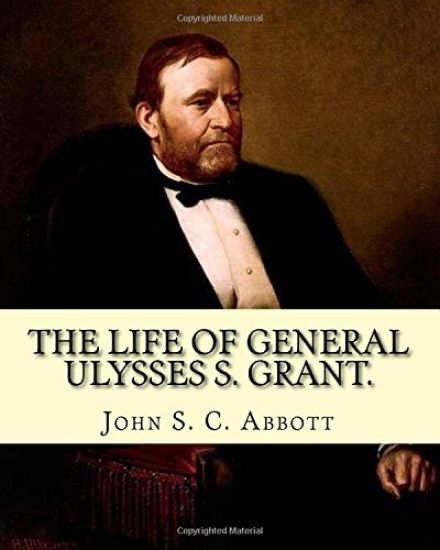
The life of General Ulysses S. Grant. Containing a brief but faithful narrative of those military and diplomatic achievements which have entitled him
John S. C. Abbott
Createspace Independent Publishing Platform
2017
nidottu
John Stevens Cabot Abbott (September 19, 1805 - June 17, 1877), an American historian, pastor, and pedagogical writer, was born in Brunswick, Maine to Jacob and Betsey Abbott. Early life: He was a brother of Jacob Abbott, and was associated with him in the management of Abbott's Institute, New York City, and in the preparation of his series of brief historical biographies. Dr. Abbott graduated at Bowdoin College in 1825, prepared for the ministry at Andover Theological Seminary, and between 1830 and 1844, when he retired from the ministry in the Congregational Church, preached successively at Worcester, Roxbury and Nantucket, all in Massachusetts. Literary career: Owing to the success of a little work, The Mother at Home, he devoted himself, from 1844 onwards, to literature. He was a voluminous writer of books on Christian ethics, and of popular histories, which were credited with cultivating a popular interest in history. He is best known as the author of the widely popular History of Napoleon Bonaparte (1855), in which the various elements and episodes in Napoleon's career are described. Abbott takes a very favourable view towards his subject throughout. Also among his principal works are: History of the Civil War in America (1863-1866), and The History of Frederick II, Called Frederick the Great (New York, 1871). He also did a forward to a book called Life of Boone by W.M. Bogart, about Daniel Boone in 1876. In general, except that he did not write juvenile fiction, his work in subject and style closely resembles that of his brother, Jacob Abbott... Ulysses S. Grant, born Hiram Ulysses Grant, (April 27, 1822 - July 23, 1885) was the Commanding General of the United States Army at the end of the American Civil War. He was elected as the 18th President of the United States in 1868, serving from 1869 to 1877. As Commanding General, Grant worked closely with President Abraham Lincoln to lead the Union Army to victory over the Confederacy in the Civil War. Supported by Congress, Grant began to implement Reconstruction, often at odds with President Andrew Johnson, who succeeded the assassinated Lincoln. Twice elected president, Grant led the Republicans in their effort to remove the vestiges of Confederate nationalism and slavery, protect African-American citizenship, and support economic prosperity. Although his presidency has often been criticized for its scandals and for his failure to alleviate the economic depression following the Panic of 1873, he is regarded as a President who performed relatively well in the context of his time, and took strong action on civil rights for African Americans. Grant graduated in 1843 from West Point and served in the Mexican-American War. After the war, he married Julia Boggs Dent in 1848, and together they had four children. Grant retired from the Army in 1854 and struggled financially in civilian life. When the Civil War began in 1861, he rejoined the U.S. Army and quickly rose through the ranks. In 1862, Grant took control of Kentucky and most of Tennessee, and led Union forces to victory in the Battle of Shiloh, earning a reputation as an aggressive commander. In July 1863, after a series of coordinated battles, Grant defeated Confederate armies and seized Vicksburg, taking Union control of the Mississippi River and dividing the Confederacy in two. After Grant's victories in the Chattanooga Campaign, Lincoln promoted the officer to lieutenant general and Commanding General of the Army in March 1864. Grant confronted Robert E. Lee in a series of bloody battles, trapping Lee's army in their defense of Richmond. Grant coordinated a series of devastating campaigns in other theaters, as well. In April 1865, Lee surrendered to Grant at Appomattox, effectively ending the war. Historians have hailed Grant's military genius, and his strategies are featured in military history textbooks, but a minority contend that he won by brute force rather than superior strategy...
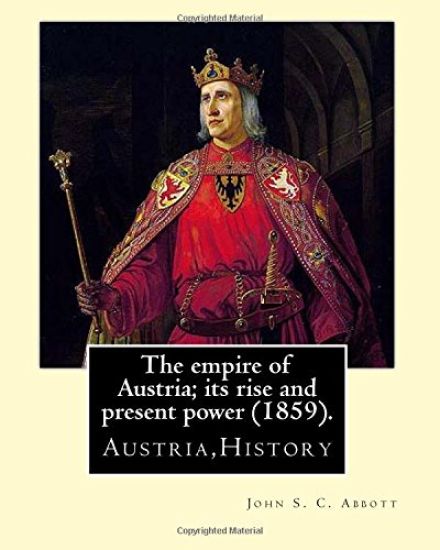
The empire of Austria; its rise and present power (1859). By: John S. C. Abbott: Austria, History
John S. C. Abbott
Createspace Independent Publishing Platform
2017
nidottu
John Stevens Cabot Abbott (September 19, 1805 - June 17, 1877), an American historian, pastor, and pedagogical writer, was born in Brunswick, Maine to Jacob and Betsey Abbott.John Stevens Cabot Abbott (September 19, 1805 - June 17, 1877), an American historian, pastor, and pedagogical writer, was born in Brunswick, Maine to Jacob and Betsey Abbott. Early life He was a brother of Jacob Abbott, and was associated with him in the management of Abbott's Institute, New York City, and in the preparation of his series of brief historical biographies. Dr. Abbott graduated at Bowdoin College in 1825, prepared for the ministry at Andover Theological Seminary, and between 1830 and 1844, when he retired from the ministry in the Congregational Church, preached successively at Worcester, Roxbury and Nantucket, all in Massachusetts. Literary career Owing to the success of a little work, The Mother at Home, he devoted himself, from 1844 onwards, to literature. He was a voluminous writer of books on Christian ethics, and of popular histories, which were credited with cultivating a popular interest in history. He is best known as the author of the widely popular History of Napoleon Bonaparte (1855), in which the various elements and episodes in Napoleon's career are described. Abbott takes a very favourable view towards his subject throughout. Also among his principal works are: History of the Civil War in America (1863-1866), and The History of Frederick II, Called Frederick the Great (New York, 1871). He also did a forward to a book called Life of Boone by W.M. Bogart, about Daniel Boone in 1876. In general, except that he did not write juvenile fiction, his work in subject and style closely resembles that of his brother, Jacob Abbott. Marriage and children On August 17, 1835 he married Jane Williams Bourne, daughter of Abner Bourne and Abagail Williams. John and Jane had issue: John Brown Abbott (November 29, 1831 - May 24, 1839) Jane Maria Abbott (born November 25, 1833) Waldo Abbott (September 8, 1836 - July 7, 1864) Harriet Vaughan Abbott (born February 18, 1838) Ellen Williams Abbott(born January 11, 1840) Laura Sallucia Abbott (born October 30, 1843) Elizabeth Ballister Abbott (March 15, 1847 - February 23, 1864) Emma Susan Abbott (born July 12, 1849) Gorham Dummer Abbott (born March 29, 1851) As a part of the 1872 Iwakura Mission Mr. Abbott was given guardianship of Shige Nagai, a Japanese girl sent to the United States to be educated. John Stevens Cabot Abbott died at Fair Haven, Connecticut. In 1910, a series of twenty short biographies of historical characters by J. S. C. and Jacob Abbott, was published. Their brother, Gorham Dummer Abbott, was also an author. Abbott's grandson, Willis Abbott, was a Christian Scientist and an editor of the Christian Science Monitor...............
The History of Christianity - Consisting of the Life and Teachings of Jesus of Nazareth is an unchanged, high-quality reprint of the original edition of 1872. Hansebooks is editor of the literature on different topic areas such as research and science, travel and expeditions, cooking and nutrition, medicine, and other genres. As a publisher we focus on the preservation of historical literature. Many works of historical writers and scientists are available today as antiques only. Hansebooks newly publishes these books and contributes to the preservation of literature which has become rare and historical knowledge for the future.
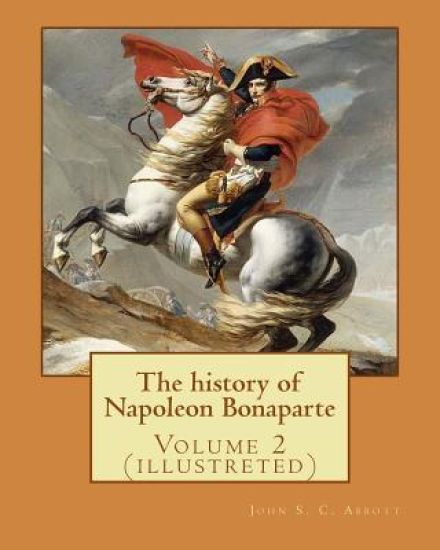
The history of Napoleon Bonaparte. By: John S.(Stevens) C.(Cabot) Abbott: Volume 2 (illustreted)
John S. C. Abbott
Createspace Independent Publishing Platform
2017
nidottu
The Life and Adventures of Rear Admiral John Paul Jones Commonly Called Paul Jones (LARGE PRINT EDITION)
John S. C. Abbott
KESSINGER PUBLISHING, LLC
2011
sidottu
The Life Of General Ulysses S. Grant: Containing A Brief, But Faithful Narrative Of Those Military And Diplomatic Achievements (1868)
John S. C. Abbott
KESSINGER PUBLISHING, LLC
2008
sidottu
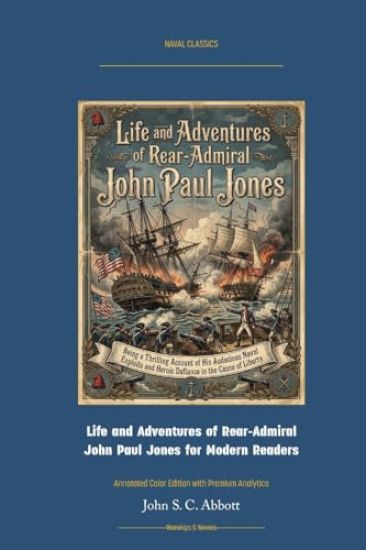
Life and Adventures of Rear-Admiral John Paul Jones: Annotated Color Edition with Premium Analytics
John S. C. Abbott
Warships and Navies
2026
nidottu
Biography of John Paul Jones, the Scottish-born sailor who became the greatest naval hero of the American Revolution. This Naval Classics edition features RKHS (Reproducing Kernel Hilbert Space) analytical enrichments including surprisal analysis, narrative complexity metrics, and computational literary analysis that illuminate the text from a modern data-science perspective.