Kirjailija
John Schofield
Kirjat ja teokset yhdessä paikassa: 29 kirjaa, julkaisuja vuosilta 2003-2024, suosituimpien joukossa St Paul's Cathedral. Vertaile teosten hintoja ja tarkista saatavuus suomalaisista kirjakaupoista.
29 kirjaa
Kirjojen julkaisuhaarukka 2003-2024.
'Wicked Problems' are those problems facing the planet and its inhabitants, present and future, which are hard (if not impossible) to resolve and for which bold, creative, and messy solutions are typically required. The adjective 'wicked' describes the mischievous and even evil quality of these problems, where proposed solutions often turn out to be worse than the symptoms. This wide-ranging and innovative book encourages readers to think about archaeology in an entirely new way, as fresh, relevant, and future-oriented. It examines some of the novel ways that archaeology (alongside cultural heritage practice) can contribute to resolving some of the world's most wicked problems, or global challenges as they are sometimes known. With chapters covering climate change, environmental pollution, health and wellbeing, social injustice, and conflict, the book uses many and diverse examples to explain how, through studying the past and present through an archaeological lens, in ways that are creative, ambitious, and both inter- and transdisciplinary, significant 'small wins' can be achieved. Through these small wins, archaeologists can help to mitigate some of those most pressing of wicked problems, contributing therefore to a safer, healthier, and more stable world.
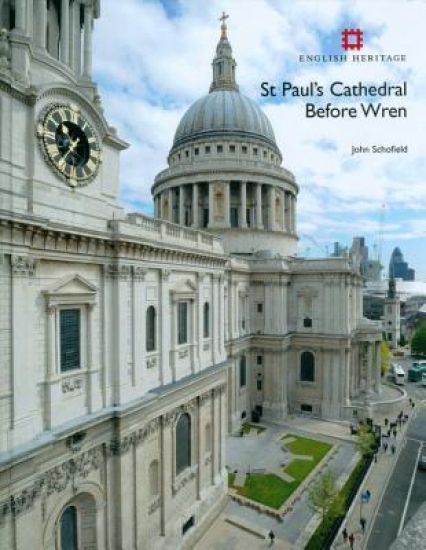
This is the first volume concerned solely with the archaeology of a major late 17th-century building in London, and the major changes it has undergone. St Paul's Cathedral in the City of London was built in 1675–1711 to the designs of Sir Christopher Wren and has been described as an iconic building many times. In this major new account, John Schofield examines the cathedral from an archaeological perspective, reviewing its history from the early 18th to the early 21st century, as illustrated by recent archaeological recording, documentary research and engineering assessment. A detailed account of the construction of the cathedral is provided based on a comparison of the fabric with voluminous building accounts which have survived and evidence from recent archaeological investigation. The construction of the Wren building and its embellishments are followed by the main works of later surveyors such as Robert Mylne and Francis Penrose. The 20th century brought further changes and conservation projects, including restoration after the building was hit by two bombs in World War II, and all its windows blown out. The 1990s and first years of the present century have witnessed considerable refurbishment and cleaning involving archaeological and engineering works. Archaeological specialist reports and an engineering review of the stability and character of the building are provided.
Laytime and Demurrage is the leading authority for all queries pertaining to this vital aspect of maritime law. It has continued to offer reliable, authoritative, and in-depth analysis since the first edition published in 1986. Praised for its unrivalled coverage and lucid writing style, this book provides a comprehensive overview of all aspects of laytime and demurrage, tracing the development of the law from its origins in the nineteenth century right up to the present day. The author delivers an in-depth analysis of both fixed and customary laytime clauses, the rules relating to commencement of laytime in berth, dock and port charters, and discusses under which circumstances laytime can be suspended. Furthermore, it analyses demurrage rules and vital issues such as despatch, detention and frustration. This eighth edition includes all key judicial and arbitral decisions reported since the seventh edition published in 2016. It also covers suffixes in connection with laytime measured in terms of Working days and Weather Working Days, and disputes arising from tender of NORs at the end of the sea passage. Laytime and Demurrage is an invaluable guide for both legal practitioners and maritime professionals worldwide, including commodity traders and brokers, shipping companies, P&I Clubs, shipowners, charterers, and arbitrators.
Archaeological Practice in Great Britain
John Schofield; John Carmen; Paul Belford
Springer-Verlag New York Inc.
2012
nidottu
This manual provides a unique ‘user guide’ to practicing archaeology and working in the cultural heritage sector within the diverse settings of Great Britain, comprising of: England, Scotland, Wales, the Isle of Man and the Channel Islands.As part of their training, archaeologists often seek work in parts of Britain, either for experience before travelling elsewhere, or directly as part of their career progression. While this does involve reading published material on excavation techniques, archaeological theory, and specific heritage management practices, or research using the Internet, the ideal preparation to working in Britain for the first time requires practitioners to know a little about a lot. Currently, there is no single resource which provides that primary resource for budding archaeologists.Archaeological Practice in Great Britain will provide just such a resource: presented in an accessible style, with a comprehensive and up-to-date bibliography and lists of useful websites. Professionals with particular areas of expertise will contribute short sections on particular subjects, incorporated into the main text prepared by the authors. Throughout, the specific contexts and differences between the various component nations and regions of Great Britain will be made clear.
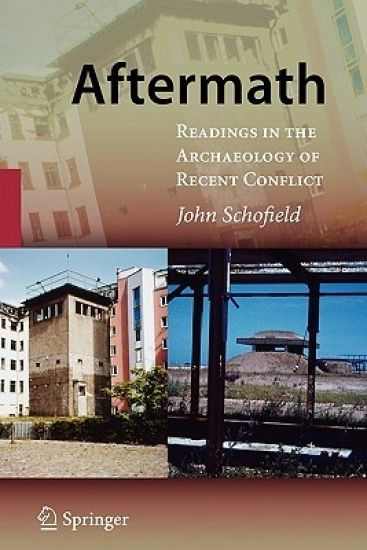
Conflict and Battlefield Archaeology is a growing and important field in archaeology, with implications on the state of the world today: how humanity has prepared for, reacted to, and dealt with the consequences of conflict at a national and international level. As the field grows, there is an increasing need for research and development in this area. Written by one of the most prominent scholars in this field of growing interest, "Aftermath", offers a clear and important overview to research in the field. It will become an essential source of information for scholars already involved in conflict archaeology as well as those just starting to explore the field. It offers access to previously hard-to-find but important research.
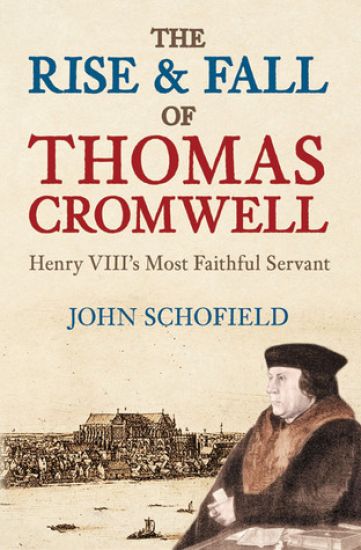
Thomas Cromwell was the Henry's VIII's chief minister and principal reformer of the church in one of the most eventful eras in English history. As The Rise & Fall of Thomas Cromwell reveals, contemporary sources reveal a brilliant mind and expansive heart, a lover and patron of the arts and humanities, while short case studies shed new light on his relations with, and his reputation among, the Tudor populace. The final part narrates the drama of his downfall, and the king's posthumous exoneration of the 'most faithful servant he ever had'. Based on a massive amount of primary research, The Rise & Fall of Thomas Cromwell overturns the previously accepted view of one of Tudor England's most important personalities.
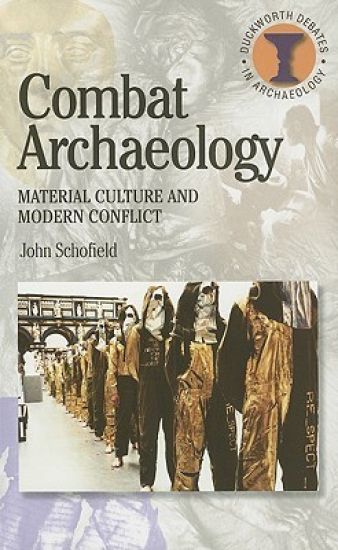
This series of short volumes, each devoted to a theme which is the subject of contemporary debate in archaeology, ranges from issues in theory and method to aspects of world archaeology. The archaeology of recent conflict is a fast-moving field of research. It is challenging and provocative. It deals with established historical events for which the material remains are unquestionably 'heritage', but also the more recent, tragic and heavily politicised events, actions and places whose meaning and significance is more ambiguous. But although recent and familiar, it is also a subject that draws closely on established principles of archaeological theory and practice, while also connecting with the related fields of history, anthropology, sociology, philosophy, art and representation. Here the author draws together projects and ideas from a diverse literature and from his own research, presenting them as a worked example of contemporary archaeology, of heritage management practice and of archaeological principles and theory. This study encapsulates a lively area of current debate: fascinating, challenging, controversial, contemporary and cross-disciplinary.
Indigenous Concepts of Health and Healing in Andean Populations
Elizabeth Currie; John Schofield
TAYLOR FRANCIS LTD
2024
sidottu
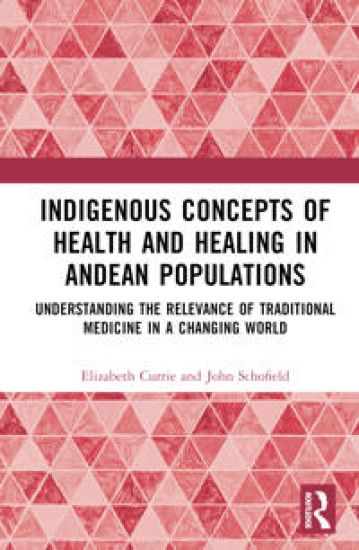
This book uses archaeology and ethnohistory to explore the evidence for the survival of ancestral beliefs and practices related to health and healing in Indigenous Andean communities.The authors argue that through determining the nature of the survival of beliefs around health and healing, important insights are gained into how people develop adaptive strategies for survival in a way that allows a continuity of identity and integrity. The book works through various stages of research to arrive at its conclusions. Firstly, through archaeology and ethnohistory, it establishes a ‘baseline’ of key ancestral (pre-European) Indigenous Andean beliefs related to health, illness and healing. It then proceeds to review the evidence for the survival of these ancestral beliefs and practices related to Indigenous pre-European Andean epistemologies and ontologies. Analysing the results of the first two sections, the final part reflects on the narratives around ancestral beliefs and practices and how they influence lived experience in the contemporary world. In essence, this book deals with the question 'How do people manage change?', a universal question relevant to humanity at any time, and stresses the need to recognise the significance of cultural diversity, intangible heritage and plurality.This interdisciplinary study is for researchers in ethnohistory, anthropology, medical anthropology, archaeology, history, heritage and Indigenous studies.
London's Waterfront and Its World, 1666-1800
John Schofield; Stephen Freeth
Archaeopress
2023
sidottu
London’s Waterfront and its World, 1666–1800 presents the results of archaeological excavations of 1974 to 1983 in the central waterfront area of the City of London. The archaeology of the port of London is considered on a wide scale, from the City down the Thames to Deptford. The Great Fire of London in 1666 prompted some changes to the topography of streets and buildings, but there were also many continuities in life and work. The waterfront changed during the 18th century as warehousing replaced houses. This process is illustrated by archaeological excavation, documentary study and the survival of plans of properties surveyed for land-owning institutions. The artefacts and pottery recovered from these sites include many pieces from overseas, and London’s waterfront can be compared with those of other port cities in Europe, North America and the Caribbean. Perhaps in late 17th- and 18th-century London we can study urban tastes and consumption from an archaeological viewpoint. During this period London became the hub of the new British empire, but contributed to the exploitation of people from other lands known as slavery. The waterfront on both sides of the Thames was at the centre of the new empire.
For over 50 years, the white radomes of the Teufelsberg have been one of Berlin’s most prominent landmarks. For half of this time the city lay over 100 miles behind an 'Iron Curtain' that divided East from West, and was surrounded by communist East Germany and the densest concentration of Warsaw Pact military forces in Europe. From the vantage point high on the Teufelsberg, British and American personnel constantly monitored the electronic emissions from the surrounding military forces, as well as high-level political intelligence. Today, the Teufelsberg stands as a contemporary and spectacular ruin, representing a significant relic of a lost cyber space of Cold War electronic emissions and espionage. Based on archaeological fieldwork and recently declassified documents, this book presents a new history of the Teufelsberg and other Western intelligence gathering sites in Berlin. At a time when intelligence gathering is once more under close scrutiny, when questions are being asked about the intelligence relationship between the United States and Russia, and amidst wider debate about the US’s National Security Agency (NSA) intelligence programmes, sites like the Teufelsberg raise questions that appear both important and timely.
London’s Waterfront 1100–1666: Excavations in Thames Street, London, 1974–84
John Schofield; Lyn Blackmore; Jacqui Pearce
Archaeopress
2020
nidottu
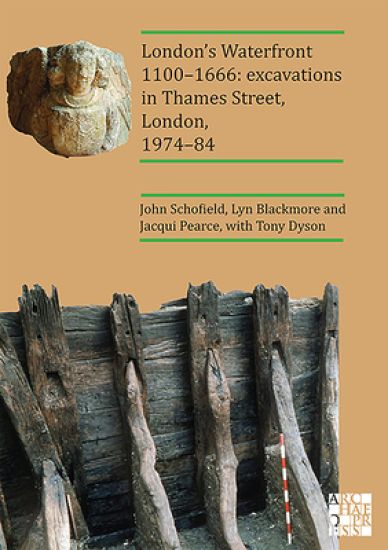
London’s Waterfront 1100–1666: excavations in Thames Street, London, 1974–84 presents and celebrates the mile-long Thames Street in the City of London and the land south of it to the River Thames as an archaeological asset. The argument is based on the reporting of four excavations of 1974–84 by the Museum of London near the north end of London Bridge: Swan Lane, Seal House, New Fresh Wharf and Billingsgate Lorry Park. Here the findings of the period 1100–1666 are presented. Buildings and property development on sixteen properties south of Thames Street, on land reclaimed in many stages since the opening of the 12th century, include part of the parish church of St Botolph Billingsgate. The many units of land reclamation are dated by dendrochronology, coins and documents. They have produced thousands of artefacts and several hundred kilos of native and foreign pottery. Much of this artefactual material has been published, but in catalogue form (shoes, knives, horse fittings, dress accessories, textiles, household equipment). Now the context of these finds, their deposition in groups, is laid out for the first time. Highlights of the publication include the first academic analysis and assessment of a 13th- or 14th-century trumpet from Billingsgate, the earliest surviving straight trumpet in Europe; many pilgrim souvenirs; analysis of two drains of the 17th century from which suggestions can be made about use of rooms and spaces within documented buildings; and the proposal that one of the skeletons excavated from St Botolph’s church is John Reynewell, mayor of London in 1426–7 and a notable figure in London’s medieval history. The whole publication encourages students and other researchers of all kinds to conduct further research on any aspect of the sites and their very rich artefactual material, which is held at the Museum of London’s Archaeological Archive. This is a significantly large and varied dataset for the archaeology and history of London in the period 1100 to 1666 which can be continuously interrogated for generations to come.
Originally published in 1987, Cost-Benefit Analysis in Urban and Regional Planning, outlines the theory and practice of cost-benefit analysis (CBA) in the context of urban and regional planning. The theory of CBA is developed with examples to illustrate the principles, it also deals with details of the applications and covers issues such as local health and social services provision, local economic development and regional policy evaluation, and planning in less developed countries – as well as the conventional land-use issues of physical planning.
For over 50 years, the white radomes of the Teufelsberg have been one of Berlin’s most prominent landmarks. For half of this time the city lay over 100 miles behind an 'Iron Curtain' that divided East from West, and was surrounded by communist East Germany and the densest concentration of Warsaw Pact military forces in Europe. From the vantage point high on the Teufelsberg, British and American personnel constantly monitored the electronic emissions from the surrounding military forces, as well as high-level political intelligence. Today, the Teufelsberg stands as a contemporary and spectacular ruin, representing a significant relic of a lost cyber space of Cold War electronic emissions and espionage. Based on archaeological fieldwork and recently declassified documents, this book presents a new history of the Teufelsberg and other Western intelligence gathering sites in Berlin. At a time when intelligence gathering is once more under close scrutiny, when questions are being asked about the intelligence relationship between the United States and Russia, and amidst wider debate about the US’s National Security Agency (NSA) intelligence programmes, sites like the Teufelsberg raise questions that appear both important and timely.
Originally published in 1987, Cost-Benefit Analysis in Urban and Regional Planning, outlines the theory and practice of cost-benefit analysis (CBA) in the context of urban and regional planning. The theory of CBA is developed with examples to illustrate the principles, it also deals with details of the applications and covers issues such as local health and social services provision, local economic development and regional policy evaluation, and planning in less developed countries – as well as the conventional land-use issues of physical planning.
St Paul’s Cathedral is the City of London’s most important monument and historic building. But Wren’s great work is only the most recent of a succession of Anglo-Saxon and medieval cathedrals on the site, where Christianity was first established in AD 604. This report is the first ever comprehensive account of the archaeology and history of the cathedral and its churchyard from Roman times up to the construction of the Wren building which began in 1675. Archaeological excavations and observations go back to the time of Wren. The Anglo-Saxon cathedral is an enigma, and even its precise site somewhere in the churchyard is not known for certain. The medieval cathedral was probably the largest building in medieval Britain and one of the largest in Europe, with its 400ft-spire and a rose window to rival those we now see at Notre Dame in Paris. Recent excavations in and around the Wren building are described, and some of the many architectural fragments of the medieval cathedral, dug up over the last 150 years, are studied. Documents, surveys and early maps show the development of the religious complex and illuminate the lives of its occupants. In the 1630s a classical portico was added to the west end by Inigo Jones, Britain’s first truly Renaissance architect. Fragments of the portico, still covered with the soot of the Great Fire of 1666 which destroyed the cathedral, were found in 1996 when a tunnel was dug through one of the crypt walls of the present building. From these varied sources, the cathedrals which preceded that of Wren come to the surface again, and we can appreciate the cultural and religious importance of St Paul’s within the City of London, over a period of more than 1000 years.
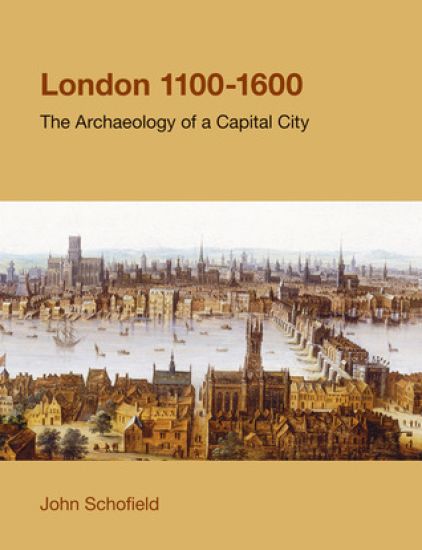
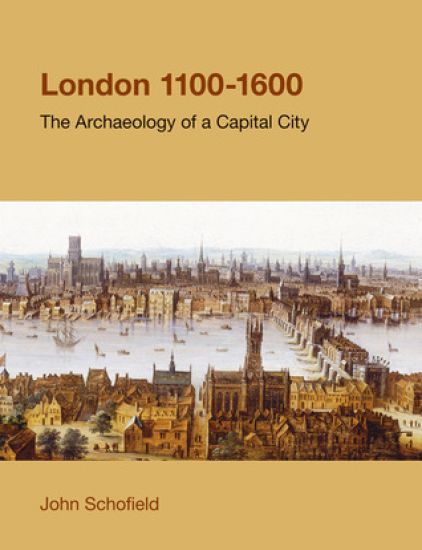
Since the early 1970s the increasingly effective conduct of archaeological work in the City of London and surrounding parts of the conurbation have revolutionised our view of the development and European importance of London between 1100 and 1600. There have been hundreds of archaeological excavations of every type of site, from the cathedral to chapels, palaces to outhouses, bridges, wharves, streams, fields, kilns, roads and lanes. The study of the material culture of Londoners over these five centuries has begun in earnest, based on thousands of accurately dated artefacts, especially found along the waterfront. Work by documentary historians has complemented and filled out the new picture. This book, written by an archaeologist who has been at the centre of this study since 1974, will summarise the main findings and new suggestions about the development of the City, its ups and downs through the Black Death and the Dissolution of the Monasteries; its place in Europe as a capital city with great architecture and relations with many other parts of Europe, from the Baltic to the Mediterranean. London has been the most intensively studied medieval city in Europe by archaeologists, due to the pace of development especially since the 1970s. Thus although this will be a study of a single medieval city, it will be a major contribution to the Archaeology of Europe, 1100-1600. The book is endorsed by the Museum of London, the City of London Archaeological Trust and the City of London Corporation whose logos will appear on the back cover.
Since the early 1970s the increasingly effective conduct of archaeological work in the City of London and surrounding parts of the conurbation have revolutionised our view of the development and European importance of London between 1100 and 1600. There have been hundreds of archaeological excavations of every type of site, from the cathedral to chapels, palaces to outhouses, bridges, wharves, streams, fields, kilns, roads and lanes. The study of the material culture of Londoners over these five centuries has begun in earnest, based on thousands of accurately dated artefacts, especially found along the waterfront. Work by documentary historians has complemented and filled out the new picture. This book, written by an archaeologist who has been at the centre of this study since 1974, will summarise the main findings and new suggestions about the development of the City, its ups and downs through the Black Death and the Dissolution of the Monasteries; its place in Europe as a capital city with great architecture and relations with many other parts of Europe, from the Baltic to the Mediterranean. London has been the most intensively studied medieval city in Europe by archaeologists, due to the pace of development especially since the 1970s. Thus although this will be a study of a single medieval city, it will be a major contribution to the Archaeology of Europe, 1100-1600.
Archaeological Practice in Great Britain
John Schofield; John Carmen; Paul Belford
Springer-Verlag New York Inc.
2011
sidottu
This manual provides a unique ‘user guide’ to practicing archaeology and working in the cultural heritage sector within the diverse settings of Great Britain, comprising of: England, Scotland, Wales, the Isle of Man and the Channel Islands.As part of their training, archaeologists often seek work in parts of Britain, either for experience before travelling elsewhere, or directly as part of their career progression. While this does involve reading published material on excavation techniques, archaeological theory, and specific heritage management practices, or research using the Internet, the ideal preparation to working in Britain for the first time requires practitioners to know a little about a lot. Currently, there is no single resource which provides that primary resource for budding archaeologists.Archaeological Practice in Great Britain will provide just such a resource: presented in an accessible style, with a comprehensive and up-to-date bibliography and lists of useful websites. Professionals with particular areas of expertise will contribute short sections on particular subjects, incorporated into the main text prepared by the authors. Throughout, the specific contexts and differences between the various component nations and regions of Great Britain will be made clear.
The English reformers of the 1530s, with Thomas Cromwell at their head, continued to have a strong belief in kingly rule and authority, in contrast to their radical approach to the power of the Pope and the Roman Catholic Church. Resisting the king was tantamount to resisting God in their eyes, and even on a matter of conscience the will of the king should prevail. Yet just over 100 years later, Charles I was called the 'man of blood', and Oliver Cromwell famously declared that 'we will cut off his head with the crown on it'. But how did we get from the one to the other? How did the deferential Reformation become a regicidal revolution? Following on from his biography of Thomas Cromwell, John Schofield examines how the English character and the way it perceived royal rule changed between the time of Thomas Cromwell and that of his great-great-grandnephew Oliver.