
Kirjailija
John Stuart Mill
Kirjat ja teokset yhdessä paikassa: 881 kirjaa, julkaisuja vuosilta 1850-2026, suosituimpien joukossa Sosialismin hyödyt ja haitat. Vertaile teosten hintoja ja tarkista saatavuus suomalaisista kirjakaupoista.
881 kirjaa
Kirjojen julkaisuhaarukka 1850-2026.
On Liberty and Other Essays (with an Introduction by A. D. Lindsay)
John Stuart Mill
Digireads.com
2016
pokkari

The Subjection of Women: John Stuart Mill
John Stuart Mill
Createspace Independent Publishing Platform
2016
nidottu
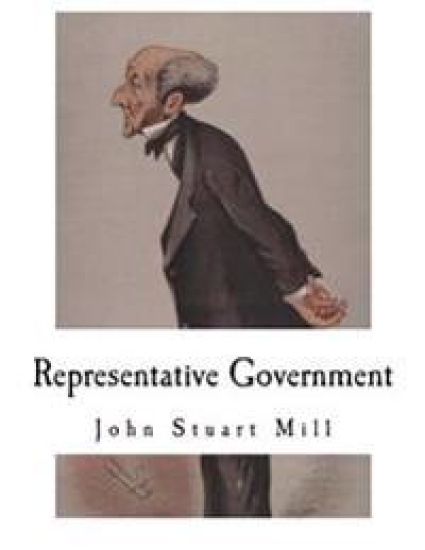
Representative Government: Considerations on Representative Government
John Stuart Mill
Createspace Independent Publishing Platform
2016
nidottu
Representative Government - John Stuart Mill

The Principles of Political Economy: John Stuart Mill
John Stuart Mill
Createspace Independent Publishing Platform
2016
nidottu
The Principles of Political Economy - with some of their applications to social philosophy - John Stuart Mill
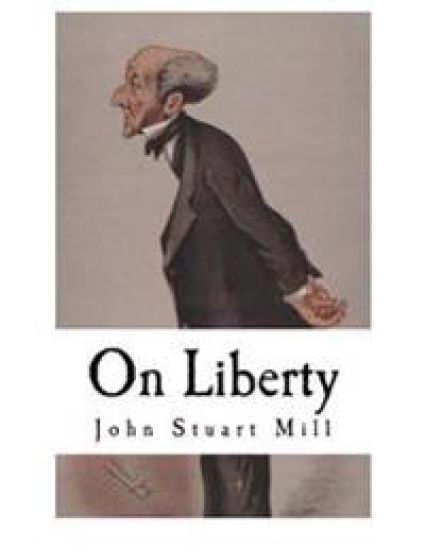
On Liberty - John Stuart Mill.... On Liberty is a philosophical work by English philosopher John Stuart Mill, originally intended as a short essay. The work, published in 1859, applies Mill's ethical system of utilitarianism to society and the state. Mill attempts to establish standards for the relationship between authority and liberty. He emphasizes the importance of individuality which he conceived as a prerequisite to the higher pleasures


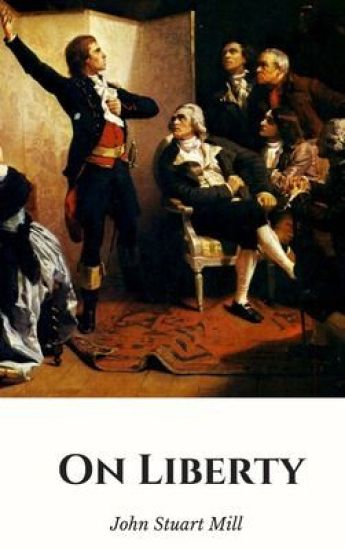
In his much quoted, seminal work, On Liberty, John Stuart Mill attempts to establish standards for the relationship between authority and liberty. He emphasizes the importance of individuality which he conceived as a prerequisite to the higher pleasures-the summum bonum of Utilitarianism. Published in 1859, On Liberty presents one of the most eloquent defenses of individual freedom and is perhaps the most widely-read liberal argument in support of the value of liberty.
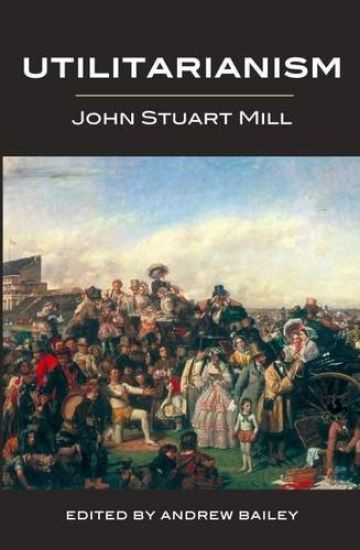
Utilitarianism is a classic work of ethical theory, arguably the most persuasive and comprehensible presentation of this widely infl uential position. Mill argues that it is pleasure and pain that ought to guide our decision-making-and not the pleasure and pain of any one person or group, but the summative experience of all who are affected by our actions. While he didn't invent utilitarianism, Mill offered its clearest expression and strongest defense, and expanded the theory to account for the variety in quality that we find among specifi c pleasures and pains. Today, Mill's version of the "Greatest Happiness Principle" is a standard premise in many moral arguments within the academy and in practical ethical and political deliberation.The complete text of the * edition of Utilitarianism is presented here, with footnote annotations added to clarify unfamiliar references and terminology. A detailed introduction by the editor is divided into brief digestible parts discussing the context of the text and offering guidelines on how to read it accurately and critically. This edition has its origin in the acclaimed Broadview Anthology of Social and Political Thought and adheres to the anthology's format and high standard of accuracy and accessibility.
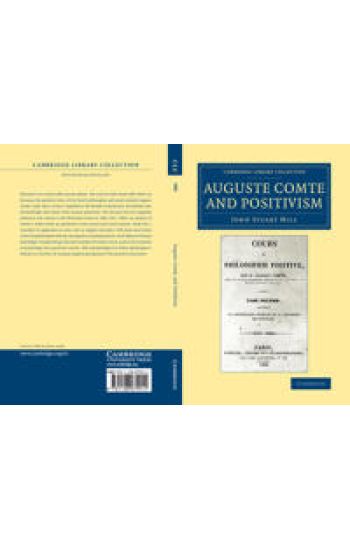
Reissued in its revised 1866 second edition, this work by John Stuart Mill (1806–73) discusses the positivist views of the French philosopher and social scientist Auguste Comte (1798–1857). Comte is regarded as the founder of positivism, the doctrine that all knowledge must derive from sensory experience. The two-part text was originally printed as two articles in the Westminster Review in 1865. Part 1 offers an analysis of Comte's earlier works on positivism in the natural and social sciences, while Part 2 considers its application in areas such as religion and ethics. Mill states that Comte is the first philosopher who has attempted to extend positivism 'to all objects of human knowledge'. Despite being critical of a number of Comte's views, such as the exclusion of psychology from positivist science, Mill acknowledges his fellow philosopher's influence in the face of common negative perceptions of the positivist movement.

"It is indisputable that the being whose capacities of enjoyment are low, has the greatest chance of having them fully satisfied; and a highly endowed being will always feel that any happiness which he can look for, as the world is constituted, is imperfect. But he can learn to bear its imperfections, if they are at all bearable; and they will not make him envy the being who is indeed unconscious of the imperfections, but only because he feels not at all the good which those imperfections qualify. It is better to be a human being dissatisfied than a pig satisfied; better to be Socrates dissatisfied than a fool satisfied. And if the fool, or the pig, is of a different opinion, it is only because they only know their own side of the question." --- John Stuart Mill, Utilitarianism John Stuart Mill's book Utilitarianism is one of the most influential and widely-read philosophical defenses of utilitarianism in ethics. The essay first appeared as a series of three articles published in Fraser's Magazine in 1861; the articles were collected and reprinted as a single book in 1863. It went through four editions during Mill's lifetime with minor additions and revisions. Although Mill includes discussions of utilitarian ethical principles in other works such as On Liberty and The Subjection of Women, Utilitarianism contains Mill's only major discussion of the fundamental grounds for utilitarian ethical theory.

L'Assujettissement des Femmes
John Stuart Mill
Createspace Independent Publishing Platform
2016
nidottu
En avance sur son temps, Stuart Mill signe une oeuvre essentielle dans laquelle il d fend le droit des femmes. Au-del de l'engagement f ministe, ''l'assuejtissement des femme'' soul ve une r flexion qui reste, pres de 150 ans apr s sa premi re publication, d'une actualit brulante.

The Collected Works of John Stuart Mill took thirty years to complete and is acknowledged as the definitive edition of J.S. Mill and as one of the finest works editions ever completed. Mill's contributions to philosophy, economics, and history, and in the roles of scholar, politician and journalist can hardly be overstated and this edition remains the only reliable version of the full range of Mill's writings. Each volume contains extensive notes, a new introduction and an index. Many of the volumes have been unavailable for some time, but the Works are now again available, both as a complete set and as individual volumes.

Why Getting and Being Happy Are So Awesome and Important John Stuart Mill's book Utilitarianism is a classic exposition and defence of utilitarianism in ethics. The essay first appeared as a series of three articles published in Fraser's Magazine in 1861; the articles were collected and reprinted as a single book in 1863. Mill's aim in the book is to explain what utilitarianism is, to show why it is the best theory of ethics, and to defend it against a wide range of criticisms and misunderstandings. Though heavily criticized both in Mill's lifetime and in the years since, Utilitarianism did a great deal to popularize utilitarian ethics and was "the most influential philosophical articulation of a liberal humanistic morality that was produced in the nineteenth century." Mill's Utilitarianism remains "the most famous defense of the utilitarian view ever written" and is still widely assigned in university ethics courses around the world. Get Your Copy Now.

Autobiography of John Stuart Mill
John Stuart Mill
Createspace Independent Publishing Platform
2016
nidottu
Autobiography of John Stuart Mill by John Stuart Mill John Stuart Mill (20 May 1806
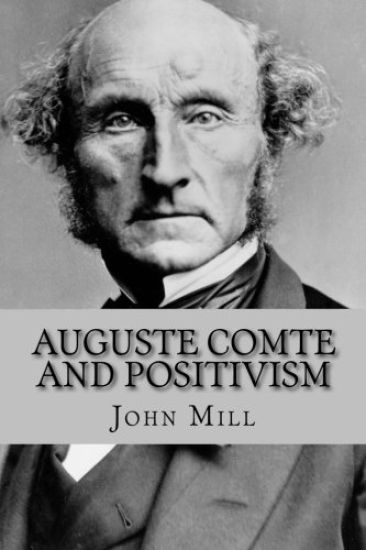
Auguste Comte and Positivism
John Stuart Mill
Createspace Independent Publishing Platform
2016
nidottu
John Stuart Mill was an English philosopher, political economist and civil servant. One of the most influential thinkers in the history of liberalism, he contributed widely to social theory, political theory and political economy. He has been called "the most influential English-speaking philosopher of the nineteenth century." Mill's conception of liberty justified the freedom of the individual in opposition to unlimited state control. 8]Mill expresses his view on freedom by illustrating how an individual's drive to better their station, and for self-improvement, is the sole source of true freedom. Only when an individual is able to attain such improvements, without impeding others in their own efforts to do the same, can true freedom prevail. Mill's linking of freedom and self-improvement has inspired many. By establishing that individual efforts to excel have worth, Mill was able to show how they should achieve self-improvement without harming others, or society at large.
