Kirjailija
John Stuart Mill
Kirjat ja teokset yhdessä paikassa: 869 kirjaa, julkaisuja vuosilta 1850-2026, suosituimpien joukossa Sosialismin hyödyt ja haitat. Vertaile teosten hintoja ja tarkista saatavuus suomalaisista kirjakaupoista.
869 kirjaa
Kirjojen julkaisuhaarukka 1850-2026.
A System of Logic Volume I: Ratiocinative and Inductive Being a Connected View of the Principles of Evidence and the Methods of Scientific Investigati
John Stuart Mill
Createspace Independent Publishing Platform
2014
nidottu

Una de las primeras obras feministas del pensador y economista ingl s John Stuart Mill, traducida, prologada y anotada por una de nuestras grandes intelectuales del siglo XIX: Emilia Pardo Bazan. "Cada var n -dice Stuart Mill en su estudio social sobre la mujer de su tiempo- es un rey de derecho divino que se juzga due o y se or por ley de nacimiento, o un noble que se impone a los plebeyos porque su sangre es azul y dorado su blas n. La relaci n del marido con la mujer se parece mucho a la del se or con sus vasallos; s lo que la mujer est obligada a mayor obediencia todav a para con su marido, de lo que nunca estuvo el vasallo con el se or feudal." Odysse Barot, habla de Stuart Mill como el piloto intelectual de nuestro siglo, el nombre que contribuy , m s que otro alguno de esta generaci n, a marcar rumbo al pensamiento de sus contempor neos. (Del pr logo de Emilia Pardo Baz n).

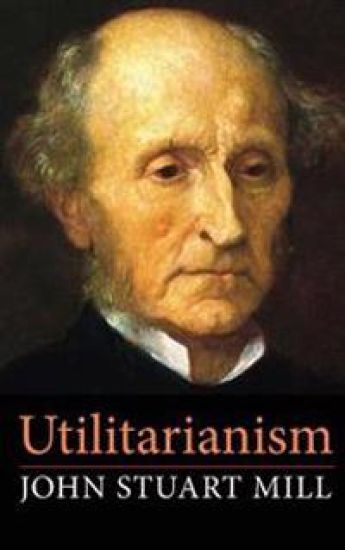
Utilitarianism and Other Works (Including On Liberty)
John Stuart Mill
Createspace Independent Publishing Platform
2014
nidottu
John Stuart Mill and Thomas Carlyle: V25 Harvard Classics
John Stuart Mill
Literary Licensing, LLC
2014
nidottu

The Subjection of Women is the title of an essay written by John Stuart Mill in 1869, possibly jointly with his wife Harriet Taylor Mill, stating an argument in favour of equality between the sexes. At the time it was published in 1869, this essay was an affront to European conventional norms for the status of men and women. John Stuart Mill credited his wife, Harriet Taylor Mill, with co-writing the essay. While some scholars agreed by 2009 that John Stuart Mill was the sole author, it is also noted that some of the arguments are similar to Harriet Taylor Mill's essay The Enfranchisement of Women which was published in 1851. Overview The Subjection of Women (1869) offers both detailed argumentation and passionate eloquence in opposition to the social and legal inequalities commonly imposed upon women by a patriarchal culture. Just as in On Liberty, Mill defends the emancipation of women on utilitarian grounds. Mill was convinced that the moral and intellectual advancement of humankind would result in greater happiness for everybody. He asserted that the higher pleasures of the intellect yielded far greater happiness than the lower pleasure of the senses. He conceived of human beings as morally and intellectually capable of being educated and civilised. Mill believed everyone should have the right to vote, with the only exceptions being barbarians and uneducated people. Mill argues that people should be able to vote to defend their own rights and to learn to stand on their two feet, morally and intellectually. This argument is applied to both men and women. Mill often used his position as a member of Parliament to demand the vote for women, a controversial position for the time. In Mill's time a woman was generally subject to the whims of her husband and/or father due to social norms which said women were both physically and mentally less able than (citation needed), and therefore needed to be "taken care of." Contributing to this view were social theories, i.e. survival of the fittest and biological determinism, based on a now considered incorrect understanding of the biological theory of evolution and also religious views supporting a hierarchical view of men and women within the family(citation needed). The archetype of the ideal woman as mother, wife and homemaker was a powerful idea in 19th century society(citation needed). At the time of writing, Mill recognised that he was going against the common views of society and was aware that he would be forced to back up his claims persistently. Mill argued that the inequality of women was a relic from the past, when "might was right," but it had no place in the modern world. Mill saw that having effectively half the human race unable to contribute to society outside of the home as a hindrance to human development. "... T]he legal subordination of one sex to another - is wrong in itself, and now one of the chief hindrances to human improvement; and that it ought to be replaced by a system of perfect equality, admitting no power and privilege on the one side, nor disability on the other."

Dissertations and Discussions V2: Political, Philosophical and Historical
John Stuart Mill
Literary Licensing, LLC
2014
nidottu
Principles of Political Economy
John Stuart Mill
Createspace Independent Publishing Platform
2014
nidottu
Principles of Political Economy with Some of Their Applications to Social Philosophy V2
John Stuart Mill
Literary Licensing, LLC
2014
nidottu

System of Logic Ratiocinative and Inductive: Being a Connected View of the Principles of Evidence and the Methods of Scientific Investigation
John Stuart Mill
Literary Licensing, LLC
2014
nidottu

Considerations on Representative Government
John Stuart Mill
Createspace Independent Publishing Platform
2014
nidottu
Dissertations and Discussions V3: Political, Philosophical and Historical
John Stuart Mill
Literary Licensing, LLC
2014
nidottu

Dissertations and Discussions V1: Political, Philosophical and Historical
John Stuart Mill
Literary Licensing, LLC
2014
nidottu

System of Logic Ratiocinative and Inductive: Being a Connected View of the Principles of Evidence and the Methods of Scientific Investigation
John Stuart Mill
Literary Licensing, LLC
2014
sidottu
""System of Logic Ratiocinative and Inductive"" is a comprehensive work on the principles of evidence and scientific investigation. Written by the renowned philosopher and economist John Stuart Mill, the book offers a connected view of the methods of reasoning, both deductive and inductive, and their applications to various fields of study. The book is divided into five parts, covering topics such as the nature of evidence, the principles of induction, the logic of probability, and the methods of scientific inquiry. Mill's approach to logic is both rigorous and practical, emphasizing the importance of empirical observation and experimentation in the development of scientific knowledge. The book is considered a landmark in the history of philosophy and a foundational text in the field of logic.This Is A New Release Of The Original 1886 Edition.This scarce antiquarian book is a facsimile reprint of the old original and may contain some imperfections such as library marks and notations. Because we believe this work is culturally important, we have made it available as part of our commitment for protecting, preserving, and promoting the world's literature in affordable, high quality, modern editions, that are true to their original work.