Kirjojen hintavertailu. Mukana 12 595 353 kirjaa ja 12 kauppaa.

Kirjailija

John Sutherland

Kirjat ja teokset yhdessä paikassa: 58 kirjaa, julkaisuja vuosilta 1980-2026, suosituimpien joukossa Charles Dickens. Vertaile teosten hintoja ja tarkista saatavuus suomalaisista kirjakaupoista.

58 kirjaa

Kirjojen julkaisuhaarukka 1980-2026.

The Connell Guide To Charles Dickens's Great Expectations

The Connell Guide To Charles Dickens's Great Expectations

John Sutherland; Jolyon Connell

Connell Guides
2012
pokkari
Great Expectations is one of the best-selling Victorian novels of our time. No Dickens work, with the exception of A Christmas Carol, has been adapted more for both film and television. It has been as popular with critics as it has with the public. In 1937, George Bernard Shaw called the novel Dickens's "most compactly perfect book". John Lucas describes it as "the most perfect and the most beautiful of all Dickens's novels", Angus Wilson as "the most completely unified work of art that Dickens ever produced". Great Expectations has been so successful partly because it's an exciting story. Dickens always had a keen eye on the market and subscribed to Wilkie Collins's advice: "make 'em laugh, make 'em cry, above all make 'em wait." From the violent opening scene on the marshes to the climax of Magwitch's attempted escape on the Thames, the story is full of suspense, mystery and drama. But while these elements of Great Expectations have ensured its popularity, it is also a novel which, as this guide will seek to show, raises profound questions not just about the nature of Victorian society but about the way human relationships work and the extent to which people are shaped by their childhoods and the circumstances in which they grow up.
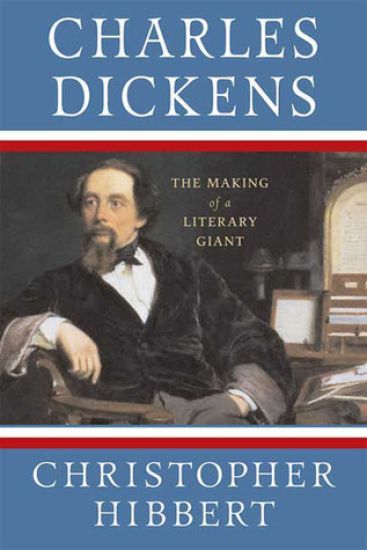
Charles Dickens

Charles Dickens

Christopher Hibbert; John Sutherland

Palgrave Macmillan
2009
nidottu
With passion and wit, Christopher Hibbert details the crucial years that formed Dickens the writer and Dickens the man. He explains how Dickens transferred the smallest fragments of his experience to his fiction, and how he interpreted his youth for both himself and his readers, throwing a clear light on the creative process and sources of literary imagination. An illuminating look at a complex and baffling person, fans of literary biography will relish Hibbert's acclaimed style as he delivers the fascinating tale of Dickens' development.
Stephen Spender: A Literary Life

Stephen Spender: A Literary Life

John Sutherland

Oxford University Press
2005
sidottu
The literary, political, and artistic interests of poet and cultural icon Stephen Spender are illuminated in this narrative based on his private papers, tracing his rise to success as a poet in the 1930s through his later years as cultural statesman of the twentieth century, and examining his relationships with such luminaries as Dylan Thomas, Sylvia Plath, T. S. Eliot, and Virgina Woolf.
The Connell Guide to Jane Austen's Mansfield Park

The Connell Guide to Jane Austen's Mansfield Park

John Sutherland; Jolyon Connell

Connell Guides
2018
pokkari
Few novels have divided critics more than Mansfield Park. It has been fiercely argued over for more than 200 years, and with good reason: it is open to radically different interpretations. At its broadest, it is a novel about the condition of England, setting up an opposition, as the Austen biographer Claire Tomalin has put it, between someone with strongly held religious and moral principles who will not consider a marriage that is not based on true feeling, and is revolted by sexual immorality, and "a group of worldly, highly cultivated, entertaining and well-to-do young people who pursue pleasure without regard for religious or moral principles". Many have dismissed the heroine, Fanny Price, as a mere picture of goodness, but the author of this guide, John Wiltshire, one of the most respected and original of modern Austen critics, dismisses this argument. "The still, principled fulcrum of moral right, celebrated and excoriated by earlier critics," he says, is now "understood to be a trembling, unstable entity", an "erotically driven and conflicted figure". Indeed, in part at least, this is a novel about female desire - the plot revolves around the passionate feelings of two young women, Fanny and Maria. The argument that it is a straightforward defence of the conservative way of life is hard to sustain; it is more plausibly seen as questioning the whole patriarchal basis of society, and in particular the extent to which women were trapped by a system over which they had no control. Far from being devoid of irony, it is now frequently, and perhaps rightly, thought of as the most ironic of all Austen's novels.
Orwell’s Nose

Orwell’s Nose

John Sutherland

Reaktion Books
2016
sidottu
In 2012 John Sutherland permanently lost his sense of smell. At about the same time he embarked on a re-reading of George Orwell’s works, and his lack of olfactory sense cast an entirely new light on the re-evaluation. What he now noticed was just how acutely attuned to scent Orwell was: rich descriptions of odours, fetors and reeks occur throughout his works, from Winston Smith’s apartment building in Nineteen Eighty-Four: ‘The hallway smelt of boiled cabbage and old rag mats’, to John Flory’s concubine Ma Hla May in Burmese Days: ‘A mingled scent of sandalwood, garlic, coconut oil and the jasmine in her hair floated from her.’ Orwell’s Nose is an original and imaginative account of the life and work of George Orwell, exploring the ‘scent narratives’ that abound in Orwell’s fiction and non-fiction. Along the way the author elucidates questions that remain unanswered in previous biographies, and addresses gaps in the evidence of the writer’s life and legacy. Orwell covered his tracks well; this illuminating and irreverent book provides a new understanding of one of our most iconic and influential writers.
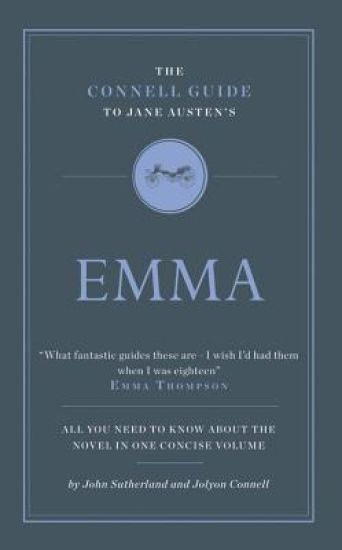
The Connell Guide To Jane Austen's Emma

The Connell Guide To Jane Austen's Emma

John Sutherland; Jolyon Connell

Connell Guides
2012
pokkari
"A heroine whom no-one but myself will much like," the author famously proclaimed. In fact, in any league of likeability Miss Woodhouse is streets ahead of Miss Fanny - the ostentatiously "meek" heroine of Mansfield Park. Meek Emma is not. Indeed it is her sense of absolute sovereignty over her little world of Highbury - her right, as she presumes, to dispose of the marriage choices of those in her circle - which brings her to grief. And that grief, by the familiar course of the heroine's moral education in Austen's fiction, makes her, through remorse and repentance, a mature woman capable of forming correct judgements. Not least about whom Miss Woodhouse herself will marry. Emma, of all the six great novels, is the one which conforms most closely to Austen's famous formula that "three or four families in a country village is the very thing to work on". Emma is, by general agreement, the "quietest" of the novels. Some have complained that there is not enough of a story in it, but others, as this guide shows, have found the plot in Emma the most successful Austen achieved. It is, for example, unusual among the sextet in playing a cunning trick on the reader who - unless they are sharp (sharper certainly than Miss Woodhouse) - may well be deluded as to which eligible young (or less than young) man the heroine will end up spending the rest of her life with. Or whether, given her frequently uttered distaste for marriage, she will end up the only unwed of the six heroines at the end of it all.
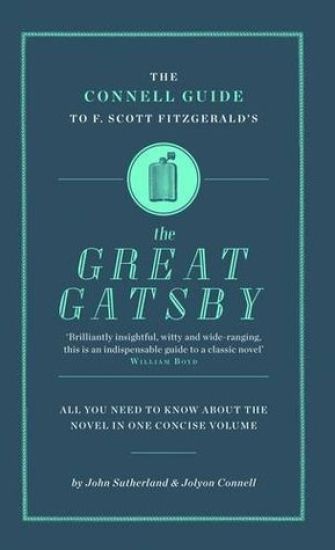
The Connell Guide To F. Scott Fitzgerald's The Great Gatsby

The Connell Guide To F. Scott Fitzgerald's The Great Gatsby

John Sutherland; Jolyon Connell

Connell Guides
2012
pokkari
When The Great Gatsby was first published, in 1925, reviews were mixed. H.L. Mencken called it "no more than a glorified anecdote". L.P. Hartley, author of The Go-Between, thought Fitzgerald deserved "a good shaking": "The Great Gatsby is evidently not a satire; but one would like to think that Mr Fitzgerald's heart is not in it, that it is a piece of mere naughtiness." Yet, gradually the book came to be seen as one of the greatest - if not the greatest - of American novels. Why? What is it that makes this story of a petty hoodlum so compelling? Why has a novel so intimately rooted in its own time "lasted" into ours? What is it that posterity, eight decades later, finds so fascinating in this chronicle of the long-gone "Jazz Age", flappers, speakeasies and wild parties? It is, after all, scarcely a novel at all, more a long short story. But it has a power out of all proportion to its length. It is beautifully written, making it feel even shorter than it is, and is full of haunting imagery. It is also, perhaps, the most vivid literary evocation of the "Great American Dream", about which it is profoundly sceptical, as it is about dreams generally. In the end, however, as D.H. Lawrence would put it, it is "on the side of life". Gatsby's dream may be impossible, so much so that the book can end in no other way than with his death, but up to a point he is redeemed by it and by the tenacity with which he clings to it. It is this that makes the novel so moving and so haunting.
Bestsellers (Routledge Revivals)

Bestsellers (Routledge Revivals)

John Sutherland

Routledge
2011
nidottu
First published in 1981, this book offers a study of British and American popular fiction in the 1970s, a decade in which the quest for the superseller came to dominate the lives of publishers on both sides of the Atlantic. Illustrated by examples of the lurid incidents that catapult so many books into the bestseller charts, this comprehensive study covers the work of Robbins, Hailey and Maclean, the 'bodice rippers', the disaster craze, horror, war stories and media tie-ins such as The Godfather, Jaws and Star Wars.
How Literature Works: 50 Key Concepts

How Literature Works: 50 Key Concepts

John Sutherland

Oxford University Press
2011
nidottu
How Literature Works is an indispensable book for any reader seeking a greater appreciation of their favorite novel, poem, or play. It offers a lively and straightforward guide to literary thinking. With a series of compact essays, the renowned literary critic John Sutherland--widely admired for his wit and clear reasoning--strips away the obscurity and pretension of literary study. His book offers concise definitions and clear examples of the fifty concepts that all book lovers should know. It includes basic descriptive terms (ambiguity, epic), the core vocabulary of literary culture (genre, style), and devices employed by authors (irony, defamiliarization). More broadly, How Literature Works explores the animating concepts behind literary theory (textuality, sexual politics), traces the forces that impact literature's role in the real world (obscenity, plagiarism), and grapples with the future of reading (fanfic, e-book). For any reader who wants to get the most out of the literature they read, Sutherland's short sharp book will both inform and delight.
Bestsellers (Routledge Revivals)

Bestsellers (Routledge Revivals)

John Sutherland

Routledge
2010
sidottu
First published in 1981, this book offers a study of British and American popular fiction in the 1970s, a decade in which the quest for the superseller came to dominate the lives of publishers on both sides of the Atlantic. Illustrated by examples of the lurid incidents that catapult so many books into the bestseller charts, this comprehensive study covers the work of Robbins, Hailey and Maclean, the 'bodice rippers', the disaster craze, horror, war stories and media tie-ins such as The Godfather, Jaws and Star Wars.
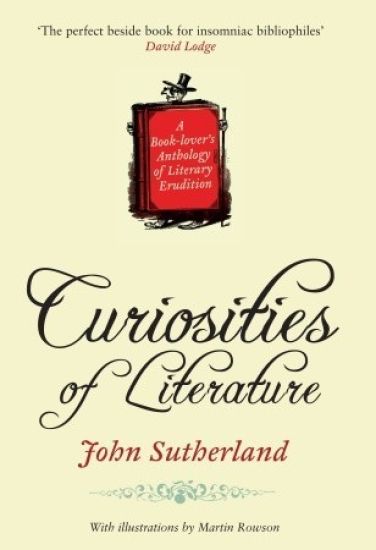
Curiosities of Literature

Curiosities of Literature

John Sutherland

Arrow Books Ltd
2009
pokkari
How much heavier was Thackeray's brain than Walt Whitman's? Which novels do American soldiers read? When did cigarettes start making an appearance in English literature? And is there any link between asthma and literary genius? This title contemplates the import of questions such as these, and attempts a few answers in a series of essays.
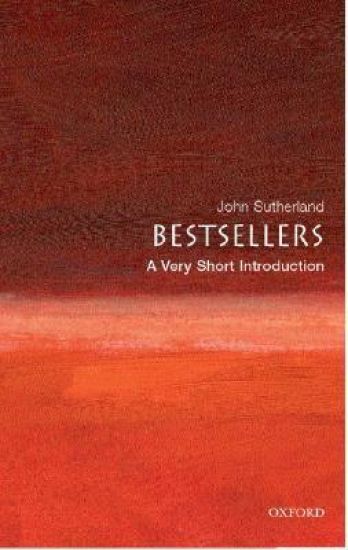
Bestsellers

Bestsellers

John Sutherland

Oxford University Press
2007
nidottu
'I rejoice', said Doctor Johnson, 'to concur with the Common Reader.' For the last century, the tastes and preferences of the common reader have been reflected in the American and British bestseller lists, and this Very Short Introduction takes an engaging look through the lists to reveal what we have been reading - and why. John Sutherland shows that bestseller lists monitor one of the strongest pulses in modern literature and are therefore worthy of serious study. Along the way, he lifts the lid on the bestseller industry, examines what makes a book into a bestseller, and asks what separates bestsellers from canonical fiction. Exploring the relationship between bestsellers and the fashions, ideologies, and cultural concerns of the day, the book includes short case-studies and lively summaries of bestsellers through the years: from In His Steps - now almost totally forgotten, but the biggest all-time bestseller between 1895 and 1945, to Gone with the Wind and The Andromeda Strain, and The Da Vinci Code. ABOUT THE SERIES: The Very Short Introductions series from Oxford University Press contains hundreds of titles in almost every subject area. These pocket-sized books are the perfect way to get ahead in a new subject quickly. Our expert authors combine facts, analysis, perspective, new ideas, and enthusiasm to make interesting and challenging topics highly readable.
Mrs Humphry Ward

Mrs Humphry Ward

John Sutherland

Clarendon Press
1990
sidottu
Mary Ward (1851-1920) had a furiously active public career, her literary and philanthropic activities transforming her from an eminent Victorian into a pre-eminent Edwardian. The granddaughter of Thomas Arnold, she found herself at the centre of an intellectual and cultural coterie comprising the Arnold, Huxley, and Trevelyan families. Her novel, Robert Elsmere (1888), the first of a series of bestsellers, earned her both unprecedented sums of money and the critical respect of writers such as Henry James. She helped found Somerville College, Oxford, the University's first institution for the higher education of women, and inaugurated a number of play centres for the children of London's working women, despite being a fierce opponent of women's suffrage. As the first female reporter to visit the trenches in 1916, she was instrumental in bringing America into the war. Yet for all her achievements, her private life was overshadowed - often tragically so - by misfortune. Her parents's marriage was seriously affected by her father's religious doubts; she eclipsed her husband, a Times journalist and art critic, while her indolent son frittered away her financial and emotional resources. John Sutherland's fascinating study of the private suffering of this predominantly public person also provides useful insights into the restrictions placed upon women in the late-Victorian-Edwardian era. This title also appears in the Oxford General Books catalogue for Autumn 1990.
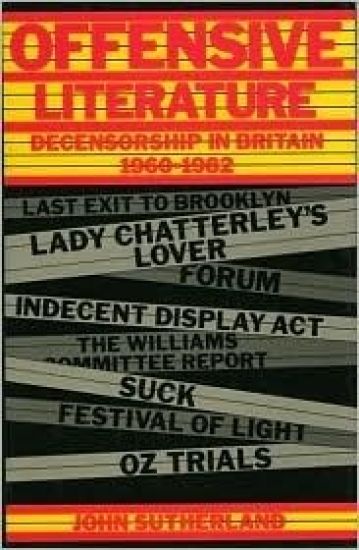
Offensive Literature

Offensive Literature

John Sutherland

Barnes Noble Books-Imports, Div of Rowman Littlefield Pubs., Inc
1983
sidottu
This provocative book takes decensorship from the 1960 Lady Chatterley trial through the long-term drive against pornography which continues into the 1980s.
97 Fights

97 Fights

John Sutherland

REAKTION BOOKS
2026
sidottu
The noble art of boxing is the world’s oldest contact sport. Its Big Bang moment was the arrival of Thomas Alva Edison, whose pioneering feature film Men Boxing was produced in 1891. From that seed, boxing grew to become the first truly global sport. Taking Men Boxing as its starting point, 97 Fights is a thrilling, no-holds-barred account that considers all the greats – Joe Louis and Muhammad Ali, Nicola Adams and Oleksandr Usyk among them. Modern boxing has weathered the storms of mob fixing, wayward fighters and personal tragedy, in and out of the ring. With signature precision and humour, and the passion of a true fan, John Sutherland charts the sport’s precipitous climb, its golden era and its uncertain future, from ‘The Thriller in Manila’ to the unedifying spectacle of Logan Paul’s ‘Bragging Rights’. Ultimately, the book asks: where will boxing go? Or will it just go? These are the two questions to which Sutherland’s authoritative survey leads, and to which he supplies authoritative answers.