Kirjojen hintavertailu. Mukana 12 165 956 kirjaa ja 12 kauppaa.
Kirjailija
John T. Morse
Kirjat ja teokset yhdessä paikassa: 46 kirjaa, julkaisuja vuosilta 2005-2026, suosituimpien joukossa A treatise on the law of banks and banking (Volume I). Vertaile teosten hintoja ja tarkista saatavuus suomalaisista kirjakaupoista.
This book has been considered by academicians and scholars of great significance and value to literature. This forms a part of the knowledge base for future generations. So that the book is never forgotten we have represented this book in a print format as the same form as it was originally first published. Hence any marks or annotations seen are left intentionally to preserve its true nature.
Thomas Jefferson - American Statesmen is an unchanged, high-quality reprint of the original edition of 1883. Hansebooks is editor of the literature on different topic areas such as research and science, travel and expeditions, cooking and nutrition, medicine, and other genres. As a publisher we focus on the preservation of historical literature. Many works of historical writers and scientists are available today as antiques only. Hansebooks newly publishes these books and contributes to the preservation of literature which has become rare and historical knowledge for the future.
This book has been considered by academicians and scholars of great significance and value to literature. This forms a part of the knowledge base for future generations. So that the book is never forgotten we have represented this book in a print format as the same form as it was originally first published. Hence any marks or annotations seen are left intentionally to preserve its true nature.
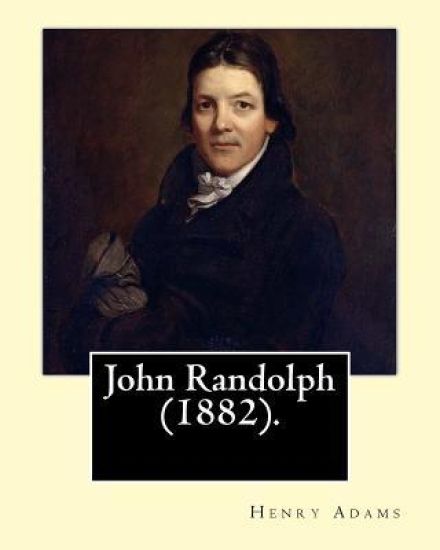
John Randolph (June 2, 1773 - May 24, 1833), known as John Randolph of Roanoke, was a planter, and a Congressman from Virginia, serving in the House of Representatives at various times between 1799 and 1833, the Senate (1825-1827), and also as Minister to Russia (1830). After serving as President Thomas Jefferson's spokesman in the House, he broke with the president in 1805 as a result of what he saw as the dilution of traditional Jeffersonian principles as well as perceived mistreatment during the impeachment of Samuel Chase, in which Randolph served as chief prosecutor. 1] Following this split, Randolph proclaimed himself the leader of the "Old Republicans" or "Tertium Quids", an arch-conservative wing of the Democratic-Republican Party who wanted to restrict the role of the federal government. Specifically, Randolph promoted the Principles of '98, which said that individual states could judge the constitutionality of central government laws and decrees, and could refuse to enforce laws deemed unconstitutional.... John Torrey Morse (1840-1937) was an American historian and biographer. He was born in Boston, Massachusetts on Jan. 9, 1840, and lived in that city as a lawyer. Morse was the editor of the 'American Statesmen Series, ' and published biographies of Alexander Hamilton in two volumes, considered his most significant work, He also wrote biographies on John and J. Q. Adams, Jefferson, Lincoln, Franklin, and Dr. Holmes. Morse also authored 'Banks and Banking', 'Arbitration and Award' and 'Famous Trials.'... Henry Brooks Adams (February 16, 1838 - March 27, 1918) was an American historian and member of the Adams political family, being descended from two U.S. Presidents. As a young Harvard graduate, he was secretary to his father, Charles Francis Adams, Abraham Lincoln's ambassador in London, a posting that had much influence on the younger man, both through experience of wartime diplomacy and absorption in English culture, especially the works of John Stuart Mill. After the American Civil War, he became a noted political journalist who entertained America's foremost intellectuals at his homes in Washington and Boston. In his lifetime, he was best known for his History of the United States During the Administrations of Thomas Jefferson and James Madison, a 9-volume work, praised for its literary style. His posthumously published memoirs, The Education of Henry Adams, won the Pulitzer Prize and went on to be named by the Modern Library as the top English-language nonfiction book of the 20th century.
John Torrey Morse (1840-1937) was an American historian and biographer. He was born in Boston, Massachusetts on Jan. 9, 1840, and lived in that city as a lawyer. Morse was the editor of the 'American Statesmen Series, ' and published biographies of Alexander Hamilton in two volumes, considered his most significant work, He also wrote biographies on John and J. Q. Adams, Jefferson, Lincoln, Franklin, and Dr. Holmes. Morse also authored 'Banks and Banking, Arbitration and Award' and 'Famous Trials...... John Adams (October 30 O.S. October 19] 1735 - July 4, 1826) was an American patriot who served as the second President of the United States (1797-1801) and the first Vice President (1789-97).He was a lawyer, diplomat, and statesman, and, as a Founding Father, a leader of American independence from Great Britain.Adams was a political theorist in the Age of Enlightenment who promoted republicanism and a strong central government. His innovative ideas were frequently published. He was also a dedicated diarist and correspondent, particularly with his wife and key advisor Abigail. He collaborated with his cousin, revolutionary leader Samuel Adams, but he established his own prominence prior to the American Revolution. After the Boston Massacre, he provided a successful (though unpopular) legal defense of the accused British soldiers, in the face of severe local anti-British sentiment and driven by his devotion to the right to counsel and the "protect ion] of innocence". Adams was a delegate from Massachusetts to the Continental Congress, where he played a leading role in persuading Congress to declare independence. He assisted Thomas Jefferson in drafting the Declaration of Independence in 1776, and was its foremost advocate in the Congress. As a diplomat in Europe, he helped negotiate the eventual peace treaty with Great Britain, and acquired vital governmental loans from Amsterdam bankers. Adams was the primary author of the Massachusetts Constitution in 1780 which influenced American political theory, as did his earlier Thoughts on Government (1776). Adams' credentials as a revolutionary secured for him two terms as President George Washington's vice president (1789 to 1797) and also his own election in 1796 as the second president. In his single term as president, he encountered fierce criticism from the Jeffersonian Republicans, as well as the dominant faction in his own Federalist Party, led by his rival Alexander Hamilton. Adams signed the controversial Alien and Sedition Acts, and built up the army and navy in the face of an undeclared naval "Quasi-War" with France. The major accomplishment of his presidency was a peaceful resolution of the conflict in the face of Hamilton's opposition. Due to his strong posture on defense, Adams is "often called the father of the American Navy".He was the first U.S. president to reside in the executive mansion, now known as the White House.In 1800, Adams lost re-election to Thomas Jefferson and retired to Massachusetts. He eventually resumed his friendship with Jefferson upon the latter's own retirement by initiating a correspondence which lasted fourteen years. 6] He and his wife established a family of politicians, diplomats, and historians now referred to as the Adams political family. Adams was the father of John Quincy Adams, the sixth President of the United States. He died on the fiftieth anniversary of the adoption of the Declaration of Independence. Modern historians in the aggregate have favorably ranked his administration.....
John Torrey Morse (1840-1937) was an American historian and biographer. He was born in Boston, Massachusetts on Jan. 9, 1840, and lived in that city as a lawyer. Morse was the editor of the 'American Statesmen Series, ' and published biographies of Alexander Hamilton in two volumes, considered his most significant work, He also wrote biographies on John and J. Q. Adams, Jefferson, Lincoln, Franklin, and Dr. Holmes. Morse also authored 'Banks and Banking', 'Arbitration and Award' and 'Famous Trials........ Oliver Wendell Holmes Sr. (August 29, 1809 - October 7, 1894) was an American polymath based in Boston. A member of the Fireside Poets, his peers acclaimed him as one of the best writers of the day. His most famous prose works are the "Breakfast-Table" series, which began with The Autocrat of the Breakfast-Table (1858). He was also an important medical reformer. In addition to his work as an author and poet, Holmes also served as a physician, professor, lecturer, and inventor, and although he never practiced it, he received formal training in law. Born in Cambridge, Massachusetts, Holmes was educated at Phillips Academy and Harvard College. After graduating from Harvard in 1829, he briefly studied law before turning to the medical profession. He began writing poetry at an early age; one of his most famous works, "Old Ironsides", was published in 1830 and was influential in the eventual preservation of the USS Constitution. Following training at the prestigious medical schools of Paris, Holmes was granted his M.D. from Harvard Medical School in 1836. He taught at Dartmouth Medical School before returning to teach at Harvard and, for a time, served as dean there. During his long professorship, he became an advocate for various medical reforms and notably posited the controversial idea that doctors were capable of carrying puerperal fever from patient to patient. Holmes retired from Harvard in 1882 and continued writing poetry, novels and essays until his death in 1894. Surrounded by Boston's literary elite-which included friends such as Ralph Waldo Emerson, Henry Wadsworth Longfellow, and James Russell Lowell-Holmes made an indelible imprint on the literary world of the 19th century. Many of his works were published in The Atlantic Monthly, a magazine that he named. For his literary achievements and other accomplishments, he was awarded numerous honorary degrees from universities around the world. Holmes's writing often commemorated his native Boston area, and much of it was meant to be humorous or conversational. Some of his medical writings, notably his 1843 essay regarding the contagiousness of puerperal fever, were considered innovative for their time. He was often called upon to issue occasional poetry, or poems written specifically for an event, including many occasions at Harvard. Holmes also popularized several terms, including "Boston Brahmin" and "anesthesia".
John Torrey Morse (1840-1937) was an American historian and biographer. He was born in Boston, Massachusetts on Jan. 9, 1840, and lived in that city as a lawyer. Morse was the editor of the 'American Statesmen Series, ' and published biographies of Alexander Hamilton in two volumes, considered his most significant work, He also wrote biographies on John and J. Q. Adams, Jefferson, Lincoln, Franklin, and Dr. Holmes. Morse also authored 'Banks and Banking', 'Arbitration and Award' and 'Famous Trials............ Oliver Wendell Holmes Sr. (August 29, 1809 - October 7, 1894) was an American polymath based in Boston. A member of the Fireside Poets, his peers acclaimed him as one of the best writers of the day. His most famous prose works are the "Breakfast-Table" series, which began with The Autocrat of the Breakfast-Table (1858). He was also an important medical reformer. In addition to his work as an author and poet, Holmes also served as a physician, professor, lecturer, and inventor, and although he never practiced it, he received formal training in law. Born in Cambridge, Massachusetts, Holmes was educated at Phillips Academy and Harvard College. After graduating from Harvard in 1829, he briefly studied law before turning to the medical profession. He began writing poetry at an early age; one of his most famous works, "Old Ironsides", was published in 1830 and was influential in the eventual preservation of the USS Constitution. Following training at the prestigious medical schools of Paris, Holmes was granted his M.D. from Harvard Medical School in 1836. He taught at Dartmouth Medical School before returning to teach at Harvard and, for a time, served as dean there. During his long professorship, he became an advocate for various medical reforms and notably posited the controversial idea that doctors were capable of carrying puerperal fever from patient to patient. Holmes retired from Harvard in 1882 and continued writing poetry, novels and essays until his death in 1894. Surrounded by Boston's literary elite-which included friends such as Ralph Waldo Emerson, Henry Wadsworth Longfellow, and James Russell Lowell-Holmes made an indelible imprint on the literary world of the 19th century. Many of his works were published in The Atlantic Monthly, a magazine that he named. For his literary achievements and other accomplishments, he was awarded numerous honorary degrees from universities around the world. Holmes's writing often commemorated his native Boston area, and much of it was meant to be humorous or conversational. Some of his medical writings, notably his 1843 essay regarding the contagiousness of puerperal fever, were considered innovative for their time. He was often called upon to issue occasional poetry, or poems written specifically for an event, including many occasions at Harvard. Holmes also popularized several terms, including "Boston Brahmin" and "anesthesia".








![John Adams. By: John T. (Torrey) Morse (1840-1937) was an American historian and biographer.: John Adams (October 30 [O.S. October 19]](/covers/9781540823434.jpg)