Kirjojen hintavertailu. Mukana 12 595 353 kirjaa ja 12 kauppaa.
Kirjailija
Jonathan Clements
Kirjat ja teokset yhdessä paikassa: 59 kirjaa, julkaisuja vuosilta 1993-2026, suosituimpien joukossa Wu. Vertaile teosten hintoja ja tarkista saatavuus suomalaisista kirjakaupoista.
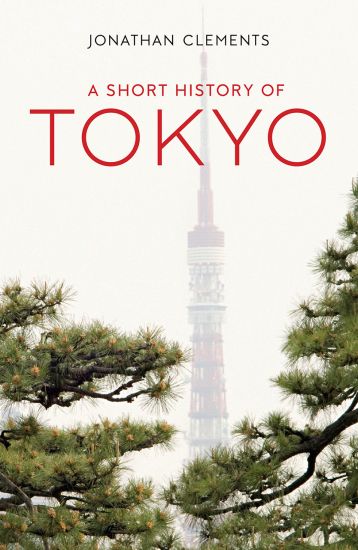
Tokyo, which in Japanese means the "Eastern Capital," has only enjoyed that name and status for 150 years. Until the middle of the nineteenth century, the city that is now Tokyo was a sprawling fishing town by the bay named Edo. Earlier still, in the Middle Ages, it was Edojuku, an outpost overlooking farmlands. And thousands of years ago, its mudflats and marshes were home to elephants, deer, and marine life. In this compact history, Jonathan Clements traces Tokyo's fascinating story from the first forest clearances and the samurai wars to the hedonistic "floating world" of the last years of the Shogunate. He illuminates the Tokyo of the twentieth century with its destruction and redevelopment, boom and bust without forgoing the thousand years of history that have led to the Eastern Capital as we know it. Tokyo is so entwined with the history of Japan that it can be hard to separate them, and A Short History of Tokyo tells both the story of the city itself and offers insight into Tokyo's position at the nexus of power and people that has made the city crucial to the events of the whole country.
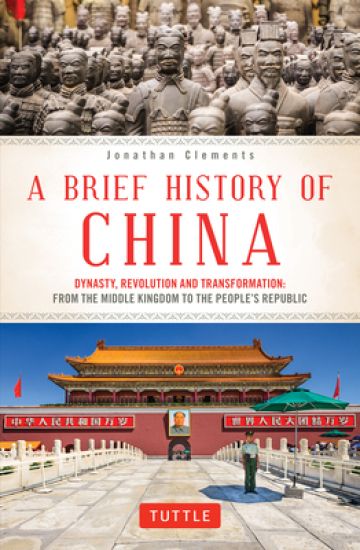
A comprehensive, yet entertaining look at China's history through a modern lens. For millennia, China was the largest and richest nation on earth. Two centuries ago, however, its economy sank into a depression from which it had not fully recovered—until now. China's modern resurgence as the world's largest nation in terms of population and its second-largest economy—where 800 million people have been lifted out of poverty in the space of a few decades—is the greatest untold story of the 21st century.A Brief History of China tells of the development of a rich and complex civilization where the use of paper, writing, money and gunpowder were widespread in ancient times and where silk, ceramics, tea, metal implements and other products were produced and exported around the globe. It examines the special conditions that allowed a single culture to unify an entire continent spanning 10 billion square kilometers under the rule of a single man—and the unbelievably rich artistic, literary and architectural heritage that Chinese culture has bequeathed to the world. Equally fascinating is the story of China's decline in the 19th and early 20th century—as Europeans and Americans took center stage—and its modern resurgence as an economic powerhouse in recent years. In his retelling of a Chinese history stretching back 5,000 years, author and China-expert Jonathan Clements focuses on the human stories which led to the powerful transformations in Chinese society—from the unification of China under its first emperor, Qinshi Huangdi, and the writings of the great Chinese philosophers Confucius and Laozi, to the Mongol invasion under Genghis Khan and the consolidation of Communist rule under Mao Zedong. Clements even brings readers through to the present day, outlining China's economic renaissance under Deng Xiaoping and Xi Jinping. What really separates this book from its counterparts is the focus on women, and modern themes such as diversity and climate change. Chinese history is typically told through the stories of its most famous men, but Clements' telling gives women equal time and research—which introduces readers of this book to equally important, but less commonly-known facts and historical figures.Often seen in the West in black or white terms—as either a savage dystopia or a fantastical paradise—China is revealed in the book as an exceptional yet troubled nation that nevertheless warrants its self-description as the Middle Kingdom.
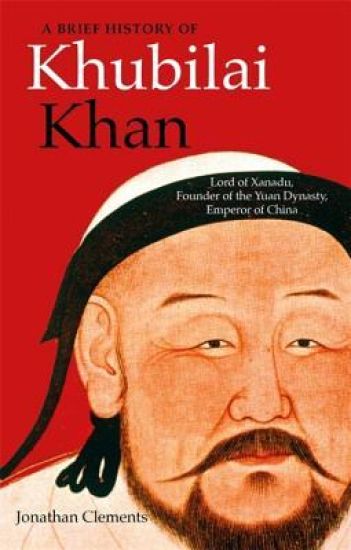
His grandfather was the bloodthirsty Mongol leader Genghis Khan, his mother a Christian princess. Groomed from childhood for a position of authority, Khubilai snatched the position of Great Khan, becoming the overlord of a Mongol federation that stretched from the Balkans to the Korean coast. His armies conquered the Asian kingdom of Dali and brought down the last defenders of imperial China.Khubilai Khan presided over a glorious Asian renaissance, attracting emissaries from all across the continent, and opening his civil service to 'men with coloured eyes' - administrators from the far west. His reign began the glorious Yuan dynasty that ruled over China for only ninety years, but had a profound impact on Asian history, from international trade to cultural revolution. Jonathan Clements's insightful biography into the life and times of one of China's greatest leaders is a fascinating introduction to an important era, uncovering the man behind Marco Polo's mythic portrait.
Presents the modern capital of Japan from the first forest clearances on the vast Kanto plain, through the wars and intrigues of the samurai era, up to the preparations for the 2020 Olympics. Tokyo (the `Eastern Capital') has only enjoyed that name and status for 150 years. Before then it was the site of Edojuku (`Estuary Camp'), a medieval outpost designed to keep watch over rich farmlands. Whereas the imperial court ruled Japan from the sleepy city of Kyoto the land-owners of the Kanto plain held the true wealth and power, which they eventually asserted in a series of bloody civil wars. As `Edo' in the early modern period, the Tokyo region became the administrative centre of Japan's Shogun overlords and the site of a vibrant, vivid urban culture of theatres, taverns and brothels. After the Meiji Restoration in 1868, it became Japan's true capital, home to the emperors, seat of government and site of rapid urban growth.
Just 77 days to a happier, more prosperous life! From Here to Financial Happiness is the day-by-day guide for anyone dreaming of a better life. Whether you’re dealing with debt, uncertain about retirement or simply want to get a grip on your finances, this book can put you on the road to happiness with a simple 11-week journey. Just 5-10 minutes a day to think about money, your habits, your goals, and your dreams. What steps can you take today to get your finances on track? What bad habits, bad investments, and misconceptions should you let go of? This book is packed with 77 days’ worth of real, actionable guidance for getting your money right—for good. It’s not an investment scheme, not extreme couponing, not something else to add to your daily to-do list. Instead, it’s about changing you—and the way you handle and think about money—so you can start building the life of your dreams. The next 11 weeks will be a revelation: Some days you’ll learn about finance, other days you’ll learn about yourself. Many days, you will be given a concrete list of things to do—right at that moment—to start steering your financial situation onto the right path. Learn how to stack the financial odds in your favorAmass savings for retirement, the children’s college or that next financial emergencyChange your perspective on money and its role in your life Get your financial house in order—and keep it that way A better life is possible. You do have the power to change things for the better. From Here to Financial Happiness is your personal roadmap to financial freedom.
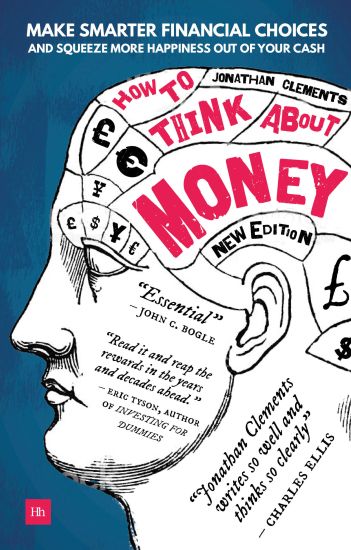
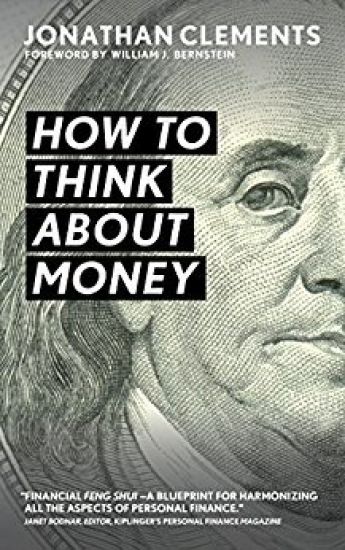
NEW INTERNATIONAL EDITION*** A cult smash in the US, How to Think About Money is the ultimate smart thinking book for those who want a more prosperous and less stressful financial life. ***There are those who think the goal of investing is to beat the market and amass as much wealth as possible, that street smarts and hard work ensure investment success, and that the road to happiness is paved with more of everything. And then there are those who get it.Want a richer, calmer financial life? Jonathan Clements, longtime personal finance columnist for the Wall Street Journal, is here to help. His goal: to provide readers with a coherent way to think about their finances, so they worry less about money, make smarter financial choices and squeeze more happiness out of the cash they have.How to Think About Money is built around five key ideas:- Money can buy happiness, but we need to spend with great care.- Most of us will enjoy an extraordinarily long life – and that has profound financial implications.- We are hardwired for financial failure, so sensible money management takes great mental strength.- We need to bring order to our financial life – by focusing on our paycheque, or lack thereof.- If we want to add to our wealth, we should strive to minimise the subtractions.With rave reviews from readers (including over 75 five-star ratings), praise from some of the greatest investors of all time ("Easy to understand, essential to follow." – Jack Bogle), this is the ultimate smart thinking book for everyone interested in making their money work for them rather than the other way around.
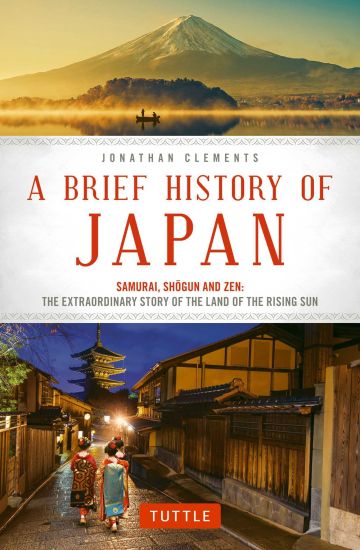
This fascinating history tells the story of the people of Japan, from ancient teenage priest-queens to teeming hordes of salarymen, a nation that once sought to conquer China, yet also shut itself away for two centuries in self-imposed seclusion.First revealed to Westerners in the chronicles of Marco Polo, Japan was a legendary faraway land defended by a fearsome Kamikaze storm and ruled by a divine sovereign. It was the terminus of the Silk Road, the furthest end of the known world, a fertile source of inspiration for European artists, and an enduring symbol of the mysterious East. In recent times, it has become a powerhouse of global industry, a nexus of popular culture, and a harbinger of post-industrial decline. With intelligence and wit, author Jonathan Clements blends documentary and storytelling styles to connect the past, present and future of Japan, and in broad yet detailed strokes reveals a country of paradoxes: a modern nation steeped in ancient traditions; a democracy with an emperor as head of state; a famously safe society built on 108 volcanoes resting on the world's most active earthquake zone; a fast-paced urban and technologically advanced country whose land consists predominantly of mountains and forests. Among the chapters in this Japanese history book are: The Way of the Gods: Prehistoric and Mythical Japan A Game of Thrones: Minamoto vs. Taira Time Warp: 200 Years of Isolation The Stench of Butter: Restoration and Modernization The New Breed: The Japanese Miracle
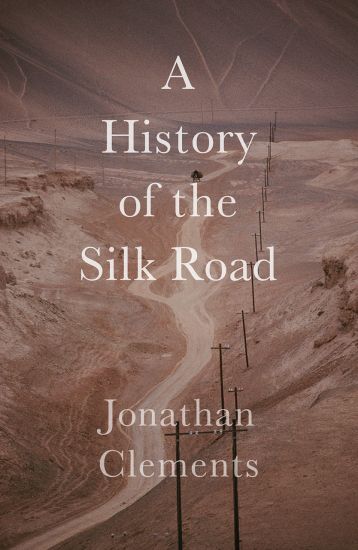
The Silk Road is a route from the edges of the European world to the central plains of China. For thousands of years, its history has been a traveller's history, of brief encounters in desert towns, snowbound passes and nameless forts. It was the conduit that first brought Buddhism, Christianity and Islam into China, and the site of much of the 'Great Game' between Victorian empires. Jonathan Clements guides the reader through the trackless wastes of the Taklamakan Desert, its black whirlwinds and dead lakes, its shimmering mirages, lost cities and mysterious mummies, but also its iconic statues and memorable modern pop songs. He explains the truth behind odd tales of horses that sweat blood, defaced statues and missing frescoes, and Marco Polo's stories of black gold that seeps from the earth.
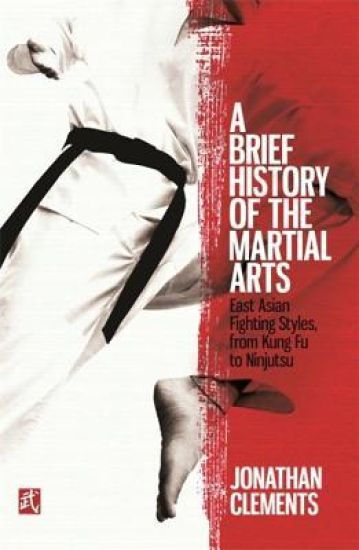
'If I had to pick a single general martial arts history book in English, I would recommend A Brief History of the Martial Arts by Dr Jonathan Clements' RICHARD BEITLICH, Martial History Team blogFrom Shaolin warrior monks to the movies of Bruce Lee, a new history of the evolution of East Asian styles of unarmed combat, from Kung Fu to NinjutsuFolk tales of the Shaolin Temple depict warrior monks with superhuman abilities. Today, dozens of East Asian fighting styles trace their roots back to the Buddhist brawlers of Shaolin, although any quest for the true story soon wanders into a labyrinth of forgeries, secret texts and modern retellings.This new study approaches the martial arts from their origins in military exercises and callisthenics. It examines a rich folklore from old wuxia tales of crime-fighting heroes to modern kung fu movies. Centre stage is given to the stories that martial artists tell themselves about themselves, with accounts (both factual and fictional) of famous practitioners including China's Yim Wing-chun, Wong Fei-hong, and Ip Man, as well as Japanese counterparts such as Kano Jigoro, Itosu Anko and So Doshin.The history of martial arts encompasses secret societies and religious rebels, with intimate glimpses of the histories of China, Korea and Japan, their conflicts and transformations. The book also charts the migration of martial arts to the United States and beyond. Special attention is paid to the turmoil of the twentieth century, the cross-cultural influence of Japanese colonies in Asia, and the post-war rise of martial arts in sport and entertainment - including the legacy of Bruce Lee, the dilemma of the ninja and the global audience for martial arts in fiction.
There are those who think the goal of investing is to beat the market and amass as much wealth as possible, that street smarts and hard work ensure investment success, and that the road to happiness is paved with more of everything. And then there are those who get it.Want a more prosperous, less stressful financial life? Jonathan Clements, longtime personal finance columnist for The Wall Street Journal, is here to help. His goal: to provide readers with a coherent way to think about their finances, so they worry less about money, make smarter financial choices and squeeze more happiness out of the dollars that they have. How to Think About Money is built around five key ideas: Money can buy happiness, but we need to spend with great care.Most of us will enjoy an extraordinarily long life--and that has profound financial implications.We are hardwired for financial failure, so sensible money management takes great mental strength.We need to bring order to our financial life--by focusing on our paycheck, or lack thereof.If we want to add to our wealth, we should strive to minimize the subtractions."Now why didn't I think of that? That's what you'll ask yourself after you read Jonathan Clements's fine new book. Its beauty lies in the commonsense and wisdom that is summed up in just five simple steps that will help you to earn your financial independence. Easy to understand, essential to follow."--John C. Bogle, founder, The Vanguard Group"Jonathan Clements brings his intelligence, insight and commonsense to How to Think About Money, which is packed with wisdom and great guidance. Read it and reap the rewards in the years and decades ahead."--Eric Tyson, author of Personal Finance for Dummies and Investing for Dummies "How to Think About Money is financial feng shui --a blueprint for harmonizing all the aspects of personal finance into a balanced way of approaching and managing money. I found myself measuring my own attitudes and beliefs against the yardsticks in Jonathan Clements's book, and was pleased to find that we're on the same page. Anyone who feels overwhelmed by the challenges of today's world can benefit from Clements's advice on how to make smart financial choices, as well as how to develop, in his words, a 'coherent way to think about their financial life'."--Janet Bodnar, editor, Kiplinger's Personal Finance magazine"Concise, important and true. Jonathan Clements provides you a path not just to better finances, but to a better life."--Terry Burnham, finance professor, Chapman University, and author of Mean Markets and Lizard Brains"Jonathan Clements writes so well and thinks so clearly that even financial planning, saving, and wise decisions are almost fun to think through with him as our guide."--Charles Ellis, author of Winning the Loser's Game"In How to Think About Money, Jonathan Clements, one of the premier financial writers of our times, provides readers with a roadmap for a successful financial life. It's an easy read that can result in changing the way readers look at investing and life. Read it and reap."--Mel Lindauer, Forbes.com columnist and co-author of The Bogleheads' Guide to Investing and The Bogleheads' Guide to Retirement Planning"Jonathan Clements is one of the greatest financial consumer advocates of our time, not only because of his emphasis on a practical and commonsense approach to personal finance, but because his message is delivered in a welcoming, easy-to-understand manner. That approach moves his readers to take the most important step toward winning in the personal-finance world--taking ownership of one's financial life and following that with action."--Peter Mallouk, president of Creative Planning and author of The 5 Mistakes Every Investor Makes and How to Avoid Them
The sect was said to harbour dark designs to overthrow the government. Its teachers used a dead language that was impenetrable to all but the innermost circle of believers. Its priests preached love and kindness, but helped local warlords acquire firearms. They encouraged believers to cast aside their earthly allegiances and swear loyalty to a foreign god-emperor, before seeking paradise in terrible martyrdoms. The cult was in open revolt, led, it was said, by a boy sorcerer. Farmers claiming to have the blessing of an alien god had bested trained samurai in combat and proclaimed that fires in the sky would soon bring about the end of the world. The Shogun called old soldiers out of retirement for one last battle before peace could be declared in Japan. For there to be an end to war, he said, the Christians would have to die. This is a true story.
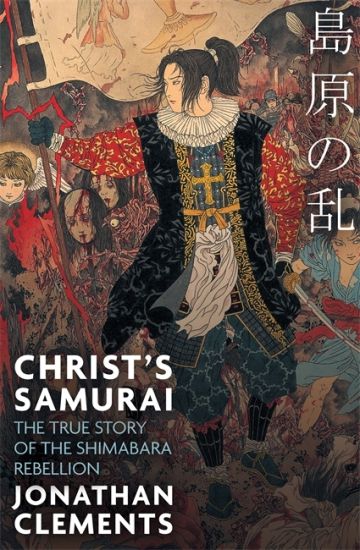
In 1638, the ruler of Japan ordered a crusade against his own subjects, a holocaust upon the men, women and children of a doomsday cult. The sect was said to harbour dark designs to overthrow the government. Its teachers used a dead language that was impenetrable to all but the innermost circle of believers. Its priests preached love and kindness, but helped local warlords acquire firearms. They encouraged believers to cast aside their earthly allegiances and swear loyalty to a foreign god-emperor, before seeking paradise in terrible martyrdoms. The cult was in open revolt, led, it was said, by a boy sorcerer. Farmers claiming to have the blessing of an alien god had bested trained samurai in combat and proclaimed that fires in the sky would soon bring about the end of the world. The Shogun called old soldiers out of retirement for one last battle before peace could be declared in Japan. For there to be an end to war, he said, the Christians would have to die. This is a true story.
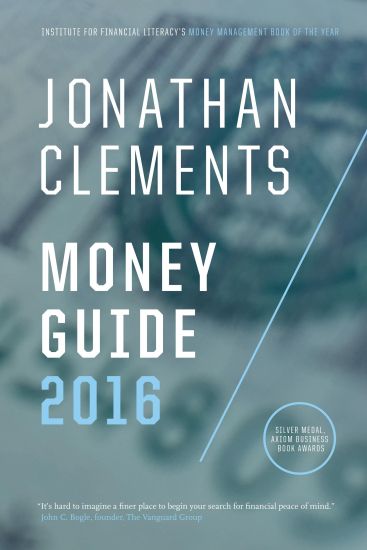
Expanded and updated for 2016, the Jonathan Clements Money Guide is the indispensable companion for Americans looking to stay on track financially. Written by The Wall Street Journal's longtime personal-finance columnist, this annual guide tackles retirement, college, home buying, estate planning and more. Here are just some of the new features in this year's Money Guide: -How to build your own financial plan in 18 easy steps-My story: Clements details how he tackled crucial money issues -Dos and don'ts for 2016-Great debates: A look at seven of the fiercest financial arguments-Fascinating statistics on how Americans are faring financially-Tax information for 2015 and 2016-Up-to-date facts and figures on the economy and markets"It's hard to imagine a finer place to begin your search for financial peace of mind."-John C. Bogle, founder, The Vanguard Group"Clements is a first-rate financial writer who is a genius at making sophisticated advice accessible to everyone and a delight to read."-Burton G. Malkiel, author of A Random Walk Down Wall Street"Keep Jonathan Clements's Money Guide on your desk or tablet for instant answers to your essential money questions."-Consuelo Mack, anchor, Consuelo Mack WealthTrack"Since the early 1990s, Jonathan Clements's columns taught his readers, profited them, and made them smile. Trouble was, you needed to have read all his Wall Street Journal articles. Until now, that is. His Money Guide wraps this bounty, and then some, into a tidy package, destined to be enjoyed and referred to over and over by readers for decades to come."-William J. Bernstein, author of The Investor's Manifesto
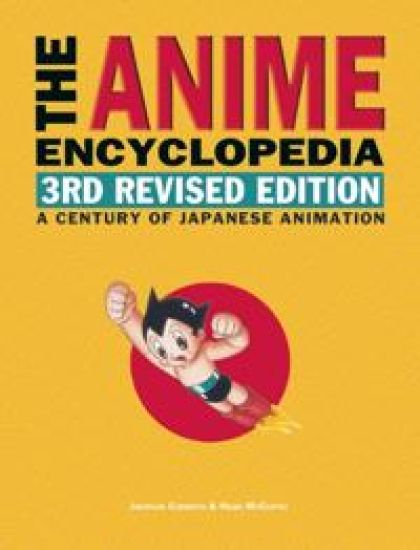
"Impressive, exhaustive, labyrinthine, and obsessive—The Anime Encyclopedia is an astonishing piece of work." —Neil GaimanWith over 10,000 entries nothing comes close . . . from classics to hidden gems, all the anime you love is finally at your fingertips.This 3rd edition of The Anime Encyclopedia brings the landmark reference work up to date with six additional years of information on Japanese animation, its practitioners and products, as well as incisive thematic entries on anime history and culture. Even the most diehard anime fans will come away with new facts about their favorite anime and hidden gems to watch.More than just generic listings, these reviews have snark, intelligence, and a discerning point of view. Data-obsessed fans will relish the extensive credits, online links, and cross-references, and parents and librarians will appreciate the content advisories.
The Jonathan Clements Money Guide 2015 is the must-have book for Americans concerned about their financial future. Written by the highly regarded columnist for The Wall Street Journal Sunday, this annually updated guide delivers punchy, plain English answers to your most pressing financial questions. Here's what you'll find in this year's Money Guide: -Help with retirement, college, home buying, estate planning and more-Indispensable information delivered in short, easy-to-understand sections-Simple strategies to improve every aspect of your financial life-Clements's outspoken views on personal finance-The latest facts and figures on the economy and markets-Tax information for 2014 and 2015-Intriguing statistics on how the typical American is faring financially"It's hard to imagine a finer place to begin your search for financial peace of mind than with Jonathan Clements Money Guide 2015. Yes, it's long. But so is the list of financial challenges faced by American families. Don't be intimidated. He's made it easy to navigate through these challenges, identify those where you need help, and successfully deal with them. Don't just scan this fine, readable, and insightful guide. Keep it by your desk and return to it as your circumstances change, as financial markets change, and as the world turns."-John C. Bogle, founder, The Vanguard Group"A comprehensive financial guide ranging from navigating health insurance alternatives to forming sensible investment portfolios. Clements is a first-rate financial writer who is a genius at making sophisticated advice accessible to everyone and a delight to read."-Burton G. Malkiel, author, A Random Walk Down Wall Street"Since the early 1990s, Jonathan Clements's columns taught his readers, profited them, and made them smile. Trouble was, you needed to have read all his Wall Street Journal articles. Until now, that is. His Money Guide wraps this bounty, and then some, into a tidy package, destined to be enjoyed and referred to over and over by readers for decades to come."-William J. Bernstein, author, The Investor's Manifesto"How do you get nearly 30 years of personal-finance wisdom and advice in an engaging, entertaining and easy-to-use format? Keep Jonathan Clements's Money Guide on your desk or tablet for instant answers to your essential money questions."-Consuelo Mack, anchor, Consuelo Mack WealthTrack"Would you like to have a friend who knew a lot and would share the straight scoop with you on any investment topic at any time in clear language, candor, and a wry sense of humor? Well, here it is. What a break "-Charles D. Ellis, author, What It Takes and Winning the Loser's Game"As someone who has read just about every personal-finance book ever published, I can honestly say this is the best money manual ever written-period Jonathan Clements's Money Guide offers readers a host of brilliant insights on how to grow their money. It's required reading for anyone striving for financial independence."-Allan Roth, author, How a Second Grader Beats Wall Street
How has Japan become a global superpower and what does the future look like for it? There was a time in the 1980s when, if the media were to be believed, the Japanese were set to become the masters of the world and owners of all our companies and intellectual properties. Today, Japan's rapid ascendancy now seems dwarfed by the metoric rise of its neighbour, China. Here, Jonathan Clements charts the rise of Japan since the end of World War Two. Presenting the country as the Japanese themselves see it, he explains key issues in national reconstruction, the often-overlooked US Occupation, the influence of the Cold War, student unrest, political scandals, and the meteoric rise and sudden fall of the Japanese economy in the late 20th century.He chronicles changes in women's rights and consumer habits, developments in politics, education and health today, and the shadow of nuclear issues from Hiroshima to Fukushima. He also raises topics rarely covered by the foreign media - Japan's ethnic minorities and burakumin underclass, the influence of organised crime and the hard sell behind "soft" power.
In Modern China: All That Matters, Jonathan Clements presents China as the Chinese themselves see it. He explains the key issues of national reconstruction; the Cold War, the Cultural Revolution, and the dizzying spectacle of China's economic reform. Clements offers a Chinese perspective on such events as the Handover of Hong Kong, and chronicles the historical events that continue to resonate today in Chinese politics, economics, culture and quality of life.A final chapter examines China's role in the global marketplace, its indirect effect on foreign economies from Australia to America to Africa, and its growing military might, with an assessment of the damage done to its environment and population. In his most provocative assertion, Clements suggests that China's contemporary problems are not the trials of a developing nation, but a possible vision of our own future. This accessible and readable book will appeal both to students and general readers, giving a fascinating introduction to modern China - and what matters most about it.
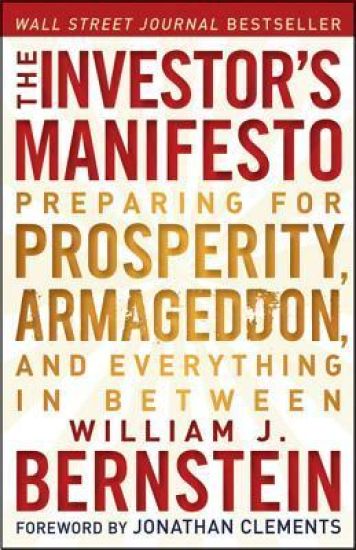
A timeless approach to investing wisely over an investment lifetime With the current market maelstrom as a background, this timely guide describes just how to plan a lifetime of investing, in good times and bad, discussing stocks and bonds as well as the relationship between risk and return. Filled with in-depth insights and practical advice, The Investor's Manifesto will help you understand the nuts and bolts of executing a lifetime investment plan, including: how to survive dealing with the investment industry, the practical meaning of market efficiency, how much to save, how to maintain discipline in the face of panics and manias, and what vehicles to use to achieve financial security and freedom. Written by bestselling author William J. Bernstein, well known for his insights on how individual investors can manage their personal wealth and retirement funds wiselyExamines how the financial landscape has radically altered in the past two years, and what investors should do about itContains practical insights that the everyday investor can understandFocuses on the concept of Pascal's Wager-identifying and avoiding worst-case scenarios, and planning investment decisions on that basis With The Investor's Manifesto as your guide, you'll quickly discover the timeless investment approaches that can put you in a better position to prosper over time.
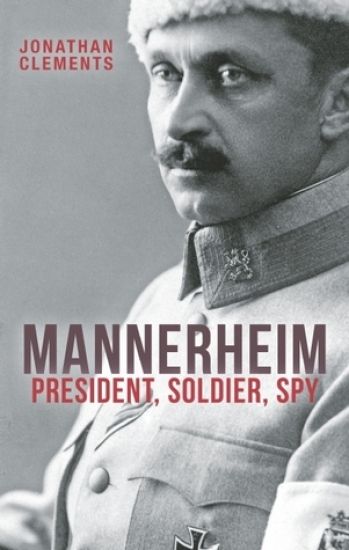
Gustaf Mannerheim was one of the greatest figures of the 20th century. As a young Finnish officer he witnessed the coronation of the last Tsar and was decorated for bravery in the Russo-Japanese War. He spent two years undercover in Asia as an agent of the 'Great Game'. Crossing China on horseback, he stopped en route to teach the 13th Dalai Lama how to shoot a pistol; he also spied on the Japanese navy. Having escaped the Bolsheviks by the skin of his teeth in 1917, he commanded the anti-Russian forces in the local revolt and civil war and later, during Finland's darkest hour, he lead the defence of his country against the impossible odds of the Winter War. In this, the first major biography of Mannerheim for a decade, Jonathan Clements brings new material to light on Mannerheim's time in Manchuria and Japan. This is a fascinating appraisal of an adventurer and explorer who would go on to forge a new nation.