Kirjojen hintavertailu. Mukana 12 657 676 kirjaa ja 12 kauppaa.

Kirjailija

Jonathan Clements

Kirjat ja teokset yhdessä paikassa: 59 kirjaa, julkaisuja vuosilta 1993-2026, suosituimpien joukossa Wu. Vertaile teosten hintoja ja tarkista saatavuus suomalaisista kirjakaupoista.

59 kirjaa

Kirjojen julkaisuhaarukka 1993-2026.

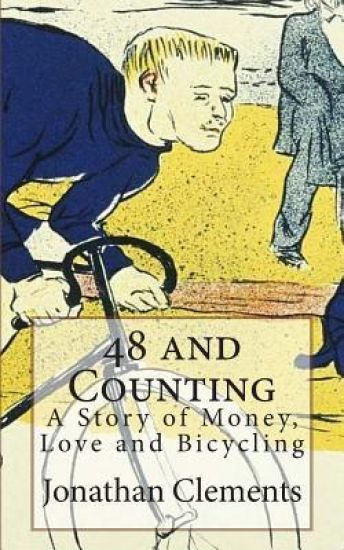
48 and Counting: A Story of Money, Love and Bicycling

48 and Counting: A Story of Money, Love and Bicycling

Jonathan Clements

Createspace Independent Publishing Platform
2012
nidottu
"Although this is his first novel, Jonathan Clements's long practice writing the personal-finance column for The Wall Street Journal shows in a quickly paced story with a plot that moves right along, with enough detail that every middle-aged cyclist can relate to," writes Richard Masoner, Cyclelicio.us. "It's a quick, enjoyable read.""An entertaining story," says Ray Niekamp, BikeNoob.com.48 and Counting is, as the novel's subtitle suggests, A Story of Money, Love and Bicycling. It traces amateur cyclist Max Whitfield through three eventful seasons as his marriage collapses and he loses control of his business. Unemployed and unsure what to do next, he throws himself into training for a 40-mile bicycle race. Clare saw Max rise out of the seat. He was her 48-year-old father and yet, at that moment, he was somebody else entirely. The muscles in his arms were taut. His face and legs glistened with perspiration. As the bike leapt forward and gathered speed, he sat down, shifted into an easier gear and spun the pedals with a controlled fury. For a few brief seconds, the beauty was unmistakable. Max's bike hurtled past the other two riders. A yawning gap immediately opened up. Max had his chance. He had broken free of the other two, who were now belatedly trying to respond, their suddenly feverish motion signaling how surprised they were. Max was 80 excruciating seconds from the finish line. Jonathan Clements is the former personal-finance columnist for The Wall Street Journal. He was born in London, England, graduated from Cambridge University and now lives in New York City. This is Clements's fifth book and his first novel.
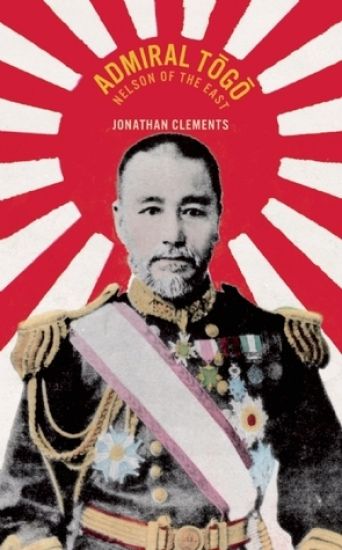
Admiral Togo - Nelson of the East

Admiral Togo - Nelson of the East

Jonathan Clements

Haus Publishing
2010
nidottu
Togo Heihachiro (1848-1934) was born into a feudal society that had lived in seclusion for 250 years. As a teenage samurai, he witnessed the destruction wrought upon his native land by British warships. As the legendary Silent Admiral, he was at the forefront of innovations in warfare, pioneering the Japanese use of modern gunnery and wireless communication. He is best known as the Nelson of the East for his resounding victory over the Tsar's navy in the Russo-Japanese War, but he also lived a remarkable life studying at a British maritime college, witnessing the Sino-French War, the Hawaiian Revolution, and the Boxer Uprising. After his retirement, he was appointed to oversee the education of the Emperor, Hirohito. This new biography spans Japan's sudden, violent leap out of its self-imposed isolation and into the 20th century. Delving beyond Togo's finest hour at the Battle of Tsushima, it portrays the life of a diffident Japanese sailor in Victorian Britain, his reluctant celebrity in America where he was laid low by Boston cooking and welcomed by his biggest fan, Theodore Roosevelt , forgotten wars over the short-lived Republics of Ezo and Formosa, and the accumulation of peacetime experience that forged a wartime hero.
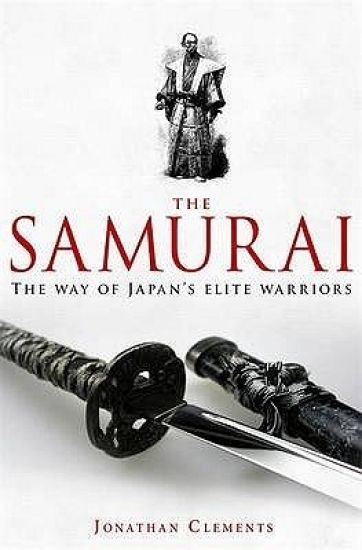
A Brief History of the Samurai

A Brief History of the Samurai

Jonathan Clements

Robinson Publishing
2010
pokkari
From a leading expert in Japanese history, this is one of the first full histories of the art and culture of the Samurai warrior. The Samurai emerged as a warrior caste in Medieval Japan and would have a powerful influence on the history and culture of the country from the next 500 years. Clements also looks at the Samurai wars that tore Japan apart in the 17th and 18th centuries and how the caste was finally demolished in the advent of the mechanized world.
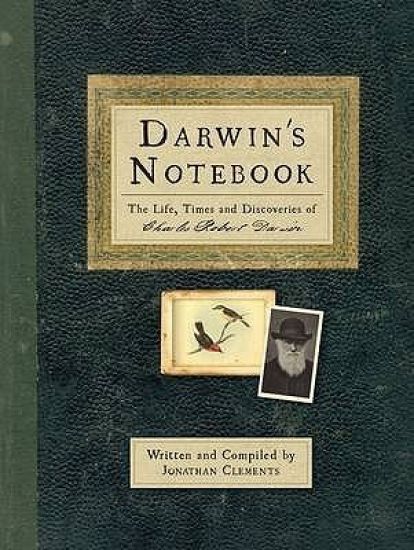
Darwin's Notebook

Darwin's Notebook

Jonathan Clements

The History Press Ltd
2009
sidottu
Many people have written biographies of Charles Darwin, but the story of his family and roots in Shrewsbury is little known. This book, containing original research, fills that gap. The key player is Charles' father, Dr Robert Darwin, a larger-than-life character whose financial acumen enabled Charles to spend his whole life on research unencumbered by money worries. Through Susannah, Charles' mother, we are introduced to the Wedgwood family, whose history was so closely interwoven with the Darwins. The stories of Charles' five siblings are detailed, and there is a wealth of local material, such as information on Shrewsbury School and its illustrious headmaster, Samuel Butler. The book is fully illustrated with contemporary and modern pictures, and will be of interest to anyone wanting to discover more about the development of Shrewsbury's most famous son.
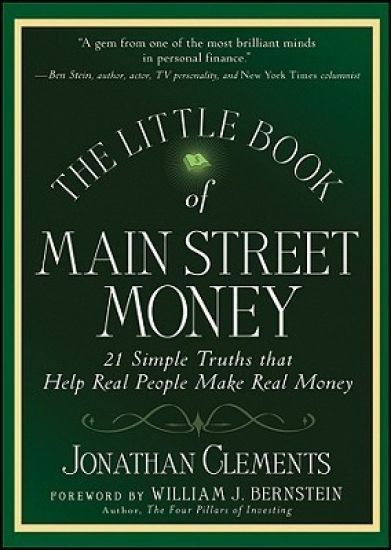
The Little Book of Main Street Money

The Little Book of Main Street Money

Jonathan Clements; William J. Bernstein

John Wiley Sons Inc
2009
sidottu
"A gem from one of the most brilliant minds in personal finance." ? Ben Stein, author, actor, TV personality, and New York Times columnist In a financial world gone mad, you still need to manage your money, put your kids through college, and save for retirement. To the rescue comes Jonathan Clements with 21 easy-to-follow rules to help you secure your financial future. Clements has spent a quarter century demystifying Wall Street for ordinary, real people on Main Street, including more than thirteen years as the Wall Street Journal's hugely popular personal-finance columnist. In The Little Book of Main Street Money, Clements brings us back to basics, with commonsense suggestions for intelligent money management. Chock-full of financial guidance that will stand up in any market, the book also reflects a financial philosophy that Clements has developed over a lifetime of watching Wall Street and writing about money?and that is even more important in the current volatile market. From the big picture (home, retirement, financial happiness) to the micro (taxes, inflation, investment costs), he offers clear-cut advice for taking control of your financial life, detailing the strategies needed to thrive in today's tough economic times. The 21 truths outlined throughout this book are a guiding light for everyone, young and old, whether starting out or soon retiring. Each chapter reads like a Clements column?clear, pithy, and feisty. From the obvious to the counterintuitive, the truths will bolster your returns, cut your costs, and give you financial peace of mind. Collectively, the 21 truths show you how to think about your entire financial life?not just stocks and bonds, but your home, your debts, your financial promises to your children, your income-earning ability, and so much more. They will help you not only survive today's treacherous financial terrain, but also prepare you for success tomorrow. Renowned for his spirited writing and shrewd investment guidance, Clements is the sane voice investors need to stay grounded in the midst of so much financial insanity.
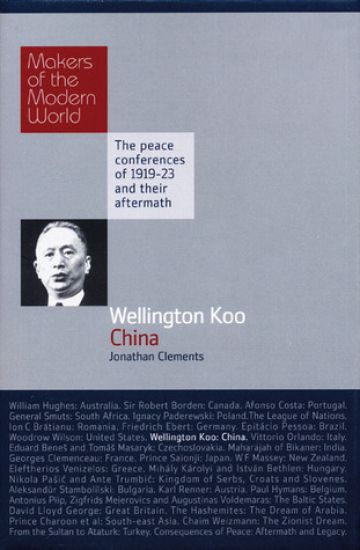
Wellington Koo: China

Wellington Koo: China

Jonathan Clements

Haus Publishing
2009
sidottu
Born in Shanghai and raised in the city's International Settlement, Gu Weijun, a.k.a. Wellington Koo (1887-1985) became fluent in English during his postgraduate studies abroad - he got a PhD in Law from Columbia in 1912. He was recalled soon afterwards to become the English Secretary to the newly formed Republic of China, and became ambassador to the United States in 1915. He achieved notoriety at the Paris Peace Conference where he sternly resisted Japanese attempts to hold onto seized German colonial territory in mainland China. In protest at their treatment, the Chinese were the only delegates not to sign the subsequent Treaty of Versailles. Koo was China's first representative to the League of Nations, and ended up as acting president of Republican China during the unrest of the period 1926-7.He subsequently served briefly as a Foreign Minister during the peak of the Warlord Era, before returning to Europe, first as a delegate at the League of Nations, and then as China's ambassador to France. With the Nazi occupation, Koo fled to Britain, where he became the Chinese ambassador to the UK until 1946. A founder member of the United Nations, Koo was instrumental in maintaining the position of Republican China on the Security Council - by this time, 'Republican China' was limited solely to the island of Taiwan, while the Communists proclaimed themselves to be the new rulers of China itself.Retiring from the diplomatic service in 1956, the venerable Koo went on to become a judge at the International Court of Justice at the Hague, rising to vice-president before his retirement, aged 80, in 1967. He settled in New York, where his final years were tormented by 'Republican' China's loss of its seat on the United Nations Security Council to the Communists, following Nixon's famous visit to China.
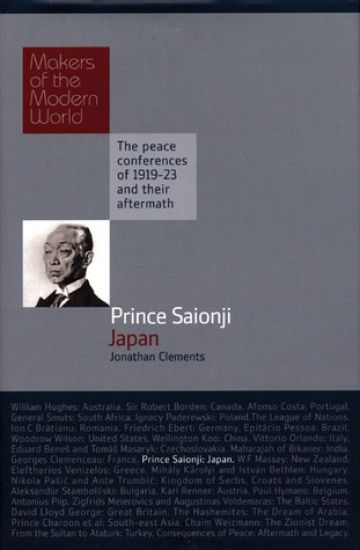
Prince Saionji: Japan

Prince Saionji: Japan

Jonathan Clements

Haus Publishing
2009
sidottu
The Japanese delegation at the Paris Peace Conference did not have the Japanese prime or foreign ministers with them as they had only just been elected and had plenty to do back home. The delegation was instead led by Prince Saionji Kinmochi (1849-1940), the dashing 'kingmaker' of early 20th-century Japanese politics whose life spanned the arrival of Commodore Perry and his 'black ships', the Japanese civil war, the Meiji Restoration, the Sino-Japanese War, the Russo-Japanese War, the First World War, the Paris Peace Conference and the Treaty of Versailles, and the rise of Japanese militarism. Unlike many of the conservatives of his day, Saionji was a man with experience of international diplomacy and admiration for European culture.Brought up in the days of the last Shogun, he became an active supporter of Japan's new ruling regime, after the Shogun was overthrown in a civil war, and a leading figure in the post-Restoration reform movement. In 1869, he founded the institution that would become the Ritsumeikan University - literally, 'the place to establish one's destiny'. He was sent to France for nine years to investigate Western technology and philosophy, and served for a decade as a Japanese ambassador in Europe. Returning to Japan, he served twice as Minister of Education and later became prime minister before resigning to become a revered elder statesman. Japan entered the First World War on the Allied side, seizing German possessions in China and the Pacific. In the closing days of the war, Japanese military forces participated in the Siberian Intervention - an American-led invasion of eastern Russia against Communist insurgents.At the Conference Saionji's presence was initially regarded by the Japanese as a sign that Japan had become a fully-fledged member of the international community and accepted on an equal footing with the Western Powers. His delegation introduced a controversial proposal to legally enshrine racial equality as one of the tenets of the League of Nations. The Japanese were also keen to grab colonies of their own, and went head-to-head with the Chinese delegation over the fate of the former German possession of Shandong. When Shandong was 'returned' not to China but to its Japanese occupiers, riots broke out in China. Despite Saionji's statesmanship and diplomacy, the Treaty of Versailles was regarded by many Japanese as a slap in the face. Saionji's influence weakened in his last years, while his party was dissolved and amalgamated with others.
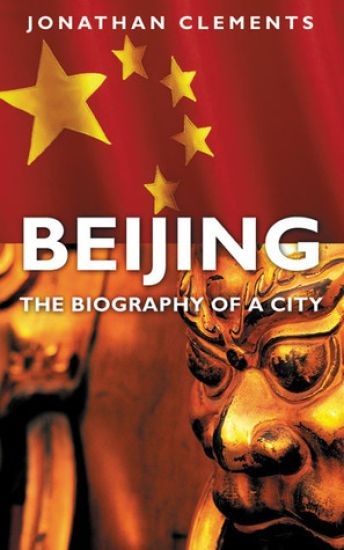
Beijing

Beijing

Jonathan Clements

Sutton Publishing Ltd
2008
sidottu
This book presents the story of Beijing, the capital of China and the site of the 2008 Olympics, from its earliest beginnings as a campsite for primitive hominids, through its fluctuating fortunes under a dozen dynasties. Despite spending almost a thousand years in ruins, the site has been a capital for several cultures, including Mongolian tribesmen and the glorious Ming emperors, whose tombs can still be found on its outskirts. Through Beijing, we can experience Chinese history itself, including some of its more famous residents - Khubilai Khan, Mulan, and Marco Polo. We can also learn about some of the most frequently asked questions about the city - the origin of 'Pekinese' dogs, what exactly 'Peking' cuisine is, and why we persist in calling the city 'Peking' at all. Jonathan Clements' new book examines both the city's most famous sites - its temples, altars, gates and precincts - as well as the ultra-modern areas under construction for the Olympics.
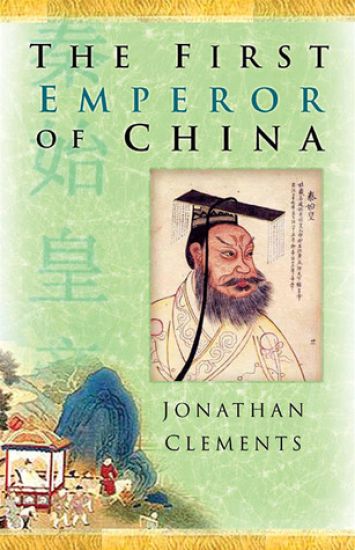
The First Emperor of China

The First Emperor of China

Jonathan Clements

The History Press Ltd
2007
nidottu
Ying Zheng was born to rule the world. Yet there were rumours he was not the son of the king but the child of a secret affair between a royal concubine and an ambitious minister. Crowned king of Qin - China's westernmost kingdom - six rival kings stood between him and victory. He invaded Qi, the Land of the Devout, looking for a mythical magical device that could bring down the power of the gods. Surviving an assassination attempt by a childhood friend, the Red Prince, he retaliated by destroying the Prince's kingdom. This new book by Jonathan Clements is the first outside Asia to tell the full story of the life, legends and laws of the First Emperor. It exposes the intrigues and scandals of his family - his mother's plot to overthrow him, a revolt led by his stepfather, and the suspicious death of his half-brother - explores the immigration crisis that threatened to destroy his kingdom, and provides a terrifying glimpse of daily life in a land under absolute rule.
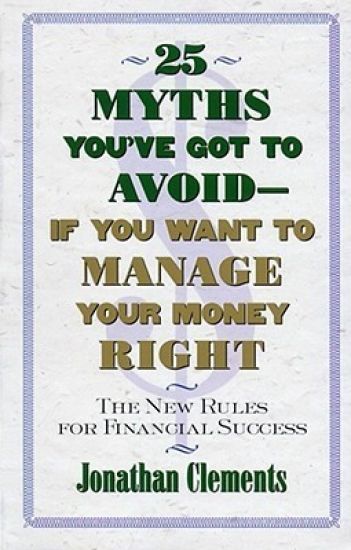
25 Myths You'Ve Got to Avoid-- If You Want to Manage Your Money Right
STOP THINKING ABOUT MONEY IN THE SAME OLD WAY Have you ever been told that you can't go wrong with mutual funds? That stocks are risky? That you should take out the largest mortgage possible? That life insurance is a good investment? That you should keep six months of emergency money? These myths and more are shattered in "25 Myths You've Got to Avoid -- If You Want to Manage Your Money Right." Each of the book's twenty-five chapters tackles a cherished money myth, first telling you why it no longer works and then showing you how to do it right. Along the way you will learn winning strategies for investing in mutual funds, building a portfolio, saving for retirement, paying for college, buying a house, preparing for financial emergencies, selecting insurance, and planning your estate. The result? Instead of the predictable compendium of tedious advice tossed out by most personal-finance tomes, Clements's book offers a witty, fast-paced journey through today's treacherous investment world. Amusing and irreverent, here is an intriguing and accessible approach to personal finance.