Kirjailija
Jonathan Harris
Kirjat ja teokset yhdessä paikassa: 40 kirjaa, julkaisuja vuosilta 1994-2025, suosituimpien joukossa Oscar Wilde. Vertaile teosten hintoja ja tarkista saatavuus suomalaisista kirjakaupoista.
40 kirjaa
Kirjojen julkaisuhaarukka 1994-2025.
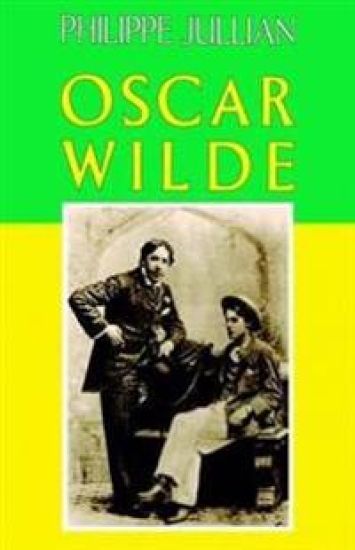
'..a biographer of supreme intelligence and industry, since the bibliography is immense and he has delved into it with extraordinary taste and imagination.' - The Spectator'An excellent book, detailed where detail was still needed, sensibly perfunctory where almost everything possible has already been told and said.' - The Observer'M. Jullian's book succeeds in keeping the reader's interest unflaggingly alive.' - The Economist
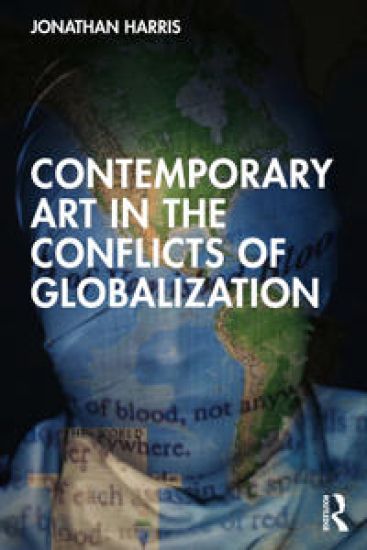
Contemporary Art in the Conflicts of Globalization presents an authoritative introductory guide to the emergence, development, and meanings of contemporary art around the world from the era of twentieth century western colonialism to the crises and conflicts of globalization over the last three decades.Examining contemporary art’s connections to and breaks from modern art in the last century, the study offers an innovative account of its artists formation during the era of decolonization after 1945 and the Cold War. Through a series of complementary analytic perspectives, the book considers the cultural politics of the global art world, its patterns of inclusion and exclusion, and charts contemporary art’s relations to feminist, anti-racist, and climate change activisms (amongst others) as these have both mutated and interconnected since the 1990s. Over fifty illustrations are included and are the basis for the book’s empirical and theoretically informed study.The book is designed for both students and general readers and will be of great value for all who see contemporary art and global cultures as a contested ground of creativity and social significance within which transformative progressive change may be achieved for the whole world and all its peoples.
Theosis offers a captivating trajectory of the life of Byzantine Emperor Basil II (976–1025), taking the reader into the intricate history of the Byzantine Empire at the peak of the Macedonian dynasty. Using authentic narratives and documentation as evidence to vividly depict life and politics at the Byzantine court, Harris in parallel traces a unique story of Basil's personal transformations from coming of age and emerging sexuality to his consolidation of power. Exploring Basil's homoerotic desires, Harris draws us in to consider familiar, seemingly modern, possibilities of queer identity without losing sight of the profound distance between Byzantine sexual cultures and our own. For the Byzantine view of rulership, another transformation represented the purpose of emperor's life. According to this ideology, theosis/deification was attainable only through a synergy of human activity and God's energies – but, how did this ideology frame Basil's views of rulership, other people and himself? Set against the backdrop of complex political events that affected the imperial dynasty, family intrigue and his early childhood losses, Harris explores the layers of Basil's conflicted selfhood, sexual subjectivity, and ultimately his desire for vengeance. This becomes the tragedy of Basil's story– despite his vast potential for goodness and self-awareness, his experiences leave him compromised, delighting in the extermination of those who have wronged him. It is this vengeance, and the transformation in him that allows it, that is now Basil's devastating theosis.(Dr. Justin Bengry, Lecturer in Queer History and Director of the Centre for Queer History, Goldsmiths University of London)Historical fiction is always a risky business. Jonathan Harris's debut novel, however, successfully overcomes the obstacles and meticulously builds a complex story set in a period that was perhaps the least covered subject of literature, especially fiction. Following Emperor Basil II on his path to deification, one can feel the atmosphere of ''Secretum'' or ''Imprimatur'' by the author duo Monaldi & Sorti, or even Madeline Miller's ''The Song of Achilles'', while exploring the vast palette of love, death, friendship, treason, and political turmoil from a thousand years ago. Harris grasps some controversy but never falls into sentimentality, which can often be a trap, especially for writers. Theosis is just a perfect text to be turned into a film or even a mini-series. (Ozren K. Glaser, mag. litt. comp., author, composer, filmmaker, cultural ambassador)
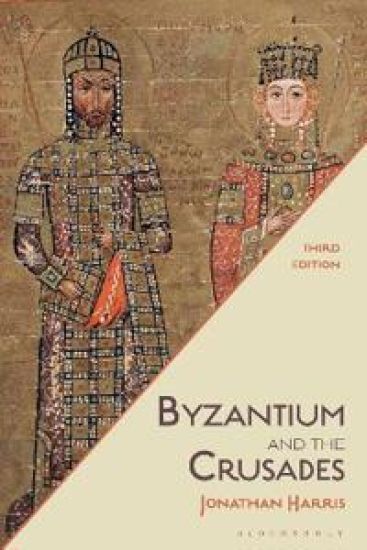
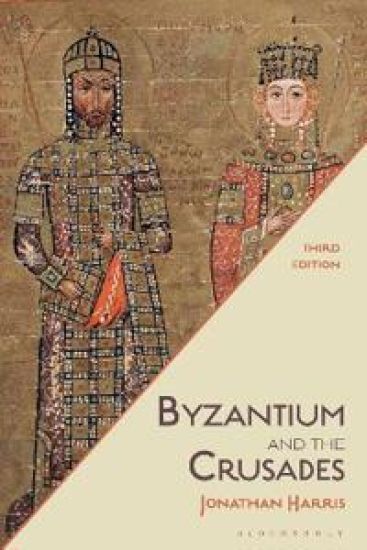
Jonathan Harris’s classic text chronologically surveys Byzantine history in the time of the Crusades. The book reveals the attitudes of the Byzantine ruling elites towards the Crusades and their ultimate inability to adapt to the challenges this presented. Using evidence amassed in a wealth of primary sources, Harris successfully makes the point that Byzantine interactions with Western Europe, the Crusades and the crusader states is best understood in the nature of the Byzantine Empire and the ideology which underpinned it, rather than in any generalised hostility between the peoples.Incorporating recent scholarship, this 3rd edition has 25 further images, as well as additional maps and genealogical tables. This new edition also comes with two significant additions to the text:* Appendix I sees the inclusion of seven critical Latin primary sources taken from across three centuries. Translated by the author, these sources are then discussed in detail, providing multiple first-hand perspectives on the subject in the process* Appendix II provides assessments of various representations of the subject in key fiction and non-fiction works, thereby enriching your appreciation of the way that Byzantine interaction with the Crusades has been constructed at different times, from various standpoints and in other languagesThis book remains the keystone to understanding the East-West relationship during the Crusades and what this meant for the Byzantine Empire.
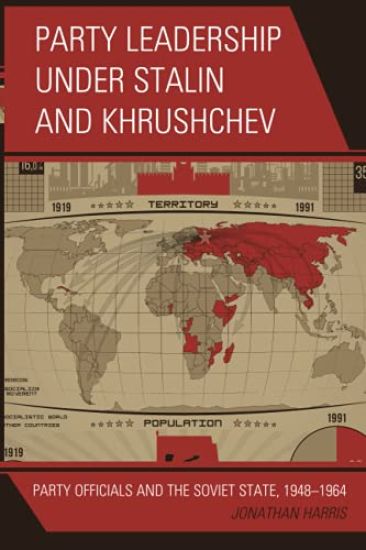
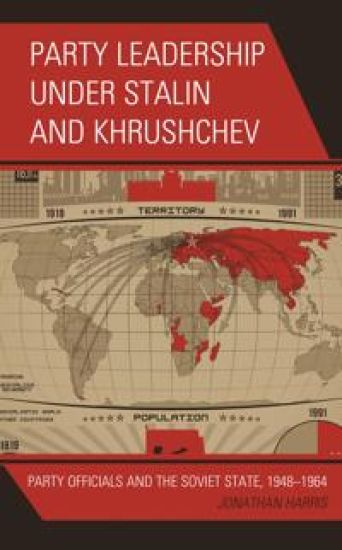
This study demonstrates that the full time party officials of the Communist Party of the Soviet Union (CPSU) used the term “party leadership” to both disguise and signal their efforts to lead the Communists who manned the Soviet state. In 1946, Stalin had made the newly formed Council of Ministers of the USSR, led by its Bureau (Presidium) directly responsible for planning and administering the Soviet economy. As a result, the full time officials clashed constantly and publicly over the relative importance of their direct intervention in production as opposed to ideological education and personnel management in their efforts to provide “party leadership” of the state from 1946 until 1964. Zhdanov and Malenkov clashed over the issue until Zhdanov’s death in 1948 and Malenkov clashed with Khrushchev over the same issue from 1949 until Stalin’s death in 1953. This conflict became more explicit once Malenkov was named Chairman of the Council of Ministers and Khrushchev first secretary of the CC/CPSU in 1953 and continued until Malenkov’s ouster in 1955. Khrushchev clashed with Chairman Bulganin over the same issue from 1955 until 1958. Khrushchev’s decision to replace Bulganin as Chairman of the Council of Ministers not only complicated the discussion of party officials’ role but led to a series of extremely contradictory reforms. Khrushchev simultaneously bolstered party officials’ capacity to intervene directly in industrial production and strengthened the Council of Ministers’ control over the same process. The ensuring administrative confusion, when coupled with Khrushchev’s overt disdain for the ideological education of Communists helped to undermine his authority and led to the decision of his colleagues to oust him in 1964.
Introduction to Byzantium, 602–1453 provides students with an accessible guide to medieval Byzantium.Beginning with the near collapse of Byzantium in the seventh century, the book traces its survival and development through to its absorption by the Ottoman empire. As well as having an overall political narrative, the chapters cover a wide range of topics including society and economy, art and architecture, literature and education, military tactics and diplomacy, gender and education. They also explore themes that remain prominent and highly debated today, including relations between Islam and the West, the impact of the Crusades, the development of Russia, and the emergence of Orthodox Christianity. Comprehensively written, each chapter provides an overview of the particular period or topic, a summary of the ongoing historiographical debates, primary source material textboxes, further reading recommendations and a ‘points to remember’ section. Introduction to Byzantium, 602–453 provides students with a thorough introduction to the history of Byzantium and equips them with the tools to write successful analytical essays. It is essential reading for any student of the history of the Byzantine empire.
A Tenth-Century Byzantine Military Manual: The Sylloge Tacticorum
Georgios Chatzelis; Jonathan Harris
Routledge
2019
nidottu
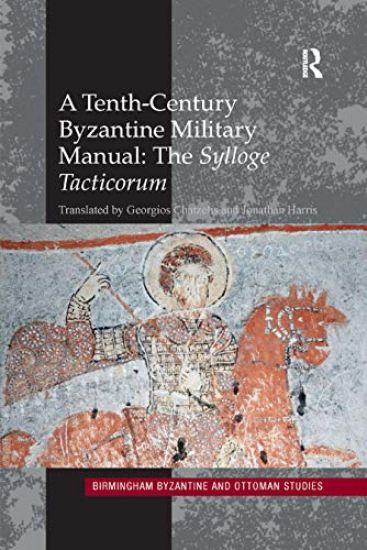
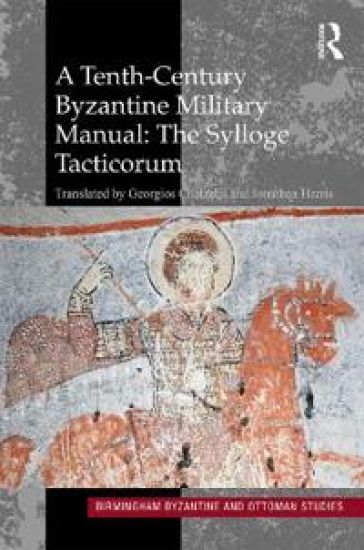
The Sylloge Tacticorum is a mid-Byzantine example of the literary genre of military manuals or Taktika which stretches back to antiquity. It was one of a number produced during the tenth century CE, a period when the Byzantine empire enjoyed a large measure of success in its wars against its traditional enemy, the Arabs. Compiled to record and preserve military strategies, know-how, and tactics, the manual discusses a wide variety of matters: battle formations, raids, sieges, ambushes, surprise attacks, the treatment of prisoners of war and defectors, distribution of booty, punishment of military offences, how to mount effective espionage, and how to send and receive envoys. There is even advice on the personal qualities required by generals, on how to neutralize enemy horses, and on how to protect the troops against poisoned food. The work culminates in an account of the stratagems employed by great Greek and Roman military commanders of the past. While, like so much of Byzantine literature, the Sylloge often simply reproduces material found in earlier texts, it also preserves a great deal of information about the military tactics being developed by the Byzantine army during the tenth century. It is the first Byzantine source to record the reappearance of a specialized heavy cavalry (the kataphraktoi) and of a specialized infantry (the menavlatoi) used to repel the attacks of the opposing heavy cavalry. There is also a great deal of information on new infantry and cavalry formations and on the new tactics that required them. This is the first complete translation of the Sylloge into English. It is accompanied by a glossary of the specialised Greek military vocabulary used in the work and by footnotes which explain obscure references and identify the author’s classical and Byzantine sources. An introduction places the work in its historical and literary context and considers some of the questions that
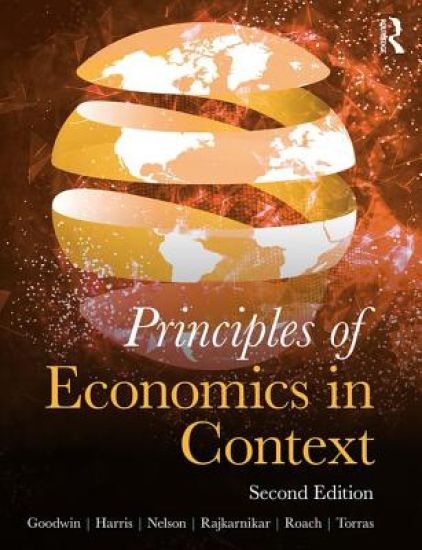
Principles of Economics in Context
Neva Goodwin; Brian Roach; Mariano Torras; Jonathan Harris; Julie Nelson
Routledge
2019
sidottu
The study of economics should not be highly abstract, but closely related to real-world events. Principles of Economics in Context addresses this challenge, laying out the principles of micro-and macroeconomics in a manner that is thorough, up to date and relevant to students, keeping theoretical exposition close to experience. Emphasizing writing that is compelling, clear, and attractive to students, it addresses such critical concerns as ecological sustainability, distributional equity, the quality of employment, and the adequacy of living standards.Key features include:Clear explanation of basic concepts and analytical tools, with Discussion Questions at the end of each section, encouraging immediate review of what has been read and relating the material to the students’ own experience;Full complement of instructor and student support materials online, including test banks and grading through Canvas;Key terms highlighted in boldface throughout the text, and important ideas and definitions set off from the main text;A glossary at the end of the book containing all key terms, their definitions, and the number of the chapter(s) in which each was first used and defined.Updates for the second edition include:Expanded coverage of topics including inequality, financialization and debt issues, the changing nature of jobs, and sustainable development;New material on wage discrimination by race and gender; an expanded section on labor markets and immigration;Updated discussion of fiscal policy to include more recent developments such as the Trump tax cuts;New material on behavioral economics, public goods, and climate change policy; a new section on “The Economics of Renewable Energy.”This new, affordable edition combines the just-released new editions of Microeconomics in Context and Macroeconomics in Context to provide an integrated full-year text covering all aspects of both micro-and macro-analysis and application, with many up-to-date examples and extensive supporting Web resources for instructors and students.The companion website can be found at: http://www.bu.edu/eci/education-materials/textbooks/principles-of-economics-in-context/
This study demonstrates that the full time party officials of the Communist Party of the Soviet Union (CPSU) used the term “party leadership” to both disguise and signal their efforts to lead the Communists who manned the Soviet state. In 1946, Stalin had made the newly formed Council of Ministers of the USSR, led by its Bureau (Presidium) directly responsible for planning and administering the Soviet economy. As a result, the full time officials clashed constantly and publicly over the relative importance of their direct intervention in production as opposed to ideological education and personnel management in their efforts to provide “party leadership” of the state from 1946 until 1964. Zhdanov and Malenkov clashed over the issue until Zhdanov’s death in 1948 and Malenkov clashed with Khrushchev over the same issue from 1949 until Stalin’s death in 1953. This conflict became more explicit once Malenkov was named Chairman of the Council of Ministers and Khrushchev first secretary of the CC/CPSU in 1953 and continued until Malenkov’s ouster in 1955. Khrushchev clashed with Chairman Bulganin over the same issue from 1955 until 1958. Khrushchev’s decision to replace Bulganin as Chairman of the Council of Ministers not only complicated the discussion of party officials’ role but led to a series of extremely contradictory reforms. Khrushchev simultaneously bolstered party officials’ capacity to intervene directly in industrial production and strengthened the Council of Ministers’ control over the same process. The ensuring administrative confusion, when coupled with Khrushchev’s overt disdain for the ideological education of Communists helped to undermine his authority and led to the decision of his colleagues to oust him in 1964.
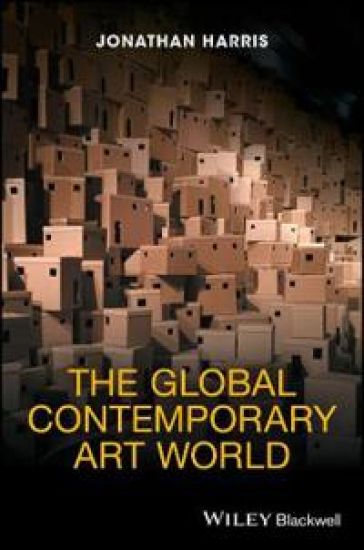
The final installment in the critically-acclaimed trilogy on globalization and art explores the growing dominance of Asian centers of art This book takes readers on a fascinating journey around five Asian centers of contemporary art and its myriad institutions, agents, forms, materials, and languages, while posing vital questions about the political economy of culture and the power of visual art in a multi-polar world. He analyzes the financial powerhouse of Art Basel Hong Kong, new media art in South Korea, the place of the Kochi Biennale within contemporary art in India, transnational art and art education in China, and the geo-politics of art patronage in Palestine, and he develops a highly original synthesis of theoretical perspectives and empirical research. Drawing on detailed case studies and personal insights gained from his extensive experience of the contemporary art scene in Asia, Professor Harris examines the evolving relationship between the western centers of art practice, collection, and validation and the emerging “peripheries” of Asian Tiger societies with burgeoning art centers. And he arrives at the somewhat controversial conclusion that dominance of the art world is rapidly slipping away from Europe and North America. The Global Contemporary Art World is essential reading for undergraduates and postgraduate students in modern and contemporary art, art history, art theory and criticism, cultural studies, the sociology of culture, and globalization studies. It is also a vital resource for research students, academics, and professionals in the art world.
Macroeconomics in Context
Sebastian Dullien; Neva Goodwin; Jonathan Harris; Julie Nelson; Brian Roach; Mariano Torras
Routledge
2017
nidottu
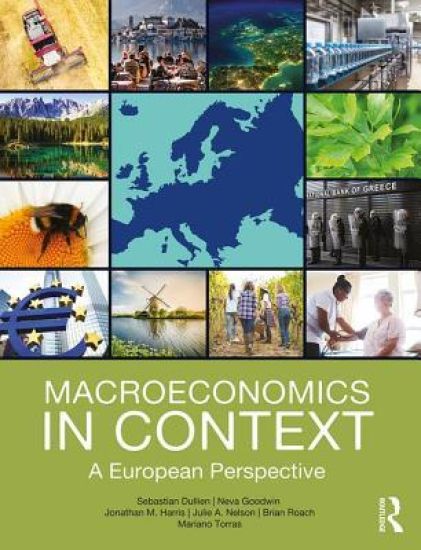
Macroeconomics in Context: A European Perspective lays out the principles of macroeconomics in a manner that is thorough, up to date, and relevant to students. With a clear presentation of economic theory throughout, this latest addition to the bestselling "In Context" set of textbooks is written with a specific focus on European data, institutions, and historical events, offering engaging treatment of high-interest topics, including sustainability, Brexit, the euro crisis, and rising inequality. Policy issues are presented in context (historical, institutional, social, political, and ethical), and always with reference to human well-being. This book is divided into four parts, covering the following key issues: The context of economic analysis, including basic macroeconomic statistics and tools; The basics of macroeconomic measurements, including GDP, inflation, and unemployment, as well as alternative measures of well-being, and the particular structures of the European economies; Methods for analyzing monetary and fiscal policy, including an in-depth coverage of the instruments and approaches of the European central bank and some coverage of an open economy; The application of the tools learnt to selected macroeconomic issues, such as the euro crisis, the global financial crisis, public debt, global development, and environmental sustainability. Far more than any other existing macroeconomic textbook, this book combines real-world relevance of the topics covered with a strong focus on European institutions and structures within an approach that explains multiple economic paradigms. This combination helps to raise students’ interest in macroeconomics as well as enhance their understanding of the power and limitation of macroeconomic analysis.Visit http://www.bu.edu/eci/education-materials/textbooks/macroeconomics-in-context-a-european-perspective/ for online resources for both lecturers and students. A video of a panel discussion about the book can be found at https://youtu.be/xjHJrW9WP44.
Macroeconomics in Context
Sebastian Dullien; Neva Goodwin; Jonathan Harris; Julie Nelson; Brian Roach; Mariano Torras
Routledge
2017
sidottu
Macroeconomics in Context: A European Perspective lays out the principles of macroeconomics in a manner that is thorough, up to date, and relevant to students. With a clear presentation of economic theory throughout, this latest addition to the bestselling "In Context" set of textbooks is written with a specific focus on European data, institutions, and historical events, offering engaging treatment of high-interest topics, including sustainability, Brexit, the euro crisis, and rising inequality. Policy issues are presented in context (historical, institutional, social, political, and ethical), and always with reference to human well-being. This book is divided into four parts, covering the following key issues: The context of economic analysis, including basic macroeconomic statistics and tools; The basics of macroeconomic measurements, including GDP, inflation, and unemployment, as well as alternative measures of well-being, and the particular structures of the European economies; Methods for analyzing monetary and fiscal policy, including an in-depth coverage of the instruments and approaches of the European central bank and some coverage of an open economy; The application of the tools learnt to selected macroeconomic issues, such as the euro crisis, the global financial crisis, public debt, global development, and environmental sustainability. Far more than any other existing macroeconomic textbook, this book combines real-world relevance of the topics covered with a strong focus on European institutions and structures within an approach that explains multiple economic paradigms. This combination helps to raise students’ interest in macroeconomics as well as enhance their understanding of the power and limitation of macroeconomic analysis.Visit http://www.bu.edu/eci/education-materials/textbooks/macroeconomics-in-context-a-european-perspective/ for online resources for both lecturers and students. A video of a panel discussion about the book can be found at https://youtu.be/xjHJrW9WP44.
A Tenth-Century Byzantine Military Manual: The Sylloge Tacticorum
Georgios Chatzelis; Jonathan Harris
Routledge
2017
sidottu
The Sylloge Tacticorum is a mid-Byzantine example of the literary genre of military manuals or Taktika which stretches back to antiquity. It was one of a number produced during the tenth century CE, a period when the Byzantine empire enjoyed a large measure of success in its wars against its traditional enemy, the Arabs. Compiled to record and preserve military strategies, know-how, and tactics, the manual discusses a wide variety of matters: battle formations, raids, sieges, ambushes, surprise attacks, the treatment of prisoners of war and defectors, distribution of booty, punishment of military offences, how to mount effective espionage, and how to send and receive envoys. There is even advice on the personal qualities required by generals, on how to neutralize enemy horses, and on how to protect the troops against poisoned food. The work culminates in an account of the stratagems employed by great Greek and Roman military commanders of the past. While, like so much of Byzantine literature, the Sylloge often simply reproduces material found in earlier texts, it also preserves a great deal of information about the military tactics being developed by the Byzantine army during the tenth century. It is the first Byzantine source to record the reappearance of a specialized heavy cavalry (the kataphraktoi) and of a specialized infantry (the menavlatoi) used to repel the attacks of the opposing heavy cavalry. There is also a great deal of information on new infantry and cavalry formations and on the new tactics that required them. This is the first complete translation of the Sylloge into English. It is accompanied by a glossary of the specialised Greek military vocabulary used in the work and by footnotes which explain obscure references and identify the author’s classical and Byzantine sources. An introduction places the work in its historical and literary context and considers some of the questions that have remained unanswered over the centuries, such as its authorship and the date of its composition.
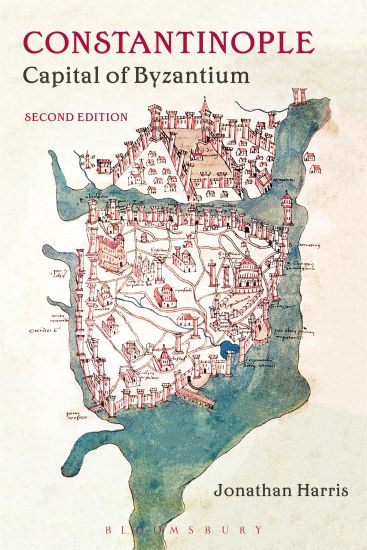
Jonathan Harris’ new edition of the CHOICE Outstanding Academic Title, Constantinople, provides an updated and extended introduction to the history of Byzantium and its capital city. Accessible and engaging, the book breaks new ground by exploring Constantinople’s mystical dimensions and examining the relationship between the spiritual and political in the city.This second edition includes a range of new material, such as:* Historiographical updates reflecting recently published work in the field* Detailed coverage of archaeological developments relating to Byzantine Constantinople* Extra chapters on the 14th century and social ‘outsiders’ in the city* More on the city as a centre of learning; the development of Galata/Pera; charitable hospitals; religious processions and festivals; the lives of ordinary people; and the Crusades* Source translation textboxes, new maps and images, a timeline and a list of emperorsIt is an important volume for anyone wanting to know more about the history of the Byzantine Empire.
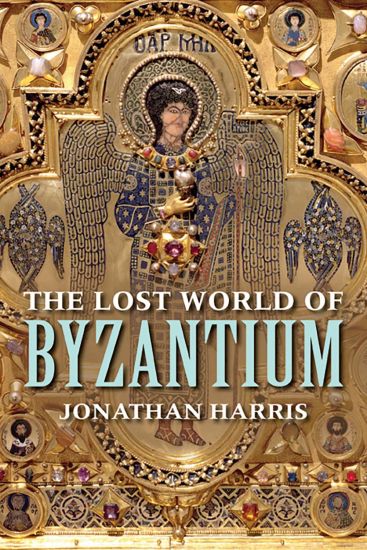
A fresh, concise, and accessible history of one of the medieval world’s greatest empires For more than a millennium, the Byzantine Empire presided over the juncture between East and West, as well as the transition from the classical to the modern world. Jonathan Harris, a leading scholar of Byzantium, eschews the usual run-through of emperors and battles and instead recounts the empire’s extraordinary history by focusing each chronological chapter on an archetypal figure, family, place, or event. Harris’s action-packed introduction presents a civilization rich in contrasts, combining orthodox Christianity with paganism, and classical Greek learning with Roman power. Frequently assailed by numerous armies—including those of Islam—Byzantium nonetheless survived and even flourished by dint of its somewhat unorthodox foreign policy and its sumptuous art and architecture, which helped to embed a deep sense of Byzantine identity in its people. Enormously engaging and utilizing a wealth of sources to cover all major aspects of the empire’s social, political, military, religious, cultural, and artistic history, Harris’s study illuminates the very heart of Byzantine civilization and explores its remarkable and lasting influence on its neighbors and on the modern world.