Kirjojen hintavertailu. Mukana 12 290 406 kirjaa ja 12 kauppaa.

Kirjailija

Joseph E. Stiglitz

Kirjat ja teokset yhdessä paikassa: 56 kirjaa, julkaisuja vuosilta 1996-2026, suosituimpien joukossa For Good Measure. Vertaile teosten hintoja ja tarkista saatavuus suomalaisista kirjakaupoista.

56 kirjaa

Kirjojen julkaisuhaarukka 1996-2026.

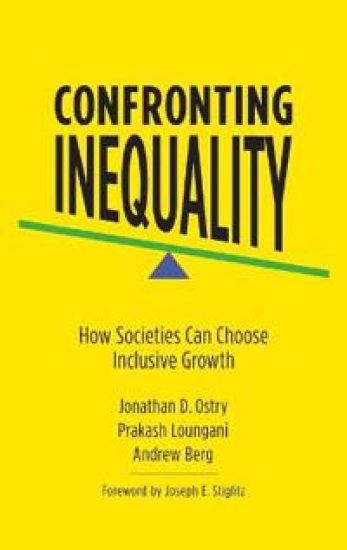
Confronting Inequality

Confronting Inequality

Jonathan D. Ostry; Prakash Loungani; Andrew Berg; Joseph E. Stiglitz

Columbia University Press
2019
sidottu
Inequality has drastically increased in many countries around the globe over the past three decades. The widening gap between the very rich and everyone else is often portrayed as an unexpected outcome or as the tradeoff we must accept to achieve economic growth. In this book, three International Monetary Fund economists show that this increase in inequality has in fact been a political choice—and explain what policies we should choose instead to achieve a more inclusive economy.Jonathan D. Ostry, Prakash Loungani, and Andrew Berg demonstrate that the extent of inequality depends on the policies governments choose—such as whether to let capital move unhindered across national boundaries, how much austerity to impose, and how much to deregulate markets. While these policies do often confer growth benefits, they have also been responsible for much of the increase in inequality. The book also shows that inequality leads to weaker economic performance and proposes alternative policies capable of delivering more inclusive growth. In addition to improving access to health care and quality education, they call for redistribution from the rich to the poor and present evidence showing that redistribution does not hurt growth. Accessible to scholars across disciplines as well as to students and policy makers, Confronting Inequality is a rigorous and empirically rich book that is crucial for a time when many fear a new Gilded Age.
Globalization and Its Discontents Revisited

Globalization and Its Discontents Revisited

Joseph E. Stiglitz

Penguin Books Ltd
2017
pokkari
**Over 1 million copies sold worldwide**MAJOR NEW EDITIONFrom Nobel laureate Joseph Stiglitz, Globalization and its Discontents is the bestselling exposé of the all-powerful organizations that control our lives.Joseph Stiglitz's landmark book lifted the lid on how globalization was hurting those it was meant to help. Many of its predictions came true, and it became a touchstone in the debate. This major new edition looks afresh at the continuing mismanagement of globalization, and how it has led to our current political and economic discontents. Globalization can still be a force for good, Stiglitz argues. But the balance of power has to change. Here he offers real, tough solutions for the future. 'A massively important political as well as economic document ... we should listen to him urgently' Will Hutton, Guardian 'Stiglitz is a rare breed, an heretical economist who has ruffled the self-satisfied global establishment that once fed him. Globalization and its Discontents declares war on the entire Washington financial and economic establishment' Ian Fraser, Sunday Herald 'Gripping ... this landmark book shows him to be a worthy successor to Keynes' Robin Blackburn, Independent
Euro

Euro

Joseph E. Stiglitz

Penguin Books Ltd.
2017
pokkari
Can the Euro be saved? Should it be?Nobel prize-winning economist Joseph E. Stiglitz dismantles the prevailing consensus around what ails Europe - arguing that economic stagnation is a direct result of the Euro's flawed birth, demolishing the champions of austerity and offering solutions that can rescue the continent from further devastation.'Stiglitz could hardly have timed The Euro better ... one of those economists with a rare ability to help readers understand complex ideas' Philip Aldrick, The Times.'Original, hard-hitting ... Much more than a demolition job. These chapters are full of constructive proposals' Martin Sandbu, Financial Times.'Terrific and clarifying' Peter Goodman, The New York Times.'Coolly analytical ... he is surely right: without a radical overhaul of its workings, the Euro seems all but certain to fail' Economist.
Globalization and Its Discontents Revisited: Anti-Globalization in the Era of Trump
In this crucial expansion and update of his landmark bestseller, renowned economist and Nobel Prize winner Joseph E. Stiglitz addresses globalization's new discontents in the United States and Europe. Immediately upon publication, Globalization and Its Discontents became a touchstone in the globalization debate by demonstrating how the International Monetary Fund, other major institutions like the World Bank, and global trade agreements have often harmed the developing nations they are supposedly helping. Yet globalization today continues to be mismanaged, and now the harms--exemplified by the rampant inequality to which it has contributed--have come home to roost in the United States and the rest of the developed world as well, reflected in growing political unrest.With a new introduction, major new chapters on the new discontents, the rise of Donald Trump, and the new protectionist movement, as well as a new afterword on the course of globalization since the book first appeared, Stiglitz's powerful and prescient messages remain essential reading.
The Euro: How a Common Currency Threatens the Future of Europe
When Nobel Prize-winning economist Joseph E. Stiglitz posed this question in the original edition of The Euro, he lent much-needed clarity to a global debate that continues to this day. The euro was supposed to unify Europe and promote prosperity; in fact, it has done just the opposite. To save the European project, the euro may have to be abandoned. Since 2010, many of the 19 countries of Europe that share the euro currency--the eurozone--have been rocked by debt crises and mired in lasting stagnation, and the divergence between stronger and weaker economies has accelerated. In The Euro, Joseph E. Stiglitz explains precisely why the eurozone has performed so poorly, so different from the expectations at its launch: at the core of the failure is the structure of the eurozone itself, the rules by which it is governed. Stiglitz reveals three potential paths forward: drastic structural reforms, not of the individual countries, but of the eurozone; a well-managed dissolution of the euro; or a bold new system dubbed the "flexible euro." With trenchant analysis--and brand new material on Brexit--The Euro is urgent and timely reading.
The Euro

The Euro

Joseph E. Stiglitz

WW Norton Co
2016
sidottu
In 2010, the 2008 global financial crisis morphed into the "eurocrisis." It has not abated. The 19 countries of Europe that share the euro currency-the eurozone-have been rocked by economic stagnation and debt crises. Some countries have been in depression for years while the governing powers of the eurozone have careened from emergency to emergency, most notably in Greece. In The Euro, Nobel Prize-winning economist and best-selling author Joseph E. Stiglitz dismantles the prevailing consensus around what ails Europe, demolishing the champions of austerity while offering a series of plans that can rescue the continent-and the world-from further devastation. Hailed by its architects as a lever that would bring Europe together and promote prosperity, the euro has done the opposite. As Stiglitz persuasively argues, the crises revealed the shortcomings of the euro. Europe's stagnation and bleak outlook are a direct result of the fundamental challenges in having a diverse group of countries share a common currency-the euro was flawed at birth, with economic integration outpacing political integration. Stiglitz shows how the current structure promotes divergence rather than convergence. The question then is: Can the euro be saved? After laying bare the European Central Bank's misguided inflation-only mandate and explaining how eurozone policies, especially toward the crisis countries, have further exposed the zone's flawed design, Stiglitz outlines three possible ways forward: fundamental reforms in the structure of the eurozone and the policies imposed on the member countries; a well-managed end to the single-currency euro experiment; or a bold, new system dubbed the "flexible euro." With its lessons for globalization in a world economy ever more deeply connected, The Euro is urgent and essential reading.
The Great Divide

The Great Divide

Joseph E. Stiglitz

Penguin Books Ltd
2016
pokkari
Why has inequality increased in the Western world - and what can we do about it? In The Great Divide, Joseph E. Stiglitz expands on the diagnosis he offered in his best-selling book The Price of Inequality and suggests ways to counter this growing problem. With his characteristic blend of clarity and passion, Stiglitz argues that inequality is a choice - the cumulative result of unjust policies and misguided priorities.In these essays, articles and reflections, Stiglitz fully exposes the inequality - from its dimensions and its causes to its consequences for the world - that is afflicting America and other Western countries in thrall to neoliberalism. From Reagan-era policies to the Great Recession and its long aftermath, Stiglitz delves into the processes and irresponsible policies - deregulation, tax cuts for the rich, the corruption of the political process - that are leaving many people further and further behind and turning the dream of a socially mobile society into an ever more unachievable myth. With formidable yet accessible economic insight, he urges us to embrace real solutions: increasing taxes on corporations and the wealthy; investing in education, science, and infrastructure; helping homeowners instead of banks; and, most importantly, doing more to restore the economy to full employment. Stiglitz's analysis reaches beyond America - the inequality leader of the developed world - to draw lessons from Scandinavia, Singapore, and Japan, and he argues against the tide of unnecessary, destructive austerity that is sweeping across Europe.Ultimately, Stiglitz believes our choice is not between growth and fairness; with the right policies, we can choose both.
Great Divide: Unequal Societies and What We Can Do about Them
A singular voice of reason in an era defined by bitter politics and economic uncertainty, Joseph E. Stiglitz has time and again diagnosed America's greatest economic challenges, from the Great Recession and its feeble recovery to the yawning gap between the rich and the poor. The Great Divide gathers his most provocative reflections to date on the subject of inequality. As Stiglitz ably argues, a healthy economy and a fairer democracy are within our grasp if we can put aside misguided interests and ideologies and abandon failed policies. Opening with the essay that gave the Occupy Movement its slogan, "We are the 99%," later essays in The Great Divide reveal equality of opportunity as a national myth, show that today's outsized inequality is a matter of choice, and explain reforms that would spur higher growth, more opportunity, and greater equality.
Rewriting the Rules of the American Economy

Rewriting the Rules of the American Economy

Joseph E. Stiglitz

WW Norton Co
2015
nidottu
Inequality is a choice. The United States bills itself as the land of opportunity, a place where anyone can achieve success and a better life through hard work and determination. But the facts tell a different story—the U.S. today lags behind most other developed nations in measures of inequality and economic mobility. For decades, wages have stagnated for the majority of workers while economic gains have disproportionately gone to the top one percent. Education, housing and health care—essential ingredients for individual success—are growing ever more expensive. Deeply rooted structural discrimination continues to hold down women and people of colour, and more than one-fifth of all American children now live in poverty. These trends are on track to become even worse in the future. Some economists claim that today’s bleak conditions are inevitable consequences of market outcomes, globalisation and technological progress. If we want greater equality, they argue, we have to sacrifice growth. This is simply not true. American inequality is the result of misguided structural rules that actually constrict economic growth. We have stripped away worker protections and family support systems, created a tax system that rewards short-term gains over long-term investment, offered a de facto public safety net to too-big-to-fail financial institutions, and chosen monetary and fiscal policies that promote wealth over full employment.
Towards a General Theory of Deep Downturns

Towards a General Theory of Deep Downturns

Joseph E. Stiglitz

Palgrave Macmillan
2015
sidottu
Joseph Stiglitz examines the theory behind the economic downturns that have plagued our world in recent times. This fascinating three-part lecture acknowledges the failure of economic models to successfully predict the 2008 crisis and explores alternative models which, if adopted, could potentially restore a stable and prosperous economy.
Creating a Learning Society

Creating a Learning Society

Joseph E. Stiglitz; Bruce Greenwald

Columbia University Press
2015
pokkari
Since its publication Creating a Learning Society has served as an effective tool for those who advocate government policies to advance science and technology. It shows persuasively how enormous increases in our standard of living have been the result of learning how to learn, and it explains how advanced and developing countries alike can model a new learning economy on this example. Creating a Learning Society: Reader's Edition uses accessible language to focus on the work's central message and policy prescriptions. As the book makes clear, creating a learning society requires good governmental policy in trade, industry, intellectual property, and other important areas. The text's central thesis-that every policy affects learning-is critical for governments unaware of the innovative ways they can propel their economies forward.
Principles of Economics

Principles of Economics

Joseph E. Stiglitz; Carl E. Walsh; Jeffrey Gow; Ross Guest; William Richmond; Max Tani

John Wiley Sons Australia Ltd
2015
nidottu
Principles of Economics, 2nd Australian edition, is an adaptation of an original work by internationally renowned economists Joseph Stiglitz and Carl Walsh. In addition to a thorough analysis of the contemporary economic landscape in Australia — with updated statistics, figures, and political and business developments — the second edition provides useful international comparisons with economies in Asia and Europe, as well as that of the United States.The adapting Australian author team has contextualised the content to suit the needs of Australian university students. Key introductory microeconomic and macroeconomics concepts are explained using the latest theory and research, with data relevant to the Australian economy. Throughout the text, these concepts are applied to contemporary local economic issues for businesses and individuals, such as: the Australian dollartthe mining industrythe National Broadband Networkpetrol pricesprivatisationthe banking and finance sectorsthe automotive industrythe carbon taxthe ageing populationskills shortagesinternational trade. At an expanded 18 chapters for the second edition, this textbook is an ideal resource for a one-semester university course in introductory economics.
Lectures on Public Economics

Lectures on Public Economics

Anthony B. Atkinson; Joseph E. Stiglitz

PRINCETON UNIVERSITY PRESS
2015
sidottu
This classic introduction to public finance remains the best advanced-level textbook on the subject ever written. First published in 1980, Lectures on Public Economics still tops reading lists at many leading universities despite the fact that the book has been out of print for years. This new edition makes it readily available again to a new generation of students and practitioners in public economics. The lectures presented here examine the behavioral responses of households and firms to tax changes. Topics include the effects of taxation on labor supply, savings, risk-taking, the firm, debt, and economic growth. The book then delves into normative questions such as the design of tax systems, optimal taxation, public sector pricing, and public goods, including local public goods. Written by two of the world's preeminent economists, this edition of Lectures on Public Economics features a new introduction by Anthony Atkinson and Joseph Stiglitz that discusses the latest developments in the field and areas for future research. * The definitive advanced-level textbook on public economics* Examines the effects of taxation on households and firms* Covers tax system design, optimal taxation, public sector pricing, and more* Includes suggestions for further reading* Additional resources available online
Economics of the Public Sector

Economics of the Public Sector

Joseph E. Stiglitz; Jay K. Rosengard

WW Norton Co
2015
nidottu
What should be the role of government in society? How should it design its programmes? How should tax systems be designed to promote both efficiency and fairness? Nobel Laureate Joseph Stiglitz and new co-author Jay Rosengard bring an unparalleled level of expertise to address these key issues of public-sector economics. No other text is as modern, as accessible, or incorporates as much first-hand policy-advising experience by its authors as Stiglitz/Rosengard.
Economics of the Public Sector

Economics of the Public Sector

Joseph E. Stiglitz; Jay K. Rosengard

WW Norton Co
2015
nidottu
What should be the role of government in society? How should it design its programs? How should tax systems be designed to promote both efficiency and fairness? Nobel Laureate Joseph Stiglitz and new co-author Jay Rosengard use their first-hand policy-advising experience to address these key issues of public-sector economics in this modern and accessible Fourth Edition.
The Great Divide

The Great Divide

Joseph E. Stiglitz

WW Norton Co
2015
sidottu
A singular voice of reason in an era defined by bitter politics and economic uncertainty, Joseph E. Stiglitz has time and again diagnosed America's greatest economic challenges, from the Great Recession and its feeble recovery to the yawning gap between the rich and the poor. The Great Divide gathers his most provocative reflections on the subject of inequality, probing for answers to the greatest threat to American prosperity and explaining its role in the country's ongoing malaise. As Stiglitz ably argues, a healthy economy and a fairer democracy are within our grasp, if we can put aside misguided interests and abandon failed policies. Opening with the essay that gave the Occupy Movement its slogan, "We are the 99%," later essays in The Great Divide reveal equality of opportunity as a national myth and explain reforms that would spur higher growth, more opportunity, and greater equality.
Creating a Learning Society

Creating a Learning Society

Joseph E. Stiglitz; Bruce Greenwald

Columbia University Press
2014
sidottu
It has long been recognized that an improved standard of living results from advances in technology, not from the accumulation of capital. It has also become clear that what truly separates developed from less-developed countries is not just a gap in resources or output but a gap in knowledge. In fact, the pace at which developing countries grow is largely a function of the pace at which they close that gap. Thus, to understand how countries grow and develop, it is essential to know how they learn and become more productive and what government can do to promote learning. In Creating a Learning Society, Joseph E. Stiglitz and Bruce C. Greenwald cast light on the significance of this insight for economic theory and policy. Taking as a starting point Kenneth J. Arrow's 1962 paper "Learning by Doing," they explain why the production of knowledge differs from that of other goods and why market economies alone typically do not produce and transmit knowledge efficiently. Closing knowledge gaps and helping laggards learn are central to growth and development. But creating a learning society is equally crucial if we are to sustain improved living standards in advanced countries. Combining accessible prose with technical economic analysis, Stiglitz and Greenwald provide new models of "endogenous growth," up-ending thowhe thinking about both domestic and global policy and trade regimes. They show well-designed government trade and industrial policies can help create a learning society, and how poorly designed intellectual property regimes can retard learning. They also explain how virtually every government policy has effects, both positive and negative, on learning, a fact that policymakers must recognize. They demonstrate why many standard policy prescriptions, especially those associated with "neoliberal" doctrines focusing on static resource allocations, have impeded learning. Among the provocative implications are that free trade may lead to stagnation whereas broad-based industrial protection and exchange rate interventions may bring benefits-not just to the industrial sector, but to the entire economy. The volume concludes with brief commentaries from Philippe Aghion and Michael Woodford, as well as from Nobel Laureates Kenneth J. Arrow and Robert M. Solow.
The Right to Trade

The Right to Trade

Joseph E. Stiglitz; Andrew Charlton

Commonwealth Secretariat
2013
nidottu
Aid for trade is a fixture in the development landscape, accounting for approximately 25 per cent of total ODA, and is being positioned as a building block in the future development agenda beyond the 2015 expiry of the Millennium Development Goals. In The Right to Trade, Nobel Prize-winning economist Joseph E Stiglitz and Andrew Charlton argue that aid for trade has not delivered on its initial promise.To create a genuinely pro-development trade liberalisation agenda, the authors propose that a 'right to trade' and a 'right to development' be enshrined within the WTO's dispute settlement system; and that aid for trade funds be consolidated into a coherent and predictable framework, where dedicated funds are committed by rich countries to a Global Trade Facility and dispersed through a transparent and competitive process. Together these proposals would help ensure that international trade works for developing countries and will help preserve a development-friendly multilateral trading system.
The Price of Inequality

The Price of Inequality

Joseph E. Stiglitz

Penguin Books Ltd
2013
pokkari
Nobel Laureate Joseph Stiglitz explains why we are experiencing such destructively high levels of inequality - and why this is not inevitable The top 1 percent have the best houses, the best educations, the best doctors, and the best lifestyles, but there is one thing that money doesn't seem to have bought: an understanding that their fate is bound up with how the other 99 percent live. Throughout history, this is something that the top 1 percent eventually do learn - too late. In this timely book, Joseph Stiglitz identifies three major causes of our predicament: that markets don't work the way they are supposed to (being neither efficient nor stable); how political systems fail to correct the shortcomings of the market; and how our current economic and political systems are fundamentally unfair. He focuses chiefly on the gross inequality to which these systems give rise, but also explains how inextricably interlinked they are. Providing evidence that investment - not austerity - is vital for productivity, and offering realistic solutions for levelling the playing field and increasing social mobility, Stiglitz argues that reform of our economic and political systems is not just fairer, but is the only way to make markets work as they really should. Joseph Stiglitz was Chief Economist at the World Bank until January 2000. He is currently University Professor of the Columbia Business School and Chair of the Management Board and Director of Graduate Summer Programs, Brooks World Poverty Institute, University of Manchester. He won the Nobel Prize for Economics in 2001 and is the best-selling author of Globalization and Its Discontents, The Roaring Nineties, Making Globalization Work and Freefall, all published by Penguin.