Kirjojen hintavertailu. Mukana 12 657 676 kirjaa ja 12 kauppaa.

Kirjailija

Joseph E. Stiglitz

Kirjat ja teokset yhdessä paikassa: 57 kirjaa, julkaisuja vuosilta 1996-2026, suosituimpien joukossa For Good Measure. Vertaile teosten hintoja ja tarkista saatavuus suomalaisista kirjakaupoista.

57 kirjaa

Kirjojen julkaisuhaarukka 1996-2026.

The Price of Inequality

The Price of Inequality

Joseph E. Stiglitz

Penguin Books Ltd
2013
pokkari
Nobel Laureate Joseph Stiglitz explains why we are experiencing such destructively high levels of inequality - and why this is not inevitable The top 1 percent have the best houses, the best educations, the best doctors, and the best lifestyles, but there is one thing that money doesn't seem to have bought: an understanding that their fate is bound up with how the other 99 percent live. Throughout history, this is something that the top 1 percent eventually do learn - too late. In this timely book, Joseph Stiglitz identifies three major causes of our predicament: that markets don't work the way they are supposed to (being neither efficient nor stable); how political systems fail to correct the shortcomings of the market; and how our current economic and political systems are fundamentally unfair. He focuses chiefly on the gross inequality to which these systems give rise, but also explains how inextricably interlinked they are. Providing evidence that investment - not austerity - is vital for productivity, and offering realistic solutions for levelling the playing field and increasing social mobility, Stiglitz argues that reform of our economic and political systems is not just fairer, but is the only way to make markets work as they really should. Joseph Stiglitz was Chief Economist at the World Bank until January 2000. He is currently University Professor of the Columbia Business School and Chair of the Management Board and Director of Graduate Summer Programs, Brooks World Poverty Institute, University of Manchester. He won the Nobel Prize for Economics in 2001 and is the best-selling author of Globalization and Its Discontents, The Roaring Nineties, Making Globalization Work and Freefall, all published by Penguin.
The Price of Inequality

The Price of Inequality

Joseph E. Stiglitz

W. W. Norton Company
2013
nidottu
The top 1 percent of Americans control some 40 percent of the nation's wealth. But as Joseph E. Stiglitz explains in this best-selling critique of the economic status quo, this level of inequality is not inevitable. Rather, in recent years well-heeled interests have compounded their wealth by stifling true, dynamic capitalism and making America no longer the land of opportunity that it once was. They have made America the most unequal advanced industrial country while crippling growth, distorting key policy debates, and fomenting a divided society. Stiglitz not only shows how and why America's inequality is bad for our economy but also exposes the effects of inequality on our democracy and on our system of justice while examining how monetary policy, budgetary policy, and globalization have contributed to its growth. With characteristic insight, he diagnoses our weakened state while offering a vision for a more just and prosperous future.
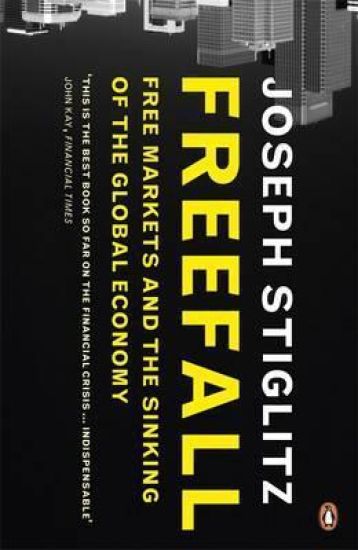
Freefall

Freefall

Joseph E. Stiglitz

Penguin Books Ltd
2010
pokkari
Out of the crisis of our times, Joseph Stiglitz's Freefall: Free Markets and the Sinking of the Global Economy is a convincing, coherent and humane account that goes to the heart of how we run our societies. When the world economy went into freefall, so too did our unquestioning faith in markets. But what happens now? Are bailouts and stern lectures enough, or do we need a rethink of our entire financial system? This acclaimed and inspiring book, by one of the world's leading economic thinkers, dissects the flawed ideas that led to the credit crunch, but also looks to the future. Drawing on his years spent shaping policy at the World Bank, Nobel Laureate Joseph Stiglitz shows why far more radical reforms are needed to avoid future crises, why the cost of recovery should be borne by the financial sector, and how we now have the opportunity to create a new global economic order. 'Bang on the money ... unafraid to ask tough questions ... we need more of his ilk' Will Hutton, Observer 'A brilliant analysis ... always enthralling' Martin Jacomb, Spectator Business 'A powerful new book' Devin Leonard, The New York Times 'A seer of almost Keynesian proportions ... this is Joe Stiglitz's victory lap' Michael Hirsh, Newsweek Joseph Stiglitz was Chief Economist at the World Bank until January 2000. He is currently University Professor of the Columbia Business School and Chair of the Management Board and Director of Graduate Summer Programs, Brooks World Poverty Institute, University of Manchester. He won the Nobel Prize for Economics in 2001 and is the author of the best-selling Globalization and Its Discontents, Making Globalization Work, The Roaring Nineties and The Price of Inequality, all published by Penguin.
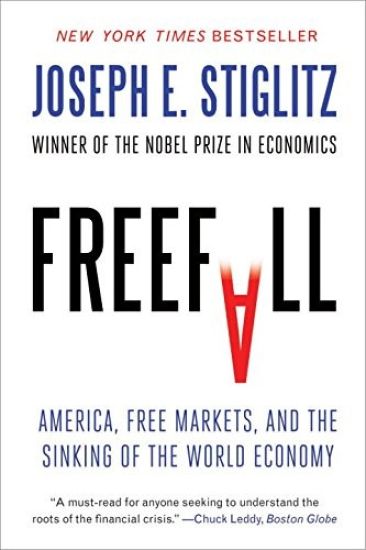
Freefall

Freefall

Joseph E. Stiglitz

WW Norton Co
2010
pokkari
The Great Recession, as it has come to be called, has impacted more people worldwide than any crisis since the Great Depression. Flawed government policy and unscrupulous personal and corporate behavior in the United States created the current financial meltdown, which was exported across the globe with devastating consequences. The crisis has sparked an essential debate about America s economic missteps, the soundness of this country s economy, and even the appropriate shape of a capitalist system. Few are more qualified to comment during this turbulent time than Joseph E. Stiglitz. Winner of the 2001 Nobel Prize in Economics, Stiglitz is an insanely great economist, in ways you can t really appreciate unless you re deep into the field (Paul Krugman, New York Times). In Freefall, Stiglitz traces the origins of the Great Recession, eschewing easy answers and demolishing the contention that America needs more billion-dollar bailouts and free passes to those too big to fail, while also outlining the alternatives and revealing that even now there are choices ahead that can make a difference. The system is broken, and we can only fix it by examining the underlying theories that have led us into this new bubble capitalism. Ranging across a host of topics that bear on the crisis, Stiglitz argues convincingly for a restoration of the balance between government and markets. America as a nation faces huge challenges in health care, energy, the environment, education, and manufacturing and Stiglitz penetratingly addresses each in light of the newly emerging global economic order. An ongoing war of ideas over the most effective type of capitalist system, as well as a rebalancing of global economic power, is shaping that order. The battle may finally give the lie to theories of a rational market or to the view that America s global economic dominance is inevitable and unassailable. For anyone watching with indignation while a reckless Wall Street destroyed homes, educations, and jobs; while the government took half-steps hoping for a just-enough recovery; and while bankers fell all over themselves claiming not to have seen what was coming, then sought government bailouts while resisting regulation that would make future crises less likely, Freefall offers a clear accounting of why so many Americans feel disillusioned today and how we can realize a prosperous economy and a moral society for the future."
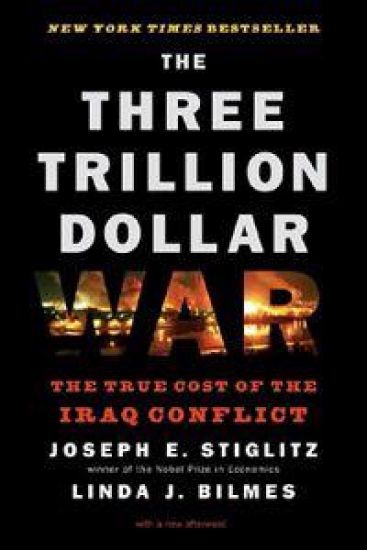
Three Trillion Dollar War: The True Cost of the Iraq Conflict

Three Trillion Dollar War: The True Cost of the Iraq Conflict

Linda J. Bilmes; Joseph E. Stiglitz

W. W. Norton Company
2008
nidottu
America has already spent close to a trillion dollars on the wars in Iraq and Afghanistan, but there are hundreds of billions of bills still due--including staggering costs to take care of the thousands of injured veterans, providing them with disability benefits and health care. In this sobering study, Nobel Prize winner Joseph E. Stiglitz and Harvard University's Linda J. Bilmes reveal a wide range of costs that have been hidden from U.S. taxpayers and left out of the debate about our involvement in Iraq. That involvement, the authors conservatively estimate, will cost us more than $3 trillion.
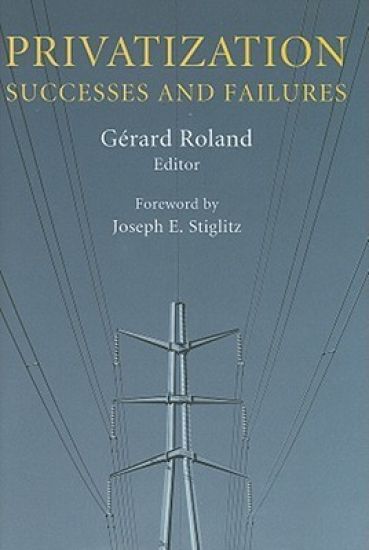
Privatization

Privatization

Joseph E. Stiglitz

Columbia University Press
2008
sidottu
The privatization of large state-owned enterprises is one of the most radical policy developments of the last quarter century. Right-wing governments have privatized in an effort to decrease the size of government, while left-wing governments have privatized either to compensate for the failures of state-owned firms or to generate revenues. In this way, privatization has spread from Europe to Latin America, from Asia to Africa, reaching its zenith with Central and Eastern Europe's transition from socialism to capitalism. In many countries state ownership has been an important tool in bringing cheap water, energy, and transport to poorer segments of the population. In other instances, it has sponsored aggressive cutbacks, corruption, and cronyism. Privatization: Successes and Failures evaluates the practices and results of privatization in Eastern Europe, Africa, Latin America, and Asia. Featuring the world's leading economists and experts on privatization, this volume offers a broad and balanced analysis of specific privatization projects and uncovers some surprising trends. Partial privatization, for example, tends to be more widespread than one might think, and the effects of privatization on efficiency are generally mixed but rarely negative. Also, while privatization appears uncontroversial in competitive sectors, it becomes increasingly complex in more monopolistic sectors where good regulation is crucial. Privatization concludes with alternative frameworks for countries in Africa and other regions that seek to develop privatization policy and programs.
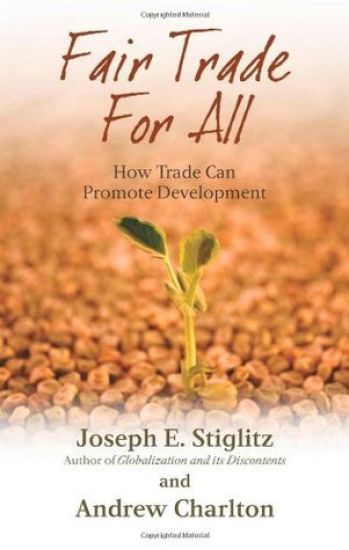
Fair Trade for All

Fair Trade for All

Joseph E. Stiglitz; Andrew Charlton

Oxford University Press Inc
2007
nidottu
Winner of the Nobel Prize in Economics and author of the New York Times bestselling book Globalization and Its Discontents, Joseph E. Stiglitz here joins with fellow economist Andrew Charlton to offer a challenging and controversial argument about how globalization can actually help Third World countries to develop and prosper. In Fair Trade For All, Stiglitz and Charlton address one of the key issues facing world leaders today--how can the poorer countries of the world be helped to help themselves through freer, fairer trade? To answer this question, the authors put forward a radical and realistic new model for managing trading relationships between the richest and the poorest countries. Their approach is designed to open up markets in the interests of all nations and not just the most powerful economies, to ensure that trade promotes development, and to minimize the costs of adjustments. The book illuminates the reforms and principles upon which a successful settlement must be based. Vividly written, highly topical, and packed with insightful analyses, Fair Trade For All offers a radical new solution to the problems of world trade. It is a must read for anyone interested in globalization and development in the Third World.
Making Globalization Work

Making Globalization Work

Joseph E. Stiglitz

W. W. Norton Company
2007
nidottu
Building on the international bestseller Globalization and Its Discontents, Joseph E. Stiglitz offers here an agenda of inventive solutions to our most pressing economic, social, and environmental challenges, with each proposal guided by the fundamental insight that economic globalization continues to outpace both the political structures and the moral sensitivity required to ensure a just and sustainable world. As economic interdependence continues to gather the peoples of the world into a single community, it brings with it the need to think and act globally. This trenchant, intellectually powerful, and inspiring book is an invaluable step in that process.
Fair Trade For All

Fair Trade For All

Joseph E. Stiglitz; Andrew Charlton

Oxford University Press
2007
nidottu
How can the poorer countries of the world be helped to help themselves through freer, fairer trade? In this challenging and controversial book Nobel prize-winning economist Joseph E. Stiglitz and his co-author Andrew Charlton address one of the key issues facing world leaders today. They put forward a radical and realistic new model for managing trading relationships between the richest and the poorest countries. Their approach is designed to open up markets in the interests of all and not just the most powerful economies, to ensure that trade promotes development, and to minimise the costs of adjustments. Beginning with a brief history of the World Trade Organisation and its agreements, the authors explore the issues and events which led to the failure of Cancun and the obstacles that face the successful completion of the Doha Round of negotiations. Finally they spell out the reforms and principles upon which a successful agreement must be based. Accessibly written and packed full of empirical evidence and analysis, this book is a must read for anyone interested in world trade and development.
The Right to Know

The Right to Know

Joseph E. Stiglitz

Columbia University Press
2007
sidottu
The Right to Know is a timely and compelling consideration of a vital question: What information should governments and other powerful organizations disclose? Excessive secrecy corrodes democracy, facilitates corruption, and undermines good public policymaking, but keeping a lid on military strategies, personal data, and trade secrets is crucial to the protection of the public interest. Over the past several years, transparency has swept the world. India and South Africa have adopted groundbreaking national freedom of information laws. China is on the verge of promulgating new openness regulations that build on the successful experiments of such major municipalities as Shanghai. From Asia to Africa to Europe to Latin America, countries are struggling to overcome entrenched secrecy and establish effective disclosure policies. More than seventy now have or are developing major disclosure policies or laws. But most of the world's nearly 200 nations do not have coherent disclosure laws; implementation of existing rules often proves difficult; and there is no consensus about what disclosure standards should apply to the increasingly powerful private sector. As governments and corporations battle with citizens and one another over the growing demand to submit their secrets to public scrutiny, they need new insights into whether, how, and when greater openness can serve the public interest, and how to bring about beneficial forms of greater disclosure. The Right to Know distills the lessons of many nations' often bitter experience and provides careful analysis of transparency's impact on governance, business regulation, environmental protection, and national security. Its powerful lessons make it a critical companion for policymakers, executives, and activists, as well as students and scholars seeking a better understanding of how to make information policy serve the public interest.
Making Globalization Work

Making Globalization Work

Joseph E. Stiglitz

WW Norton Co
2006
sidottu
The Nobel Prize-winning economist and leading critic of globalization offers a fresh new approach to the issue that explains how to restructure an unstable global financial system, how nations can grow economically without damaging the environment, and how to devise a framework for free and fair global trade. 70,000 first printing.
Fair Trade For All

Fair Trade For All

Joseph E. Stiglitz; Andrew Charlton

Oxford University Press
2005
sidottu
How can the poorer countries of the world be helped to help themselves through freer, fairer trade? In this challenging and controversial book Nobel prize-winning economist Joseph E. Stiglitz and his co-author Andrew Charlton address one of the key issues facing world leaders today. They put forward a radical and realistic new model for managing trading relationships between the richest and the poorest countries. Their approach is designed to open up markets in the interests of all and not just the most powerful economies, to ensure that trade promotes development, and to minimise the costs of adjustments. Beginning with a brief history of the World Trade Organisation and its agreements, the authors explore the issues and events which led to the failure of Cancun and the obstacles that face the successful completion of the Doha Round of negotiations. Finally they spell out the reforms and principles upon which a successful agreement must be based. Accessibly written and packed full of empirical evidence and analysis, this book is a must read for anyone interested in world trade and development.
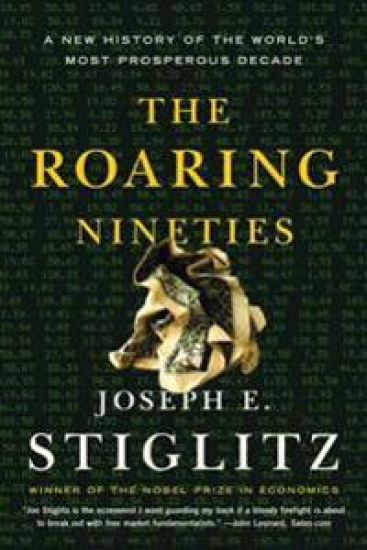
The Roaring Nineties

The Roaring Nineties

Joseph E. Stiglitz

WW Norton Co
2004
pokkari
With his best-selling "Globalization and Its Discontents," Joseph E. Stiglitz showed how a misplaced faith in free-market ideology led to many of the recent problems suffered by the developing nations. Here he turns the same light on the United States. "The Roaring Nineties" offers not only an insider's illuminating view of policymaking but also a compelling case that even the Clinton administration was too closely tied to the financial community that along with enormous economic success in the nineties came the seeds of the destruction visited on the economy at the end of the decade. This groundbreaking work by the Nobel Prize-winning economist argues that much of what we understood about the 1990s' prosperity is wrong, that the theories that have been used to guide world leaders and anchor key business decisions were fundamentally outdated. Yes, jobs were created, technology prospered, inflation fell, and poverty was reduced. But at the same time the foundation was laid for the economic problems we face today. Trapped in a near-ideological commitment to free markets, policymakers permitted accounting standards to slip, carried deregulation further than they should have, and pandered to corporate greed. These chickens have now come home to roost. The paperback includes a new introduction that reviews the continued failure of the Bush administration's policies, which have taken a bad situation and made it worse."
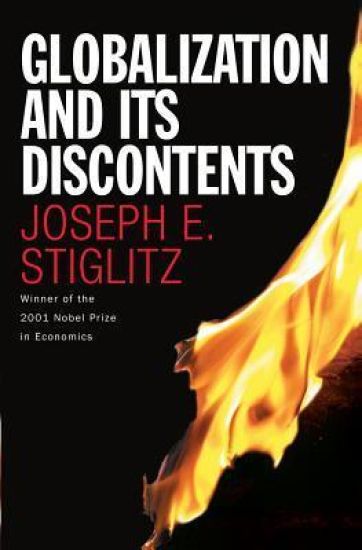
Globalization and Its Discontents

Globalization and Its Discontents

Joseph E. Stiglitz

W. W. Norton Company
2003
nidottu
An insider's analysis of the major institutions of globalization, this title details Joseph E. Stiglitz's disillusionment with the International Monetary Fund and other major institutions as they put the interests of Wall Street and the financial community ahead of the poorer nations.
Globalization and Its Discontents

Globalization and Its Discontents

Joseph E. Stiglitz

W. W. Norton Company
2002
sidottu
This powerful, unsettling book gives us a rare glimpse behind the closed doors of global financial institutions by the winner of the 2001 Nobel Prize in Economics. Renowned academic economist Joseph E. Stiglitz served seven years in Washington, as chairman of President Clinton's Council of Economic Advisers and as chief economist at the World Bank. In this book, Stiglitz recounts his experiences in such places as Ethiopia, Thailand, and Russia. He finds repeatedly that the International Monetary Fund puts the interests of its "largest shareholder," the United States, above those of the poorer nations it was designed to serve. This insider's account of global economic policy will be hailed for its courage and honesty. Those seeking to understand why globalization has engendered the hostility of protesters in Seattle and Genoa will find the reasons here. While this book includes no simple formula on how to make globalization work, Stiglitz provides a reform agenda that will provoke debate for years to come.Author Biography: Nobel Prize winner Joseph E. Stiglitz is professor of economics at Columbia University.
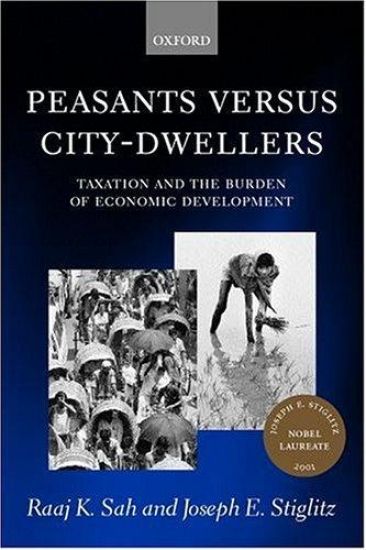
Peasants versus City-Dwellers

Peasants versus City-Dwellers

Raaj K. Sah; Joseph E. Stiglitz

Oxford University Press
2002
nidottu
Most countries face town versus country tensions of increasing severity. This volume analyzes these tensions and issues, taking into account the great diversity of institutions and economic environments observed in different developing countries.
Whither Socialism?

Whither Socialism?

Joseph E. Stiglitz

MIT Press
1996
pokkari
The rapid collapse of socialism has raised new economic policy questions and revived old theoretical issues. In this book, Joseph Stiglitz explains how the neoclassical, or Walrasian model (the formal articulation of Adam Smith's invisible hand), which has dominated economic thought over the past half century, may have wrongly encouraged the belief that market socialism could work. Stiglitz proposes an alternative model, based on the economics of information, that provides greater theoretical insight into the workings of a market economy and clearer guidance for the setting of policy in transitional economies.Stiglitz sees the critical failing in the standard neoclassical model underlying market socialism to be its assumptions concerning information, particularly its failure to consider the problems that arise from lack of perfect information and from the costs of acquiring information. He also identifies problems arising from its assumptions concerning completeness of markets, competitiveness of markets, and the absence of innovation. Stiglitz argues that not only did the existing paradigm fail to provide much guidance on the vital question of the choice of economic systems, the advice it did provide was often misleading.