Kirjojen hintavertailu. Mukana 12 175 261 kirjaa ja 12 kauppaa.

Kirjailija

Judith Butler

Kirjat ja teokset yhdessä paikassa: 102 kirjaa, julkaisuja vuosilta 1991-2026, suosituimpien joukossa Kuka pelkää sukupuolta?. Vertaile teosten hintoja ja tarkista saatavuus suomalaisista kirjakaupoista.

102 kirjaa

Kirjojen julkaisuhaarukka 1991-2026.

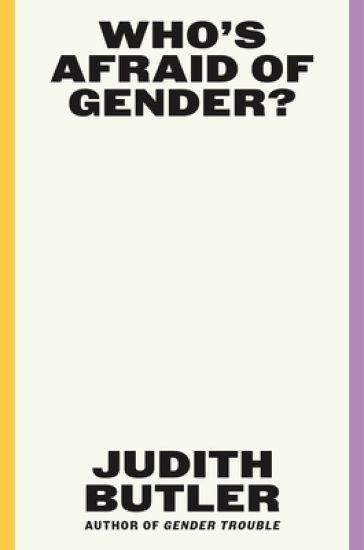
Kuka pelkää sukupuolta?

Kuka pelkää sukupuolta?

Judith Butler

kosmos
2024
sidottu
Feministisen teorian kulttinimen uusi teos ruotii anti-gender-liikettä ja sen vaikutuksiaViime aikoina ympäri maailmaa on noussut poliittinen liike, joka määrittää itsensä ”gender-ideologiaa” vastustavaksi. Oikeistolaisten uskonnollisten järjestöjen lietsoma ja lopulta kansallisten puolueiden retoriikkaan heijastuva anti-gender-liike pyrkii rajoittamaan sukupuoli- ja seksuaalivähemmistöjen oikeuksia sekä naisten taloudellista ja sosiaalista vapautta ja lisääntymisoikeuksia.Liike on onnistunut lyömään läpi globaalisti mediassa ja onnistunut määrittämään sukupuolen vaaralliseksi ideologiaksi, joka uhkaa tuhota perheet, paikalliskulttuurit ja sivilisaation. Butler argumentoi uudessa teoksessaan, että yhtenäisen argumentaation sijaan kyseistä liikettä ajaa hajanainen aatteiden kirjo. Kuka pelkää sukupuolta? piirtää tarkan kuvan anti-gender-liikkeestä ja hahmottelee tulevaisuuden, jossa kaikki sukupuolet voivat elää kohtaamatta pelkojen lietsomaa vihaa.Judith Butler on yhdysvaltalainen filosofi ja yksi feministisen teorian avainnimistä. Palkittu ja arvostettu pitkän linjan akateemikko on tullut tunnetuksi jokaisen sukupuolentutkimuksesta kiinnostuneen peruslukemistoon kuuluvista teoksistaan, kuten Hankala sukupuoli ja Bodies That Matter. Kuka pelkää sukupuolta? on Butlerin ensimmäinen ei-akateeminen tietokirja.
Toward a Feminist Ethics of Nonviolence

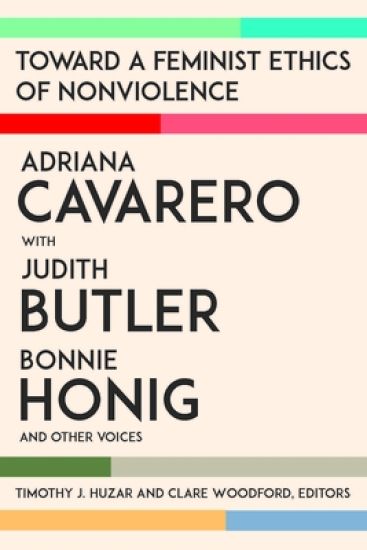
Toward a Feminist Ethics of Nonviolence

Adriana Cavarero; Judith Butler; Bonnie Honig

FORDHAM UNIVERSITY PRESS
2021
sidottu
Toward a Feminist Ethics of Nonviolence brings together major feminist thinkers to debate Cavarero's call for a postural ethics of nonviolence and a sociality rooted in bodily interdependence. Toward a Feminist Ethics of Nonviolence brings together three major feminist thinkers—Adriana Cavarero, Judith Butler, and Bonnie Honig—to debate Cavarero's call for a postural ethics of nonviolence. The book consists of three longer essays by Cavarero, Butler, and Honig, followed by shorter responses by a range of scholars that widen the dialogue, drawing on post-Marxism, Italian feminism, queer theory, and lesbian and gay politics. Together, the authors contest the boundaries of their common project for a pluralistic, heterogeneous, but urgent feminist ethics of nonviolence.
Toward a Feminist Ethics of Nonviolence

Toward a Feminist Ethics of Nonviolence

Adriana Cavarero; Judith Butler; Bonnie Honig

Fordham University Press
2021
pokkari
Toward a Feminist Ethics of Nonviolence brings together major feminist thinkers to debate Cavarero’s call for a postural ethics of nonviolence and a sociality rooted in bodily interdependence. Toward a Feminist Ethics of Nonviolence brings together three major feminist thinkers—Adriana Cavarero, Judith Butler, and Bonnie Honig—to debate Cavarero’s call for a postural ethics of nonviolence. The book consists of three longer essays by Cavarero, Butler, and Honig, followed by shorter responses by a range of scholars that widen the dialogue, drawing on post-Marxism, Italian feminism, queer theory, and lesbian and gay politics. Together, the authors contest the boundaries of their common project for a pluralistic, heterogeneous, but urgent feminist ethics of nonviolence.
Precarious Life

Precarious Life

Judith Butler

Verso Books
2025
nidottu
In this profound appraisal of post-September 11, 2001 America, Judith Butler considers the conditions of heightened vulnerability and aggression that followed from the attack on the US, and US retaliation. Judith Butler critiques the use of violence that has emerged as a response to loss, and argues that the dislocation of first-world privilege offers instead a chance to imagine a world in which that violence might be minimized and in which interdependency becomes acknowledged as the basis for a global political community.Butler considers the means by which some lives become grief-worthy, while others are perceived as undeserving of grief or even incomprehensible as lives. She discusses the political implications of sovereignty in light of the prisoners in Guantanamo Bay. She argues against the anti-intellectual current of contemporary US patriotism and the power of censorship during times of war. Finally, she takes on the question of when and why anti-semitism is leveled as a charge against those who voice criticisms of the Israeli state. She counters that we have a responsibility to speak out against both Israeli injustices and anti-semitism, and argues against the rhetorical use of the charge of anti-semitism to quell public debate.In her most impassioned and personal book to date, Judith Butler responds to the current US policies to wage perpetual war, and calls for a deeper understanding of how mourning and violence might instead inspire solidarity and a quest form global justice.
Frames of War

Frames of War

Judith Butler

Verso Books
2025
nidottu
In Frames of War, Judith Butler explores the media’s portrayal of state violence, a process integral to the way in which the West wages modern war. This portrayal has saturated our understanding of human life, and has led to the exploitation and abandonment of whole peoples, who are cast as existential threats rather than as living populations in need of protection. These people are framed as already lost, to imprisonment, unemployment and starvation, and can easily be dismissed. In the twisted logic that rationalizes their deaths, the loss of such populations is deemed necessary to protect the lives of ‘the living.’ This disparity, Butler argues, has profound implications for why and when we feel horror, outrage, guilt, loss and righteous indifference, both in the context of war and, increasingly, everyday life.This book discerns the resistance to the frames of war in the context of the images from Abu Ghraib, the poetry from Guantanamo, recent European policy on immigration and Islam, and debates on normativity and non-violence. In this urgent response to ever more dominant methods of coercion, violence and racism, Butler calls for a re-conceptualization of the Left, one that brokers cultural difference and cultivates resistance to the illegitimate and arbitrary effects of state violence and its vicissitudes.
Giving an Account of Oneself

Giving an Account of Oneself

Judith Butler

FORDHAM UNIVERSITY PRESS
2025
sidottu
What does it mean to lead a moral life? In their first extended study of moral philosophy, Judith Butler offers a provocative outline for a new ethical practice—one responsive to the need for critical autonomy yet grounded in the opacity of the human subject. Butler takes as their starting point one's ability to answer the questions "What have I done?" and "What ought I to do?" They show that these questions can be answered only by asking a prior question, "Who is this 'I' who is under an obligation to give an account of itself and to act in certain ways?" Because I find that I cannot give an account of myself without accounting for the social conditions under which I emerge, ethical reflection requires a turn to social theory. In three powerfully crafted and lucidly written chapters, Butler demonstrates how difficult it is to give an account of oneself, and how this lack of self-transparency and narratibility is crucial to an ethical understanding of the human. In dialogue with Adorno, Levinas, Foucault, and other thinkers, they eloquently argue the limits, possibilities, and dangers of contemporary ethical thought. Butler offers a critique of the moral self, arguing that the transparent, rational, and continuous ethical subject is an impossible construct that seeks to deny the specificity of what it is to be human. We can know ourselves only incompletely, and only in relation to a broader social world that has always preceded us and already shaped us in ways we cannot grasp. If inevitably we are partially opaque to ourselves, how can giving an account of ourselves define the ethical act? And doesn't an ethical system that holds us impossibly accountable for full self-knowledge and self-consistency inflict a kind of psychic violence, leading to a culture of self-beratement and cruelty? How does the turn to social theory offer us a chance to understand the specifically social character of our own unknowingness about ourselves? By recasting ethics as a project in which being ethical means becoming critical of norms under which we are asked to act, but which we can never fully choose, Butler illuminates what it means for us as "fallible creatures" to create and share an ethics of vulnerability, humility, and ethical responsiveness.
Giving an Account of Oneself

Giving an Account of Oneself

Judith Butler

FORDHAM UNIVERSITY PRESS
2025
pokkari
What does it mean to lead a moral life? In their first extended study of moral philosophy, Judith Butler offers a provocative outline for a new ethical practice—one responsive to the need for critical autonomy yet grounded in the opacity of the human subject. Butler takes as their starting point one's ability to answer the questions "What have I done?" and "What ought I to do?" They show that these questions can be answered only by asking a prior question, "Who is this 'I' who is under an obligation to give an account of itself and to act in certain ways?" Because I find that I cannot give an account of myself without accounting for the social conditions under which I emerge, ethical reflection requires a turn to social theory. In three powerfully crafted and lucidly written chapters, Butler demonstrates how difficult it is to give an account of oneself, and how this lack of self-transparency and narratibility is crucial to an ethical understanding of the human. In dialogue with Adorno, Levinas, Foucault, and other thinkers, they eloquently argue the limits, possibilities, and dangers of contemporary ethical thought. Butler offers a critique of the moral self, arguing that the transparent, rational, and continuous ethical subject is an impossible construct that seeks to deny the specificity of what it is to be human. We can know ourselves only incompletely, and only in relation to a broader social world that has always preceded us and already shaped us in ways we cannot grasp. If inevitably we are partially opaque to ourselves, how can giving an account of ourselves define the ethical act? And doesn't an ethical system that holds us impossibly accountable for full self-knowledge and self-consistency inflict a kind of psychic violence, leading to a culture of self-beratement and cruelty? How does the turn to social theory offer us a chance to understand the specifically social character of our own unknowingness about ourselves? By recasting ethics as a project in which being ethical means becoming critical of norms under which we are asked to act, but which we can never fully choose, Butler illuminates what it means for us as "fallible creatures" to create and share an ethics of vulnerability, humility, and ethical responsiveness.
Who's Afraid of Gender?

Who's Afraid of Gender?

Judith Butler

PENGUIN BOOKS LTD
2025
pokkari
An Instant Sunday Times Bestseller'A profoundly urgent intervention' Naomi KleinFrom one of the most influential thinkers of our time, an enlightening, essential account of how a fear of gender is fuelling reactionary politics around the world Judith Butler, the ground-breaking philosopher whose work has redefined how we think about gender and sexuality, confronts the attacks on gender that have become central to right-wing movements today. Global networks have formed ‘anti-gender ideology movements’ dedicated to circulating a fantasy that gender is a dangerous threat to families, local cultures, civilization – and even ‘man’ himself. Inflamed by the rhetoric of public figures, this movement has sought to abolish reproductive justice, undermine protections against violence, and strip trans and queer people of their rights.But what, exactly, is so disturbing about gender? In this vital, courageous book, Butler carefully examines how ‘gender’ has become a phantasm for emerging authoritarian regimes, fascist formations and transexclusionary feminists, and the concrete ways in which this phantasm works. Operating in tandem with deceptive accounts of critical race theory and xenophobic panics about migration, the anti-gender movement demonizes struggles for equality and leaves millions of people vulnerable to subjugation.An essential intervention into one of the most fraught issues of our moment, Who's Afraid of Gender? is a galvanizing call to make a broad coalition with all those who struggle for equality and fight injustice. Imagining new possibilities for freedom and solidarity, Butler offers us an essentially hopeful work that is both timely and timeless.
Who's Afraid of Gender?

Who's Afraid of Gender?

Judith Butler

Picador USA
2025
nidottu
National Bestseller. Named a Best Book of 2024 by NPR, Harper's Bazaar, W, and Esquire."A profoundly urgent intervention." --Naomi Klein "A timely must-read for anyone actively invested in reimagining collective futurity." --Claudia RankineFrom a global icon, a bold, essential account of how a fear of gender is fueling reactionary politics around the world. Judith Butler, the groundbreaking thinker whose iconic book Gender Trouble redefined how we think about gender and sexuality, confronts the attacks on "gender" that have become central to right-wing movements today. Global networks have formed "anti-gender ideology movements" that are dedicated to circulating a fantasy that gender is a dangerous, perhaps diabolical, threat to families, local cultures, civilization--and even "man" himself. Inflamed by the rhetoric of public figures, this movement has sought to nullify reproductive justice, undermine protections against sexual and gender violence, and strip trans and queer people of their rights to pursue a life without fear of violence. The aim of Who's Afraid of Gender? is not to offer a new theory of gender but to examine how "gender" has become a phantasm for emerging authoritarian regimes, fascist formations, and trans-exclusionary feminists. In their vital, courageous new book, Butler illuminates the concrete ways that this phantasm of "gender" collects and displaces anxieties and fears of destruction. Operating in tandem with deceptive accounts of "critical race theory" and xenophobic panics about migration, the anti-gender movement demonizes struggles for equality, fuels aggressive nationalism, and leaves millions of people vulnerable to subjugation. An essential intervention into one of the most fraught issues of our moment, Who's Afraid of Gender? is a bold call to refuse the alliance with authoritarian movements and to make a broad coalition with all those whose struggle for equality is linked with fighting injustice. Imagining new possibilities for both freedom and solidarity, Butler offers us a hopeful work of social and political analysis that is both timely and timeless--a book whose verve and rigor only they could deliver.
Vem är rädd för genus?

Vem är rädd för genus?

Judith Butler

Fri Tanke
2024
sidottu
Med Vem är rädd för genus? återvänder Judith Butler till det intellektuella slagfältet och de frågeställningar som hen tog upp i sin numera klassiska Genustrubbel, en av världens mest lästa genusböcker. De frågor som Butler då tog upp har idag fått förnyad aktualitet, då kön och identitet har blivit identitetspolitiska slagträn i en ny politisk diskurs, där auktoritära regimer målar upp genusvetenskapen som en av kärnfamiljens och den traditionella livsstilens stora fiender.Snarare än en ny teori är Vem är rädd för genus? ett reportage från en värld, där kön, identitet och rättigheter på ett olyckligt sätt har tagits som gisslan i ett alltmer oresonligt kultur- och civilisationskrig. Detta är på samma gång en angripen akademikers försvarsskrift och en plädering för allas vår rätt att vara just den vi vill vara.
Hvem er bange for køn?

Hvem er bange for køn?

Judith Butler

Forlaget Klim
2024
nidottu
Fra et globalt ikon får vi her en modig og nødvendig beretning om hvordan frygten for køn (gender) giver næring til reaktionære politiske bevægelser rundt om i verden.Den banebrydende tænker Judith Butler, hvis ikoniske bog Kønsballade redefinerede vores måde at tænke på køn og seksualitet, konfronterer i sin nye bog de voldsomme angreb på “køn”, der er blevet en mærkesag for mange højrefløjs-bevægelser i dag. Globale netværk har dannet ’anti-gender’ ideologiske bevægelser, der er dedikerede til at sprede en fantasi om at køn er en farlig, ja nærmest diabolsk, trussel mod familien, lokale kulturer, civilisationen – endda selve menneskets eksistens. Antændt af offentlige personers retorik har bevægelsen forsøgt at ophæve reproduktiv retfærdighed, undergrave beskyttelsesordninger for seksuel og kønsmæssig vold og fratage trans- og queerpersoner retten til et liv uden frygt for vold.Formålet med Hvem er bange for køn? er ikke at fremsætte en ny teori om køn, men derimod at undersøge hvordan “køn” er blevet som en illusion for nye autoritære regimer, fascistiske formationer og transeksluderende feminister. I deres afgørende og modige nye bog belyser Butler de konkrete måder hvorpå denne illusion om “køn” indsamler og forskyder angsten og frygten for ødelæggelse. I samspil med vildledende beretninger om “kritisk raceteori” og xenofobisk panik omkring migration dæmoniserer“anti-gender”-bevægelsen kampen for ligestilling, giver næring til aggressiv nationalisme og efterlader millioner af mennesker sårbare for undertrykkelse.Som en afgørende intervention i et af vor tids mest anspændte spørgsmål, Hvem er bange for køn? er bogen her et frygtløst opråb i fornægtelsen af alliancer med autoritære bevægelser for i stedet at skabe en bred sammenslutning med alle dem, hvis kamp for ligestilling er forbundet med kampen mod uretfærdighed. Ved at forestille sig nye muligheder for både frihed og solidaritet tilbyder Butler os et håbefuldt værk med sociale og politiske analyser, der både er aktuelle og tidløse.
Who's Afraid of Gender?

Who's Afraid of Gender?

Judith Butler

PENGUIN BOOKS LTD
2024
sidottu
An Instant Sunday Times BestsellerOne of the most anticipated books of 2024 according to The Times, Guardian, Financial Times, New Statesman, The Independent, The Scotsman, Time and moreShouldn't we know what we're arguing about?From one of the most influential thinkers of our time, an enlightening, essential account of how a fear of gender is fuelling reactionary politics around the world Judith Butler, the ground-breaking philosopher whose work has redefined how we think about gender and sexuality, confronts the attacks on gender that have become central to right-wing movements today. Global networks have formed ‘anti-gender ideology movements’ dedicated to circulating a fantasy that gender is a dangerous threat to families, local cultures, civilization – and even ‘man’ himself. Inflamed by the rhetoric of public figures, this movement has sought to abolish reproductive justice, undermine protections against violence, and strip trans and queer people of their rights.But what, exactly, is so disturbing about gender? In this vital, courageous book, Butler carefully examines how ‘gender’ has become a phantasm for emerging authoritarian regimes, fascist formations and transexclusionary feminists, and the concrete ways in which this phantasm works. Operating in tandem with deceptive accounts of critical race theory and xenophobic panics about migration, the anti-gender movement demonizes struggles for equality and leaves millions of people vulnerable to subjugation.An essential intervention into one of the most fraught issues of our moment, Who's Afraid of Gender? is a galvanizing call to make a broad coalition with all those who struggle for equality and fight injustice. Imagining new possibilities for freedom and solidarity, Butler offers us an essentially hopeful work that is both timely and timeless.
Who's Afraid of Gender?

Who's Afraid of Gender?

Judith Butler

Farrar, Straus and Giroux
2024
sidottu
National Bestseller. Named a Best Book of 2024 by NPR, Harper's Bazaar, W, and Esquire."A profoundly urgent intervention." --Naomi Klein "A timely must-read for anyone actively invested in reimagining collective futurity." --Claudia RankineFrom a global icon, a bold, essential account of how a fear of gender is fueling reactionary politics around the world. Judith Butler, the groundbreaking thinker whose iconic book Gender Trouble redefined how we think about gender and sexuality, confronts the attacks on "gender" that have become central to right-wing movements today. Global networks have formed "anti-gender ideology movements" that are dedicated to circulating a fantasy that gender is a dangerous, perhaps diabolical, threat to families, local cultures, civilization--and even "man" himself. Inflamed by the rhetoric of public figures, this movement has sought to nullify reproductive justice, undermine protections against sexual and gender violence, and strip trans and queer people of their rights to pursue a life without fear of violence. The aim of Who's Afraid of Gender? is not to offer a new theory of gender but to examine how "gender" has become a phantasm for emerging authoritarian regimes, fascist formations, and trans-exclusionary feminists. In their vital, courageous new book, Butler illuminates the concrete ways that this phantasm of "gender" collects and displaces anxieties and fears of destruction. Operating in tandem with deceptive accounts of "critical race theory" and xenophobic panics about migration, the anti-gender movement demonizes struggles for equality, fuels aggressive nationalism, and leaves millions of people vulnerable to subjugation. An essential intervention into one of the most fraught issues of our moment, Who's Afraid of Gender? is a bold call to refuse the alliance with authoritarian movements and to make a broad coalition with all those whose struggle for equality is linked with fighting injustice. Imagining new possibilities for both freedom and solidarity, Butler offers us a hopeful work of social and political analysis that is both timely and timeless--a book whose verve and rigor only they could deliver.
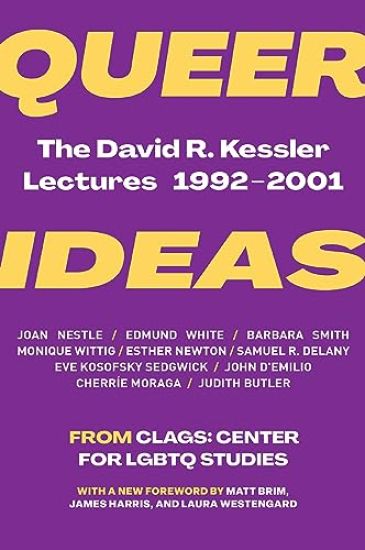
Queer Ideas

Queer Ideas

Judith Butler; Martin Duberman

FEMINIST PRESS AT THE CITY UNIVERSITY OF NEW YORK
2023
sidottu
An essential text documenting the foundation and rise of queer theory.The David R. Kessler Lectures, established in 1992 by CLAGS: Center for LGBTQ Studies at CUNY, represent the cutting edge of queer studies in the United States. Years before LGBTQ studies had found a foothold in American academia, the Kessler Lectures celebrated dynamic and diverse inquiries into queer thought, community, and politics.Twenty years after its initial publication, Queer Ideas collects the first ten historic Kessler Lectures by influential scholars, writers, and activists including Cherr iacute;e Moraga, Samuel R. Delany, Eve Kosofsky Sedgwick, and Barbara Smith, with a new foreword by CLAGS Executive Director Matt Brim and Board Co-Chairs James Harris and Laura Westengard. Alongside the second volume, Queer Then and Now: The David R. Kessler Lectures, 2002-2020, this revised edition of Queer Ideas traces the early foundations of the field and provides a new opportunity to revisit an essential collection of queer and trans thought.
Queer Ideas

Queer Ideas

Judith Butler; Martin Duberman

FEMINIST PRESS AT THE CITY UNIVERSITY OF NEW YORK
2023
nidottu
An essential text documenting the foundation and rise of queer theory. The David R. Kessler Lectures, established in 1992 by CLAGS: Center for LGBTQ Studies at CUNY, represent the cutting edge of queer studies in the United States. Years before LGBTQ studies had found a foothold in American academia, the Kessler Lectures celebrated dynamic and diverse inquiries into queer thought, community, and politics. Twenty years after its initial publication, Queer Ideas collects the first ten historic Kessler Lectures by influential scholars, writers, and activists including Cherr e Moraga, Samuel R. Delany, Eve Kosofsky Sedgwick, and Barbara Smith, with a new foreword by CLAGS Executive Director Matt Brim and Board Co-Chairs James Harris and Laura Westengard. Alongside the second volume, Queer Then and Now: The David R. Kessler Lectures, 2002-2020, this revised edition of Queer Ideas traces the early foundations of the field and provides a new opportunity to revisit an essential collection of queer and trans thought.
The Livable and the Unlivable

The Livable and the Unlivable

Judith Butler; Frédéric Worms

FORDHAM UNIVERSITY PRESS
2023
sidottu
The unlivable is the most extreme point of human suffering and injustice. But what is it exactly? How do we define the unlivable? And what can we do to prevent and repair it? These are the intriguing questions Judith Butler and Frédéric Worms discuss in a captivating dialogue situated at the crossroads of contemporary life and politics. Here, Judith Butler criticizes the norms that make life precarious and unlivable, while Frédéric Worms appeals to a "critical vitalism" as a way of allowing the hardship of the unlivable to reveal what is vital for us. For both Butler and Worms, the difference between the livable and the unlivable forms the critical foundation for a contemporary practice of care. Care and support, in all their aspects, make human life livable, that is, "more than living." To understand it, we must draw on the concrete practices of humans who are confronted with the unlivable: the refugees of today and the witnesses and survivors of past violations and genocide. They teach us what is intolerable but also undeniable about the unlivable, and what we can do to resist it. Crafted with critical rigor, mutual respect, and lively humor, the compelling dialogue transcribed and translated in this book took place at the École Normale Supérieure (ENS) on April 11, 2018, at a time when close to two thousand migrants were living in nearby makeshift camps in northern Paris. The Livable and the Unlivable showcases this 2018 dialogue in the context of Butler's and Worms's ongoing work and the evolution of their thought, as presented by Laure Barillas and Arto Charpentier in their equally engaging introduction. It concludes with a new afterword that addresses the crises unfolding in our world and the ways a philosophically rigorous account of life must confront them. While this book will be of keen interest to readers of philosophy and cultural criticism, and those interested in vitalism, new materialism, and critical theory, it is a far from merely academic text. In the conversation between Butler and Worms, we encounter questions we all grapple with in confronting the distress and precarity of our times, marked as it is by types of survival that are unlivable, from concentration camps to prisons to environmental toxicity, to forcible displacement, to the Covid pandemic. The Livable and the Unlivable at once considers longstanding philosophical questions around why and how we live, while working to retrieve a philosophy of life for today's Left.