Kirjojen hintavertailu. Mukana 12 390 323 kirjaa ja 12 kauppaa.

Kirjailija

K. Sivaramakrishnan

Kirjat ja teokset yhdessä paikassa: 59 kirjaa, julkaisuja vuosilta 1999-2025, suosituimpien joukossa The Camphor Tree and the Elephant. Vertaile teosten hintoja ja tarkista saatavuus suomalaisista kirjakaupoista.

59 kirjaa

Kirjojen julkaisuhaarukka 1999-2025.

The Camphor Tree and the Elephant

The Camphor Tree and the Elephant

Faizah Zakaria; K. Sivaramakrishnan

UNIVERSITY OF WASHINGTON PRESS
2023
sidottu
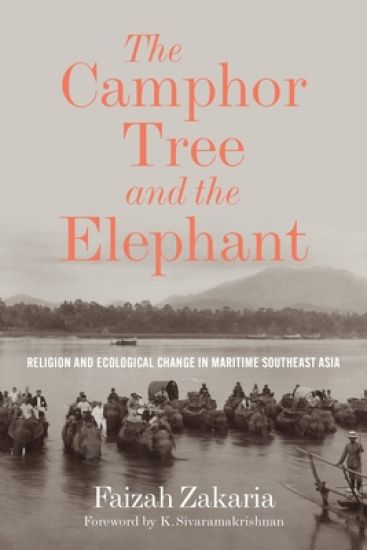
Uncovers a spiritual dimension in the transition to the AnthropoceneWhat is the role of religion in shaping interactions and relations between the human and nonhuman in nature? Why are Muslim and Christian organizations generally not a potent force in Southeast Asian environmental movements? The Camphor Tree and the Elephant brings these questions into the history of ecological change in the region, centering the roles of religion and colonialism in shaping the Anthropocene—"the human epoch." Historian Faizah Zakaria traces the conversion of the Batak people in upland Sumatra and the Malay Peninsula to Islam and Christianity during the long nineteenth century. She finds that the process helped shape social structures that voided the natural world of enchantment, ushered in a cash economy, and placed the power to remake local landscapes into the hands of a distant elite. Using a wide array of sources such as family histories, prayer manuscripts, and folktales in tandem with colonial and ethnographic archives, Zakaria brings everyday religion and its far-flung implications into our understanding of the environmental history of the modern world.
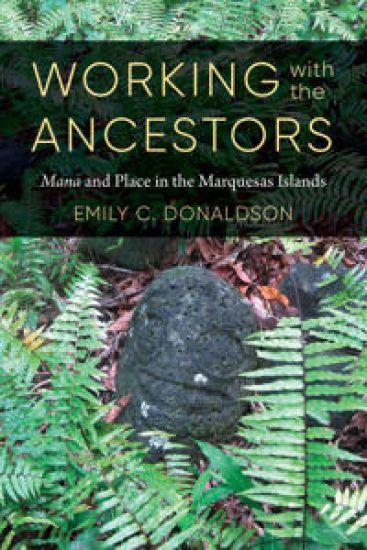
Working with the Ancestors

Working with the Ancestors

Emily C. Donaldson; K. Sivaramakrishnan

University of Washington Press
2019
sidottu
Throughout the Marquesas Islands of French Polynesia, forest spirits share space with ancestral ruins and active agricultural plots, affecting land use and heritage preservation. As Marquesans continue their efforts to establish UNESCO World Heritage status, they grapple with questions about when sites should be preserved intact, when neglect is an appropriate option, and when deterioration resulting from local livelihoods should be accepted.In Working with the Ancestors Emily Donaldson considers how Marquesan perceptions of heritage and mana, or sacred power, have influenced the use of land in the islands and how both cultural and environmental sustainability can be achieved. The Marquesas' relative geographical isolation and ecological richness are the backdrop for the confluence of international heritage preservation and sustainability efforts that affect both resources and Indigenous peoples. Donaldson demonstrates how anthropological concepts of embodiment, alienation, place, and power can inform global resource management, offering a new approach that integrates analyses of policy, practice, and heritage.
Amphibious Anthropologies

Amphibious Anthropologies

K. Sivaramakrishnan

UNIVERSITY OF WASHINGTON PRESS
2025
pokkari
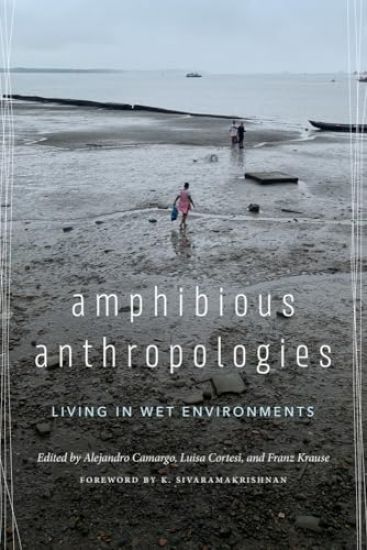
Muddying the divide between land and waterThis interdisciplinary collection delves into the experiences and meanings of life in environments where water levels and availability are in constant flux. Amphibious Anthropologies brings together a global set of case studies, from Italy's historic marshes to the tidal pools of the Bahamas, to show how living with unpredictable wetness has become crucial in the age of climate crisis. The book introduces "amphibious anthropologies" as a framework to challenge the dichotomy of water and land and interrogate spaces marked by rapid and profound environmental change. It brings to light the everyday creativity and uncertainty in wet environments like California's Salton Sea and India's North Bihar floodplain. Engaging with disciplines like anthropology, geography, and STS, this work offers a timely discourse on environmental change and resilience.
Amphibious Anthropologies

Amphibious Anthropologies

K. Sivaramakrishnan

UNIVERSITY OF WASHINGTON PRESS
2025
sidottu
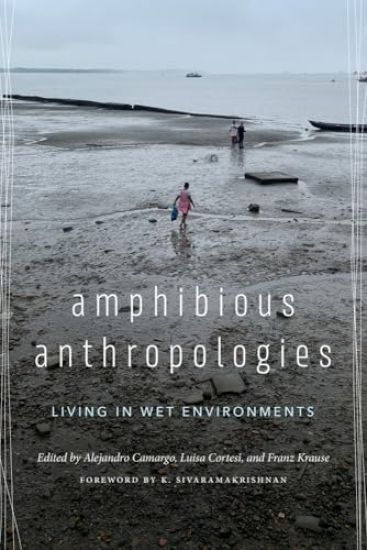
Muddying the divide between land and waterThis interdisciplinary collection delves into the experiences and meanings of life in environments where water levels and availability are in constant flux. Amphibious Anthropologies brings together a global set of case studies, from Italy's historic marshes to the tidal pools of the Bahamas, to show how living with unpredictable wetness has become crucial in the age of climate crisis. The book introduces "amphibious anthropologies" as a framework to challenge the dichotomy of water and land and interrogate spaces marked by rapid and profound environmental change. It brings to light the everyday creativity and uncertainty in wet environments like California's Salton Sea and India's North Bihar floodplain. Engaging with disciplines like anthropology, geography, and STS, this work offers a timely discourse on environmental change and resilience.
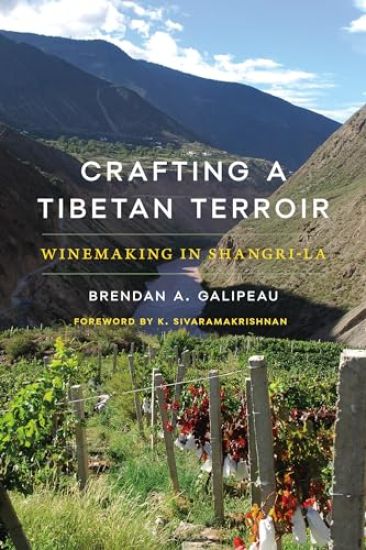
Crafting a Tibetan Terroir

Crafting a Tibetan Terroir

Brendan A. Galipeau; K. Sivaramakrishnan

UNIVERSITY OF WASHINGTON PRESS
2025
pokkari
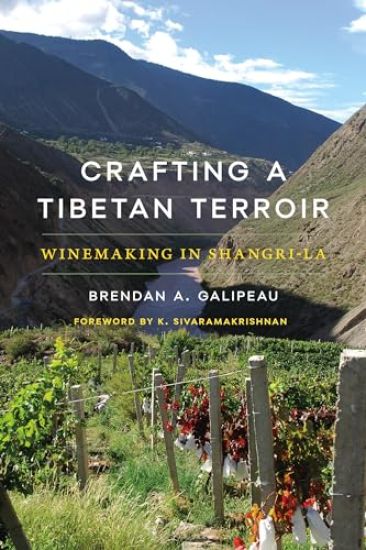
How wine has transformed Tibetan land and livesSet in the Sino-Tibetan border region renamed "Shangri-La" by the Chinese government for tourism promotion, Crafting a Tibetan Terroir considers how the deployment of the French notion of terroir works to create new forms of ethno-regional identities and village landscapes through the production of Tibetan wine as a commodity. In Shangri-La, a rapidly developing international ethno-travel destination, European histories and global capitalism are being reestablished and reformulated through viticulture, which has altered landscapes and livelihoods. From the introduction of vineyards by nineteenth-century French and Swiss Catholic missionaries to make sacramental wine to twenty-first century commercialization, this ethnography documents the ways Tibetans are indigenizing modernity in the context of economic development on their own terms. It provides timely insight into China's rapid entry into the global wine market, highlighting the localized impacts of this emergent industry, which include transformation from subsistence agriculture to monocropping and intensified agrochemical use. It also addresses larger issues of international trade, suggesting that certain commodities—stimulants and intoxicants in particular—have long connected Europe and the Asia Pacific region, and that these connections are now being reconceived in fashioning new industries and identities.
Crafting a Tibetan Terroir

Crafting a Tibetan Terroir

Brendan A. Galipeau; K. Sivaramakrishnan

UNIVERSITY OF WASHINGTON PRESS
2025
sidottu
How wine has transformed Tibetan land and livesSet in the Sino-Tibetan border region renamed "Shangri-La" by the Chinese government for tourism promotion, Crafting a Tibetan Terroir considers how the deployment of the French notion of terroir works to create new forms of ethno-regional identities and village landscapes through the production of Tibetan wine as a commodity. In Shangri-La, a rapidly developing international ethno-travel destination, European histories and global capitalism are being reestablished and reformulated through viticulture, which has altered landscapes and livelihoods. From the introduction of vineyards by nineteenth-century French and Swiss Catholic missionaries to make sacramental wine to twenty-first century commercialization, this ethnography documents the ways Tibetans are indigenizing modernity in the context of economic development on their own terms. It provides timely insight into China's rapid entry into the global wine market, highlighting the localized impacts of this emergent industry, which include transformation from subsistence agriculture to monocropping and intensified agrochemical use. It also addresses larger issues of international trade, suggesting that certain commodities—stimulants and intoxicants in particular—have long connected Europe and the Asia Pacific region, and that these connections are now being reconceived in fashioning new industries and identities.
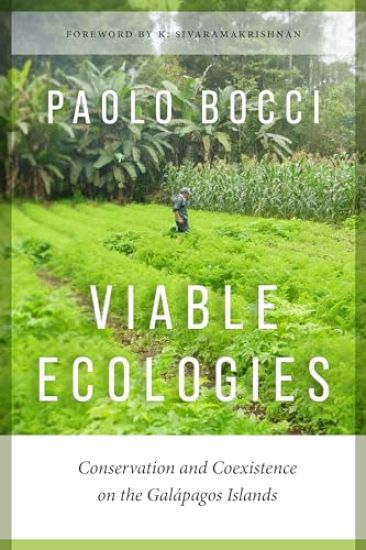
Viable Ecologies

Viable Ecologies

Paolo Bocci; K. Sivaramakrishnan

UNIVERSITY OF WASHINGTON PRESS
2024
pokkari
How humans living amid an abundance of diverse flora and fauna help us rethink conservationFamous for their geographic isolation and high proportion of endemic species, the Galápagos Islands have long been promoted as the premier destination for tourists and scientists seeking to escape humanity's impact on the world. This idyllic vision dominates the islands' conservation policy, which, despite calls for a more integrated human-environment approach, continues to emphasize restoration. It ignores the people who call the Galápagos home, who must instead partner with their plant and animal neighbors to secure a thriving future for all. Drawing on years of fieldwork, Paolo Bocci's Viable Ecologies brings attention to the farmers and other marginalized locals who enact their own ways of caring for, and living on, the islands. Through extended observation and experimentation, they craft conservation strategies based on mutual dependence and long-term accountability. They fuse their livelihoods to the ecosystems around them and, in doing so, challenge the image of the Galápagos as a place to be studied and visited but never inhabited. As Bocci argues, the farmers' methods of remediation and recuperation broaden the scope of what conservation can—and should—be.Connecting environmental policy and science to matters of immigration and belonging, Viable Ecologies offers strategies for crafting a future in which humans and nonhumans may thrive.
Viable Ecologies

Viable Ecologies

Paolo Bocci; K. Sivaramakrishnan

UNIVERSITY OF WASHINGTON PRESS
2024
sidottu
How humans living amid an abundance of diverse flora and fauna help us rethink conservationFamous for their geographic isolation and high proportion of endemic species, the Galápagos Islands have long been promoted as the premier destination for tourists and scientists seeking to escape humanity's impact on the world. This idyllic vision dominates the islands' conservation policy, which, despite calls for a more integrated human-environment approach, continues to emphasize restoration. It ignores the people who call the Galápagos home, who must instead partner with their plant and animal neighbors to secure a thriving future for all. Drawing on years of fieldwork, Paolo Bocci's Viable Ecologies brings attention to the farmers and other marginalized locals who enact their own ways of caring for, and living on, the islands. Through extended observation and experimentation, they craft conservation strategies based on mutual dependence and long-term accountability. They fuse their livelihoods to the ecosystems around them and, in doing so, challenge the image of the Galápagos as a place to be studied and visited but never inhabited. As Bocci argues, the farmers' methods of remediation and recuperation broaden the scope of what conservation can—and should—be.Connecting environmental policy and science to matters of immigration and belonging, Viable Ecologies offers strategies for crafting a future in which humans and nonhumans may thrive.
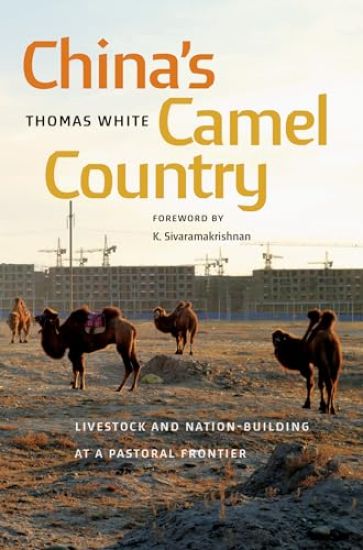
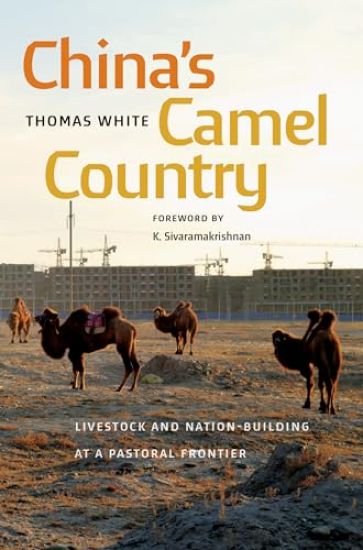
China's Camel Country

China's Camel Country

Thomas White; K. Sivaramakrishnan

UNIVERSITY OF WASHINGTON PRESS
2024
sidottu
How animal conservation became a defense against cultural erasureChina today positions itself as a model of state-led environmentalism. On the country's arid rangelands, grassland conservation policies have targeted pastoralists and their animals, blamed for causing desertification. State environmentalism—in the form of grazing bans, enclosure, and resettlement—has transformed the lives of many ethnic minority herders in China's western borderlands. However, this book shows how such policies have been contested and negotiated on the ground, in the context of the state's intensifying nation-building project. Drawing on ethnographic fieldwork in Alasha, in the far west of China's Inner Mongolia Autonomous Region, Thomas White describes how ethnic Mongols have foregrounded the local breed of Bactrian camel, mobilizing ideas of heritage and resource conservation to defend pastoralism.In exploring how the greening of the Chinese state affects the entangled lives of humans and animals at the margins of the nation-state, this study is both a political biography of the Bactrian camel and an innovative work of political ecology addressing critical questions of rural livelihoods, conservation, and state power.
China's Camel Country

China's Camel Country

Thomas White; K. Sivaramakrishnan

UNIVERSITY OF WASHINGTON PRESS
2024
pokkari
How animal conservation became a defense against cultural erasureChina today positions itself as a model of state-led environmentalism. On the country's arid rangelands, grassland conservation policies have targeted pastoralists and their animals, blamed for causing desertification. State environmentalism—in the form of grazing bans, enclosure, and resettlement—has transformed the lives of many ethnic minority herders in China's western borderlands. However, this book shows how such policies have been contested and negotiated on the ground, in the context of the state's intensifying nation-building project. Drawing on ethnographic fieldwork in Alasha, in the far west of China's Inner Mongolia Autonomous Region, Thomas White describes how ethnic Mongols have foregrounded the local breed of Bactrian camel, mobilizing ideas of heritage and resource conservation to defend pastoralism.In exploring how the greening of the Chinese state affects the entangled lives of humans and animals at the margins of the nation-state, this study is both a political biography of the Bactrian camel and an innovative work of political ecology addressing critical questions of rural livelihoods, conservation, and state power.
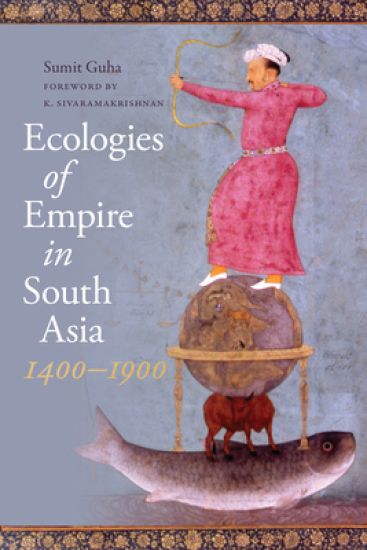
Ecologies of Empire in South Asia, 1400-1900

Ecologies of Empire in South Asia, 1400-1900

Sumit Guha; K. Sivaramakrishnan

UNIVERSITY OF WASHINGTON PRESS
2023
pokkari
Reveals how imperial power and local resistance have shaped landscapesThe perception, valuation, and manipulation of human environments all have their own layered histories. So Sumit Guha argues in this sweeping examination of a pivotal five hundred years when successive empires struggled to harness lands and peoples to their agendas across Asia. Ecologies of Empire in South Asia, 1400–1900 compares the practices of the Mughal and British Empires to demonstrate how their fluctuating capacity for domination was imbricated in the formation of environmental knowledge itself. The establishment of imperial control transforms local knowledge of the world into the aggregated information that reproduces centralized power over it. That is the political ecology that reshapes entire biomes. Animals and plants are translocated; human communities are displaced or destroyed. Some species proliferate; others disappear. But these state projects are overlaid upon the many local and regional geographies made by sacred cosmologies and local sites, pilgrimage routes and river fords, hot springs and fluctuating aquifers, hunting ranges and nesting grounds, notable trees and striking rocks.Guha uncovers these ecological histories by scrutinizing little-used archival sources. His historically based political ecology demonstrates how the biomes of a vast subcontinent were changed by struggles to make and to resist empire.
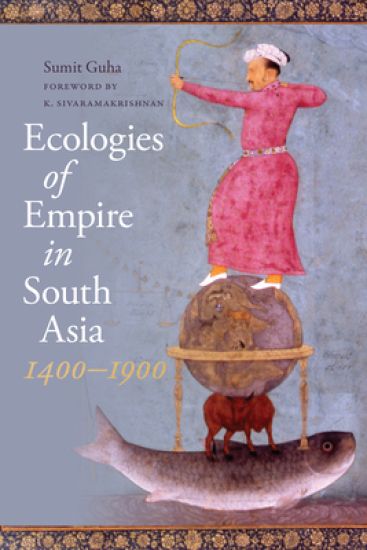
Ecologies of Empire in South Asia, 1400-1900

Ecologies of Empire in South Asia, 1400-1900

Sumit Guha; K. Sivaramakrishnan

UNIVERSITY OF WASHINGTON PRESS
2023
sidottu
Reveals how imperial power and local resistance have shaped landscapesThe perception, valuation, and manipulation of human environments all have their own layered histories. So Sumit Guha argues in this sweeping examination of a pivotal five hundred years when successive empires struggled to harness lands and peoples to their agendas across Asia. Ecologies of Empire in South Asia, 1400–1900 compares the practices of the Mughal and British Empires to demonstrate how their fluctuating capacity for domination was imbricated in the formation of environmental knowledge itself. The establishment of imperial control transforms local knowledge of the world into the aggregated information that reproduces centralized power over it. That is the political ecology that reshapes entire biomes. Animals and plants are translocated; human communities are displaced or destroyed. Some species proliferate; others disappear. But these state projects are overlaid upon the many local and regional geographies made by sacred cosmologies and local sites, pilgrimage routes and river fords, hot springs and fluctuating aquifers, hunting ranges and nesting grounds, notable trees and striking rocks.Guha uncovers these ecological histories by scrutinizing little-used archival sources. His historically based political ecology demonstrates how the biomes of a vast subcontinent were changed by struggles to make and to resist empire.
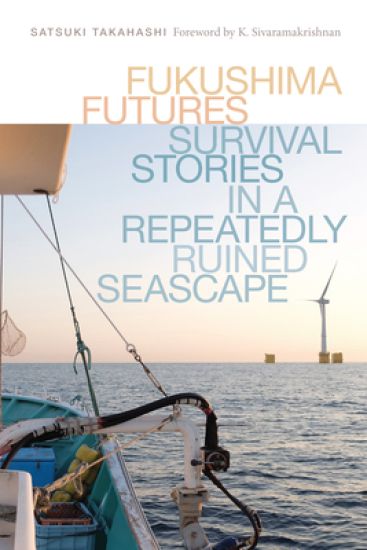
Fukushima Futures

Fukushima Futures

Satsuki Takahashi; K. Sivaramakrishnan

UNIVERSITY OF WASHINGTON PRESS
2023
pokkari
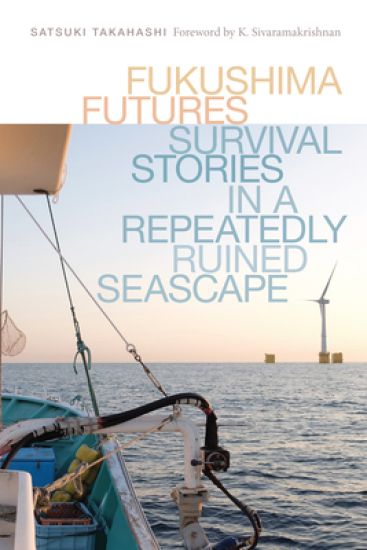
A probe of the environmental and sociocultural effects of industrialization and nuclear disaster on coastal livelihoodsBoth before and after the 2011 "Triple Disaster" of earthquake, tidal wave, and consequent meltdown at the Fukushima Daiichi nuclear power plant, anthropologist Satsuki Takahashi visited nearby communities, collecting accounts of life and livelihoods along the industrialized seascape. The resulting environmental ethnography examines the complex relationship between commercial fishing families and the Joban Sea—once known for premium-quality fish and now notorious as the location of the world's worst nuclear catastrophe. Fukushima Futures follows postwar Japan's maritime modernization from the perspectives of those most entangled with its successes and failures. In response to unrelenting setbacks, including an earlier nuclear accident at neighboring Tokaimura and the oil spills of stranded tankers during typhoons, these communities have developed survival strategies shaped by the precarity they share with their marine ecosystem. The collaborative resilience that emerges against this backdrop of vulnerability and uncertainty challenges the progress-bound logic of futurism, bringing more hopeful possibilities for the future into sharper focus.
Fukushima Futures

Fukushima Futures

Satsuki Takahashi; K. Sivaramakrishnan

UNIVERSITY OF WASHINGTON PRESS
2023
sidottu
A probe of the environmental and sociocultural effects of industrialization and nuclear disaster on coastal livelihoodsBoth before and after the 2011 "Triple Disaster" of earthquake, tidal wave, and consequent meltdown at the Fukushima Daiichi nuclear power plant, anthropologist Satsuki Takahashi visited nearby communities, collecting accounts of life and livelihoods along the industrialized seascape. The resulting environmental ethnography examines the complex relationship between commercial fishing families and the Joban Sea—once known for premium-quality fish and now notorious as the location of the world's worst nuclear catastrophe. Fukushima Futures follows postwar Japan's maritime modernization from the perspectives of those most entangled with its successes and failures. In response to unrelenting setbacks, including an earlier nuclear accident at neighboring Tokaimura and the oil spills of stranded tankers during typhoons, these communities have developed survival strategies shaped by the precarity they share with their marine ecosystem. The collaborative resilience that emerges against this backdrop of vulnerability and uncertainty challenges the progress-bound logic of futurism, bringing more hopeful possibilities for the future into sharper focus.
The Camphor Tree and the Elephant

The Camphor Tree and the Elephant

Faizah Zakaria; K. Sivaramakrishnan

UNIVERSITY OF WASHINGTON PRESS
2023
pokkari
Uncovers a spiritual dimension in the transition to the AnthropoceneWhat is the role of religion in shaping interactions and relations between the human and nonhuman in nature? Why are Muslim and Christian organizations generally not a potent force in Southeast Asian environmental movements? The Camphor Tree and the Elephant brings these questions into the history of ecological change in the region, centering the roles of religion and colonialism in shaping the Anthropocene—"the human epoch." Historian Faizah Zakaria traces the conversion of the Batak people in upland Sumatra and the Malay Peninsula to Islam and Christianity during the long nineteenth century. She finds that the process helped shape social structures that voided the natural world of enchantment, ushered in a cash economy, and placed the power to remake local landscapes into the hands of a distant elite. Using a wide array of sources such as family histories, prayer manuscripts, and folktales in tandem with colonial and ethnographic archives, Zakaria brings everyday religion and its far-flung implications into our understanding of the environmental history of the modern world.
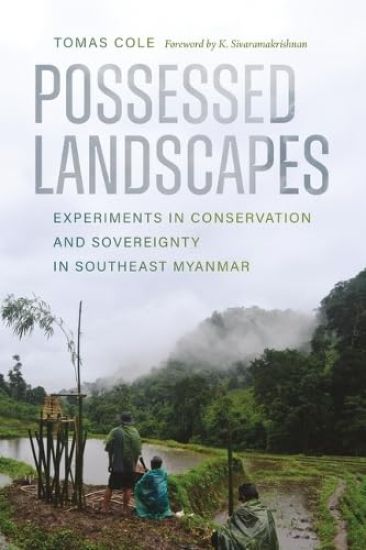
Spawning Modern Fish

Spawning Modern Fish

Heather Anne Swanson; K. Sivaramakrishnan

UNIVERSITY OF WASHINGTON PRESS
2022
pokkari
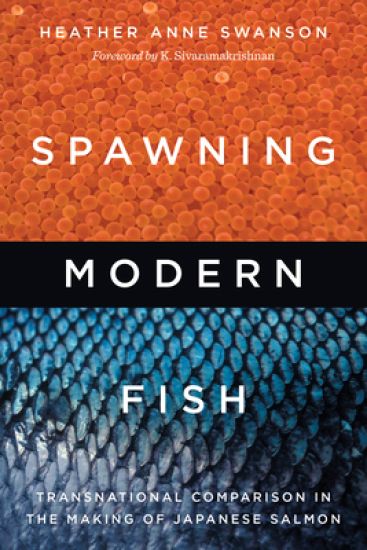
Winner of the Francis L.K. Hsu Book Prize from the Society for East Asian AnthropologyMultispecies ethnography turns its attention to the bodies of fishSince the mid-nineteenth century, agricultural development and fisheries management in northern Japan have been profoundly shaped by how people within and beyond Japan have compared Hokkaido's landscapes to those of other places, as part of efforts to make the new Japanese nation-state more legibly "modern." In doing so, they engaged in non-conforming modes of thinking that reached out to diverse places, including the American West and southern Chile. Today, the comparisons made by Hokkaido fishing industry professionals, scientists, and Ainu indigenous groups between the island's forests, fields, and waters and those of other places around the world continue to dramatically affect the region's approaches to environmental management and its physical landscapes. In this far-ranging ethnography, Heather Anne Swanson shows how this traffic in ideas shapes the course of Hokkaido's development, its fish, and the lives of people on and beyond the island while structuring trade dynamics, political economy, and multispecies relations in watersheds around the globe.
Spawning Modern Fish

Spawning Modern Fish

Heather Anne Swanson; K. Sivaramakrishnan

UNIVERSITY OF WASHINGTON PRESS
2022
sidottu
Winner of the Francis L.K. Hsu Book Prize from the Society for East Asian AnthropologyMultispecies ethnography turns its attention to the bodies of fishSince the mid-nineteenth century, agricultural development and fisheries management in northern Japan have been profoundly shaped by how people within and beyond Japan have compared Hokkaido's landscapes to those of other places, as part of efforts to make the new Japanese nation-state more legibly "modern." In doing so, they engaged in non-conforming modes of thinking that reached out to diverse places, including the American West and southern Chile. Today, the comparisons made by Hokkaido fishing industry professionals, scientists, and Ainu indigenous groups between the island's forests, fields, and waters and those of other places around the world continue to dramatically affect the region's approaches to environmental management and its physical landscapes. In this far-ranging ethnography, Heather Anne Swanson shows how this traffic in ideas shapes the course of Hokkaido's development, its fish, and the lives of people on and beyond the island while structuring trade dynamics, political economy, and multispecies relations in watersheds around the globe.
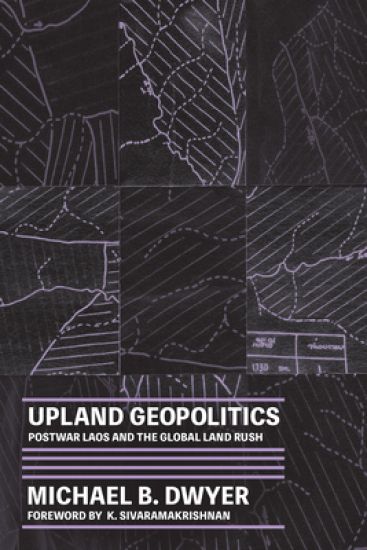
Upland Geopolitics

Upland Geopolitics

Michael B. Dwyer; K. Sivaramakrishnan

UNIVERSITY OF WASHINGTON PRESS
2022
sidottu
Winner of the 2024 EuroSEAS Social Science Book PrizeCold War legacies in Southeast Asia enable new geographies of enclosureIn the twenty-first century, land deals in the Global South have become increasingly prevalent and controversial. Transnational access to arable land in impoverished "land-rich" countries in Latin America, Sub-Saharan Africa, and Southeast Asia highlights the link between the shifting geopolitics of economic development and problems of food security, climate change, and regional and international trade. Drawing on ethnographic and archival research, Upland Geopolitics uses the case of Chinese agribusiness investment in northern Laos to study the unbalanced geography of the new global land rush. Connecting the current rubber plantation boom to a longer trajectory of foreign intervention in the region, Upland Geopolitics reveals how legacies of Cold War conflict continue to pave the way for transnational enclosure in a socially uneven landscape.Upland Geopolitics is freely available in an open access edition thanks to TOME (Toward an Open Monograph Ecosystem) and the generous support of Indiana University.DOI: 10.6069/9780295750507