Kirjojen hintavertailu. Mukana 12 152 606 kirjaa ja 12 kauppaa.

Kirjailija

Kerry Segrave

Kirjat ja teokset yhdessä paikassa: 52 kirjaa, julkaisuja vuosilta 1993-2025, suosituimpien joukossa Death in a Hansom Cab; The 1904 Persecution of Nan Patterson. Vertaile teosten hintoja ja tarkista saatavuus suomalaisista kirjakaupoista.

52 kirjaa

Kirjojen julkaisuhaarukka 1993-2025.

Masking America, 1918-1919

Masking America, 1918-1919

Kerry Segrave

MCFARLAND CO INC
2025
pokkari
This book recalls masking efforts in response to the Spanish flu epidemic. Masking the population as an ineffective response to disease by public health officials and political bureaucrats at various levels of jurisdiction reached its zenith in 2020. However, it began a century earlier during the Spanish flu epidemic of 1918-1919. In both cases, masking was not the first response made by the officials. In both cases, it was introduced as part of the second round of responses after the first round had failed. During 1918 the imposition of masking was done by legal mandate in some areas, by hectoring and whining on the part of officials in other areas, and by gentle and not so gentle public persuasion involving the use of "good" examples. Military members were mainly forced to don masks. Since there were bases, camps, and cantonments all over America as the war was ongoing, it was hoped an example would be set for the general public. Post office clerks who dealt with the public were often forced to wear masks; it was one of the few areas where the federal government had the power to impose masking. Some areas used masking almost not at all, such as the New England states. Other areas, such as the Pacific, forced masking on much of the population. Some public health officials did not subscribe to any of the imposed measures, such as Dr. Royal Copeland, the New York City Health Commissioner, and Dr. Rupert Blue, the United States Surgeon General.
Tarring and Feathering in America

Tarring and Feathering in America

Kerry Segrave

MCFARLAND CO INC
2025
nidottu
Tarring and feathering as a punishment is present throughout American history, perhaps most notably as a form of political reprimand during the late eighteenth century. Its original use was as a non-lethal method of torture and humiliation, designed to publicly shame the targeted individual and drive them from the area. Following the Civil War, tarring and feathering became less of a political statement and more of an attack upon individuals whose neighbors determined them to be deviant or noncompliant with existing community standards. The practice of tarring and feathering became less common by the early 1900s but experienced a resurgence following World War I, when it reverted back to being used as a political punishment against those considered to be anti-war and anti-capitalist, and anti-American. This book delves into the patterns and usage of tarring and feathering across American history, recounting its origins from before 1865 through the present day. Pulling upon information and accounts gleaned from online databases and newspaper archives, the author identifies the most commonly targeted people groups and explores the most notable reasonings behind their victimization within each historical era.
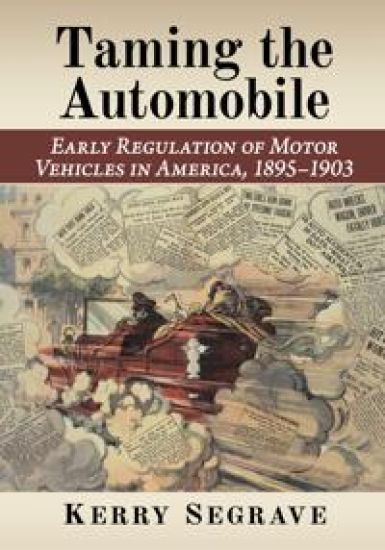
Taming the Automobile

Taming the Automobile

Kerry Segrave

MCFARLAND CO INC
2024
pokkari
The first decade of the auto industry in America featured politicians and bureaucrats at all political levels trying to come to terms with a new form of locomotion. Rules and regulations had to be drafted, implemented, and then enforced. Working against them was a small but wealthy and powerful group that wanted no regulations. If that was not possible, the lobby group tried to weaken any such rules, or even write the regulations themselves. This book details how the auto industry was imposed on society from the top down, unlike many new innovations that go through society from the bottom up.
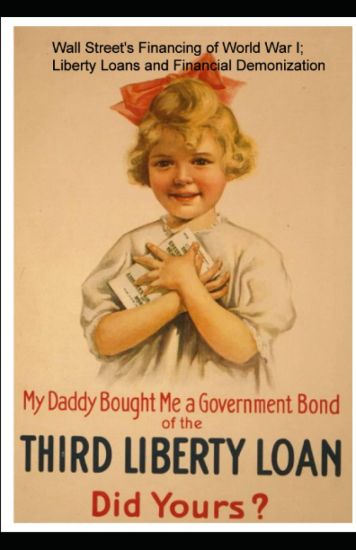
Wall Street's Financing of World War I; Liberty Loans and Financial Demonization.
World War I was a gold mine for the capitalist class. The only problem was that they did not want to pay the entire war cost themselves. The banking plutocrats created the Liberty Loan programs to pass much of that cost along to the underclasses - five in total from 1917 to 1919. An intense campaign was put in motion to sell the bonds, perhaps the most significant public relations campaign to that time. Those who refused to buy any bonds or less than their "fair share" were demonized by the capitalist class as "financial slackers." Such individuals were attacked in the media by all the opinion makers of the day. No excuse for not buying was acceptable. It was a program crafted exclusively by the banking plutocracy, the United States Treasury Department bureaucrats, and administered by the newly created Federal Reserve banking system. The bond program was unnecessary since the ruling class could easily have paid the total cost, with almost enough money in liquid bank deposits alone. In all the discussions about how to raise money for the war, there was never any mention of some wealth tax; it was there the majority of money of the capitalist class was to be found, not from "income" as usually defined. Resistors to buying the bonds were often subject to summary dismissal from their jobs, tarred and feathered, and ridden out of town on a rail. Those who declined to purchase bonds were ruthlessly attacked by naming, shaming, force, and coercion. No one had a good word to say about those who declined to purchase bonds; dissent was not allowed.
Dying for Chocolate

Dying for Chocolate

Kerry Segrave

McFarland Co Inc
2020
pokkari
On a summer day in 1898, a family in Dover, Delaware, shared a box of chocolates they received in the mail from an anonymous sender. Within days, two of the seven family members were dead; the other five became ill but recovered. The search for the perpetrator soon moved from Delaware to California, where a suspect was quickly identified: Cordelia Botkin, lover of the husband of one of the poisoned women. This book chronicles the shoddy investigation that led to Botkin's indictment and the two sensational trials, adjudicated in the press, that found her guilty. National attention was drawn by the cross-country nature of the crime and the fact that the supposed perpetrator had never been in Delaware in her life. It was also a trial over what was viewed as the moral and sexual depravity of the two main participants, Botkin and Dunning (the husband), with most of that criticism directed at Botkin.
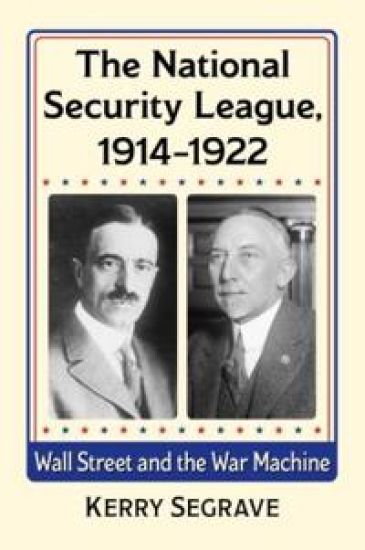
The National Security League, 1914-1922

The National Security League, 1914-1922

Kerry Segrave

McFarland Co Inc
2020
pokkari
The early 20th century saw the founding of the National Security League, a nationalistic nonprofit organization committed to an expanded military, conscripted service and meritocracy. This book details its history, from its formation in December 1914 through 1922, at which point it was a spent force in decline. Founded by wealthy corporate lawyers based in New York City, it had secret backers in the capitalist class, who had two goals in mind. One was to profit immensely from the newly begun World War I. The other was to control the working classes in times of both war and peace. This agenda was presented to the public under the guise of preparedness, patriotism, and Americanization. Although the league was eventually found by Congress to have violated election spending limits, no sanctions of any kind were ever applied. This history details the secret machinations of an organization dedicated to solidifying the grip of the capitalist class over workers, all under the cover of American pride.
Anti-Kissing in America, 1876-1922

Anti-Kissing in America, 1876-1922

Kerry Segrave

Historical Press
2020
nidottu
dern anti-kissing era began in 1876 when Robert Koch proved that microorganisms could transfer disease from an ill creature to a healthy creature. At that point the war on kissing in America began in earnest. It was a war against microbes wherever they were found, such as on common drinking cups at public fountains and on brushes and combs used by barbers and hair stylists on customer after customer. Especially, though, it was a crusade against kissing, for that contained an emotional component not found in attacks on cups and combs. Underlying the assault on kissing in America was a strong moral component and a puritan streak. The war on kissing was a war on bacteria but it was also a war on "moral bacteria." Many of the attacks on kissing delivered as health concerns actually masked that moral outrage. The crusade penetrated all parts of society. Religious figures weighed in against the practice. A major target was on the practice of kissing babies; women who greeted other women by kissing them were heavily criticized. The Pennsylvania Railroad tried to prohibit the practice at its depots. Several people were taken to court and fined for engaging in the practice in the streets, even married couples. Many anti-kissing organizations were formed; many states and other jurisdictions passed, or tried to pass, legislation against kissing. The anti-kissing crusades were another example of a unique American custom - the moral regulation of social affairs.
Death in a Hansom Cab; The 1904 Persecution of Nan Patterson
This is the story about two lovers riding in a hansom cab in New York City on June 4 1904. A single shot rang out and Caesar Young was dead. Nan Patterson soon came to be charged with murder in the first degree. Three trials followed; three mistrials ensued. But the trials of the 21-year-old woman weren't so much about establishing the "facts" about Young's death as they were about persecuting a young woman. Editorials were often printing pointing out that Nan deserved to be punished, regardless of the Young death. In their view she needed to be punished for her so-called moral lapses. She committed adultery and she was a home wrecker, a charge not leveled at Young. She was an actor and they were held in low esteem, especially the females, who were all immoral. Also, she stayed out late and participated in champagne suppers. The story is about appalling media coverage that alternated between publishing smear pieces about the young woman, and making up tales about interviews with Nan that had not happened. It is about a poor quality prosecution that consisted mainly of lies and fanciful, bizarre theories about the death of Young. It is about the state refusing to grant bail and to set speedy trial dates. The story of Nan Patterson is the story of the persecution of a young woman under the guise of prosecution.
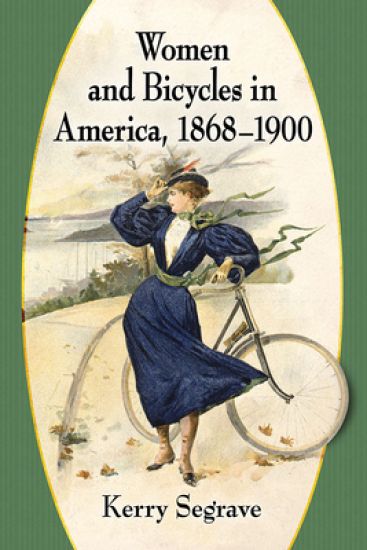
Women and Bicycles in America, 1868-1900

Women and Bicycles in America, 1868-1900

Kerry Segrave

McFarland Co Inc
2019
pokkari
? In the last third of the 1800s, America was struck by a bicycle craze. This trend massively impacted the lives of women, allowing them greater mobility and changing perceptions of women as weak or in need of chaperons. This book traces the history and development of the American bicycle, observing its critical role in the fight for gender equality. The bicycle radically changed the face of fashion, health and even morality and propriety in America. This thorough history traces the sweeping social advances made by women in relation to the development of the bicycle.
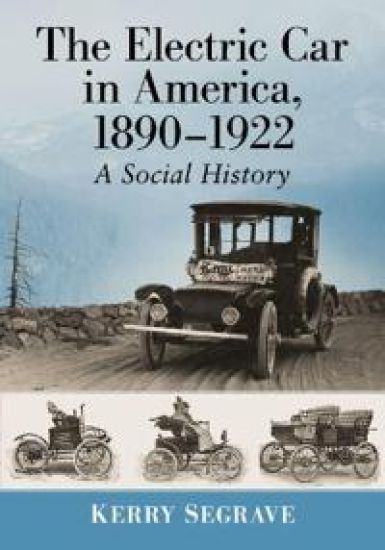
The Electric Car in America, 1890-1922

The Electric Car in America, 1890-1922

Kerry Segrave

McFarland Co Inc
2019
pokkari
The electric vehicle seemed poised in 1900 to be a leader in automotive production. Clean, odorless, noiseless and mechanically simple, electrics rarely broke down and were easy to operate. An electric car could be started instantly from the driver's seat; no other machine could claim that advantage. But then it all went wrong. As this history details, the hope and confidence of 1900 collapsed and just two decades later electric cars were effectively dead. They had remained expensive even as gasoline cars saw dramatic price reductions, and the storage battery was an endless source of problems. An increasingly frantic public relations campaign of lies and deceptive advertising could not turn the tide.
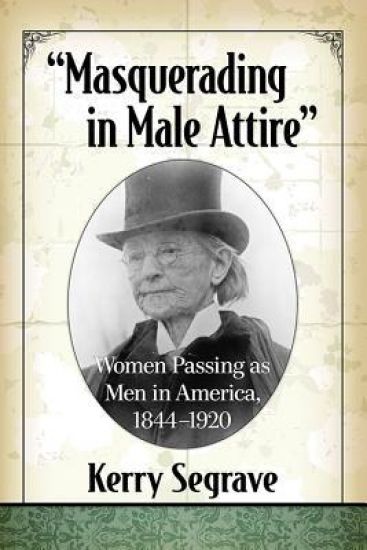
"Masquerading in Male Attire"

"Masquerading in Male Attire"

Kerry Segrave

McFarland Co Inc
2018
pokkari
Historically, American women have dressed as men for a number of reasons: to enter the military, to travel freely, to commit a criminal act, to marry other women--most often however to secure employment. During the 1800s and early 1900s, most jobs were barred to women, and those that were available to both sexes paid women far less. This book profiles both women who passed as men and were caught--even arrested--and those who successfully masqueraded for years. Whatever the motive, all took part in a common rebellion against an economic and social system that openly discriminated against them.
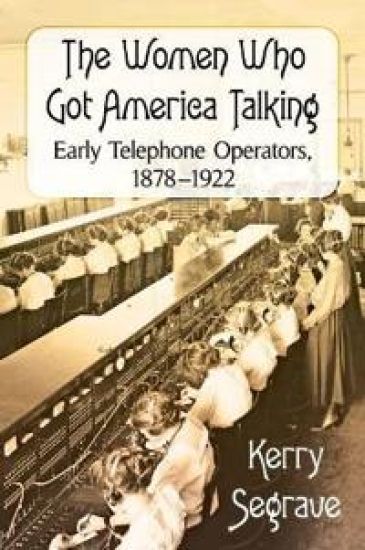
The Women Who Got America Talking

The Women Who Got America Talking

Kerry Segrave

McFarland Co Inc
2017
pokkari
When the need for telephone operators arose in the 1870s, the assumption was that they should all be male. Wages for adult men were too high, so boys were hired. They proved quick to argue with the subscribers, so females replaced them. Women were calmer, had reassuring voices and rarely talked back. Within a few years, telephone operators were all female and would remain so. The pay was low and working conditions harsh. The job often impaired their health, as they suffered abuse from subscribers in silence under pain of dismissal. Discipline was stern--dress codes were mandated, although they were never seen by the public. Most were young, domestic and anything but militant. Yet many joined unions and walked picket lines in response to the severely capitalistic, sexist system they worked under.
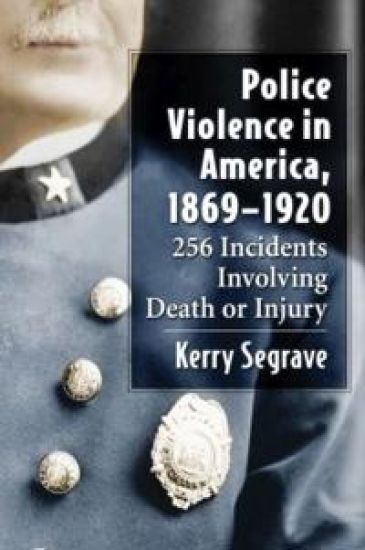
Police Violence in America, 1869-1920

Police Violence in America, 1869-1920

Kerry Segrave

McFarland Co Inc
2016
pokkari
Police violence is not a new phenomenon. In the late 19th and early 20th centuries, police officers in America assaulted or killed many ordinary citizens, often during improper detainments or arrests where no threat existed or no crime had been committed. Based on hundreds of newspaper accounts from 1869 through 1920, this history provides a chronological listing of interactions between police and unarmed citizens in which the citizens--some of them minors--were assaulted or killed. Police who committed such acts often lied to protect themselves, assisted by fellow officers and encouraging the media to demonize the victims. The author provides information on the prosecution and punishment of officers where available.
The Hatpin Menace

The Hatpin Menace

Kerry Segrave

McFarland Co Inc
2016
pokkari
Between 1887 and 1920, the humble hatpin went from an unremarkable item in every woman's wardrobe, to a fashion necessity, to a dangerous weapon (it was said). Big hair and big hats of the era meant big hatpins, and their weaponized use sparked controversy. There were "good" uses of hatpins, such as fending off an attacker in the street. There were also "bad" uses, such as when a woman being arrested tried to stab a police officer. But seriously: All those protruding pins seemed to threaten people everywhere in the public sphere. It did not sit well with the patriarchy, who responded with hysterical crusades and often ludicrous legislation aimed at curbing the hatpin and disarming American women.
Chewing Gum in America, 1850-1920

Chewing Gum in America, 1850-1920

Kerry Segrave

McFarland Co Inc
2015
pokkari
Americans began chewing gum long before 1850, scraping resin from spruce trees, removing any bits of bark or insects and chewing the finished product. Commercially-made gum was of limited availability and came in three types--tree resin, pretroleum-based paraffin and chicle-based--the latter, a natural latex, ultimately eclipsing its rivals by 1920. Once considered a women-only bad habit, chewing gum grew in popularity and was soon indulged in by all segments of society. The gum industry tried vigorously to export the habit, but it proved uniquely American and would not stick abroad. This book examines the chewing gum industry in the United States from 1850 to 1920, the rise and spread of gum chewing and the reactions--nearly all negative--to the habit from editorial writers, reformers, religious figures, employers and the courts. The age-old problem of what to do with chewed gum--some saved it in lockets around their neck; some shared it with friends--is also covered.
Wiretapping and Electronic Surveillance in America, 1862-1920
Following the 2013 revelations of Edward Snowden, Americans have come to realize that many of us may be under surveillance at any time. It all started 150 years ago on the battlefields of the Civil War, where each side tapped the other's telegraph lines. It continued in 1895, when the New York Police Department began to tap telephone lines. It was 20 years before it was public knowledge, and by then the NYPD was so busy tapping they had a separate room set aside for the purpose. Wiretapping really took off in 1910, when the dictograph--the first ready-to-use bug that anyone could operate--arrived, making it easier still to engage in electronic surveillance. Politicians bugged other politicians, corporations bugged labor unions, stockbrokers bugged other stockbrokers, and the police bugged everybody. And we were well on our way to the future that George Orwell envisioned, the world Edward Snowden revealed: Big Brother had arrived.
Beware the Masher

Beware the Masher

Kerry Segrave

McFarland Co Inc
2014
pokkari
This book examines the history of sexual harassment in America's public places, such as on the streets and on public transit vehicles, in the period 1880 to 1930. Such behavior was referred to then as mashing with the harasser most commonly being called a masher. It began around 1880 as a response to the women's movement as females in America increased their efforts to gain more freedom of movement and greater independence. Women going out and about on their own, or only with other women, threatened male dominance and control of society. One response by men was to turn to the sexual harassment of those women when they were alone in public places. This book looks at the extent of the problem, editorial opinions on the subject, the tendency to blame the victim, and the responses of women in the streets to the harassment. As well, the actions and reactions of the courts and the actions and reactions of the police are studied. Much of the sexual harassment of this period took place in the daytime hours, in busy areas of cities.
Policewomen

Policewomen

Kerry Segrave

McFarland Co Inc
2014
pokkari
Women in policing have seen three phases of acceptance. Beginning in about 1880, they were admitted as police matrons with extremely limited duties. Next they were accepted as policewomen around 1910-1916, when that title was officially bestowed on them. Finally came assignment of females as general duty officers in the late 1960s and early 1970s. Not coincidentally, an active women's movement was the driving force behind all three phases. As women in policing went from matrons to regular officers, they faced harassment and discrimination that only worsened as they neared equality. Many still face it today. This book examines the history of policewomen from 1880 to 2012--particularly in the U.S.--and tells the story of their gradual recognition by the professional establishment of male officers.
American Television Abroad

American Television Abroad

Kerry Segrave

McFarland Co Inc
2013
pokkari
Once the major Hollywood studios got over their loathing of television as an entertainment medium, they moved quickly to try to dominate both domestic and international programming. In the United States, the eight major studios controlled an overwhelming majority of all television programming by the early 1950s. Their efforts in foreign markets were not quite so successful, but by the 1990s U.S. distributors controlled about 75 percent of the international television trade. Hollywood's efforts in television were often thwarted by governments that recognized the airwaves as a public resource and intervened in varying degrees to keep the studios' programing off the air in their countries. Still the U.S. industry found various ways to provide American fare to foreign viewers. Even into the 1980s, for example, some Hollywood shows could be bought by foreign broadcasters for fees as low as $25 per segment. Despite these efforts the American studios have never been able to completely dominate foreign airwaves: Viewers usually prefer their own, domestic fare to that offered by Hollywood. This history fully documents the U.S. television industry's efforts in foreign markets and how it continues to look for new markets.
Extras of Early Hollywood

Extras of Early Hollywood

Kerry Segrave

McFarland Co Inc
2013
pokkari
Pity the "extras." Mostly overlooked and forgotten. Especially those in the major Hollywood films 1913 to 1945--right through the dream factory's golden era. The struggles of extras to unionize were followed by internal struggles as the extras fought for a voice within that union. There were just too few jobs for far too many extras, some of whom were lured to Hollywood by what seemed to be rags-to-riches tales of stardom (but which were likely little more than industry publicity plants). Once lured to the film capital the reality was much different: low pay, little or no work, ripoffs from private employment agencies, and sexual harassment of the women, likely very much underreported. Some extras had special skills or language abilities, some had wardrobes replete with many period costumes.