
Kirjailija
Kevin Wright
Kirjat ja teokset yhdessä paikassa: 43 kirjaa, julkaisuja vuosilta 2008-2026, suosituimpien joukossa Street Corner Desire. Vertaile teosten hintoja ja tarkista saatavuus suomalaisista kirjakaupoista.
43 kirjaa
Kirjojen julkaisuhaarukka 2008-2026.


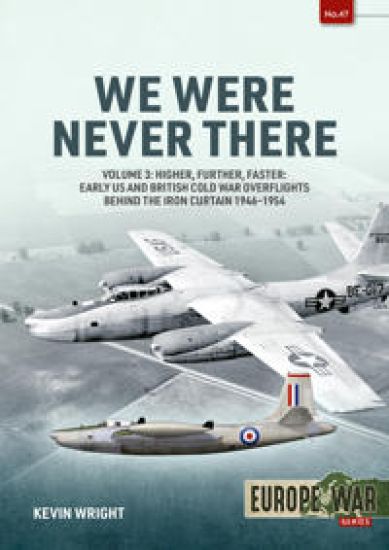
The creation of what Winston Churchill named the 'Iron Curtain' along the borders between Western and Eastern Europe in the late 1940s made conventional espionage extremely difficult. This forced the Western powers to fall back upon their large fleets of transport aircraft and bombers for intelligence-gathering work. The range of aerial spying activities were extensive, from classic photoreconnaissance, the insertion of agents deep within enemy territory (HUMINT), through to electronic intelligence (ELINT) - subdivided into communications intelligence (COMINT), signals intelligence (SIGINT) and telemetry intelligence (TELINT) - to the monitoring of nuclear tests.Always at the forefront of such activities, the Central Intelligence Agency (CIA) of the USA clandestinely developed a large organization, operating dozens of - often heavily - modified aircraft for all of these purposes. Their activities reached frantic proportions especially during the late 1940s, when the Agency became involved in attempts to inspire popular uprisings in several countries of what would later be known as the Warsaw Pact, or even on the soil of the Union of the Soviet Socialist Republics itself. While sometimes revealed in public - whether by accident or by design - the mass of such operations remain largely unknown.While the activities of the U-2 are reasonably well documented We Were Never There Volume 3, is the first ever effort to research, record, and explain CIA-run clandestine operations beyond the Iron Curtain by these other aircraft types and is based on extensive research, dozens of interviews with the participants and official documentation now released to the public.The book is lavishly illustrated with original photographs, custom-drawn maps and color profiles, thus providing a unique insight into these affairs and and a single-point source of reference.

TAC was the largest of the USAF’s major Cold War combatant commands. Formed in 1946 and headquartered at Langley AFB, Virginia, it operated a huge range of aircraft over the following 46 years until it was inactivated in 1992. In 1946, it was equipped with mainly World War Two aircraft types including P-47s and P-51s. It soon ushered into service jet aircraft operations with the P-80 and F-86. Within a few years, TAC was operating a wide range of tactical fighters, ground attack fighters, light bombers, tactical missiles, photographic reconnaissance and special mission aircraft (reconnaissance, special operations, and electronic warfare). TAC played a significant part in the Korean War, the Cuban missile crisis and later the wars in SE Asia and the Gulf in 1991. It came to operate a large number of tactical fighter and attack aircraft including the F-84, F-100 and F-105. As the 1960s progressed, they were joined by the A-7, F-111 and F-4 and, in the 1980s, supplemented by A-10s, F-15s and F-16s through to the end of the Cold War. In the run-up to any war with the USSR, Tactical Air Command was expected to deploy its combat airpower to USAF Commands in Europe and/or the Pacific. That deployment capability struggled during the 1970s. However, from 1978 to 1984, the strength and capability of TAC was transformed by its new commander, General Wilbur ‘Bill’ Creech. He organised, equipped and prepared his units (including ANG and AFRES elements) to deploy from the continental US to the frontline in Europe. Ready to fight and familiarized with their area of operations they could have joined the war immediately, drawing on pre-positioned weapons stocks. As the Soviet threat diminished towards the end of the 1980s, all TAC’s preparations, planning and capabilities were tested for real following the Iraqi invasion of Kuwait in August 1990. Suddenly sent to Middle East in the countries surrounding Iraq, those well tested plans saw TAC aircraft form a major part of all coalition air forces that took part in Operations Desert Shield and Desert Storm. In 1992, in a major USAF reorganisation TAC became Air Combat Command.

Heart Work is a poetic rollercoaster. This book explores the essence of unknown feelings and emotions. It creates an opportunity to receive closure in some ways while being lost in other ways and being okay with it. There is no universal way of how the heart works, yet it is the hope that the poems in this book can provide clarity. The journey to healing is not easy, but it is worth it. It is hard work and heart work
Strategic Air Command (SAC) was the pre-eminent military actor in US nuclear policy from start to the end of the Cold War. Its early years saw the introduction of new aircraft and early ballistic missiles, while after the Cuban Missile Crisis, there was a period of force consolidation with the it being dominated by the B-52 and the KC-135; this period also saw the introduction of second-generation missiles. The late 1960s and early1970s saw the bomber force involvement in Vietnam and the introduction of the FB-111A. This was followed by a period of stability in the 1980s, when SAC readiness reached its peak. Illustrated with over 180 photographs, this book looks at the aircraft, operations, people and locations of SAC, from its early history through to the end of the Cold War. It looks at new equipment, the importance of SAC strategic reconnaissance aircraft (RB-29, RB-45, RB-50, U-2/TR-1, SR-71, B-47 and RC-135), SAC readiness programmes (ORI), and its command and control mechanisms.
Split into two for decades between the late 1940s and early 1990s, Germany was the hottest 'battlefield' of the Cold War. Its western part was dotted by dozens of major military facilities of the reconstituted national armed forces, and those of the NATO allies, foremost the USA, Great Britain and France. Even more so, whole third of East Germany was under the control of the Armed Forces of the Union of Soviet Socialist Republics (USSR) and housed several dozens of major air and ground units. On the ground, the city of West Berlin - situated in the center of the German Democratic Republic (GDR), and the three occupation zones there controlled by the USA, Great Britain, and France, was connected to the outside world only via tightly controlled railways, waterways or autobahns. However, in the air, three 'aerial corridors' connected it with West Germany. Far away from high-profile intelligence-gathering operations - like those by Lockheed U-2s - several intelligence agencies of the USA, Great Britain and France exploited this fact to run clandestine operations along these corridors.Principally conducted by adapted transport or liaison aircraft - which received a host of clandestine modifications - such operations often took their crews into the very center of what was perceived as the 'danger zone' by NATO: the airspace over some of the most sensitive Soviet military installations.Danger Zone Volume 1, is the first comprehensive and in-depth study of intelligence-gathering efforts by aircraft operated by, or on behalf of, the US intelligence agencies. It provides a carefully researched review of the involved equipment, modifications, maintenance, flight operations, post-flight activities and the resulting intelligence analysis, set within the context of the unique situation surrounding West Berlin during the Cold War, and its air corridors.
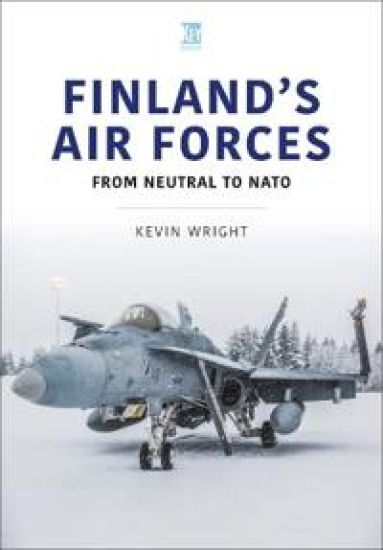
The Finnish Air Force operates at the world's most northerly latitudes in an often extreme climate. During the Cold War, it was overshadowed by the Soviet Union, but remained fiercely independent. Since then, it has worked hard to deepen cooperation with its neighbours. It modernised its aircraft fleet and intends to acquire a new generation of combat aircraft through its HX fighter competition. Illustrated with over 170 photographs, this book examines the development of the Finnish Air Force from the Cold War, concentrating on its modern organisation, training and operations. It also covers its increased cooperation with neighbouring countries and NATO, and the use of reserve air strips, along with wartime mobilisation and its reserve forces. Although concentrating on the Finnish Air Force, there will also be coverage of the Finnish Army's helicopters and HX Competition.
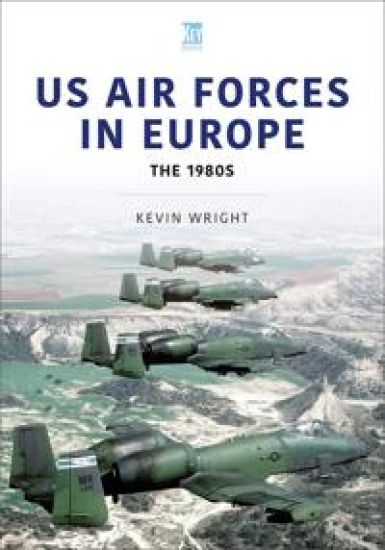
The US Air Forces in Europe (USAFE) rapidly expanded its presence in the 1980s, as it became the most dangerous decade of the Cold War. Most controversially, a new generation of intermediate-range nuclear weapons was deployed by both sides. As tensions between the East and West escalated, a new generation of aircraft arrived at bases across Western Europe - state of the art F-15 Eagle air superiority fighters were followed by the A 10 tank busters and the multi-role F-16 Fighting Falcons. Illustrated with over 180 images, this book examines the aircraft and bases of the USAFE during the 1980s. it also describes the vital support provided by other arms of the USAF, including Military Airlift Command's transport and tanker fleet. The part played by Strategic Air Command's iconic SR-71s, U-2s, and giant B-52 bombers is outlined, as is the role of Tactical Air Command, which would have rapidly reinforced USAFE in time of war.
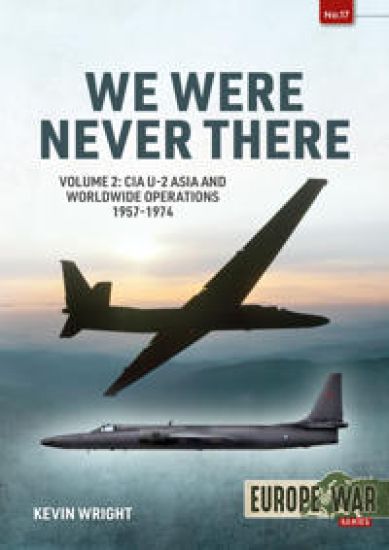
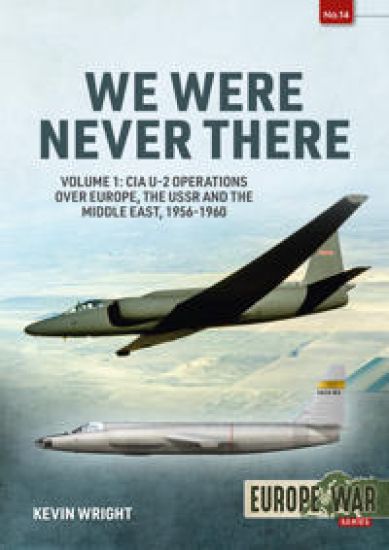
Devised by Kelly Johnson and initially operated by the CIA, the U-2 is the world's most famous 'spyplane.' It flew at unprecedented altitudes and carried the most sophisticated sensors available, all in the greatest secrecy. Operating from remote locations and without markings, they often took-off before first light. Ostensibly operated by civilians flying meteorological research missions, their bold overflights took them far across Eastern Europe, the USSR, Middle and Far East. However, many details of the aircraft's operational history remain vague and a considerable amount is still classified. Continuing national political sensitivities have meant that much about these early operations has still not been fully revealed even more than 60 years later. This book utilises a large number of recently declassified documents to explore the remaining hidden details. It provides in-depth examinations of some missions not previously fully described and include more about Norway's role in U-2 operations, and a breakdown of British U-2 overflights of the Middle East using recently released files from the British Ministry of Defence. It examines some of the U-2's extensive efforts to collect intelligence on Soviet ballistic missile test launches and space programme, on 'Fast Move' staging operations and lots more from these missions up to May 1960. Chapters explore some of the ground-breaking technology employed by the U-2 to photograph and eavesdrop on Soviet nuclear, military and industrial activities. These include revealing secrets of the Fili heavy bomber production plant, just five miles from the Kremlin. Overflights of the 'Arzamas-16' closed nuclear city, Vozrozhdeniya biological warfare centre in the Aral Sea and the mystery that was Mozhaysk. Over 90 photographs, maps and illustrations provide details of the aircraft, the cameras and electronic defensive and eavesdropping systems. The specialised nuclear fallout sampling role is explored and the 'weather packs' installed to substantiate the wafer-thin false cover story of the U-2's role as a 'meteorological research' aircraft. Maps, most never been seen before, record the detailed routes flown by U-2 pilots deep into denied airspace to reveal the secrets of Soviet military, nuclear, scientific and industrial sites.

Are you new to kitchen and never cooked before?Or you cooked several times but found it boring and tiring?If yes, then you should not miss this cookbook.1500 Days Affordable, Healthy Recipes that Everyone Can Cook This book will teach you: How to use your Hamilton Beach Air Fryer Oven machine to its fullest potential.What a Hamilton Beach Air Fryer Oven can do (and what it can't do).How to make the most delicious recipes you've ever tasted.Order Your Copy Now and Start Cooking Healthier

Are you new to kitchen and never cooked before?Or you cooked several times but found it boring and tiring?If yes, then you should not miss this cookbook.1500 Days Affordable, Healthy Recipes that Everyone Can Cook This book will teach you: How to use your Hamilton Beach Air Fryer Oven machine to its fullest potential.What a Hamilton Beach Air Fryer Oven can do (and what it can't do).How to make the most delicious recipes you've ever tasted.Order Your Copy Now and Start Cooking Healthier
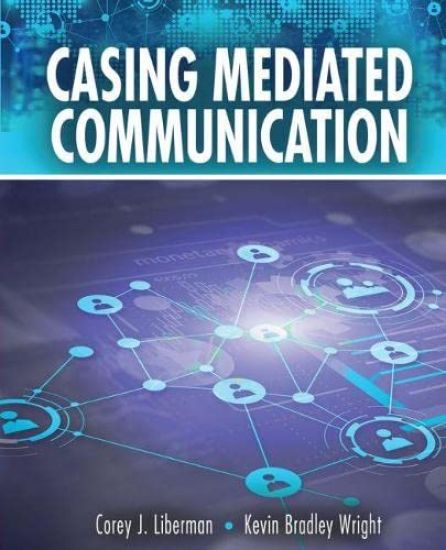
Casing Mediated Communication
Corey Liberman; Kevin Wright
Kendall/Hunt Publishing Co ,U.S.
2021
nidottu
The mass media has long been an important research and theoretical focus of the communication discipline. New media scholars conduct media research from a variety of scholarly traditions, including social science, humanistic/interpretive approaches, critical/ cultural studies, and rhetorical studies. The growth of the Internet, social media, mobile applications, media convergence, and a variety of other technological advances have significantly transformed the media landscape. Casing Mediated Communication presents 26 case studies that explore the multi-faceted nature of new media and mediated communication as applied to current communication contexts, such as interpersonal relationships, online dating, online organizational communication, online social support, strategic communication, and global new media communication and international/intercultural issues.
