Kirjojen hintavertailu. Mukana 12 115 806 kirjaa ja 12 kauppaa.

Kirjailija

Larry May

Kirjat ja teokset yhdessä paikassa: 32 kirjaa, julkaisuja vuosilta 1996-2025, suosituimpien joukossa Medieval Legal and Political Thought. Vertaile teosten hintoja ja tarkista saatavuus suomalaisista kirjakaupoista.

32 kirjaa

Kirjojen julkaisuhaarukka 1996-2025.

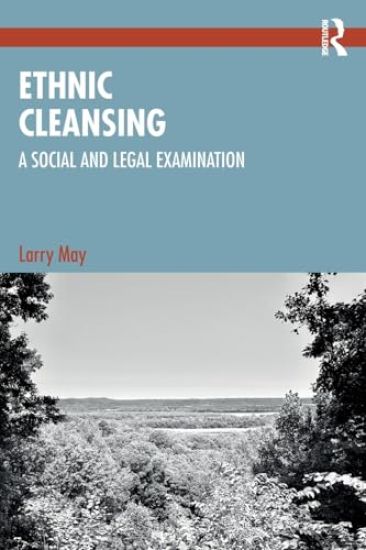
Ethnic Cleansing

Ethnic Cleansing

Larry May

TAYLOR FRANCIS LTD
2025
nidottu
Putting forward the argument that the strength of democracies can be measured in how well minorities – especially ethnic and racial minorities – are treated by the majority, Larry May’s Ethnic Cleansing maintains that unjust ethnic cleansing is one of the greatest internal challenges to the modern institutions of pluralistic and multicultural states.In order to determine what constitutes the crime of ethnic cleansing, this book details crucial conceptual issues around the topic, such as what ethnicity means, what ethnic cleansing claims to achieve, why these acts are invariably harmful, and the conditions of restitution, reparation, and reconciliation – affirming that ethnic cleansing must be countered by existing institutions such as the International Criminal Court, which is uniquely situated to prosecute ethnic cleansing.The first major study to analyze ethnic cleansing from an explicitly normative and conceptual perspective in the last decade, the increase in number and complexity of cases of ethnic cleansing makes this a timely book to understand the challenges that confront contemporary society.
Ethnic Cleansing

Ethnic Cleansing

Larry May

TAYLOR FRANCIS LTD
2025
sidottu
Putting forward the argument that the strength of democracies can be measured in how well minorities – especially ethnic and racial minorities – are treated by the majority, Larry May’s Ethnic Cleansing maintains that unjust ethnic cleansing is one of the greatest internal challenges to the modern institutions of pluralistic and multicultural states.In order to determine what constitutes the crime of ethnic cleansing, this book details crucial conceptual issues around the topic, such as what ethnicity means, what ethnic cleansing claims to achieve, why these acts are invariably harmful, and the conditions of restitution, reparation, and reconciliation – affirming that ethnic cleansing must be countered by existing institutions such as the International Criminal Court, which is uniquely situated to prosecute ethnic cleansing.The first major study to analyze ethnic cleansing from an explicitly normative and conceptual perspective in the last decade, the increase in number and complexity of cases of ethnic cleansing makes this a timely book to understand the challenges that confront contemporary society.
Trafficking and the Conscience of Humanity
Human trafficking has become the scourge of the 21st century, with child trafficking arguably its worst form. As vulnerable children are lured into prostitution, pornography and other forms of exploitation, there is only a patchwork legal regime trying to deal with child trafficking.This book assesses this legal regime, arguing that a more coordinated and international response is needed. Analyzing the moral and conceptual issues at stake across a wide variety of child trafficking cases – child prostitution, child pornography, forced “marriage,” corrupt “adoptions,” organ “donation,” refugee abuse, child soldiers, orphanage abuse, and “normal” parental child abuse – it goes on to argue that the crimes of child trafficking make apparent that there are conceptual, moral, and legal issues concerning child trafficking that differ from other kinds of crime including adult trafficking.Trafficking and the Conscience of Humanity puts forward the case that the crimes of child trafficking could, and should, be prosecuted by an international court such as the International Criminal Court.
Trafficking and the Conscience of Humanity
Human trafficking has become the scourge of the 21st century, with child trafficking arguably its worst form. As vulnerable children are lured into prostitution, pornography and other forms of exploitation, there is only a patchwork legal regime trying to deal with child trafficking.This book assesses this legal regime, arguing that a more coordinated and international response is needed. Analyzing the moral and conceptual issues at stake across a wide variety of child trafficking cases – child prostitution, child pornography, forced “marriage,” corrupt “adoptions,” organ “donation,” refugee abuse, child soldiers, orphanage abuse, and “normal” parental child abuse – it goes on to argue that the crimes of child trafficking make apparent that there are conceptual, moral, and legal issues concerning child trafficking that differ from other kinds of crime including adult trafficking.Trafficking and the Conscience of Humanity puts forward the case that the crimes of child trafficking could, and should, be prosecuted by an international court such as the International Criminal Court.
Medieval Legal and Political Thought

Medieval Legal and Political Thought

Larry May

CAMBRIDGE SCHOLARS PUBLISHING
2021
sidottu
Medieval legal and political thought encompasses the period from approximately 500 CE to 1500 CE. The term "Medieval" refers to the legal and political thought from the time of the late Roman Empire to that of the Renaissance. The legal and political thought of the Middle Ages is overwhelmingly characterized by the increasing role that religion played in influencing politics and law. By the high Middle Ages, we find the great theorists, Averroes, Maimonides, and Aquinas linking law to their respective religions of Islam, Judaism, and Christianity.This book argues that the so-called Dark Ages had very significant ideas about the law, especially how violence is to be contained, which make this early Medieval period anything but "Dark." It suggests that the Christianization and Islamization of legal and political thought created almost as many problems as solutions to the increasingly diverse times that arose in the middle of the Middle Ages. The book also shows that the late Middle Ages already held many of the most important legal and political ideas of the Renaissance–showing that there was no clear break from the Medieval to the Modern periods of legal and political thought. Of central importance is the way that the development of the idea of conscience made the natural law theories of the Medieval times a robust set of ideas that is still felt quite strongly today.
Ancient Legal Thought

Ancient Legal Thought

Larry May

Cambridge University Press
2019
sidottu
This is a study of what constituted legality and the role of law in ancient societies. Investigating and comparing legal codes and legal thinking of the ancient societies of Mesopotamia, Egypt, Greece, India, the Roman Republic, the Roman Empire and of the ancient Rabbis, this volume examines how people used law to create stable societies. Starting with Hammurabi's Code, this volume also analyzes the law of the pharaohs and the codes of the ancient rabbis and of the Roman Emperor Justinian. Focusing on the key concepts of justice equity and humaneness, the status of women and slaves, and the idea of criminality and of war and peace; no other book attempts to examine such diverse legal systems and legal thinking from the ancient world.
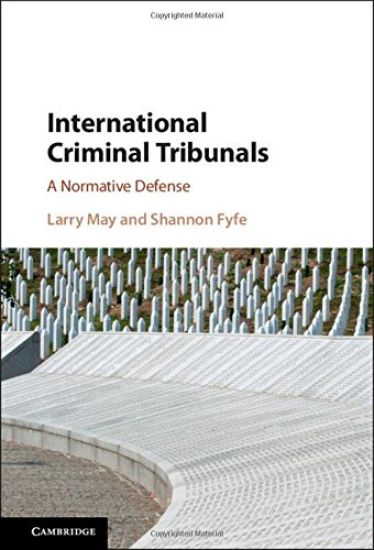
International Criminal Tribunals

International Criminal Tribunals

Larry May; Shannon Fyfe

Cambridge University Press
2018
pokkari
In the last two decades there has been a meteoric rise of international criminal tribunals and courts, and also a strengthening chorus of critics against them. Today it is hard to find strong defenders of international criminal tribunals and courts. This book attempts such a defense against an array of critics. It offers a nuanced defense, accepting many criticisms but arguing that the idea of international criminal tribunals can be defended as providing the fairest way to deal with mass atrocity crimes in a global arena. Fairness and moral legitimacy will be at the heart of this defense. The authors take up the economic and political arguments that have been powerfully expressed, as well as arguments about sovereignty, punishment, responsibility, and evidence; but in the end they show that these arguments do not defeat the idea of international criminal courts and tribunals.
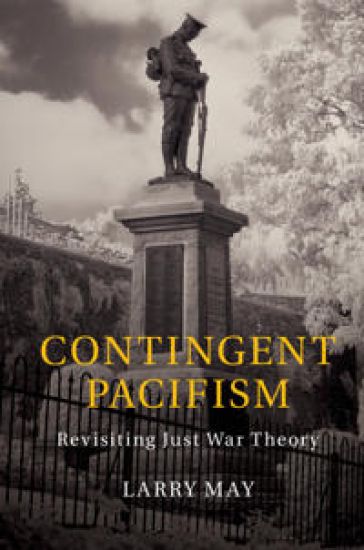
Contingent Pacifism

Contingent Pacifism

Larry May

Cambridge University Press
2018
pokkari
In this, the first major philosophical study of contingent pacifism, Larry May offers a new account of pacifism from within the Just War tradition. Written in a non-technical style, the book features real-life examples from contemporary wars and applies a variety of approaches ranging from traditional pacifism and human rights to international law and conscientious objection. May considers a variety of thinkers and theories, including Hugo Grotius, Kant, Socrates, Seneca on restraint, Tertullian on moral purity, Erasmus's arguments against just war, and Hobbes's conception of public conscience. The guiding idea is that the possibility of a just war is conceded, but not at the current time or in the foreseeable future due to the nature of contemporary armed conflict and geopolitics - wars in the past are also unlikely to have been just wars. This volume will interest scholars and upper-level students of political philosophy, philosophy of law, and war studies.
International Criminal Tribunals

International Criminal Tribunals

Larry May; Shannon Fyfe

Cambridge University Press
2017
sidottu
In the last two decades there has been a meteoric rise of international criminal tribunals and courts, and also a strengthening chorus of critics against them. Today it is hard to find strong defenders of international criminal tribunals and courts. This book attempts such a defense against an array of critics. It offers a nuanced defense, accepting many criticisms but arguing that the idea of international criminal tribunals can be defended as providing the fairest way to deal with mass atrocity crimes in a global arena. Fairness and moral legitimacy will be at the heart of this defense. The authors take up the economic and political arguments that have been powerfully expressed, as well as arguments about sovereignty, punishment, responsibility, and evidence; but in the end they show that these arguments do not defeat the idea of international criminal courts and tribunals.
Necessity in International Law

Necessity in International Law

Jens David Ohlin; Larry May

Oxford University Press Inc
2016
sidottu
Necessity is a notoriously dangerous and slippery concept-dangerous because it contemplates virtually unrestrained killing in warfare and slippery when used in conflicting ways in different areas of international law. Jens David Ohlin and Larry May untangle these confusing strands and perform a descriptive mapping of the ways that necessity operates in legal and philosophical arguments in jus ad bellum, jus in bello, human rights, and criminal law. Although the term "necessity" is ever-present in discussions regarding the law and ethics of killing, its meaning changes subtly depending on the context. It is sometimes an exception, at other times a constraint on government action, and most frequently a broad license in war that countenances the wholesale killing of enemy soldiers in battle. Is this legal status quo in war morally acceptable? Ohlin and May offer a normative and philosophical critique of international law's prevailing notion of jus in bello necessity and suggest ways that killing in warfare could be made more humane-not just against civilians but soldiers as well. Along the way, the authors apply their analysis to modern asymmetric conflicts with non-state actors and the military techniques most likely to be used against them. Presenting a rich tapestry of arguments from both contemporary and historical Just War theory, Necessity in International Law is the first full-length study of necessity as a legal and philosophical concept in international affairs.
Contingent Pacifism

Contingent Pacifism

Larry May

Cambridge University Press
2015
sidottu
In this, the first major philosophical study of contingent pacifism, Larry May offers a new account of pacifism from within the Just War tradition. Written in a non-technical style, the book features real-life examples from contemporary wars and applies a variety of approaches ranging from traditional pacifism and human rights to international law and conscientious objection. May considers a variety of thinkers and theories, including Hugo Grotius, Kant, Socrates, Seneca on restraint, Tertullian on moral purity, Erasmus's arguments against just war, and Hobbes's conception of public conscience. The guiding idea is that the possibility of a just war is conceded, but not at the current time or in the foreseeable future due to the nature of contemporary armed conflict and geopolitics - wars in the past are also unlikely to have been just wars. This volume will interest scholars and upper-level students of political philosophy, philosophy of law, and war studies.
Proportionality in International Law

Proportionality in International Law

Michael Newton; Larry May

Oxford University Press Inc
2014
nidottu
Proportionality is intimately linked to the overarching concepts of self-defense, lawful force, and the controlled application of violence. It is one of the most visible facets of humanitarian law designed to reduce unnecessary human suffering and avoid excessive damage to property, and the natural environment. However, its application has come under renewed scrutiny and sustained controversy as a result of wars against non-state actors and from the extensive use of drones, human shields, cyber war techniques, and counterinsurgency tactics. Proportionality in International Law critically assesses the law of proportionality in normative terms combining abstract philosophical and legal analysis with highly emotive contemporary combat cases. The principle of proportionality permits actions that are logically linked to the intended goal, and thus defines the permissible boundaries for the initiation and conduct of modern wars. The case studies discussed in this book are predominantly from the perspective of those who make decisions in the midst of armed conflict, bringing analytic rigor to the debates as well as sensitivity to facts on the ground. The authors analyze modern usages of proportionality across a wide range of contexts enabling a more complete comprehension of the values that it preserves. This book contrasts the applications of proportionality in both jus ad bellum (the law and morality of resort to force) and within jus in bello (the doctrines applicable for using force in the midst of conflicts). Proportionality in International Law provides the reader with a unique interdisciplinary approach, offering practitioners and policymakers alike greater clarity over how proportionality should be understood in theory and in practice.
Grotius and Law

Grotius and Law

Larry May; Emily McGill

Ashgate Publishing Limited
2014
sidottu
The essays collected for this volume represent the best scholarly literature on Hugo Grotius available in the English language. In the English speaking world Grotius is not as well known as his fellow 17th century political philosophers, Thomas Hobbes or John Locke, but in legal theory Grotius is at least as important. Even on central political concepts such as liberty and property, Grotius has important views that should be explored by anyone working in legal and political philosophy. And Grotius’s work, especially De Jure Belli ac Pacis, is much more important in international law and the laws of war than anyone else’s work in the 17th or 18th centuries. This volume is therefore useful not only to Grotius scholars, but also to anyone interested in historical and modern debates on key issues in political and legal philosophy more broadly, and international law in particular.
Proportionality in International Law

Proportionality in International Law

Michael Newton; Larry May

Oxford University Press Inc
2014
sidottu
Proportionality is intimately linked to the overarching concepts of self-defense, lawful force, and the controlled application of violence. It is one of the most visible facets of humanitarian law designed to reduce unnecessary human suffering and avoid excessive damage to property, and the natural environment. However, its application has come under renewed scrutiny and sustained controversy as a result of wars against non-state actors and from the extensive use of drones, human shields, cyber war techniques, and counterinsurgency tactics. Proportionality in International Law critically assesses the law of proportionality in normative terms combining abstract philosophical and legal analysis with highly emotive contemporary combat cases. The principle of proportionality permits actions that are logically linked to the intended goal, and thus defines the permissible boundaries for the initiation and conduct of modern wars. The case studies discussed in this book are predominantly from the perspective of those who make decisions in the midst of armed conflict, bringing analytic rigor to the debates as well as sensitivity to facts on the ground. The authors analyze modern usages of proportionality across a wide range of contexts enabling a more complete comprehension of the values that it preserves. This book contrasts the applications of proportionality in both jus ad bellum (the law and morality of resort to force) and within jus in bello (the doctrines applicable for using force in the midst of conflicts). Proportionality in International Law provides the reader with a unique interdisciplinary approach, offering practitioners and policymakers alike greater clarity over how proportionality should be understood in theory and in practice.
Limiting Leviathan

Limiting Leviathan

Larry May

Oxford University Press
2013
nidottu
Thomas Hobbes wrote extensively about law and was strongly influenced by developments and debates among lawyers of his day. And Hobbes is considered by many commentators to be one of the first legal positivists. Yet there is no book in English that focuses on Hobbes's legal philosophy. Indeed, Hobbes's own book length treatment of law, A Dialogue Between a Philosopher and a Student of the Common Laws of England, has also not received much commentary over the centuries. Larry May seeks to fill the gap in the literature by addressing Hobbes's legal philosophy directly, and comparing Leviathan to the Dialogue, as he offers a new interpretation of Hobbes's views about the connections among law, politics, and morality. May argues that Hobbes is much more amenable to moral, and even legal, limits on the law--indeed closer to Lon Fuller than to today's legal positivists--than he is often portrayed. He shows that Hobbes's views can provide a solid grounding for the rules of war and international relations generally, contrary to the near universal belief that Hobbes is the bête noir of international law. To support these views, May holds that Hobbes places greater weight on equity than on justice, and that understanding the role of equity is the key to his legal philosophy. Equity also is the moral concept that provides restrictions on what a sovereign can legitimately do, and if violated is the kind of limitation on sovereignty that could open the door for possible international institutions.
Limiting Leviathan

Limiting Leviathan

Larry May

Oxford University Press
2013
sidottu
Thomas Hobbes wrote extensively about law and was strongly influenced by developments and debates among lawyers of his day. And Hobbes is considered by many commentators to be one of the first legal positivists. Yet there is no book in English that focuses on Hobbes's legal philosophy. Indeed, Hobbes's own book length treatment of law, A Dialogue Between a Philosopher and a Student of the Common Laws of England, has also not received much commentary over the centuries. Larry May seeks to fill the gap in the literature by addressing Hobbes's legal philosophy directly, and comparing Leviathan to the Dialogue, as he offers a new interpretation of Hobbes's views about the connections among law, politics, and morality. May argues that Hobbes is much more amenable to moral, and even legal, limits on the law--indeed closer to Lon Fuller than to today's legal positivists--than he is often portrayed. He shows that Hobbes's views can provide a solid grounding for the rules of war and international relations generally, contrary to the near universal belief that Hobbes is the bête noir of international law. To support these views, May holds that Hobbes places greater weight on equity than on justice, and that understanding the role of equity is the key to his legal philosophy. Equity also is the moral concept that provides restrictions on what a sovereign can legitimately do, and if violated is the kind of limitation on sovereignty that could open the door for possible international institutions.
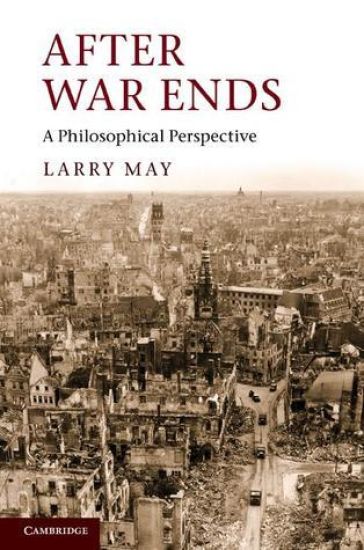
After War Ends

After War Ends

Larry May

Cambridge University Press
2012
pokkari
There is extensive discussion in current Just War literature about the normative principles which should govern the initiation of war (jus ad bellum) and also the conduct of war (jus in bello), but this is the first book to treat the important and difficult issue of justice after the end of war. Larry May examines the normative principles which should govern post-war practices such as reparations, restitution, reconciliation, retribution, rebuilding, proportionality and the Responsibility to Protect. He discusses the emerging international law literature on transitional justice and the problem of moving from a position of war and possible mass atrocity to a position of peace and reconciliation. He questions the Just War tradition, arguing that contingent pacifism is most in keeping with normative principles after war ends. His discussion is richly illustrated with contemporary examples and will be of interest to students of political and legal philosophy, law and military studies.
After War Ends

After War Ends

Larry May

Cambridge University Press
2012
sidottu
There is extensive discussion in current Just War literature about the normative principles which should govern the initiation of war (jus ad bellum) and also the conduct of war (jus in bello), but this is the first book to treat the important and difficult issue of justice after the end of war. Larry May examines the normative principles which should govern post-war practices such as reparations, restitution, reconciliation, retribution, rebuilding, proportionality and the Responsibility to Protect. He discusses the emerging international law literature on transitional justice and the problem of moving from a position of war and possible mass atrocity to a position of peace and reconciliation. He questions the Just War tradition, arguing that contingent pacifism is most in keeping with normative principles after war ends. His discussion is richly illustrated with contemporary examples and will be of interest to students of political and legal philosophy, law and military studies.
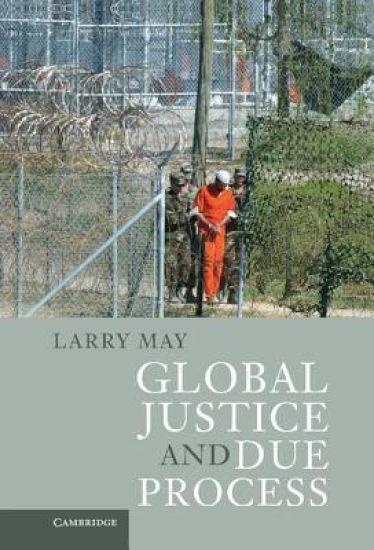
Global Justice and Due Process

Global Justice and Due Process

Larry May

Cambridge University Press
2010
sidottu
The idea of due process of law is recognised as the cornerstone of domestic legal systems, and in this book Larry May makes a powerful case for its extension to international law. Focussing on the procedural rights deriving from Magna Carta, such as the rights of habeas corpus (not to be arbitrarily incarcerated) and nonrefoulement (not to be sent to a state where harm is likely), he examines the legal rights of detainees, whether at Guantanamo or in refugee camps. He offers a conceptual and normative account of due process within a general system of global justice, and argues that due process should be recognised as jus cogens, as universally binding in international law. His vivid and compelling study will be of interest to a wide range of readers in political philosophy, political theory, and the theory and practice of international law.
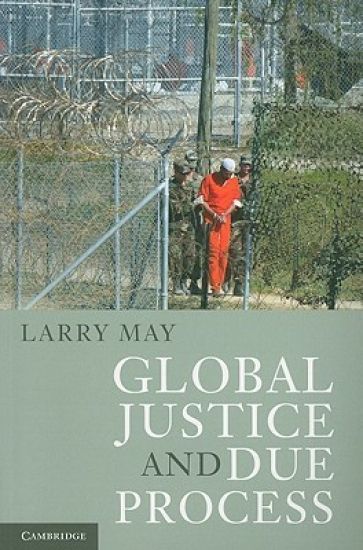
Global Justice and Due Process

Global Justice and Due Process

Larry May

Cambridge University Press
2010
pokkari
The idea of due process of law is recognised as the cornerstone of domestic legal systems, and in this book Larry May makes a powerful case for its extension to international law. Focussing on the procedural rights deriving from Magna Carta, such as the rights of habeas corpus (not to be arbitrarily incarcerated) and nonrefoulement (not to be sent to a state where harm is likely), he examines the legal rights of detainees, whether at Guantanamo or in refugee camps. He offers a conceptual and normative account of due process within a general system of global justice, and argues that due process should be recognised as jus cogens, as universally binding in international law. His vivid and compelling study will be of interest to a wide range of readers in political philosophy, political theory, and the theory and practice of international law.