Kirjailija
László Krasznahorkai
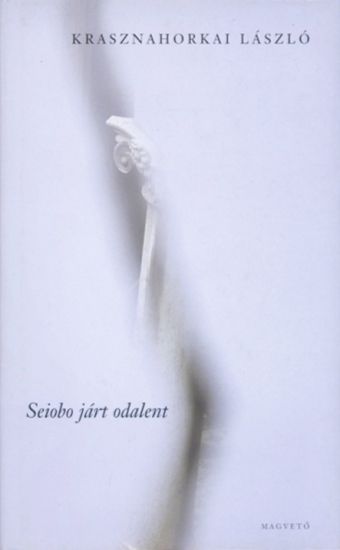
Kirjat ja teokset yhdessä paikassa: 84 kirjaa, julkaisuja vuosilta 2000-2026, suosituimpien joukossa Seiobo tuolla alhaalla. Vertaile teosten hintoja ja tarkista saatavuus suomalaisista kirjakaupoista.
Mukana myös kirjoitusasut: Laszlo Krasznahorkai
84 kirjaa
Kirjojen julkaisuhaarukka 2000-2026.
László Krasznahorkai är en av Ungerns stora författare. Hans verk beskrivs som postmoderna och dystopiska och flera böcker har blivit film. Dessa noveller är häpnadsväckande historier med karaktärer från biblisk tid och nutid, skrivna på ett speciellt språk som ofta tycks vara en enda lång mening.
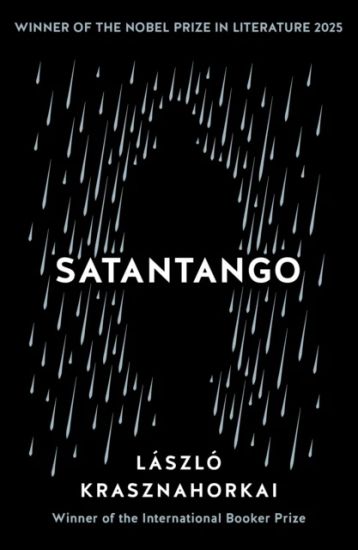
Translated by George Szirtes From the winner of the Man Booker International Prize In the darkening embers of a Communist utopia, life in a desolate Hungarian town has come to a virtual standstill. Flies buzz, spiders weave, water drips and animals root desultorily in the barnyard of a collective farm. But when the charismatic Irimias - long-thought dead - returns, the villagers fall under his spell. Irimias sets about swindling the villagers out of a fortune that might allow them to escape the emptiness and futility of their existence. He soon attains a messianic aura as he plays on the fears of the townsfolk and a series of increasingly brutal events unfold.
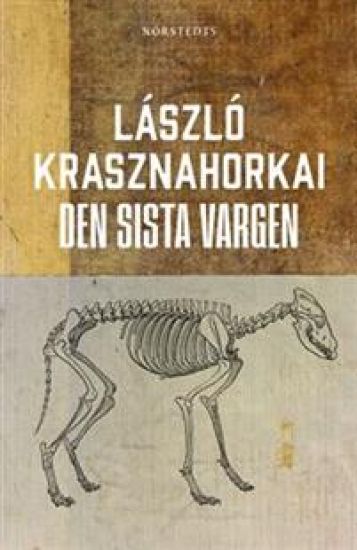
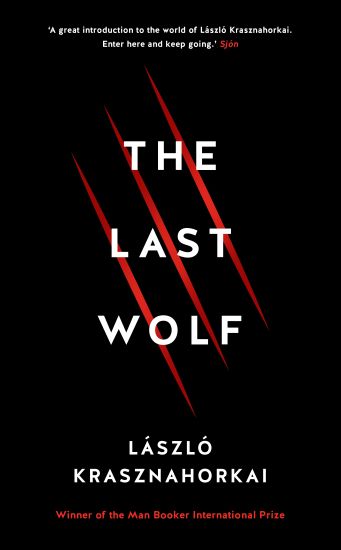
Nobelpriset i litteratur 2025: "för hans visionära och kraftfulla författarskap som mitt i undergångens fasa upprätthåller tron på konstens möjligheter." Han är författare och får i uppdrag att skriva en text om den sista vargen i Extremadura, ett högslättsområde som tidigare var utposten för de spanska erövrarna. Det är högst ovisst varför han, bosatt i Berlin, fått uppdraget. Av misstag? Har han tagits för någon annan? Ödet? Uppdraget, som kanske inte är ett uppdrag, växer i storlek och blir till en alltigenom olycksbringande upplevelse, likt en berättelse utan början och slut, en mening som förvägras att sätta punkt eller till den sista vargens sorgesamma ylande. Jägmästaren Herman får i uppgift att utplåna ett skogsområdes sista rovdjur. Han tar sig an uppdraget med friskt mod, men kommer snart på andra tankar. I den efterföljande Herman II betraktas samma skeende utifrån några barocka besökares blickar. Skabrösa officerare från överklassen, som förlustar sig i en by vid skogens utkant, blir på olika sätt indragna i Hermans angelägenheter och hela berättelsen välts över ända. Den sista vargen, Herman och Herman II visar att László Krasznahorkai är en mästare även i det kortare formatet. Med osviklig känsla för prosans yttre gränser har han här samlat tre berättelser som på olika sätt öppnar texten lika mycket som den kör in en pil rakt in i människans mest fördärvbringande sidor. Om hans senaste bok Seiobo där nere: "Det här är en komplicerad och mångtydig bok på ett hypnotiserande konstfullt språk som värjer sig mot vardaglig slöläsning. Översättaren Daniel Gustafsson har utfört ett herkuliskt storverk, och man förstår varför författaren allt oftare nämns som Nobelpriskandidat." Aftonbladet "Seiobo där nere är ett märkvärdigt konstverk." Expressen "Det är inget annat än storslaget. Om inte mer än så." GP "Vad är detta för bok? En roman? Novellsamling? Essä? ... Krasznahorkai skriver i långa men sällsamt lätta satser. Genom dessa periodiska bågar, fulla av inskott och utvikningar, får prosan en ornamental karaktär som påminner om utsmyckningarna i Alhambra eller Bachs barocka passioner." Dagens Nyheter
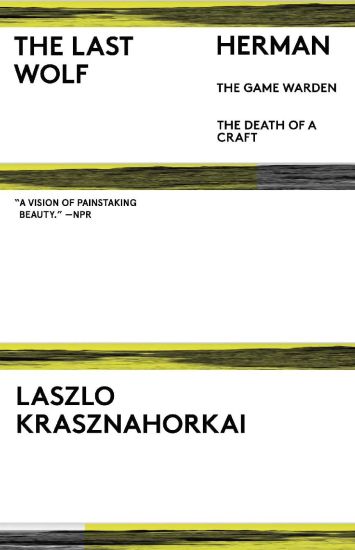
The Last Wolf (translated by George Szirtes) is Krasznahorkai in a maddening nutshell--it features a classic obsessed narrator, a man hired (by mistake) to write the true tale of the last wolf in Spain. This miserable experience (being mistaken for another person, dragged about a cold foreign place, and appalled by a species's end) is narrated--all in a single sentence--as a sad looping tale, a howl more or less, in a dreary Berlin bar to a patently bored bartender. Herman (translated by John Batki), "a peerless virtuoso of trapping who guards the splendid mysteries of an ancient craft gradually sinking into permanent oblivion," is asked to clear a forest's last "noxious beasts." He begins with great zeal, although in time he "suspects that maybe he was 'on the wrong scent.'" Herman switches sides, deciding to track entirely new game ...
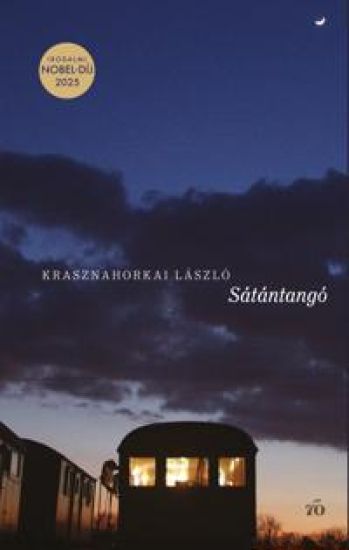
I et lille landbrugskollektiv i en udørk af en landsby melder to gådefulde personer deres ankomst. Kollektivets beboere stiller store forventninger til de to mystiske fremmede og det bliver svært at afgøre om der er tale om profet og discipel, eller om det er selve djævlen og hans lærling der har meldt sin ankomst. László Krasznahorkais debutroman fra 1985 Satantango er en almengyldig fortælling om fascination og forfald i en totalitær verden. I en særegen stil, med alenlange sætningskonstruktioner, indkapsler romanen et dystopisk og humoristisk-grotesk univers. László Krasznahorkai er født i Gyula i Ungarn i 1954. Han er en af Ungarns vigtigste samtidsforfattere og er blevet tildelt en række litterære priser i Ungarn, Tyskland og USA for sine romaner og noveller. Sammen med landsmændene Imre Kertész, Peter Nadas og Peter Esterházy udgør han en generation af forfattere, der alle har haft deres gennembrud i tiden efter Anden Verdenskrig. Hans stil bliver ofte sammenlignet med forfattere som W.G. Sebald og Thomas Bernhard, mens hans eksistentielle tematikker kan sammenstilles med Kafkas, Gogols eller Dostojevskijs. Krasznahorkai modtog i 2015 The Man Booker International Prize. Forlaget Sisyfos har i 2015 udgivet Krasznahorkais Modstandens melankoli der oprindeligt udkom i 1989.
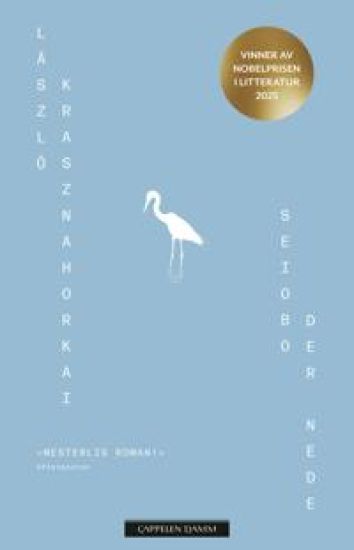
Seiobo er en japansk gudinne. Ferskentrærne hennes blomstrer bare en gang hvert 3000. år, men den som ser blomstringen, forblir udødelig. Folk har sluttet å tro på slike historier, men ikke å lengte etter dem. I Seiobo der nede undersøker László Krasznahorkai vår lengsel etter det vakre. Han skildrer hvordan det i hver epoke, til enhver tid har eksistert fullkomne gjenstander: En egretthegre som jakter urørlig i en elv, grimasene til en No-maske, den absolutte nakenheten i ikonets ansikt.Seiobo der nede kom opprinnelig ut i 2008, og regnes som et av Krasznahorkais viktigste verk. Boken består av 17 løst sammenhengende fortellinger der forfatteren tar med leseren på en reise gjennom tid og rom, fra Kyoto til Venezia, fra Paris til Athen via Grenada og Geneve. Det er en melankolsk, språklig briljant prosatekst om oppfordrer oss til å ta vare på evnen til å gi vår fulle konsentrasjon til det sublime i kunsten.
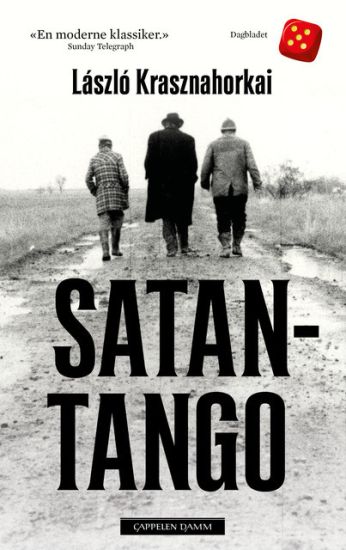
Vinner av den internasjonale Man Bookerprisen 2015Satantango er historien om livet i en fraflytningstruet bygd i et dystopisk kommunistisk Ungarn. Irimiás, som alle trodde var død, men som kan være en profet, eller hemmelig agent, eller djevelen selv, dukker opp fra intet og begynner å manipulere livene til dem som er igjen i bygda. I hans kjølvann følger fyll og desperasjon, og et brutalt oppgjør i det Irimiás først utnytter bygdefolket på det groveste før han fører dem rett i døden.Boka foregår i regn og gjørme over noen få dager. Intriger, forbrytelser, utroskap, håp om å unnslippe og først og fremst tillit, og konstant svik er Krasznahorkais stoff. Karsznahorkais prosa er svart som natta, men ikke uten glimt av humor. Som forfatteren sier: "djevelen har det alltid moro". "Endelig en roman som man virkelig kan undres over og brytes med, og det på de aller beste premisser."Jonny Halberg, Dagbladet"Satantango imponerer, sin dysterhet til tross, både gjennom sin nesten "ugjennomtrengelige", intrikate oppbygging og gjennom sin stilistiske eleganse." Turid Larsen, Dagsavisen
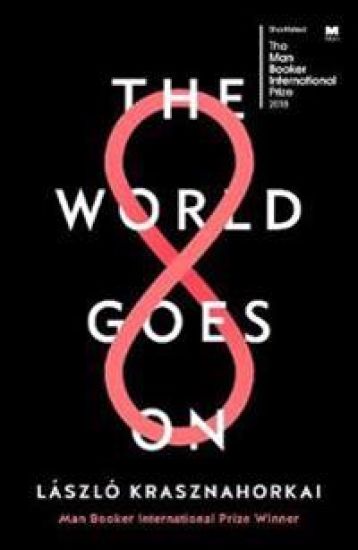
Shortlisted for The Man Booker International Prize 2018 A Hungarian interpreter obsessed with waterfalls, at the edge of the abyss in his own mind, wanders the chaotic streets of Shanghai. A traveller, reeling from the sights and sounds of Varanasi, encounters a giant of a man on the banks of the Ganges ranting on the nature of a single drop of water. A child labourer in a Portuguese marble quarry wanders off from work one day into a surreal realm utterly alien from his daily toils. In The World Goes On, a narrator first speaks directly, tells twenty-one unforgettable stories, then bids farewell ('for here I would leave this earth and these stars, because I would take nothing with me'). As László Krasznahorkai himself explains: 'Each text is about drawing our attention away from this world, speeding our body toward annihilation, and immersing ourselves in a current of thought or a narrative...' The World Goes On is another masterpiece by the winner of the 2015 Man Booker International Prize. 'The excitement of his writing,' Adam Thirlwell proclaimed in the New York Review of Books, 'is that he has come up with his own original forms-there is nothing else like it in contemporary literature.'
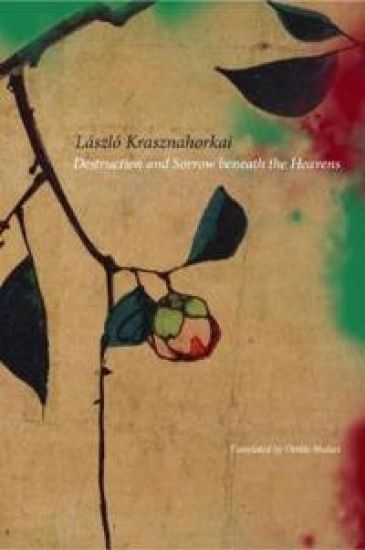
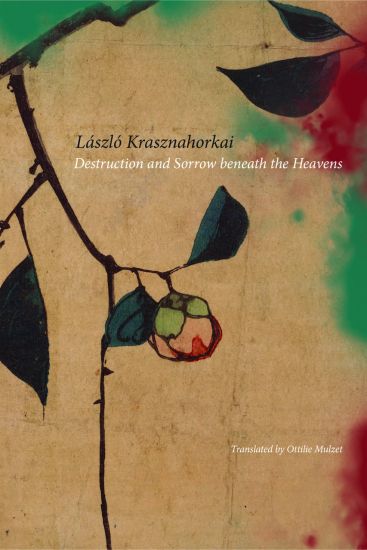
Destruction and Sorrow Beneath the Heavens
Laszlo Krasznahorkai
Seagull Books London Ltd
2018
pokkari
Known for his brilliantly dark fictional visions, Laszlo Krasznahorkai is one of the most respected European writers of his generation and the winner of the 2015 Man Booker International Prize. Here, he brings us on a journey through China at the dawn of the new millennium. On the precipice of its emergence as a global power, China is experiencing cataclysms of modernity as its harsh Maoist strictures meet the chaotic flux of globalism. What remains of the Middle Kingdom's ancient cultural riches? And can a Westerner truly understand China's past and present--or the murky waters where the two meet? Destruction and Sorrow beneath the Heavens is both a travel memoir and the chronicle of a distinct intellectual shift as one of the most captivating contemporary writers and thinkers begins to engage with the cultures of Asia and the legacies of its interactions with Europe in a newly globalized society. Rendered in English by award-winning translator Ottilie Mulzet, Destruction and Sorrow beneath the Heavens is an important work, marking the emergence of Krasznahorkai as a truly global novelist.
In The Last Wolf, a philosophy professor is mistakenly hired to write the true tale of the last wolf of Extremadura, a barren stretch of Spain. His miserable experience is narrated in a single, rolling sentence to a patently bored bartender in a dreary Berlin bar. In Herman, a master trapper is asked to clear a forest's last 'noxious beasts.' Herman begins with great zeal, although in time he switches sides, deciding to track entirely new game... In Herman II, the same events are related from the perspective of strange visitors to the region, a group of hyper-sexualised aristocrats who interrupt their orgies to pitch in with the manhunt of poor Herman... These intense, perfect novellas, full of Krasznhorkai's signature sense of foreboding and dark irony, are perfect examples of his craft.
Vinner av den internasjonale Man Bookerprisen 2015Satantango er historien om livet i en fraflytningstruet bygd i et dystopisk kommunistisk Ungarn. Irimiás, som alle trodde var død, men som kan være en profet, eller hemmelig agent, eller djevelen selv, dukker opp fra intet og begynner å manipulere livene til dem som er igjen i bygda. I hans kjølvann følger fyll og desperasjon, og et brutalt oppgjør i det Irimiás først utnytter bygdefolket på det groveste før han fører dem rett i døden.Boka foregår i regn og gjørme over noen få dager. Intriger, forbrytelser, utroskap, håp om å unnslippe og først og fremst tillit, og konstant svik er Krasznahorkais stoff. Karsznahorkais prosa er svart som natta, men ikke uten glimt av humor. Som forfatteren sier: "djevelen har det alltid moro". Lásló Karsznahorkai er Ungarns enfant terrible og Satantango er hans debut, utgitt i Ungarn i 1985.
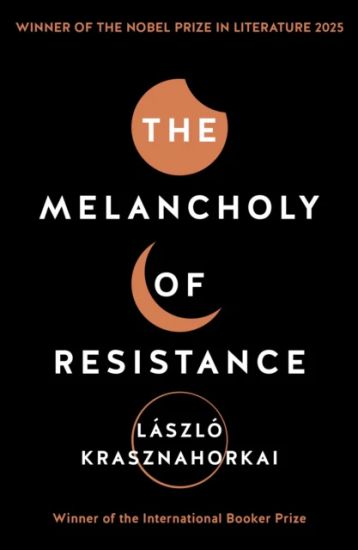
Winner of the 2015 Man Booker International Prize The Melancholy of Resistance, László Krasznahorkai's magisterial, surreal novel, depicts a chain of mysterious events in a small Hungarian town. A circus, promising to display the stuffed body of the largest whale in the world, arrives in the dead of winter, prompting bizarre rumours. Word spreads that the circus folk have a sinister purpose in mind, and the frightened citizens cling to any manifestation of order they can find - music, cosmology, fascism. The novel's characters are unforgettable: the evil Mrs. Eszter, plotting her takeover of the town; her weakling husband; and Valuska, our hapless hero with his head in the clouds, who is the tender centre of the book, the only pure and noble soul to be found. Compact, powerful and intense, The Melancholy of Resistance, as its enormously gifted translator George Szirtes puts it, 'is a slow lava flow of narrative, a vast black river of type.' And yet, miraculously, the novel, in the words of Guardian, 'lifts the reader along in lunar leaps and bounds.'
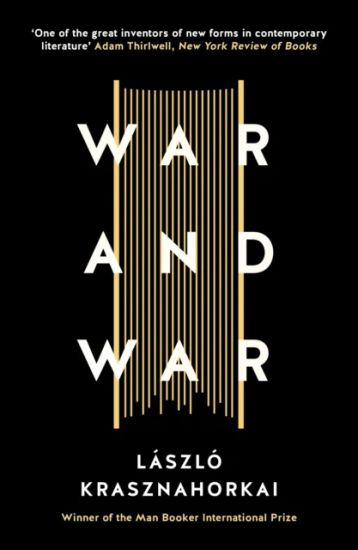
Winner of the 2015 Man Booker International Prize War & War begins at a point of danger: on a dark train platform Korim is on the verge of being attacked and robbed by thuggish teenagers. From here, we are carried along by the insistent voice of this nervous clerk. Desperate, at times almost mad, but also keenly empathic, Korim has discovered in a small Hungarian town's archives an antique manuscript of startling beauty: it narrates the epic tale of brothers-in-arms struggling to return home from a disastrous war. Korim is determined to do away with himself, but before he commits suicide, he feels he must escape to New York with the precious manuscript and commit it to eternity by typing it all out onto the world wide web. Following Korim with obsessive realism through the streets of New York (from his landing in a Bowery flophouse to his move far uptown with a mad interpreter), War and War relates his encounters with a fascinating range of people in a world torn between viciousness and mysterious beauty. Following the eight chapters of War & War is a short 'prequel acting as a sequel', 'Isaiah', which brings us to a dark bar, years before in Hungary, where Korim rants against the world and threatens suicide. Written like nothing else (turning single sentences into chapters), War & War affirms W. G. Sebald's comment that Krasznahorkai's prose far surpasses all the lesser concerns of contemporary writing.
Winner of the 2015 Man Booker International Prize Beauty, in László Krasznahorkai's new novel, reflects, however fleeting, the sacred - even if we are mostly unable to bear it. In Seiobo There Below we see the Japanese goddess Seiobo returning to mortal realms in search of perfection. An ancient Buddha being restored; the Italian renaissance painter Perugino managing his workshop; a Japanese Noh actor rehearsing; a fanatic of Baroque music lecturing to a handful of old villagers; tourists intruding into the rituals of Japan's most sacred shrine; a heron as it gracefully hunts its prey. Told in chapters that sweep us across the world and through time, covering the furthest reaches of human experience, Krasznahorkai demands that we pause and ask ourselves these questions: What is sacred? How do we define beauty? What makes great art endure? Melancholic and mesmerisingly beautiful, this latest novel by the author of Satantango shows us how to glimpse the divine through extraordinary art and human endeavour. Winner of Best Translated Book of the Year Award 2014 Translated by Ottilie Mulzet
Destruction and Sorrow beneath the Heavens
László Krasznahorkai
Seagull Books London Ltd
2016
sidottu
Known for his brilliantly dark fictional visions, Laszlo Krasznahorkai is one of the most respected European writers of his generation. Here, he brings us on a journey through China at the dawn of the new millennium. On the precipice of its emergence as a global power, China is experiencing cataclysms of modernity as its harsh Maoist strictures meet the chaotic flux of globalism. What remains of the Middle Kingdom's ancient cultural riches? And can a Westerner truly understand China's past and present-or the murky waters where the two meet? Destruction and Sorrow beneath the Heavens is both a travel memoir and the chronicle of a distinct intellectual shift as one of the most captivating contemporary writers and thinkers begins to engage with the cultures of Asia and the legacies of its interactions with Europe in a newly globalized society. Rendered in English by award-winning translator Ottilie Mulzet, Destruction and Sorrow beneath the Heavens is an important work, marking the emergence of Krasznahorkai as a truly global novelist. Praise for Krasznahorkai "The contemporary Hungarian master of the apocalypse." -Susan Sontag "Krasznahorkai delights in unorthodox description; no object is too insignificant for his worrying gaze...He offers us stories that are relentlessly generative and defiantly irresolvable. They are haunting, pleasantly weird, and ultimately, bigger than the worlds they inhabit."-New York Times "Krasznahorkai is an expert with the complexity of human obsessions. Each of his books feel like an event, a revelation."-Daily Beast
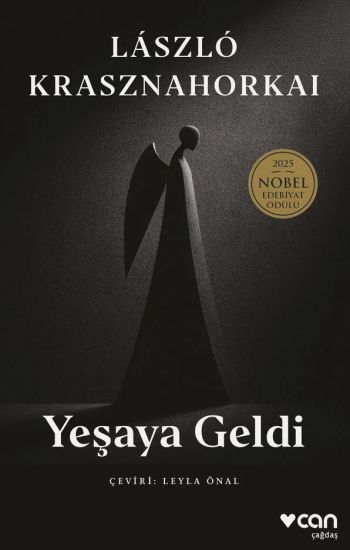
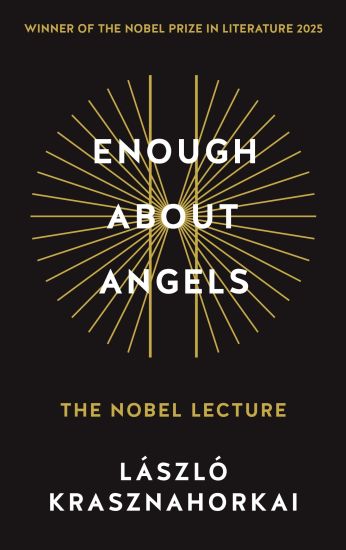
László Krasznahorkaille myönnettiin vuoden 2025 kirjallisuuden Nobel-palkinto "vakuuttavasta ja visionäärisestä tuotannosta, joka vahvistaa taiteen voimaa apokalyptisen kauhun keskellä." Muutama päivä ennen palkintoseremoniaa Krasznahorkai piti perinteisen Nobel-luennon Tukholmassa. Enkeleiden historia ja nykyhetki, ihmisen luonto ja saavutukset, kapinan liike ja inertia; Minnamari Sinisalon suomentamassa luennossa Krasznahorkai avaa valtavat ajalliset maisemat ja lopulta tiivistää ja kokoaa ne Berliinin metrossa kohdattuun kuvaelmaan, joka ei ole jättänyt häntä rauhaan.